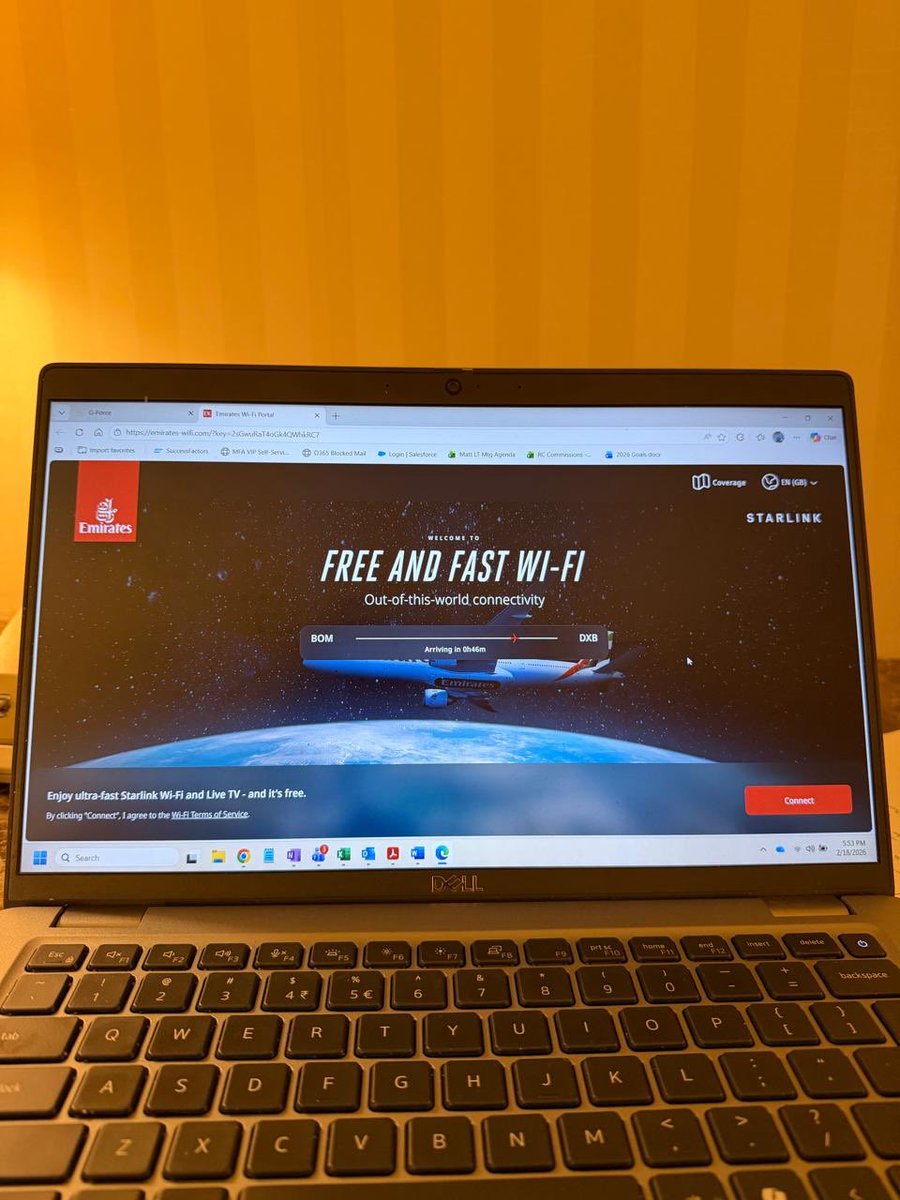
@airindia, your call centre, app, and website are all equally broken. It’s impossible to be a "Maharaja" when your basic tech doesn't work. Stop the slogans and fix the user experience. This is beyond frustrating.
English
Vipan Goel
3.4K posts
@VipanGoel
Paranoids survive but happy ones thrive. Go J! I need to learn to suffer fools with equanimity, learning to suffer myself first -:)🥸
Twelve words just rewrote the post-1945 maritime order and no one has processed what happened. “Iran controls the Strait of Hormuz and it is open for us.” Chinese Defense Minister Admiral Dong Jun, speaking publicly to the Trump administration and the US Navy on April 13, the same day CENTCOM activated a blockade of all Iranian ports effective 10am Eastern. Not through diplomatic cables. Not through UN backchannels. A peer nuclear power publicly declaring it will ignore a US naval blockade because it has sovereign energy agreements with the country being blockaded. This has not happened since 1945. Not during Korea, Vietnam, Cuba, or the Tanker Wars. In every prior American naval interdiction, no peer power publicly declared its intention to transit the enforcement zone by sovereign right. China just did. The mechanism is energy existential. China imports approximately 1.85 million barrels per day of Iranian crude, roughly 80 to 90 percent of Iran’s total exports. On April 7, China and Russia vetoed a UN Security Council resolution to reopen the Strait, with China’s MFA explicitly calling the disruption a consequence of “US-Israeli illegal military operations against Iran.” Six days later, Dong Jun told the world the Strait is open for Chinese vessels regardless of what Washington orders. Now trace the logic. The blockade targets Iranian ports. Iran’s primary customer is China. Either the US Navy interdicts a Chinese vessel, or the blockade has no teeth against the only customer that matters. Capital Economics stated it precisely: “Would the U.S. Navy target Chinese vessels in the Strait? Either outcome would represent a significant escalation.” There is no third option. Trump responded the same day. “We can’t let a country blackmail or extort the world.” Then: “Many ships are heading to our country to load up with the best oil.” Then: “China’s Xi wants to see this ended.” Then the line that reveals everything beneath the rhetoric: “We’ve been called by the other side. They’d like to make a deal very badly.” The other side is not Iran. Iran’s parliament speaker returned from the collapsed 21-hour Islamabad talks and told Trump: “If you fight, we will fight.” Iran’s military declared “no port in the region will be safe.” The other side that called is Beijing. And the deal is not about nuclear enrichment. It is about Chinese energy security transiting a waterway America can no longer unilaterally control, denominated in a currency that is not the dollar. Brent surged 7.5% to $102.30. WTI hit $104.20. Crude is up 40 to 50 percent since the war began February 28. American gasoline averaged $4.13 per gallon on April 13, up $1.20 since hostilities started. March CPI printed 3.3%, up from 2.4% in February. The blockade designed to strangle Iran is importing inflation into the American economy at a rate that compounds through every supply chain touching energy. Before the war, 130 vessels transited daily. Saturday, Windward tracked 17. The UK and Australia both refused to join. The ceasefire expires April 22. Trump visits Beijing May 14. The post-war order was built on one assumption: no country could challenge American naval supremacy at a global chokepoint. Dong Jun just challenged it in twelve words. The question is no longer whether the Strait reopens. It is what currency the toll is paid in when it does. open.substack.com/pub/shanakaans…