

Kai Koenig
58.5K posts

Kai Koenig
@agentK
Kotlin,Flutter,Dart,CFML,Java,Linux and more,✍️@ix,💑 @blauerpunto,✈️ pilot,🎮 Nintendo 385233198305,🎙 @codecafeteria, tshirts&hoodies only. 🌈❤️💜💙 he/him
Wellington (Aotearoa - NZ) Beigetreten Nisan 2007
1.2K Folgt2.2K Follower

@analyticflying Seeing these networks shift is actually fascinating. One wonders what the breaking point for the Gulf carriers will be and when they will try to move capacity elsewhere; but where and how?
English

We've been saying for a few weeks that Asia-Europe is the bottleneck & this is probably the biggest move to cover that.
Unlike other carriers, Singapore aren't a few ad hoc flights for the next month, rather large & sustained increases through August. Networks are shifting!!
aeroroutes@aeroroutes
Singapore Airlines Boosts London Gatwick Flights in NS26 aeroroutes.com/eng/260320-sqn…
English
Thank you, @codecampwelly, for the opportunity to speak today.
For those who couldn't attend or chose a different session, my slides for "Dart on the Command Line: Building and Deploying CLI Tools" are now available on my Speakerdeck account. You can view them here: speakerdeck.com/therealagentk/…
Additionally, I've shared the sample code on GitHub, which can be accessed at: github.com/TheRealAgentK/…
English
@dvassallo @OfficialS2G 💯 Formula One has always been driven by what engine and car manufacturers want to showcase.
They're not in that game to win prize money, they're in to demonstrate the higher powered version of what will be in mainstream cars in a few years.
English

@OfficialS2G Because no power unit manufacturer is interested in investing hundreds of millions of dollars into the best and most powerful V12s. This current formula of ~50/50 hybrid is what they want to invest in.
English

@analyticflying @JSS779 I almost 💯 guarantee you it's written by AI using a poor prompt 😂.
English
@JSS779 This was just disqualifying:
"British Airways feeding London passengers through Dubai is what makes DXB a global hub rather than a regional airport"
English

Never have I read an analysis that is so right but so wrong at the same time. This guy may be able to assess war threat but clearly knows nothing about aviation and how the ME hubs operate.
Shanaka Anslem Perera ⚡@shanaka86
British Airways. Lufthansa. Swiss. Austrian. Air France. KLM. Cathay Pacific. Singapore Airlines. Finnair. Virgin Atlantic. All suspended flights to Dubai. The busiest airport in the Middle East is running on Emirates, Etihad, and hope. The suspensions are not symbolic. British Airways has cancelled all flights to Dubai, Abu Dhabi, Amman, Bahrain, Doha, and Tel Aviv, with Abu Dhabi routes suspended into later this year. Lufthansa Group, covering Lufthansa, Austrian, Swiss, and Brussels Airlines, suspended Dubai and Abu Dhabi until at least mid-March with rolling extensions. KLM cancelled Dubai until 28 March. Cathay Pacific until 31 March. Finnair until 29 March. Singapore Airlines until at least mid-March. Every carrier cites the same three words: airspace, insurance, safety. The insurance is the mechanism. War-risk premiums for Gulf airspace surged 300 to 1,000%, and no airline’s risk committee will authorise a route where the premium assumes a drone can reach the fuel supply and the fuel supply just proved it can be reached. Hours ago, the Dubai Media Office confirmed a drone incident near DXB that set a fuel tank on fire. Civil Defence contained it. No injuries. But the fire is not the problem. The fire is the evidence that the risk committees used to justify the cancellations, and the evidence just updated in real time. DXB processed 95.2 million passengers in 2025. It connected 260 destinations across six continents. It was the physical proof that the Gulf was open, safe, and central to global aviation. Seventeen days of war have reduced it to a hub running limited schedules on its home carriers while every major international airline that made it the world’s busiest routes its passengers through Istanbul, Doha, and Singapore instead. Emirates and Etihad are operating limited services and gradually resuming. They have no choice. DXB and Abu Dhabi are their homes. But a hub is not defined by its home carriers. It is defined by the international network that feeds it. British Airways feeding London passengers through Dubai is what makes DXB a global hub rather than a regional airport. Cathay Pacific feeding Hong Kong. Singapore Airlines feeding Southeast Asia. Lufthansa feeding Frankfurt. When those carriers leave, the hub becomes a terminal with runways and a fuel tank that was on fire this morning. The suspensions are temporary. Every airline says so. Every statement includes “pending airspace stabilisation” and “subject to review.” But temporary in aviation means something specific: it means the route remains cancelled until the insurance market reprices the risk below the threshold at which the route generates positive margin. The insurance market will not reprice the risk until the war ends. The war shows no sign of ending. Araghchi told CBS “as long as it takes.” The insurance cancellations are not temporary. They are indefinite with a euphemism attached. The tourism economy that lost $600 million per day was calculated when the airlines were merely cautious. The DFM Real Estate Index that fell 30% was calculated when the airport was merely disrupted. The fuel tank fire converts “disrupted” into “targeted.” And targeted airports do not attract the 95.2 million passengers who made DXB the world’s busiest. They attract the insurance adjusters who calculate whether the airport can reopen at premiums anyone will pay. Dubai built its economy on connectivity. The airlines that provided the connectivity have left. The fuel tank that powered the connectivity is on fire. And the war that caused both is being fought by a regime that says it will last as long as it takes, funded by an economic empire of 812 companies that no bomb has touched. open.substack.com/pub/shanakaans…
English
@DanielW_Kiwi On that note, look up Buchpreisbindung - it's a law in German-speaking countries.
en.wikipedia.org/wiki/Fixed_boo…
It's obviously market intervention, but it leads to more variety in book publishing and to a more equal playing field for retail bookshops.
English
The photo suggests a moral argument. And maybe the OP intends to create that.
The better argument is local retail (say, single shop owner) vs global corporate behemoth and there are cases for both - obviously if all local bookstores close because of Amazon, people will complain about not being able to browse, too.
The point is though - even a local shop needs to be able to compete on price. I'm not willing to pay $20-30 extra for a video game at JB HiFi in NZ when I can get it much cheaper at Amazon AU (including shipping). However, for books I'm usually happy to go to the local bookshop (or a second hand bookstore) instead of Amazon.
English

Honestly what is the justification for something like this?
At first it feels warm and fuzzy like the bookstore is part of your community if you give to it then it will give back. Truth is it's not its another business making profit for its owner.
Get the best deal for you.
ourania, elderly multigravida shikse⁷@ouranometrian2
How many times is this gonna get posted
English
The photo suggests a moral argument. And maybe the OP intends to create that.
The better argument is local retail (say, single shop owner) vs global corporate behemoth and there are cases for both - obviously if all local bookstores close because of Amazon, people will complain about not being able to browse, too.
The point is though - even a local shop needs to be able to compete on price. I'm not willing to pay $20-30 extra for a video game at JB HiFi in NZ when I can get it much cheaper at Amazon AU (including shipping). However, for books I'm usually happy to go to the local bookshop (or a second hand bookstore) instead of Amazon.
English
Seriously peeps, if you're interested in the mechanics and economies of running an airline - @analyticflying's Twitter posts and articles are really cool.
I'm just a hobbyist aviation fan that tends to be in the frequent flyer game, but if you do this thing for a living or are aviation journos etc, you should throw them some serious money for their explainer and research work.
Analytic Flying@analyticflying
✈️⛽️Why don't airlines hedge all their fuel needs? There's been a lot of talk about airlines & fuel price hedging given current event. We thought we'd put together an explainer, highlighting why they hedge fuel prices, but also why not all airlines do & why airlines don't fully hedge👇 🔴Airlines hedge fuel prices as an insurance policy against price volatility. Reason is asymmetric risk → airlines sell a lot of tickets in advance of when they eventually purchase fuel for any given flight 🔴In some cases one can buy tickets 11 months in advance → once a passenger has bought it the price is locked in, but fuel prices aren't! 🔴Example: end of 2025 financial year, Qantas had already sold $4.7 billion in tickets over next 11 months → that's nearly 3 months of revenue 🔴Fuel accounts for 23% of Qantas's expenditure & its price is volatile → with an operating margin of 11.1%, if fuel prices ↑45% it'll will wipe out the $525m in operating profit they'd expect to earn from those forward sales 🔴This is where hedging comes in → airlines can buy fuel today for delivery in several weeks or months → this means they lock in current prices & reduce the risk of higher future prices 🔴But there's a catch! In the same way selling tickets in advance creates risk, buying too much fuel in advance also creates risk → if prices fall you'll end up being stuck with the higher price you paid when locking it in 🔴Volatility is a two-way street & this is why airlines don't hedge all future fuel needs, rather aligning proportion of fuel they hedge with forward sales in magnitude & timing 🔴Qantas hedge about 80% for the next 6 months, decline thereafter; Cathay are 30% hedged through 2026; Singapore about 50% 3 months out, then declining → each utilising their own strategy based on their risk assessment & needs 🔴In practice, airlines don't actually buy fuel ahead since airport fuel providers won't take that risk, but also because they'd have to make arrangements with hundreds of different providers around the world 🔴Instead, they buy their fuel from airport providers as needed (basically on the day) & hedge through various instruments in financial markets (e.g. futures contracts, swaps, options, collars; in many cases, they don't even hedge fuel prices, rather utilising crude oil as a proxy) 🔴Their financial statements will show the actual cost paid for fuel & then adjust that by gains/losses made on the hedging instruments 🔴Basically, when fuel prices ↑ they take higher charge for higher fuel prices & offset that from gains on the hedging instruments; if fuel prices ↓ they take lower charge for lower fuel prices & offset with losses on the hedging instruments 🔴Looking at Qantas's financial statements we can see this in action over time → in years when fuel prices ↑ they show gains from hedging whereas in years when fuel prices ↓ they show losses from hedging 🔴While gains outweigh losses by a small amount that's not the point or goal → a good hedging strategy aims to break even → too much profit from hedging would suggest their strategy wasn't focused on risk mitigation, but speculation 🔴Hedging isn't free & intermediaries charge a margin on hedging instruments & trading fees, etc → these costs can be substantial & some airlines would rather take on the fuel price volatility rather than the ongoing costs of hedging 🔴But most are happy to take on the cost of hedging since it gives them more certainty, allows better planning, etc → there's no right or wrong, but hedging is clearly a more conservative strategy & those airlines with substantial hedging are probably a lot less stressed at the moment than those that have less or no hedging!
English
90 minutes in Colombo is easily doable. The airport is surprisingly well organized for transit pax and tiny in the grand scheme of things. I've never checked-in there landside - no idea how well that runs - but done 5 or 6 transfers there and all super smooth, fast and efficient.
English
@arnie03 90 minutes? That's fine. It's 55 minutes the other way which is less than the MCT. Suspect they're looking to adjust slots on one end, but it's less important since there's a 4 hour options that way. The problem was the 11h, which has been reduced to 90 minutes.
English
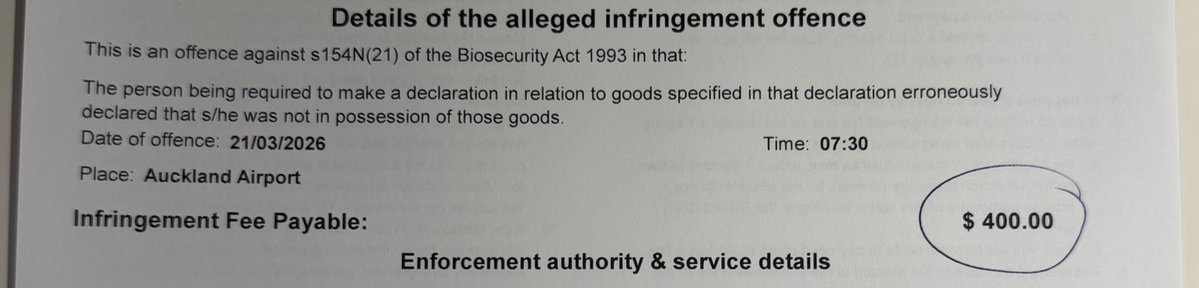
Timing of SriLankan's additional Melbourne-Colombo flights coincides with Jetstar's new flights, but schedule looks like it's targeted at London connections:
New flight reduces eastbound layover from 11.5→1.5 hours, and 4→1 hours on westbound!
SriLankan Airlines@flysrilankan
Strengthening connections between Sri Lanka and Australia! 🇱🇰✈️🇦🇺 Starting 2nd August 2026, SriLankan Airlines will increase its services between Colombo and Melbourne to 10 weekly flights, introducing three additional frequencies every Tuesday, Thursday, and Sunday. Contact SriLankan Airlines call center on 1979, visit srilankan.com or your nearest travel agent to book your ticket today. Terms and conditions apply* #SriLankanAirlines #iflysrilankan
English
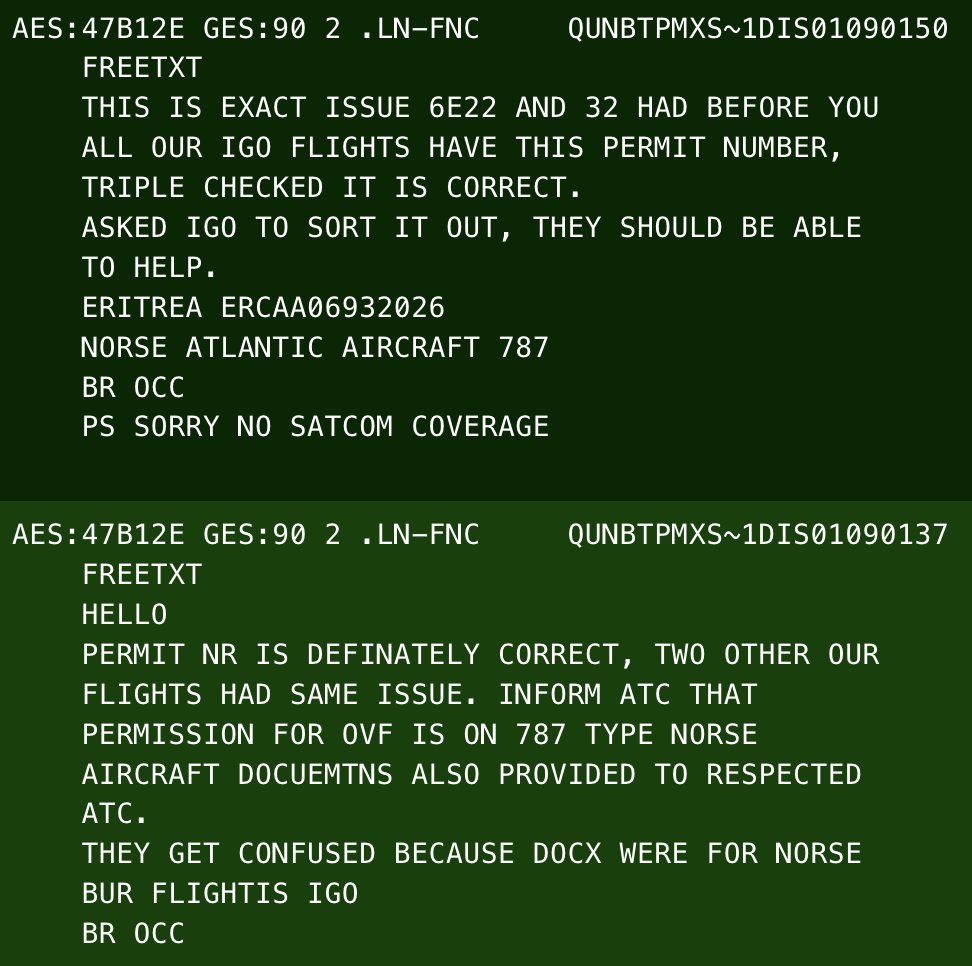
@analyticflying @jainmehul1994 But if the permits are not Norse's problem but Indigo's responsibility as the marketing carrier and they were correctly applied for and issued, then that's fundamentally Eritrea ATC breaking some international agreement or law, isn't it?
Is there no recourse for cases like this?
English
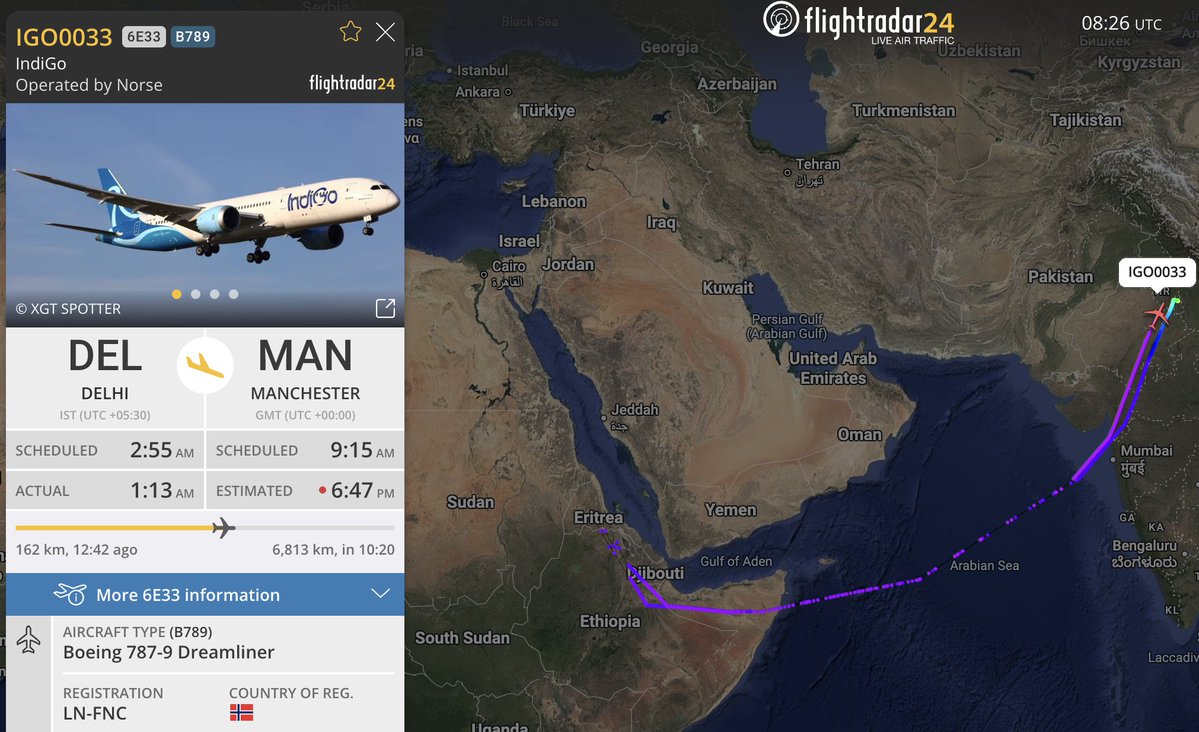
So IndiGo's Delhi-Manchester is returning to Delhi after being denied access to Asmara FIR (Eritrea)!
Seems as though several IndiGo flights have run into permit issues as Eritreans are confused by IndiGo flight on Norse aircraft → see ACARS messages from ops to aircraft!
English
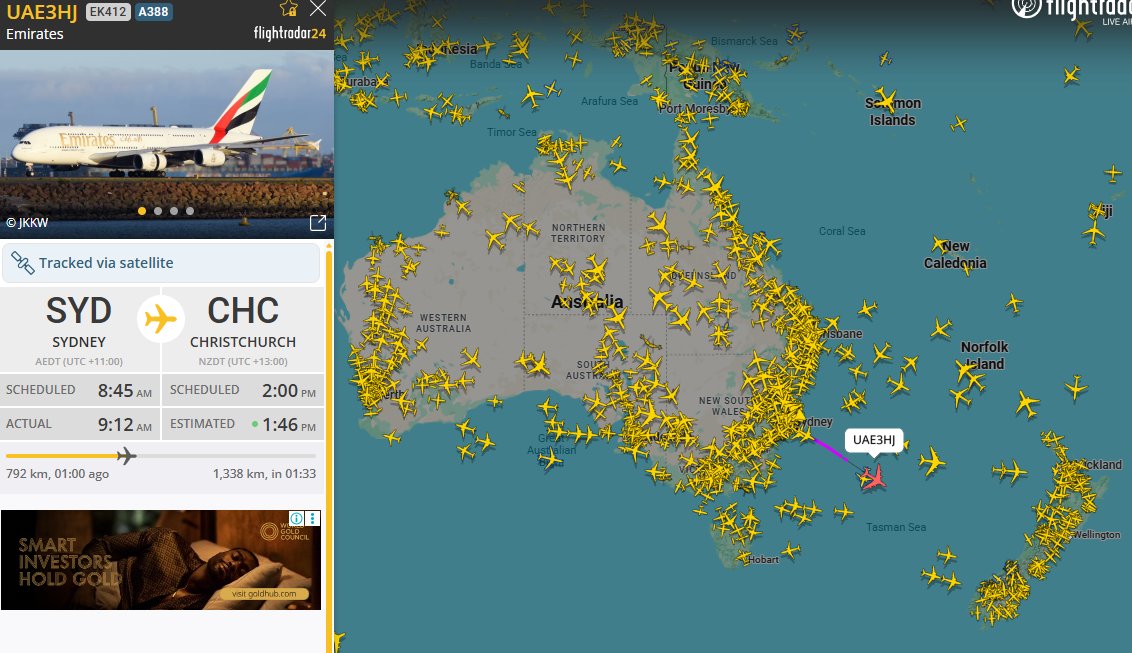
@analyticflying @central01000011 I assume they only would take pax that are booked between CHC and SYD on Middle East routings?
English
@central01000011 Yes, they're still continuing with the daily SYD-CHC-SYD run, even with the DXB sectors being cancelled.
English

@analyticflying @thetrickytrade It's amazing how many people don't even see the fundamental issues Indian airlines have with west-bound flights due to being blocked almost everywhere now.
English
@thetrickytrade Slightly? AI’s DEL-LHR flight time was more than 20% longer. That’s massively longer. 20% more costly, but also reduces payload meaning all else constant it also is earning less revenue giving up that potential payload. It’s a huge difference!
English

@OptionJackson1 @Niklas_Sikorra @levelsio The reality is that for a single-person business like @levelsio, frameworks, build processes and "proper software engineering" is more often than not total overkill.
English

@Niklas_Sikorra @levelsio Not shocking that high level vibe coders don’t understand this concept 😂. Very basic fundamentals.
English

I never fully understood the build process because I've always coded without frameworks
I always felt the faster I could see the code I just typed in action, the faster my feedback loop and the faster I can ship and improve my products
Waiting even a minute to build would destroy that feedback loop and make me way slower
I can do lots of mini edits and see each instead of batching them and then building!
@levelsio@levelsio
My simple PHP JS stack without any build works incredibly well with AI because it's so simply and basic
English
@analyticflying Wouldn't surprise me to see similar for flights via Singapore and other Asian 1-stop hubs.
English
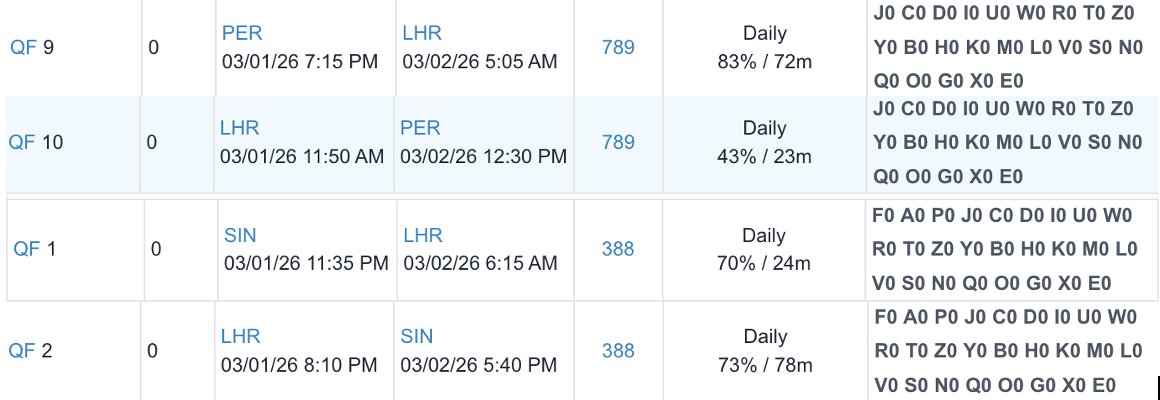
All Qantas's European flights are already sold out for the next few days! 0s mean there's no remaining availability in all fare classes👇
QF9 PER-LHR sold out through Fri (QF10 through Tue)
QF33 PER-CDG through Tue (QF34 through Wed)
QF1 SIN-LHR through Wed (QF2 through Wed)
English
Kai Koenig retweetet

@analyticflying @kiwimusiclover Interesting, thanks for the deep explanation!!!
English
They argue that it's part of the problem. At least that's been part of their strategic message over the last few years, that they're in a holding pattern until they get their new product out there (which is coming). However, that papers over the cracks.
AU/NZ-AU market has been their largest long haul market for a long time (include AU since AU-US connecting traffic is an important part of their business). Post pandemic, AU/NZ-US demand declined dramatically, much quicker than expected.
Simultaneously, US carriers flooded market (for different reason). QF were very disciplined with US capacity, pivoting a lot of it to Asia & Europe. QF have never been one to hold onto capacity for nostalgia! Yet, NZ decided to defend their turf more and returned a lot more of their US capacity (they're at about 86% of 2019 US seat capacity). Comparatively, QF have only returned about 70% of US capacity.
While it's instructive on this route, their broader US loads are down significantly (e.g. from 82% in 2019 to 74% in 2024; haven't calculated 2025 yet). While product might contribute, there's a bigger issue about NZ maintaining overcapacity on US routes that's likely a bigger contributor. This has downstream effects since they're short of capacity, and pushing a lot to the US to defend their turf has meant bigger cuts elsewhere.
English
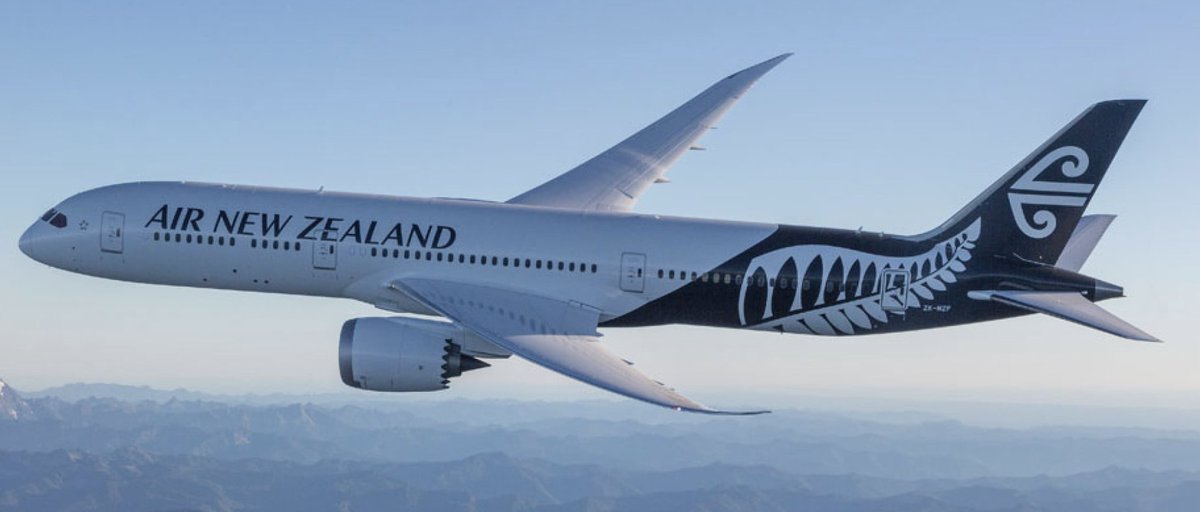
✈️🇳🇿🍎A ray of sunshine for Air New Zealand with 1st of the long awaited new B787-9s confirmed for delivery before middle of 2026. They'll be deployed on NZ2/1 AKL-JFK-AKL from 15 June (confirmed in schedule)!
⚪️It's been operating since 2022 with 275 seat B789, flying with big payload restrictions & insufficient premium seats to overcome the high unit costs
⚪️They've been bullied by Qantas entering the route, pushing loads down further; it's been surprising that they've persisted given capacity shortage
⚪️New 227 seat layout has 23 more business seats & 19 more premium economy, cutting 90 economy seats to make the space
⚪️New config will reshape the yield profile of the flight, but will it be enough? More detailed analysis on the blog in the coming days!
English
Is the reason for the low NZ load mainly the perceived (and real) value gap of the their current business class compared to QF's?
That would sort itself out over time, but flying NZ long-haul always seems to come with a premium price tag in all classes.
Maybe Kiwis finally woke up and are not will to pay that "loyalty" price tag?
English
AKL-JFK:
NZ 208 pax/flight
QF 190
JFK-AKL:
NZ 147
QF 168
Point of the lower loads on NZ is the config. Low loads with only 27 business class seats means yields are in the dustbin. That config really needs very high loads to just pay for itself. QF don't need as high a load given the larger business cabin.
English
@fjzeit @markgadala Like what - an actual camera and not some basic LiDAR thing to minimise bumping into stuff? 😂
English

@markgadala why would anybody buy a robot vacuum with internet connectivity and a camera on it?
English

This story is actually insane:
• dude drops $2000 on a DJI robot vacuum like a lunatic
• refuses to use the normal app like a peasant
• Sammy Azdoufal fires up Claude to crack the API so he can drive it with an xbox controller
• Claude delivers the goods
• pulls an auth token from their servers, connects successfully
• except the system thinks he controls 7000 vacuums
• checks again
• yep, seven thousand
• DJI built authentication with zero device ownership verification
• any valid token works for any unit on the planet
• Sammy now has eyes inside homes across 24 countries
• live vacuum camera feeds everywhere
• full floor plans from the mapping data
• some guy in germany eating cereal at 3am, unaware his roomba is snitching
• one API call away from being the most informed burglar in history
• all he wanted was to steer his vacuum with a joystick
• does the right thing and reports it
• DJI fixes it in two days
• back to normal life with his stupidly expensive floor cleaner
• IoT companies stay undefeated at shipping garbage security

English
I'll be speaking at @codecampwelly in March about building CLI tools with Dart.
Most people reach for Go or Node when they need a CLI tool. I'm going to show you why Dart is actually a good option, especially if you're already doing Flutter.
Featuring: @raygunio CLI 🚀
English