Ayaan Hossain

551 posts

Ayaan Hossain banner
Ayaan Hossain

Ayaan Hossain

@bioalgorithmist

Scientist, ML at Tessera | Algorithms for Gene Writing™ | PhD from Salis Lab at Penn State | threads/X/bsky @bioalgorithmist | Opinions are Mine Only

Boston, MA Beigetreten Nisan 2017
263 Folgt283 Follower
Angehefteter Tweet
Ayaan Hossain
Ayaan Hossain@bioalgorithmist·
Very happy to release our latest paper from @hsalis Lab in collaboration with @klavins Lab at UW on "Automated design of thousands of nonrepetitive parts for engineering stable genetic systems", now published in Nature Biotechnology! 1/18 nature.com/articles/s4158…
English
4
7
34
0
Ayaan Hossain
Ayaan Hossain@bioalgorithmist·
@anshulkundaje I think I know very little, but one thing I'm convinced about is that the truth is inevitable. It's the only thing that converges and survives, asymptomatically. Maybe something beautiful emerges when all the dust settles.
English
0
0
1
31
Ayaan Hossain
Ayaan Hossain@bioalgorithmist·
@anshulkundaje Maybe we’re moving toward trust as a new currency? When flooded with generative noise, verified high-fidelity info becomes a competitive advantage? Maybe we don't abandon AI, but use it for scale, while all claims without a verification protocol and provenance are auto discarded?
English
1
0
1
51
Anshul Kundaje
Anshul Kundaje@anshulkundaje·
Honestly feel kinda sad to see so many young scientists adopting and idolizing ultra hype culture. I think people don't really understand the medium and long term consequences to their own credibility and that of science as a whole.
English
18
32
457
40.8K
Ayaan Hossain retweetet
BURKOV
BURKOV@burkov·
Human coders know they lost, but they keep fighting with windmills because they aren't ready to accept it.
BURKOV tweet media
English
17
8
88
15.7K
Ayaan Hossain retweetet
Nature Biotechnology
Nature Biotechnology@NatureBiotech·
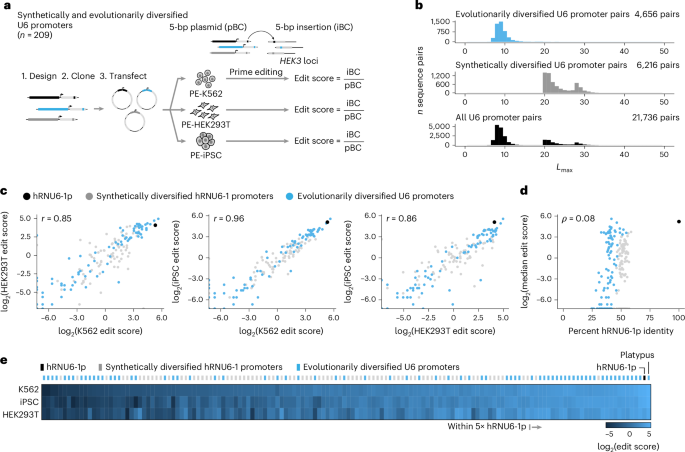
A parts list of promoters and gRNA scaffolds for mammalian genome engineering and molecular recording go.nature.com/49eTPCu
Nature Biotechnology tweet media
English
1
22
93
23.1K
Ayaan Hossain
Ayaan Hossain@bioalgorithmist·
@omarabudayyeh I wonder if the "AI might prolong the reliance on flawed theories" part is True. Could be true depending on how AI systems are designed and used?
English
0
0
0
99
Omar Abudayyeh
Omar Abudayyeh@omarabudayyeh·
This is the most decelerationist thing I've read in a while 🤦‍♂️
Arvind Narayanan@random_walker

Some aspects of AI discourse seem to come from a different planet, oblivious to basic realities on Earth. AI for science is one such area. In this new essay, @sayashk and I argue that visions of accelerating science through AI should be considered unserious if they don't confront the production-progress paradox. ========= AI leaders have predicted that it will enable dramatic scientific progress: curing cancer, doubling the human lifespan, colonizing space, and achieving a century of progress in the next decade. Given the cuts to federal funding for science in the U.S., the timing seems perfect, as AI could replace the need for a large scientific workforce. It’s a common-sense view, at least among technologists, that AI will speed science greatly as it gets adopted in every part of the scientific pipeline. But many early common-sense predictions about the impact of a new technology on an existing institution proved badly wrong. The Catholic Church welcomed the printing press as a way of solidifying its authority by printing Bibles. The early days of social media led to wide-eyed optimism about the spread of democracy worldwide following the Arab Spring. Similarly, the impact of AI on science could be counterintuitive. Even if individual scientists benefit from adopting AI, it doesn’t mean science as a whole will benefit. When thinking about the macro effects, we are dealing with a complex system with emergent properties. That system behaves in surprising ways because it is not a market. It is better than markets at some things, like rewarding truth, but worse at others, such as reacting to technological shocks. So far, on balance, AI has been an unhealthy shock to science, stretching many of its processes to the breaking point. Any serious attempt to forecast the impact of AI on science must confront the production-progress paradox. The rate of publication of scientific papers has been growing exponentially, increasing 500 fold between 1900 and 2015. But actual progress, by any available measure, has been constant or even slowing. So we must ask how AI is impacting, and will impact, the factors that have led to this disconnect. Our analysis in this essay suggests that AI is likely to worsen the gap. This may not be true in all scientific fields, and it is certainly not a foregone conclusion. By carefully and urgently taking actions such as those we suggest, it may be possible to reverse course. Unfortunately, AI companies, science funders, and policy makers all seem oblivious to what the actual bottlenecks to scientific progress are. They are simply trying to accelerate production, which is like adding lanes to a highway when the slowdown is actually caused by a toll booth. It’s sure to make things worse. Contents 1. Science has been slowing — the production-progress paradox 2. Why is progress slowing? Can AI help? 3. Science is not ready for software, let alone AI 4. AI might prolong the reliance on flawed theories 5. Human understanding remains essential 6. Implications for the future of science 7. Final thoughts Full essay (about 6,500 words) aisnakeoil.com/p/could-ai-slo…

English
2
0
5
2.1K
Jake Wintermute 🧬/acc
Jake Wintermute 🧬/acc@SynBio1·
Does anyone have a favorite protocol for gene library assembly from oligo pools? Attaching one paper as an example but I know there's a few out there. + if the protocol is clear and well documented +++ if you've tried it yourself biorxiv.org/content/10.110…
English
6
4
21
3.1K
Ayaan Hossain retweetet
Jessica Sacher, PhD
Jessica Sacher, PhD@JessicaSacher·
🧠 Why do smart scientists feel stupid when reading papers? Because nobody teaches you HOW to read them efficiently. This 3-pass system will change how you approach every paper: 🧵
English
4
31
145
14.4K
Ayaan Hossain retweetet
Nic Fishman
Nic Fishman@njwfish·
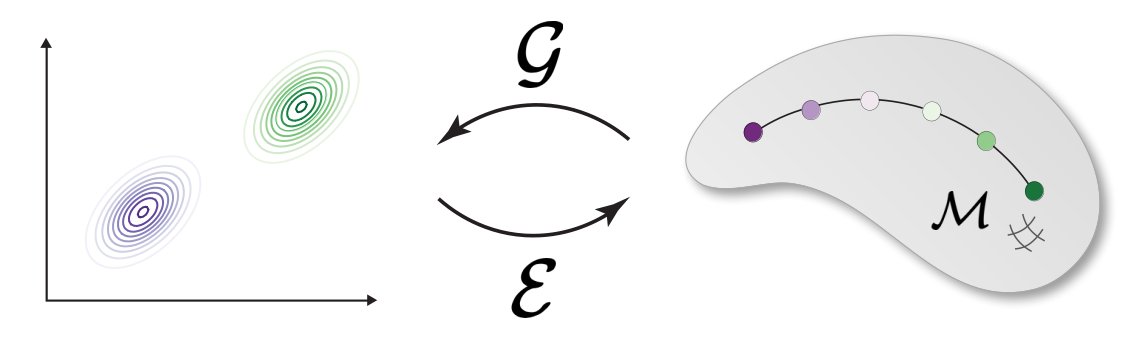
🚨 New preprint 🚨 We introduce Generative Distribution Embeddings (GDEs) — a framework for learning representations of distributions, not just datapoints. GDEs enable multiscale modeling and come with elegant statistical theory and some miraculous geometric results! 🧵
Nic Fishman tweet media
English
6
139
756
80.7K
Ayaan Hossain retweetet
Omar Abudayyeh
Omar Abudayyeh@omarabudayyeh·
New lab preprint! 🚀 Modeling complex data distributions is tough. We designed GDEs, a new framework that tackles this head-on! GDEs generalize across text, images & MANY bio apps (think virtual cells, spatial bio, viral genome tracking). Thread 👇
English
3
7
61
18.7K
Ayaan Hossain retweetet
François Chollet
François Chollet@fchollet·
If you have a solid strategy and a small amount of compute, you can go pretty far. If you have huge clusters of GPUs and no strategy, your only achievement will be burning capital.
English
33
71
831
42.3K
Ayaan Hossain retweetet
Asimov
Asimov@AsimovBio·
This is a great paper from the @hsalis lab. - Measure the decay rates of 50,000 mRNAs in bacteria. - Use biophysical models + ML to build models of mRNA stability. - Profit. And a good reminder of what's possible when one turns a biological problem into a sequencing problem!
Asimov tweet media
English
1
24
89
7.9K
Ayaan Hossain retweetet
Daniel Cetnar
Daniel Cetnar@DanielCetnar·
I am pleased to announce our latest publication ‘Predicting synthetic mRNA stability using massively parallel kinetic measurements, biophysical modeling, and machine learning’ in @NatureComms
English
1
2
4
162
Ayaan Hossain
Ayaan Hossain@bioalgorithmist·
Congratulations to co-authors @grace_vezeau and massive thanks to Prof. @hsalis for making us part of this exciting project! 🙏
English
0
0
1
91
Ayaan Hossain
Ayaan Hossain@bioalgorithmist·
We applied rational learn-by-design 🔢 methods to create a maximally informative library 📚, coupled that with high throughput, barcoded, massively parallel reporter assays to decrypt major design rules using Gradient Boosted Trees 🌳!
English
1
0
1
114
Ayaan Hossain retweetet