Mátyás Andorka

3.2K posts

Mátyás Andorka banner
Mátyás Andorka

Mátyás Andorka

@easypocus

consultant in ICM&anaesth.; POCUS: FAMUS+FUSIC supervisor, FUSIC heart, CACTUS lung mentor; regional anaesth.; airway lead; retired ATLS/ETC/ALS/GIC instructor

Redhill, England Beigetreten Kasım 2018
281 Folgt534 Follower
Mátyás Andorka
Mátyás Andorka@easypocus·
Ashley Miller@icmteaching

This is a really important Doppler physics point that influences how you interpret renal doppler signals in VExUS. What you are seeing here is not a physiological change in renal venous flow. It's a change in Doppler sensitivity. The velocity scale on colour or PW Doppler is essentially the PRF (pulse repetition frequency). When the scale is set high, the system is tuned to detect higher velocities and very slow flow may fall below the detection threshold. When that happens, the slower parts of the venous waveform simply disappear from the display. The result is that only the faster portions of the waveform are visible, which can make flow appear interrupted or pulsatile. If you progressively lower the scale, the machine becomes sensitive to lower velocities and those previously invisible parts of the waveform reappear. The same flow can therefore go from: no visible flow → interrupted flow → continuous flow purely as a function of Doppler settings, not physiology. This matters because renal venous velocities are extremely low (often just a few cm/s), so inappropriate scale settings can easily create pseudo-pulsatility. For renal venous Doppler the scale therefore needs to be reduced until low-velocity venous flow is fully visible (while avoiding noise). Only then can waveform morphology be interpreted. The important implication is that some apparent renal venous “pulsatility” may reflect machine sensitivity rather than true flow interruption. This is something that I have not seen discussed in the VExUS literature. @ThinkingCC @khaycock2 @NephroP @ArgaizR thoughts?

0
0
2
255
Mátyás Andorka retweetet
Philippe Rola
Philippe Rola@ThinkingCC·
@Turningthe_Tide But since for now, that knowledge translation is still occurring, we inherit a lot of patients where the enthusiasm has outpaced the physiology, so important to know how to de resuscitate!
English
1
1
7
158
Mátyás Andorka retweetet
Turning the Tide
Turning the Tide@Turningthe_Tide·
Fluid accumulation in ICU is clearly associated with harm. Deresuscitation is sometimes necessary once overload has occurred. But the bigger challenge is preventing unnecessary fluid accumulation in the first place. Getting the physiology right early is the real goal. That’s why we started @Turningthe_Tide doi.org/10.1007/s00134…
English
0
26
89
9.4K
Mátyás Andorka
Mátyás Andorka@easypocus·
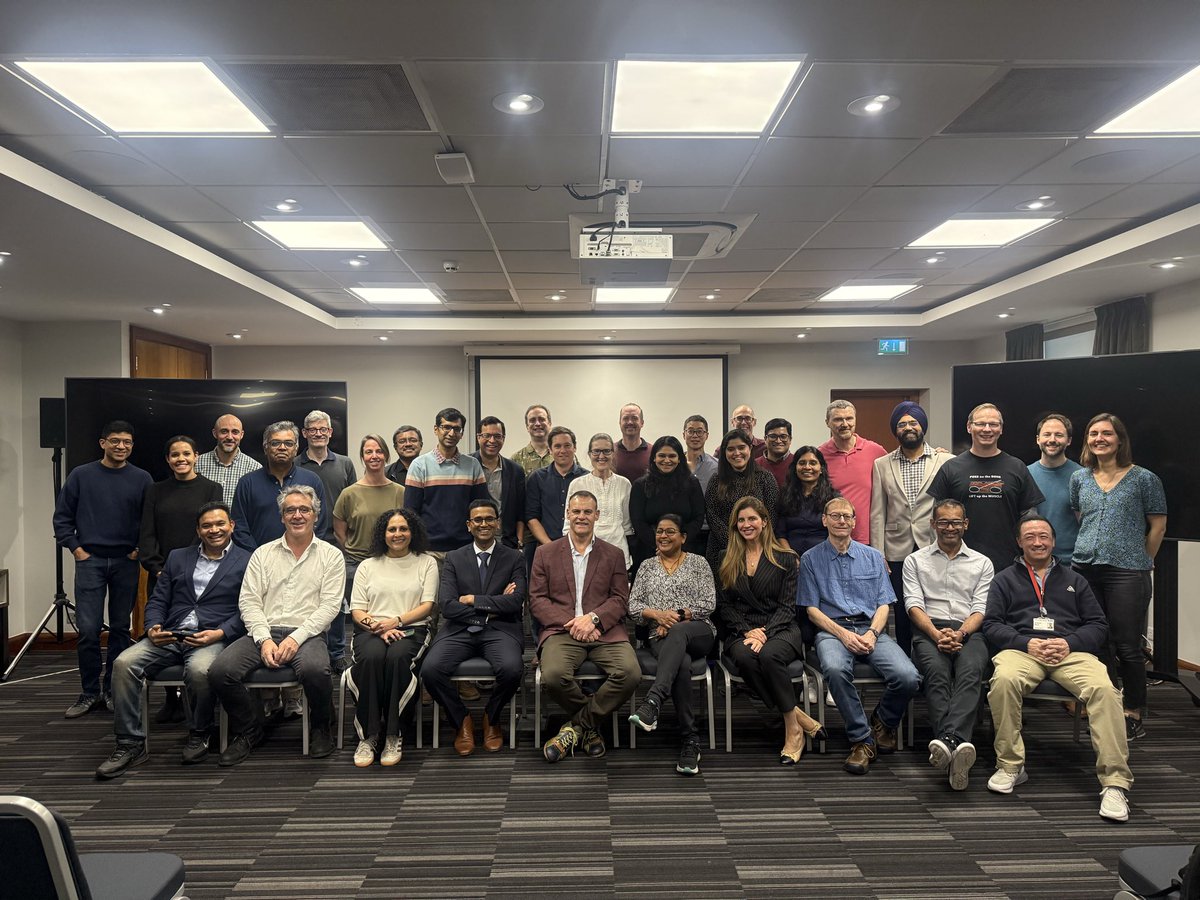
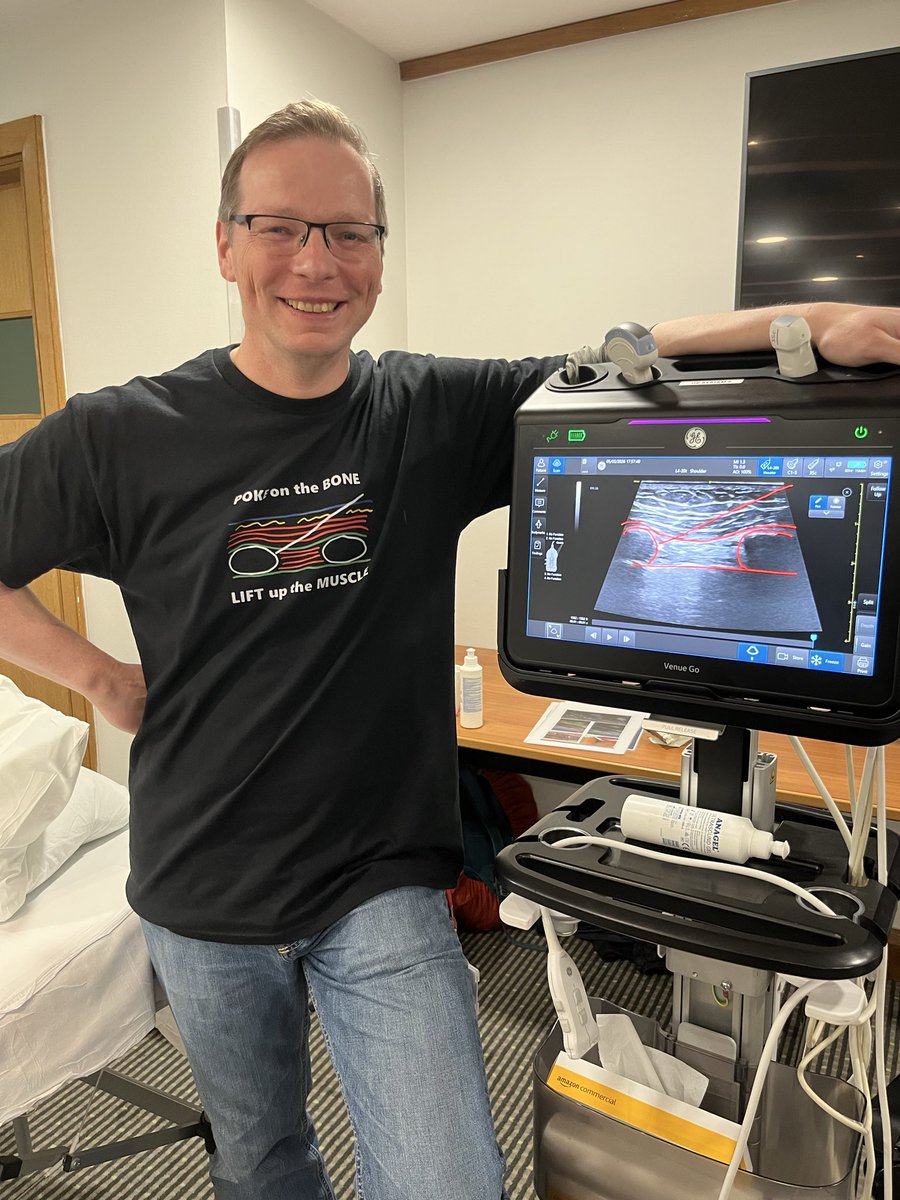
Another year, another successful @eastsurreyRA course! Thank you for the opportunity to join your faculty @drvenkatd Kept my promise from last year and made the “poke on the bone, lift up the muscle” t shirt ;)
Mátyás Andorka tweet media
Mátyás Andorka@easypocus

Great summary of how to make ESP work! I can confirm (at an anecdotal level) that this works very well - actually with all the “poke on the bone, lift up the muscle” blocks: - ESP - (deep) serratus plane - external oblique intercostal - parasternal x.com/easypocus/stat…

English
1
1
11
1K
Mátyás Andorka
Mátyás Andorka@easypocus·
Great summary of how to make ESP work! I can confirm (at an anecdotal level) that this works very well - actually with all the “poke on the bone, lift up the muscle” blocks: - ESP - (deep) serratus plane - external oblique intercostal - parasternal x.com/easypocus/stat…
Jeff Gadsden@jeffgadsden

My ESP blocks never used to work. Then we realized what we were doing wrong…. Why Your ESP Block Fails (And How To Fix It) youtu.be/KTmzwR-NziE

English
0
1
5
1.6K
Mátyás Andorka
Mátyás Andorka@easypocus·
great course indeed, highly recommended!* #BrIC * COI: happy member of the faculty
Mátyás Andorka tweet media
Hans Huitink@AirwayMxAcademy

Today we took the #BRIC course for the first time to the Royal Bournemouth Hospital UK. Bronchoscopy is a vital skill in the intensive care and acute care settings. Prof suveer singh and his faculty normally teach at location Chelsea and Westminster hospital in London. but because of high demand we have now been teaching in Manchester and in other cities. This course is designed for pulmonologists, intensivists, anaesthestists, ICU nurses and respiratory technicians. More information briccourse.com @BrICcourse @Respitudoc @AmbuEurope

English
0
1
3
1.2K
Mátyás Andorka retweetet
Difficult Airway Society (DAS)
📢 Registration is now OPEN for DAS ASM 2026! 📍 International Convention Centre Wales 📅 11–13 November 2026 Three days of airway science, practical learning and expert discussion shaping how we manage airways. If safe airway management matters to you, join us at #DAS2026 #anaesthesia #airwaymanagement
Difficult Airway Society (DAS) tweet media
English
4
6
5
726
Mátyás Andorka retweetet
Ashley Miller
Ashley Miller@icmteaching·
Coupling 🧵 The physics of circulation part 6 In the last thread we described afterload as “how hard it is for the ventricle to eject” Let’s sharpen that. Mechanically: Afterload = wall stress during ejection. But whether the ventricle is appropriately matched to the arterial load is a separate question. That relationship is called coupling.
English
4
25
53
3.9K
Mátyás Andorka retweetet
Ashley Miller
Ashley Miller@icmteaching·
Afterload 🧵 The physics of circulation part 5 Afterload is tricky to understand. It is not blood pressure. It is not SVR. It is not “how tight the arteries are.” To understand it, we need to separate three things that are routinely blurred.
English
5
34
100
10.8K
Mátyás Andorka retweetet
NephroPOCUS
NephroPOCUS@NephroP·
Looks like there is an additional chamber on this apical long axis!! #POCUS #FOAMed Very interesting #echofirst case - Loculated Pericardial Effusion: An Uncommon Cause of Left Ventricular Outflow Tract Obstruction. 🔗JACC Case Rep. 2021;3(1):128-132. doi: 10.1016/j.jaccas.2020.11.035.
NephroPOCUS tweet media
English
2
19
67
4.2K
Mátyás Andorka retweetet
Ashley Miller
Ashley Miller@icmteaching·
@NephroP 💯 This slide is in several of my talks and X posts. Autoregulation on one side of the capillary bed. Congestion on the other.
English
1
2
5
902
Mátyás Andorka retweetet
Turning the Tide
Turning the Tide@Turningthe_Tide·
Fluid overload doesn’t just cause oedema. It raises tissue pressure, collapses small vessels, and switches perfusion off. When arterioles close, flow disconnects from pressure. More fluid ≠ more perfusion. #TurningTheTide #FluidSafety
Ashley Miller@icmteaching

Critical closing pressure - how it should guide personalised care If CCP is a threshold (not a pressure), the clinical aim is simple: 👉 keep arterioles open 👉 preserve flow continuity from pump → tissue Not chase MAP or SVR in isolation. doi.org/10.3390/jpm160…

English
0
12
29
4.5K