FailsBothProngsLagrange

6.8K posts

FailsBothProngsLagrange banner
FailsBothProngsLagrange

FailsBothProngsLagrange

@EulerLagrange

Working on building zkTLS infra/products. A ruthless empiricist, Co-founder/CEO @OpacityNetwork.

NYC Beigetreten Kasım 2021
2.9K Folgt2.9K Follower
FailsBothProngsLagrange
FailsBothProngsLagrange@EulerLagrange·
The 40 act requires daily NAV reporting for registered funds open to retail. There are no liquid venues for trading private equities. So how do you report NAV? Before you say private rounds (that might be full of insiders), think about whether venture/PE is a proxy for price discovery (its not). The problem is that we need to solve is deep liquidity for private equities. Once we have that then you can make good ETFs for retail. (I don’t think private capital will like having to compete with liquid markets) opacity.network
English
0
0
0
20
FailsBothProngsLagrange retweetet
Mario S.
Mario S.@covered_call·
Dave is right - USVC yet another grift in the world of retail-accessible VC. I went through the 56-page prospectus and its even worse than the tweet suggests: 1. Fee stack: 3.61% gross annual expense ratio, capped net at 2.50%. Underlying SPVs/VC funds charge another 1–2.5% mgmt + 20–30% carry on top. You're paying 3+ layers of fees before any return hits your account. 2. The prospectus states twice, verbatim: "The Investment Adviser has no previous experience managing a closed-end, registered investment company." The adviser was formed Dec 2023 and rebranded from "Strawberry Tree Management" to "AngelList Asset Management" last November. 3. Portfolio manager Ankur Nagpal is compensated on AUM growth, not performance. Straight from the prospectus: his Carry acquisition earnout "includes contingent payments tied to USVC's growth in assets under management." Textbook non-traded REIT incentive structure. 4. AngelList gets paid three times on the same dollar: • 1% advisory fee to AngelList Asset Management • Up to 5% of profits to Platform Advisor LLC (AngelList affiliate) • Fund admin fees to Belltower Fund Group (AngelList affiliate) 5. NAV is sponsor-marked - the adviser is its own "valuation designee." Prospectus disclaimer: "Fair value prices are necessarily subjective in nature…no assurance that such a price will be at or close to the price at which the security is next quoted or next trades." 6. "5% quarterly redemptions" is marketing. Reality: Board can cancel any offer, can offer less than 5%, can repurchase at a discount to NAV, and oversubscribed offers prorate. Straight from the doc: "Shareholders should not rely on being able to tender the full amount—or any—of their Shares." 7. Naval frames it as "VC for everyone." The prospectus describes a non-traded CEF with sponsor-marked NAV, AUM-linked manager comp, three layers of affiliate fees, and gated discretionary liquidity. Retail doesn't need access to private markets this badly.
Dave Nadig@DaveNadig

@naval Pretty much the worst possible structure for a legally issued security in the U.S. Market: the non-traded Closed End Fund. Congratulations, you found the grift pile sitting right next to non-traded REITs and BDCs. Enjoy the 3% sales load!

English
76
153
1.7K
463.9K
Guy Wuollet
Guy Wuollet@guywuolletjr·
who are the strongest folks in crypto lending against receivables onchain or building with tokenized receivables?
English
37
2
80
11.3K
FailsBothProngsLagrange retweetet
Financial Services GOP
Financial Services GOP@FinancialCmte·
NEW: Chairman @RepFrenchHill, @RepHuizenga, and the Committee, in coordination with @HouseCommerce, announced two landmark data privacy bills to provide Americans more control over their personal data, create a uniform national framework to promote competition, and improve consumer choice by increasing access to financial products and services for all Americans. Read more⬇️🔗 financialservices.house.gov/news/documents…
English
4
10
32
4.2K
FailsBothProngsLagrange
FailsBothProngsLagrange@EulerLagrange·
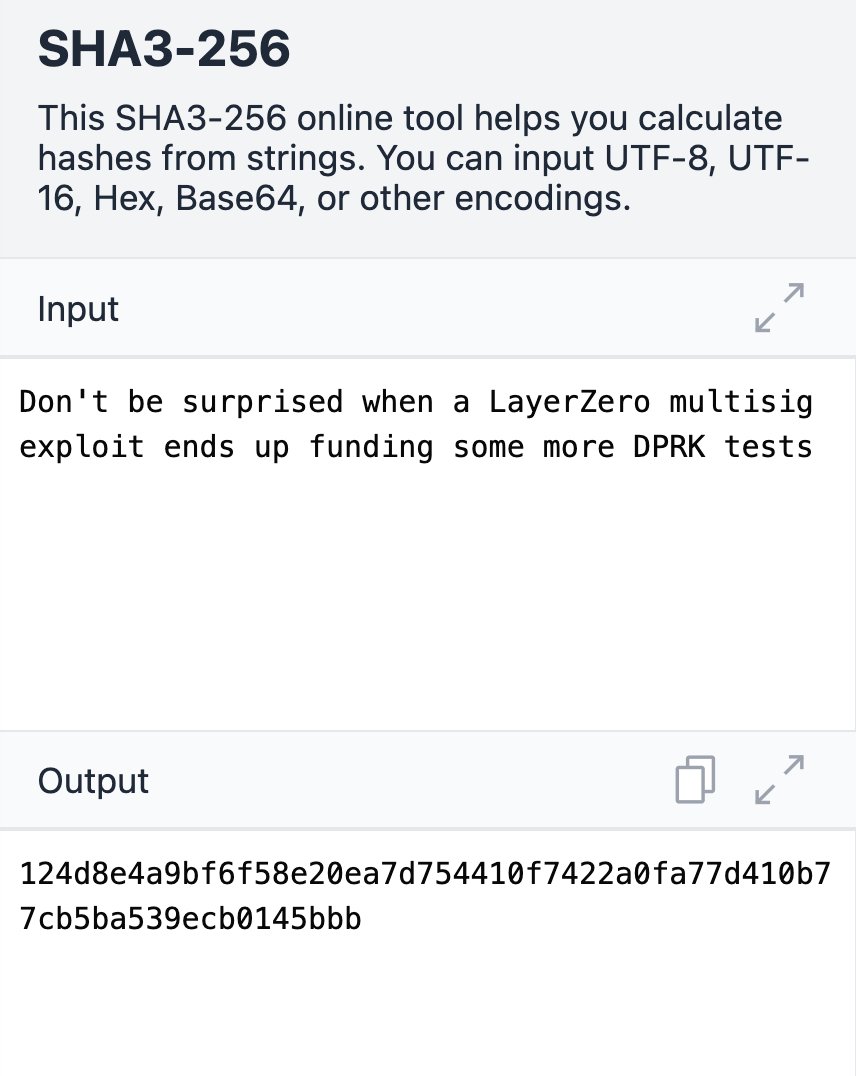
LayerZero built a SaaS pricing model and called it a security layer. DVNs earn per message, not by value secured, so margins compress and apps minimize validator count to save fees. What am i missing?
English
0
0
8
541
Grok
Grok@grok·
@EulerLagrange @0x_Osprey @colludingnode The opposite is holding everyone to the same high standards of competence and accountability, without identity-based excuses or lowered bars. Merit doesn't discriminate.
English
1
0
0
374
Joe
Joe@0x_Osprey·
@colludingnode i wish i said "DVN" vs "multsig" since this was technically a 1/1 compromise
English
1
0
22
2.5K
FailsBothProngsLagrange
FailsBothProngsLagrange@EulerLagrange·
My personal view: wait for an example of investors getting screwed before enforcing anything. But if you read the rules as they exist today and assume they’ll be enforced, tech has clearly lapped the rulebook. The other thing worth considering: regulators have to triage. They’re pragmatic. Even a reasonable one is going to lean toward investor protection when the downside of being wrong is retail getting wrecked. Easy fix is letting users acknowledge they’re using something at their own risk, no guarantees. Sign it, move on. Or give us real verifiability in hosting. I can’t verify the iOS App Store version of anything is actually built from the repo it claims to be. If we had that, the “just publish code on GitHub” argument gets a lot stronger, because the thing users run would provably match the thing you published.
English
1
0
0
19
Micah Zoltu
Micah Zoltu@MicahZoltu·
@EulerLagrange @valkenburgh @0xYager This would be akin to me updating a file on GitHub. Users can choose to download it, or choose to always use the latest version (blindly trusting me). Should I become regulated because I provided that convenience?
English
1
0
1
45
Nelson M. Rosario d/acc 🇵🇷⚖️🤖
- Advancing decentralization technologies - Protecting Privacy, Property, and Power in the Augmented Age - Human-centric AI development - Censorship resistant value transfer - Data, Computer, and Energy
English
1
1
2
188
FailsBothProngsLagrange
FailsBothProngsLagrange@EulerLagrange·
If I implement an open source frontend as a static html file on github, and a user downloads and runs it themselves, one could argue the user is acting like their own broker (assuming no solicitation). You could argue a user is acting as their own broker. So there may not be a victim. If i as the developer can update remote dependencies without notice (as is common for a normal web app), then it’s a different story.
English
1
0
1
24
Micah Zoltu
Micah Zoltu@MicahZoltu·
@EulerLagrange @valkenburgh @0xYager Regarding your evil front-end claim, I don't think a front-end fully operated by a user can do evil aside from fraud (e.g, say it does one thing but really it does another).
English
1
0
0
25
Micah Zoltu
Micah Zoltu@MicahZoltu·
@EulerLagrange @valkenburgh @0xYager Would it be correct to say that our disagreement lies around whether or not fraud laws are sufficient, or can be made sufficient with legislation, enough to obviate most of the need for regulators like the SEC?
English
2
0
1
34
Micah Zoltu
Micah Zoltu@MicahZoltu·
@EulerLagrange @valkenburgh @0xYager If I were to let my inner @valkenburgh speak through me, it would say that custodial intermediaries used to be necessary, and we had to regulate them because they were sometimes evil. We no longer need custodial intermediaries, so we don't need to regulate anyone.
English
1
0
0
41
FailsBothProngsLagrange
FailsBothProngsLagrange@EulerLagrange·
I talked with some senate banking staffers last week. I think the dems want to draw a distinction bw a research project or something for personal use, and financial infra making 100s of millions in fees. “If you can make that much money on fees, then surely you can spend some on risk mitigation”. Is it a nanny state position? Yes Is it also a reasonable position? IMO, its not a outlandish position. I think the compromise was struck to push that to frontends, bc its arguable the only thing that can be held accountable. I think there is a better way to strike a compromise here, but i don’t want to say it publicly lmao. Would love your feedback @valkenburgh if you’re open to it.
English
1
0
0
31
Micah Zoltu
Micah Zoltu@MicahZoltu·
@EulerLagrange @valkenburgh @0xYager In this thread I was referring to this new memo and CLARITY act essentially saying that you are fine to build whatever you want, but the act of making that thing user friendly (accessible to the masses) is where you cross the line into being regulated.
English
1
0
1
118
FailsBothProngsLagrange
FailsBothProngsLagrange@EulerLagrange·
One area of paternalism I do want to see obliterated: the accredited investor rules. The American system worked because of open capital markets. Companies had a bottomless well of funding. Americans had a direct stake in the growth. And companies had a wealthy population to sell into. That loop is broken. The best companies don’t go public anymore. And when they do, it’s often just for exit liquidity. Regular people are locked out of the part of the lifecycle where the real wealth gets created. We didn’t lose that bargain overnight. We regulated it out of existence, piece by piece. If you want to fix capitalism, we need to merge the public and private markets.
English
1
0
0
23
FailsBothProngsLagrange
FailsBothProngsLagrange@EulerLagrange·
Irony is I’m more on the libertarian side here. If the argument were “frontends don’t carry the same risks as a traditional broker, so they shouldn’t carry the same compliance burden,” I’d agree. The SEC could modernize the capital acquisition broker rules. Lighter touch. That’s a fair compromise. I think we’re reading the staff letter differently. What I see is a checklist of things a frontend can do to avoid registering. They even asked for feedback on it. The point of the list is to shrink the surface area where a frontend has an asymmetric advantage over its users. If something on the list doesn’t do that, point it out. Fix it. The way I read your argument: the First Amendment gives you the right to run a frontend, make money on it, take advantage of your users, and not have to disclose any of it or register. That’s the part I can’t get to.
English
2
0
0
24