jacomesandra, ANutr

1.1K posts

jacomesandra, ANutr banner
jacomesandra, ANutr

jacomesandra, ANutr

@jacomesandra

-Nutritionist, BSc (Hons), #AfN #metabolichealth / Biochemistry/Exercise and #nutrition in health and disease. #CommunityEngagement #healthyeating #jacomesandra

London Beigetreten Şubat 2011
250 Folgt180 Follower
Angehefteter Tweet
jacomesandra, ANutr
jacomesandra, ANutr@jacomesandra·
It's a great honour for me to be part of this important research! Thanks, @I_mitochondria for leading this valuable study! . . Link here👇: doi.org/10.3390/ijms24… . . #KetoSage #metabolichealth #ketosis #nutrition #hyperinsulinemia
Isabella Cooper@I_mitochondria

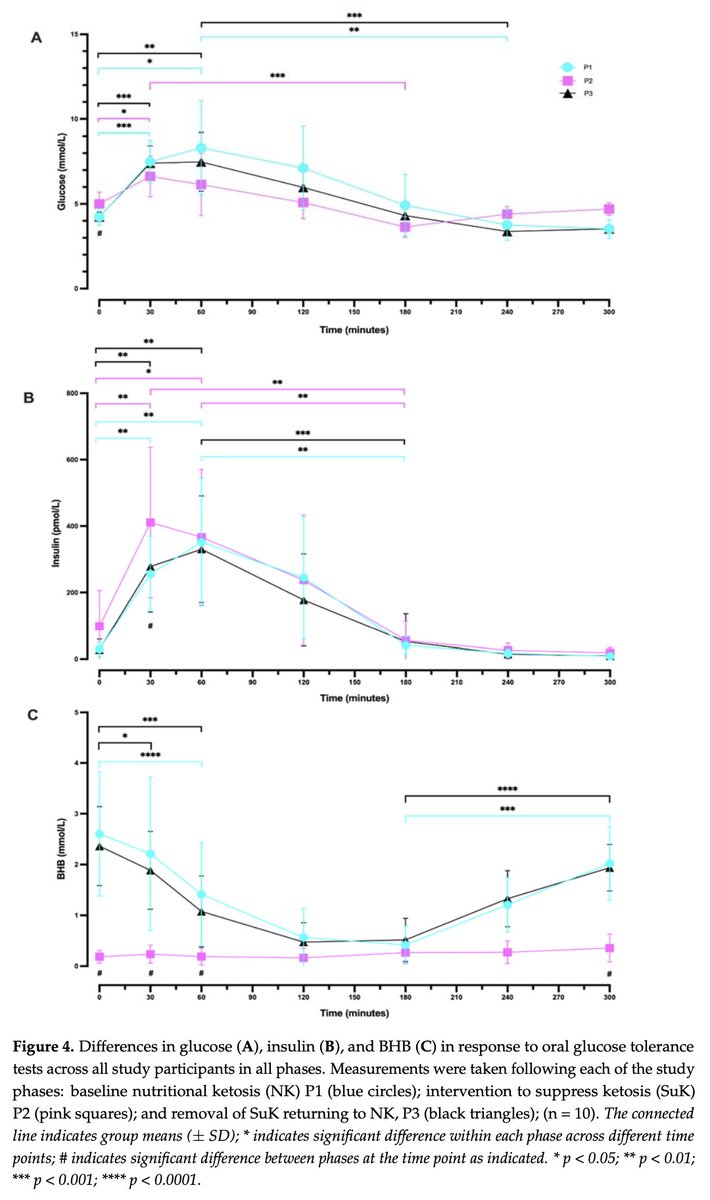
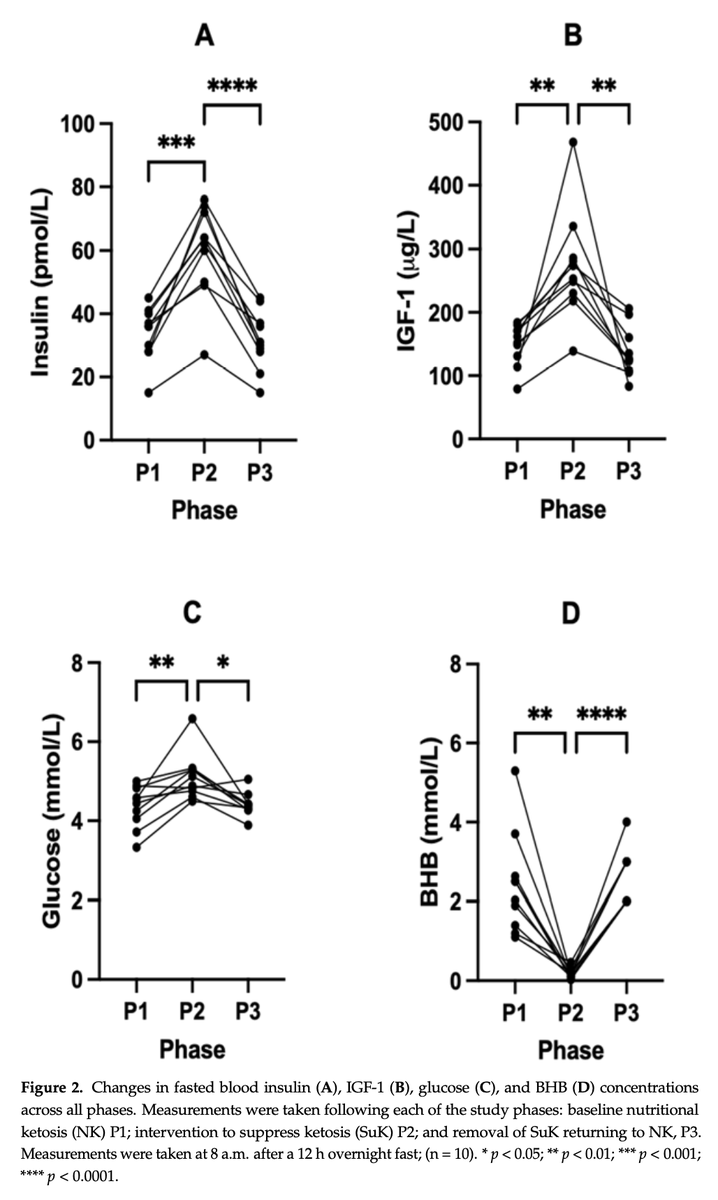
Our open-labelled, non-randomised cross-over trial is published. We studied the effects of short-term ketosis-suppression in healthy women on long-standing ketosis. Ten lean (BMI 20.5 ± 1.4), metabolically healthy, pre-menopausal women (age 32.3 ± 8.9) maintaining nutritional ketosis (NK) for > 1 year (3.9 years ± 2.3) underwent three 21-day phases: nutritional ketosis (NK; P1), suppressed ketosis (SuK; P2), and returned to NK (P3). (66 days in total with a 6 month qualifying lead in) Results: Adherence to each phase was confirmed with daily capillary BHB tests (P1 = 1.9 ± 0.7; P2 = 0.1 ± 0.1; and P3 = 1.9 ± 0.6 mmol/L). Ketosis suppression significantly increased: 👉Insulin, 1.78-fold from 33.60 (± 8.63) to 59.80 (± 14.69) mmol/L (p = 0.0002) 👉IGF1, 1.83-fold from 149.30 (± 32.96) to 273.40 (± 85.66) µg/L (p = 0.0045) 👉Glucose, 1.17-fold from 4.36 (± 0.53) to 5.12 mmol/L (± 0.59, P2; p = 0.0088) 👉Respiratory quotient, 1.09-fold 0.66 (± 0.05) to 0.72 (± 0.06; p = 0.0427) 👉PAI-1, 13.34 (± 6.85) to 16.69 (± 6.26) ng/mL (p = 0.0428). 👉VEGF, EGF, and monocyte chemotactic protein also significantly increased, indicating a pro-inflammatory shift. 👉Sustained ketosis showed no adverse health effects and may mitigate hyperinsulinemia without impairing metabolic flexibility in metabolically healthy women. Conclusions: Evolutionary evidence suggests that ancestral populations were predominantly adapted to patterns of intermittent and time-restricted feeding, as opposed to continuous nutritional intake, rich in farinaceous and sucrose carbohydrates that stimulate bolus insulin secretion. The escalating prevalence of T2DM, obesity, CVD, AD, and cancer observed in populations adhering to multiple substantial carbohydrate-dominated meals in developed nations is a testament to this. Individuals maintaining long-standing habitual NK, when subjected to 21 days of consuming carbohydrate to suppress ketosis, followed with restricting carbohydrate, reverted to an evolutionary ketotic state within one day, indicate metabolic flexibility and health. The negative changes in biomarkers associated with chronic diseases and ageing, which occur from a one-time excursion in a 1-year period of 21 consecutive days of suppressing ketosis, are rapidly restored after restoring the baseline dietary lifestyle of carbohydrate restriction which does not overstimulate insulin demand and secretion. Our data show that long-standing NK appears to provide major health benefits in the maintenance of euglycaemia, with low insulin and IGF-1, the triad of markers most strongly associated with chronic diseases and biological ageing. NK serves as a reliable surrogate marker for these parameters to understand an individual’s metabolic phenotype, and therefore risk. This study was conducted to establish a detailed metabolic phenotype biomarker profile in a long-standing healthy ketosis cohort, providing a NK control group for other studies to establish metabolic phenotypes in people with cancer, CVD, AD, T2DM, and ageing, and to assess treatment efficacy using KMT in gaining better health. Sustained NK may mitigate hyperinsulinemia without impairing metabolic flexibility and carbohydrate tolerance in metabolically healthy individuals. Maintaining low insulin requirement and IGF-1 levels through endogenous NK may offer lower chronic disease risk, resulting in benefits to both lifespan and healthspan. mdpi.com/1422-0067/24/2… Awesome co-authors: @Yvoni_Kyr @_kurtisedwards @_LucyPetagine @tnseyfried @TommyDeeMD @ascarbs @jacomesandra @AdrianSotoMota @kenbrookler @valennutrition @NovaesVanusa @Brads_science

English
0
0
3
1.2K
jacomesandra, ANutr retweetet
Isabella Cooper
Isabella Cooper@I_mitochondria·
Yes very much so. Patients are often sadly told Ketosis is dangerous and there’s no evidence it is safe. The #KetoSage trial provides a control group of healthy longstanding Ketosis (metabolic phenotype 1) people and what their biomarkers look like, which physicians and patients will be able to compare their own metabolic health and track their response to KMT for chronic diseases such as cancer, CVD, AD, PD, T2DM, NAFLD and ageing.
Tomás Duraj, MD, PhD@drtomasduraj

@I_mitochondria Congrats Isabella! :) This is an important milestone to serve as a comparative baseline for what can be achieved by long-standing nutritional ketosis in healthy adults, which will be very useful as a “goal” for patients with chronic diseases treated with KMT interventions.

English
3
7
27
2.7K
jacomesandra, ANutr retweetet
Isabella Cooper
Isabella Cooper@I_mitochondria·
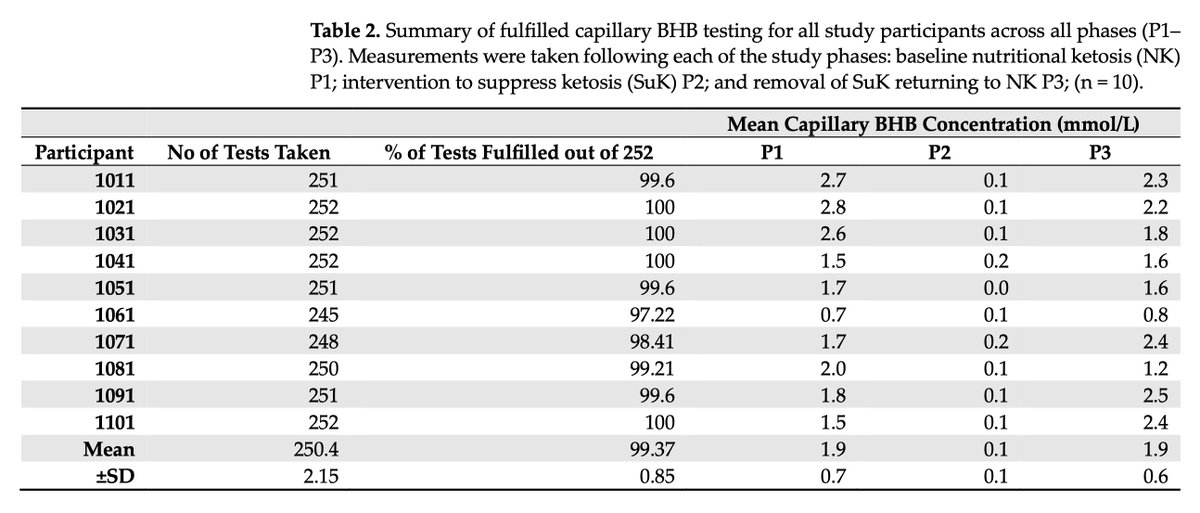
KetoSAge Trial: Adherence/compliance For the duration of the 66 days trial, participants were required to monitor their capillary glucose and ketone BHB concentrations (mmol/L) at four time points throughout the day to ascertain compliance. These time points were between: 7:30–9:30 a.m., 11:30–13:30 p.m., 15:30–17:30 p.m., 21:30–23:30 p.m 252 capillary BHB concentrations: 84 tests across each of the 21-day phases. Too many low carb/keto studies only measure morning capillary or urine BHB. Both of these are less reliable in ascertaining if participants are truly maintaining nutritional ketosis (NK), as morning readings are typically after an over night fast, where many individuals (even those with hyperinsulinaemia) may wake up with 0.3-0.5 mmol/L of BHB. This can lead to more noise in the results of studies, due to incorrectly classing participants as being in ketosis, when it is not truly known if they spend most of their 24 hour days in NK. Multiple tests, spread over the day, before consuming foods/drinks and at least 4 hours after a meal, enable confirmation that a persons lifestyle is truly supporting euketonaemia. mdpi.com/1422-0067/24/2… @Yvoni_Kyr @_kurtisedwards @_LucyPetagine @tnseyfried @TommyDeeMD @AdrianSotoMota @ascarbs @jacomesandra @kenbrookler @valennutrition @NovaesVanusa @Brads_science
Isabella Cooper tweet mediaIsabella Cooper tweet media
Isabella Cooper@I_mitochondria

Our open-labelled, non-randomised cross-over trial is published. We studied the effects of short-term ketosis-suppression in healthy women on long-standing ketosis. Ten lean (BMI 20.5 ± 1.4), metabolically healthy, pre-menopausal women (age 32.3 ± 8.9) maintaining nutritional ketosis (NK) for > 1 year (3.9 years ± 2.3) underwent three 21-day phases: nutritional ketosis (NK; P1), suppressed ketosis (SuK; P2), and returned to NK (P3). (66 days in total with a 6 month qualifying lead in) Results: Adherence to each phase was confirmed with daily capillary BHB tests (P1 = 1.9 ± 0.7; P2 = 0.1 ± 0.1; and P3 = 1.9 ± 0.6 mmol/L). Ketosis suppression significantly increased: 👉Insulin, 1.78-fold from 33.60 (± 8.63) to 59.80 (± 14.69) mmol/L (p = 0.0002) 👉IGF1, 1.83-fold from 149.30 (± 32.96) to 273.40 (± 85.66) µg/L (p = 0.0045) 👉Glucose, 1.17-fold from 4.36 (± 0.53) to 5.12 mmol/L (± 0.59, P2; p = 0.0088) 👉Respiratory quotient, 1.09-fold 0.66 (± 0.05) to 0.72 (± 0.06; p = 0.0427) 👉PAI-1, 13.34 (± 6.85) to 16.69 (± 6.26) ng/mL (p = 0.0428). 👉VEGF, EGF, and monocyte chemotactic protein also significantly increased, indicating a pro-inflammatory shift. 👉Sustained ketosis showed no adverse health effects and may mitigate hyperinsulinemia without impairing metabolic flexibility in metabolically healthy women. Conclusions: Evolutionary evidence suggests that ancestral populations were predominantly adapted to patterns of intermittent and time-restricted feeding, as opposed to continuous nutritional intake, rich in farinaceous and sucrose carbohydrates that stimulate bolus insulin secretion. The escalating prevalence of T2DM, obesity, CVD, AD, and cancer observed in populations adhering to multiple substantial carbohydrate-dominated meals in developed nations is a testament to this. Individuals maintaining long-standing habitual NK, when subjected to 21 days of consuming carbohydrate to suppress ketosis, followed with restricting carbohydrate, reverted to an evolutionary ketotic state within one day, indicate metabolic flexibility and health. The negative changes in biomarkers associated with chronic diseases and ageing, which occur from a one-time excursion in a 1-year period of 21 consecutive days of suppressing ketosis, are rapidly restored after restoring the baseline dietary lifestyle of carbohydrate restriction which does not overstimulate insulin demand and secretion. Our data show that long-standing NK appears to provide major health benefits in the maintenance of euglycaemia, with low insulin and IGF-1, the triad of markers most strongly associated with chronic diseases and biological ageing. NK serves as a reliable surrogate marker for these parameters to understand an individual’s metabolic phenotype, and therefore risk. This study was conducted to establish a detailed metabolic phenotype biomarker profile in a long-standing healthy ketosis cohort, providing a NK control group for other studies to establish metabolic phenotypes in people with cancer, CVD, AD, T2DM, and ageing, and to assess treatment efficacy using KMT in gaining better health. Sustained NK may mitigate hyperinsulinemia without impairing metabolic flexibility and carbohydrate tolerance in metabolically healthy individuals. Maintaining low insulin requirement and IGF-1 levels through endogenous NK may offer lower chronic disease risk, resulting in benefits to both lifespan and healthspan. mdpi.com/1422-0067/24/2… Awesome co-authors: @Yvoni_Kyr @_kurtisedwards @_LucyPetagine @tnseyfried @TommyDeeMD @ascarbs @jacomesandra @AdrianSotoMota @kenbrookler @valennutrition @NovaesVanusa @Brads_science

English
3
8
24
3.9K
jacomesandra, ANutr retweetet
Isabella Cooper
Isabella Cooper@I_mitochondria·
Our open-labelled, non-randomised cross-over trial is published. We studied the effects of short-term ketosis-suppression in healthy women on long-standing ketosis. Ten lean (BMI 20.5 ± 1.4), metabolically healthy, pre-menopausal women (age 32.3 ± 8.9) maintaining nutritional ketosis (NK) for > 1 year (3.9 years ± 2.3) underwent three 21-day phases: nutritional ketosis (NK; P1), suppressed ketosis (SuK; P2), and returned to NK (P3). (66 days in total with a 6 month qualifying lead in) Results: Adherence to each phase was confirmed with daily capillary BHB tests (P1 = 1.9 ± 0.7; P2 = 0.1 ± 0.1; and P3 = 1.9 ± 0.6 mmol/L). Ketosis suppression significantly increased: 👉Insulin, 1.78-fold from 33.60 (± 8.63) to 59.80 (± 14.69) mmol/L (p = 0.0002) 👉IGF1, 1.83-fold from 149.30 (± 32.96) to 273.40 (± 85.66) µg/L (p = 0.0045) 👉Glucose, 1.17-fold from 4.36 (± 0.53) to 5.12 mmol/L (± 0.59, P2; p = 0.0088) 👉Respiratory quotient, 1.09-fold 0.66 (± 0.05) to 0.72 (± 0.06; p = 0.0427) 👉PAI-1, 13.34 (± 6.85) to 16.69 (± 6.26) ng/mL (p = 0.0428). 👉VEGF, EGF, and monocyte chemotactic protein also significantly increased, indicating a pro-inflammatory shift. 👉Sustained ketosis showed no adverse health effects and may mitigate hyperinsulinemia without impairing metabolic flexibility in metabolically healthy women. Conclusions: Evolutionary evidence suggests that ancestral populations were predominantly adapted to patterns of intermittent and time-restricted feeding, as opposed to continuous nutritional intake, rich in farinaceous and sucrose carbohydrates that stimulate bolus insulin secretion. The escalating prevalence of T2DM, obesity, CVD, AD, and cancer observed in populations adhering to multiple substantial carbohydrate-dominated meals in developed nations is a testament to this. Individuals maintaining long-standing habitual NK, when subjected to 21 days of consuming carbohydrate to suppress ketosis, followed with restricting carbohydrate, reverted to an evolutionary ketotic state within one day, indicate metabolic flexibility and health. The negative changes in biomarkers associated with chronic diseases and ageing, which occur from a one-time excursion in a 1-year period of 21 consecutive days of suppressing ketosis, are rapidly restored after restoring the baseline dietary lifestyle of carbohydrate restriction which does not overstimulate insulin demand and secretion. Our data show that long-standing NK appears to provide major health benefits in the maintenance of euglycaemia, with low insulin and IGF-1, the triad of markers most strongly associated with chronic diseases and biological ageing. NK serves as a reliable surrogate marker for these parameters to understand an individual’s metabolic phenotype, and therefore risk. This study was conducted to establish a detailed metabolic phenotype biomarker profile in a long-standing healthy ketosis cohort, providing a NK control group for other studies to establish metabolic phenotypes in people with cancer, CVD, AD, T2DM, and ageing, and to assess treatment efficacy using KMT in gaining better health. Sustained NK may mitigate hyperinsulinemia without impairing metabolic flexibility and carbohydrate tolerance in metabolically healthy individuals. Maintaining low insulin requirement and IGF-1 levels through endogenous NK may offer lower chronic disease risk, resulting in benefits to both lifespan and healthspan. mdpi.com/1422-0067/24/2… Awesome co-authors: @Yvoni_Kyr @_kurtisedwards @_LucyPetagine @tnseyfried @TommyDeeMD @ascarbs @jacomesandra @AdrianSotoMota @kenbrookler @valennutrition @NovaesVanusa @Brads_science
Isabella Cooper tweet mediaIsabella Cooper tweet media
English
75
226
761
329.9K
jacomesandra, ANutr retweetet
Isabella Cooper
Isabella Cooper@I_mitochondria·
We propose a criteria for establishing metabolic phenotypes and T2DM staging The largest stage of T2DM is hyperinsulinaemia, increased levels of insulin that manages glycaemia When overt hyperglycaemia presents, an individual is already at stage 3 T2DM mdpi.com/2227-9059/9/7/…
English
3
20
43
0
jacomesandra, ANutr
jacomesandra, ANutr@jacomesandra·
Great interview, Isabella 👏! Super proud of you @I_mitochondria!!!! Your dedication and hard work is an inspiration! Thank you! #biochemistry #hyperinsulinemia #metabolichealth
Isabella Cooper@I_mitochondria

Thank you so much for having me on your podcast @SBakerMD and for giving me the chance to talk none-stop about my favourite subjects! #hyperinsulinemia #insulinresistance #VitaminD #COVID19 #mitochondria #metabolism #ketosis youtu.be/h52fTuJkA2I

English
0
0
1
0
jacomesandra, ANutr retweetet
James DiNicolantonio
James DiNicolantonio@drjamesdinic·
Sugar —> Insulin Resistance —> Salt retention —> High Blood Pressure Sugar, NOT salt, causes hypertension
English
12
181
665
0
jacomesandra, ANutr retweetet
James DiNicolantonio
James DiNicolantonio@drjamesdinic·
How to deal with sugar cravings 1.Salt 2.Dark chocolate (70% cacao) 3.Nuts 4.Mineral water 5.Chromium 6.Remove junk food from the diet 7.Just eat real food
English
15
97
482
0
Stages of Change
Stages of Change@SofC_MI·
FREE webinar this Thursday evening at 7PM (UK) on zoom. The basics of Behaviour change. If you would like a link please DM me with your Email address. Useful for both trainers and nutritionists @AfN_UK_
Stages of Change tweet media
English
43
7
42
0
DrKalpanaSurendar
DrKalpanaSurendar@drkalraj31_s·
Submitted!! the simple looking but by far the biggest scientific proposal in my career!!! SARSCoV2 🧬 🧬 5 medical institutes, 2 NGOs, 2 leaders in Global Health Care and 2 Academic institutes and 2 startups! Has been a true journey fingers crossed @UoW_Genlab @LifeSciWestmin
English
2
0
16
0