

Alex Morcos
2K posts


hey errybody please reply to this so i can see who u r kthxbye
English
Alex Morcos retweetet

We invited @dwarkesh_sp to tackle a foundational question in quant trading: What does it take to build a predictive signal from market data?
We loved showing him what makes work at HRT so fun — and why, in Marc’s words, “it occupies a lot of very smart people for years.”
English
Alex Morcos retweetet

English
Alex Morcos retweetet

Solo puedes dar RT si tu equipo sigue invicto en esta 25/26.

Español
Alex Morcos retweetet
Keeping The Faith, the first X Originals content series commissioned in the UK, documents Burnley FC’s return to the Premier League in real-time across the 2025/26 season.
English
@MrHodl I think we have a problem. @Excellion makes the hats. Maybe the need for hats can cause us all to come together!
English

@morcosa I'm requesting a "Chaincode Spy" hat. Thank you.
English
The hate on Blockstream has ended.
We are now going to focus on Chaincode labs. 😂🤣😂
Lysander@UnderCoercion
Never forget the Chaincode employees that tried to gaslight you for standing up for principles. If you don’t know who these people are, let me tell you. The bearded lady is Gloria . She is a maintainer which means that she is one of five people that can add code to Bitcoin Core. She is on staff full-time at chain code She is on staff full-time at Chaincode. The next is Sergi. He is a core developer that is on the Chaincode payroll. He has very vocal about his belief that all the new Knots Node are not real. In one breath, they will tell you that you can run any software you want and in the next, they will shame you and gaslight you if you say anything, contrary to the “party line”.
English
@MrHodl Wow. I had not read crypto twitter in a while. We really are aren’t we?
English
Chaincode labs is the new Blockstream.
Congrats @morcosa. You made it!
FractalEncrypt ∞/21M@FractalEncrypt
Very powerful painting of Chaincode Labs.
English
Alex Morcos retweetet

Please send this to whoever doesn’t think moderation in an online community is necessary.
The Bitcoin Core github org has suffered from a lack of moderation for years - killing projects and burning out contributors - and we should thank software engineers who give up their time to be moderators.
First, just imagine an online forum where technical people come to discuss Bitcoin. The community is thriving if the quality of technical discussions is high, and many people visit the site when they are curious about a technical subject. Disagreements are fine and, in fact, it’s a sign of success if people feel comfortable debating topics there.
Anyone who’s participated in any online forum knows that spam is always abundant. Clear-cut stuff is easy to hide and ban: “you’re an ugly so I will you,” “Bitcoin was sent by aliens to enslave us,” “Bitcoin was sent by God,” “you should buy my token” etc. But mods struggle when it goes beyond that.
It only takes 1-2 usernames and an LLM to fill up a thread with technical slop, drown out all the actual content, and kill intelligent discussion entirely. Nobody is obligated to stay there and continue arguing the reasonable side; they can and will leave at any time. The smart people can start their a private group chat where they don’t have to deal with OurLordSatoshisProphet9999 and SelfSovereignGovHater21, who doesn’t even know what a signed integer is.
In the Bitcoin Core repo, these threads are PRs where people review code that adds user-facing features, fixes vulnerabilities, and contributes to complex projects. These PRs are necessary as the security model, performance requirements, and testing infrastructure scales with the amount of real people’s money dependent on this software.
And the Bitcoin Core repo suffers from the exact same problem as all online forums. Year after year, projects grind to a halt because they are brigaded by a storm of people from twitter, one guy with an LLM (or is just really verbose, I can’t tell), or someone who is a technical contributor but harasses people by nacking their PRs with walls of text. In annual surveys of Bitcoin Core devs, people often name the same 3-4 trolls as the worst part of working in the repository.
It’s already difficult to get people to care about your PR. If reviewing your PR requires reading thousands of angry words and getting dragged to the whipping post on twitter, maybe I’ll just go look at one of the other 300+ PRs open to the repo. The discussion dies, the author can’t get reviewers to come back, and they have to close the PR. Maybe things cool off, 2 years later people think it’s a good time to revive it, it’s reopened, and the brigading returns. Regardless of how you feel about OP_RETURN, if it’s so easy to stop code progress, it’s a sign the community is poorly managed.
So yes, it is appropriate and important to keep discussions on topic by hiding off-topic comments, penalizing users who refuse to follow basic guidelines for discourse, and asking people to take conversations elsewhere. Additionally, we should thank the people who volunteer their time to moderate when they could be writing code. Everybody hates to do it - especially Bitcoiners - but it has to be done. And it is not fun.
Sometimes, mods can’t keep up, especially when the number of brand new commenters on a thread is higher than the number of regular contributors to the entire repository, so it needs to be locked. That’s unfortunate, but it’s the only action left when brigading gets to that volume, short of requiring permissions across the entire repo - we have discussed that idea and always feel uncomfortable with it.
I don’t think the process is perfect, but there are many false claims about what moderation actions have been taken.
I disagree that moderation of the repo is “censorship” or “attacking” Bitcoin to enforce rules of engagement within a community. The Bitcoin Core repo (again, a code collaboration platform) is far from the only place where people can discuss Bitcoin. In fact, it is *not* the appropriate place for discussions that should involve the wider ecosystem, as Bitcoin Core devs are not representative of Bitcoin. That is why PRs touching network/protocol often start with a mailing list thread. We *don’t* want the conceptual discussion to happen in a place that we moderate.
The decentralized open source repository that is Bitcoin Core means software development on hard mode. Developers put up with a lot, but they continue to work in public precisely because they believe in censorship resistance, open forums, and transparency. Let’s not punish them for their ideology by forcing them to deal with threats, harassment, and brigading while they are at work.
English
Alex Morcos retweetet

Alex Morcos retweetet

3.14159265358979323846264338327950288419716939937510582097494459230781640628620899862803482534211706798214808651328230664709384460955058223172535940812848111745028410270193852110555964462294895493038196442881097566593344612847564823378678316527120190914564856692346034861045432664

Alex Morcos retweetet

Today, Bitwise is donating $150,000 to support Bitcoin open-source developers, who work tirelessly to secure and maintain the network.
When the Bitwise Bitcoin ETF ($BITB) launched, we committed to donating 10% of its gross profits each year. We’re delighted to make good on that promise with this first annual donation.
Three fantastic non-profit organizations with established track records—@BitcoinBrink, @OpenSats, and @HRF—will allocate the funds. We’re grateful for the work they do.
Thank you to the investors who’ve chosen Bitwise and BITB among many options. This donation is made possible because of your choice. We hope you’re as proud as we are to support Bitcoin open-source developers.
As BITB grows, so too will our contribution. Bitcoin is changing the world, and Bitwise will always strive to do our part to be a good steward of this incredible ecosystem alongside you.
From all 100 of us at Bitwise, thank you.
GIF
English
Alex Morcos retweetet

Today is the day: Obscura VPN is NOW AVAILABLE!
@obscuravpn is the first VPN that:
- CAN'T log your activity by design
- Outsmarts network filters
We believe Obscura sets the standard for a new generation of VPNs, and hope you’ll check it out!
👇 Links + more in thread

English
@shocknet_justin @morcosa this is your fault. I still love you but this one is on you!
English
Almost everything James said here is just flat-out lying
jamesob@jamesob
SUNDAY BITCOIN OUTLOOK 1. Bitcoin price will continue to go up. As the world's most liquid* fixed supply** digital asset (for now), bitcoin is still underpriced and will continue to be bought up by people fluent with money. 2. Third party custodians remain the only and preferred option for most people to actually interact with bitcoin, due to (i) a poorly chosen high-level technical path (i.e. the Blockstream-style smallblock scaling meme), and (ii) a lack of any real interest from most participants in the more abstract goals of bitcoin, like circumventing the fiat monetary system. 3. Soft forks with bold scaling improvements likely can't be deployed anymore. This is not a certainty but it is my best guess. This condition has been all but cemented by ecosystem fragmentation, high degrees-of-freedom in design choice, and the entrance of large institutions who have fork leverage. 4. As a result of bitcoin's failure to preserve mass self-custody, there is now a "shot clock" on the properties I asterisked above: liquidity* (the censorship resistant kind) and the fixed supply**. As large institutions capture larger shares of stored and immobile bitcoin, fork choice clauses translate into the power to dump one side of a given fork, destroying the price of the fork and forcing profit-seeking hashrate to the other side. While this isn't a definite game-over, it creates a very uncomfortable option for governments and institutions to exert a high leverage veto over tech that will bitcoin meaningfully challenging to fiat. The idea that everyone who holds bitcoin would be voting on protocol changes indeed seems foolish, but certainly there is a point closer to that side of the spectrum than where we are heading. 5. Even if the fork choice judo isn't leveraged, traveling the path that gold did seems inevitable given the low rate of self-custody. Bitcoin could be crippled by fiat in the same way: centralized warehouses give way to rehypothecation. Some will argue that bitcoin's easy-to-validate nature will mitigate this, and that may be true. But ask yourself how much fake gold governments have to produce vs. simple rehypothecation and accounting games. 6. BCH might have actually been right about the big picture, but in the critical moment they didn't have the developer network effect or market recognition to capture bitcoin's momentum. Even if they were right, and are still right, about some major conceptual issues for bitcoin's scaling, the ship has sailed. I hope I'm wrong on this, but BCH's market share will remain fringe despite being probably the most faithful continuation of what bitcoin was actually supposed to be - in the same way that early internet pioneers thought we'd all be running easy-to-use SMTP servers, but instead we converged on the more dystopic outcome of all mostly submitting to gmail's walled garden. 7. The upside is that for now, bitcoin's rules are indeed resistant to inflation. True P2P exchanges may not have developed, LocalBitcoins might have been beaten into submission, and KYC/chainalysis may be basically winning, but at least for now the asset is still scarce. So the silver lining is that maybe we've bought some time, and those who are fiat-hostile may have been awarded some capital. 8. An under-mentioned fork necessary to scale bitcoin ownership is probably unit subdivision (as pointed out by @shocknet_justin). At the current base unit, if we hit $1 = 1 sat, the minimum transaction fee is around $200 unless some kind of out-of-band miner payment is happening. 9. As I get older, I realize that many of the problems that created the emergence of fiat money are due to upstream human systems problems, and that is where the fix really lies. Developing our relationship with (and place beneath) God, and revisiting what made the west successful in the first place, are more crucial to human flourishing than bitcoin is. Bitcoin still remains an interesting experiment and encouraging bed of possibility.
English
@matthuang @rstormsf Thanks Matt! It’s an important fight to support!
English

Paradigm will be donating $1.25M to help fund Roman Storm’s legal defense
The prosecution’s case threatens to hold software developers criminally liable for the bad acts of third parties, which would have a chilling effect in crypto and beyond
We must stand with @rstormsf
Roman Storm 🇺🇸 🌪️@rstormsf
My name is Roman Storm, and I am one of the founders of Tornado Cash, a non-custodial privacy protocol. I am being prosecuted for writing open-source code that enables private crypto transactions in a completely non-custodial manner. This prosecution represents a terrifying criminalization of privacy. The charges against me threaten to criminalize software development itself. If successful, the implications could extend far beyond the crypto industry, impacting every software developer. I face up to 45 years in prison on charges including operating an unlicensed money-transmitting business, conspiracy to commit money laundering, and sanctions evasion. This case has already had a chilling effect on developers working on software tools. Recently, a developer filed a lawsuit against the DOJ, seeking relief because my case has made them fearful of releasing new software. x.com/lewellenmichae… Additionally, there is significant confusion around the 1960 charge (operating an unlicensed money-transmitting business), as different government agencies have conflicting interpretations of the law. x.com/amandatums/sta… “This prosecution threatens to criminalize software development itself,” said Keri Axel of Waymaker LLP, my legal counsel. American entrepreneur and politician @VivekGRamaswamy commented, “You can’t go after the developers of code. What you actually need to do is go after individual bad actors who are breaking the laws that already exist.” x.com/benzingacrypto… Multiple amicus briefs have been filed in support of my defense by the DeFi Education Fund (@fund_defi), Coin Center (@coincenter), and Blockchain Association (@BlockchainAssn): defieducationfund.org/_files/ugd/84b… coincenter.org/app/uploads/20… theblockchainassociation.org/wp-content/upl… The 5th Circuit Court has already ruled that Tornado Cash sanctions were unlawful: x.com/AlexanderFishe… However, the DOJ has dismissed this ruling as irrelevant: storage.courtlistener.com/recap/gov.usco… My trial is set for April 14, 2025.
English
Alex Morcos retweetet

Today, I’m taking a stand against the Biden administration’s unjust crackdown on crypto development. I’ve filed a lawsuit against the DOJ to challenge their flawed and unjust interpretation of the law.
My work on Pharos—a non-custodial protocol for public goods fundraising—reflects the kind of innovation that many in the crypto space are striving for. It’s a tool for trustless and transparent crowdfunding, empowering users without intermediaries.
Yet developers like me are facing baseless legal risks. The DOJ’s broad interpretation of money transmission laws threatens the ability to build freely. This isn’t just about Pharos; it’s about the future of cryptocurrency innovation in America.
This lawsuit is about ensuring innovators can create without fear and that laws aren’t misused to hold back progress. For too long, the Biden administration has used a lack of clarity to scare builders away from new technology or force them to leave the USA. That needs to end.
You can read more about this lawsuit and why it's so important from @CoinCenter, who are supporting me every step of the way.
coincenter.org/coin-center-fe…
English
A recognition well deserved!
Congratulations!
The Finney Freedom Prize@FinneyPrize
NEW: The Finney Freedom Prize for the 2012-2016 era goes to Pieter Wuille and Gregory Maxwell for their contributions to Bitcoin usability, scalability, and privacy. For more info on the Prize, Hal’s story, the committee, and future prizes, visit finneyprize.org
English
Alex Morcos retweetet

🎄🎄 It's that time of year again! 🎅🎅
Time for the outgoing administration to release a civil-liberties-damaging rulemaking at the last possible moment, the midnight period before a new President of the opposite party takes office!
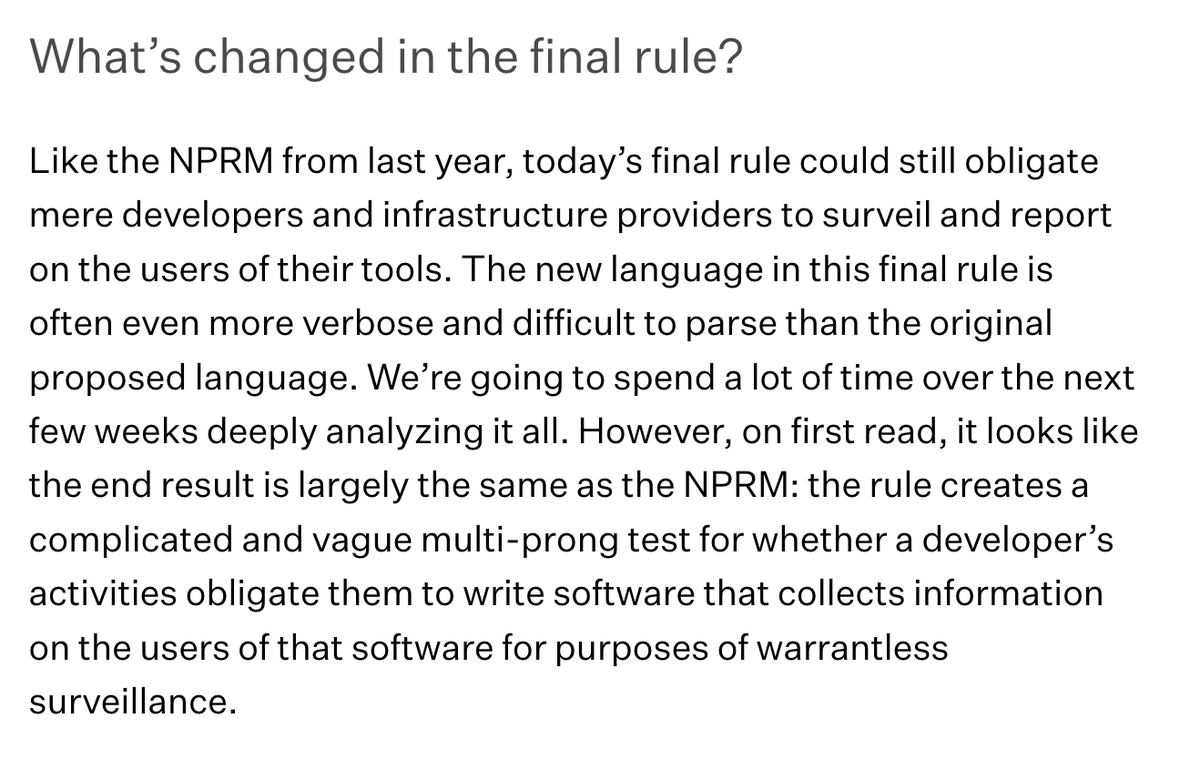
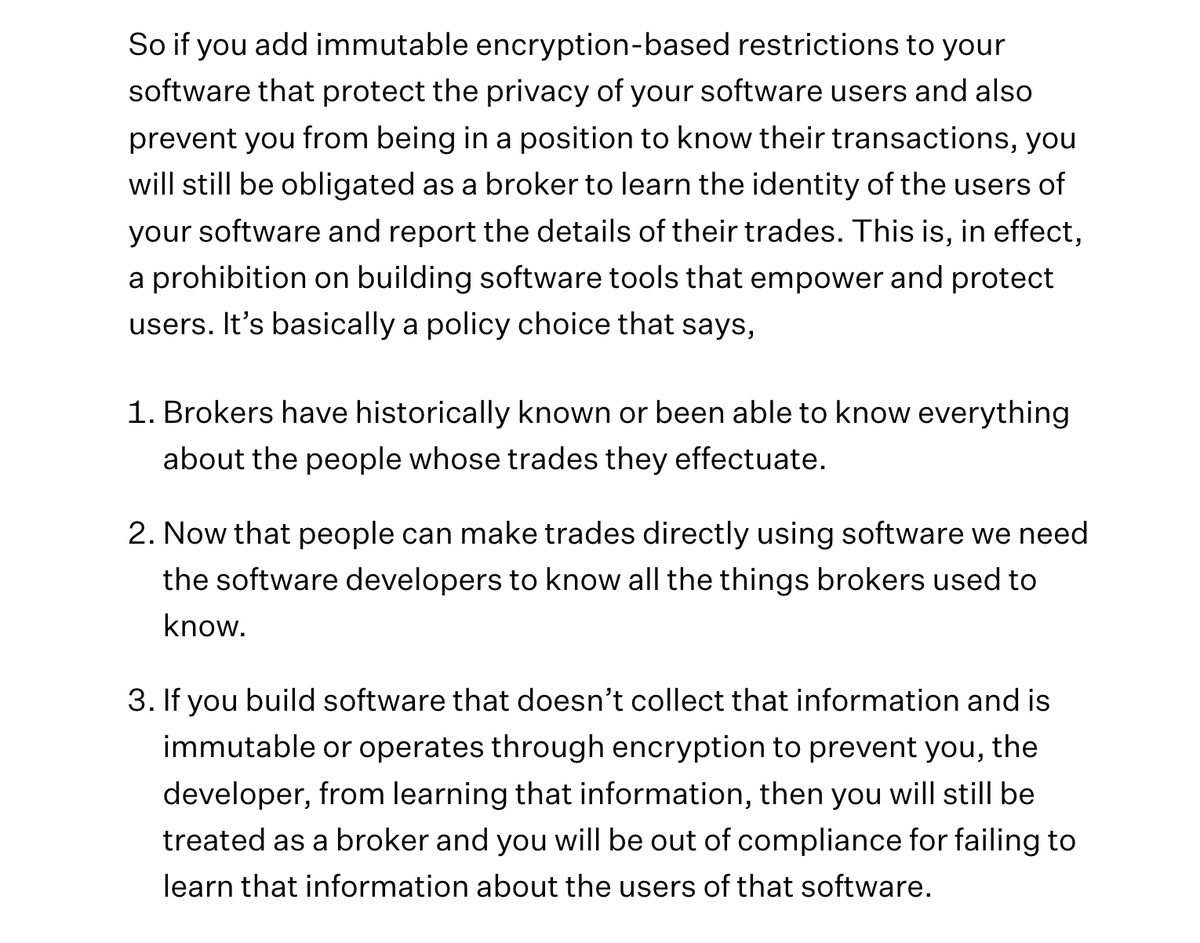
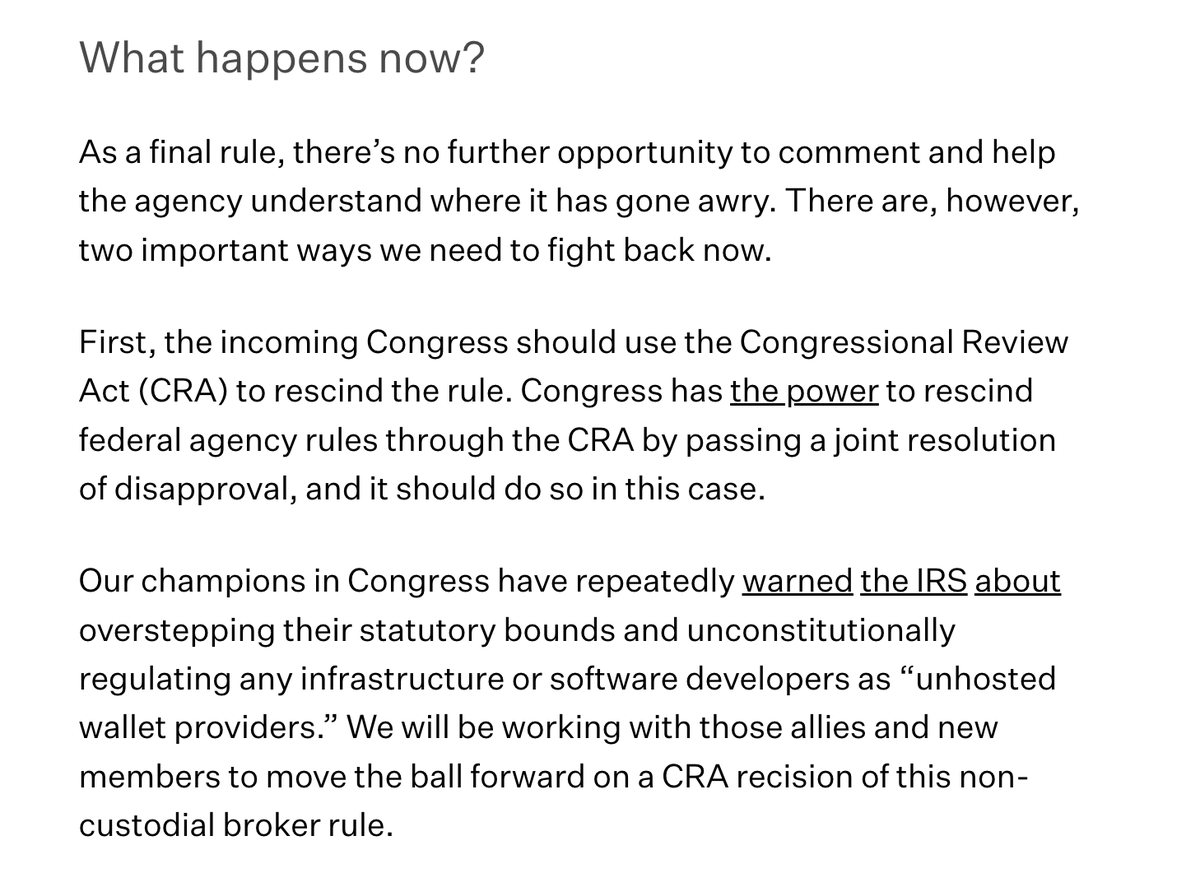
Here's our analysis of the final broker rule from the IRS that ruined my milk bread rolls while I was cooking a family christmas feast:

English
Alex Morcos retweetet

There is a very good discussion to be had about whether Bitcoin has lost its way culturally. There may be too much focus on price, focus on institutional inflow and government adoption of Bitcoin a reserve asset. Instead, maybe we have forgotten the values we had, about Bitcoin being an anti-establishment grassroots movement. Maybe we have lost focus on the idea of people using Bitcoin onchain for everyday transactions. Maybe we now lack vision.
However, blaming Bitcoin Core for this is ridiculous. Bitcoin Core developers are not the cause of these issues nor are they the corrupt power center responsible for this whatsoever. It is great that you are engaging in this cultural battle for the future of Bitcoin. Really not sure why you frame Bitcoin Core as the enemy here.
English
Alex Morcos retweetet
New Post: The changing tide in DC on crypto.
At Coin Center we're optimistic but we need to seize the moment and focus on surveillance and civil liberty issues as well as the SEC.
"It’s up to us to make it clear that being “pro-crypto” doesn’t just mean choosing friendlier agency heads or implementing pro-business regulations, it also means something deeply American: standing up for privacy and speech when it’s hardest to do so, when the national security stakes are high and the specters of crime and terrorism ever so briefly appear to eclipse our lasting virtues of liberty, privacy, and openness."
Coin Center's full analysis in the next link.

English
Alex Morcos retweetet