Nirbhai Singh

469.9K posts

Nirbhai Singh banner
Nirbhai Singh

Nirbhai Singh

@nirbhaisingh07

Indian Air Force Veteran🎖️

Gorakhpur - Trivandrum Beigetreten Şubat 2014
241 Folgt57.8K Follower
Angehefteter Tweet
Nirbhai Singh
Nirbhai Singh@nirbhaisingh07·
सुप्रभात "मित्रो" "जय माँ भारती" जय श्री कृष्णा आपका सभी का दिन सुफल और मंगलमय हो pic.twitter.com/R40sjw7WKx
हिन्दी
120
1.1K
1.1K
0
Nirbhai Singh retweetet
Yogi Adityanath
Yogi Adityanath@myogiadityanath·
बंगाल में बंगाली ही बोली जाएगी, ये कठमुल्लापन की संस्कृति यहां नहीं चलने दी जाएगी...
हिन्दी
870
3.6K
17.1K
480.2K
Nirbhai Singh retweetet
Rajnath Singh
Rajnath Singh@rajnathsingh·
शब्द नहीं शक्ति है, ‘अरिदमन’!
हिन्दी
424
3.2K
22K
1.2M
INTEL-24
INTEL-24@Tracking_Live·
“Guess this Air Force Station''👀
INTEL-24 tweet media
English
120
76
2.9K
122.6K
Shiv Aroor
Shiv Aroor@ShivAroor·
Nobody: Uttar Pradesh:
Shiv Aroor tweet media
हिन्दी
204
785
6.6K
173.8K
CBSE HQ
CBSE HQ@cbseindia29·
Important Update: Press Release issued by CBSE
CBSE HQ tweet media
English
418
358
5.2K
495.9K
Nirbhai Singh retweetet
Bhupender Yadav
Bhupender Yadav@byadavbjp·
Cheetahs cross half-century 🐆 A moment of great pride for Project Cheetah as Jwala, the Namibian Cheetah and a successful third-time mother, gave birth to five cubs today at the Kuno National Park. With this birth, the number of Indian-born thriving cubs has risen to 33, marking the 10th successful cheetah litter on Indian soil—another important milestone in India’s cheetah conservation journey. This achievement reflects the dedicated efforts, skill, and commitment of the veterinarians, field staff and all involved who continue to work tirelessly on the ground. With the arrival of these cubs, the total cheetah population in India has now reached 53. A historic and heart-warming moment for wildlife conservation. May Jwala and her cubs grow strong and race ahead, carrying India’s cheetah story to even greater heights.
Bhupender Yadav tweet media
English
73
919
4.6K
101.7K
Nirbhai Singh
Nirbhai Singh@nirbhaisingh07·
#Punch the little monkey!! A animated short film, created with #Seedance 2.0, @NanoBanana, @suno , and @ChatGPTapp . It took under 48 hours to complete and cost under $100. Made entirely by one person. Written and directed by Hashem Al-Ghaili.
English
0
0
3
165
Nirbhai Singh
Nirbhai Singh@nirbhaisingh07·
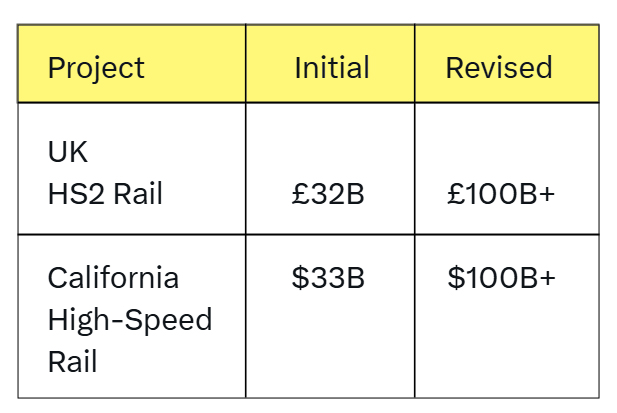
@nhsrcl This is standard practice globally in infrastructure projects. The revised estimate therefore reflects final engineering and contract pricing, not necessarily mismanagement.
Nirbhai Singh tweet media
English
0
2
44
2.1K
NHSRCL
NHSRCL@nhsrcl·
* The commentary circulating on the Mumbai–Ahmedabad High Speed Rail Project relies largely on conjecture and selective interpretation rather than verified facts. Several of the claims made are factually wrong. * ⁠Updated project cost estimates are comparable to global benchmarks. The initial estimate was prepared at a preliminary stage nearly a decade ago. As is standard practice in major infrastructure projects worldwide, costs are refined once detailed design, engineering, land acquisition and construction contracts are finalised. * ⁠India has undertaken projects of similar scale in highways, metro rail and airports where revised estimates followed detailed project reports and tendering. * ⁠The agreement between India and Japan for funding the project is comprehensive and the speculations made have no base. * ⁠The project continues to be backed by one of the most concessional sovereign loans ever extended for infrastructure, with extremely low interest and long repayment periods. * ⁠Such financing terms are precisely why the project was structured as a bilateral partnership. Assertions to the contrary appear speculative rather than factual. * ⁠It is also incorrect to state that the burden is being placed on Indian Railways. The project is implemented through the dedicated entity National High Speed Rail Corporation Limited (NHSRCL), which has its own financing structure involving the Government of India and the participating state governments. * ⁠Treating it as an operating liability of Indian Railways reflects a misunderstanding of the institutional framework. * ⁠National transport infrastructure is evaluated world over by looking at economic benefits. High-speed rail corridors generate value through time savings and productivity gains, reduction in aviation and highway congestion, regional economic development along the corridor technology transfer and domestic manufacturing capability. These wider economic multipliers are the basis on which such projects are evaluated internationally. * ⁠Ticket pricing will be affordable. The speculative numbers have no basis and are meant to mislead people. * ⁠The Mumbai–Ahmedabad High Speed Rail Project is India’s first high-speed rail corridor. Its purpose extends beyond a single route: it establishes the technological, engineering and industrial base required for future high-speed rail development in the country. * ⁠Every country that now operates high-speed rail networks began with a similar foundational investment. The socio economic benefit of high speed outweighs financial returns and this project lays the foundation of construction of High speed in the country will revolutionise transportation required for Viksit Bharat.

Congress Kerala@INCKerala

WHITE ELEPHANT MODI | As we exposed nearly two years ago, Modi’s vanity project, the Mumbai–Ahmedabad Bullet Train, has seen its cost escalate from the original ₹1.1 lakh crore to ₹1.98 lakh crore. This is when the project is half complete. The final cost could be more than 2.5 lakh Cr. The additional ₹90,000 crore burden will now be borne by Indian Railways, which is already struggling for funds. The Japanese agency JICA is not going to fund this escalation. The main attraction of JICA funding was the ultra-low 0.25% interest rate. But this extra ₹90,000 crore will now be raised as debt by the Government of India at 7–8% interest. It will take more than a century to recover the cost. The original projected ticket price between Mumbai and Ahmedabad was around ₹3,000. With costs nearly doubling while the project is only half complete, ticket prices could well touch ₹6,000–₹7,000. How many of you would actually pay that much for this ride? Bhakts, please answer and go.

English
54
562
2.2K
123.5K
Nirbhai Singh
Nirbhai Singh@nirbhaisingh07·
बुलेट ट्रेन पर सवाल उठाने वालों के लिए कुछ कड़वे तथ्य जो लोग मुंबई-अहमदाबाद हाई-स्पीड रेल प्रोजेक्ट की आलोचना कर रहे हैं, वे शायद बुनियादी अर्थशास्त्र और देश के भविष्य की जरूरतों को नजरअंदाज कर रहे हैं। यहाँ कुछ ऐसे तथ्य हैं जिन्हें झुठलाया नहीं जा सकता: 1. दुनिया का सबसे सस्ता कर्ज इस प्रोजेक्ट के लिए भारत ने Japan International Cooperation Agency (JICA) से लगभग 0.1% की ब्याज दर पर 50 साल के लिए कर्ज लिया है। बुनियादी ढांचे (Infrastructure) के इतिहास में यह अब तक के सबसे रियायती ऋणों में से एक है। इसे 'कर्ज' के बजाय 'भविष्य में निवेश' कहना अधिक सटीक होगा। 2. सिर्फ ट्रेन नहीं, एक नया 'इकोसिस्टम' यह प्रोजेक्ट केवल 508 किमी की पटरी बिछाने के बारे में नहीं है, बल्कि इसके दूरगामी लाभ हैं: एडवांस टेक्नोलॉजी: भारत को दुनिया की सबसे बेहतरीन रेल तकनीक मिल रही है। मेक इन इंडिया: इससे घरेलू विनिर्माण (Manufacturing) क्षमताओं को बढ़ावा मिल रहा है। आर्थिक कॉरिडोर: यह रूट आने वाले दशकों में व्यापार और विकास का नया केंद्र बनेगा। 3. तुलना: 2010 कॉमनवेल्थ गेम्स बनाम बुलेट ट्रेन जरा सोचिए, 2010 में कॉमनवेल्थ गेम्स (CWG) पर लगभग 👉₹70,000 करोड़ खर्च किए गए थे। CAG की रिपोर्ट ने उस वक्त खरीद-फरोख्त में भारी अनियमितताओं की पोल खोली थी। मूल्य का अंतर: 2010 के ₹70,000 करोड़ की कीमत आज के हिसाब से करीब 👉₹1.7 लाख करोड़ बैठती है। उपयोगिता: वह भारी-भरकम राशि केवल 12 दिन के खेल आयोजन के लिए फूँक दी गई थी। स्थायित्व: दूसरी ओर, बुलेट ट्रेन प्रोजेक्ट देश के लिए 100 साल का ट्रांसपोर्ट इन्फ्रास्ट्रक्चर खड़ा कर रहा है। निष्कर्ष: एक तरफ वह आयोजन था जो खत्म होते ही इतिहास बन गया, और दूसरी तरफ यह प्रोजेक्ट है जो भारत की गति और प्रगति का भविष्य लिख रहा है। जहाँ एक तरफ सिर्फ 'खर्च' था, वहीं दूसरी तरफ देश की 'मोबिलिटी' का कायाकल्प है।
NHSRCL@nhsrcl

* The commentary circulating on the Mumbai–Ahmedabad High Speed Rail Project relies largely on conjecture and selective interpretation rather than verified facts. Several of the claims made are factually wrong. * ⁠Updated project cost estimates are comparable to global benchmarks. The initial estimate was prepared at a preliminary stage nearly a decade ago. As is standard practice in major infrastructure projects worldwide, costs are refined once detailed design, engineering, land acquisition and construction contracts are finalised. * ⁠India has undertaken projects of similar scale in highways, metro rail and airports where revised estimates followed detailed project reports and tendering. * ⁠The agreement between India and Japan for funding the project is comprehensive and the speculations made have no base. * ⁠The project continues to be backed by one of the most concessional sovereign loans ever extended for infrastructure, with extremely low interest and long repayment periods. * ⁠Such financing terms are precisely why the project was structured as a bilateral partnership. Assertions to the contrary appear speculative rather than factual. * ⁠It is also incorrect to state that the burden is being placed on Indian Railways. The project is implemented through the dedicated entity National High Speed Rail Corporation Limited (NHSRCL), which has its own financing structure involving the Government of India and the participating state governments. * ⁠Treating it as an operating liability of Indian Railways reflects a misunderstanding of the institutional framework. * ⁠National transport infrastructure is evaluated world over by looking at economic benefits. High-speed rail corridors generate value through time savings and productivity gains, reduction in aviation and highway congestion, regional economic development along the corridor technology transfer and domestic manufacturing capability. These wider economic multipliers are the basis on which such projects are evaluated internationally. * ⁠Ticket pricing will be affordable. The speculative numbers have no basis and are meant to mislead people. * ⁠The Mumbai–Ahmedabad High Speed Rail Project is India’s first high-speed rail corridor. Its purpose extends beyond a single route: it establishes the technological, engineering and industrial base required for future high-speed rail development in the country. * ⁠Every country that now operates high-speed rail networks began with a similar foundational investment. The socio economic benefit of high speed outweighs financial returns and this project lays the foundation of construction of High speed in the country will revolutionise transportation required for Viksit Bharat.

हिन्दी
0
1
4
292
Nirbhai Singh retweetet
Indian Air Force
Indian Air Force@IAF_MCC·
#IAFSindoorFormation Standing shoulder to shoulder with our sister services, the Sindoor Formation on #RepublicDay2026 underscored the #IndianAirForce’s role in shaping military outcomes through precise and time-sensitive air operations. Music credits : Mahisasura Mardini Fusion by Damru #IndianAirForce #RepublicDayFlypast #RepublicDay2026 #SindoorFormation #OpSindoor @DefenceMinIndia @SpokespersonMoD @HQ_IDS_India @adgpi @indiannavy
English
236
2.6K
8.9K
358.9K
NHSRCL
NHSRCL@nhsrcl·
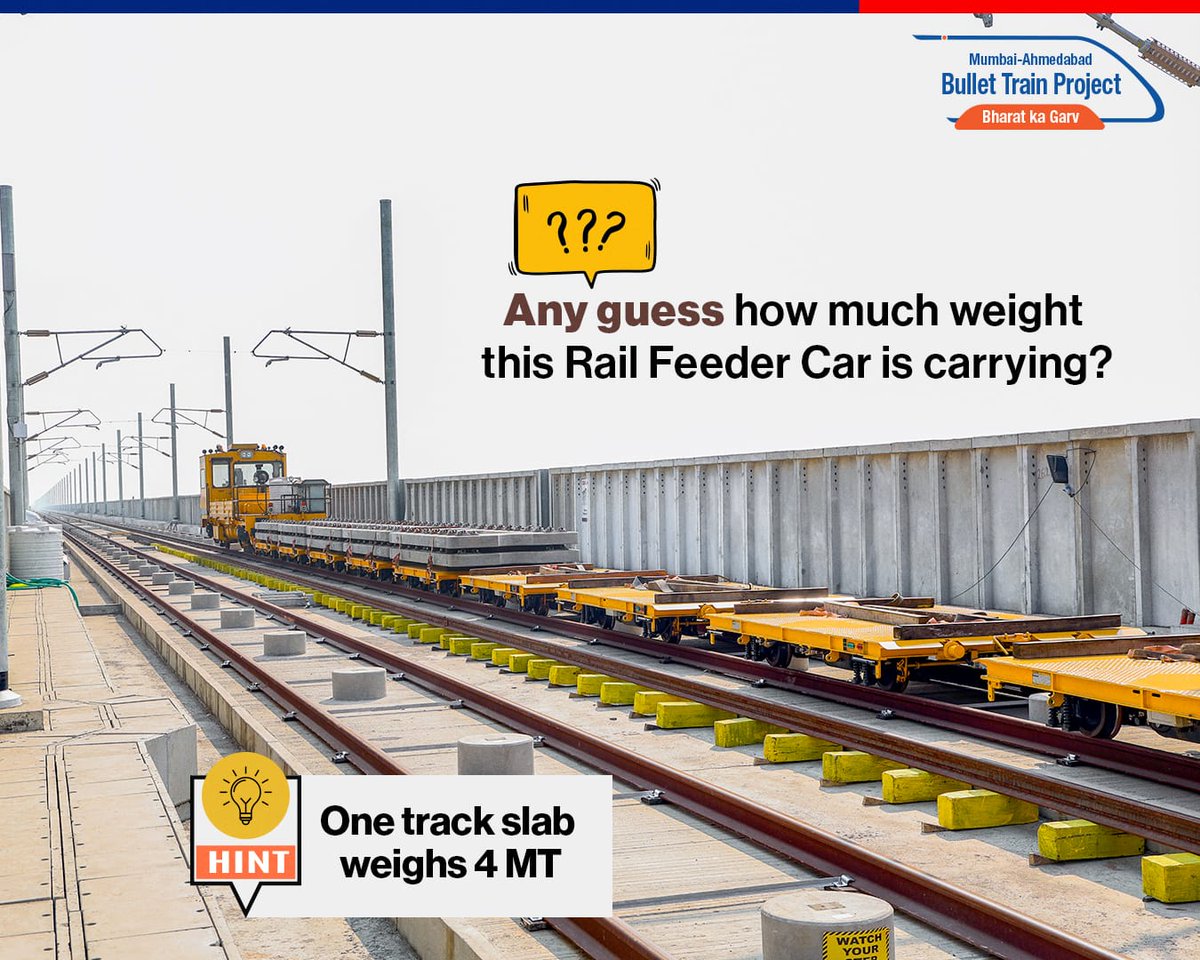
How much weight is this Rail Feeder Car carrying ? Drop your answer 👇 #BharatKaGarv
NHSRCL tweet media
English
8
11
120
3.8K
Nirbhai Singh retweetet
Nirbhai Singh
Nirbhai Singh@nirbhaisingh07·
This is next level. Respect. @adgpi🫡
English
0
1
1
147