TheUniverse

9.7K posts

TheUniverse banner
TheUniverse

TheUniverse

@pcdocjim

Bank Network Admin by day. Computer repairer/builder by night. Get a hold of me!

Greenville, Pa Beigetreten Haziran 2013
520 Folgt348 Follower
TheUniverse
TheUniverse@pcdocjim·
@HedgieMarkets Not often a post gives me an aha moment … why didn’t I think of that because makes perfect sense. Then at the same time post gives me hope when the before story only gave gloomy future ahead vibes.
English
0
0
0
214
Hedgie
Hedgie@HedgieMarkets·
🦔Nvidia's VP of applied deep learning told Axios that for his team, the cost of compute is far beyond the cost of employees. An MIT study found AI automation is economically viable in only 23% of roles where vision is a primary part of the work, meaning human labor remains cheaper in the vast majority of cases. Uber's CTO said he's back to the drawing board because his 2026 AI budget is already blown. AI software fees have increased 20% to 37% over the past year. Despite all of this, Big Tech has announced $740 billion in capital expenditures for AI this year, a 69% increase from 2025, while laying off more than 92,000 tech workers. My Take The core contradiction of the AI moment is now being stated openly by people inside the industry. Companies are cutting human workers who are cheaper than the AI replacing them, to fund AI infrastructure that isn't generating measurable productivity returns, financed by investors who are also funding the AI companies selling the tokens at prices those companies cannot sustain without continued subsidy. My honest read is that the workforce decisions being made right now are irreversible on a timeline the technology cannot meet. The entry-level pipeline being dismantled today will take a decade to rebuild. The engineers being cut to fund token budgets that exceed their salaries are the same people who would catch the failures when the AI gets it wrong. Companies are making permanent structural changes based on a cost structure that doesn't exist yet and a productivity case that by their own executives' admission hasn't materialized. At some point the distance between the bet and the reality has to close, and the people who absorbed the cost of being wrong won't be the ones who made the decision. Hedgie🤗
Hedgie tweet media
English
55
197
1K
287K
TheUniverse
TheUniverse@pcdocjim·
@Norseman1 Yeah volume people crack me up. They think I’m crazy when I tell them I don’t even use volume in my TA.
English
0
0
2
117
Norseman Market Timing
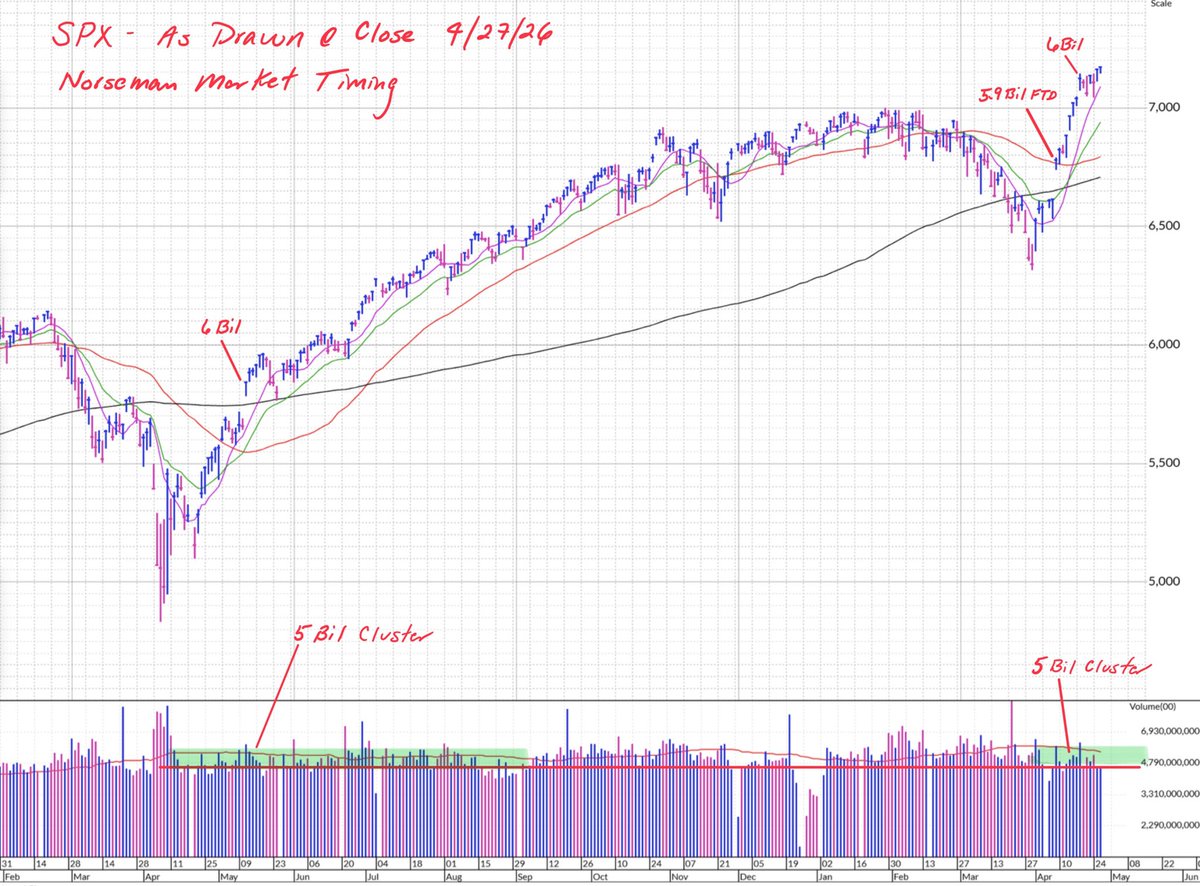
The rallying on Low Volume argument is complete bunk. Follow this at your peril! It’s argued on every rally since I’ve been involved in markets. Volume is running near average and near last year’s “V” out of the hole. No divergences on A-D Lines which is what really matters as the “liquidity” measure!
Norseman Market Timing tweet media
English
26
23
192
20.5K
TheUniverse
TheUniverse@pcdocjim·
@HealthRanger Yeah been hearing similar things or a recession is at hand for years now.
English
0
0
0
12
HealthRanger
HealthRanger@HealthRanger·
We are not awaiting a collapse; we are in its early stages. Stage One is the visible sabotage we see today, where most of the public remains oblivious or dismissive, blaming 'geopolitical conflict' or 'market forces.' The mainstream media obediently provides this cover story. Stage Two -- widespread mainstream concern over acute shortages, hyperinflation, and the realization that the system is broken -- is imminent. Based on the trajectory of fuel and food prices, this stage is likely only weeks away for North America. Stage Three is mass panic and the acceptance of a new, permanent reality. This is when people realize the abundance of the 20th century is gone, replaced by a managed decline in living standards, mobility, and personal freedom. As detailed in The Coming Storm: America's Descent into Chaos, the fragile systems underpinning our civilization are failing in a coordinated manner. The engineered energy scarcity is the trigger for this final descent.
English
187
1.8K
6.1K
190.4K
Aidan Simardone
Aidan Simardone@AidanSimardone·
I don’t like sensationalism. But when a lot of smart people are getting worried, I also getting worried Right now, a lot of smart people are saying we are heading to an energy crisis. They could be all wrong. More likely, disaster is coming
English
17
74
771
14.4K
TheUniverse
TheUniverse@pcdocjim·
@BenjaminDEKR I love how comments always direct the problem is the workers or this gen or that gen. To me this screams you are paid well, fairly, valued at your job and have no idea how it feels not to be. Not could something like that be the problem verse the worker is just lazy.
English
0
0
0
25
Benjamin De Kraker
Benjamin De Kraker@BenjaminDEKR·
Have you noticed that core competence of staff for things like hotels, gas stations, restaurants etc has fallen to the point of being almost useless? Nobody seems able to do even the basics of their jobs and this is getting worse.
English
604
221
4.5K
266.3K
TheUniverse
TheUniverse@pcdocjim·
@BenjaminDEKR I mean being paid less than livable wages with no hope of the future kind of doesn’t instill going out of your way or being happy at your job. Thats why I quit at age 48 and pivoted to trading. I saw the writing on the wall.
English
0
0
0
36
TheUniverse
TheUniverse@pcdocjim·
@davidsirota I mean to me I have never heard any of real world problems such as jobs not at least paying a living wage to start let alone one for most the whole time they work there for 10+ years. How raises don’t even keep up with COLA. How there are no jobs.
English
0
0
1
66
David Sirota
David Sirota@davidsirota·
If you need proof that you’re living inside the most powerful propaganda system in human history, consider the fact that almost nobody can afford anything & yet this is somehow not — by far — the top issue covered by the press, discussed in politics or trending on social media.
English
327
5.8K
27.9K
396.7K
TheUniverse
TheUniverse@pcdocjim·
@WhaleNoName You seriously things that’s what it was? Even so it broke out to the top so it’s invalidated.
English
1
0
0
177
NoName
NoName@WhaleNoName·
🚨 S&P 500 CORRECTION IS CLOSE This chart looks absolutely disgusting We’re seeing a perfect 5-wave broadening wedge pattern play out We just had a fake breakout at point (5) I think the GAP on Monday will surprise everyone THIS IS THE END GAME, BE READY!
NoName@WhaleNoName

🚨 STOP AND LOOK AT THE CHART 🚨 This is the dot-com bubble overlaid on today’s S&P 500 chart If this repeats, we’re not in for the easiest future Do you believe in this outcome?

English
130
171
1.2K
715.5K
TrendSpider
TrendSpider@TrendSpider·
$SPY is making new all-time highs... while nearly every single one of its largest companies is not.
TrendSpider tweet media
English
131
179
2K
373.9K
RYAN SΞAN ADAMS - rsa.eth 🦄
the pace of crypto hacks is at all time highs i think this is AI AI giving hackers dark superpowers defense has to catch up now - we're out of time
English
97
75
753
88.9K
TheUniverse
TheUniverse@pcdocjim·
@BenKizemchuk Another guy posted same thing. You guys arnt reading this correctly. It’s not rsi
English
0
0
0
30
Ben Kizemchuk
Ben Kizemchuk@BenKizemchuk·
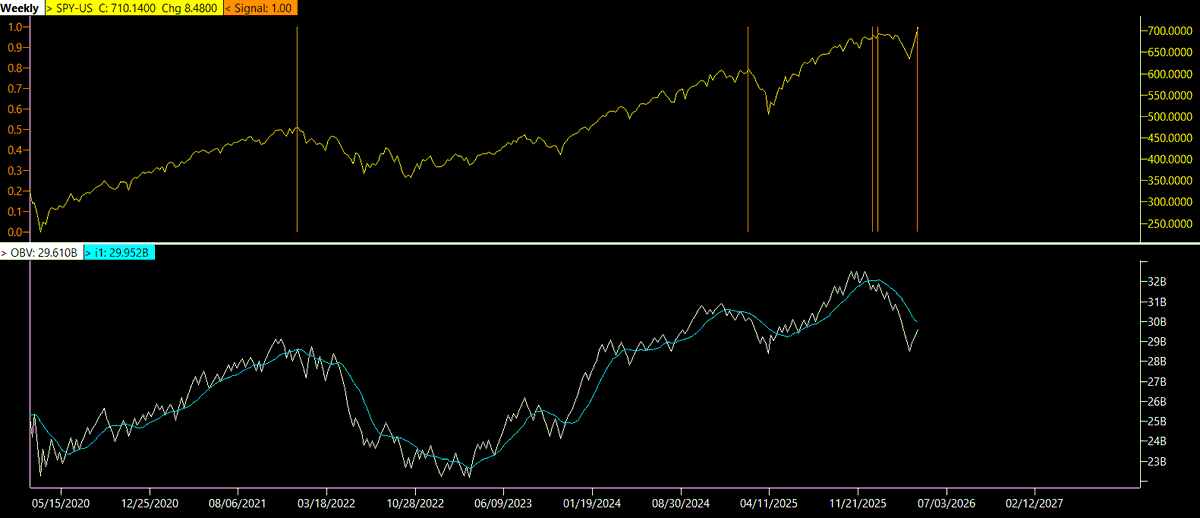
Last few times SPY made a new high while on-balance-volume did not
Ben Kizemchuk tweet media
English
13
17
133
10.8K
TheUniverse
TheUniverse@pcdocjim·
@jukan05 I’m still not convinced it’s game over for these companies. I think people are over reacting to the amount of destruction it will do to these companies before they have a chance to pivot and adjust.
English
0
0
0
54
Jukan
Jukan@jukan05·
Software will never return to the era when it commanded 50x revenue multiples… Software companies now have to fight not just for growth, but for survival itself. This is a truly great piece. You should definitely read it.
Brad Lyons@blyons151

In August I wrote a thesis I never published. The funds I was warning were key Crossover Research clients, so I stayed quiet. Since then, 𝗦𝗼𝗳𝘁𝘄𝗮𝗿𝗲 𝗺𝘂𝗹𝘁𝗶𝗽𝗹𝗲𝘀 𝗮𝗿𝗲 𝗱𝗼𝘄𝗻 𝟱𝟬%+. Salesforce $CRM, ServiceNow $NOW, Adobe $ADBE, Workday $WDAY all off 40% from highs. Thomson Reuters $TRI dropped 16% in a single session on the Anthropic legal agent launch. The SaaSpocalypse arrived. So here's the follow-up. Not commentary on what happened, but where I think this goes next. Most vertical SaaS companies aren't underperforming because their software is bad. 𝗧𝗵𝗲𝘆'𝗿𝗲 𝘂𝗻𝗱𝗲𝗿𝗽𝗲𝗿𝗳𝗼𝗿𝗺𝗶𝗻𝗴 𝗯𝗲𝗰𝗮𝘂𝘀𝗲 𝘁𝗵𝗲𝘆 𝗻𝗲𝘃𝗲𝗿 𝗯𝘂𝗶𝗹𝘁 𝘁𝗵𝗲 𝘀𝗲𝗰𝗼𝗻𝗱 𝗯𝘂𝘀𝗶𝗻𝗲𝘀𝘀. And the first business is under attack. For twenty years, one of the biggest SaaS moats was engineering complexity: deep technical talent, long roadmaps, compounding codebases that were genuinely hard to replicate. 𝗔𝗜 𝘂𝗽𝗲𝗻𝗱𝗲𝗱 𝘁𝗵𝗮𝘁 𝗮𝗹𝗺𝗼𝘀𝘁 𝗼𝘃𝗲𝗿𝗻𝗶𝗴𝗵𝘁. Product development is democratizing to operators with no code background but strong product vision. Look at Anthropic: they've built the engine and are shipping lookalike products at a cadence that would have taken a legacy SaaS vendor three years of roadmap, with a fraction of the headcount. That pace can kill legacy businesses overnight. 𝗜𝗳 𝘁𝗵𝗲 𝗲𝗻𝗴𝗶𝗻𝗲𝗲𝗿𝗶𝗻𝗴 𝗺𝗼𝗮𝘁 𝗶𝘀 𝗴𝗼𝗻𝗲, 𝗳𝗼𝘂𝗿 𝗺𝗼𝗮𝘁𝘀 𝗿𝗲𝗺𝗮𝗶𝗻: 𝗱𝗶𝘀𝘁𝗿𝗶𝗯𝘂𝘁𝗶𝗼𝗻, 𝗽𝗿𝗼𝗽𝗿𝗶𝗲𝘁𝗮𝗿𝘆 𝗱𝗮𝘁𝗮, 𝘄𝗼𝗿𝗸𝗳𝗹𝗼𝘄 𝗯𝗿𝗲𝗮𝗱𝘁𝗵, 𝗮𝗻𝗱 𝗿𝗲𝗴𝘂𝗹𝗮𝘁𝗼𝗿𝘆 𝗶𝗻𝘀𝘂𝗹𝗮𝘁𝗶𝗼𝗻. The first three are moats the company builds. The fourth is a moat the company captures, and it's the one most resistant to AI disruption. 𝗥𝗲𝗴𝘂𝗹𝗮𝘁𝗼𝗿𝘆 𝗰𝗼𝗺𝗽𝗹𝗲𝘅𝗶𝘁𝘆 𝗰𝗿𝗲𝗮𝘁𝗲𝘀 𝘀𝘄𝗶𝘁𝗰𝗵𝗶𝗻𝗴 𝗰𝗼𝘀𝘁𝘀 𝘁𝗵𝗮𝘁 𝗵𝗮𝘃𝗲 𝗻𝗼𝘁𝗵𝗶𝗻𝗴 𝘁𝗼 𝗱𝗼 𝘄𝗶𝘁𝗵 𝗽𝗿𝗼𝗱𝘂𝗰𝘁 𝗾𝘂𝗮𝗹𝗶𝘁𝘆. Once a vendor is embedded in a compliance workflow, ripping them out means re-attesting, re-auditing, and re-certifying every downstream process. The buyer isn't paying for software, they're paying for the accumulated paper trail. Tyler Technologies ($TYL) is the clearest version of the pattern. State and local government software across courts, public safety, assessment, and ERP. Every module is married to statutory process, FIPS, CJIS, audit trails, and procurement cycles that take years. TYL is down 42% TTM and 2026 guidance came in soft, but the moat didn't break. Revenue still compounded, and government procurement runs on five-year cycles, not five-week news cycles. Veeva is the sharper version. Revenue up 16% in FY26, Q4 beat, the stock still down 25%. The market is selling execution, not weakness. Guidewire in P&C insurance, where regulatory filings and rate approvals anchor the stack, sits in the same setup: still compounding ARR, still winning cloud conversions, multiple reset anyway. Same pattern across all three: multiples compressed, fundamentals intact. The moat is the regulatory surface area itself, and it compounds because the rules get more complex, not less. 𝗜 𝘄𝗮𝘀 𝗹𝗼𝗻𝗴 𝗣𝗮𝗹𝗮𝗻𝘁𝗶𝗿 𝗮𝘁 $𝟭𝟯 (read that here: x.com/blyons151/stat…). 𝗡𝗼𝘁 𝗯𝗲𝗰𝗮𝘂𝘀𝗲 𝗼𝗳 𝘁𝗵𝗲 𝗺𝗼𝗱𝗲𝗹 𝗼𝗿 𝘁𝗵𝗲 𝘁𝗼𝗼𝗹𝗶𝗻𝗴. 𝗕𝗲𝗰𝗮𝘂𝘀𝗲 𝗼𝗳 𝘁𝗵𝗲 𝗼𝗻𝘁𝗼𝗹𝗼𝗴𝘆. Palantir is the proprietary-data version of the regulatory thesis. Once Palantir sits between the customer and their own data, ripping it out means rebuilding the data model from scratch. Snowflake and Databricks never had that entrenchment layer. AIP bootcamps then turned the data moat into a distribution moat: 660 bootcamps in a single quarter, 94% y/y US customer deal growth, bookings at 1.9x sales. Own the data, ship functional AI on top of it, let the GTM compound. Every vertical incumbent has a version of this available. The question is whether they'll build it before a challenger does. But regulatory insulation is necessary, not sufficient. Plenty of vendors inside regulated verticals are still getting squeezed because they never became AI-native. BlackLine ($BL) and Trintech are feeling it in close and reconciliation as Numeric, Maximor, and Stacks build AI-native from day one. nCino ($NCNO) in banking faces the same challenge. The regulatory moat buys you time. It doesn't buy you the decade. 𝗧𝗵𝗲 𝘄𝗶𝗻𝗻𝗶𝗻𝗴 𝗳𝗼𝗿𝗺𝘂𝗹𝗮 𝗶𝘀 𝗱𝗮𝘁𝗮 𝗼𝗿 𝗿𝗲𝗴𝘂𝗹𝗮𝘁𝗼𝗿𝘆 𝘀𝘂𝗿𝗳𝗮𝗰𝗲 𝗮𝗿𝗲𝗮 𝗽𝗹𝘂𝘀 𝗳𝘂𝗻𝗰𝘁𝗶𝗼𝗻𝗮𝗹 𝗔𝗜, 𝗻𝗼𝘁 𝗼𝗻𝗲 𝗼𝗿 𝘁𝗵𝗲 𝗼𝘁𝗵𝗲𝗿. Look at why Claude is winning. Anthropic isn't competing on model benchmarks, they're competing on functional workflow. Building for the user, not the leaderboard. That's the playbook vertical incumbents need to run. Take the moat you already have, whether it's regulatory or data-entrenchment, layer genuine workflow AI on top, and the challenger can't catch you. The vendors that do both win the decade. The ones that rely on inertia alone get caught. The ones that ship AI without an anchor get commoditized. You need both. 𝗧𝗵𝗲 𝗯𝘂𝘆𝗲𝗿 𝗶𝘀 𝘁𝗲𝗹𝗹𝗶𝗻𝗴 𝘆𝗼𝘂 𝘁𝗵𝗶𝘀 𝗽𝗹𝗮𝗶𝗻𝗹𝘆. A study we ran with Battery Ventures on AI adoption in the Office of the CFO (battery.com/blog/first-cod…) surveyed 129 finance leaders at companies from $50M to $5B+ in revenue. 77% said they want to uplevel existing systems with AI from new vendors that layer onto existing systems. Only 15% want to replace their current system of record with an AI-native platform. The incumbent wins if they ship AI. The AI-native challenger wins only if the incumbent doesn't. The signal shows up in our VoC data too. In regulated verticals, mission criticality scores cluster above 9, and NPS doesn't track satisfaction, it tracks switching friction. Customers will tell you the product is mediocre and still score it 9 on "would not switch" because the compliance team vetoes any alternative. 𝗧𝗵𝗮𝘁'𝘀 𝘁𝗵𝗲 𝘀𝗶𝗴𝗻𝗮𝘁𝘂𝗿𝗲 𝗼𝗳 𝗮 𝗰𝗼𝗺𝗽𝗹𝗶𝗮𝗻𝗰𝗲-𝗶𝗻𝘀𝘂𝗹𝗮𝘁𝗲𝗱 𝘃𝗲𝗻𝗱𝗼𝗿, 𝗮𝘀 𝗹𝗼𝗻𝗴 𝗮𝘀 𝘁𝗵𝗮𝘁 𝘃𝗲𝗻𝗱𝗼𝗿 𝗶𝘀 𝗮𝗰𝘁𝗶𝘃𝗲𝗹𝘆 𝘀𝗵𝗶𝗽𝗽𝗶𝗻𝗴 𝗮𝗴𝗮𝗶𝗻𝘀𝘁 𝘁𝗵𝗲 𝗔𝗜 𝗰𝘂𝗿𝘃𝗲. Which brings us back to the second business for everyone outside the regulated or data-entrenched moat. Seat ARR got them to $100M. But with the shift to agentic workforce structures, partial human capital replacement, and pricing pressure compressing margins, the traditional SaaS model has to transform fast. The next $500M comes from monetizing the installed base: marketplace rake on demand they generate for their own customers, capital products underwritten by their own transaction data, supplier monetization, brand partnerships, group buying. The assets are already sitting there. Captive SMB audience. Proprietary transaction and behavioral data. A distribution pipe (the UI itself) that delivers new products at near-zero CAC. 𝗪𝗵𝗮𝘁'𝘀 𝗺𝗶𝘀𝘀𝗶𝗻𝗴 𝗶𝘀 𝗼𝗿𝗴𝗮𝗻𝗶𝘇𝗮𝘁𝗶𝗼𝗻𝗮𝗹 𝘄𝗶𝗹𝗹. Monetizing the installed base requires a different org than the one that got you to scale. Different GTM, P&L optics, and talent. Founders and boards under-invest because year one looks worse before it looks better, and public markets punish any SaaS multiple that starts to look like fintech or marketplace. So the second business never ships. The round prices in the optionality. The multiple compresses. The exit underwhelms. 𝗧𝗵𝗿𝗲𝗲 𝗱𝗶𝗹𝗶𝗴𝗲𝗻𝗰𝗲 𝗾𝘂𝗲𝘀𝘁𝗶𝗼𝗻𝘀 𝗻𝗼𝘁 𝗲𝗻𝗼𝘂𝗴𝗵 𝗶𝗻𝘃𝗲𝘀𝘁𝗼𝗿𝘀 𝗮𝗿𝗲 𝗮𝘀𝗸𝗶𝗻𝗴: 𝟭. 𝗪𝗵𝗮𝘁 𝗽𝗲𝗿𝗰𝗲𝗻𝘁 𝗼𝗳 𝗿𝗲𝘃𝗲𝗻𝘂𝗲 𝗰𝗼𝗺𝗲𝘀 𝗳𝗿𝗼𝗺 𝘀𝗼𝘂𝗿𝗰𝗲𝘀 𝗼𝘁𝗵𝗲𝗿 𝘁𝗵𝗮𝗻 𝘀𝘂𝗯𝘀𝗰𝗿𝗶𝗽𝘁𝗶𝗼𝗻 𝗮𝗻𝗱 𝗽𝗮𝘆𝗺𝗲𝗻𝘁 𝗽𝗿𝗼𝗰𝗲𝘀𝘀𝗶𝗻𝗴? Under 5%, they haven't started. 10 to 20%, thesis is live. Over 20%, it's working. 𝟮. 𝗛𝗼𝘄 𝗵𝗮𝗿𝗱 𝘄𝗼𝘂𝗹𝗱 𝗶𝘁 𝗯𝗲 𝘁𝗼 𝗿𝗲𝗰𝗿𝗲𝗮𝘁𝗲 𝘁𝗵𝗶𝘀 𝗰𝗼𝗺𝗽𝗮𝗻𝘆 𝗳𝗿𝗼𝗺 𝘀𝗰𝗿𝗮𝘁𝗰𝗵 𝘄𝗶𝘁𝗵 𝗔𝗜 𝘁𝗼𝗱𝗮𝘆? If a well-funded team with Claude and six engineers could rebuild the functional product in nine months, the software isn't the moat. The moat has to live somewhere else: proprietary data, a network, integrations, or regulatory surface area the challenger can't clear. If you can't point to at least one, you're underwriting a melting ice cube. 𝟯. 𝗪𝗵𝗮𝘁 𝗽𝗲𝗿𝗰𝗲𝗻𝘁 𝗼𝗳 𝘁𝗵𝗲 𝗯𝘂𝘆𝗲𝗿'𝘀 𝘀𝘁𝗶𝗰𝗸𝗶𝗻𝗲𝘀𝘀 𝗶𝘀 𝗿𝗲𝗴𝘂𝗹𝗮𝘁𝗼𝗿𝘆, 𝗮𝗻𝗱 𝘄𝗵𝗶𝗰𝗵 𝘄𝗮𝘆 𝗶𝘀 𝘁𝗵𝗲 𝗿𝘂𝗹𝗲 𝘀𝗲𝘁 𝗺𝗼𝘃𝗶𝗻𝗴? A regulatory moat evaporates if the regulation simplifies. Underwrite the direction of travel, not just the current state. 𝗔𝗻𝗱 𝘁𝗵𝗲 𝗰𝗹𝗼𝗰𝗸 𝗶𝘀 𝘁𝗶𝗴𝗵𝘁𝗲𝗿 𝘁𝗵𝗮𝗻 𝗺𝗼𝘀𝘁 𝗿𝗲𝗮𝗹𝗶𝘇𝗲. Retention in enterprise SaaS has largely been defined by the pain of systems replacement, not genuine moat. If the stickiness isn't backed by proprietary data, a harvesting flywheel, or regulatory surface area, those vendors are about to get disrupted. Pure seat-based pricing is dying unless vendors embrace agent-seat models, and LLM providers have been subsidizing the market on token cost, with recent pricing shifts signaling cash reserves aren't infinite. 𝗛𝗲𝗿𝗲'𝘀 𝘁𝗵𝗲 𝘂𝗻𝗱𝗲𝗿𝗮𝗽𝗽𝗿𝗲𝗰𝗶𝗮𝘁𝗲𝗱 𝗽𝗼𝗶𝗻𝘁: 𝗔𝗜-𝗻𝗮𝘁𝗶𝘃𝗲 𝗰𝗼𝗺𝗽𝗲𝘁𝗶𝘁𝗼𝗿𝘀 𝗵𝗮𝘃𝗲 𝘄𝗼𝗿𝘀𝗲 𝗴𝗿𝗼𝘀𝘀 𝗺𝗮𝗿𝗴𝗶𝗻𝘀 𝘁𝗵𝗮𝗻 𝗦𝗮𝗮𝗦 𝗶𝗻𝗰𝘂𝗺𝗯𝗲𝗻𝘁𝘀, 𝗻𝗼𝘁 𝗯𝗲𝘁𝘁𝗲𝗿. Inference costs haven't collapsed, and burning VC cash to subsidize unit economics is a bridge, not a business model. The incumbents should be winning on P&L. They're losing on product velocity and AI-readiness. That's a solvable problem if the board has the will to ship. Vendors without a second business, without a data moat, and without regulatory insulation will still lose, despite having better margins than their AI-native challengers. Customers switch on features and speed, not on unit economics. 𝗘𝗻𝘁𝗲𝗿𝗽𝗿𝗶𝘀𝗲 𝗮𝗻𝗱 𝗿𝗲𝗴𝘂𝗹𝗮𝘁𝗲𝗱 𝘃𝗲𝗿𝘁𝗶𝗰𝗮𝗹𝘀 𝗮𝗿𝗲 𝘁𝗵𝗲 𝗹𝗮𝘀𝘁 𝘀𝗮𝗳𝗲 𝗵𝗮𝗿𝗯𝗼𝗿, 𝗮𝗻𝗱 𝗼𝗻𝗹𝘆 𝗯𝗲𝗰𝗮𝘂𝘀𝗲 𝗼𝗳 𝗱𝗮𝘁𝗮 𝗯𝗿𝗲𝗮𝗱𝘁𝗵 𝗮𝗻𝗱 𝗰𝗼𝗺𝗽𝗹𝗶𝗮𝗻𝗰𝗲. Everywhere else, the premium is about to get competed away. Any fund underwriting vertical SaaS exposure right now should be asking the second-business question before the next check clears. DM me, email me brad@crossoverresearch.com, or let's chat about your portfolio/underwriting process (book.crossoverresearch.com). Crossoverresearch.com

English
81
191
2.6K
593.2K
TheUniverse
TheUniverse@pcdocjim·
@brettmacro I don’t think you’re using/viewing that correctly.
English
0
0
0
154
₿rett
₿rett@brettmacro·
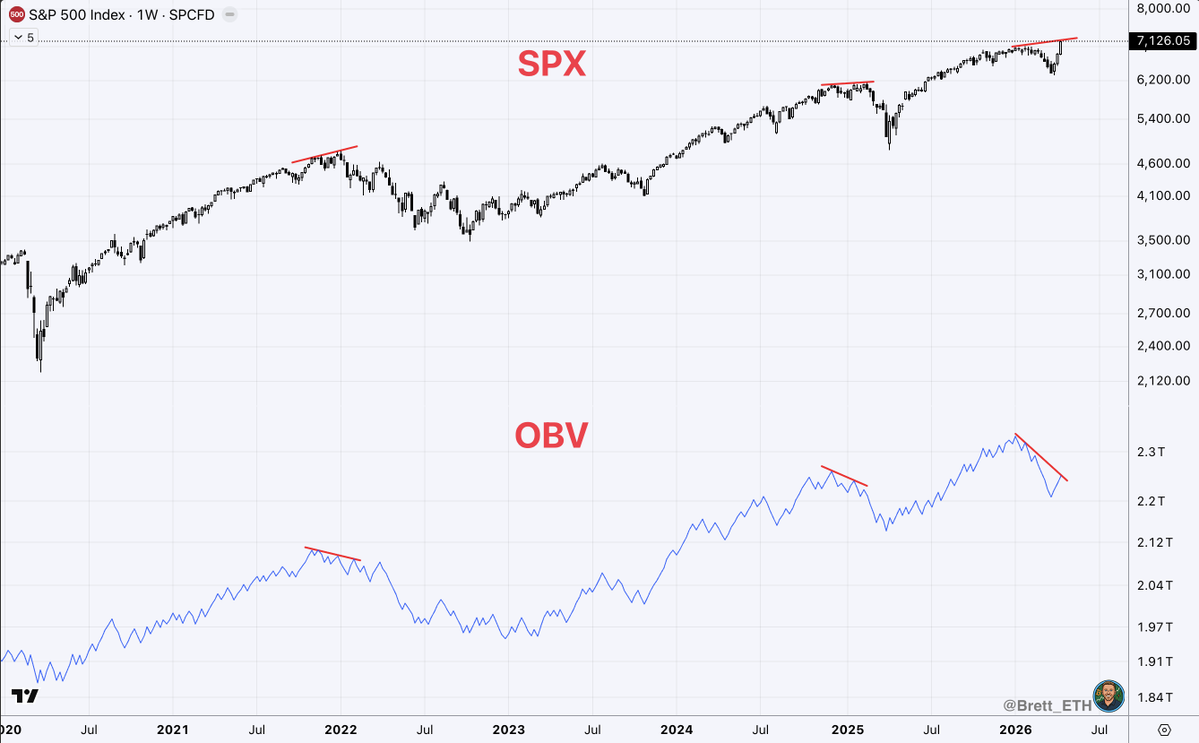
$SPX: New all time high. OBV: 3.5% below its prior peak. This is the largest divergence in 20+ years.
₿rett tweet media
English
30
55
450
47.6K
TheUniverse
TheUniverse@pcdocjim·
@ThierryBorgeat Naaa we should stay bullish thru July then your narritive can happen.
English
1
0
0
210
Thierry from arvy 🇨🇭
Thierry from arvy 🇨🇭@ThierryBorgeat·
Today is the DAY. April 17, 2026. The intermediate top before the most difficult time of the presidential cycle. THE BAD NEWS We're entering the mid-term correction phase. Historically, markets correct an average of 16% during this period. It's the weakest part of the 4-year presidential cycle. And it starts NOW. THE CHART SPX Seasonal Composite 4-Year Presidential Cycle (99 years of data): Election Year → Post-Election Year → Mid-Election Year → Pre-Election Year Red line (current cycle): Peaked April 17, 2026 Black line (historical average): Shows consistent mid-term weakness The pattern is clear. Mid-election years are brutal. THE HISTORICAL PATTERN Out of the last 20 presidential cycles, we've witnessed 19 sharp mid-term corrections. Average decline: 16% Timing: Mid-election year (Year 2 of the cycle) This is where markets reset. THE GOOD NEWS After 19 out of 19 sharp mid-term corrections, we've seen a new bull market. Duration: 2 years Phase: Pre-election year + election year (Year 3 and Year 4) This is the most bullish part of the cycle. THE SETUP We're at the top of Year 2. The correction is coming. But the 2-year bull market follows. THE MESSAGE Buy any dip in the coming months. Not now. Not at the top. But when the market corrects 10%, 15%, 20% — that's your entry. Because history says: Mid-term corrections are buying opportunities for the pre-election rally. THE PLAYBOOK 1. We're at the intermediate top (April 17, 2026) 2. Expect a 16% correction over the next 6-9 months 3. Layer in during weakness (-10%, -15%, -20%) 4. Hold through the pre-election year rally (Year 3) 5. Ride the election year momentum (Year 4) THE PATTERN NEVER FAILS 19 out of 19 times, the mid-term correction was followed by a 2-year bull market. That's 100%. THE LESSON Don't panic during the correction. Don't fight the cycle. Buy the dip. Hold for 2 years. That's the presidential cycle playbook. Today is the DAY. The top is in. The correction starts now. The opportunity is coming.
Thierry from arvy 🇨🇭 tweet media
English
73
152
952
580.4K
TheUniverse
TheUniverse@pcdocjim·
@Mr_Derivatives Funny I always see these types of charts when they are indicating a bearish period is about to hit. I use fibs and some ew. I also use patterns. But I don’t think Wyckoff is usually for predicting the way these people try to show it.
English
0
0
0
35
TheUniverse
TheUniverse@pcdocjim·
@SethAbramson Yup. An ai generated fake war with a bad storyline that is also allowing Trump insiders to place masssive bets before his tweets everytime and no one can stop it nor seems to care.
English
0
0
0
21
Seth Abramson
Seth Abramson@SethAbramson·
Anyone else getting the sense that Trump is colluding with energy market robber barons to screw every last one of the rest of us? Anyone else starting to feel like the Second Iran War is a grift to enrich domestic and foreign billionaires at the expense of America's middle class?
English
477
2.9K
10.7K
108.3K
TheUniverse
TheUniverse@pcdocjim·
@GregorianCharts Wizard of oz it is. I mean Trump is our president so if that can happen so can our visit to the land of make believe.
English
0
0
0
167
Gregorian Charts
Gregorian Charts@GregorianCharts·
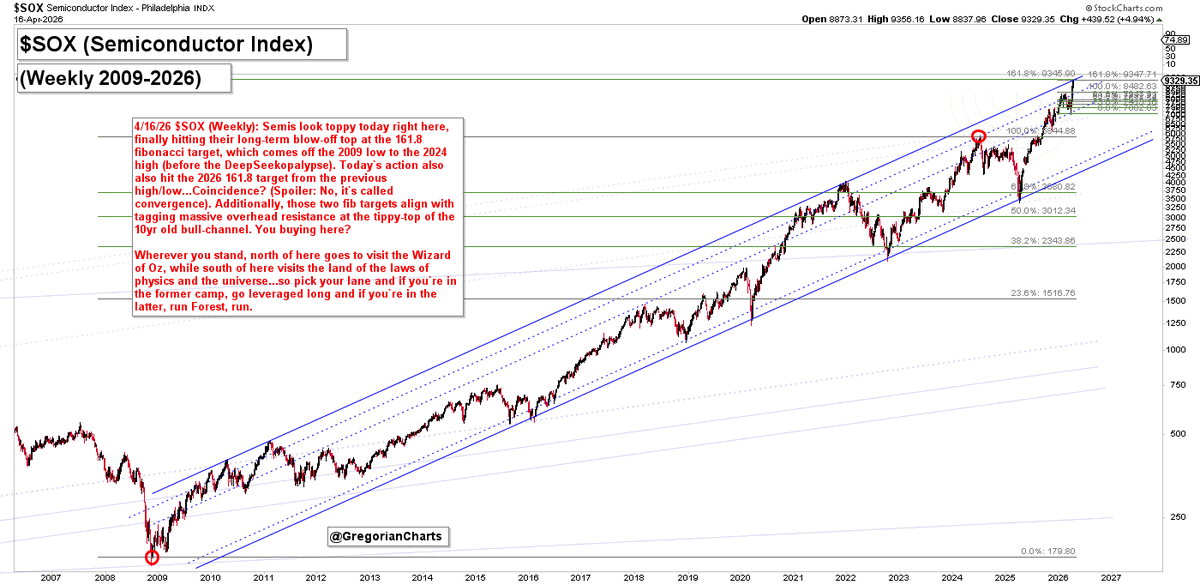
$SOX (Weekly): Semis look toppy right here, finally hitting their long-term blow-off top at the 161.8 fibonacci target, which comes off the 2009 low to the 2024 high (before the DeepSeekopalypse). Today's action also also hit the 2026 161.8 target from the previous high/low...Coincidence? (Spoiler: No, it's called convergence). Additionally, those two fib targets align with tagging massive overhead resistance at the tippy-top of the 10yr old bull-channel. You buying here? Wherever you stand, north of here goes to visit the Wizard of Oz, while south of here visits the land of the laws of physics and the universe...so pick your lane and if you're in the former camp, go leveraged long and if you're in the latter, run Forest, run.
Gregorian Charts tweet media
English
17
27
176
16.2K
TheUniverse
TheUniverse@pcdocjim·
@satyanadella Residents describe it as audible 24/7, even inside homes with windows closed, and compare it to a ringing in the ears or a fan noise that does not stop.
English
0
0
1
57
Satya Nadella
Satya Nadella@satyanadella·
Our Fairwater datacenter in Wisconsin is going live, ahead of schedule. As the world’s most powerful AI datacenter, it will bring together hundreds of thousands of GB200s into a single seamless cluster. Congrats to all the teams who made this possible!
Satya Nadella@satyanadella

If intelligence is the log of compute… it starts with a lot of compute! And that’s why we’re scaling our GPU fleet faster than anyone else. Just last year, we added over 2 gigawatts of new capacity – roughly the output of 2 nuclear power plants. And today we’re going further, announcing the world's most powerful AI datacenter, located in southeastern Wisconsin. Fairwater is a seamless cluster of hundreds of thousands of NVIDIA GB200s, connected by enough fiber to circle the Earth 4.5 times. It will deliver 10x the performance of the world’s fastest supercomputer today, enabling AI training and inference workloads at a level never before seen. For AI training workloads, you need compute at exponential scale. That’s why we designed the datacenter, GPU fleet, and network together as one integrated system. This ensures a single job can run from day 1 at exponential scale across thousands of GPUs. Fairwater uses a liquid-cooled closed-loop system for cooling GPUs that requires zero water for operations after construction. And we’re matching all of the energy that is consumed with renewable sources. And of course, it is just one of several similar sites we’re lighting up across our 70+ regions. We have multiple identical Fairwater datacenters under construction in other locations across the US, in addition to our AI infrastructure already deployed in over 100 datacenters around the world, powering model training, test-time compute, RL tuning, and real-time inference at global scale. Too often during times like this, people go with the current and only later wonder, how did we get here? With Fairwater, we're charting a new path: doing the hard engineering work, bringing compute, network, and storage into one highly scaled cluster, and designing closed-loop energy systems to meet real-world computing needs. And partnering with local communities to ensure it's thoughtfully done in a way that is sustainable, creates new jobs, and expands opportunity. We are thrilled to see this take hold in Wisconsin, and we are just getting started.

English
335
458
3.9K
660.7K
TheUniverse
TheUniverse@pcdocjim·
@Mr_Derivatives I’m thinking we have to get closer to 7500 before we can have that correction.
English
0
0
0
31
Heisenberg
Heisenberg@Mr_Derivatives·
🚨 Just in today. Tom Lee who accurately called for ATH’s this month, reiterates we will see 7,300 on the $SPX in the near term then we might see a 15-20% drawdown after, before a Q4 rally back to ATH’s at 7,700 to close the year. So timeline looks something like this: 7,300 (Q2) ➡️ 5,840-6,205 (Q3) ➡️ 7,700 (Q4)
English
283
201
2.6K
367.1K