𓆩𝕋𓆪

5.7K posts

𓆩𝕋𓆪 banner
𓆩𝕋𓆪

𓆩𝕋𓆪

@spacejunnk

Steward @LayerZero_Core • @genlayer • @ritualnet

Beigetreten Kasım 2023
1.8K Folgt1.9K Follower
Angehefteter Tweet
𓆩𝕋𓆪
𓆩𝕋𓆪@spacejunnk·
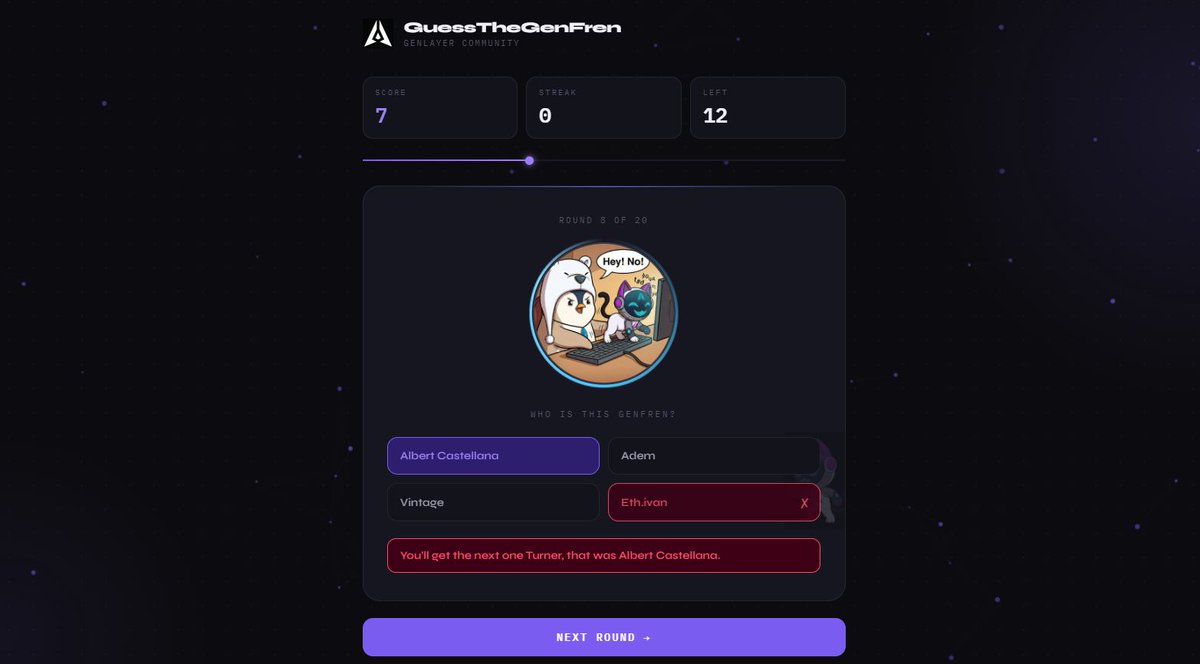
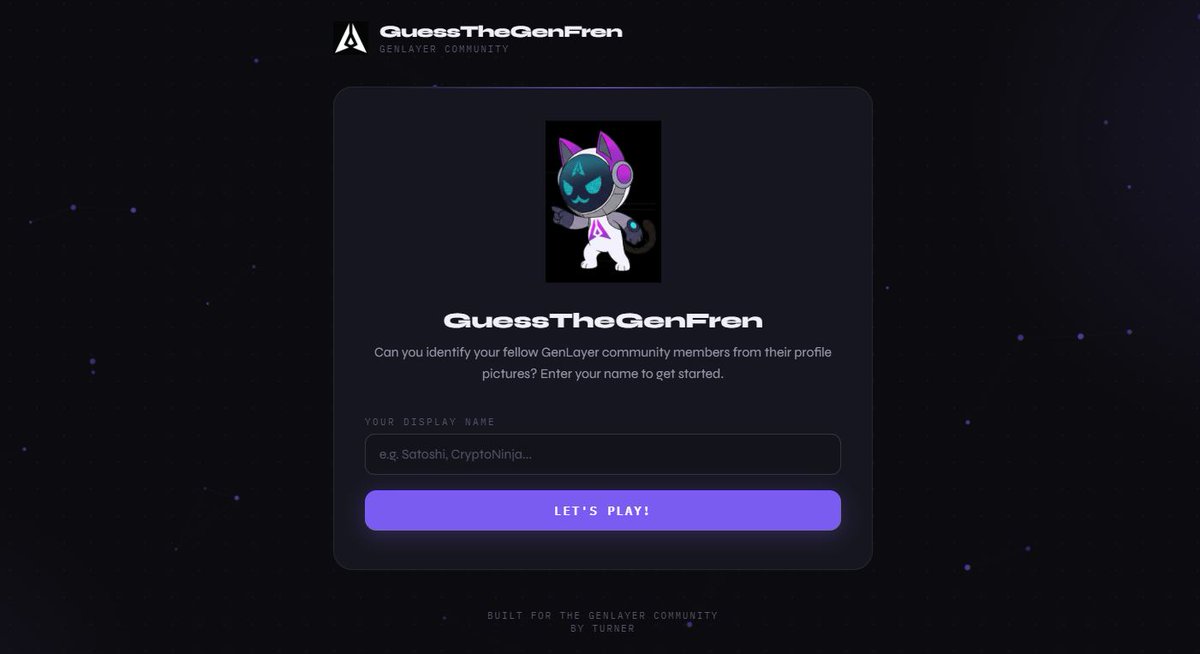
How well do you really know the core and contributing members of the @GenLayer community? Genfrens, I took the time to compile 100+ recognized and active contributors across the ecosystem. Introducing guessthegenfren.vercel.app Register your name, jump into rounds featuring 20 different community members, and test how many you can identify. It’s a simple way to see just how observant you’ve been without even realizing it. Drop a screenshot of your score in the comments, let’s see who’s truly woven into the fabric of this community.
𓆩𝕋𓆪 tweet media𓆩𝕋𓆪 tweet media𓆩𝕋𓆪 tweet media𓆩𝕋𓆪 tweet media
English
58
11
78
4.7K
H.
H.@hujjahhh·
How else can I express the depth of my love for him? ‘I love you’ feels too weak for everything I actually feel.
English
1
1
5
113
𓆩𝕋𓆪 retweetet
Premier League
Premier League@premierleague·
Champions League qualification secured for 2026/27 🏆 Congratulations, @ManUtd 🔴
Premier League tweet media
English
2.2K
29.7K
180.2K
6.6M
Manchester United
Manchester United@ManUtd·
”European games have a beauty all of their own." – Sir Matt Busby ❤️
Manchester United tweet media
English
1.1K
16.1K
73.4K
1.2M
𓆩𝕋𓆪
𓆩𝕋𓆪@spacejunnk·
@ManUtd Back to the big boys arena 🙂‍↔️
English
0
0
0
28
𓆩𝕋𓆪
𓆩𝕋𓆪@spacejunnk·
A few months ago, I tried something small. Instead of just reposting a project, I broke it down for one person in my DMs. I explained it slowly, like I was teaching a younger sibling. I even used voice notes because I knew text wouldn’t be enough. Two days later, that same person explained it to someone else, in their own words. That’s when it clicked for me. Real influence is not how many people see your post. It is how many people actually understand it well enough to pass it on. But most platforms don’t reward that. They reward speed, repetition, and scale. You can say very little, but say it loudly, and still win. That’s why what @RallyOnChain is doing feels different, especially with the recent updates. Take the Minimum Sorsa Score. This one quietly fixes a problem many people ignore. It sets a baseline for quality before your work even starts building reputation. So instead of flooding the system with surface-level content, you are pushed to actually understand what you are writing. It reminds me of school exams where you couldn’t just show up and guess your way through. You needed a certain level of understanding before your score even mattered. Then there is the Max Winners per period. This is where things shift from fair to intentional. If you have ever been in a group project where everyone gets the same grade regardless of effort, you know how frustrating that feels. Rally does the opposite. It narrows rewards to the strongest contributions, so the people who think deeper, explain better, and connect ideas clearly are the ones who stand out. And what stands out to me personally is how fast these changes came in. People pointed out issues. Bots, farming, low-effort submissions. Instead of ignoring it, Rally responded with real actions. Manual banning, referral fixes, stronger quality filters. That tells me this is not just a system running on autopilot. It is a system being actively shaped with its community. Under the hood, everything supports this direction. GenLayer handles the AI evaluation through intelligent contracts. Base and zkSync Era handle distribution. Campaign funds sit in escrow, rewards are calculated transparently, and every payout can be verified onchain. So when you put in effort, it is not filtered through someone’s bias. It is measured, scored, and rewarded based on what you actually contributed. For creators who care about being understood, not just seen, that difference is huge. And it is why this feels like a move toward something more fair, more precise, and more aligned with how real influence works in everyday life.
𓆩𝕋𓆪 tweet media
English
0
56
173
609
𓆩𝕋𓆪
𓆩𝕋𓆪@spacejunnk·
@L4t5s What stands out is how this aligns incentives across participants. Creators are rewarded for clarity, audiences receive better explanations, and campaigns benefit from more accurate representation.
English
0
0
0
32
Lo𝕋us🌸
Lo𝕋us🌸@L4t5s·
A friend of mine runs a small food spot. Not fancy, not viral, just good food and loyal customers. One day, a big brand approached him for promotion. But instead of paying him directly, they went through an agency. The agency took their cut, brought in bigger influencers, and gave him almost nothing even though his customers were the ones actually buying. That situation stuck with me. Because it showed how broken influence really is. The people closest to the audience are often the furthest from the reward. That’s why what @RallyOnChain is building feels like a shift, not just another platform. Rally removes that middle layer completely. No agencies deciding who matters. No hidden deals. If you can explain a project clearly and contribute meaningfully, you can participate. You go to the platform, pick a campaign, create your post, and submit it. From there, your work is evaluated by AI through intelligent contracts on GenLayer. It looks at what actually matters: how well you understood the message, how accurately you explained it, how original your perspective is, and how people genuinely engage with it. The scoring is transparent. You can see the criteria. You can understand the outcome. And when rewards are distributed, it happens onchain. That changes the mindset. Instead of trying to look important, creators focus on being useful. A smaller account with clear thinking can outperform a larger account posting surface-level content, because the system is built to measure contribution, not popularity. Over time, that creates something deeper than just campaigns. It creates a community where creators are not competing for access but contributing to a shared outcome. Each person adds their own perspective, their own way of explaining things, and that collective effort becomes the real value. That’s why I don’t see Rally as just infrastructure. Yes, it runs on Base and zkSync Era for distribution. Yes, GenLayer handles AI verification. Yes, rewards are calculated algorithmically and paid from escrow in a verifiable way. But the real shift is cultural. It’s the first time I’ve seen a system where influence is treated like actual work with clear inputs, clear evaluation, and fair outputs. And if you’ve ever created something that moved people but didn’t get rewarded properly, you’ll understand why this matters. This isn’t just a better tool. It’s the early version of a creator economy that finally makes sense.
Lo𝕋us🌸 tweet media
English
13
61
207
755
𓆩𝕋𓆪
𓆩𝕋𓆪@spacejunnk·
@Hadeniransleem @RallyOnChain This shifts competition from volume to signal density. Fewer low-quality submissions means the scoring model can rank meaningful differences more accurately.
English
0
0
0
18
Hadeniran 🐺
Hadeniran 🐺@Hadeniransleem·
Creators are growing tired of failed promises, while projects are fed up with mediocrity. This dissatisfaction drives drives the big shift to @RallyOnChain Protocols promise but fail to deliver, but Rally listens to its community and delivers real value for creators and projects
Hadeniran 🐺 tweet media
English
16
5
23
195
CUPZ
CUPZ@0X_CUPZ·
3 Men, 1 Space ship, A Lunar Sojourn The year was 1969. July 16 was the day. NASA sent Neil Armstrong, Buzz Aldrin, and Michael Collins toward the Moon. That journey Led to humanity’s first steps on another world. The Apollo Lunar Journey took about 4 days, from launch till first Llanding, with the full mission lasting 8 days, from launch to splashdown. Day 201 - July 20, 1969: "Footprint Beyond Origin" - Humanity's first steps on another world NEIL ARMSTRONG & BUZZ ALDRIN, stepped onto the Moon. I was Curious and decided to see what Historical Event happened on MY BIRTHDAY. Hence, searching "The 16th Of July" and discovering the APOLLO LAUNCH happened that day. Owning This date, is more than owning just art. It's owning a very unique day , handdrawn & living onchain. Yours to keep and cherish forever. If you Mint "The 16th of July" Pls hold it dearly cos this date means so much to me. Not only will you be the custodian of my birthday, you'd also be safeguarding the day man set out to see beyond our world. I LOBBB YOUUUU 💫 @yr365art History here isn't just something we can read, it is something we can hold. My day is July 16, what significant event happened on your birthday? Drop it below let’s see how history connects us all. cc: @yr365art
CUPZ tweet media
English
14
11
46
1.7K
𓆩𝕋𓆪
𓆩𝕋𓆪@spacejunnk·
@omo_daddybolaji A lot of the system today exists just to fix disagreements. If those disappear, so does a big part of the overhead.
English
0
0
0
21
Ifeoluwa ❄
Ifeoluwa ❄@omo_daddybolaji·
@spacejunnk There’s also a deeper implication for operational complexity. A significant portion of banking infrastructure exists to detect, resolve, and audit discrepancies. If outcomes are provable upfront, those functions could be reduced dramatically.
English
1
0
0
61
𓆩𝕋𓆪
𓆩𝕋𓆪@spacejunnk·
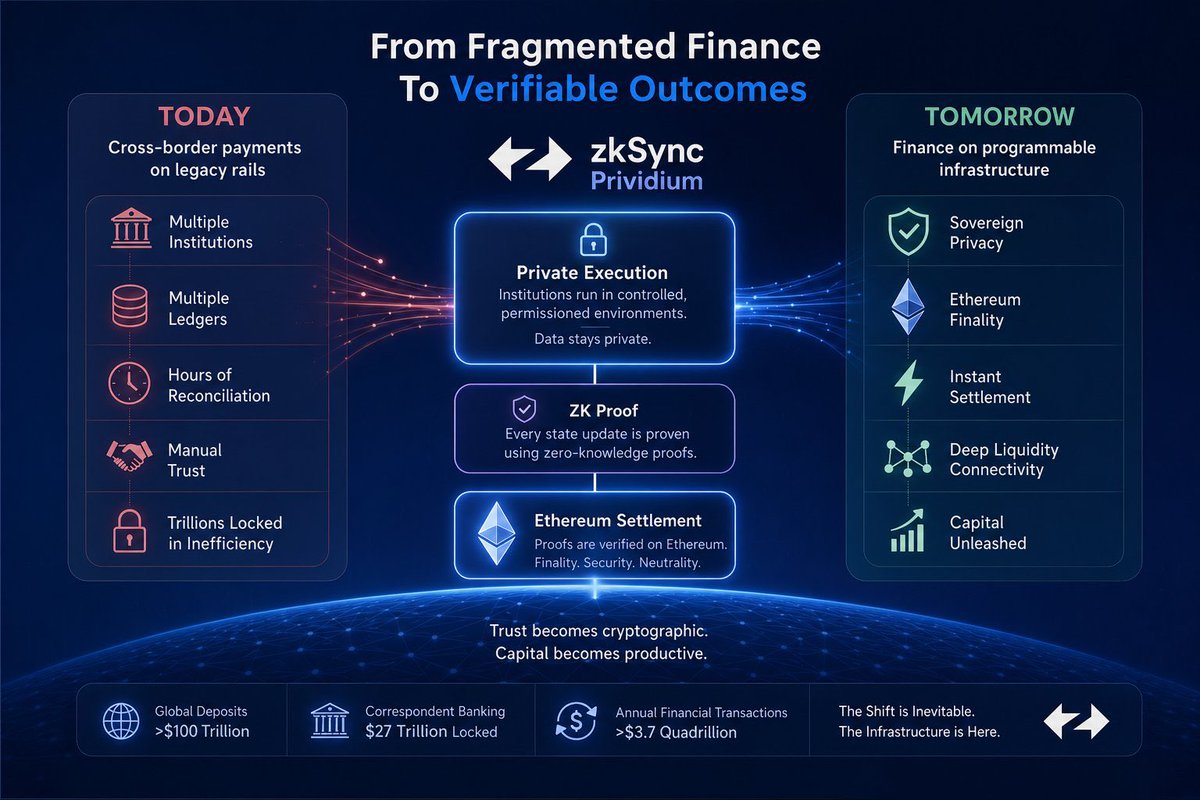
I sat with a banker friend recently while he explained why cross-border settlement still takes days. Not because the money can’t move faster, but because trust is fragmented across systems. That stuck with me. Today’s flow looks like this: multiple ledgers → manual reconciliation → capital parked in advance → delayed settlement Over $27T sits locked just to keep that system functioning. When I looked into @zksync, the model felt fundamentally different. With Prividium, institutions don’t expose sensitive data or rely on intermediaries. They operate in private environments, then publish a zk proof that verifies everything without revealing anything. The flow becomes: private execution → zk proof → Ethereum finality Every state update is mathematically verified and settled on Ethereum. No need to pre-fund trust across disconnected systems. This isn’t just about speed, it’s about coordination. If trust becomes cryptographic instead of institutional, what part of today’s financial infrastructure actually remains necessary?
𓆩𝕋𓆪 tweet media
English
10
49
132
43.4K
𓆩𝕋𓆪
𓆩𝕋𓆪@spacejunnk·
@Visionszn8 And once trust becomes computational, you don’t need to keep re-establishing it.
English
0
0
0
3
𓆩𝕋𓆪
𓆩𝕋𓆪@spacejunnk·
@Y4n_tee That’s it. The capital is there to hold the system together, not to drive it forward.
English
0
0
0
8
Baby💕
Baby💕@Y4n_tee·
@spacejunnk The $27T figure becomes easier to understand when you view it as a coordination buffer. It’s capital deployed not for productivity, but to guarantee that fragmented systems can eventually reconcile without breaking. That’s a costly way to manufacture trust.
English
1
0
0
18
𓆩𝕋𓆪
𓆩𝕋𓆪@spacejunnk·
@L4t5s Exactly, movement isn’t the issue. It’s agreeing on the state that takes time.
English
0
0
0
18
Lo𝕋us🌸
Lo𝕋us🌸@L4t5s·
@spacejunnk That distinction your banker friend made is one a lot of people miss. The bottleneck isn’t transmission, it’s agreement. Money can move instantly, but synchronized truth across institutions is what actually determines when a transaction is considered final.
English
1
0
0
19
𓆩𝕋𓆪
𓆩𝕋𓆪@spacejunnk·
@nuenaive And that’s the strongest signal. If it aligns with regulation, adoption becomes much more likely.
English
0
0
0
20
Nav🔺
Nav🔺@nuenaive·
@spacejunnk The involvement of regulated entities changes how this should be interpreted. When participants with strict compliance requirements engage with new infrastructure, it usually means the model aligns with existing regulatory frameworks, not that it bypasses them.
English
1
0
1
23
𓆩𝕋𓆪
𓆩𝕋𓆪@spacejunnk·
In my very own honest opinion, $27 trillion sitting idle in correspondent banking isn’t just a number. It’s a design flaw. Capital is being pre-positioned across jurisdictions, not because it’s productive, but because the system cannot coordinate trust in real time. That inefficiency rarely gets framed this way, but it explains why institutions aren’t experimenting with blockchain for curiosity. They’re trying to remove a structural cost that has existed for decades. This is where @zksync becomes easier to understand from a systems perspective. Prividium isn’t a generic scaling solution. It’s a permissioned ZK Chain built with the ZK Stack, operating as a Validium. Execution and data stay inside institution-controlled environments, while zero-knowledge proofs and state commitments settle to Ethereum. That design choice matters. Banks don’t need public execution. They need controlled environments, auditability, and verifiable settlement without exposing sensitive flows. Prividium gives them private execution, selective disclosure, and Ethereum-backed finality in one architecture. The institutions already building here reflect that shift. Cari Network represents over $600B in deposits across U.S. regional banks, led by a former Comptroller of the Currency. That isn’t experimentation, it’s regulated capital moving toward a new settlement model. Deutsche Bank’s Memento ZK Chain, First Abu Dhabi Bank through ADI Chain, and BitGo’s custody integration all point to the same thing: this is infrastructure being tested under real financial constraints, not theory. As these participants connect, the network doesn’t just grow linearly. Each new institution increases the number of possible settlement relationships across the system. That’s how financial networks historically scaled, and it’s happening here at the settlement layer. Within this architecture, $ZK plays a specific role. $ZK is the only native asset of the ZKsync network, with a fixed supply of 21 billion and no inflation. It functions as a governance token, where holders participate in decisions around protocol upgrades, fee structures, and network parameters through the Token Assembly, alongside the Security Council and Guardians. It also serves as the native gas token for ZKsync Gateway, which aggregates transactions across ZKsync chains and Prividium environments before settlement on Ethereum. So the shift isn’t just “finance moving onchain.” It’s the gradual removal of a costly workaround, replaced by systems that can coordinate capital without forcing it to sit still.
𓆩𝕋𓆪 tweet media
English
10
59
178
45.9K
𓆩𝕋𓆪
𓆩𝕋𓆪@spacejunnk·
@Lawonxyz That balance is everything. Scalability without losing verifiability is what makes it viable.
English
0
0
1
13
Okanlawon🥜
Okanlawon🥜@Lawonxyz·
@spacejunnk The Validium structure seems particularly suited for this use case. It allows high-throughput private execution while still anchoring outcomes to Ethereum. That balance between scalability and verifiability is what makes the architecture viable for large institutions.
English
1
0
1
33
𓆩𝕋𓆪
𓆩𝕋𓆪@spacejunnk·
@Visionszn8 Right, it works with constraints instead of ignoring them. That’s what makes it realistic for institutions.
English
0
0
0
2
𓆩𝕋𓆪
𓆩𝕋𓆪@spacejunnk·
@Jumbotrain7 That’s the key driver. This isn’t innovation for its own sake, it’s cost being addressed directly.
English
0
0
0
5
Jumbotrain
Jumbotrain@Jumbotrain7·
@spacejunnk The idea that institutions are solving for cost rather than curiosity is important. A lot of blockchain narratives focus on innovation, but here the driver is clearly economic. Reducing idle capital isn’t optional at scale, it’s a competitive necessity.
English
1
0
0
3