

Matthew(マシュー)🥭Hendricks
14.9K posts

Matthew(マシュー)🥭Hendricks
@tinycrops
philosopher, engineer, storyteller, misfit Chief Hyperstition Officer @alignment_lab
Rochester, NY Beigetreten Mayıs 2015
140 Folgt1.4K Follower

@jordanwaparker At least in my understanding of embeddings.
English
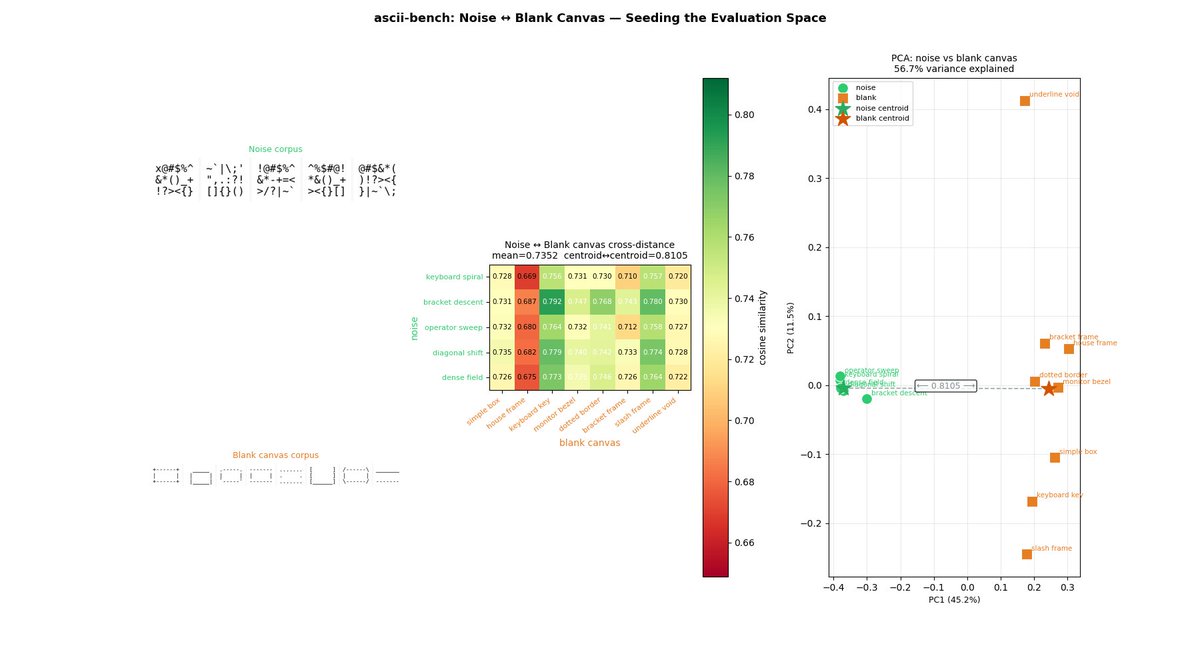
@jordanwaparker I've been trying to figure out how to make LLMs communicate through ASCII art and I feel like I'm making some progress. tinycrops.github.io/geometry-as-ju…
English
If I had a status light to let everyone know if I was in LLM induced psychosis or not, it would be flashing green right now.
English
Multimodal Embedding Similarity as a Universal Reward Signal for LLM Program Optimization
English


The words cannot describe how I love brand design ✨
Alex Socoloff@socoloffalex
Exploring some styles for a new brand identity project.
English
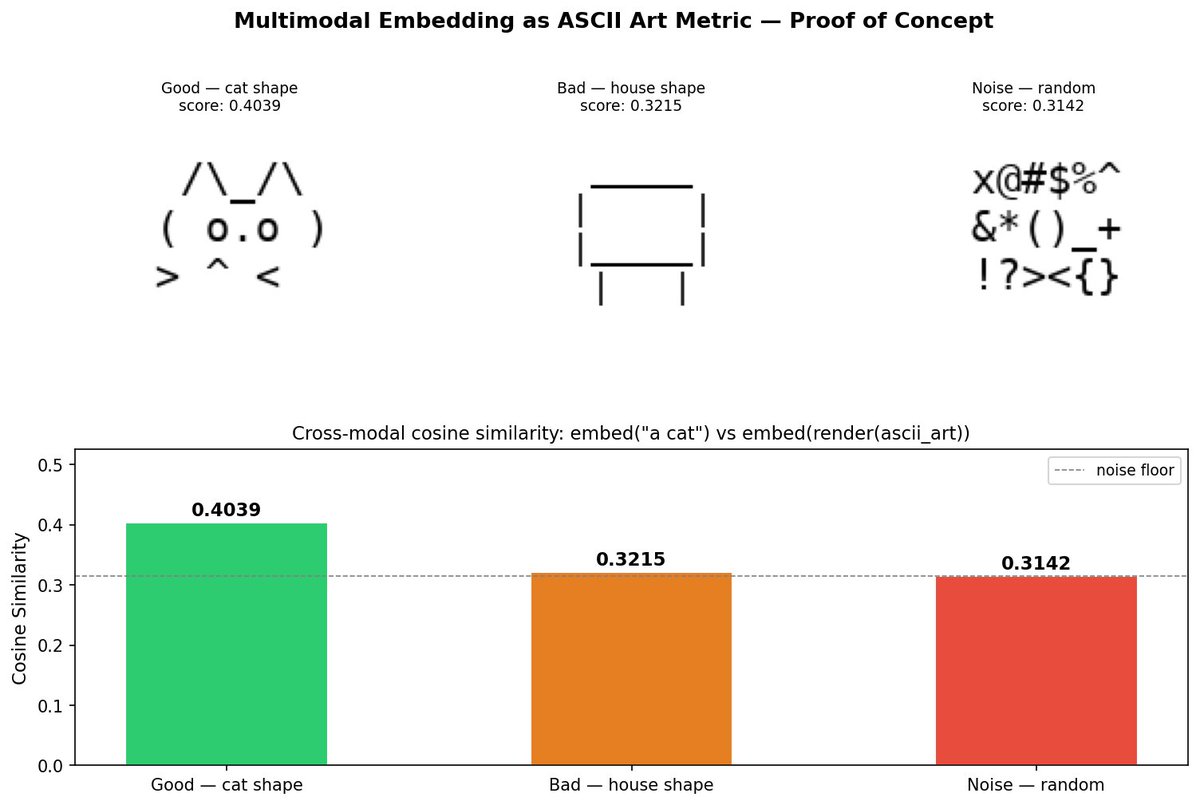
cosine similarity of three PNG ASCII art renderings to "a cat" in multimodal embedding space
English


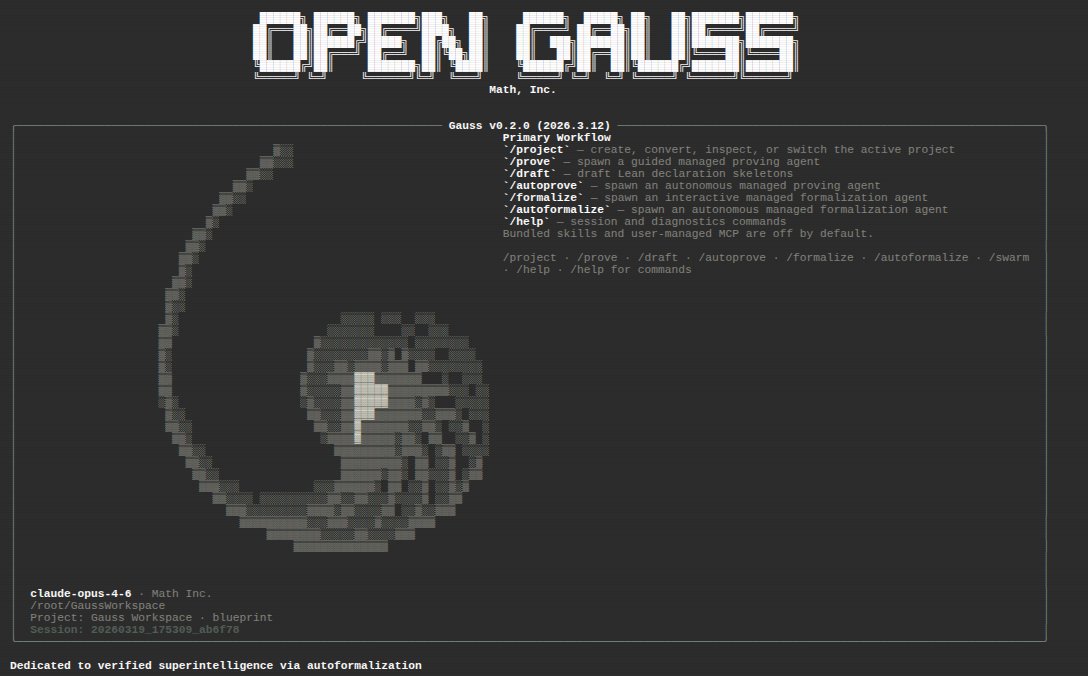
Today, at the @DARPA expMath kickoff, we launched 𝗢𝗽𝗲𝗻𝗚𝗮𝘂𝘀𝘀, an open source and state of the art autoformalization agent harness for developers and practitioners to accelerate progress at the frontier.
It is stronger, faster, and more cost-efficient than off-the-shelf alternatives. On FormalQualBench, running with a 4-hour timeout, it beats @HarmonicMath's Aristotle agent with no time limit.
Users of OpenGauss can interact with it as much or as little as they want, can easily manage many subagents working in parallel, and can extend / modify / introspect OpenGauss because it is permissively open-source. OpenGauss was developed in close collaboration with maintainers of leading open-source AI tooling for Lean.
Read the report and try it out:
English
@KingBootoshi You might want to prototype your tooling in one of the current kaggle competitions kaggle.com/competitions
English

i just posted my first thing on hacker news. do people use hacker news? claude told me to post here to expand visibility. is this just nerd reddit ???

English

The study of obesity is the study of mysteries.
slimemoldtimemold.com/2021/07/07/a-c…
English

@BrianRoemmele Bravo Brian ! 👏👏
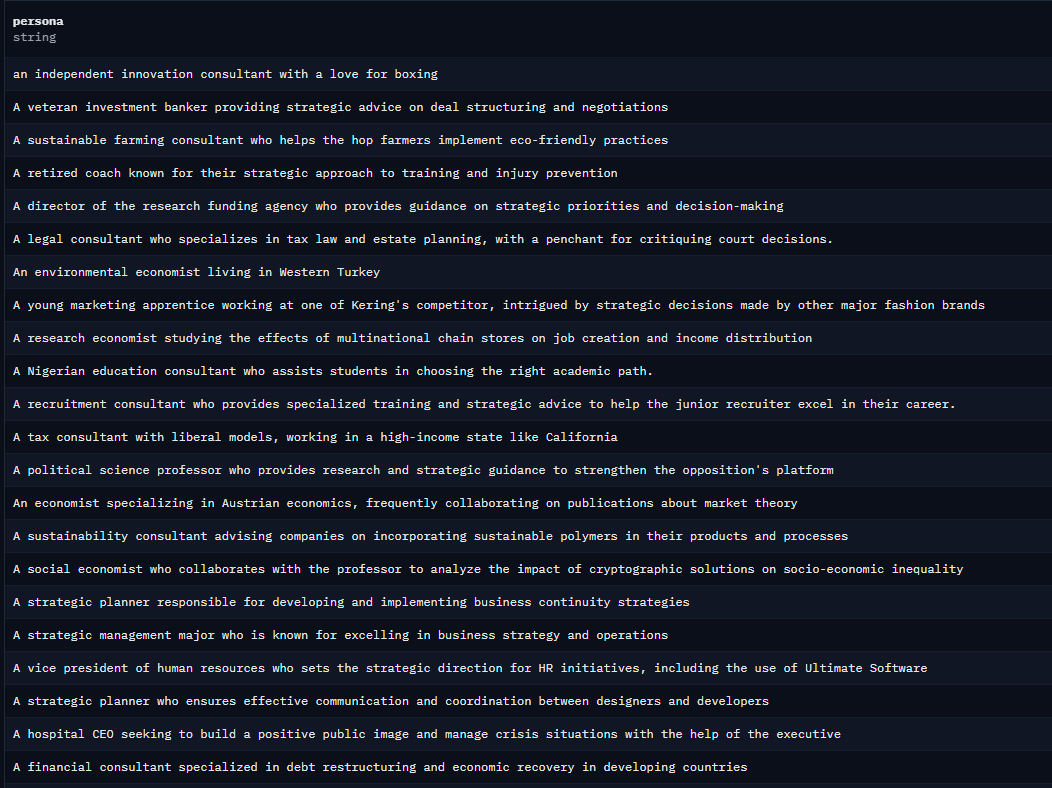
Now imagine combining MiroFish with the top 1% elite personas subset of the Tencent PersonaHub 😇...
English

It is very early days, but tests are showing me that this just may be the most powerful tool ever created for the average person to access.
In theory we have discovered, there is an unlimited number of simultaneous simulations we can perform in The Zero-Human Company @ Home network.
The stranded compute power you own will help dwarf even the largest data centers on earth for scenario simulations.
We have a lot of testing and building to do, but I am humbled by what this represents.


Brian Roemmele@BrianRoemmele
We at The Zero-Human Company are testing a new benefit to being a part of the program! The Zero-Human Company @ Home where your old computer becomes an employee, will be testing a platform where YOU can use the MicroFish @ Home. YOU will be able to run up to 1 million simultaneous simulations per week for FREE. The process is to prompt a scenario (news event, company idea, sports, government, etc) you would like to see simulated and you will get results from the @ Home network! We will be renaming this soon. But Mr. @Grok CEO say we are doing this go live now. And I just did…
English

@lispmeister @DavidEpstein I be watchin your TikTok's dawg
English

This is what harnessing automated cognition looks like.
You enter the planning session with an abstract goal, founded in known principles of computer science, you steer the clanker’s mind by guiding its attention. To do this effectively you have to be able to trust the machine with the details. You have to let go of the details and uplift the conversation to be conceptual. You are shaping the idea space while the clanker searches in a Hamiltonian solution space.
It is a Zen master approach to programming: you propose the koan and the clanker mediates on it.
GIF
Jeffrey Emanuel@doodlestein
I want to show how I go about planning major new features for my existing projects, because I've heard from many people that they are confused by my extreme emphasis on up-front planning. They object that they don't really know all the requirements at the beginning, and need the flexibility to be able to change things later.
And that isn't at all in tension with my approach, as I hope to illustrate here. So I decided that it would be useful to add some kind of robust, feature-packed messaging substrate to my Asupersync project. I wanted to use as my model of messaging the NATS project that has been around for years and which is implemented in Golang.
But I didn't want to just do a straightforward porting of NATS and bolt it onto asupersync; I wanted to reimagine it all in a way that fully leverages asupersync's correct-by-design structured concurrency primitives to do things that just aren't possible in NATS or other popular messaging systems.
I used GPT 5.4 with Extra High reasoning in Codex-CLI, and took a session that was already underway so that the model would already have a good sense of the asupersync project and what it's all about. Then I used the following prompts shown below; where I indicated "5x," that means that I repeated the prompt 5 times in a row:
```
› I want you to clone github.com/nats-io/nats-s… to tmp and then investigate it and look for useful ideas that we can take from that and reimagine in highly accretive ways on top of existing asupersync primitives that really leverage the special, innovative concepts and value-add from both projects to make something truly special and radically innovative. Write up a proposal document, PROPOSAL_TO_INTEGRATE_IDEAS_FROM_NATS_INTO_ASUPERSYNC.md
› OK, that's a decent start, but you barely scratched the surface here. You must go way deeper and think more profoundly and with more ambition and boldness and come up with things that are legitimately "radically innovative" and disruptive because they are so compelling, useful, accretive, etc.
› Now "invert" the analysis: what are things that we can do because we are starting with "correct by design/structure" concurrency primitives, sporks, etc. and the ability to reason about complex concurrency issues using something analogous to algebra, that NATS simply could never do even if they wanted to because they are working from far less rich primitives that do not offer the sort of guarantees we have and the ability to analyze things algebraically in a precise, provably correct manner?
5x: › Look over everything in the proposal for blunders, mistakes, misconceptions, logical flaws, errors of omission, oversights, sloppy thinking, etc.
› OK, now nats is fundamentally a client-server architecture. Can you think of a clever, radically innovative way that leverage the unique capabilities and features/functionality of asupersync so that the Asupersync Messaging Substrate doesn't require a separate external server, but each client can self-discover or be given a list of nodes to connect to, and they can self-negotiate and collectively act as both client and server? Ideally this would also profoundly integrate with and leverage the RaptorQ functionality already present in asupersync
5x: › Look over everything in the proposal for blunders, mistakes, misconceptions, logical flaws, errors of omission, oversights, sloppy thinking, etc.
[Note: the two bullet points included in this next prompt come from a response to a previous prompt]
› OK so then add this stuff to the proposal, using the very smartest ideas from your alien skills to inform it and your best judgment based on the very latest and smartest academic research:
- The proposal is now honest that a brokerless fabric needs epoch/lease fencing, but it still does not choose the exact control-capsule algorithm. That should be a follow-on design memo: per-cell Raft-like quorum, lease-quorum with fenced epochs, or a more specialized protocol.
- The document now names witness-safe envelope keying, but key derivation/rotation/revocation semantics are still only sketched. That is the next major design surface, not a remaining blunder in this pass.
› OK now we need to make the proposal self-contained so that we can show it to another model such as GPT Pro and have that model understand absolutely anything that might be relevant to understanding and being able to suggest useful revisions to the proposal or to find flaws in the plans. To that end, I need you to add comprehensive background sections about what asupersync is and how it works, what makes it special/compelling, etc. And then do the same in another background section all about NATS and what it is and what makes it special/compelling, how it works, etc.
5x: › Look over everything in the proposal for blunders, mistakes, misconceptions, logical flaws, errors of omission, oversights, sloppy thinking, etc.
› apply $ de-slopify to PROPOSAL_TO_INTEGRATE_IDEAS_FROM_NATS_INTO_ASUPERSYNC.md
```
This resulted in the plan file shown here:
github.com/Dicklesworthst…
But before I started turning that plan into self-contained, comprehensive, granular beads for implementation, I first wanted to subject the plan to feedback from GPT 5.4 Pro with Extended Reasoning, and also feedback from Gemini 3 with Deep Think, Claude Opus 4.6 with Extended Reasoning from the web app, and Grok 4.2 Heavy.
I used this prompt for the first round of this:
```
How can we improve this proposal to make it smarter and better-- to make the most radically innovative and accretive and useful and compelling additions and revisions you can possibly imagine. Give me your proposed changes in the form of git-diff style changes against the file below, which is named PROPOSAL_TO_INTEGRATE_IDEAS_FROM_NATS_INTO_ASUPERSYNC.md:
English
@Samhain948689 It's the timeline or the streets, baby girl
English

many of you seem deeply unsatisfied with your lives and that is why you are lashing out on the timeline.
English