
Angehefteter Tweet
Yadab
606 posts

Yadab
@yadab
Software Engr | 20+ yrs building systems | Blog: https://t.co/5X7FgU1Cg6 | LinkedIn: https://t.co/lXrM4EIDMh
Vancouver Beigetreten Ağustos 2008
77 Folgt202 Follower
i agree with you on the core point.
Adam Smith argues that capital withdraws not because production is excessive but because it cannot find secure and profitable employment at home (Book II, Ch. V; Book II, Ch. IV), a failure of circulation ultimately rooted in weakened consumption, the true end of production (Book IV, Ch. VIII).
US dollar overproduction is internal/Auto-genous to a late-stage, financialized economy. Energetic societies absorb overflow from lethargic ones until their own constraints bind. That’s a civilizational dynamic, not merely a policy failure.
English

Bessent is setting up dollar funding centers in the Gulf and Asia designed to stop CNY settlement system from scaling.
Swap lines give allies dollar liquidity , reducing their incentive to price oil or trade in CNY.
This strengthens US financial control, protects Treasury demand, supports sanctions, and keeps partners tied to the dollar system.
The risk ? probably more political: critics see as hidden bailouts.
But if collateralized and profitable, the strategy is more financial statecraft, not so much aid. As always it depends on the collateral .
The goal ? make the petroyuan redundant before it gets momentum .
Will it work ? Probably but it has potential down side long term .
Bessent has publicly confirmed talks with “many” Gulf allies and “numerous” Asian allies about permanent dollar swap lines.
The clearest recently named cases are the UAE & Argentine . Other counterparts who’ve been mentioned in different reports Saudi Arabia, Qatar, Bahrain, Singapore, Japan, South Korea, and Taiwan.
The risk is that America becomes the permanent dollar backstop for everyone.
Moral hazard is high here
Does the U.S. have a choice ? Probably not , this protects dollar dominance, but it also creates exposure: more counterparties, more crisis , politically contention, and enormous moral hazard.
If badly managed, swap lines shift from strategic leverage into an open-ended liquidity guarantee for foreign central banks.
So allies likely take greater financial risks because they expect US dollar support, turning emergency swap lines into routine dependency.
USD becomes the wholesale reserve currency inside their financial system.
oil, LNG, and trade invoices stay dollar-based
banks fund in dollars more easily
central banks manage crises through dollar access
sovereign wealth funds recycle more capital into US assets
local currencies become domestic units sitting under a dollar roof
In return for dollar liquidity, the U.S. gets oil pricing in USD , less CNY settlement, gteed demand for Treasuries, deeper ally dependence on US finance, protection against forced US asset sales .
It probably goes with a lot of other things we can’t see . Arms , trade , security deals etc
The world splits into currency blocs
US bloc: dollar swap lines, Treasury markets, SWIFT, Gulf/Asia dollar liquidity hubs.
China bloc: yuan settlement, CIPS, mBridge, sanctioned oil flows, material/refining access.
Middle states: try to keep access to both.
Money no longer neutral plumbing and becomes a kind membership infrastructure. Like everything else the world is separating into camps
Consistently with pre war footing
Reuters@Reuters
US Treasury Secretary Scott Bessent said a number of allies in the Gulf region and in Asia have requested currency swap lines from the United States to help deal with energy shocks and other fallout from the Middle East war reut.rs/41R9inr
English
@LukeGromen @ctindale As Bessent used to say about Euro ; “why are you long the euro? because everything else is worse”. right now everything else is worse than dollar and hence it’s still afloat?
English
@ctindale The risk is more straightforward than that IMO:
Why bother investing in US manufacturing if Bessent just showed us the US’ biggest export will always remain dollars, rather than goods?
English
if that happens then surplus country has to buy gold or invest somewhere? till now UAE was investing in USA treasuries and bonds or companies, i am thinking if they need to change their strategy? if that happens then the one way door with usa assets may crumble? too much wild speculation after coffee 😝
English

My take: UAE drifting from OPEC isn’t just about quotas—it’s geopolitical. Frustration with smaller GCC states’ passivity and Saudi’s mixed signals is pushing a realignment. Watch a UAE–Israel–India axis emerge, with shared strategic and economic interests driving tighter cooperation.
English
@LukeGromen could countries hit the USA with reverse sanctions (punishments going the other way)? just an guess following the field 🤔
English
Not the action of someone running low on supplies
Financial Times@FT
China poised to restart exporting jet fuel, diesel and gasoline ft.trib.al/VW9ugy6
English
@ctindale a different option is also at play?
What if the main buyers of oil (like China, the US, or India) directly control the oil fields and extraction areas instead?
And if that happens, could countries hit the USA with reverse sanctions (punishments going the other way)?
English
Which ones will be next ?
OPEC is fragmenting along security, currency and buyer lines.
UAE and Venezuela signal a tilt toward US liquidity and protection.
The next moves come down to three levers: who guarantees security, who provides dollar funding, and who absorbs barrels at scale.
Saudi sits on the fence but anchors the system let’s assume they go to US for lots of treasure and guns .
Kuwait likely follows Saudi.
Iraq tracks US security
. ( after a tantrum )
Nigeria follows financing access. Nigerians are stable coins biggest holder . They need the swaps
Libya follows whoever stabilises flows.
Algeria and Iran lean the other way but one may have no choice .
Congo, Guinea and Gabon move with project finance. Again like US
This splits into three camps: US-linked, China-linked, and non-aligned sellers arbitraging both.
Watch the signals: swap lines, security agreements, refinery offtake contracts, and currency of settlement.
Who locks those first wins the barrels.
China is getting outplayed here .
Michael Every@TheMichaelEvery
The UAE will leave OPEC(+) after getting a $ swapline and an Israeli iron dome & troops to protect it; and tensions with Saudi in Yemen & Sudan. Another earthquake for the Middle East. And maybe a signpost to a post-war fragmentation of oil markets - in the U.S. favour(?)
English
@johnarnold @robin_j_brooks two days left of 60 days limit, will congress approve after that?
English

@robin_j_brooks Each day that ticks by without a solution increases the expected value of the total production loss.
English
The fair market value of oil ticks up every day that goes by without an articulated plan for how to end the war.
English

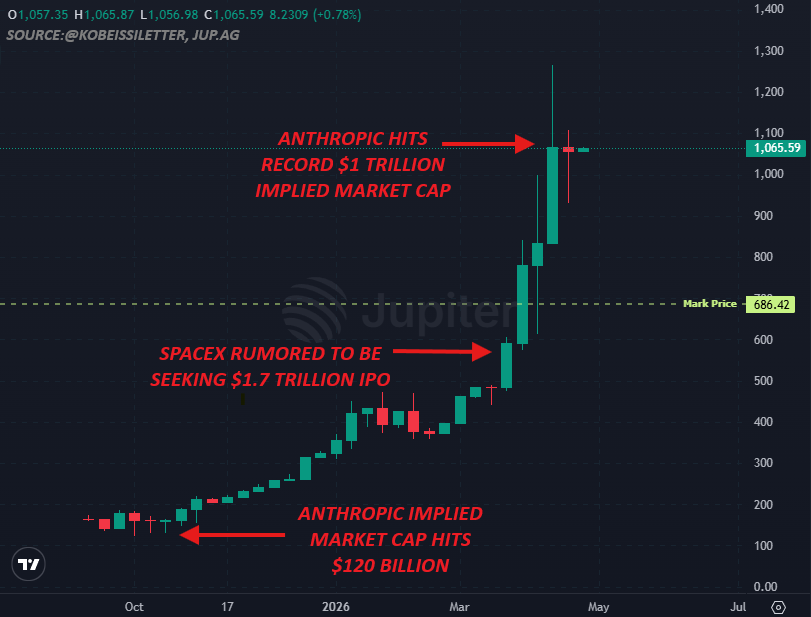
BREAKING: Anthropic's pre-IPO valuation has officially hit a record $1 trillion.
Anthropic's implied valuation is now up +733% since October 2025, per onchain pre-IPO trading data.
Pre-IPO instruments trading onchain, backed 1:1 by SPV exposure on Jupiter, are providing a real-time proxy for the company’s implied IPO valuation.
Anthropic has now become the third company to exceed $1 trillion in implied valuation, joining OpenAI and SpaceX.
The implied market cap of these 3 companies alone is now up to $3.7 TRILLION.
We are about to witness a historic IPO run.
English

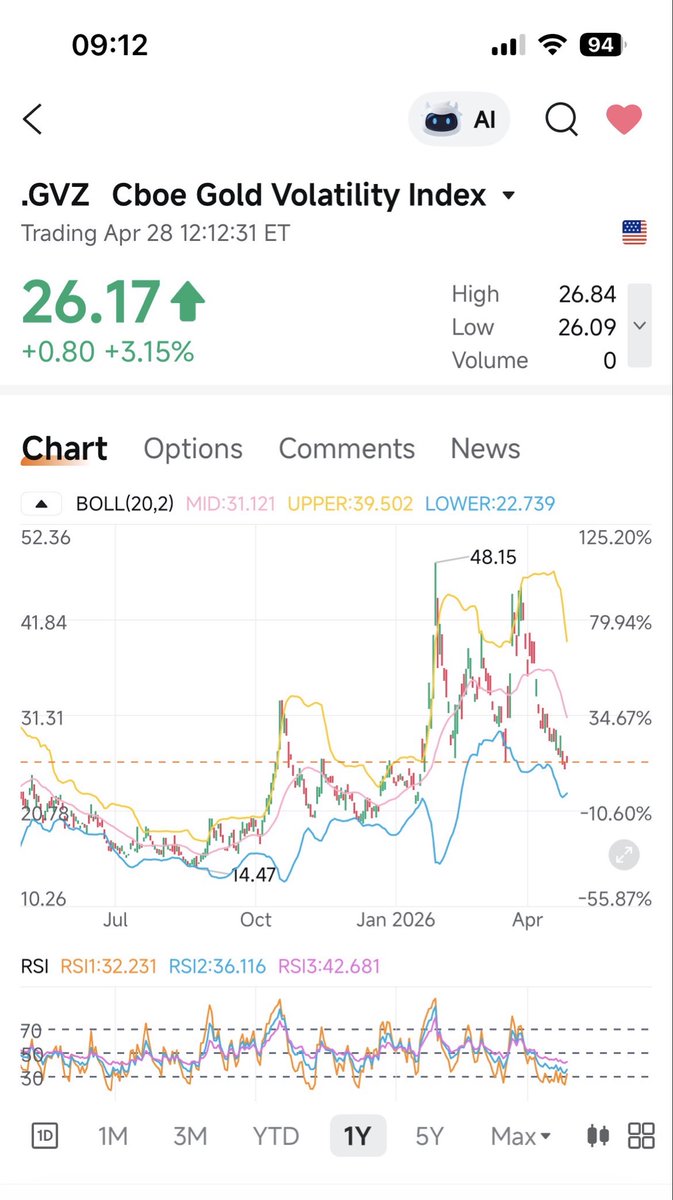
27 reasons why gold is going higher, and the stock market is going lower. 🧐
1) Debt Bubble. This has led to fiscal dominance and a $2T deficit and $1T interest payments.
2) Fragile US Government bond market. Foreign buyers have dried up.
3) Geopolitics. The Ukraine and Iran wars have created global instability and uncertainty. The BRICS+ nations are creating an alternative to the SWIFT system for international payments.
4) Tariffs. These are essentially taxes paid by consumers, and create headwinds for the economy.
5) Inflation. The cost-of-living impact from inflation has not subsided. Plus, tariffs and oil prices are currently pushing inflation higher. Gasoline, interest rates, and inflation are all stuck at high levels.
6) Overvalued Stock Market. With a forward PE around 22 and a Buffett Indicator over 200%, the stock market is due for a crash. Dave Collum thinks it is overvalued by 200%, and that it will revert to its mean.
7) De-dollarization. Countries are swapping their dollar reserves for gold. Plus, we are seeing more trade in non-dollar currencies.
8) Employment. This clearly has weakened over the past 12 months. It now takes about 6-months to replace a job. Normally, that number is 3 months. New college graduates are having trouble finding a job.
9) Housing. The cost for a new or existing house is around $450K. Housing affordability is at historic levels. Inventory levels are rising rapidly, and a crisis is emerging. March’s existing housing sales were the second lowest on record for March. Only March of 2009 were lower.
10) Autos-Trucks. At current interest rates, the average auto-loan is around 8%. The combination of tariffs and high interest rates makes autos-trucks unaffordable.
11) ISM Data. The ISM data for manufacturing and services has been weak for years. It does not appear to be improving.
12) Office Vacancies. Since COVID, the vacancy rate for commercial real estate has been at crisis levels and does not appear to be improving.
13) Banks. The balance sheets of large banks have been a mess after interest rates rose. Delinquency rates for credit cards and commercial real estate are rising. Bankruptcies are rising.
14) Private Credit. This is a potential crisis, with several bankruptcies and gated funds.
15) AI. It has been a job killer. Wal-Mart announced it would soon be reducing jobs due to AI efficiencies. Law firms no longer need as many lawyers. That’s just one example.
16) Demographics. Baby boomers are retiring in droves each month. This reduces consumer spending and taxable income.
17) Healthcare Costs. The current inflation rate for healthcare is 8%. This is squeezing discretionary spending.
18) Political Bifurcation. Washington has become ineffective with ongoing gridlock. Both parties no longer hold the same values. This is only getting worse.
19) College Costs. Like housing, it has an affordability problem. Colleges have become extremely expensive.
20) GDP Slowing. GDP for Q1 is projected to be sub 2%. Ironically, government spending is counted as GDP when $2T is borrowed. If you subtract this $2T, then we are in a recession.
21) Retail/Restaurant Sales. K-shaped economy. We continue to see national chains go bankrupt as the consumer remains constrained. Which company goes bankrupt next?
22) Consumer Confidence. The UOM (University of Michigan) consumer confidence number is currently at an all-time low. Why? Because the consumer can’t pay its bills.
23) Trains/Trucking Volume. The volume is at recessionary levels for both.
24) Apartment Rent. Rents are dropping nationally. Why? Consumers are broke.
25) A Recession is overdue. The last recession ended in Q2 2009. Some say we had a recession in 2020, but that was the COVID crisis and was not a true recession, where you have an extended period of lost jobs and a moribund stock market.
26) Low Dividend Payout. The average is currently below 2% and half the historical norm. The MAG7 average .3%.
27) Gold Exports. The US has been exporting an average of $10B in gold every month since January 2025. This is unprecedented. Why is gold moving from West to East? One reason: the rest of the world is selling their US bonds and dollars and buying gold. This is effectively de-dollarization, and it’s picking up speed.
English
@great_martis the public always wants to be told and hence deliberate misinformation becomes gold standard news.
English

Americans copying Chinese technology again
Chris Cappy@Cappyarmy
The US Army's new 30mm airburst grenade gun is built to destroy Russian trenches with precision explosives at 500m. It aims to change entire infantry squad, you will have 2 per squad one in each fireteam. This will be their primary weapon weighing about 11 lbs no side M4.
English
@Mr_Derivatives it could go to infinity as someone might have successfully created an one way door with the USD swap lines ? welcome to yet another asymmetric bubble along with AI 😝
English

Question: How long can this “locked” system last?
Fed swap lines give foreign central banks easy access to dollar liquidity during stress. This reduces the pressure for them to sell USD assets (like Treasuries or US stocks) to raise dollars — which would otherwise crash prices or spike rates.
Gold has no equivalent backstop. It’s highly liquid and neutral, so it often becomes the go-to asset for raising cash without political complications. That’s why we’ve seen accelerated selling (not just trading) by some central banks in 2026 — Russia and Turkey, for example, liquidating gold to fund wars, defend currencies, or cover energy/defense costs. elements.visualcapitalist.com
The swaps help “lock in” dollar assets by cushioning them, while making gold relatively more attractive for long-term diversification. But when real liquidity crunches hit, gold gets sold faster precisely because there’s no Fed-style safety net.
How long can this asymmetry hold? As long as the Fed keeps providing liquidity and major holders trust the dollar system, although new geopolitical shocks or sustained wars could test it quickly.
English
RE: “Weaponizing USD swap lines” - last time the USD system rails were weaponized (2022 Russia FX reserves frozen), CIPS payments more than doubled in 2 years, and gold rose 3x in 4 years.
Let’s watch.

English

@MPelletierCIO China is still a net seller... at the end of the day, where does everything come from?
English

English

@yadab @Mr_Derivatives @RayDalio Invest in gold/silver or copper miners. Oil producers... commodities in general will do good. Especially ones that get consumed. Farmland is a great alternative but obviously alot different then buying stocks.
English
@great_martis problem is there is an virtual embargo which strongly discourages selling of usa assets by institutions and foreign major holders by providing them usd swaps ? that’s i figure, could be off but i don’t know basically a virtual blockade on selling?
English

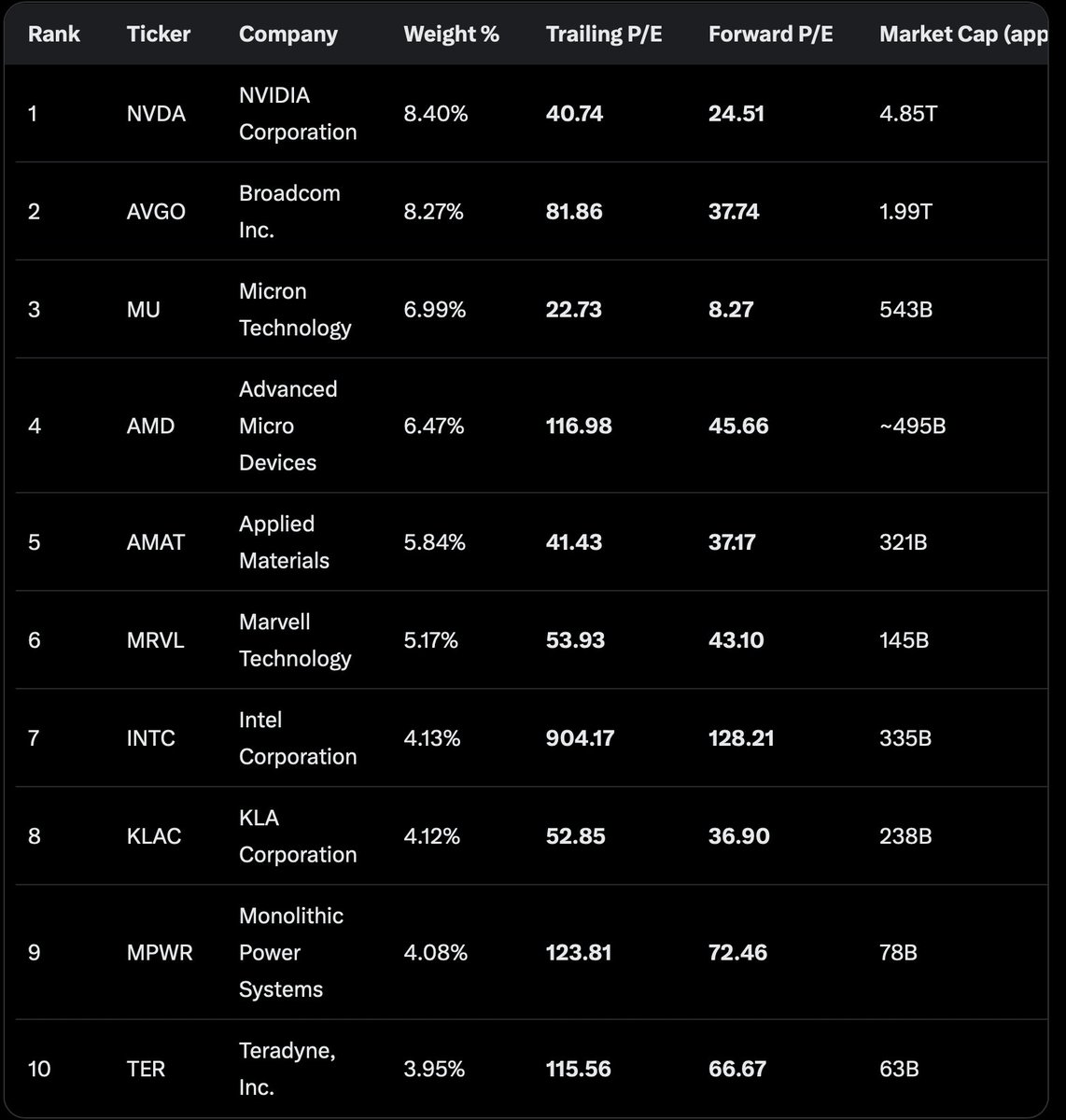
I spy with my little 👁️something beginning with B 🫧
English