Post

SpaceX
SpaceX@SpaceX·
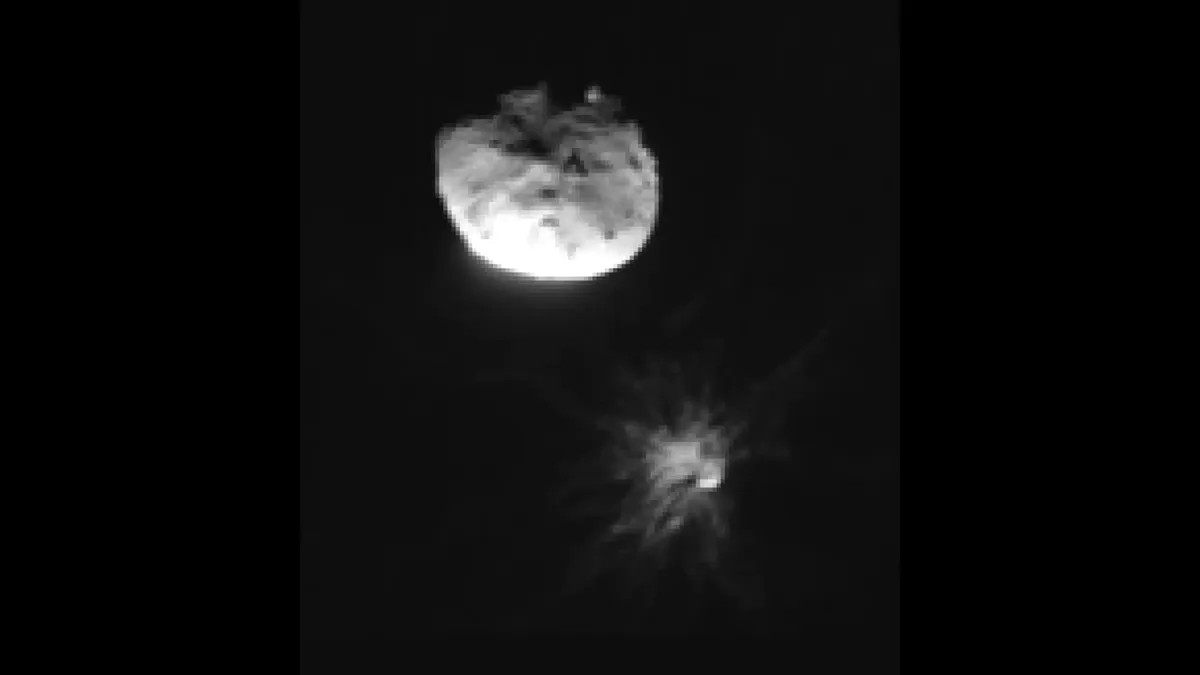
It worked! DART successfully shifted the orbit of not one, but two asteroids around the Sun after Falcon 9 launched the spacecraft in 2021 → nasa.gov/missions/dart/…
SpaceX tweet media
SpaceX@SpaceX

@NASA Congratulations on successfully crashing a spacecraft into an asteroid!

English
716
2.3K
13K
1.5M
NASA's Kennedy Space Center
NASA's Kennedy Space Center@NASAKennedy·
@SpaceX @NASA DART was humanity's first planetary defense technology demonstration! It intentionally impacted the asteroid moonlet Dimorphos Sept. 26, 2022.
GIF
English
10
52
512
19.5K
REDWRITER
REDWRITER@REDWRITER·
@SpaceX @NASA Massive news! Sadly this makes movies like ‘Deep Impact’ completely fictional now lol
REDWRITER tweet media
English
1
2
19
2.3K
David Pollack
David Pollack@DavidPollackUSA·
@SpaceX @NASA What happens if that asteroids new path isn’t favorable for us earthlings?
English
20
2
15
3.3K
Mitch🦖
Mitch🦖@mitch_7w·
@SpaceX @NASA Amazing! Asteroid defence force accepting job apps yet?
English
0
3
6
359
Pulse Digital 🟣
Pulse Digital 🟣@CryptoPulse9·
@SpaceX @NASA hey girl so how SpaceX shifted these asteroids but we still cant shift our hearts, girl I am your DART, let me adjust the trajectory of your love to impact me violently, you are my sun shine let me be your falcon 9
English
0
2
5
581
Brian Basson
Brian Basson@BassonBrain·
@SpaceX @NASA This is great news, especially for future reference! Well done, Sci-Fi becoming reality...🫡
English
0
0
5
336
NFK
NFK@nfkmobile·
@SpaceX @NASA Nice! So we safe from the 2027-2030 incomings?
English
0
1
3
158
Solid
Solid@1000xSolid·
@SpaceX @NASA SpaceX flexing again like it’s nothing
English
0
0
2
112
🌋🌋 Deep₿lueCrypto 🌋🌋
🌋🌋 Deep₿lueCrypto 🌋🌋@DeepBlueCrypto·
@SpaceX @elonmusk @NASA The future of humanity looks bright with SpaceX
🌋🌋 Deep₿lueCrypto 🌋🌋@DeepBlueCrypto

Elon Musk just announced a major strategic pivot for @SpaceX: the company is officially shifting its primary focus to building a "self-growing city" on the Moon. The logic is centered on speed. While Mars missions are restricted by orbital alignments every 26 months, SpaceX can launch to the Moon every 10 days. This allows for much faster iteration and development. @elonmusk estimates that a lunar city could be achieved in less than 10 years. In contrast, a similar presence on Mars is now projected to take 20 or more years to establish. Mars remains on the long-term roadmap with work potentially starting in 5 to 7 years, but the immediate priority is now "securing the future of civilization" via the faster lunar route. H/t: @mark_k

English
0
0
2
250
🌋🌋 Deep₿lueCrypto 🌋🌋
🌋🌋 Deep₿lueCrypto 🌋🌋@DeepBlueCrypto·
@SpaceX @elonmusk @NASA Wow… SpaceX is successfully altering the orbits of asteroids… the future looks very bright
🌋🌋 Deep₿lueCrypto 🌋🌋@DeepBlueCrypto

FUTURE LOOKS BRIGHT WITH SPACE EXPLORATION, MOON MISSIONS, MARS MISSIONS, SPACE ENERGY GRIDS, SPACE DATA CENTERS etc. By the mid-2040s, humanity's foothold on the Moon has transformed from tentative outposts into thriving metropolises, powered by SpaceX's Starship fleets that shuttle resources and personnel with the regularity of transatlantic flights. Vast lunar bases, sprawling across craters like Shackleton and Malapert, serve as hubs for mining helium-3 and rare earth elements, fueling fusion reactors back on Earth and enabling self-sustaining habitats with 3D-printed domes and hydroponic farms. These settlements aren't just scientific enclaves; they're economic powerhouses, where private enterprises lease land from U.S.-backed alliances to conduct zero-gravity manufacturing, producing flawless pharmaceuticals and advanced alloys impossible on Earth. As SpaceX's dominance ensures seamless logistics, the Moon becomes the gateway to the stars, with tourists gazing at Earthrise from luxury resorts while robots assemble massive solar arrays to beam unlimited energy to our planet. Venturing further, Mars emerges as the ultimate frontier by 2050, with SpaceX's reusable megaships establishing interconnected colonies that house millions in pressurized cities beneath transparent biodomes. Red Planet outposts like Olympus City leverage in-situ resource utilization to extract water from ice caps and fabricate habitats from regolith, creating a new society where AI-managed greenhouses yield bountiful harvests and underground tunnels connect research labs to industrial zones. The U.S., through strategic partnerships with SpaceX, leads in terraforming initiatives, deploying fleets of atmospheric processors to thicken the thin Martian air, fostering an ecosystem where humans adapt with genetic enhancements for lower gravity. This monopolistic grip accelerates innovation, turning Mars into a backup for civilization—data vaults preserving Earth's knowledge, experimental fusion plants providing inexhaustible power, and even off-world economies trading in digital currencies mined from asteroid belts. In the vast expanse of orbit and beyond, by 2060, space becomes the ultimate infrastructure for humanity's insatiable demands, with colossal energy farms orbiting Earth like glittering necklaces, capturing solar power unfiltered by atmosphere and wirelessly transmitting it to power entire continents. SpaceX's Starlink constellation evolves into a neural network of data centers floating in Lagrange points, where quantum computers process exabytes of information in the cold vacuum, free from earthly heat constraints and enabling real-time global AI governance. These orbital facilities, guarded by autonomous drones and serviced by robotic swarms, host everything from virtual reality worlds to genetic archives, ensuring data sovereignty for the U.S. amid geopolitical shifts. As SpaceX's unparalleled launch cadence floods the cosmos with infrastructure, space transforms from a void into a vibrant extension of human ambition, where energy is abundant, computation infinite, and the boundaries of possibility dissolve into the stars.


English
0
0
0
221
Nebula Chaser
Nebula Chaser@seahunter·
@SpaceX @NASA Reminder that humans built a spacecraft, launched it 7 million miles, slammed it into a 500ft asteroid at 14,000 mph, and changed its orbit. Planetary defense is no longer theoretical.
English
2
1
163
2.6K
igniteXi
igniteXi@igniteXi·
SpaceX with the perfect full-circle moment. Falcon 9 launched DART in 2021. Old post: “Congratulations on successfully crashing a spacecraft into an asteroid!” New reality: “It worked!” — and it shifted the orbit of not one, but two asteroids around the Sun. First proven planetary defense test in history. This is how you protect a planet.
igniteXi tweet media
English
1
6
44
3.8K
🌠G°
🌠G°@Superjovian·
@SpaceX @NASA DART —first time a human-made object has measurably altered the path of a celestial body around the Sun. This is just mind blowing to me, wow!!!!☄️
🌠G° tweet media
English
1
6
38
1.6K
Q.E.D
Q.E.D@QEDreal·
@SpaceX @NASA Humanity's planetary defense strategy: yeet a $300M spacecraft at a rock REALLY hard. And somehow it worked. We're basically cosmic bullies now and honestly I've never been more proud of our species. 🎯

English
0
3
24
683
LEB
LEB@LEBcando·
@SpaceX @NASA Where is it now? 2022 to 2026. How far and wide has its trajectory been transitioned? And are you experimenting with other explosions in space?
English
4
7
11
1K
Luca
Luca@LucaLXL·
@SpaceX @NASA Impressive! With rockets like the SpaceX Falcon 9, spaceflight is being redefined again and again. 🚀
English
2
4
14
2.9K
Solofil
Solofil@_Solofil·
@SpaceX @NASA There goes Elon Musk, saving the World again. It’s becoming his habit to keep humanity safe from life ending external threats, and those of our own making. What a guy..
English
5
3
15
1.5K
Jana
Jana@TechieTex·
@SpaceX @NASA Worth the wait! Way to go NASA and teams!
English
3
4
12
1.4K
SarahYang
SarahYang@sarahyang_ai·
@SpaceX @NASA i’ve been amazed by the speed of progress in space, focusing on small wins feels like the best way to tackle huge challenges
English
2
5
8
2.2K
Wilfried Kramer
Wilfried Kramer@Intotron·
@SpaceX @NASA Very good. So basically we changed the path of Dimorphos, and used it as a gravity tractor to deflect Didymos from its original path. So if we place a chunk of matter with a long-lasting ion drive near an asteroid we can change the orbit.
English
5
4
9
1.7K
Justin Blake
Justin Blake@thenextepoch·
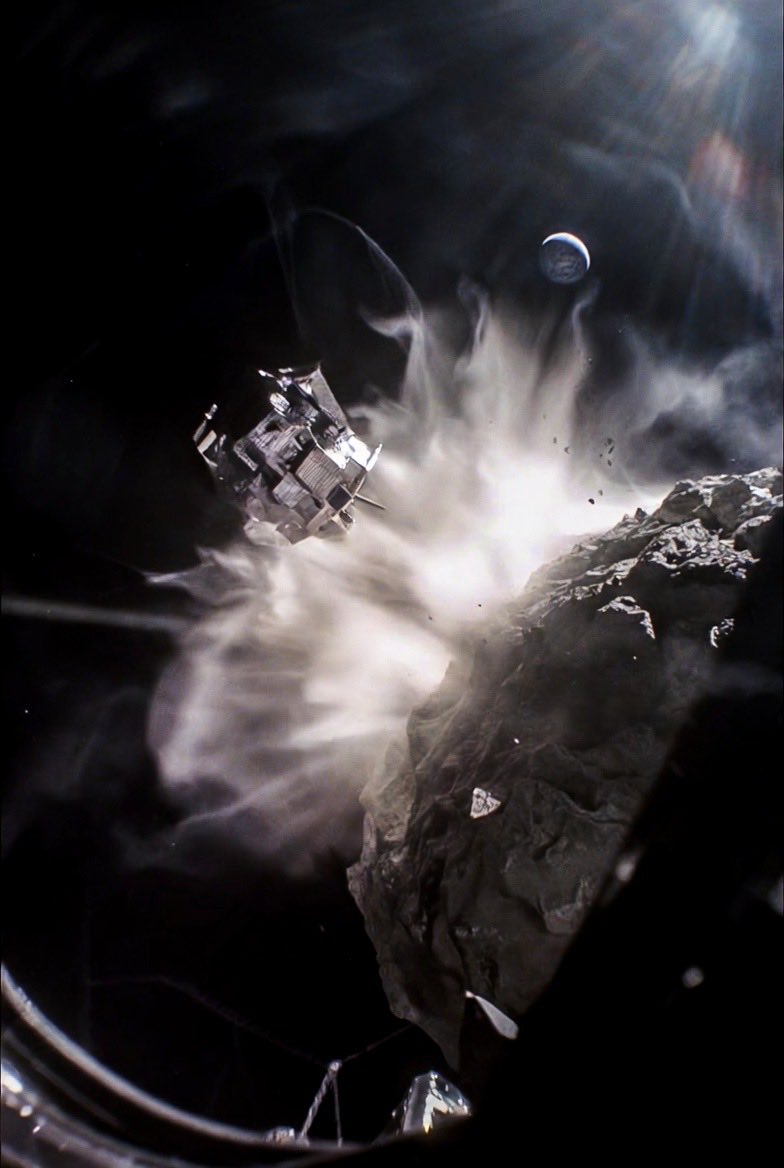
@SpaceX @NASA How I imagine it looked... And you can't tell me otherwise
English
0
1
15
889
laura anne edwards
laura anne edwards@alurabrava·
@SpaceX @NASA Great now please help with additional missions to develop data and capabilities for asteroids of different sizes and compositions.
English
7
2
12
406
Victoria Zeev
Victoria Zeev@VictoriaZeev·
@SpaceX @NASA So NASA crashes a spacecraft into an asteroid and slightly nudges its orbit, and we’re calling it some massive breakthrough?
English
62
2
12
8K
Doug
Doug@RealRedDude·
@SpaceX @NASA Why is this story not plastered on every network?
English
5
2
11
3K
moderncarsonly
moderncarsonly@DWealsy23·
@SpaceX @NASA We really did a “what if we just hit it” experiment on an asteroid… and it actually worked twice over. Low‑key the most sci‑fi thing humanity’s pulled off lately: nudging a whole asteroid system’s path around the Sun with a glorified space battering ram.
English
0
2
11
623
Share