@NotA_Bull If you are trying to win the game by only holding the same basket as everyone else like an index fund, you are choosing a safe path that makes it very hard to ever finish first...
English
Compounding Titans
128 posts
@Compoundtitans
In-depth analysis of stocks that stand the test of time. Subscribe for free: https://t.co/1qz3Z0SM7M

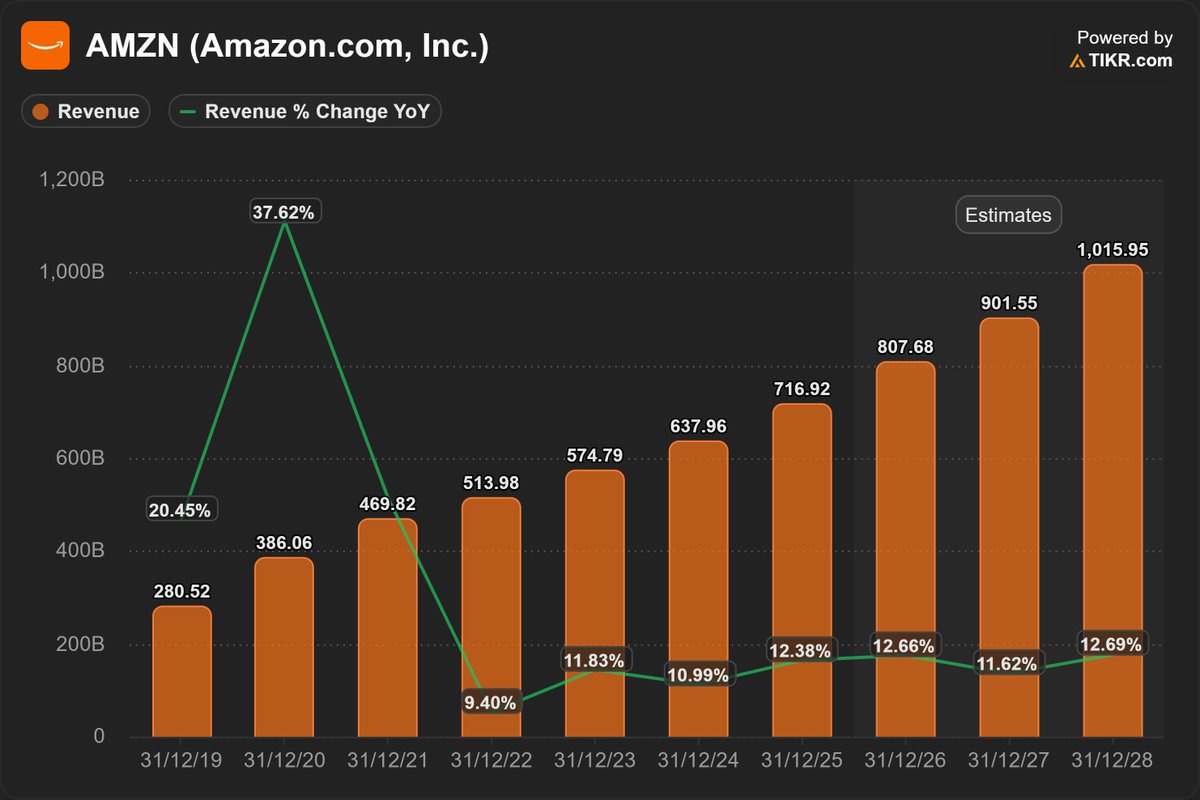
For over 16 years: Amazon has followed a consistent pattern. Price disconnects. EPS compounds. Then valuation realigns. $AMZN


Greg Abel on Berkshire Hathaway's investment philosophy: "We will remain Berkshire and we will never be dependent on a bank or some other party for Berkshire to be successful." Greg explains that Berkshire starts from a position of strength—a great culture and strong values defined by Warren Buffett, Charlie Munger, and everyone associated with the business. These values, he says, set Berkshire up well for the future. When it comes to capital allocation, Greg highlights two priorities that are absolutely critical. First, reputation. "We will maintain the reputation of Berkshire and that of our company. I view that in investing or how we operate things across each of our businesses — that will always be a priority and something that will ensure is in the forefront of our minds." Second, a fortress balance sheet. Referencing Warren's comments, Greg acknowledges that Berkshire holds a significant amount of cash right now. But rather than viewing it as idle capital, he frames it as a strategic advantage. "It's an enormous asset to have that and that will continue to be a philosophy. Yes, when we can deploy it, we'll deploy it well. But we do recognize it as a strategic asset and it allows us to weather the difficult times and not be dependent on anybody." Greg also credits Sue Decker, Berkshire's lead director, for articulating this well — the cash position isn't a problem to solve, it's a deliberate choice that gives Berkshire independence and resilience.

Warren Buffett on what caused the 2008 Global Financial Crisis "You cannot stand to see your neighbor getting rich. You know you are smarter than he is. And he is doing these things and getting rich. Your spouse is unhappy with you because you aren't doing it. And pretty soon, you start doing it. And so you get the three Is: the innovators, the imitators, and the idiots."