

Jobizzness
230 posts

Jobizzness
@Jobizzness
Builder, Africa Enthusiast, Growth Hacker, Talk to me About AI + Coffee ☕
Tech • ECommerce • Finance Joined Temmuz 2014
3K Following1.2K Followers

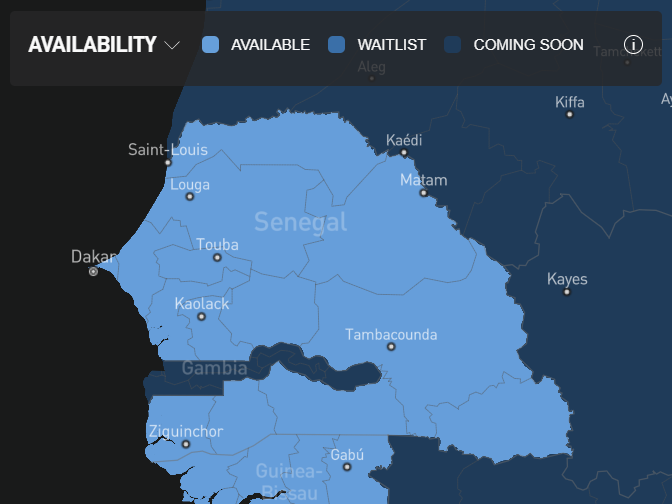
Starlink’s high-speed, low-latency internet is now available in Senegal! 🛰️🇸🇳❤️ → starlink.com/senegal
English
@max_rosewater I wonder if this may be a crucial step for businesses with longer consideration time.
English

We allocated ~3% of ad spend (~$400K) to a conversion lift test optimizing for add-to-cart events with a 10% holdout. The results are interesting...
Performance (add-to-cart vs. purchase optimized):
CTR: 5.62% vs. 2.1–2.9%
CPM: $17 vs. $23.50
CPC: $0.30 vs. $0.85–$1.10
Cost per add-to-cart: $1.19 vs. $3.75
Cost per checkout: $13.02 vs. $21.60
Add-to-cart volume (similar spend): 1,722 vs. 731–1,070
ROAS: 1.80 vs. 2.33 blended
(Several purchase optimized campaigns performing similarly).
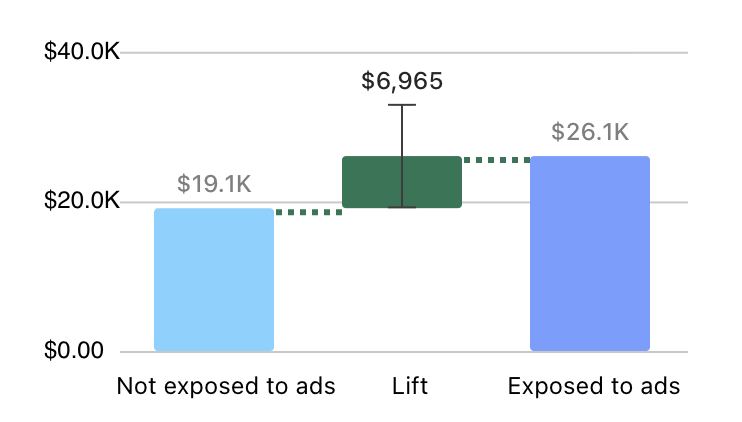
To validate this in terms of incremental lift, we ran a Meta Conversion Lift Study. It showed 118 incremental conversions, $6,965 in incremental revenue, and 1.84x incremental ROAS—confirming there is a lift across the account from this spend, even if ROAS is slightly below target on the campaign itself.
Acknowledging, scale on this test was pretty low, so going to stress-test this now.
My takeaway: Even with limited spend, optimizing earlier in the funnel does result in cheaper and still valuable traffic. This seems to help our account to drive more eye-balls that actually do convert, for a bit cheaper. I'd say it's a great supplement to purchase conversion campaigns.
If you're interested, you can test this out in Meta Ads' "Experiments" section!
English
@PrestonRuther10 This is brilliant, would assume organic search will include searches on TikTok and social?
English

For half a decade, I thought I was tracking the right metrics.
I was wrong.
Here are 8 metrics I wish I had started tracking sooner to know if our Brand (AKA the equity value of the business) was actually getting stronger.
1. Are your branded organic searches growing faster than revenue?
2. Are contribution dollars & margin going up?
Note: Contribution Dollars = Revenue - variable costs (COGS, marketing, shipping). It excludes fixed costs like rent & salaries.
3. Is direct & branded search revenue growing faster than overall revenue?
4. Is the % difference between gross & net sales shrinking?
Note: This signals less reliance on discounts & fewer returns.
5. Are 30, 60, and 90-day incremental LTV going up? (excluding initial purchase)
6. Is your reach growing as fast as (or faster than) your revenue?
7. Have your worst days gotten better? (i.e., is the average of your 30 lowest-revenue days trending up?)
8. For organic search: is revenue per session rising while total sessions are growing or stable?
--
If you're not tracking any of these things, fret not.
For the first half decade, I only thought revenue, growth rate, ROAS, conversion rate, new customers acquired, and % of revenue from existing customers were the only metrics that mattered.
I realized that while those metrics matter, they're just a small part of the puzzle.
They don't get to the core of building a balanced growth engine that improves over time, not the opposite.
---
Caveats:
None of these metrics are perfect.
You can game any of them.
The general idea is that if you're able to answer yes to all of these questions in a reasonable way, then your brand is likely getting healthier.
Make best efforts to handle things that would invalidate the metric.
For example, regarding the branded organic search volume metric: you might be thinking, "well, we did TV last year, so the fact that Brand search volume is down this year is irrelevant."
Unfortunately, that's a bullsh*t excuse.
Find a way to make the metric relevant by getting an understanding of what the TV impact on search was and strip that out, or acknowledge that TV was driving value for you, and canceling it was a mistake.
---
Question for the people of the internet:
What other metrics do you like to track that help you get a feel for the increasing quality of your business?

English



Thanks to Dalton Caldwell and Paul Buchheit. Excited for their new VC fund!
ycombinator.com/blog/dalton-ca…
English
CMO: if you want me to hit a 2 ROAS, or a 20 ROAS, i can do that.
CFO: bruh, wtf do you mean?
CMO: i can toggle 3 big things and get you whatever number you want. if i spend more on retargeting or brand keywords, run discount sales, or reduce spend, I can drive ROAS to the moon.
CFO: go on...
CMO: the problem is that we have not evolved from the early days when we had existing untapped demand. that's why we started the business in the first place. there was demand for a product that didn't yet exist in the market. therefore, every dollar we spent was both high-ROAS AND driving incremental revenue
CFO: i'm starting to follow
CMO: but as we've grown, we've exhausted that group's revenue. We haven't started generating new demand. What got us here won't get us where we need to go.
CFO: but we need a number showing how our investments are driving increased profitable growth
CMO: i get it, but if we're using ROAS as THE tier-1 metric, our team will be incentivized to do things that have the opposite impact
CFO: i'm back to not following
CMO: ROAS as the only metric will drive the human tendency to do 3 things: pull back spend on low ROAS, but high-incrementality (driving purchases that would not have happened without this spend) investments, over-spend on high-ROAS low-incrementality tactics like retargeting or brand keywords, and prioritize messaging, creative and sending traffic to discount collections.
CFO: ok, that's making sense
CMO: so our new customer cohorts will shrink, and a larger percentage of that cohort will be acquired on discount. because our forecasts have increasing pressure on repeat revenue, we'll push harder to get more revenue sooner from these cohorts. but because there are fewer customers, and they're lower LTV to begin with, we won't be able to hit our forecast without further discounting to drive them to purchase. you can see how this doesn't end well.
CFO: gotcha. so you're saying focusing on ROAS alone makes us do things that actually slow our growth while simultaneously reducing our margin?
CMO: yes. clearly we need to run promotions sometimes, and there's some amount of retargeting that makes sense. but ROAS is an "efficiency" metric. we need an "effectiveness" metric to balance it out. sure, we can use number of new customers, but that doesn't tell us about customer quality
CFO: so lemme see if I'm pickin' up what you're puttin down. Putting too much focus on efficiency metric like ROAS will incentivize team behaviors counter to our long term goals. therefore, we need a metric that represents the total amount of growth (AKA "effectiveness"), BUT, it has to represent long term customer quality, not just new customers, like total 180-day contribution LTV dollars from full-price customers acquired
CMO: (floored) you're my hero
CFO: not all heroes wear capes
English
Serious requests for both ChatGPT and Claude teams: Take network failures much more seriously, and write to a scratch area that allows retries to work off of prior work. It feels like catastrophic data loss when a given response comes back and fails half way, and then the next retry is not as good.
English
@tamarajtran @Firebase @googlecloud Sorry Tamara. I can only help you find the bug that caused this. But google alone can help you with the bill
English




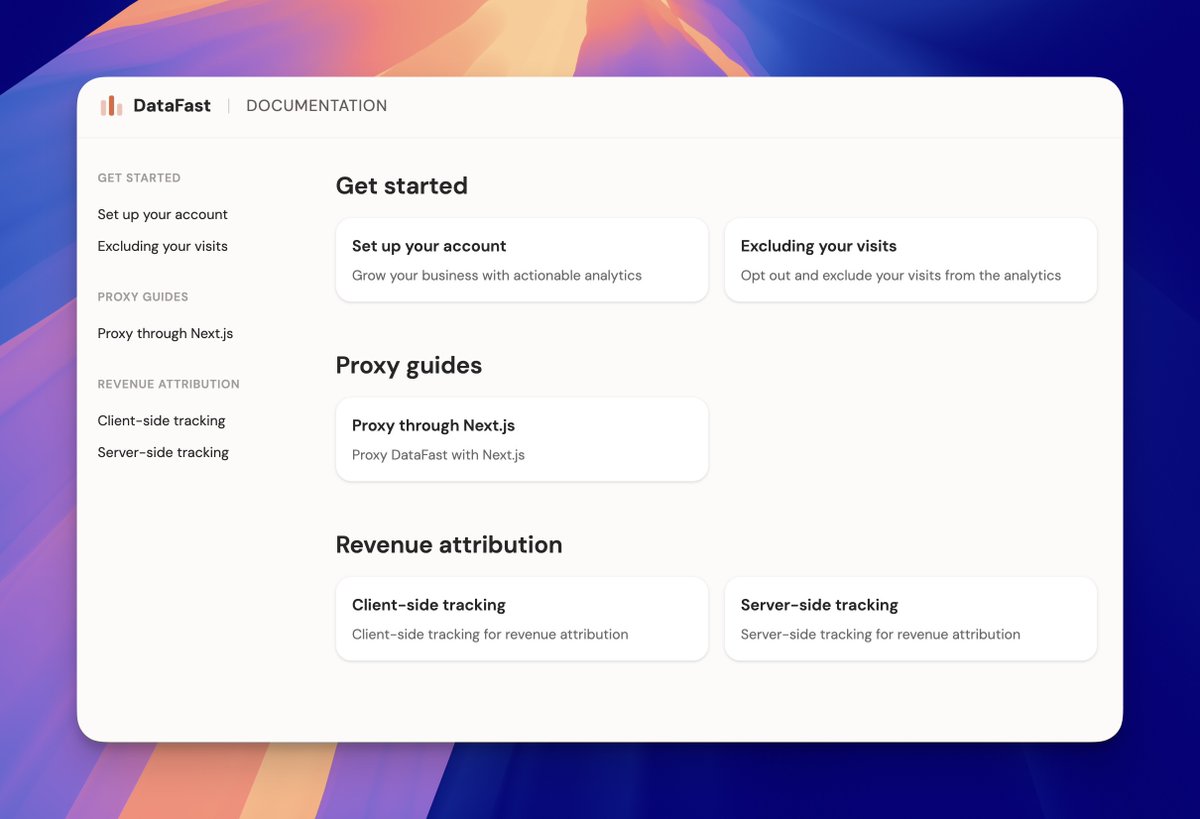
I shipped documentation for @DataFast_ and added two new features:
🧱 Server-side tracking to attribute revenue on the back end with nearly 100% accuracy
↔️ Proxy the script with your domain to bypass ad blockers (35% of the web)
Available now!
English

Google just launched an AI that takes over Chrome and does things for you.
It scores an insane 90.5% w/ tree search on the WebVoyager benchmark which has tasks like:
"Book a flight from SF to Berlin, departing on March 5 and returning on the 12"
Agents are going mainstream.
English







Gojek completes more food deliveries than GrubHub, Uber Eats, and DoorDash combined, and more rides per day than Lyft. Vikrama Dhiman (@vikramadhiman) heads all things product at @GojekTech, including product management, design, and research, across teams in Indonesia, Singapore and India. He is among the most well-known and respected product leaders in all of Asia, and one of my most requested guests.
In our conversation, we discuss:
🔸 The most common traits of successful PMs
🔸 The 3 W’s framework for PM career growth
🔸 The right way to push back as a PM
🔸 The Four A’s of leveling up in product management
🔸 Common pitfalls that stall PM careers
🔸 Advice for transitioning into PM
🔸 Why intent alone is not enough
🔸 Much more
Listen now 👇
- YouTube: youtu.be/ImSvm11GR0Y
- Spotify: open.spotify.com/episode/0HoWK3…
- Apple: podcasts.apple.com/us/podcast/a-f…
Some key takeaways:
1. As a PM—especially early in your career—make sure you’re nailing execution before you spend too much time on strategy. Effective strategic thinking requires context on the company, product, and stakeholders that you might not have yet. But you always have opportunities to execute and make your team members’ lives easier. As you execute more, you’ll begin to understand the strategic needs more deeply, and you’ll have more opportunities to contribute at that level.
2. Three traits that make you a great PM to work with:
a. Raise difficult issues without being difficult to work with
b. Bring up important topics without drawing importance to yourself
c. Remember that you are in charge of getting decisions made, not making the decisions yourself
3. Good PMs produce good artifacts: PRDs, product notes, design briefs, etc. These demonstrate your proficiency across core PM skills, and they are your opportunity to “have impact on the impact”—to add value to a team that is adding value to the company. If you’re not sure what to focus on next in your PM career, go scrutinize your recent artifacts and ask how they could be improved.
4. To push back on ideas without being difficult to work with, ask clarifying questions and bring the conversation to a logical space rather than an emotional one. Here are some of Vikrama’s favorites:
a. Why has this become suddenly important?
b. So that I am clear, can you help clarify xyz?
c. What would success look like?
d. What time frame do you need this in?
5. Vikrama’s 3 W’s framework for PM career growth comprises (1) what you produce, (2) what you bring to the table, and (3) what your operating model is. Strong product managers excel at two of the three W’s. Product managers who rise in their career excel at all three.
6. Three mindset shifts that can enable faster growth:
a. Focus on things you can control: Concentrate your efforts on aspects of your role that you can influence or control, especially as you advance in your career.
b. Always embrace change: As an IC PM, you experience rapid change. It’s important that as you get to mid/senior level, you never stop looking for ways to improve.
c. How you see yourself: Cultivate a positive and growth-oriented mindset about yourself and your capabilities.
7. Three core competencies to focus on when transitioning into PM roles are (1) data, (2) design/research, and (3) technology. Someone from a design background should focus on strengthening data or tech skills to complement their existing expertise. Similarly, someone from a tech background should pick a design skill to focus on. This approach allows for maximum leverage.

YouTube
English