
Mitopapi 🧬🕊️

6.9K posts

Mitopapi 🧬🕊️ banner
Mitopapi 🧬🕊️

Mitopapi 🧬🕊️

@Mitopapi

God First☦️ | All Things Health Optimization, Chronic Illness Help & Sovereign Enlightenment | DM to work 1:1

Live Long, Die Fast → Joined Mart 2024
484 Following12.5K Followers
Pinned Tweet
Mitopapi 🧬🕊️
People with slow COMT are told they have "high dopamine" and should feel sharp, focused, and motivated. So why do so many of them feel the exact opposite? The answer has everything to do with WHERE your dopamine is elevated and what happens to it under stress. If you've run a genetic panel and seen that you carry the Met/Met variant of the COMT gene, you've probably read that this means you break down dopamine more slowly, which leads to higher dopamine levels in the brain. And on paper, that sounds like it should protect you from attention and focus issues. More dopamine, better executive function, right? For a lot of people, their lived experience tells a completely different story. They're dealing with brain fog, an inability to start tasks, scattered attention, emotional overwhelm, and what feels like textbook ADHD. And the confusion sets in because everything they've read about their genetics says they should have PLENTY of dopamine to go around. Here's where it gets interesting though... COMT is responsible for breaking down roughly 60% of dopamine in your prefrontal cortex (the part of your brain that handles working memory, focus, and executive function) (PFC). But in the striatum (the region that drives reward processing, motivation, and task initiation), COMT handles less than 15% of dopamine clearance. The striatum relies on an entirely different system called the dopamine transporter (DAT) to do that job. Think of it like a building with multiple floors, where each floor has its own thermostat controlled by a different system. COMT is the thermostat on the top floor (your prefrontal cortex). Slow COMT means that floor runs warm. But the other floors (your striatum and reward centers) have their own thermostats, and COMT has almost no say in how those are regulated. Having a warm top floor tells you absolutely nothing about whether the rest of the building is freezing. This is the first major reason why slow COMT and ADHD symptoms can absolutely coexist. The circuits most directly tied to the motivation problems, task initiation failures, and reward insensitivity that characterize ADHD are largely outside of COMT's jurisdiction. But there's another layer to this. Dopamine in the brain operates in two modes. There's tonic dopamine, which is your baseline ambient level that's always humming in the background. And there's phasic dopamine, which comes in quick, sharp bursts whenever something important happens (a reward, a salient stimulus, a moment where your brain needs to lock in and pay attention). These two modes have an inverse relationship. When tonic dopamine is high, it activates feedback receptors that dampen the amplitude of those phasic bursts. Think of it like trying to hear someone clap in a room where the background music is already loud. The clap still happens, but it doesn't cut through the noise the way it would in a quiet room. Slow COMT raises tonic dopamine in the PFC. That part is accurate. But by raising that baseline, it can reduce the contrast of the phasic signals your brain uses to flag what's important, drive learning, and motivate action. So "more dopamine" at baseline can paradoxically translate into LESS effective dopamine signaling when it actually counts. PET imaging studies in people with ADHD have found a very specific pattern: attenuated tonic dopamine release at rest combined with enhanced phasic release during tasks. This tonic/phasic imbalance in fronto-striatal circuits is one of the leading models for how ADHD actually works at the neurochemical level. And slow COMT, by raising tonic levels in the PFC, can contribute to a version of that same signal-to-noise problem from a different angle. Now layer stress on top of all of this. There's a well-established relationship between prefrontal dopamine and cognitive performance that follows an inverted U shape. Too little dopamine and your PFC underperforms. Too much and it gets overwhelmed. There's an optimal zone in the middle where everything clicks. A meta-analysis of 75 published studies confirmed this curve, showing that it explains a significant portion of the variance in working memory performance. For people with slow COMT, baseline PFC dopamine is already sitting closer to the peak of that curve under calm conditions. This means there is very little room before stress, cognitive load, or even mild social pressure pushes them PAST optimal and into territory where executive function starts falling apart. Think of it like a dimmer switch on a light that's already near the top of its range. Any additional input doesn't make it brighter in a useful way. It becomes blinding. A study by Zareyan et al. tested this directly. In a within-subject crossover design, 140 healthy adults carrying at least one Met allele or homozygous for Val/Val each completed executive function tasks in two separate sessions (one under calm conditions and one under mild social evaluative stress), with order counterbalanced across participants. Met carriers performed significantly worse under stress compared to when they were calm. Val/Val individuals showed the opposite pattern and actually performed BETTER under that same mild pressure. This was the first empirical confirmation of the double dissociation that researchers had predicted for years. It's worth noting that two prior studies (Buckert et al., 2012 and Qin et al., 2012) successfully showed that stress impaired Met carriers, but in both cases Val/Val individuals were essentially unaffected by stress, not improved by it. The full double dissociation (Mets worse AND Vals better) was only achieved in Zareyan et al. by using a much milder stressor. The bandwidth for stress to actually boost Val/Val performance is exceedingly narrow. What this means in practical terms is that even everyday stressors (a deadline, someone watching you work, a conversation where you feel evaluated) can crash prefrontal function in people with slow COMT. And when that crash happens, it looks EXACTLY like ADHD from the outside: task avoidance, inability to initiate, scattered attention, emotional dysregulation, etc. The behavioral output is essentially the same, even though the mechanism driving it is different. Research also shows that Met carriers are more environmentally sensitive across the board. A longitudinal study tracking children over time found that COMT Met genotype and early-life family adversity interactively predicted ADHD symptom trajectories, with Met carriers showing steeper increases in symptoms under high-adversity conditions. A separate study found the same interaction with socioeconomic status. This pattern is consistent with what researchers call "differential susceptibility," meaning slow COMT makes you more responsive to your environment in both directions. You benefit more from enriching, low-stress conditions. You're harmed more by adverse ones. So if you have slow COMT and you're experiencing symptoms that feel like ADHD, here's the practical picture. Your PFC may perform well under low-demand, self-paced, calm conditions but buckle under any significant stress or cognitive load. Reducing chronic stress is a neurochemical necessity for you, because even mild persistent pressure degrades your prefrontal function in a way it doesn't for people with fast COMT. Sleep and circadian regulation matter more than you might realize here, because dopamine tone volatility amplifies the PFC function collapses that slow COMT predisposes you to. If you're stimulant maxxxing, it's also worth understanding that Met/Met individuals may be more sensitive to being pushed past optimal PFC dopamine, which can show up as increased anxiety, cognitive rigidity, or paradoxically worse attention at doses that work fine for someone with fast COMT. This argues for careful, gradual titration rather than one-size-fits-all dosing. And if you carry both slow COMT AND a high genetic burden for ADHD (which is entirely possible since they operate through independent pathways), you're dealing with a layered situation. The ADHD component drives baseline fronto-striatal dysfunction, and the slow COMT component adds prefrontal cortex stress sensitivity on top of that. Understanding which piece is contributing what is valuable, because the strategies for managing each are different. The bottom line is this: "slow COMT = high dopamine = no focus problems" is a massive oversimplification that collapses the second you understand how regionally specific COMT's influence is, how tonic and phasic dopamine interact, and how dramatically stress changes the equation for Met carriers. Your COMT status is one piece of a much bigger and more nuanced puzzle. This is for educational purposes only, not medical advice.

Mitopapi 🧬🕊️ tweet media
English
2
2
13
2.6K
Mitopapi 🧬🕊️
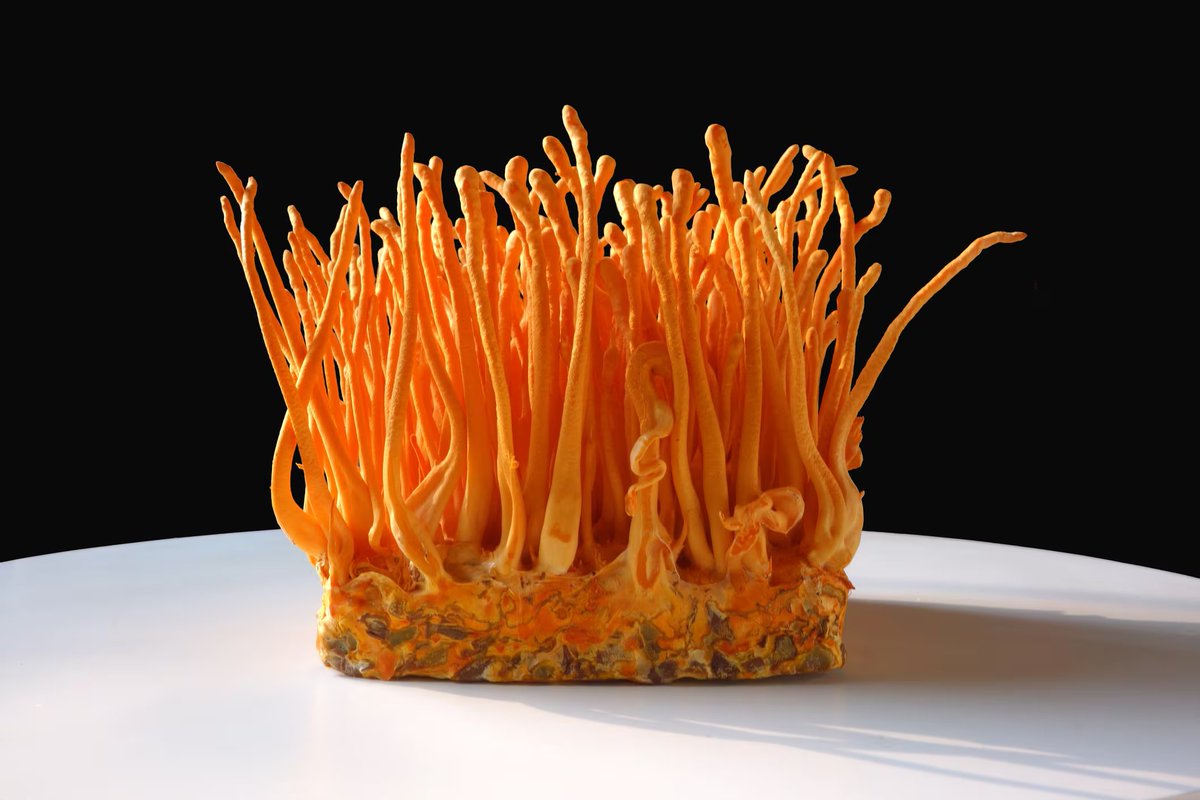
Dealing with thyroid autoimmunity is a long, slow process, and a lot of people reach a point where they feel like they've hit a ceiling with their antibodies that nothing seems to break through. Cordyceps has clinical data showing 40 to 51% antibody reduction across multiple trials, a thermostat-like immune mechanism that corrects from both directions depending on the disease, evidence of direct thyroid tissue protection, and significant reductions in the inflammatory cytokines that keep the autoimmune process going. And almost nobody in the mainstream thyroid conversation is talking about it. Now you know about it. STAY HEALTHY
English
0
0
1
153
Mitopapi 🧬🕊️
Short-term safety data across the trials shows that adverse events were mild and happened at similar rates in both the Cordyceps groups and the control groups (occasional GI discomfort, nothing serious). That said, long-term safety data beyond about 7 months doesn't exist in the thyroid literature, and no formal drug interaction studies with levothyroxine or methimazole have been published yet.
English
1
0
1
163
Mitopapi 🧬🕊️
You've cleaned up your diet. You've worked on your gut. You've managed your stress. And your thyroid antibodies are STILL elevated... I want to talk about something the mainstream thyroid conversation has been completely overlooking:
Mitopapi 🧬🕊️ tweet media
English
2
0
27
2.9K
Mitopapi 🧬🕊️
People with slow COMT are told they have "high dopamine" and should feel sharp, focused, and motivated. So why do so many of them feel the exact opposite? The answer has everything to do with WHERE your dopamine is elevated and what happens to it under stress. If you've run a genetic panel and seen that you carry the Met/Met variant of the COMT gene, you've probably read that this means you break down dopamine more slowly, which leads to higher dopamine levels in the brain. And on paper, that sounds like it should protect you from attention and focus issues. More dopamine, better executive function, right? For a lot of people, their lived experience tells a completely different story. They're dealing with brain fog, an inability to start tasks, scattered attention, emotional overwhelm, and what feels like textbook ADHD. And the confusion sets in because everything they've read about their genetics says they should have PLENTY of dopamine to go around. Here's where it gets interesting though... COMT is responsible for breaking down roughly 60% of dopamine in your prefrontal cortex (the part of your brain that handles working memory, focus, and executive function) (PFC). But in the striatum (the region that drives reward processing, motivation, and task initiation), COMT handles less than 15% of dopamine clearance. The striatum relies on an entirely different system called the dopamine transporter (DAT) to do that job. Think of it like a building with multiple floors, where each floor has its own thermostat controlled by a different system. COMT is the thermostat on the top floor (your prefrontal cortex). Slow COMT means that floor runs warm. But the other floors (your striatum and reward centers) have their own thermostats, and COMT has almost no say in how those are regulated. Having a warm top floor tells you absolutely nothing about whether the rest of the building is freezing. This is the first major reason why slow COMT and ADHD symptoms can absolutely coexist. The circuits most directly tied to the motivation problems, task initiation failures, and reward insensitivity that characterize ADHD are largely outside of COMT's jurisdiction. But there's another layer to this. Dopamine in the brain operates in two modes. There's tonic dopamine, which is your baseline ambient level that's always humming in the background. And there's phasic dopamine, which comes in quick, sharp bursts whenever something important happens (a reward, a salient stimulus, a moment where your brain needs to lock in and pay attention). These two modes have an inverse relationship. When tonic dopamine is high, it activates feedback receptors that dampen the amplitude of those phasic bursts. Think of it like trying to hear someone clap in a room where the background music is already loud. The clap still happens, but it doesn't cut through the noise the way it would in a quiet room. Slow COMT raises tonic dopamine in the PFC. That part is accurate. But by raising that baseline, it can reduce the contrast of the phasic signals your brain uses to flag what's important, drive learning, and motivate action. So "more dopamine" at baseline can paradoxically translate into LESS effective dopamine signaling when it actually counts. PET imaging studies in people with ADHD have found a very specific pattern: attenuated tonic dopamine release at rest combined with enhanced phasic release during tasks. This tonic/phasic imbalance in fronto-striatal circuits is one of the leading models for how ADHD actually works at the neurochemical level. And slow COMT, by raising tonic levels in the PFC, can contribute to a version of that same signal-to-noise problem from a different angle. Now layer stress on top of all of this. There's a well-established relationship between prefrontal dopamine and cognitive performance that follows an inverted U shape. Too little dopamine and your PFC underperforms. Too much and it gets overwhelmed. There's an optimal zone in the middle where everything clicks. A meta-analysis of 75 published studies confirmed this curve, showing that it explains a significant portion of the variance in working memory performance. For people with slow COMT, baseline PFC dopamine is already sitting closer to the peak of that curve under calm conditions. This means there is very little room before stress, cognitive load, or even mild social pressure pushes them PAST optimal and into territory where executive function starts falling apart. Think of it like a dimmer switch on a light that's already near the top of its range. Any additional input doesn't make it brighter in a useful way. It becomes blinding. A study by Zareyan et al. tested this directly. In a within-subject crossover design, 140 healthy adults carrying at least one Met allele or homozygous for Val/Val each completed executive function tasks in two separate sessions (one under calm conditions and one under mild social evaluative stress), with order counterbalanced across participants. Met carriers performed significantly worse under stress compared to when they were calm. Val/Val individuals showed the opposite pattern and actually performed BETTER under that same mild pressure. This was the first empirical confirmation of the double dissociation that researchers had predicted for years. It's worth noting that two prior studies (Buckert et al., 2012 and Qin et al., 2012) successfully showed that stress impaired Met carriers, but in both cases Val/Val individuals were essentially unaffected by stress, not improved by it. The full double dissociation (Mets worse AND Vals better) was only achieved in Zareyan et al. by using a much milder stressor. The bandwidth for stress to actually boost Val/Val performance is exceedingly narrow. What this means in practical terms is that even everyday stressors (a deadline, someone watching you work, a conversation where you feel evaluated) can crash prefrontal function in people with slow COMT. And when that crash happens, it looks EXACTLY like ADHD from the outside: task avoidance, inability to initiate, scattered attention, emotional dysregulation, etc. The behavioral output is essentially the same, even though the mechanism driving it is different. Research also shows that Met carriers are more environmentally sensitive across the board. A longitudinal study tracking children over time found that COMT Met genotype and early-life family adversity interactively predicted ADHD symptom trajectories, with Met carriers showing steeper increases in symptoms under high-adversity conditions. A separate study found the same interaction with socioeconomic status. This pattern is consistent with what researchers call "differential susceptibility," meaning slow COMT makes you more responsive to your environment in both directions. You benefit more from enriching, low-stress conditions. You're harmed more by adverse ones. So if you have slow COMT and you're experiencing symptoms that feel like ADHD, here's the practical picture. Your PFC may perform well under low-demand, self-paced, calm conditions but buckle under any significant stress or cognitive load. Reducing chronic stress is a neurochemical necessity for you, because even mild persistent pressure degrades your prefrontal function in a way it doesn't for people with fast COMT. Sleep and circadian regulation matter more than you might realize here, because dopamine tone volatility amplifies the PFC function collapses that slow COMT predisposes you to. If you're stimulant maxxxing, it's also worth understanding that Met/Met individuals may be more sensitive to being pushed past optimal PFC dopamine, which can show up as increased anxiety, cognitive rigidity, or paradoxically worse attention at doses that work fine for someone with fast COMT. This argues for careful, gradual titration rather than one-size-fits-all dosing. And if you carry both slow COMT AND a high genetic burden for ADHD (which is entirely possible since they operate through independent pathways), you're dealing with a layered situation. The ADHD component drives baseline fronto-striatal dysfunction, and the slow COMT component adds prefrontal cortex stress sensitivity on top of that. Understanding which piece is contributing what is valuable, because the strategies for managing each are different. The bottom line is this: "slow COMT = high dopamine = no focus problems" is a massive oversimplification that collapses the second you understand how regionally specific COMT's influence is, how tonic and phasic dopamine interact, and how dramatically stress changes the equation for Met carriers. Your COMT status is one piece of a much bigger and more nuanced puzzle. This is for educational purposes only, not medical advice.
Mitopapi 🧬🕊️ tweet media
English
2
2
13
2.6K
Mitopapi 🧬🕊️ retweeted
@simpleorganix
@simpleorganix@simpleorganix·
People don’t like to hear that their emotional garbage is making them physically sick. They want a pill & easy fix. You didn’t just come here to pay taxes & die… You came to learn & fix patterns that have generationally stopped your blood line from being its best version. We miss this part.
English
3
9
91
3K