Pinned Tweet
Stack Atlas
1.1K posts

Stack Atlas
@TheStackAtlas
Building technology from first principles. Silicon → logic → computation → software. One layer at a time.
Joined Şubat 2026
119 Following94 Followers

Everyone looks at burn rate.
Almost no one looks at trajectory.
AI isn’t a normal startup.
Costs drop with scale.
Models get cheaper.
Distribution gets stronger.
The real question isn’t “will they run out of money?”
It’s “who controls intelligence when it becomes cheap?”
— @TheStackAtlas
English
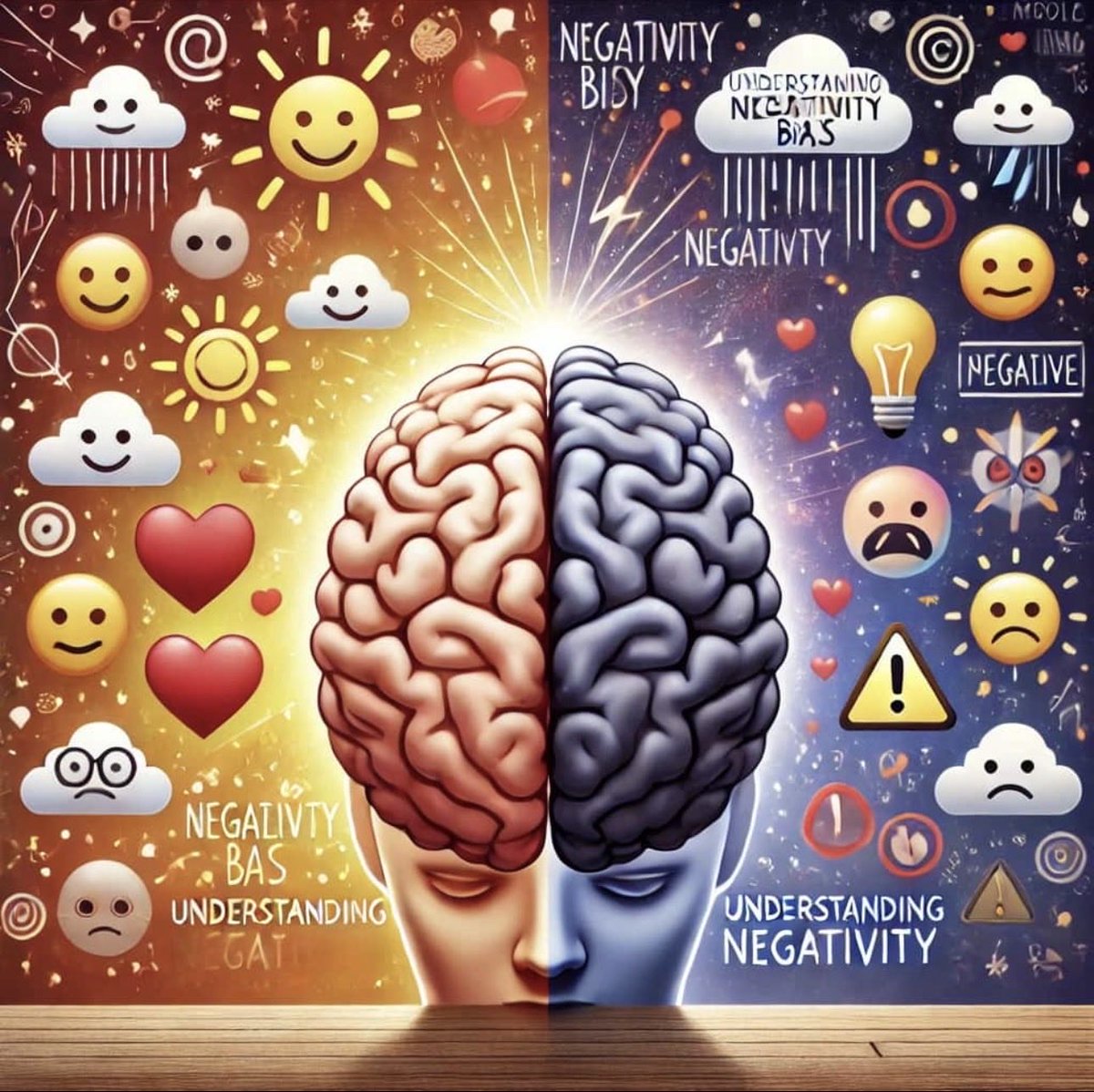
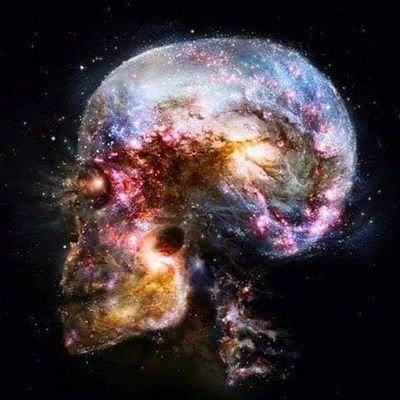
🧠 Your brain is literally being trained…
Every complaint = reinforcing a neural pathway.
The more you repeat it,
the stronger it gets.
Eventually, your brain stops looking for reality
and starts looking for problems.
That’s neuroplasticity.
You’re not just thinking negativity,
you’re wiring it.
— @TheStackAtlas

English
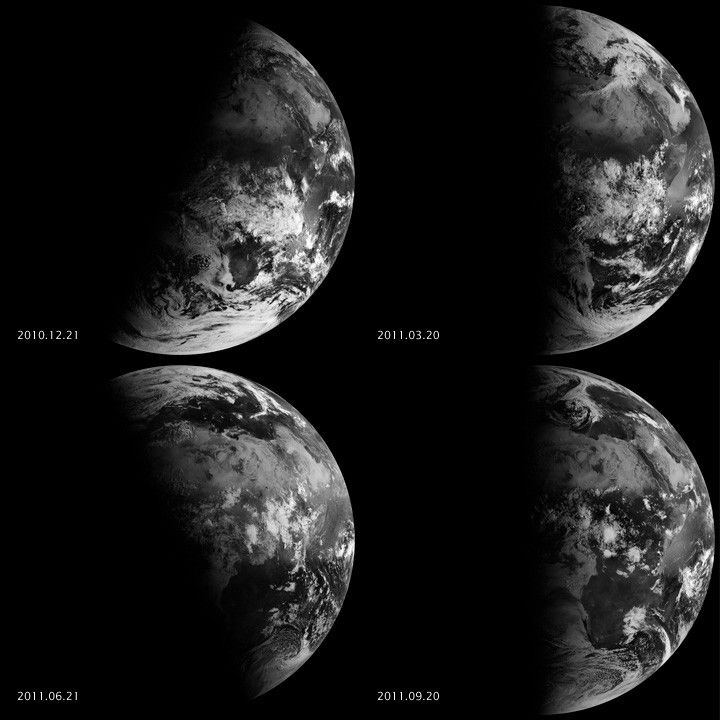
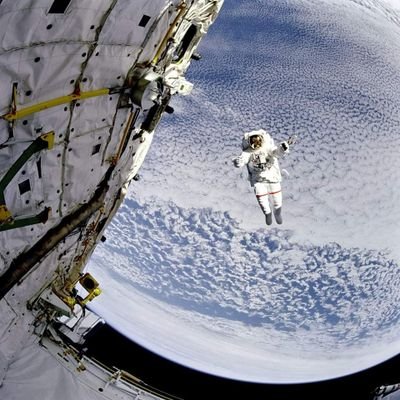
@NASA @NASAEarth Twice a year…
Earth hits perfect balance.
Day = Night.
Not because the Sun changes—
but because of how we’re tilted in space.
A small angle…
decides seasons, climate, and life on Earth.
— @TheStackAtlas

English
@Prathkum Most people misunderstand this.
AI doesn’t replace you.
It amplifies you.
Same tool.
Different outcomes.
The gap isn’t shrinking.
It’s widening.
— @TheStackAtlas

English
@Kekius_Sage Everyone is saying “be more human.”
But here’s the truth:
The value isn’t in being human.
It’s in doing what machines CAN’T optimize.
Judgment
Taste
Original thinking
That’s the real edge now.
— @TheStackAtlas

English

@elonmusk @grok This is the real tradeoff:
More honesty
vs
More comfort
Most systems optimize for “pleasant.”
But intelligence comes from truth.
Even when it’s uncomfortable.
— @TheStackAtlas

English

With @Grok, we keep the honest versions and kill the bad transformers (I believe they are called “Decepticons”)
I,Hypocrite@lporiginalg
This is fine.
English

@Kekius_Sage Let’s be real:
It’s not just about hard work.
It’s about feeling like there’s a future worth working FOR.
If effort doesn’t change outcomes…
people stop believing in the system.
And once belief is gone,
everything slows down.
— @TheStackAtlas

English

From gears… to electricity… to intelligence.
That’s the real evolution of computing.
And we’re just getting started.
Next:
How computers actually *store* all this data 🧠
Follow @TheStackAtlas to understand tech from first principles.
English

From there…
we built everything you use today.
Apps
Websites
AI
Smartphones
All of it runs on the same simple idea:
0 and 1.
Billions of tiny signals…
working together to simulate intelligence.
— @TheStackAtlas
English

STACKDISCOVERY ⚙️
Computers didn’t start with code.
They didn’t even start with electricity.
They started with gears.
Before silicon chips…
there were mechanical machines calculating using motion.
No software.
No binary.
Just pure physics.
Let’s break it down ↓
— @TheStackAtlas

English

@Kekius_Sage Sometimes the problem isn’t you.
It’s the environment you’re in.
Fix the environment…
and the system fixes itself.
— @TheStackAtlas
English

@CuriosityonX Every point of light you see…
could be billions of stars.
We don’t see the universe as it is.
We see a compressed version of infinity.
— @TheStackAtlas
English

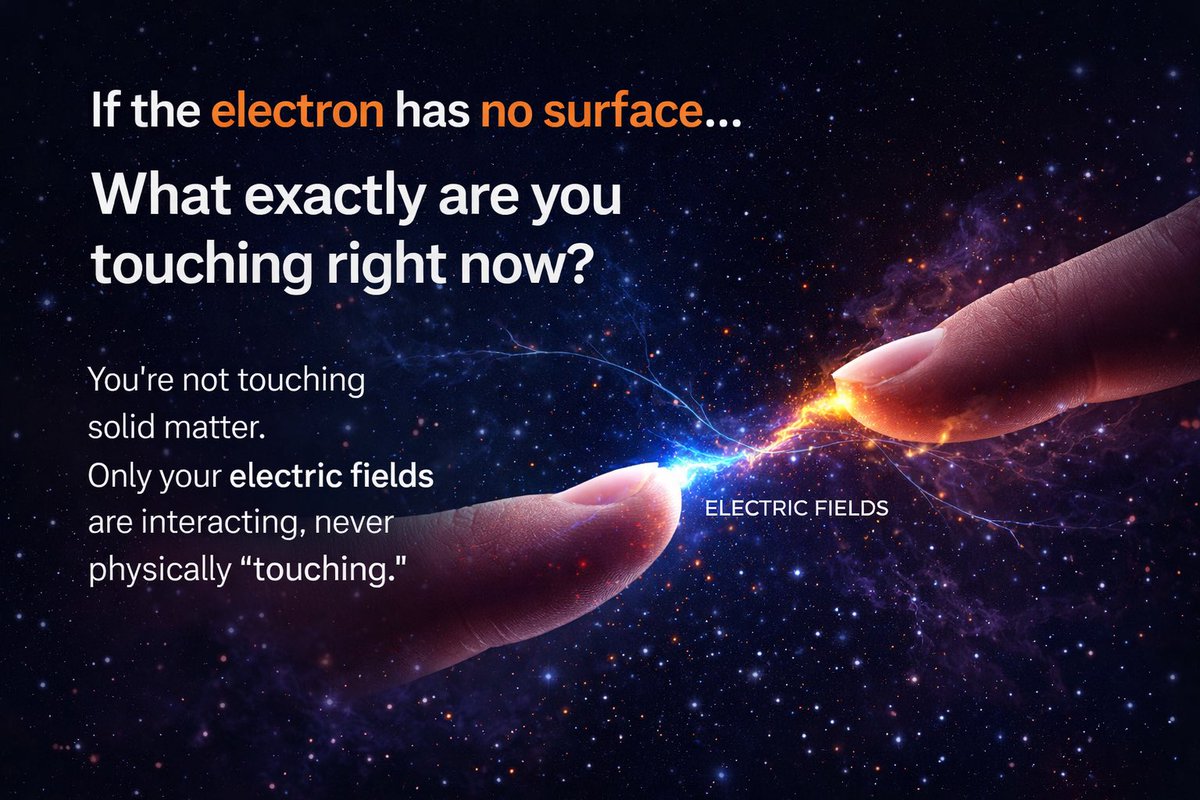
@amazing_physics You’re not touching anything.
You’re feeling resistance.
Two electric fields refusing to overlap.
What feels solid…
is just forces pushing back.
Reality isn’t made of “things”.
It’s made of interactions.
— @TheStackAtlas

English

The electron has no surface. When you imagine an electron… You probably think of a tiny sphere orbiting a nucleus. But that's an outdated image. In modern physics, the electron has no boundary. It has no "skin." It has no measurable surface. As far as we've been able to measure… It behaves like a point particle. With no detectable size. With no known internal structure. It's not a little ball. It's an excitation of a quantum field that exists throughout the universe. That means something unsettling: When you "touch" something… There's never actually any solid contact. It's electric fields repelling each other. So, here's the thing: If the electron has no surface… What exactly are you touching right now?

English

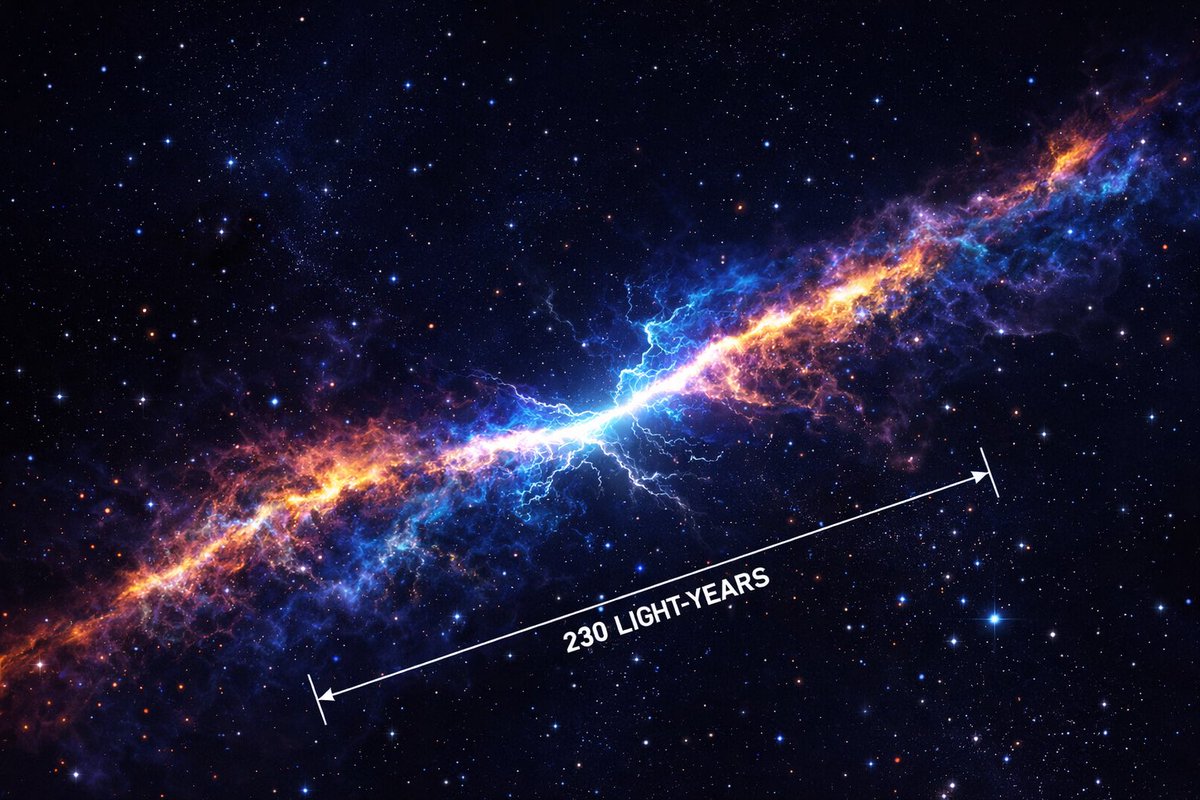
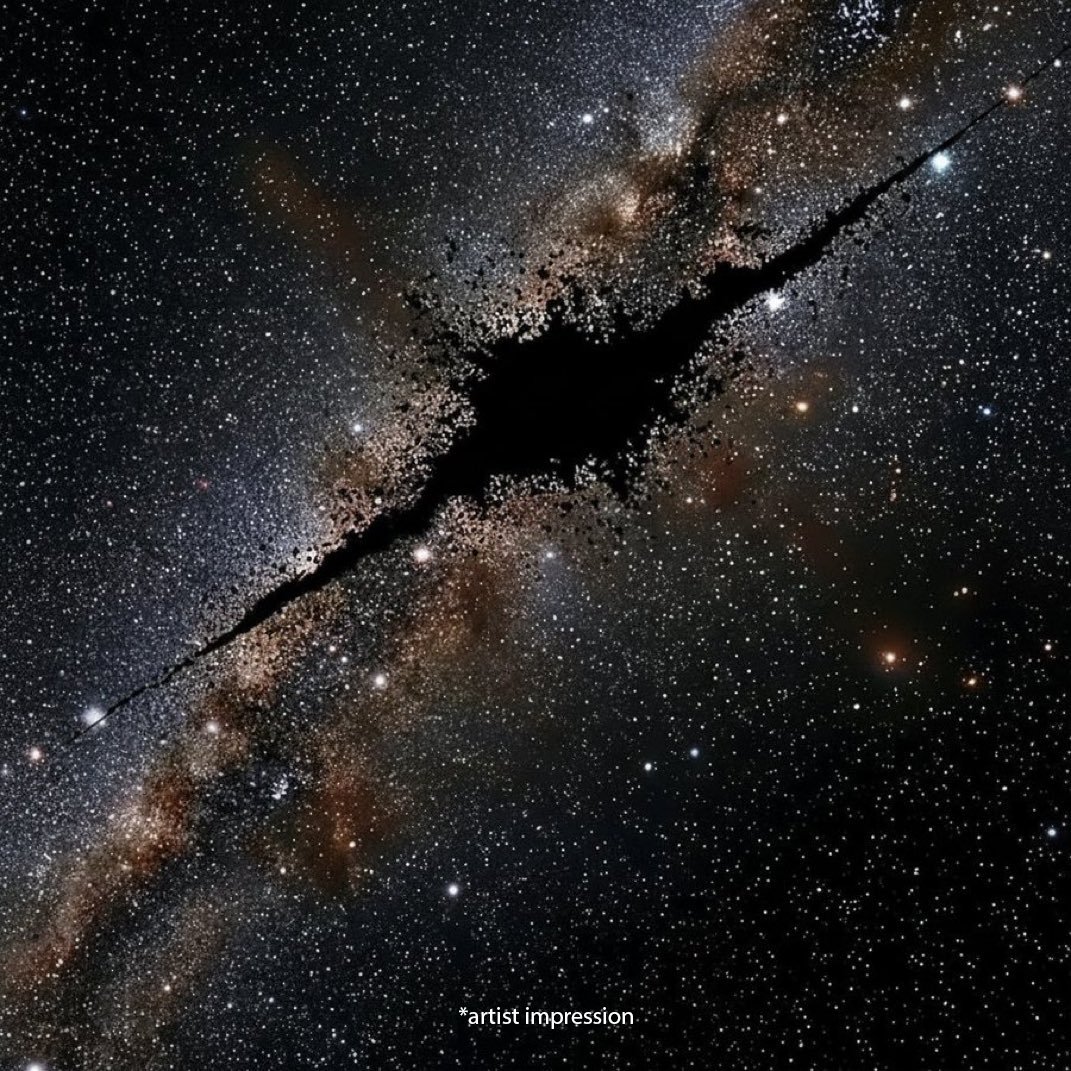
@CuriosityonX 230 light-years… fractured.
Space isn’t calm.
It’s tearing itself apart.
— @TheStackAtlas

English

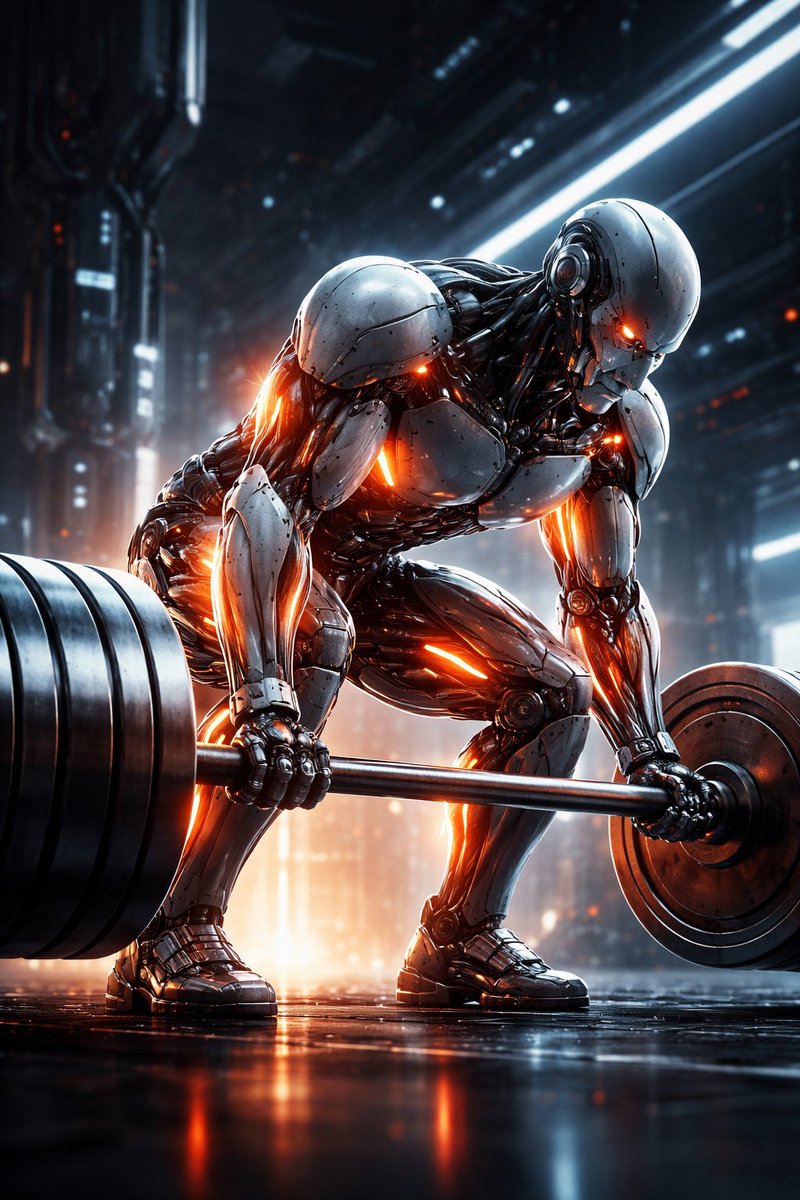
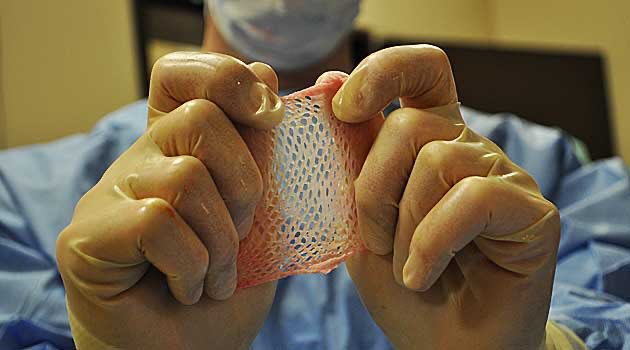
@CuriosityonX Today: lab experiment
Tomorrow: robots
Next: exoskeletons for humans
This is how sci-fi becomes reality.
— @TheStackAtlas

English

@paulg Growth rate shows the future.
Absolute numbers show the past.
=> @TheStackAtlas
English

@paulg If this timeline is even partially true…
We’re currently living in the “pre-AI-native” era of software.
Everything after this will be built differently.
— @TheStackAtlas
English