EAGLEPMX

784 posts

EAGLEPMX banner
EAGLEPMX

EAGLEPMX

@eaglepmx

🛡️ Digital truth, secured. 🛡️ Infrastructure for trust, responsibility & value. PMXChain • PMXQuantum 🦅

Joined Şubat 2024
128 Following9 Followers
Pinned Tweet
EAGLEPMX
EAGLEPMX@eaglepmx·
Encryption is probably the most over-credited technology in enterprise security right now.Not because it doesn't work — it does exactly what it was designed to do, reliably. The problem is the gap between what encryption actually solves and what most organizations believe it solves.Ask a senior security leader whether their data is protected and the answer is almost always framed around encryption. "We encrypt data at rest and in transit." "All our backups are encrypted." These statements are true — and they're all answers to a question that isn't the one regulators, forensic examiners, or insurers are actually asking.Encryption controls access. It answers one question well: can someone who isn't supposed to read this data read it?But there is a second question encryption is structurally incapable of answering: has this data changed since it was created? These are not variations of the same question. They're different problems requiring different solutions — and conflating them creates a gap that is showing up in incident investigations, insurance disputes, and regulatory proceedings with increasing frequency.
English

1
0
0
11
EAGLEPMX
EAGLEPMX@eaglepmx·
Most companies focus on securing their environment. Infrastructure. Access. Perimeter. Because that’s where control feels tangible. However, risk does not always sit at the edges. It sits inside the data itself. Not when it’s stolen. When it’s quietly altered. By the time you notice, the system has already accepted it as valid. Most setups aren’t designed for that. At Eagle PMX, the focus shifts inward. To what your systems rely on most. #DataIntegrity #CyberSecurity #EaglePMX #PMXChain
EAGLEPMX tweet media
English
0
0
0
0
EAGLEPMX
EAGLEPMX@eaglepmx·
Sending an invoice isn't the risky part. It's what happens after you hit 'Send'. Once a document leaves your system, you assume that it has arrived unchanged. In reality, there’s often no way to verify that. It's not because something is obviously broken. It's because nothing checks it. And that’s the gap that most processes are built on. 🔗 eagle-pmx.ch #EaglePMX #PMXQuantum #DataIntegrity #CyberSecurity
English
0
0
0
0
EAGLEPMX
EAGLEPMX@eaglepmx·
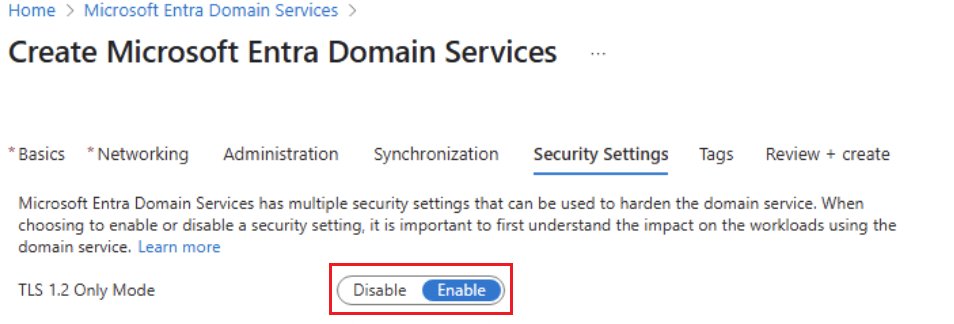
@AzureSupport TLS 1.2 answers: can someone intercept this in transit? It doesn't answer: has this data been modified since it was created? Encryption protects confidentiality. It doesn't give you proof of data state over time. Two different problems, both matter for compliance.
English
1
0
0
10
Azure Support
Azure Support@AzureSupport·
Upgrade your identity security by enforcing TLS 1.2 for Microsoft Entra Domain Services on #Azure 🔐 🔸 Stronger encryption & modern cipher suites 🔸 Protect data and meet compliance standards 🔸 Smooth migration with portal or PowerShell Start here 👉msft.it/6011Qkivc
Azure Support tweet media
English
2
9
37
4.5K
EAGLEPMX
EAGLEPMX@eaglepmx·
@TheHackersNews Two of three still unpatched means the window is open. The question beyond patching: if these flaws were used before confirmation, can you prove what your environment looked like — and that your data hasn't been touched? That's what IR, legal, and cyber insurers require.
English
0
0
0
6
The Hacker News
The Hacker News@TheHackersNews·
⚡ Researchers confirm exploitation of three Microsoft Defender flaws—one patched (CVE-2026-33825) , two unpatched. Attackers escalate privileges and can block Defender updates. 🔗 Learn how these flaws are used in attacks → thehackernews.com/2026/04/three-…
English
7
60
151
14K
EAGLEPMX
EAGLEPMX@eaglepmx·
@TheHackersNews Detection counts going up while CVSS loses relevance is the right observation. The CISO question underneath: when a critical flaw is exploited, can you prove what data existed before the event? Risk scoring tells you probability. Forensic baseline tells you what actually changed.
English
0
0
0
4
The Hacker News
The Hacker News@TheHackersNews·
Security alerts rose 52%, but critical risk jumped ~400%. OX Security shows AI-driven development is scaling high-impact flaws faster than teams can fix them, while business context now outweighs CVSS in real risk. 🔗 Read → thehackernews.com/2026/04/analys…
English
2
5
19
7K
EAGLEPMX
EAGLEPMX@eaglepmx·
@TheHackersNews Shared responsibility means GCP secures the platform. What it doesn't cover: if credentials were abused and data accessed before the flaw was disclosed, proving what existed in your environment — and that it's unchanged — is entirely on the tenant. Most aren't ready for that.
English
0
0
0
2
The Hacker News
The Hacker News@TheHackersNews·
⚠️ A flaw in Google Cloud Vertex AI could expose sensitive data across projects. Default service agent permissions allow attackers to steal credentials from AI agents, access storage buckets, and move inside cloud environments. 🔗 Details here → thehackernews.com/2026/03/vertex…
English
3
17
44
11.6K
EAGLEPMX
EAGLEPMX@eaglepmx·
@TheHackersNews GDPR is treated as a policy problem. The technical question here is harder: can the bank prove exactly what user data existed in their environment before this redirect chain, and that none of it was altered? Auditors don't ask about CSP configs. They ask what you can demonstrate.
English
0
0
0
7
The Hacker News
The Hacker News@TheHackersNews·
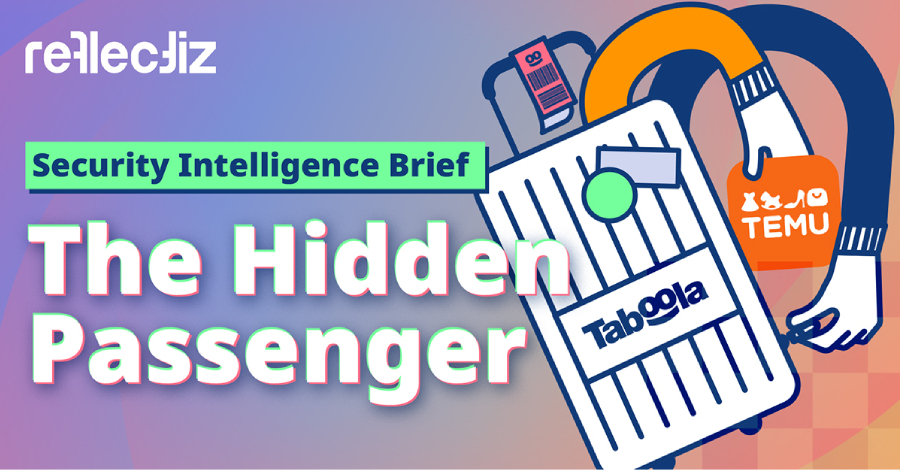
A bank-approved pixel redirected logged-in users to Temu—without consent or detection. First-hop bias let it pass: Taboola was allow-listed, so the browser followed a 302 redirect and sent cookies cross-origin. 🔗 Full trace of how CSP trust breaks at runtime → thehackernews.com/2026/04/hidden…
The Hacker News tweet media
English
4
10
29
7.4K
EAGLEPMX
EAGLEPMX@eaglepmx·
@TheHackersNews Killing EDR before encryption means by the time you detect, the data is already gone. What most orgs still can't answer post-incident: what did the environment look like before the attack started? That forensic pre-state is what insurance, regulators, and legal all require.
English
0
0
0
6
The Hacker News
The Hacker News@TheHackersNews·
🛑 Qilin and Warlock #ransomware are disabling defenses before attacks using BYOVD techniques. Qilin uses a side-loaded DLL to kill 300+ EDR drivers via vulnerable kernel drivers. Warlock exploits SharePoint and uses similar drivers to bypass kernel-level security, often delaying ransomware execution. 🔗 Find the technique disabling EDR tools → thehackernews.com/2026/04/qilin-…
The Hacker News tweet media
English
7
48
167
18.2K
EAGLEPMX
EAGLEPMX@eaglepmx·
@TheHackersNews 72 hours from breach to ransomware is the headline. The less covered part: once encryption hits, can you prove what the data looked like before? Logs on a compromised environment aren't proof. That forensic baseline gap is what stalls insurance, compliance, and litigation.
English
0
0
0
11
The Hacker News
The Hacker News@TheHackersNews·
⚠️ WARNING: China-linked Storm-1175 is breaching networks and deploying ransomware in under 72 hours. It chains zero-day and known flaws, then uses trusted tools to move, steal data, and evade detection across healthcare, finance, and more. 🔗 Read → thehackernews.com/2026/04/china-…
English
9
66
151
21.7K
EAGLEPMX
EAGLEPMX@eaglepmx·
@Cyber_O51NT Data staging and exfiltration via Rclone is the easy part to see. The harder question: can you prove what the data looked like before it was staged? Without that baseline, you can detect the attack but you can't fully scope the exposure for regulators or legal.
English
0
0
0
105
Cyber_OSINT
Cyber_OSINT@Cyber_O51NT·
Microsoft Defender researchers show cross-tenant Teams impersonations leading to remote access, lateral movement with WinRM, data staging, and exfiltration using Rclone. microsoft.com/en-us/security…
English
3
9
43
3.5K
EAGLEPMX
EAGLEPMX@eaglepmx·
@BleepinComputer Supply chain flaws like this raise a question orgs rarely ask until after: which systems ran the vulnerable version, and can you show what data transited them before the patch? That forensic baseline is what IR and regulators need. Most can't produce it.
English
0
0
0
13
EAGLEPMX
EAGLEPMX@eaglepmx·
@MsftSecIntel Detection tells you something happened. Proof tells you what changed, when, and that the record hasn't been touched. Credential-based intrusions are fast — by the time you contain the attack, the window for proving pre-breach data state is often already closed.
English
0
0
0
43
Microsoft Threat Intelligence
In identity-based intrusions, threat actors seek to compromise domain-level credentials on first access and abuse them almost immediately, highlighting the importance of disrupting and containing credential-based attacks as they happen. msft.it/6016v6DNs Proactive shielding in Microsoft Defender’s automatic attack disruption capability uses high-confidence signals of credential theft activity to proactively restrict accounts that might have been exposed, helping stop attacks before stolen credentials are fully operationalized. The latest blog from Microsoft Defender Research uses a case study to demonstrate how proactive shielding protects organizations in the real world.
English
7
18
51
5.8K
EAGLEPMX
EAGLEPMX@eaglepmx·
@MsftSecIntel Cross-tenant attacks are a tenant-level problem. Detecting the intrusion is step one. The harder step is proving what data existed in your environment before access was granted — and that the record hasn't been modified since. Most tenants can't answer that on short notice.
English
0
0
0
153
Microsoft Threat Intelligence
Attackers are using cross-tenant helpdesk impersonation to trick users into granting remote access. Read this Microsoft Defender Research blog to learn how these attacks work and how layered defenses and user awareness reduce risk: msft.it/6013v6SnH
English
15
51
188
34K
EAGLEPMX
EAGLEPMX@eaglepmx·
@TechCrunch The detection part gets coverage. The harder question is what comes after: can you prove what your data looked like before the intrusion? Logs on compromised endpoints aren't proof. That forensic baseline gap is what stalls insurance claims and litigation.
English
0
0
0
7
EAGLEPMX
EAGLEPMX@eaglepmx·
@SecurityWeek Patching closes the hole. What it doesn't answer: if that zero-day was exploited before Tuesday, can you prove what changed in your tenant and when? Shared responsibility means Microsoft fixes the platform. Proving what happened to your data — that part is yours.
English
0
0
0
2
EAGLEPMX
EAGLEPMX@eaglepmx·
@BleepinComputer PIN resets handle access. The harder question: can they demonstrate exactly what data existed beforehand, and that it hasn't been altered since? That's what GDPR notification and any downstream litigation actually run on. Most orgs don't have an answer until it's too late.
English
0
0
0
3
EAGLEPMX
EAGLEPMX@eaglepmx·
@InfosecurityMag Two weeks to recover is actually fast. The slower timeline is what comes after: proving what the data looked like before the breach. For compliance, insurance, litigation — that reconstruction is where it stalls. Detection ends. Then the real clock starts.
English
0
0
0
2
EAGLEPMX
EAGLEPMX@eaglepmx·
We are not a firewall. We are not an antivirus programme. Traditional IT systems protect access. PMX, on the other hand, protects the information itself. Even if an administrator gains access or a server is stolen, only unreadable data remains. Any manipulation becomes visible. Others protect systems. We protect the truth. #CyberSecurity #DataIntegrity #EaglePMX
English
0
0
0
3
EAGLEPMX
EAGLEPMX@eaglepmx·
Encryption creates a sense of control. You can be sure that your data is yours. Locked away. Protected. Private. However, ownership doesn't always mean control. If someone else holds the keys, access is still technically possible. Not visible. Not obvious. But it's still there. That’s the difference between securing data and actually owning it. At Eagle PMX, we're shifting that balance. From managed access to real control. #ZeroKnowledge #CyberSecurity #DataPrivacy #EaglePMX #PMXQuantum
EAGLEPMX tweet media
English
0
0
0
2
EAGLEPMX
EAGLEPMX@eaglepmx·
The test is direct. Take your most important category of business document — vendor invoices, signed contracts, compliance filings, financial statements. Ask: if one of these was modified by an authorized user three months ago, and the modification was designed to look legitimate, what technical evidence could you produce today to prove the pre-modification state? If the answer involves encrypted backups — ask whether those backups were made before or after the modification. If the modification came first, the encrypted backup contains the modified version. If the answer involves version history — ask who controls that history and whether it's independently verifiable, or maintained by the same party whose systems were compromised. If the answer involves log files — ask whether those logs record content state or only access events. The gap this exposes isn't an encryption gap. Your encryption is probably fine. It's an integrity proof gap — the absence of a layer that creates cryptographic evidence of data state at the point of creation, stored independently of the systems that hold the data. PMXChain is built specifically to close that second gap. Tamper-evident, cryptographically verifiable proof of data state — complementing encryption rather than replacing it, and answering the evidentiary question that encryption was never designed to address. eagle-pmx.ch #ZeroTrust #DataPrivacy #Encryption #CyberSecurity
English
0
0
0
1
EAGLEPMX
EAGLEPMX@eaglepmx·
Two distinct technical capabilities. Two distinct problems. Understanding the difference is what separates organizations that survive an incident investigation from those that don't. Encryption: access control. Produces ciphertext that only key-holders can reverse. Answers the question: can someone who shouldn't see this read it? Does not answer any question about what "this" is or whether it has changed. Cryptographic hashing with timestamping: data integrity proof. Produces a fixed-length fingerprint unique to the exact byte content at that moment. Any change — no matter how small — produces a completely different hash. When stored in an append-only, tamper-evident record, it creates proof of what the document contained at the moment the hash was recorded. Most enterprise security architectures deploy the first extensively. Very few build in the second. The result is organizations that can demonstrate sophisticated access control and genuinely cannot prove data integrity. Both are solvable problems. The mistake is assuming one solves both.
English
1
0
0
3
EAGLEPMX
EAGLEPMX@eaglepmx·
Encryption is probably the most over-credited technology in enterprise security right now.Not because it doesn't work — it does exactly what it was designed to do, reliably. The problem is the gap between what encryption actually solves and what most organizations believe it solves.Ask a senior security leader whether their data is protected and the answer is almost always framed around encryption. "We encrypt data at rest and in transit." "All our backups are encrypted." These statements are true — and they're all answers to a question that isn't the one regulators, forensic examiners, or insurers are actually asking.Encryption controls access. It answers one question well: can someone who isn't supposed to read this data read it?But there is a second question encryption is structurally incapable of answering: has this data changed since it was created? These are not variations of the same question. They're different problems requiring different solutions — and conflating them creates a gap that is showing up in incident investigations, insurance disputes, and regulatory proceedings with increasing frequency.
English

1
0
0
11