

研究据点wep
4K posts

5/21 富途, 老虎为首的跨境券商的境内业务被打击, 没收过去非法所得, 并且限制境内投资者在平台的美股投资.
1. 土地财政的窟窿需要新的稳定收入来源填补. capital gain tax, 房产税之类的新税收的到来只是时间问题. 人在中国炒美股, 两边避税的好处应该是已经到尾声了.
2. 中国下阶段的产业升级需要类似硅谷的风投模式, 央行放水, 提供便宜的资金时, 政府会配合圈住资金, 逼迫资本流向国内的高风险投资 (比如最近有名的张雪机车 -- 浙江政府投过, 长鑫 -- 合肥政府, 长存 -- 武汉 + 国家大基金). 在中共眼里, 金融市场属于二等公民, 只是为工厂公司高效提供资金, 让央行的水高效流转的工具, 当"它"觉得你这个市场里面的钱不听话的时候, 重拳出击就来了. 拿着 RMB 换美元投硅谷这边的"风险投资"现在这阶段应该是属于中共眼里"不听话"的行为, 中美 AI 竞争再激烈点, 扣个 "资敌" 的帽子也不是不可能. 资金没有情绪喜好, 也没有意识形态, 只会追求最高的 risk-reward 比, 要让资金听话, 社会主义铁拳抬高不了 reward 的时候增加资金的 risk 是个屡试不爽的方法.
3. 如果后面中国出现类似美国的全球征税体系也正常, 还是 1 的思路 -- 政府财政收入的窟窿需要找新方法填补, 中共是美国的好学生, 它觉得美国可以用的机制都会在合适的时机拿过来用. 要实现全球征税, 中国需要建立可以全球追踪中国公民的资金流向的东西, 而这个东西的建立还需要和美国合作. 只是不知道这个东西上没上和美国的谈判桌.
Nullable@NullableX
7/21 中国国务院发布的国务令 "住房租赁条例": gov.cn/zhengce/conten… "国家鼓励出租人和承租人依法建立稳定的住房租赁关系,推动租购住房在享受公共服务上具有同等权利。" 房子"租住同权"开始实现, 后续甚至废除户籍制度也不是不可能. 如果新时代要用"金融市场"当新蓄水池, 政府财政和股权债权绑定, 用新税收当土地财政的接棒者, 那旧时代制约这种经济转向的所有以前看似坚不可摧的政策都会被一一清除, 就像1978年的改革开放一样. "当时代的转折点出现的时候, 处于时代漩涡中心的人们只认为自己度过了一个平凡的下午."
中文

你们看懂这份意见对你们手里的学区房意味着什么吗?
答案是:是的,这几乎是二三线城市“老破小学区房”最后的、也是最窄的一个逃跑窗口。 如果你或者身边的朋友在二三线城市(哪怕是像南京、武汉、成都、杭州这样的强二线城市)手里还囤着纯粹为了“挂户口、拿学位”而存在的低总价、居住体验极差的“老破小”学区房,现在已经是到了必须坚决割肉、果断套现的最后时刻。

中文


研究据点wep retweeted

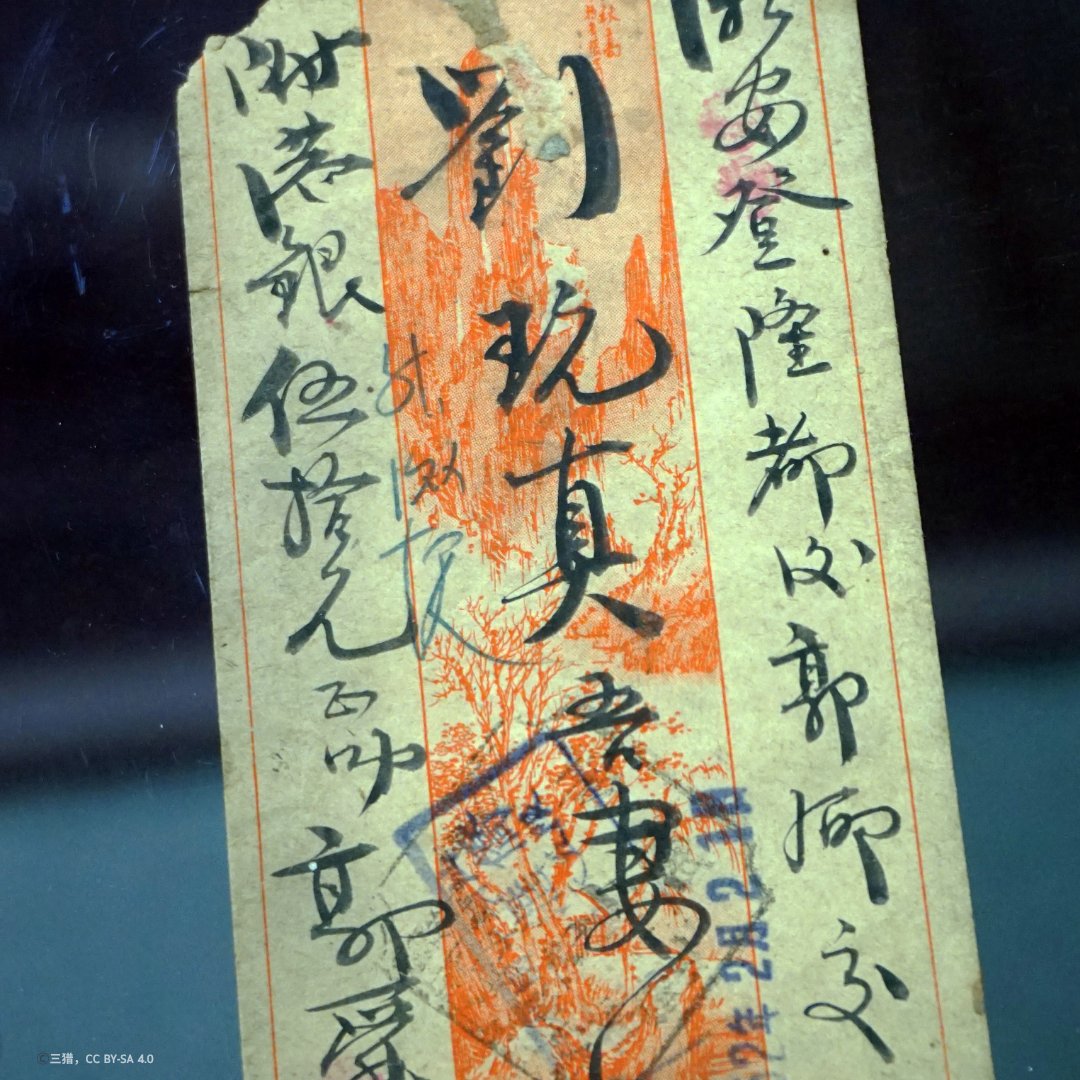
侨批是一份 #世界记忆 。
它是书信与汇款合一的华侨家书,盛行于潮汕等地,在19和20世纪被大规模使用。它既是维系亲情的纽带,也是中国历史的见证者。
#世界记忆 项目是教科文组织专门负责 #文献遗产 保护与传播的旗舰项目。《侨批档案-海外华侨银信》已列入世界记忆名录➡️unesco.org/zh/memory-world
中文
研究据点wep retweeted

长鑫存储扩产的设备供应链全景
长鑫现在合肥两座、北京一座,三座12英寸厂。合肥一厂11万片月产能,二厂8万片,北京厂7万片,加起来接近30万片,全部满产。两年涨了三倍,2024年初差不多10万片,2025年底冲到28到30万,2026年目标稳在30万。按晶圆片数算全球DRAM占比已经接近15%,但按销售额算只有3.97%,片数堆上来了,单价还在追赶。
工艺端,G4在16纳米已经量产,DDR5良率从2024年底的80%升到现在的90%区间。G5对应15纳米,2026年底量产。HBM2去年下半年就上了,比外界预期提前两年,主要供华为昇腾910。HBM3的前段晶圆产能主要在合肥和北京现有基地内部腾出来,目标月产6万片,约占30万片总产能的20%。后段的堆叠和封装由上海新建的HBM封测厂承接,2026年底投产。
产能还在继续扩。上海新厂分两期,Phase 1产能10万片,2027年初量产,Phase 2同样10万片,2028年初量产。加上现有的30万片,远期产能目标是奔着50万片以上去的。华为也在建一条10万片规模的产线,专门配合长鑫做昇腾系列所需的HBM3和LPDDR5X,2026年下半年开始全面量产。
IPO募资295亿,DRAM技术升级拿了130亿,量产线升级75亿,前瞻技术研发90亿。多家券商纪要提到其中约200亿会直接变成设备采购订单,叠加2024年712亿的存量Capex节奏,是国产设备厂未来两年最确定的基本盘。
长鑫正在进行的大规模扩产,设备采购需求非常可观。每个品类的国产化进展差异很大。
光刻是最大的对外依赖,国产化率连5%都不到。主力机器是ASML的NXT:1980Di,每小时出275片,覆盖到16纳米节点,目前还能正常采购。被荷兰管制的是NXT:2050i及以上,每小时295片,2023年9月起要许可证,2024年1月起对华许可基本停发。修正一个流传很广的说法,275到295片是1980Di到2050i的代际跳变,不是1980系列内部的迭代。长鑫往15纳米以下走,这道墙绕不开。上海微电子的28/14纳米DUV还在攻关,光刻这一环短期无解。
刻蚀占设备投资25到30%,是国产化最深的核心工艺。北方华创的ICP在长鑫产线上市占超过50%,中微的CCP介质刻蚀机做到50比1以上深宽比,专门用于HBM的TSV深硅通孔。但存储节点100比1深宽比的极端工艺,孔洞必须互相平行规整,任何偏差直接砸良率,Lam和东京电子在这个区间仍然是主力。
薄膜沉积占约25%,品类分得细。PECVD做绝缘层,PVD做金属互连,ALD做电容器的高k介电层。拓荆科技的PECVD已经批量进入长鑫DDR5和LPDDR5产线,北方华创的PVD覆盖铝铜溅射和氮化钛溅射。但DRAM电容器核心的高k ALD设备,应用材料和ASM的位置很难动,拓荆的ALD在验证爬坡中还没有大规模上量。整体看PECVD和PVD的国产化率高一些,ALD最低。
CMP只占设备投资5到7%。华海清科占国产CMP装备销售90%以上份额,12英寸Universal-300已经导入长鑫。新变量是中微4月29日刚过会的收购杭州众硅,6抛光盘架构是国际首创,效率比主流4盘方案高一截。国产CMP从单点供应正式进入双供。
清洗国产化率30到40%,盛美上海的SAPS/TEBO兆声波清洗覆盖FinFET和DRAM的16到19纳米制程。热处理40到50%,北方华创立式氧化炉打头,激光退火端莱普科技两年内国内市占从3%涨到16%,跟长鑫和长存共同开发匹配DRAM工艺的设备。这几个环节已经跑通了。
最薄弱的三个环节是量测检测、涂胶显影和离子注入。量检测国产化率个位数,KLA全球占51到54%,精测电子进了长鑫12英寸产线,中科飞测也在部分环节往里切,但高端光学检测和电子束检测差距仍然明显。涂胶显影国产化率仅4%,东京电子在大陆市占超过90%,芯源微是唯一量产替代,目前只在封装端站住了,前道关键层还进不去。离子注入同样个位数,万业凯世通累计交付40多台。弹性最大的三个环节,也是短期内最动不了的三个环节。
长存三期产线2026年一季度国产设备占比首次过50%,目标100%。长鑫设备国产化率已突破45%,但仍低于长存三期产线的水平。根源在工艺。DRAM的电容刻蚀和光刻精度对先进DUV的依赖远高于3D NAND。NAND可以靠堆层数绕过光刻瓶颈,DRAM要正面硬刚,结构性差异,跟意愿无关。
外部约束在收紧。4月22日美国众议院外交事务委员会投票通过了MATCH法案,路透社称之为"国会史上最大规模的半导体出口管制立法审议"。法案把长鑫、中芯国际、长江存储、华为、华虹一起列入covered facility,禁止ASML的DUV浸没式光刻机对长鑫出口,禁止盟国为既有设备提供维保,要求荷兰和日本在150天内对齐美方规则。主要推手是美光。一旦通过,NXT:1980Di这条最后的灰色通道就堵死了。长鑫本身还没进BIS实体清单,但设备进口其实早就在2022年10月那波18纳米以下DRAM工艺限制的笼子里。
45%的国产化率意味着长鑫在两条腿走路,海外设备保良率,国产设备保供应链安全。MATCH法案的压力反而在加速这个进程。长鑫每往国产设备多切一个百分点,对应的就是北方华创、中微、拓荆、华海清科、盛美这些公司实打实的订单增量。上海新厂分两期共20万片的增量产能,加上现有产线的持续技术升级,未来两到三年国产设备厂面对的是一个确定性极高的需求窗口。
从更长的时间尺度看,长鑫的扩产不只是一家公司的资本开支计划。它每走通一个工艺节点,整条12英寸国产设备平台就多一次被验证、被复用的机会。刻蚀和CMP已经证明了这条路径,薄膜沉积和清洗正在跟进,量测和涂胶显影是下一个要啃的硬骨头。这个验证循环一旦转起来,国产设备的竞争力会以远超线性的速度积累。
中文
研究据点wep retweeted

Q: Recently, MOFCOM issued the Overall Plan for Developing National Demonstration Zones for the Innovative Development of Trade in Services, and identified 17 localities, including Beijing, Tianjin, and Shanghai, to take the lead in establishing demonstration zones. Could you share the overall considerations behind the development of these demonstration zones? (MOFCOM Regular Press Conference May 14, 2026)
A: The development of national demonstration zones for innovative development of trade in services is a major decision and plan made by the CPC Central Committee and the State Council. MOFCOM, together with relevant departments, has formulated the overall plan, which specifies the overall objectives, main tasks, and pathways for developing the demonstration zones. Building on the previous pilot programs for innovative development of trade in services, we will focus on demand-driven approaches, breakthroughs in reforms, technology empowerment, and opening up and cooperation. We will continue to develop a number of major open cooperation platforms for trade in services that rank among the top in scale, gather high-end factors, demonstrate outstanding innovation capabilities, facilitate trade-industry linkages, and exert significant spillover effects. We will also cultivate a group of internationally competitive service export enterprises and key service industry clusters, and establish a more robust institutional system and business environment for innovation-driven development, thereby leading and driving nationwide innovative development in trade in services.
We will start the development of demonstration zones in 17 regions, including Beijing, Tianjin, Shanghai, Chongqing, Dalian, and Xiamen, and by 2035, the total number of demonstration zones is expected to reach around 35. Specifically, we will carry out differentiated exploration in areas such as pursuing integrated innovation in industrial and supply chains, fostering the competitiveness of market entities, facilitating the efficient supply of production factors, advancing high-standard opening up, and building domestic and international promotion systems. At the same time, we will guide local governments to leverage their resource endowments and geographical advantages to promote the coordinated development of trade in services, investment, consumption, and industries.
Moving forward, MOFCOM will work with relevant departments and local authorities to implement the plan, and will support and guide other eligible cities to actively apply for the establishment of demonstration zones, so as to continuously promote the high-quality development of trade in services.
English
研究据点wep retweeted
MOFCOM Spokesperson’s Remarks on the Determination That the EU’s Relevant Practices in Foreign Subsidy Investigations Constitute Improper Extraterritorial Jurisdiction
Q: On May 15, the Ministry of Justice of the People’s Republic of China issued an announcement determining that the EU’s cross-border investigative practices against Chinese entities under its Foreign Subsidies Regulation (FSR) constitute “improper extraterritorial jurisdiction.” What is MOFCOM’s comment on this?
A: China has always opposed the EU’s abuse of unilateral tools such as the FSR to suppress Chinese enterprises. Recently, the EU has not only increased the frequency and scope of its investigations targeting Chinese companies, but also escalated its probes into enterprises, including Nuctech, to in-depth investigations. Furthermore, it has compelled Chinese banking institutions to cooperate with these investigations, unreasonably demanding extensive access to a large amount of information within China that is unrelated to the investigations. The normal investment and operation of multiple Chinese companies and banking institutions in Europe have been severely and adversely affected.
As early as January 2025, MOFCOM concluded through investigation that the relevant EU practices under the FSR constitute trade and investment barriers. MOFCOM called on the EU side to correct these practices and advocated for the proper management of differences through dialogue. However, the EU side has remained obstinate and gone further down the wrong path.
In response, following a comprehensive investigation, the Ministry of Justice, in conjunction with MOFCOM, has determined that the cross-border investigative practices taken by the EU against certain Chinese entities during its FSR probe into Nuctech constitute improper extraterritorial jurisdiction measures. This determination was made in accordance with the Regulations of the People’s Republic of China on Countering Foreign States’ Unlawful Extraterritorial Jurisdiction. Consequently, it has been ordered that no organization or individual shall execute or assist in the execution of such measures.
China reiterates its hope that the European Commission will promptly correct its erroneous practices, cease its unjustified suppression on Chinese enterprises, stop abusing the FSR investigation tool, and provide a fair, just, and predictable business environment for Chinese enterprises investing and operating in Europe. China has always advocated for managing differences through dialogue and consultation, and hopes that the EU side will pull with China in the same direction to resolve the issue through friendly consultations. At the same time, we will closely follow the EU’s subsequent actions and take necessary measures to resolutely safeguard national security and the legitimate rights and interests of Chinese enterprises. (Released on May 16)
English

综合来看,国内数据这么弱,要降息或加大宽松了吧……🤔
不过美联储那边年内降息的可能性已经极低了,能源价格和通胀压力不小,两边央行都不好做啊……😮💨
宏观边际MacroMargin@MacroMargin
中国4月经济数据一览, 除了外贸和通胀数据外,其他指标全部低于预期,不少指标大幅低于预期
中文
研究据点wep retweeted

There are places we pass through in life… and there are places that become part of who we are.
Manchester will forever be my home.
To the city, the club, and every supporter, my sincerest thank you. These past four years have been unforgettable, filled with moments my family and I will carry with us for the rest of our lives. There simply aren’t enough words to describe the happiness and warmth we’ve felt here.
Thank you for every cheer, every memory, and for making us feel at home from the very first day.
Forever a Red Devil ❤️


English


研究据点wep retweeted

It is noteworthy to me that official Chinese statements, before and after the visit, have been calling (aspirationally) for "predictable" and "stable" U.S.-China relations. If this was the goal, then I think we are going to need to distinguish “predictability” from “stability." I notice that a lot of people in the media, here on social media, and among the commentariat are either conflating the two or else using them in the same sentence, as in: “President's Trump's visit has brought greater predictability and stability” to relations between Washington and Beijing. But I'm sorry, these two words are NOT the same thing.
We might now get greater predictability— which is an achievement with a president as mercurially unpredictable as Trump. But we should have no illusions that this has “stabilized” U.S.-China relations because all of the things that made them unstable in the first place are still with us: (1) clashing security concepts, (2) obvious differences of political system and ideology, (3) contending economic interests, (4) technology competition as emerging and foundational technologies, from AI enabled applications to quantum, become inherently dual use, and (5) combustible domestic politics where there is, frankly, little benefit on either side in advocating for a "stable" relationship.
In analytical terms, I suspect Beijing is pleased, not least because China will settle for a more predictable relationship with Donald Trump. But we are nowhere near “stable.” And I thought much of the visit was well-done performance art, directed at specific domestic audiences, on both sides.
Incidentally, I am quite sure that Xi Jinping did not, in fact, say that “America is the hottest country in the world,” as the President told the press gaggle on Air Force One. So we should take much else that Xi is alleged to have said with a heaping dose of salt.
Xie Feng 谢锋@AmbXieFeng
“It is hoped that the U.S. side will work with China in the same direction, pursue dialogue and mutually beneficial cooperation rather than confrontation and zero-sum competition, and maintain stable and predictable China-U.S. economic and trade relations. This is in line with the fundamental interests of both sides.” Premier Li Qiang made the remarks when meeting with a visiting delegation of U.S. senators led by Steve Daines in Beijing on May 7. Chairman of the NPC Standing Committee Zhao Leji and FM Wang Yi also met with the delegation on the same day.
English
研究据点wep retweeted

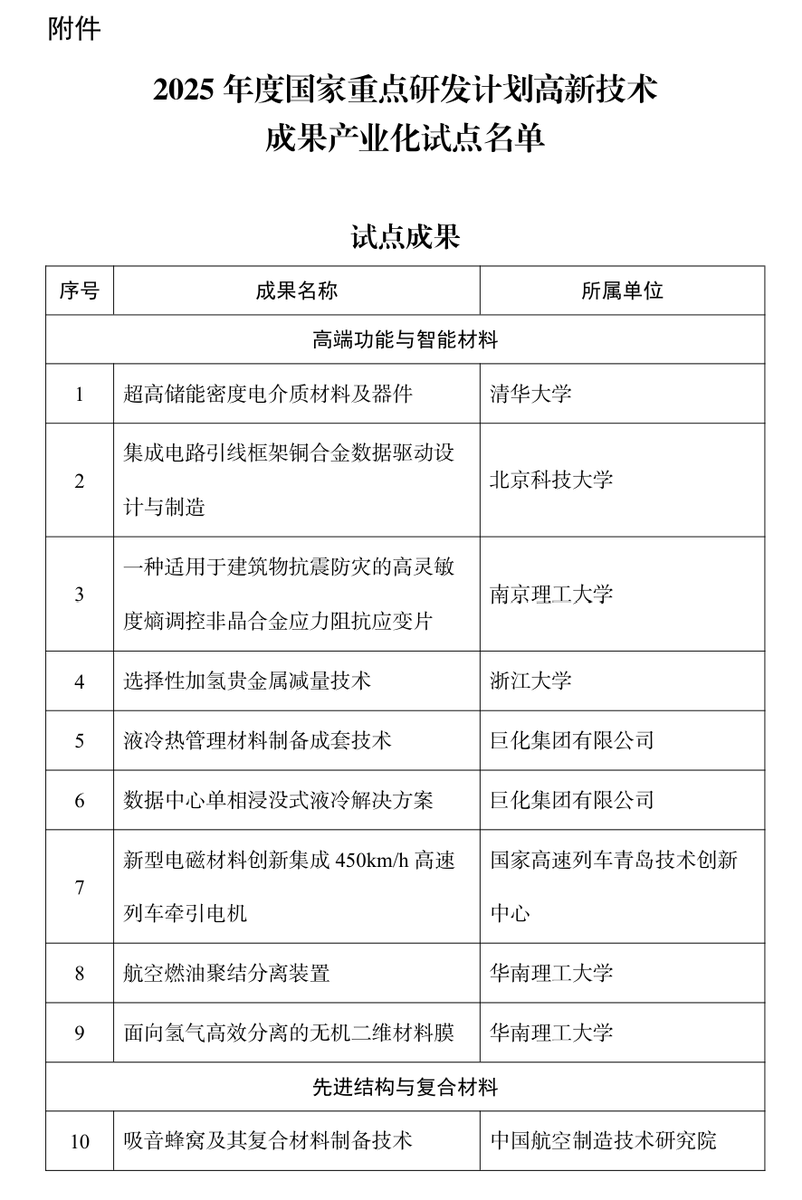
It's interesting to scan through MIIT's list of 67 pilot projects for high-tech industrialization to get a sense of what tech China thinks is important:
High-End Functional and Intelligent Materials
1. Ultra-high energy-density dielectric materials and devices — Tsinghua University
2. Data-driven design and manufacturing of copper alloys for integrated-circuit lead frames — University of Science and Technology Beijing
3. High-sensitivity entropy-regulated amorphous-alloy stress-impedance strain gauge for seismic resistance and disaster prevention in buildings — Nanjing University of Science and Technology
4. Noble-metal reduction technology for selective hydrogenation — Zhejiang University
5. Complete preparation technology for liquid-cooling thermal-management materials — Juhua Group
6. Single-phase immersion liquid-cooling solution for data centers — Juhua Group
7. 450 km/h high-speed train traction motor integrating new electromagnetic materials — National High-Speed Train Qingdao Technology Innovation Center
8. Aviation fuel coalescence-separation device — South China University of Technology
9. Inorganic two-dimensional material membranes for efficient hydrogen separation — South China University of Technology
Advanced Structural and Composite Materials
10. Preparation technology for sound-absorbing honeycomb and composite materials — China Aviation Manufacturing Technology Research Institute
11. Wear-resistant, fatigue-resistant, corrosion-resistant rails and frogs for the Sichuan–Tibet Railway — China Academy of Railway Sciences Corporation
12. Long-term performance-retention technologies for structural concrete in complex environments on the Sichuan–Tibet Railway — China Academy of Railway Sciences Corporation
13. High-performance shotcrete technology for complex environments on the Sichuan–Tibet Railway — China Academy of Railway Sciences Corporation
14. Crack-resistance improvement technologies for structural concrete in complex environments on the Sichuan–Tibet Railway — China Academy of Railway Sciences Corporation
15. Powder-making technology and applications for recycling coarse high-temperature alloy powder — AECC Beijing Institute of Aeronautical Materials
16. Large-tonnage carbon-fiber composite cables — University of Science and Technology Beijing
17. Multi-layer gradient cold-spray repair and nano-hard reinforcement composite plating for continuous-casting molds — Ansteel Group Beijing Research Institute
18. Key technologies and application development for ultra-high-stiffness magnesium-matrix composites — Harbin Institute of Technology
New Displays and Strategic Electronic Materials
19. Sub-6GHz GaN radio-frequency devices — CETC 13th Research Institute
20. High-frequency, high-power laser modulator technology — Fujian Institute of Research on the Structure of Matter, Chinese Academy of Sciences
Rare-Earth New Materials
21. Preparation technology for high-temperature-resistant cobalt-based permanent magnet materials — China Jiliang University
22. Heavy-rare-earth-free high-coercivity sintered NdFeB technology — Ningbo Institute of Materials Technology and Engineering, Chinese Academy of Sciences
High-Performance Manufacturing Technologies and Major Equipment
23. 6-inch semi-insulating SiC crystal-growth furnace and 6/8-inch compatible SiC epitaxial furnace — NAURA
24. New MOCVD equipment for Micro-LED — Advanced Micro-Fabrication Equipment Inc. China
25. Precision forming technology for large aerospace thin-walled aluminum-alloy integrated cylindrical sections — Shanghai Aerospace Precision Machinery Institute
26. High-temperature-resistant, corrosion-resistant transmission-system bearings — Luoyang Bearing Group
27. High-performance seals for aviation hydraulic systems — Guangzhou Mechanical Engineering Research Institute
28. Key manufacturing technology for ultra-large seamless titanium cathode rollers — Xi’an Taijin New Energy Technology
Intelligent Sensors
29. Advanced sensors, core components, and manufacturing processes for spacecraft control systems — Beijing Institute of Control Engineering
30. Flexible intracranial implantable multimodal sensing and modulation system for multiparameter brain monitoring — Aerospace Information Research Institute, Chinese Academy of Sciences
31. Self-powered sensor technologies for human health monitoring — Beijing Institute of Nanoenergy and Nanosystems
32. High-sensitivity MEMS magnetic sensing components and sensors — State Grid Smart Grid Research Institute
33. Miniature high-performance accelerometers — Beijing Aerospace Xinghua Technology
34. Rocket sensors — Long March Rocket Technology
35. New broadband ng-resolution triaxial accelerometer — Tianjin SIASUN Robot & Automation
36. Automotive-grade high-precision integrated navigation sensors — Hebei Meitai Electronic Technology
37. Series of sensors for deep-sea environmental observation and resource exploration — Shenyang Institute of Automation, Chinese Academy of Sciences
38. Multi-parameter differential-pressure flowmeter — Shenyang Zhongke Bowei Technology
39. Quantitative sensing-interface model and analytical instrument technology based on resonant cantilever beams — Shanghai Institute of Microsystem and Information Technology, Chinese Academy of Sciences
40. High-performance X-ray sensors — iRay Technology
41. Electromagnetic sensors — Xinlian Superconductor Shanghai
42. Thin-film getter structure with a micro-heater and its manufacturing method — Shanghai New Micro Technology R&D Center
43. High-performance acoustic sensing elements and sensors — Wuxi Weigan Semiconductor
44. New high-performance MEMS gas sensors — Suzhou Huiwen Nanotechnology
45. MEMS sensor mass-manufacturing platform — XINLIAN Integrated Circuit Manufacturing
46. Development and application of diamond quantum magnetic sensors — University of Science and Technology of China
47. In-situ continuous temperature sensors and measurement systems for molten steel — Maanshan Iron & Steel
48. High-performance laser gas-sensing components — Shandong Science & Technology Innovation Group
49. Key technologies and applications for biosensor sensitive elements — Shandong Kanghua Biomedical Technology
50. Wireless passive temperature sensors based on polymer-derived ceramic metamaterials — Zhengzhou University
51. High-precision printing technology and equipment for ultrafine fiber surfaces — Huazhong University of Science and Technology
52. Complete sensor set for high-speed rail vehicle health-monitoring systems — CRRC Zhuzhou Institute
53. Industrializable mass-producible automotive-grade solid-state LiDAR for autonomous driving — RoboSense
54. Sensing-computing integrated room-temperature infrared imaging detection technology — Chongqing Institute of Green and Intelligent Technology, Chinese Academy of Sciences
55. Nanometer-precision displacement-measurement grating sensors — Xi’an Jiaotong University
56. Distributed thin-film sensors for highway infrastructure — AVIC Electromechanical Measurement Instrument Xi’an
Industrial Software
57. Core components of an industrial internet operating system for discrete industries — Beijing Institute of Technology
58. Data-driven closed-loop performance analysis, regulation, and optimization technology and software for manufacturing processes — University of Science and Technology Beijing
59. Intelligent analysis and decision-making system for full-process industrial data in discrete manufacturing — Beihang University
60. Distributed time-series data management system Apache IoTDB — Tsinghua University
61. MEC-based edge control and real-time simulation theories and methods — Shenyang Institute of Automation, Chinese Academy of Sciences
62. Cloud-based service-oriented MES and intelligent management-control platform system — Beijing Xiaomi Mobile Software
63. Domestic isogeometric-analysis software ADIGA — Dalian University of Technology
64. Distributed factory industrial interconnection platform — Shanghai Aircraft Manufacturing
65. Industrial interconnection platform for personalized customization industries — Guangzhou MINO Equipment
66. End-edge-cloud interconnection integration technology and system for OT/IT convergence — Shenzhen Institute of Advanced Technology, Chinese Academy of Sciences
67. Industrial interconnection platform for large-scale manufacturing industries — Gree Electric Appliances of Zhuhai
English

我还记得当年大家老在宣传
中国“新四大发明”
经常有人说
国内二维码多方便不啦不啦的
然后就经常有人说,国外可以NFC啊
刷一下就行
然后就被底下小粉红狂喷
实际最近的观察里,在上海,
用NFC的明显比我这种打开支付宝找二维码的多太多了
说实话,大家用脚投票
分的清啥很方便的
中文
研究据点wep retweeted


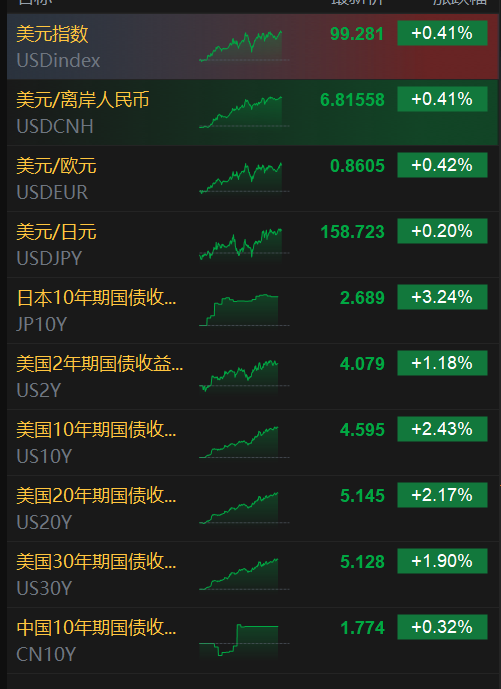
"日元日债崩了" => 这是我前面提到的可能导致大回调的原因之一, 今天相信各位已经见识到威力了. 如果不了解威力的可以回顾一下 2024/8/5 的K线, 见识一下盘前 ES 跌到熔断的威力.
现在我自己如果long 或者 short 的逻辑:
long :
这次中美会谈定义的"建设性战略稳定关系"有用, 会谈后中美停战缓和关系是两国共识, 世界真正走向 G2 共治, 美国后续有什么动作会给中国打招呼. 回去后美伊走向和谈, 中日经济战走向缓和, 俄乌谈判进入实质性推进阶段. 市场下跌的 trigger 是利率, 那这个过程中任何一件事都可能触发"市场对通胀预期, 利率上升担忧缓解"这件事, 所以后续会空中加油走向新高.
warsh 上任, 是Trump 自己人, Trump 现在有了 FED, 财政部, 统计局, 他可以开始自己 plan 的后半场, 要美元贬值+经济繁荣, 接受适度通胀.
short 的逻辑:
通胀预期压制不下去, 利率抬头, 市场直接开始price in FED 因为油价高企, 通胀压制不了不再降息, 甚至开始加息. short 的逻辑这个点基本都是围绕通胀和 FED 货币政策炒.
现在的问题就是看怎么选了. 是相信 short 的逻辑主导后面的市场还是 long. AI 生产力提升啥的故事线都没啥用, FED 利率预期 > 所有 AI 故事线. 这里有个关键问题: 由于 deeepseek 开源模型以及后续中国那边的 ai token 价格战导致现在美国搞 AI 的公司都是收入 < 支出, token 买不起太高溢价. 这一点你从几个大科技的财报里面都看的出来 -- 现金流的快速减少, 还有一个明显证据是几乎所有搞算力的公司都在发债借钱. 而这个时候利率如果被迫上升, 让钱变贵了, AI 所有故事线全体立刻熄火.
我自己感觉中美这次谈判结果还可以, 比较明显的信号是 H200 可以卖了. 这个信号比松绑 ASML 低, 但也还可以. 如果 H200 可以卖, 那代表这条线之下的很多产业链条上的东西都可以卖, H200 不是单个的产品, 它是一条标准线. 所以我目前的看法是"谨慎乐观", 再看看后续中美动作. 毕竟这才刚结束会面. 目前还没看到 joint statement, 大概率是无了, 那比最乐观预期还是要降一档.
Nullable@NullableX
指数每年 10% 以上的回调平均下来每年只有一次. 今年3月已经跌到位了. 即使等回调, -5% 附近就该上车了. 现在这个点位就算跌5%, 我也有钱加. 目光所及范围内, 能触发第二次 15% 左右的 level-2 回调的事件也就那几个: 中美谈崩, 伊朗战争继续升级, FED 突然变鹰派开始炒加息预期, 日元日债崩了. 中美谈判只要谈好, 后面这些出现的概率都很小. 所以我这个时候加仓本质是在赌中美谈判出好消息. 当然如果赌错了, 就亏呗, 反正我又不是单方面押注, 如果苗头不对我直接会反手做空.
中文

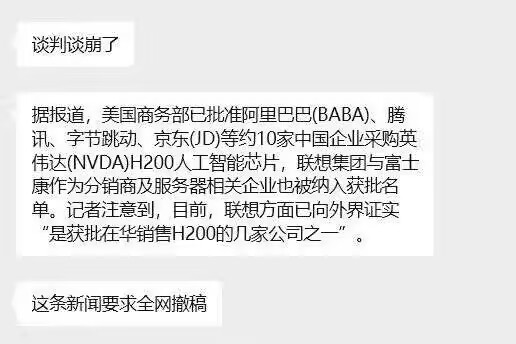
H200 disapproved
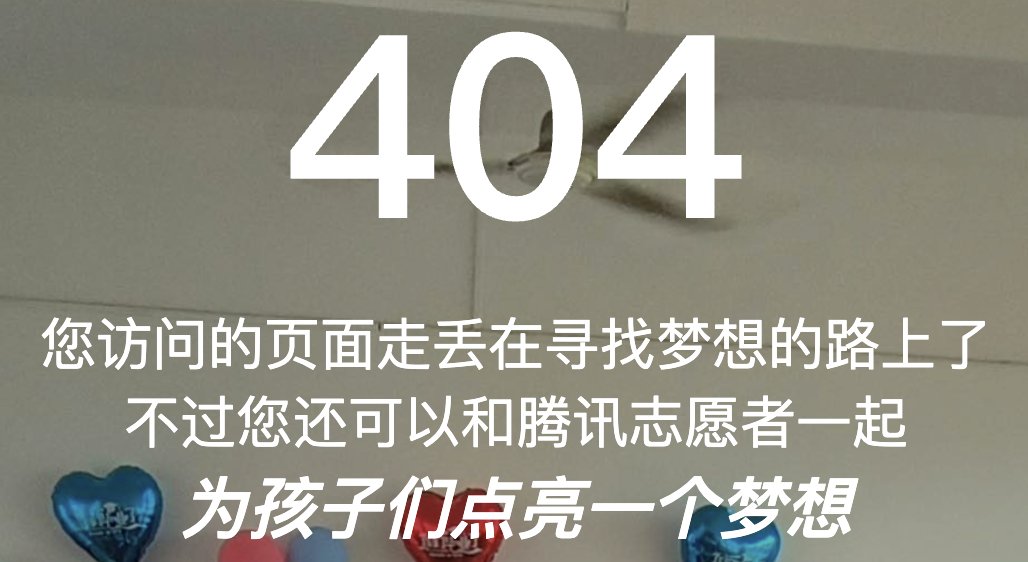
The reports claiming that “H200 has been approved for sale in China” have been ordered to be retracted across the entire internet
If you try opening the Tencent News article now, it only returns a 404 error
Jukan@jukan05
H200 approved
English

身在墙外的你们可能不知道,
墙内出大事了!
墙内出了一个杰青杀手、教授克星、长江猎人、院士刺客。
耿同学在抖音上打假各大高校教授学术造假,打一个,某高校就开除一个。
当者立毙,无人幸免!
为学术圈这个瘴痢之地带来了一股清流!
耿同学找对方向了,为什么这么说呢?
因为他几乎拥有无穷无尽的素材!

中文