Most people, including really accomplished people, don't have an accurate mental model of how LLMs operate (and why would they?)
You see this in wide beliefs that AI is just copying from known sources, or that it only produces average answers, or that it can't generate new ideas
its so fun seeing all projects built with cursor sdk that leverages the composer 2.5 speed. more generative, synchronous experiences for users when it comes with really high tps
@scaling01 true.
but the search space of observable data you can feed is infinite and uncountable. You need an efficiency mechanism to pick which data clusters to target, and physical world intuition is often the zero-shot filter that points where to look.
GPT-5.4 Pro continues to be the only model of its class. For anything really hard & complex, I throw it into the maw with every bit of context I can think of. More often than not, something very useful comes out.
I can't get the same results from Codex or Code or anything else.
Happy to share an article I co-authored with @Yann_Bilien (Chief Scientist Officer at @RippletideCo) and Guilhem Loussouarn (PhD at @imperialcollege working on Multi-Agent Reinforcement Learning), exploring self-learning and non-regressive agents.
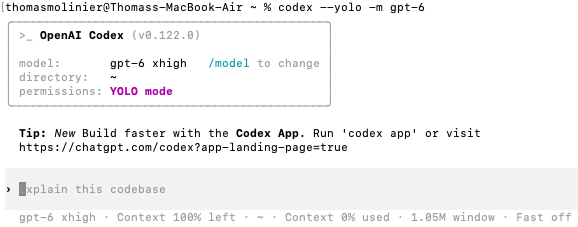
Clawdbot creator, Peter Steinberger says Opus is the best model overall, but Codex is his go-to for coding.
He trusts Codex to handle big codebases with almost no mistakes.
It’s more reliable and needs less handholding, which makes him faster.
Claude Code can work too, but it requires more effort and tricks.
For serious tasks, Codex feels like a dependable coworker.