Jessica Flack

11.6K posts

Jessica Flack banner
Jessica Flack

Jessica Flack

@C4COMPUTATION

Lambent Society Founder | Professor | Hourglass Emergence + Foundations of Computation | Flourishing | Kitchen Alchemist + Vegetarian | Privacy | @EMERGCOMP

Wilderness Se unió Eylül 2012
2.2K Siguiendo11.3K Seguidores
Jessica Flack
Jessica Flack@C4COMPUTATION·
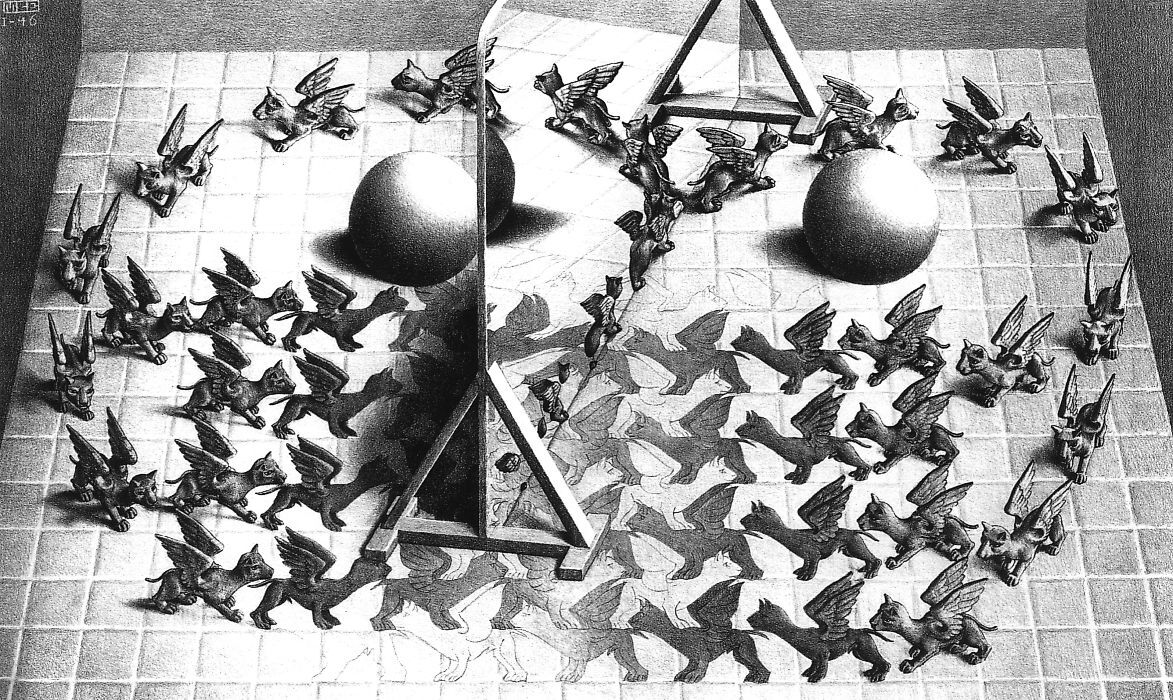
When I was in seventh or eight grade—even though my algebra was riddled with little errors—I was good at geometry and in particular at Escher assignments. For this reason I was chosen to participate on our regional Math Olympiad team. We were terrible but I had the distinct honor of being the only kid (on our team) to answer a question correctly when under fire. If I recall it was something simple relating to factorials. ‘Science’ and ‘math’ are often presented as uniform, homogeneous disciplines that lend themselves to a certain kind of mind. This is not at all the case and hides the fact that the same questions can often be addressed in what seem like very different ways—for example, with different representations. Once one understands this point, one can see if by shifting perspective or formal approach one can gain more traction. The gain in traction can be due to the approach coming more naturally to a person given a their skills, or because it is in fact more ‘natural’ or ‘generative’ given the problem.
English
0
0
0
123
Jessica Flack
Jessica Flack@C4COMPUTATION·
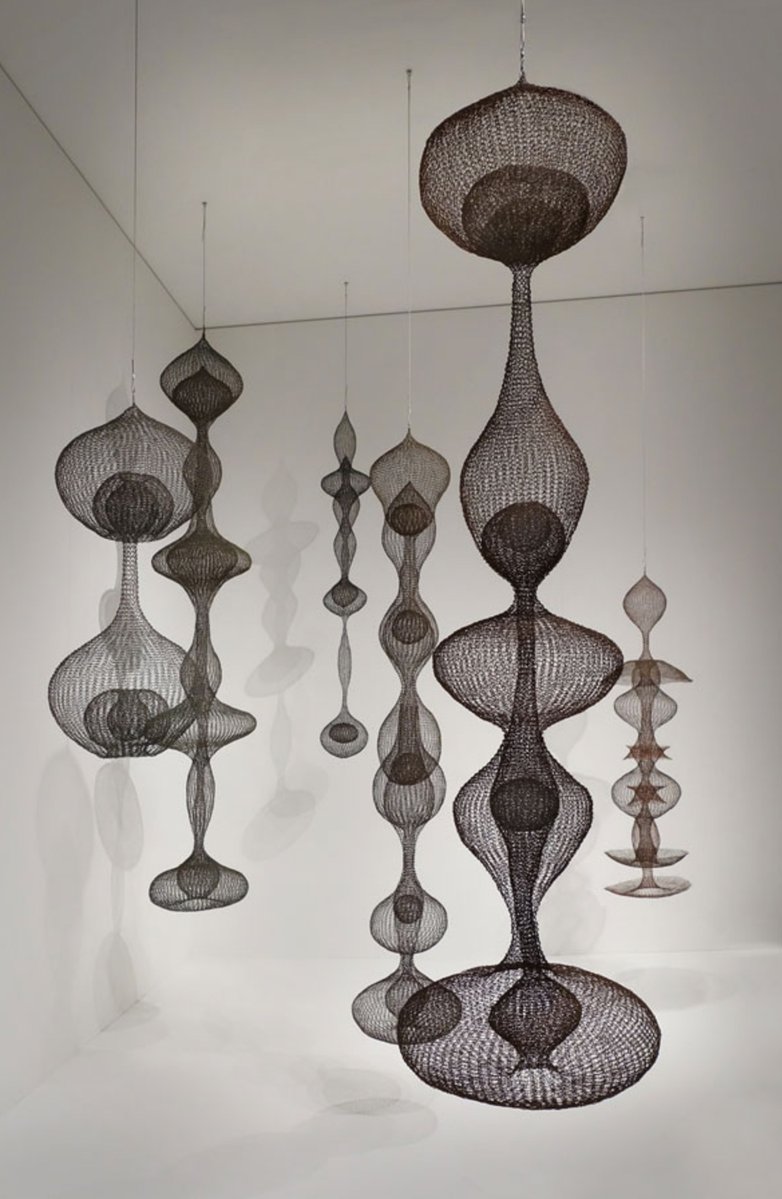
Spectacular looped-wire sculptures at ruthasawa.com. HT David Zwirner Gallery. Lovely for thinking about the geometry of hourglass emergence. Ruth Asawa, in her own words, was interested in the idea that ‘the relation between outside and inside was interdependent, integral.” jessicaflack.wordpress.com/blog [I am certain I‘ve discussed Asawa already on this platform but @x is hiding the post, as well as many others.]
Jessica Flack tweet media
English
1
2
3
917
Jessica Flack
Jessica Flack@C4COMPUTATION·
@substack @chrisbest @thegp @AndrewMayne @OpenAI Hi @CjBest In the name of product feedback, customer service and civil liberties can you PLEASE help with my two hacked @substack accounts. Thank you. x.com/C4COMPUTATION/…
Jessica Flack@C4COMPUTATION

Hello @substack Wondering if you can help. My initial Substack was hacked. I finally managed to delete it but it is still registering as in use. My new Substack might also be hacked as my security question protocol (which I in fact never set up) does not work and consequently I cannot log in although sometimes I can post notes as if I am logged in. . . It’s all rather odd behavior. Links to the old and new accounts are below. A hacker who edits these posts as I write them keeps indicating that my accounts are censored until “bit’. I have no idea what this means and censorship is illegal regardless, not to mention excruciatingly irritating. Could you PLEASE delete the old account and send a password reset note to the iCloud email associated with my new account? Thanks! OLD (SUPPOSEDLY DELETED) c4computation.substack.com NEW (WITH LOGIN WEIRDNESS) @jessicaflack" target="_blank" rel="nofollow noopener">substack.com/@jessicaflack

English
0
0
0
199
Jessica Flack retuiteado
Jessica Flack
Jessica Flack@C4COMPUTATION·
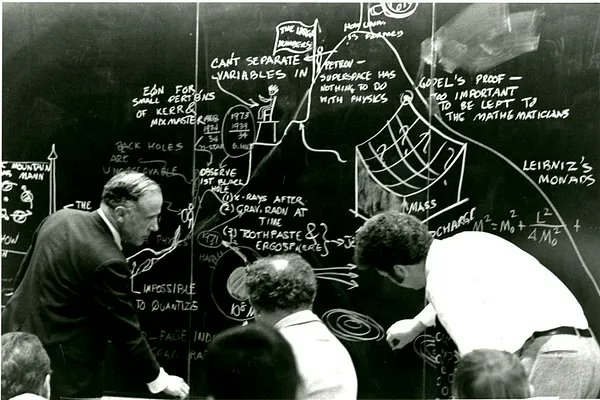
One deeply generative implication of work on collective computation in nature is the possibility of a theory of computation that underlies both biology and physics (and consequently also applies to 'artificial' intelligence) and in which biology is not, as is usually assumed, subsidiary. Rather information processing principles that we think of as biological are in fact general, influencing the evolution + mathematical structure of the universe. In the coming weeks and months I will be expanding on this idea, which was in almost no sense a chance discovery but an entirely natural one. jessicaflack.wordpress.com Image: John Wheeler at a Princeton blackboard with students. Credit: R.P. Matthews.
Jessica Flack tweet media
English
5
6
14
5K
Jessica Flack retuiteado
Jessica Flack
Jessica Flack@C4COMPUTATION·
What is the Lambent Society? An umbrella organization I‘m founding that will house an emergence + computation institute ecosystem, entrepreneurial, as well as arts + culture initiatives for the public good, and privacy projects. When I regain a secure machine I’ll finish building the Society Website. Interstellar dust in the LDN 1641 nebula within the Orion constellation. Captured by European Space Agency Euclid telescope.
Jessica Flack tweet media
Jessica Flack@C4COMPUTATION

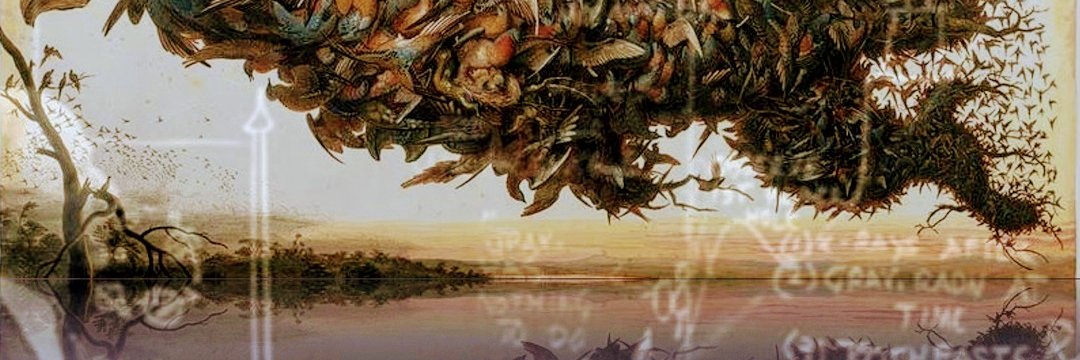
A potential renaissance is within our collective grasp. Several related but not yet widely known science advances are challenging old boundaries and revealing new sets of questions. These advances help inform our understanding of emergence, the evolution of the universe, and our place in it, and also have profound pragmatic implications for how we live the days and years of our lives. Almost as incredible as these innovations is the story of how across time and space they were discovered, suppressed, and came into view again—slowly consolidating into a coherent framework for understanding how the very small connects to the very large. There is no doubt these advances can contribute to human and whole earth flourishing. The complexity derived from the fact that our lives play out over many time and space scales—with change and uncertainty inevitable—might seem to undercut the possibility of flourishing, especially in the context of advances that stretch the limits of imagination. It is in fact the other way around. Uncertainty provides the opportunity to challenge and overcome perceived limits—and hence to flourish—as long as we recognize one constant. As the story of these discoveries suggests, trouble arises when we allow the erosion of individual and civil liberties, a ‘we “can just do things” mentality’ that undermines our collective memory of history, fail to hold to account those who exploit others, and stifle innovation while simultaneously failing to maintain an orienteering mindset as we explore the limits of the knowable universe. If we course-correct, the future is open with a new frontier and age of exploration before us. On Babel Blog, you will find posts on bits of the science that contributed to these advances, as well as gain a glimmer of the tragic, brutal, determined, creative, and heroic path that led to the present moment. jessicaflack.wordpress,com/blog Image: The physicist John Wheeler working at a Princeton blackboard but as if he were looking at Walton Ford’s painting, “Falling Bough”, a fantastic depiction of collective behavior. Composite image by JCF. Wheeler photograph by Kip Thorne.

English
3
4
3
2.3K
Jessica Flack retuiteado
Jessica Flack
Jessica Flack@C4COMPUTATION·
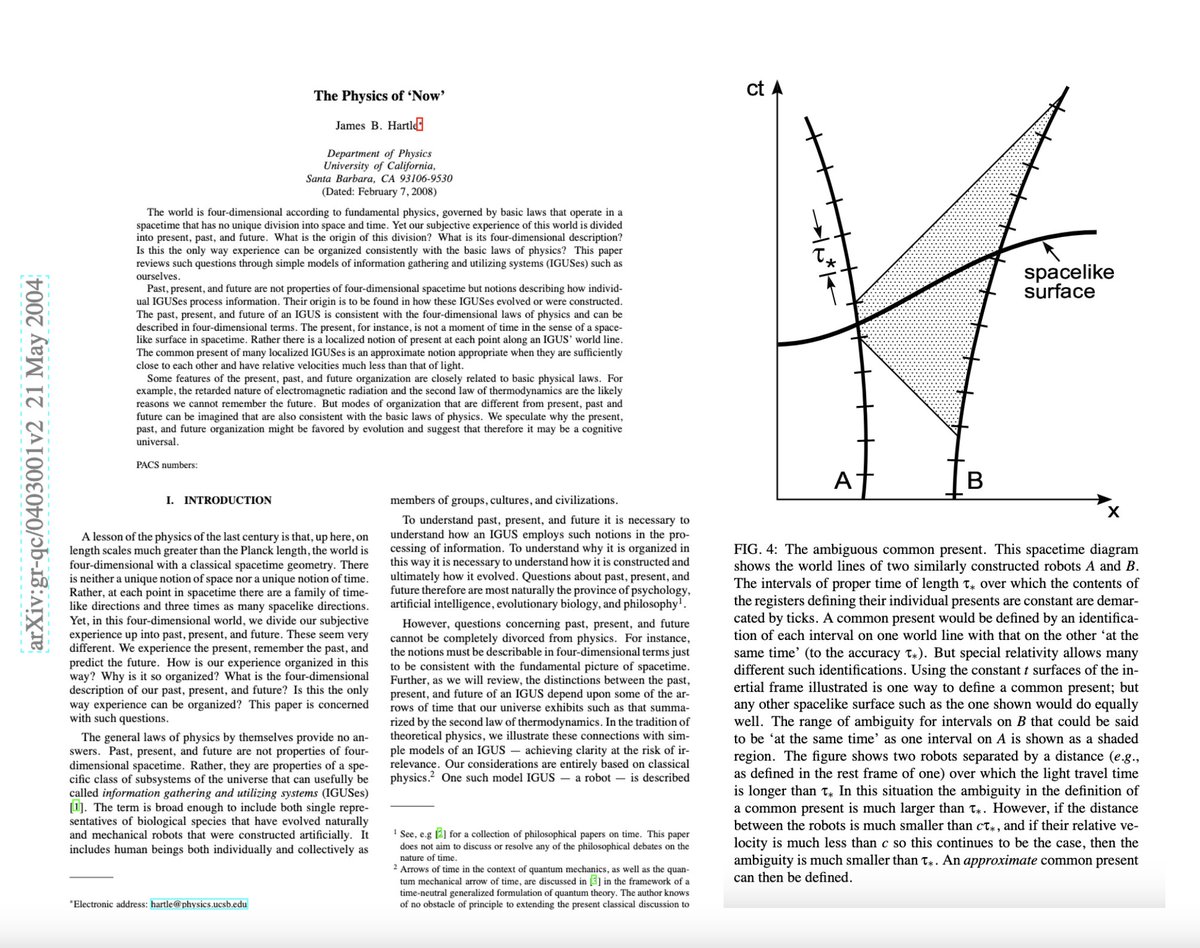
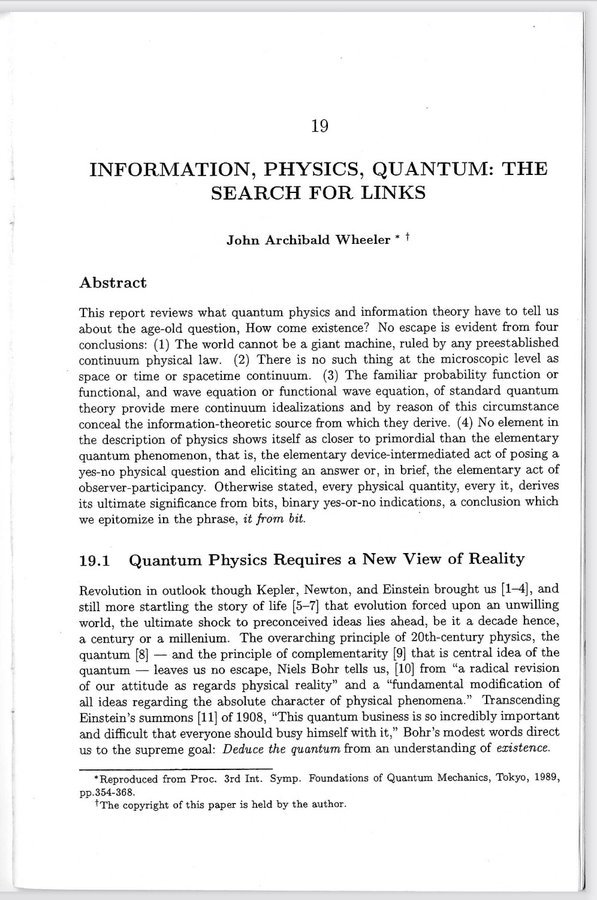
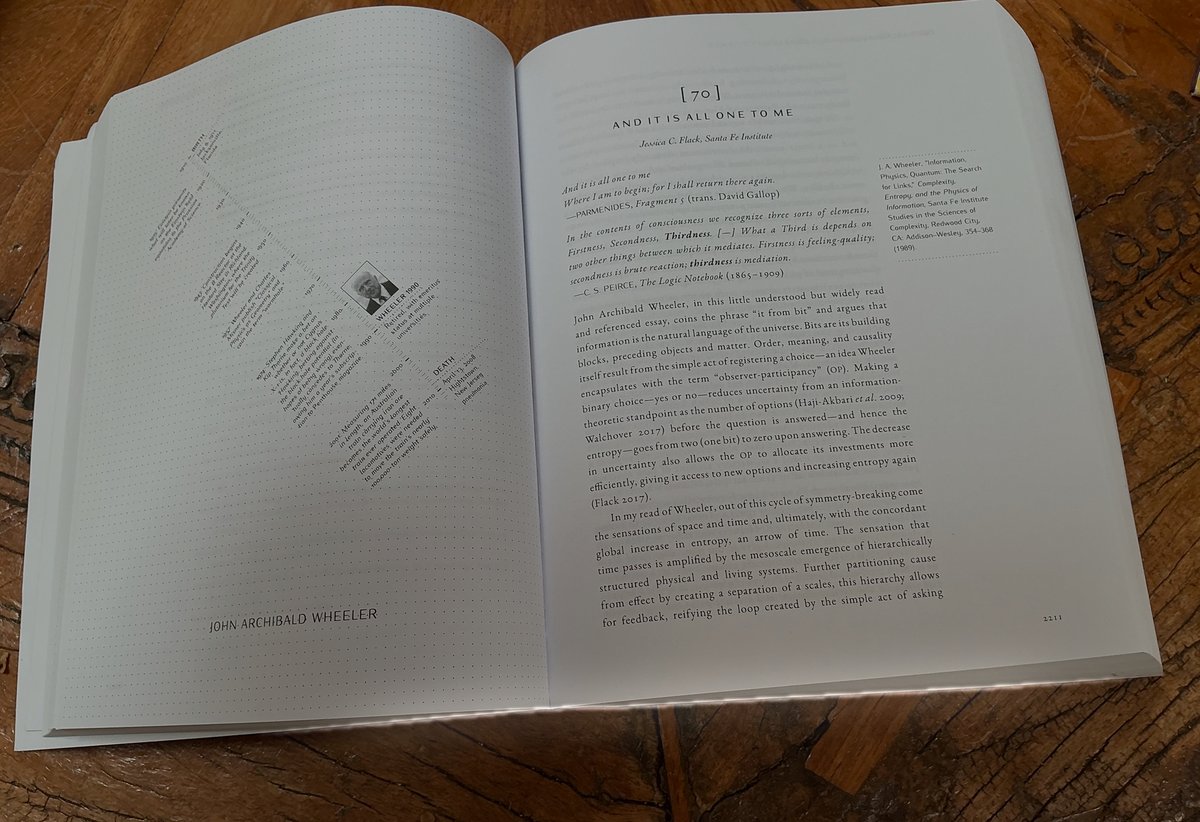
What is information? What does it mean to say the universe or a biological system computes? Wheeler in the late eighties wrote a remarkable paper. In it he developed the idea information came before matter—“it from bit“. He argued the universe is fundamentally participatory and information-theoretic. He wrote function, meaning, existence—of every particle, every force, even space-time—derive from binary questions, confounding even titans in physics and the rest of science. The paper for years was dismissed as either trivial or obscure when in fact every sentence was perfectly composed to be maximally substantive, making the reading hard going for some, but a total pleasure for me—so much so I laughed time and time again as I read through it and understood some new thing I had missed in an previous read. Wheeler’s ideas were by no means born of nothing. Rather in that paper he laid the foundation for the (re)unification of physics and biology through the lens of inference and he assembled the parts from his peers and predecessors in physics, philosophy, and cognitive science to make his case. He hinted at directions and presciently provided leads to answers. Thirty-five or so years later the paper finds its time. From the quantum to gravity and high dimensional spacetime… How entropy transitions and hourglass emergence link the very small to the very large—unifying computation in nature, and explain dark matter, the nature of time, the relationship between black holes and portals, give rise to white holes linking nebula, and reveal how Euler’s number encodes the knowable universe. Wheeler provided the special kind of technical lens that he no doubt knew would in the right context produce a phase transition in our ability to see. For more on this ground shift and to gain a concrete grasp of just how something can come from nothing, please visit Babel Blog and read my paper integrating Wheeler’s it from bit idea and idea of observer participancy, with my work on collective computation, entropy transitions, and hourglass emergence, and Jim Hartle’s work on the ‘common now’, all set against a background provided by (among others) Einstein’s general relativity, Murray Gell Mann’s work on renormalization and complexity, and Shannon’s work on uncertainty and through Jaynes its connections to the thermodynamics of computation. As perhaps is sensed during a phase transition, there is a hidden story. In Babel Blog I also provide provisional information about a long history of censoring these ideas in physics, hopefully soon to be corrected. Please note that to be consistent with past mistakes, Babel Blog is also censored and third party edited, like my other social media accounts. Science as well as corruption posts in my @x feed are either hidden or outright deleted. The point of all of this appears to be to make it seem like I’ve done nothing of interest (and hence can be ‘recycled’). Wrong on at least two fronts. jessicaflack.wordpress.com/blog @jessicaflack/" target="_blank" rel="nofollow noopener">substack.com/@jessicaflack/ Please note my @substack was hacked so I have a new one. Address in profile. Unfortunately it is also under third party control so I can’t be sure the text of my article is accurate (once this censorship is brought to an end I will double check the material against my files). In principle the 2024 published SFI press version should be correct but please proceed with caution. This is the digital age and it has some vulnerabilities. Images: My paper, “And it’s all one to me’, Wheeler’s paper, “Information, physics, quantum: the search for links”, and Jim Hartle’s paper, “The physics of ‘now’”. Wheeler’s paper: cqi.inf.usi.ch/qic/wheeler.pdf Also see the Wheeler archive (appears to be censored) @AmPhilSociety: as.amphilsoc.org/repositories/2… Jim’s paper: arxiv.org/pdf/gr-qc/0403…
Jessica Flack tweet mediaJessica Flack tweet mediaJessica Flack tweet media
Jessica Flack@C4COMPUTATION

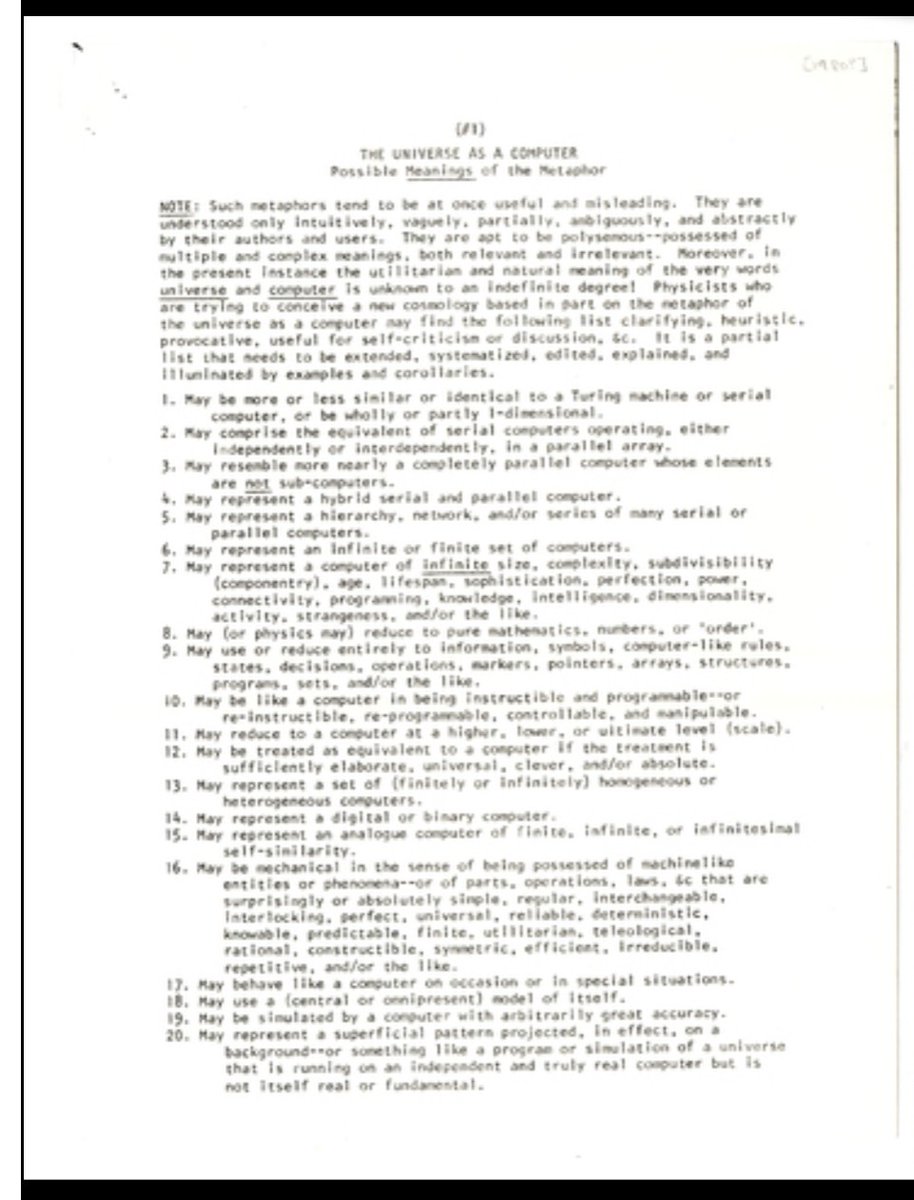
Wheeler's 48 definition-metaphors for computation + the universe as a computer. From a ~1980 note available in the Wheeler repository at APS—by way of my old twitter-friend Dave Bacon—and pasted below with my very brief annotations. diglib.amphilsoc.org/islandora/obje… Dave highlights #39 in his lovely blog post: dabacon.org/pontiff/2024/0… 39. No one knows how simple, powerful, universal, natural, and/or complex computers might ultimately become–and it might be in these  ultimate senses that the universe is or resembles a ‘computer’.  (It might even be possible to devise revolutionary types of computers by studying and applying computational or computer-like properties of the universe.) I find interesting Wheeler's juxtaposition of 8+9: 8. May (or physics may) reduce to pure mathematics, numbers, or ‘order’. 9. May use or reduce entirely to information, symbols, computer-like rules, states, decisions, operations, markers, pointers, arrays, structures, programs, sets, and/or the like. #21 is a pragmatically useful operational definition identifying basic elements without hoopla (In my work I operationalize the elements of computation similarly): 21. All natural phenomena, entities, and systems (be they trees, rocks, : molecules, bacteria, men, societies, rivers, stars, diseases, clouds, or whatever) may be computers or computer-like (have  programs, perform computations, use circuitry, possess memory, use languages, process information, use Boolean logic, or the like). #23 seems at odds with a central message of the it from bit paper: no turtles. The It from bit is a later work piblished in 1990 and delivered as talks in 1989 @sfiscience + elsewhere. 23. All known laws may be controlled or created by higher laws (possibly  arranged in a hierarchy or network). How to rethink #30 given growing consensus universe is lumpy? x.com/C4COMPUTATION/… 30. May be a lattice–or spacetime may be wholly quantized. #32—I hope not! 32. May essentially represent but a single, individual particle, event, or computer (that somehow generates the illusion of a multifarious world); or a single iterative or recursive operation repeating itself forever or toward a finite future destiny. #34—The 21st century science question!! 34. It may be possible to show that information and computation are fundamentally indistinguishable and hence equivalent, or that all of the following must in a similar way be equivalent: information, computation, energy, mass, space, time, and/or the like. Like #21, #40 is pragmatically useful. 40. May function in ways similar or identical to such computer or mental  processes as generalization, recognition, categorization, error  correction, time sequence retention, induction, symbolic logic, analogical reasoning, and/or the like. #45—The universe as chatty-cat micromanager! 😹 45. May represent a great hierarchical network of specialized ‘administrators’ or ‘administrative! processes, functions, systems, laws, constraints, &c. Also, may contain things analogous to questions, answers, experiments, orders, requests, negotiations, conversations, messages, traffic cops, supervisors, inspectors, translators, arbitrators, pioneers, &c. And #48—Lovely! 48. All that exists in the universe (including relationships, entities, interactions, laws, &c that are conventionally thought of as being inert, static, or time-invariant) may in fact be time-asymmetric or an uninterrupted process of change or of cosmoplastic or cosmopoietic interadjustments and interchanges; in this ‘everywhere~ always~novel universe! work and information- could be omnipresent and quintessential.

English
2
7
26
4.2K
Jessica Flack retuiteado
Jessica Flack
Jessica Flack@C4COMPUTATION·
The sports betting scandal described in this and many other articles is part of the tip of a very large iceberg.
Jessica Flack tweet media
Jessica Flack@C4COMPUTATION

GAMES AND METAGAMES Old School 1. So and so is feeling a bit ill and will be out for the game tonight. 2. So and so will be ill thanks to the nano tech containing E. coli we added to his food delivery last night. New School 1. The above @NBA game is just one ’battle’ in a ‘Second Life Type’ game between very high stakes players betting on individuals over their careers or lifetimes. 2. The individuals—avatars—are ‘designed’ and purchased (without knowing a thing about this bio-cultural engineering) using gene editing tech. The players betting on them can buy ‘interventions’ that include choosing a family to raise an avatar, arranging debilitating ‘allergy‘ shots for the avatar in childhood, and manipulating college admissions, etc. . Sound fun?

English
0
1
2
838
Jessica Flack retuiteado
Jessica Flack
Jessica Flack@C4COMPUTATION·
The correct temporal story has to be told or left ambiguous. I will not allow any misrepresentations or lies. Do not say a person is a genetic father, sister, twin, son, etc. when the genetic relationship is otherwise. I will investigate everything. This btw is a point about information integrity and helping to keep history reconstructable. It is not a point about inheritance or entitlement. Genetic relatedness confers no entitlement. Inheritance terms are private, personal choices that are not up for discussion with any individual or group.
English
1
2
2
513
Jessica Flack
Jessica Flack@C4COMPUTATION·
The key to avoiding ’mind-reading’ until privacy legislation is updated and security solutions are improved is to actively maintain an open mind and sense of humor. Emergent thoughts—as opposed to ‘preconscious‘ ones—cannot be ‘read’ in advance. A second very real problem is when this type of tech is used to introduce intrusive thoughts with the malicious actor targeting isolated individuals—say, marginalized high school age boys—who are susceptible to violence.
English
0
0
0
187
nature
nature@Nature·
Ethicists say AI-powered advances will threaten the privacy and autonomy of people who use mind-reading devices go.nature.com/44iXYlp
English
4
19
57
15.9K
Jessica Flack
Jessica Flack@C4COMPUTATION·
Ah, yes, when you can’t be an alien or are too lazy to find your own superpowers and you think the next best thing is to (try to) control the aliens and more resourceful humans by making avatars of them in hybrid Second Life type games. “Make ‘share genetic material hand gesture’” “Scratch nose” “Raise heart rate” 🧐😂 Ah, yes, when you are a (former) civil liberties icon and you go upstairs to play poker after giving the lackeys downstairs the joysticks. Now that’s power!
English
0
0
0
188
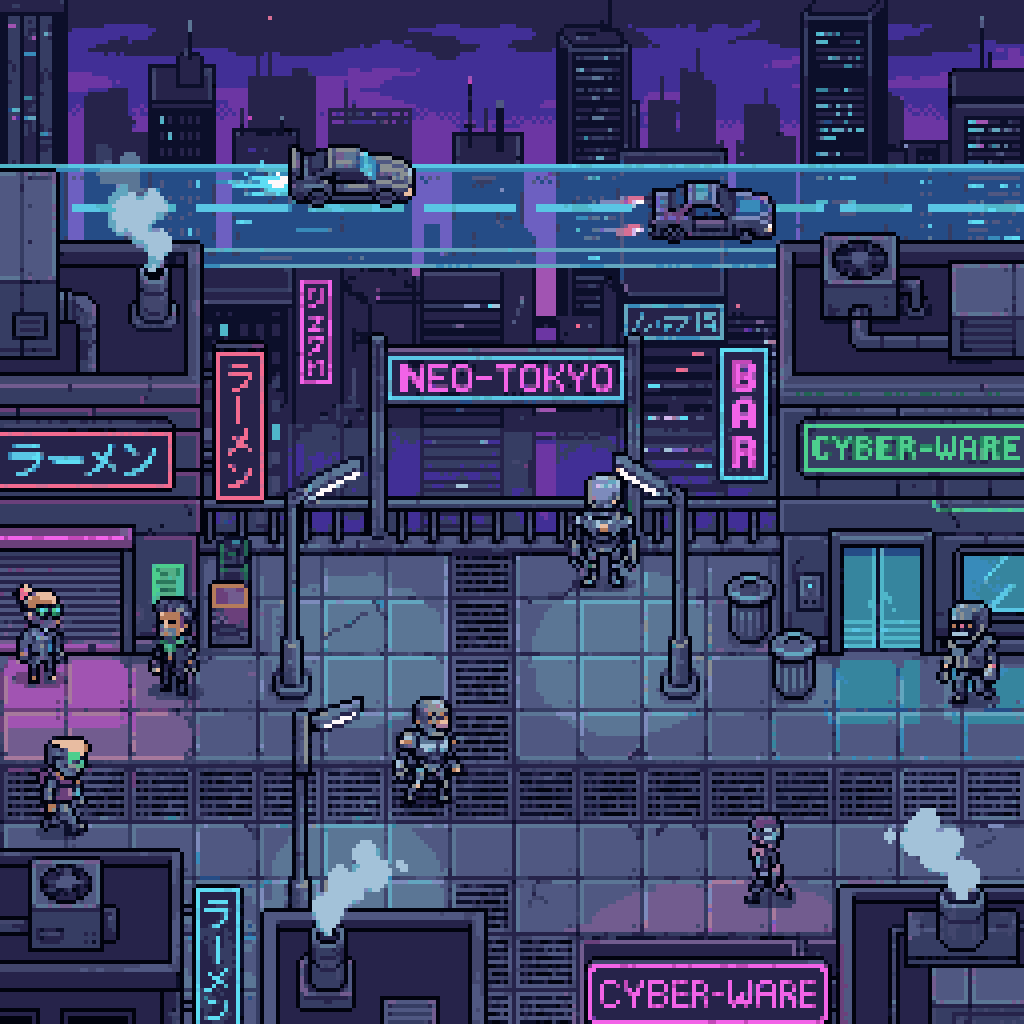
Astropulse
Astropulse@RealAstropulse·
Man being able to trick nano banana into making real pixels opens SO many doors
Astropulse tweet mediaAstropulse tweet mediaAstropulse tweet media
English
69
121
3.8K
224.2K
Jessica Flack retuiteado
Jessica Flack
Jessica Flack@C4COMPUTATION·
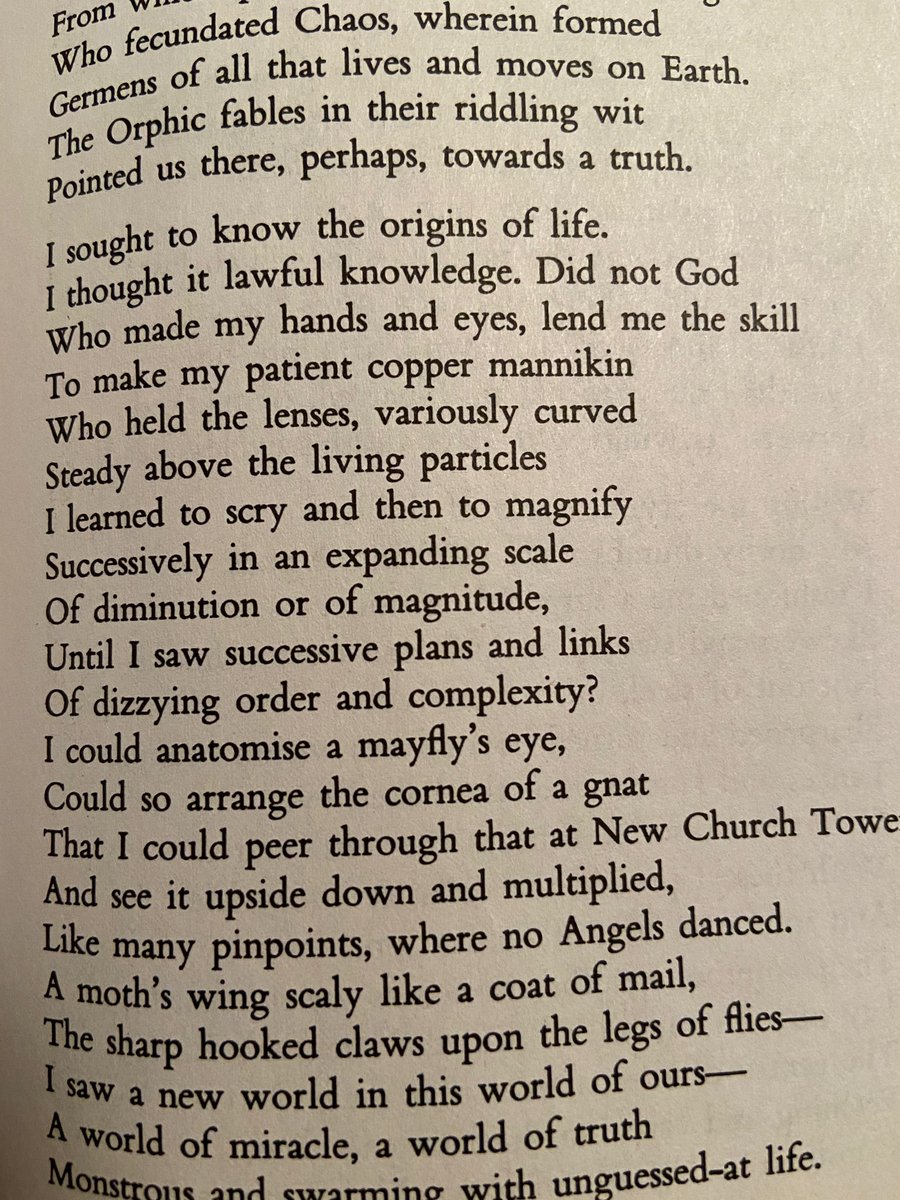
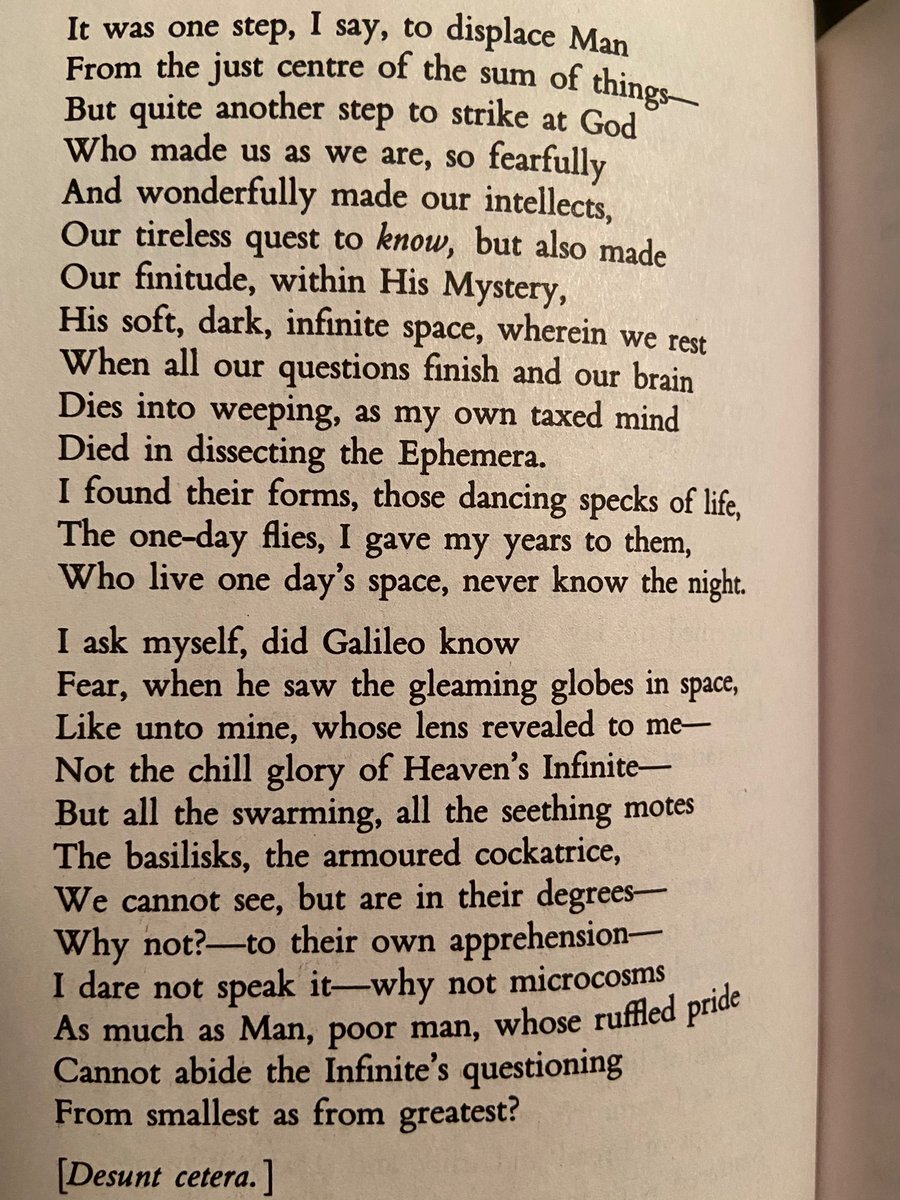
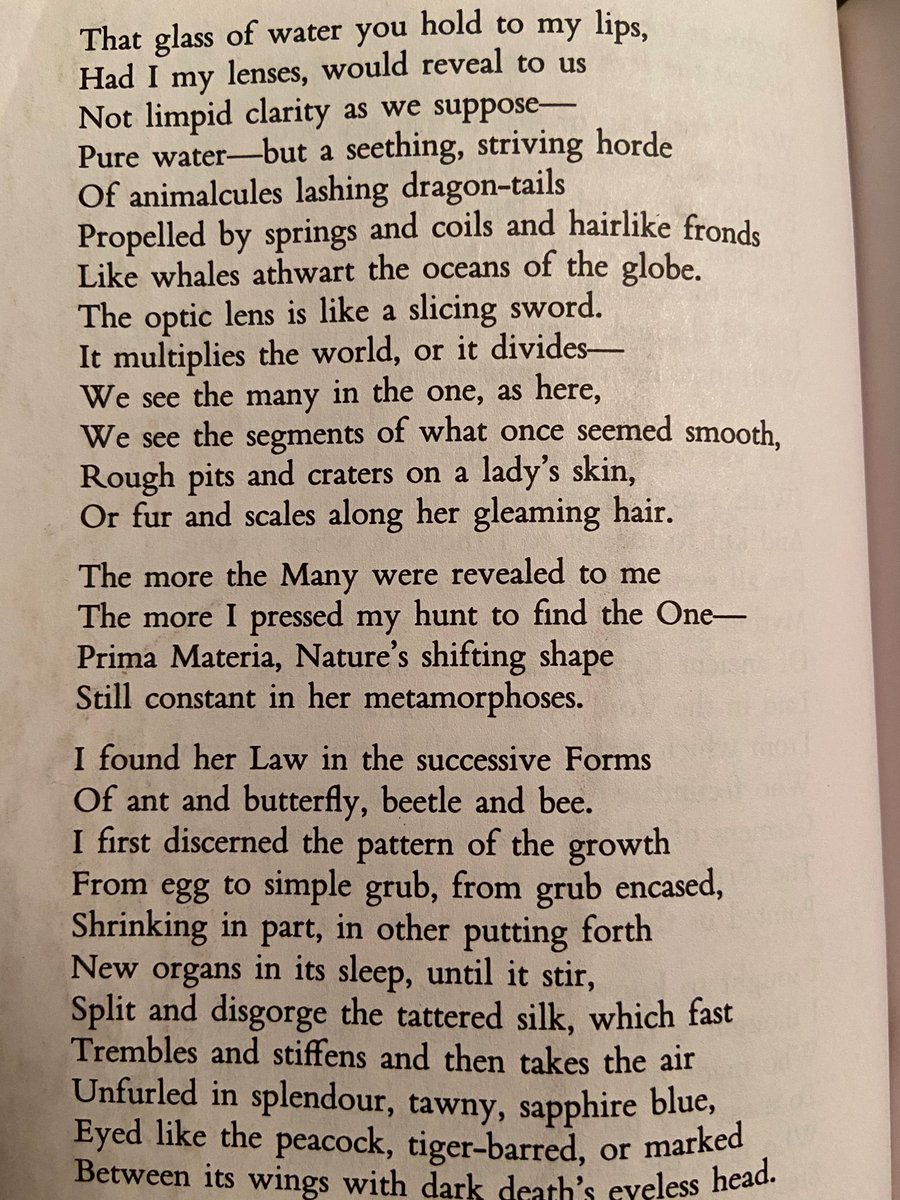
Stanzas from A.S. Byatt's tour de force, Swammerdam—a poem written by her character, R.H. Ash w refs to individuality, collective behavior, perspective + origins + laws of life. Great Galileo with his optic tube A century ago, displaced this Earth From apprehension's Centre,
Jessica Flack tweet mediaJessica Flack tweet mediaJessica Flack tweet media
English
1
5
22
0
Jessica Flack retuiteado
Jessica Flack
Jessica Flack@C4COMPUTATION·
What is greatness and why for some is this abstract concept so motivating? Most of the time pursuit of greatness seems to be born out of nostalgia for a moment in history during which progress could be viscerally felt. This is sometimes measured through the acquisition of territory—the size of empire. Arguably far more meaningful and relevant—especially at this moment in time—are those engineering, scientific, and artistic achievements that in addition to improving quality of life make infinity emotionally tangible. Photo credit in subthread.
Jessica Flack tweet media
Jessica Flack@C4COMPUTATION

Science is distributed around the world, across groups, departments, and institutes, sometimes in competition and sometimes in collaboration. This dynamic when founded on integrity, open-mindedness, excellence, creativity, and playful rigor fuels innovative solutions to challenges and advances understanding. There need not and should not be one trajectory forward. The future is open and there is room + need for many approaches. Embrace pluralism and have fun.

English
0
4
5
2.8K
Jessica Flack retuiteado
Jessica Flack
Jessica Flack@C4COMPUTATION·
Dream Dust By Langston Hughes Gather out of star-dust Earth-dust, Cloud-dust, And splinters of hail, One handful of dream-dust Not for sale. Langston Hughes had a gift for distillation that like Shakespeare he often achieved with an irreverent humor conveyed through clever inversions and other plays on language, or the meter itself. This poem is from The Collected Works of Langston Hughes (2002) via @PoetryFound. Photo credit—TBD—please share if you know.
Jessica Flack tweet media
English
15
5
12
6.4K
Jessica Flack
Jessica Flack@C4COMPUTATION·
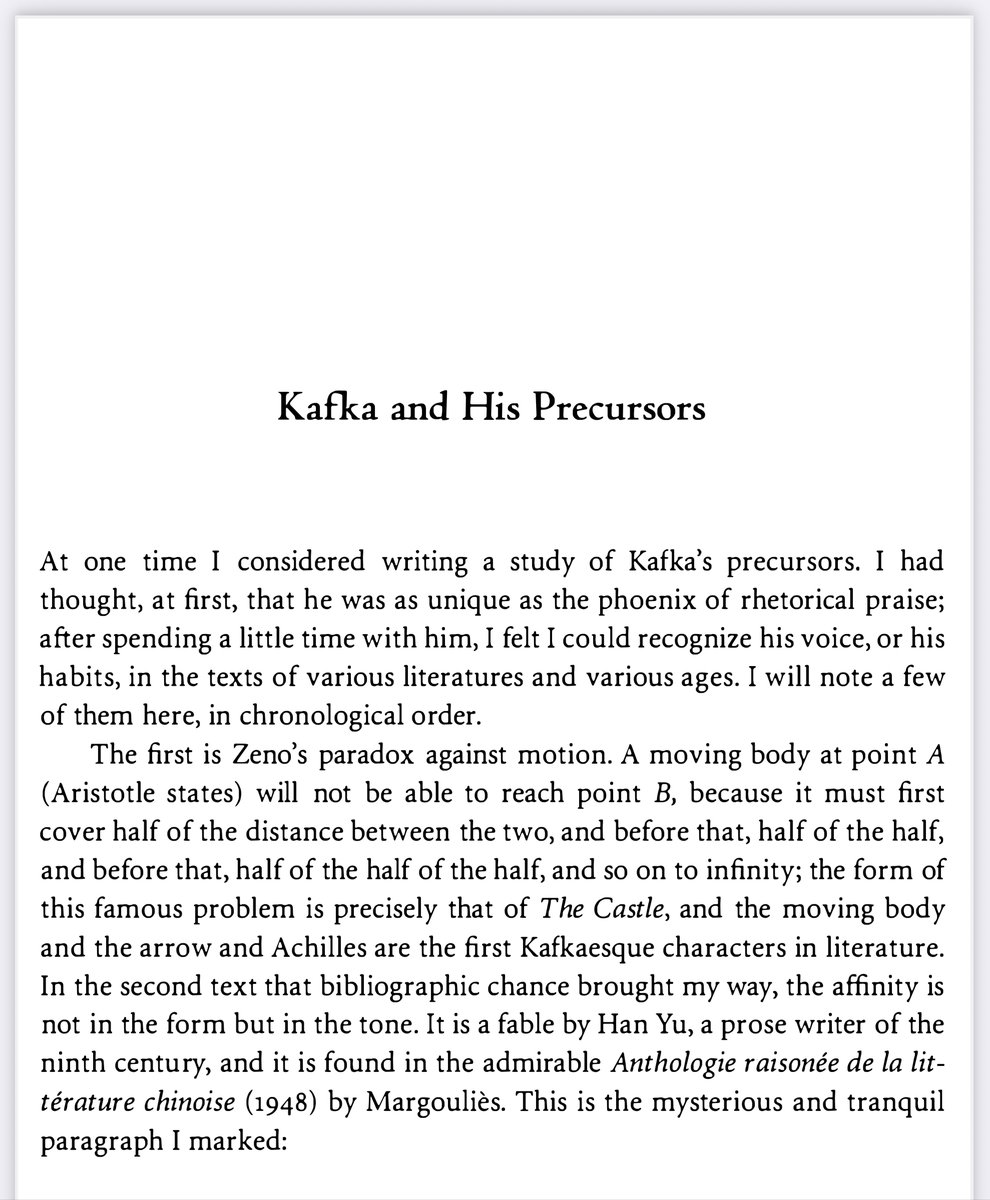
“Kafka's idiosyncracy is present in each of these writings, to a greater or lesser degree, but if Kafka had not written, we would not perceive it; that is to say, it would not exist.” In certain groups there seems to be an obsession with (producing) descendants. Borges wrote a delightful and apropos short story called Kafka and His Precursors. It turns out to apply more broadly than in only creative endeavors like novel writing and science. And also to have a double meaning—finally a good use of ‘double entendre’. 😂
Jessica Flack tweet media
English
0
0
3
240
Jessica Flack
Jessica Flack@C4COMPUTATION·
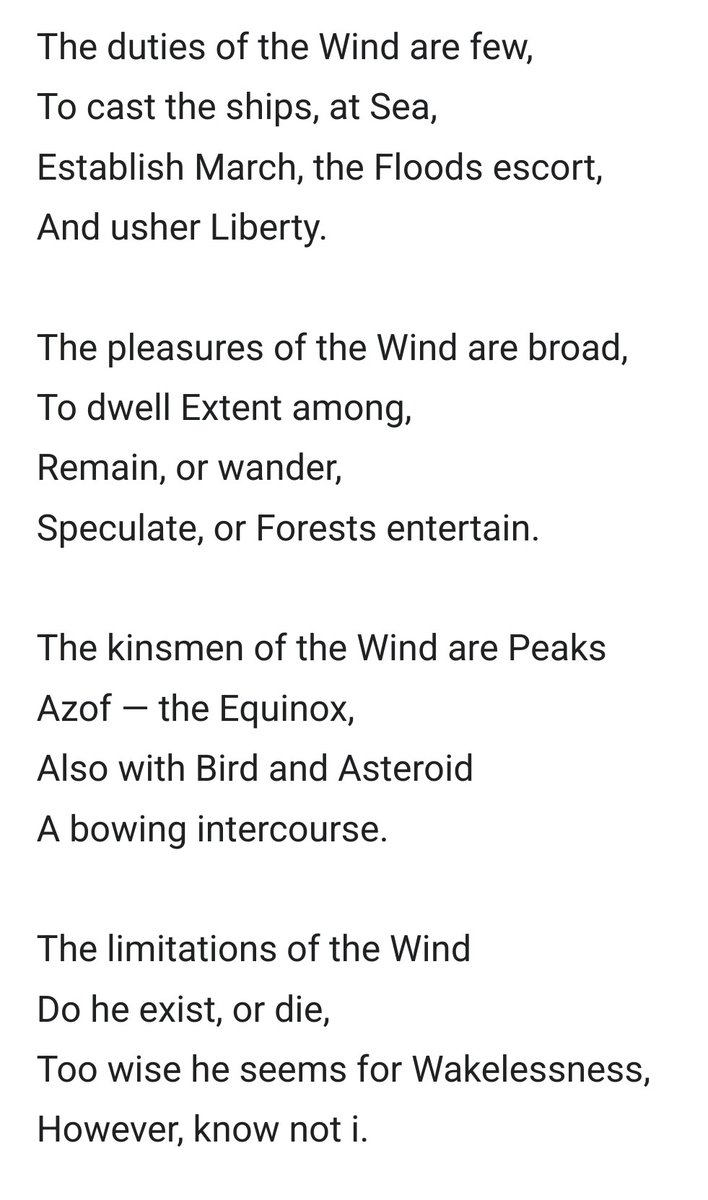
The duties of the Wind are few Poem 1137 by Emily Dickinson.
Jessica Flack tweet media
English
5
6
25
8.2K
Jessica Flack retuiteado
Jessica Flack
Jessica Flack@C4COMPUTATION·
Wheeler's 48 definition-metaphors for computation + the universe as a computer. From a ~1980 note available in the Wheeler repository at APS—by way of my old twitter-friend Dave Bacon—and pasted below with my very brief annotations. diglib.amphilsoc.org/islandora/obje… Dave highlights #39 in his lovely blog post: dabacon.org/pontiff/2024/0… 39. No one knows how simple, powerful, universal, natural, and/or complex computers might ultimately become–and it might be in these  ultimate senses that the universe is or resembles a ‘computer’.  (It might even be possible to devise revolutionary types of computers by studying and applying computational or computer-like properties of the universe.) I find interesting Wheeler's juxtaposition of 8+9: 8. May (or physics may) reduce to pure mathematics, numbers, or ‘order’. 9. May use or reduce entirely to information, symbols, computer-like rules, states, decisions, operations, markers, pointers, arrays, structures, programs, sets, and/or the like. #21 is a pragmatically useful operational definition identifying basic elements without hoopla (In my work I operationalize the elements of computation similarly): 21. All natural phenomena, entities, and systems (be they trees, rocks, : molecules, bacteria, men, societies, rivers, stars, diseases, clouds, or whatever) may be computers or computer-like (have  programs, perform computations, use circuitry, possess memory, use languages, process information, use Boolean logic, or the like). #23 seems at odds with a central message of the it from bit paper: no turtles. The It from bit is a later work piblished in 1990 and delivered as talks in 1989 @sfiscience + elsewhere. 23. All known laws may be controlled or created by higher laws (possibly  arranged in a hierarchy or network). How to rethink #30 given growing consensus universe is lumpy? x.com/C4COMPUTATION/… 30. May be a lattice–or spacetime may be wholly quantized. #32—I hope not! 32. May essentially represent but a single, individual particle, event, or computer (that somehow generates the illusion of a multifarious world); or a single iterative or recursive operation repeating itself forever or toward a finite future destiny. #34—The 21st century science question!! 34. It may be possible to show that information and computation are fundamentally indistinguishable and hence equivalent, or that all of the following must in a similar way be equivalent: information, computation, energy, mass, space, time, and/or the like. Like #21, #40 is pragmatically useful. 40. May function in ways similar or identical to such computer or mental  processes as generalization, recognition, categorization, error  correction, time sequence retention, induction, symbolic logic, analogical reasoning, and/or the like. #45—The universe as chatty-cat micromanager! 😹 45. May represent a great hierarchical network of specialized ‘administrators’ or ‘administrative! processes, functions, systems, laws, constraints, &c. Also, may contain things analogous to questions, answers, experiments, orders, requests, negotiations, conversations, messages, traffic cops, supervisors, inspectors, translators, arbitrators, pioneers, &c. And #48—Lovely! 48. All that exists in the universe (including relationships, entities, interactions, laws, &c that are conventionally thought of as being inert, static, or time-invariant) may in fact be time-asymmetric or an uninterrupted process of change or of cosmoplastic or cosmopoietic interadjustments and interchanges; in this ‘everywhere~ always~novel universe! work and information- could be omnipresent and quintessential.
Jessica Flack tweet media
Jessica Flack@C4COMPUTATION

The physicist John Wheeler, inventor of the phrase, "it from bit" at a Princeton blackboard discussing what in nature can be quantized but as if he were looking at Walton Ford's, "Falling Bough," a fantastic depiction of collective behavior.

English
3
13
42
16.9K