

CaptainDrev
287 posts

CaptainDrev retuiteado

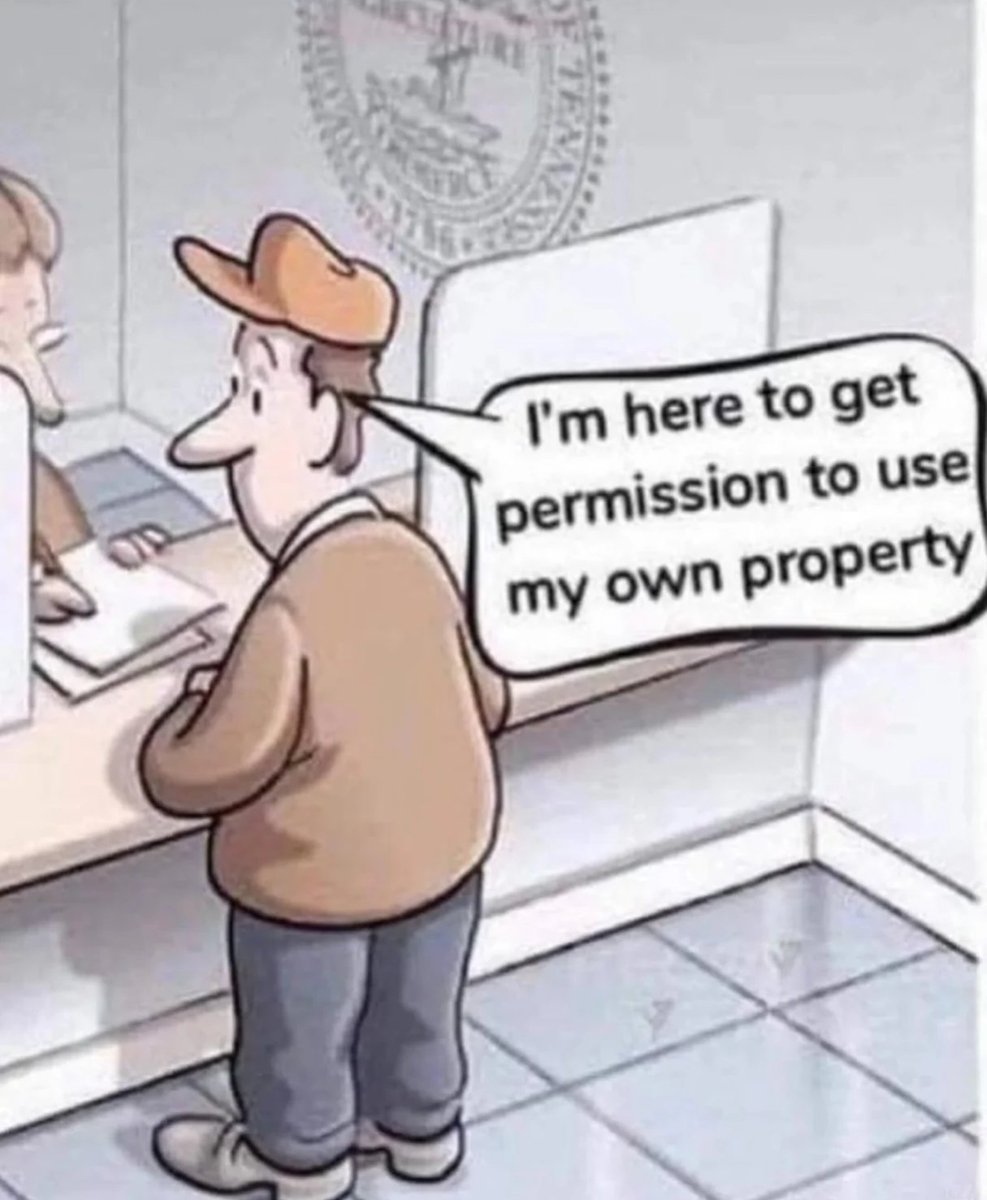
Permits are state permission slips to use your own life and property, backed by fines, shutdowns, and guns if you refuse.
They exist merely to turn ordinary action into a privilege. The whole point is leverage.
Whoever controls the permit controls the pace, the price, and who gets to participate, and the people with lawyers and connections always move first.
A free society does not require you to beg a bureaucracy for the right to act peacefully.
English
@AAGDhillon @TheJusticeDept @CivilRights My super smart nephew who has his master in chemical engineering, can’t get a job due to these H1B workers.
English

It is deeply problematic that federal funding flows to institutions that disproportionately hire H-1B visa workers over American workers.
@TheJusticeDept will continue to root out this problem and protect the employment @CivilRights of Americans!
English
CaptainDrev retuiteado
NYC’s “Underground Railroad Ladder” – Heroic Discovery of a Laundry Chute!
Historians and the media are calling it the find of the decade: a hidden 2×2-foot ladder tucked under a dresser drawer in Manhattan’s Merchant’s House Museum, built in 1832 by abolitionist Joseph Brewster. They say it’s the first verified Underground Railroad “safe house” feature discovered in the city in over 100 years — a “masterwork of deliberate concealment” for escaped slaves fleeing to freedom.But a closer look suggests this story might be more hype than history.
Here’s why the bold claim is likely wrong:
1. It looks exactly like a laundry chute
The shaft drops straight from a second-floor built-in wardrobe to a basement closet. Original blueprints show the dresser positioned directly above a pantry area — perfect for dropping soiled linens, coal, or rubbish without hauling them down stairs.
Laundry chutes (or similar utility drops) existed in multi-story homes by the early 1800s, even if they weren’t yet the fancy Victorian version. They were practical, discreet, and often hidden in furniture for a tidy appearance. Slave catchers? Or just avoiding the servants’ stairs?
2. Zero direct evidence — only circumstantial clues
No diaries, letters, runaway ads, or escapee testimonies mention this house or ladder. The feature was known for decades; curators just reinterpreted it recently after confirming Brewster’s abolitionist ties.
Candle wax? Could be from storage or routine basement access. Similar “secret compartments” Brewster designed for churches? Also unproven as escape routes.
3. The timeline makes no sense for a desperate hideout
New York fully abolished slavery in 1827 — five years before the house was built. Fugitive slaves in Manhattan were already in free territory, and the fugitive slave act was not enhanced until 1850.
Why install a tiny, two-story vertical ladder in the middle of a dense urban block as a “quick escape” when Canada was hundreds of miles away and slave catchers were far less of a daily threat than in border states?
4. The Underground Railroad story has a long history of exaggeration
Scholars have long noted that many “safe house” claims were amplified after the Civil War for Northern moral credit. Actual numbers of people helped were far smaller than the legend suggests. In an era hungry for uplifting Black history stories, every ambiguous old shaft suddenly becomes “the path to freedom.”Social media is already pushing back — plenty of replies are calling it a laundry drop, a Prohibition-era booze hide, or a later modification. The museum plans tours and press around the “discovery” right in time for Black History Month.
Extraordinary claims require extraordinary evidence. This one has enthusiasm and a photogenic dresser drawer — but not much else.
History deserves skepticism, not slogans. Something tells me these people used to work at Monticello, where everything seems to be connected to Sally Hemings.
#history #ushistory #slavery

English
CaptainDrev retuiteado

CaptainDrev retuiteado

As a former Special Forces Warrant Officer with multiple rotations running counterinsurgency ops—both hunting insurgents and trying to separate them from sympathetic populations—I’ve seen organized resistance up close. From Anbar to Helmand, the pattern is familiar: spotters, cutouts, dead drops (or modern equivalents), disciplined comms, role specialization, and a willingness to absorb casualties while bleeding the stronger force slowly.
What’s unfolding in Minneapolis right now isn’t “protest.” It’s low-level insurgency infrastructure, built by people who’ve clearly studied the playbook.
Signal groups at 1,000-member cap per zone. Dedicated roles: mobile chasers, plate checkers logging vehicle data into shared databases, 24/7 dispatch nodes vectoring assets, SALUTE-style reporting (Size, Activity, Location, Unit, Time, Equipment) on suspected federal vehicles. Daily chat rotations and timed deletions to frustrate forensic recovery. Vetting processes for new joiners. Mutual aid from sympathetic locals (teachers providing cover, possible PD tip-offs on license plate lookups). Home-base coordination points. Rapid escalation from observation to physical obstruction—or worse.
This isn’t spontaneous outrage. This is C2 (command and control) with redundancy, OPSEC hygiene, and task organization that would make a SF team sergeant nod in recognition. Replace “ICE agents” with “occupying coalition forces” and the structure maps almost 1:1 to early-stage urban cells we hunted in the mid-2000s.
The most sobering part? It’s domestic. Funded, trained (somewhere), and directed by people who live in the same country they’re trying to paralyze law enforcement in. When your own citizens build and operate this level of parallel intelligence and rapid-response network against federal officers—complete with doxxing, vehicle pursuits, and harassment that’s already turned lethal—you’re no longer dealing with civil disobedience. You’re facing a distributed resistance that’s learned the lessons of successful insurgencies: stay below the kinetic threshold most of the time, force over-reaction when possible, maintain popular support through narrative, and never present a single center of gravity.
I spent years training partner forces to dismantle exactly this kind of apparatus. Now pieces of it are standing up in American cities, enabled by elements of local government and civil society. That should keep every thinking American awake at night.
Not because I want escalation. But because history shows these things don’t de-escalate on their own once the infrastructure exists and the cadre believe they’re winning the information war.
We either recognize what we’re actually looking at—or we pretend it’s still just “activism” until the structures harden and spread.
Your call, America. But from where I sit, this isn’t January 2026 politics anymore.
It’s phase one of something we’ve spent decades trying to keep off our own soil.
English
English
Armored vehicle entering the scene near the shooting , the crowd tries to block the vehicle as protesters throw objects at the vehicle @DailyCaller
English
CaptainDrev retuiteado

This is key.
It’s not just that none of the 315,000 early votes for Fulton County, GA in 2020 were not signed.
They never turned over ANY zero tapes for those votes. That’s the entire beginning record of the election.
They provided 137 unsigned closing tapes, but ZERO signed or unsigned opening tapes.
They made the early votes up and this is what the recounts were supposed to match. (They didn’t.) It was all a fraud and they never produced the results that the second machine count and the hand recount were supposedly matching.
English
CaptainDrev retuiteado

In this video, Milton Friedman explains why capitalism isn’t just the best system, it’s the only one that works.
English
@ConfederateShop I’ve been trying to find the quote Patton made regarding the Confederate Army if it exists.
English

Young George S. Patton, grandson of Confederate Colonel George S. Patton Sr. of the 22nd Virginia Infantry, grew up hearing daring raid stories from family friend John S. Mosby, the legendary “Gray Ghost.” Those tales of bold tactics and fearless leadership shaped him into one of America’s most aggressive generals during the Second World War.

English

BREAKING
The ICE officer who was suspended after his response was caught on camera to a woman assaulting him during the arrest of her husband has now reportedly been REINSTATED to full active duty following an investigation.
Do you support this decision?
English
CaptainDrev retuiteado

The media are lying about left-wing political violence.
English
What’s happening at @ups? I track my package through UPS’s system and it moves fine until it gets to the Forest Park, GA Distribution center then it stops and then delay after delay. This has happened many times with my shipments.
English
@amazon sends me a tube of caulk without the nozzle that supposed to come with it. This is why I avoid buying from Amazon if I can, because they can’t resolve small issues without going through an entire return process.
English




So New York City took down a statue of Thomas Jefferson and put up a statue of this? The absurdity of this is beyond belief!!


English