Canadian Energy Analysis

4.8K posts

Canadian Energy Analysis

Canadian Energy Analysis

@CdnEngyAnalysis

Canadian Energy. Former sell side scrub, IR punching bag, corporate schmuck.

Se unió Ekim 2014
218 Siguiendo6.6K Seguidores
Tweet fijado
Canadian Energy Analysis
Canadian Energy Analysis@CdnEngyAnalysis·
Capital discipline in the Canadian Oil & Gas industry? Let’s find out. A thread.
English
18
27
191
0
Canadian Energy Analysis
Canadian Energy Analysis@CdnEngyAnalysis·
Trying to implement AI at a big bureaucratic organization: Me: Copilot is useless, can we get Claude instead? IT: No. Me: but we could cut so many people if you let us use Claude. IT: No. Case resolved. Ticket closed. IT email: Please complete this short survey.
English
1
0
7
1.1K
Canadian Energy Analysis retuiteado
Michael Spyker
Michael Spyker@ShaleTier7·
Please for the love of everything holy if you are an E&P do not do anything stupid. Do not buy back your shares after running your cashflow at $110/bbl WTI. No they're not cheap. The time to buy back stock was every day over the last year. Do not buy new assets. The time to buy new assets was every day over the last year. Do not grow. If you couldn't grow over the last year economically, you are almost certainly not going to be able to maintain your new-found production levels when the market reverts. You are not the low cost producer.
English
27
12
276
31.4K
Canadian Energy Analysis
Canadian Energy Analysis@CdnEngyAnalysis·
I asked AI to write a haiku for $TOU: Tourmaline drifts low, Charts whisper unmet promise— Patience thins like fog.
English
3
0
29
2.9K
Canadian Energy Analysis
Canadian Energy Analysis@CdnEngyAnalysis·
Has there ever been a more ADHD company with respect to M&A than $OVV? 🤦‍♂️
English
3
0
27
6.9K
Canadian Energy Analysis
Canadian Energy Analysis@CdnEngyAnalysis·
@FracSlap Curious which components make up the $1B bottom line figure above? Every line item or specific buckets more than others? IE: capex savings or opex or higher revenues from XYZ?
English
0
0
1
568
Collin McLelland 🏴‍☠️
It's becoming extremely clear to me that oil companies will diverge into the "haves and have nots" based on who becomes AI-native the fastest. We have a client that has a straight path to adding $1 Billion+ to their bottom line and will get there quickly because of their culture and urgency to become AI-native. Meanwhile, other companies are operating on longer multi-year timelines or have no plan at all. It's important to understand that AI isn't some enterprise SaaS widget that solves one specific problem, it's going to be a material shift in the way companies operate and will significantly cut capex and opex. If you want to attract investors, they're going to want to invest in the most capital-efficient companies. If you want to attract the best talent, they're going to want to work at the companies that are using the latest AI technologies. It's very binary, the companies who become AI-native are going to cook those who don't.
English
5
1
39
8.4K
Michael Spyker
Michael Spyker@ShaleTier7·
We’re genuinely going to spend over a trillion dollars building data centers. This is good for natural gas.
Michael Spyker tweet media
English
7
16
169
14.1K
Unemployed Capital Allocator
Unemployed Capital Allocator@atelicinvest·
Since I've been breathlessly spewing shit all week, just to sum up: - Genie 3 is surprising not only because of its capabilities (as crazy as it is) but because of the Q: If they can get this to work, what else is trainable? It gives us a glimpse into what else is possible. - Moltbook is surprising not only because bots are talking to each other (it's nuts!) but because it asks the Q: if a bot can have real world impact through tokens, because people are willing to give them access to a whole bunch of services meant for humans - does it matter that it's just predicting the next token? - Claude Code / Work is surprising not only because of its capabilities (it's amazing!) but because of the Q: if harness / tools given to a base model can make *this* much of a difference - what can I build - today?
English
3
0
32
3.8K
Michael Spyker
Michael Spyker@ShaleTier7·
Just a weeeeeeeee bit outside
Michael Spyker tweet mediaMichael Spyker tweet media
English
5
0
38
5.5K
Michael Spyker
Michael Spyker@ShaleTier7·
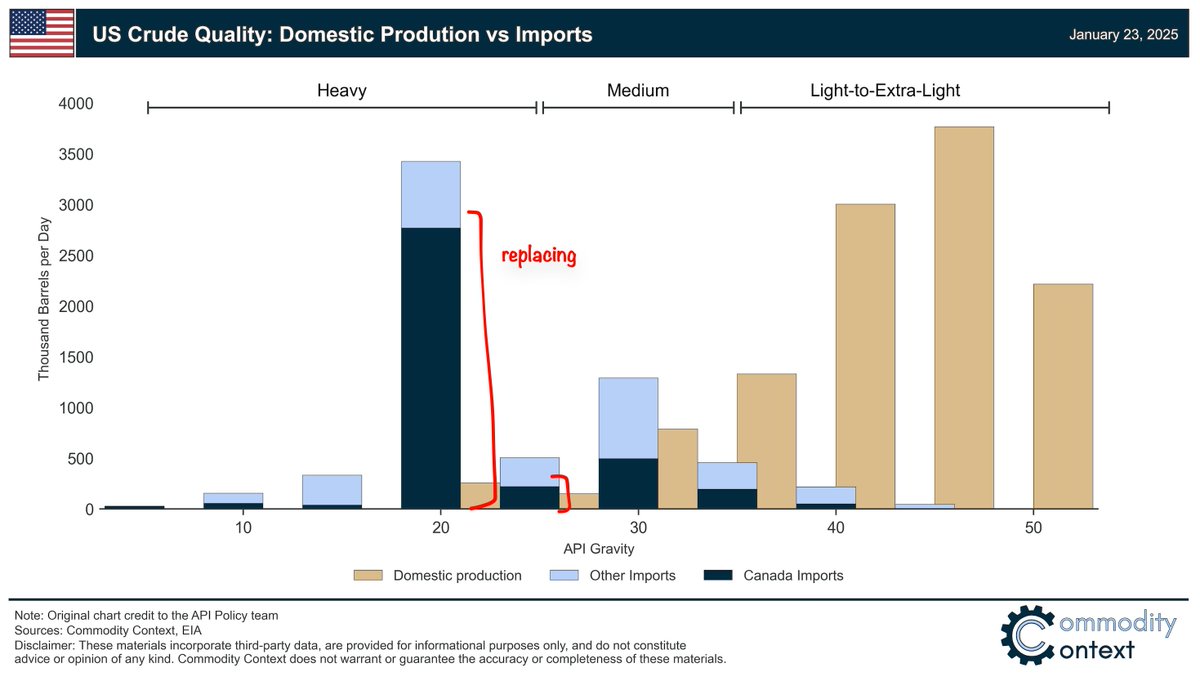
I have spent a lot of time talking shit at people with opinions on Venezuela's oil production potential, and how it's going to "RePLaCe CanADa". So here's my contribution -- how I see the cost of replacing Canadian crude with Venezuelan heavy. I think it's a nearly $1 trillion bill to get that done. I'm not sure who has a spare $1 trillion in their jeans. Venezuela's natural domestic consumption is ~1MMB/d, so to completely replace Canada and reach 3MMB/d of export capacity, the country needs to grow production to ~4MMB/d of production, a level they have never hit before. Exports never really exceeded more than ~1.2MMB/d. They have one main export terminal (Puerto José) capable of ~1.2MMB/d and other smaller terminals gets them to realistically, 1.7MMB/d, so they need +1.3MMB/d in just export capacity and storage facilities, that's $5-10Bn. On the US side there needs to be minor import expansion, but not super major, around $1Bn. Then, they have to get the oil flowing north. You'd be able to repurpose some Canadian pipelines (if we assume no USGC re-export), but right now Mid-Valley Pipeline is the only major remaining heavy trunk line that moves oil from the USGC region northward into the Midwest. So you need +3MMBbls/d of crude pipelines that move crude north which would run around $30-50Bn. Then you also need a condensate return line for another $10Bn. Venezuelan crude has higher levels of metals and a higher TAN than Canadian exports, so you need to retool the refineries accepting the new sauce, that's another $50-90Bn on the tab. Cause there's not enough VLCCs in the world to service this, you also need to build new tankers for the shuttle service. 30 new VLCCs will cost $4-8Bn. Then onto the upstream. I'm going to say that if you're getting super majors to really invest in Venezuela, they're going to do tertiary recovery which is overwhelmingly the right play over 20+ years with current SAGD tech (SAGD wasn't commercial when Venezuela grew the first go-round). Using foamy oil to get to 4MMBbls/d and keep it there for 10-20+ years is impossible (we're replacing Canada so we need a 20+ year RLI). Right now, Venezuela produces oil cold, and uses depleting reservoir pressure to bring that oil to surface. For a true Canada replacement, you need heat, which is going to be expensive! But we're not building new upgraders (replacing Canadian heavy), but even then upgrading capacity is only ~0.7MMB/d. The problem is they don't have the power infrastructure to add the power needed for 3MMBbls/d of SAGD for steam generation, and even for primary recovery they don't have the electricity they need. So you need to build 10-15 GW of new power infra, at gas-fired capital cost including transmission and the new midstream infra to move gas (including LNG import terminals), that's another $40-75Bn just to get the power to the SAGD facilities. There are constant rolling blackouts in the country. You also need ~7-900MB/d of diluent looping on the Venezuela side, including DRUs for another ~$25Bn. Other local midstream refurb is at least $15Bn to replace ashphalted and corroded trunk lines. Any North American firm would also have to commit to cleaning up Lake Maracaibo which is a $10Bn commitment. For the actual upstream facilities, I'm just going to use a pretty general number based on 125% of Canadian Greenfield costs, so ~$45K/Bbl/d, and lets just call it 2.8MMB/d that's another ~$125Bn for the actual production facilities and ~$220Bn in sustaining CAPEX while everything ramps, and inevitable 5yr issues will add another $10Bn. There are also very little functional logistics infrastructure. The Tinaco-Anaco rail line was never completed, so you'd have to finish that. All copper has been inevitably stripped and looted, you'd have to rebuild all sorts of worker camps, airports/airstrips, rail spurs, trainload facilities. You'd need to re-dredge the Orinoco River ($15Bn), complete the Tinaco-Anaco line ($20Bn), build 1,000 miles of new heavy spec roads ($25Bn), and you'd need to refresh all of the civil infrastructure cause nobody from Houston is going to live in Venezuela as it stands. So you're going to shoulder that in wages, or Fort Mac copy-paste CAPEX for ~$40Bn. You are also, in the growth/construction and first 5 years going to spend $50-60Bn on paying employees/EPC/other contractors. You need at least 50,000 people in offices and fields to get this done. Of course, security too. Petrominerales spent ~$2.50/BOE on security, so +3MMB/d over 5 years is ~$10Bn on security. So all-in we're at ~$700Bn in both direct upstream costs, and indirect costs. All-in, this is a $1 trillion project to grow exports ~3MMB/d. There is short-term growth to be had, but it's not sustainable growth. There is also huge long-term potential, but it's not the same as drilling a pad in the Permian and ripping a tie-in to Energy Transfer. It's a freaking massive commitment. The country is pretty much dilapidated, and until super majors (and other infra builders) begin committing to the full-cycle costs associated with realizing the country's potential, the upside is not as robust as many would want you to believe. - Export terminal ($8Bn) and import refresh ($1Bn) - Pipelines from USGC to Midwest ($40Bn) and then a condensate return line ($10Bn) - Retooling refineries ($75Bn) - New tankers for shuttle service ($6Bn) - Lake Maracaibo clean up ($10Bn) - New power infrastructure for the upstream growth at a post-AI inflated capital cost ($60Bn) - New diluent looping ($25Bn) - Actual upstream production facilities and <5yr sustaining capital and issue contingency ($355Bn) - Full logistics and civil infrastructure overhaul (~$100Bn) and security ($10Bn). US imports chart by @Rory_Johnston
Michael Spyker tweet media
English
273
847
3K
591.6K
Canadian Energy Analysis
Canadian Energy Analysis@CdnEngyAnalysis·
@trend_bullish Are you sure they’ll generate enough excess FCF at $60/bbl to buy back $3.5-4.0B of stock each year? 50% of EFFF is committed to debt repayment until net debt is under $6B.
English
1
0
4
704
Bullish Trend
Bullish Trend@trend_bullish·
Cenovus; If oil remains stable at **US$60 WTI** (consistent with Cenovus' 2026 guidance assumptions), and if share buybacks continue at the current pace (approximately CA$3.5-4 billion per year, based on recent shareholder returns, primarily through buybacks), the Cenovus share price could reasonably reach **approximately CA$38-40** in 2028 (on the TSX, ticker CVE.TO). ### Key Reasoning - Current Price (early 2026): ~CA$24, with ~1.89 billion shares outstanding (market capitalization ~CA$45 billion). - Buyback Pace: Recent returns ~CA$1.3 billion per quarter (of which ~70-80% are buybacks), representing a buyback yield of approximately 7-8% annually at the current price. This reduces the number of shares outstanding by approximately 7-8% per year. - Over 3 years (2026-2028): Cumulative reduction of approximately 20-23% in the number of shares (to ~1.45-1.5 billion shares at the end of 2028). - Production growth: 2026 guidance of ~965 kb/d (midpoint), growth to ~1.1 million b/d by the end of 2028 (+14% cumulative, via expansions at Christina Lake, Sunrise, Lloydminster, and West White Rose). - Impact on price: At a stable $60 WTI, the enterprise value remains solid (breakeven ~$45-50 WTI for maintenance capex + dividend base; sensitivity ~+$220M in AFFO revenue per +$1 WTI increase). Share buybacks concentrate the value on fewer shares, while production growth (+14%) supports an increase per share. Compound effect: +35-45% on price per share (buybacks + growth). - Other factors: Growing dividend base (current yield ~3.3%, target growth >10% per share per annum), policy of returning ~100% of excess FCF to shareholders (buybacks prioritized once net debt reaches ~C$4 billion, target reached/close to). 2026 Capex ~C$5 billion funded even at $60 WTI. - Risks: At $60 exact (vs. guidance assumptions), slightly lower FCF could moderate buybacks if prioritized otherwise, but this assumes the current pace is maintained. Valuation multiples could vary, but a low cost structure (~C$21/bbl) supports resilience. This is not a precise prediction (volatile markets, execution of key projects), but a reasonable estimate based on the 2026 guidance, the corporate presentation (Dec. 2025), and the track record of aggressive returns. Short-term analyst targets are around CA$31-32 (average), with potentially higher long-term targets in similar scenarios.
English
10
4
92
18.4K
Canadian Energy Analysis
Canadian Energy Analysis@CdnEngyAnalysis·
Hearing $SCR has asked shareholders to give back the $10/sh special dividend they just paid out. Bullish.
English
2
1
46
28.1K
Canadian Energy Analysis
Canadian Energy Analysis@CdnEngyAnalysis·
Not a source of pride, but posting my 24 year equity curve for full transparency. Few.
Canadian Energy Analysis tweet media
English
1
0
16
2.9K
Michael Spyker
Michael Spyker@ShaleTier7·
I’m gonna say it — Japan sucks as a travel destination. Can’t see why people enjoy it.
English
21
0
30
24.8K
Canadian Energy Analysis
Canadian Energy Analysis@CdnEngyAnalysis·
@ShaleTier7 $1,000,000,000 so far. I believe with the right acquisition he could get up to the $2,500,000,000 mark. I’m pulling for him and the team.
English
0
0
13
1.3K
Michael Spyker
Michael Spyker@ShaleTier7·
Eric Greager lit $1,000,000,000 on fire. One billion dollars. Why does he still have a job at Baytex Energy? He should not still be employed at this company.
Michael Spyker tweet media
English
7
1
52
13.9K
Canadian Energy Analysis
Canadian Energy Analysis@CdnEngyAnalysis·
@BrownMarubozu How do you anticipate new minority retail shareholders will benefit over time relative to the majority owner on this name?
English
1
0
6
717
Brown
Brown@BrownMarubozu·
Despite the general oil price weakness, this is probably a good week to pick up $GFR $GFR.TO if so inclined as the rights issue expires tomorrow. Everyone who wanted to sell will have sold and $SCR.TO holders who are fans of WEF should have some cash to invest next week.
GIF
HFI Research@HFI_Research

(Idea) Greenfire Resources - One Of Our Favorite Energy Names At US$75 per barrel WTI and production at 21,500 bbl/d, GFR can generate C$120 million in free cash flow, or ~20% FCF yield. $GFR By: @Jon_Costello_ hfir-ideas.com/p/idea-greenfi…

English
4
0
15
17K
Martin Pelletier
Martin Pelletier@MPelletierCIO·
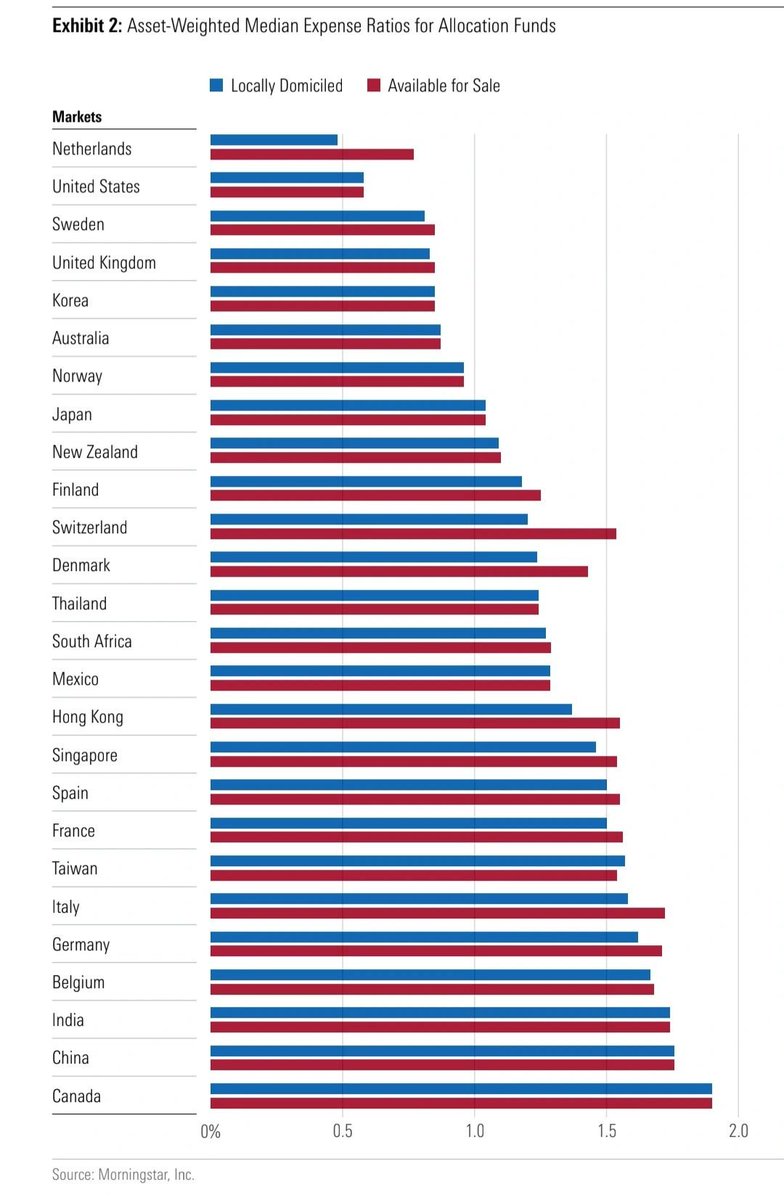
This is crazy but not surprising given the entire wealth management industry in Canada is concentrated among 5 banks.
Martin Pelletier tweet media
English
24
18
141
11.9K