Canadian Energy Analysis
4.8K posts

Canadian Energy Analysis
@CdnEngyAnalysis
Canadian Energy. Former sell side scrub, IR punching bag, corporate schmuck.
Katılım Ekim 2014
217 Takip Edilen6.6K Takipçiler
Sabitlenmiş Tweet


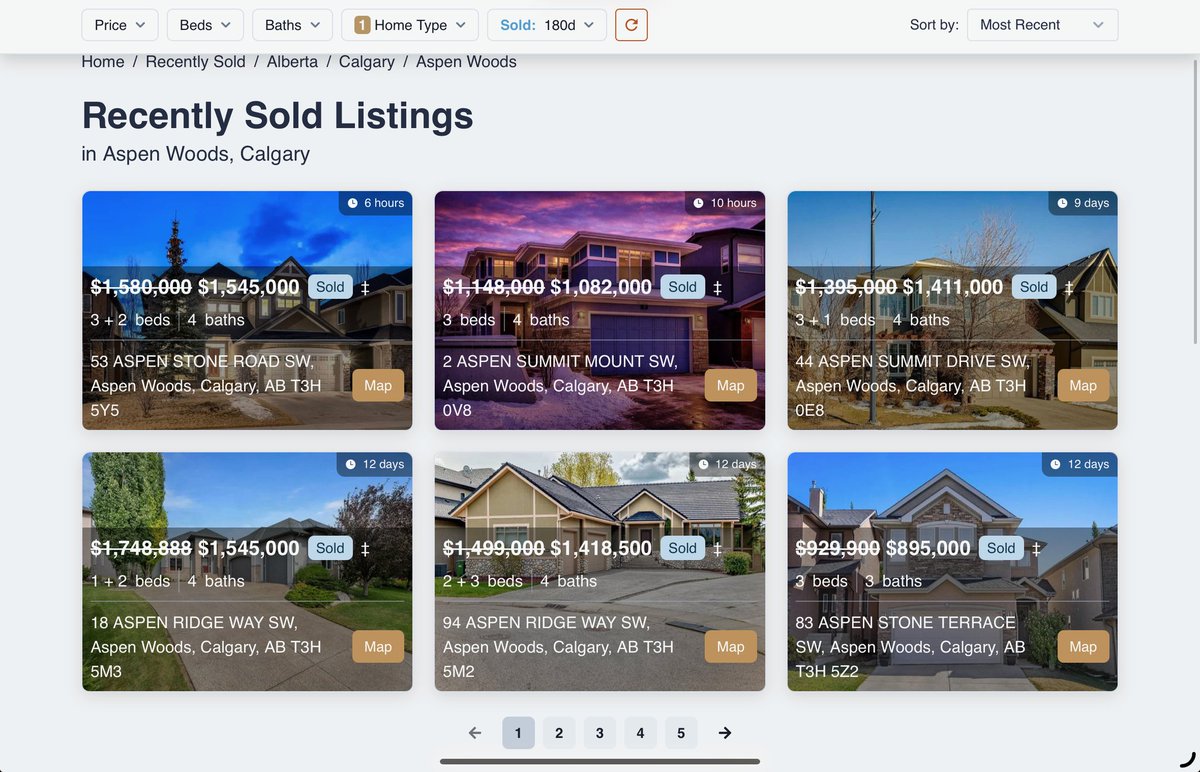
@LUV2SKIPOW Breaking: Local man in top 1% of the wealth spectrum decries strength of top 1% of real estate market. More news to follow at 6PM.
English

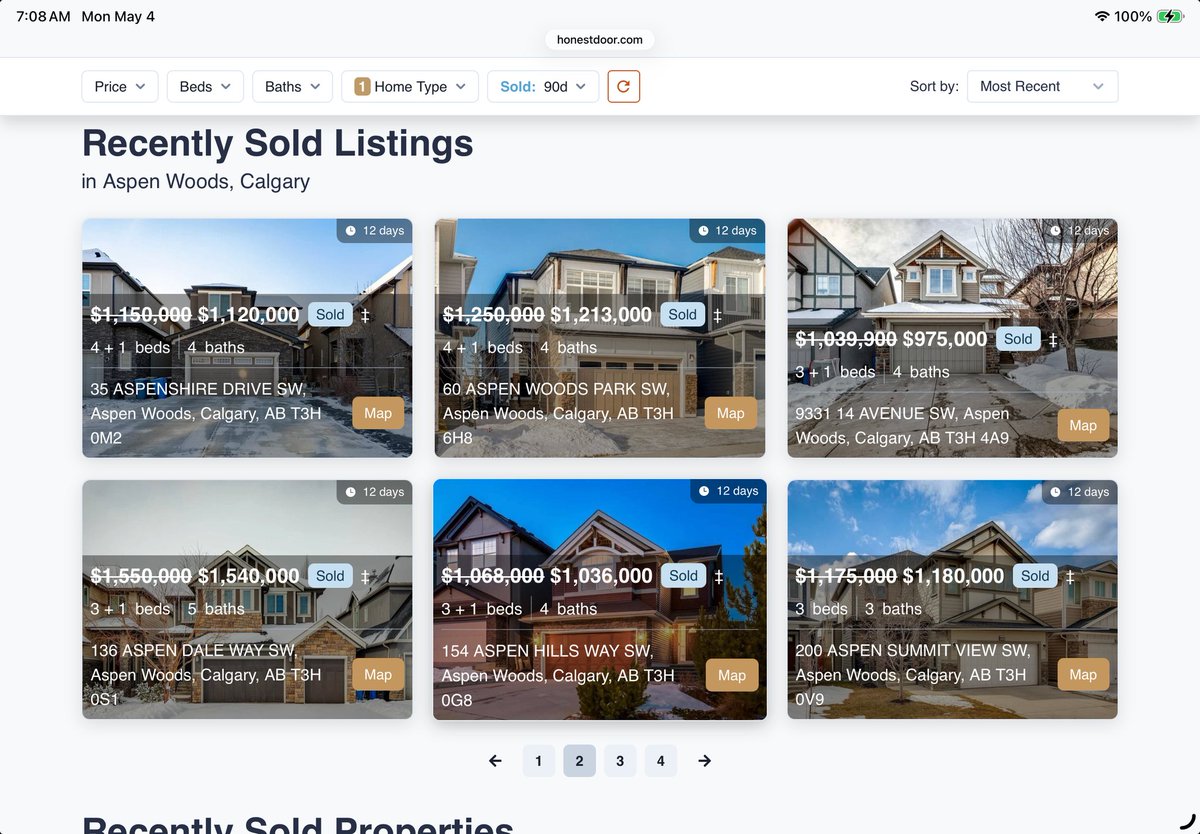
Aspen Estates.
Highly desirable.
Without doing a deeper historical dive or market evaluation - 12 houses: 10 UNDER ask with 2 barely over ask.


Martin Pelletier@MPelletierCIO
Calgary single family housing market on fire. Multiple offers, gone in hours if priced fairly. Know someone sold $2mm house with multiple offers within hours. Amazing. $100 oil?

English

@ShaleTier7 Remember how great things were in 2016? Man, those were the glory days.
Few.
English

Lol, all this chart shows is that oil stocks have traded at 6x for all-of-time except the 4-years between 2014 and 2018 where there was aggressive forward growth; only then they traded to aggressive forward multiples.
Why compare to a basket of other companies in other industries with different growth profiles? Why is that a useful metric? Slop!!

Tracy Shuchart (𝒞𝒽𝒾 )@chigrl
O&G E&P's still look cheap E&P Vs. S&P Multiple

English


@EnergyCynic Same position, same thinking as you.
English

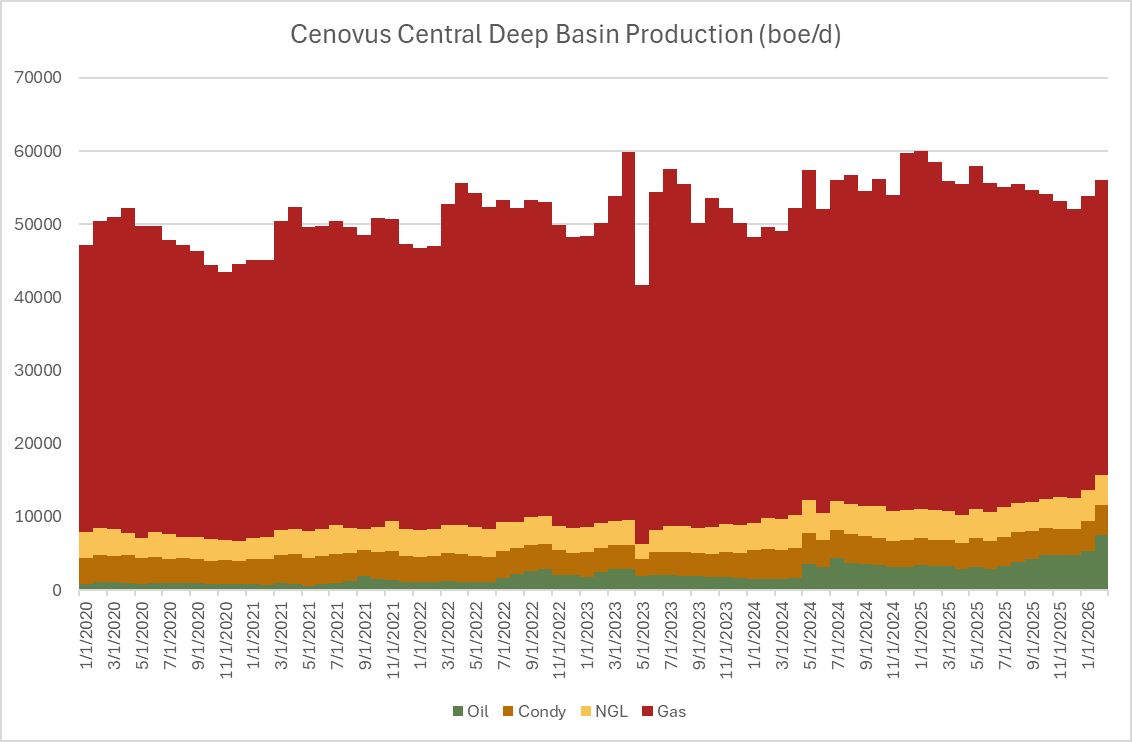
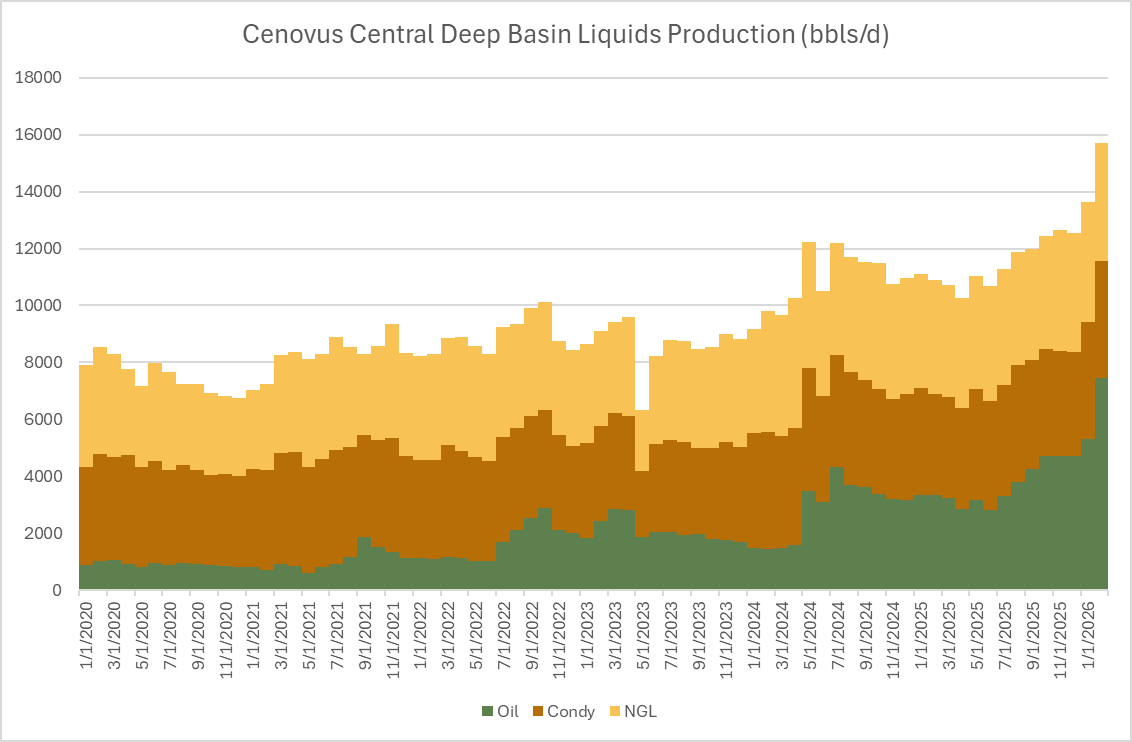
Now that Cenovus is dead-set on growing their Montney asset, as they've licensed 8-well in NEBC offsetting Murphy's Tupper asset -- the forward outlook for AECO looks EVEN MORE GRIM, if you could possibly fathom that.
I propose that on June 1st, everyone gather on the CVE exec floor in Brookfield Place and we scream at the top of our lungs until they agree to not add more gas into the basin. I'm only semi-joking.
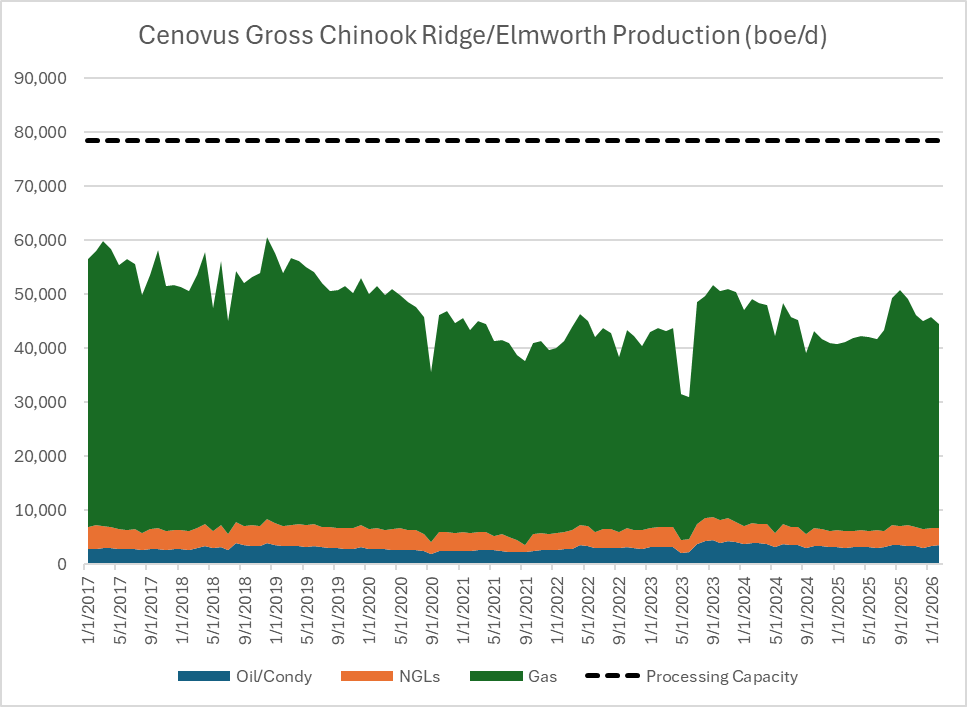
Cenovus inherited a massive Chinook Ridge/Elmworth Deep Basin gas position from Cenovus when they acquired their Canadian assets in 2017, and they have tried to maintain it to some degree. The main historical target has been the Cadomin on the BC side, but they haven't been drilling that as it's mostly blowdown. They sold the Elmworth/Pipestone Montney to NuVista, but have retained the Deep Basin. Recently, Cenovus has added land through the BC Crown Land sale to grow their footprint.
Attempts to maintain this complex have been fairly mixed, wells are okay, not great, but I think that's not a geology thing, that's an expertise thing. Looking at it objectively, there's pretty decent *gassy* horizontal upside throughout in the Falher/Wilrich/Doig, and some oil upside in the Dunvegan and 2 other zones which I won't share but there's some sauce here -- so you can see why they want to grow it.
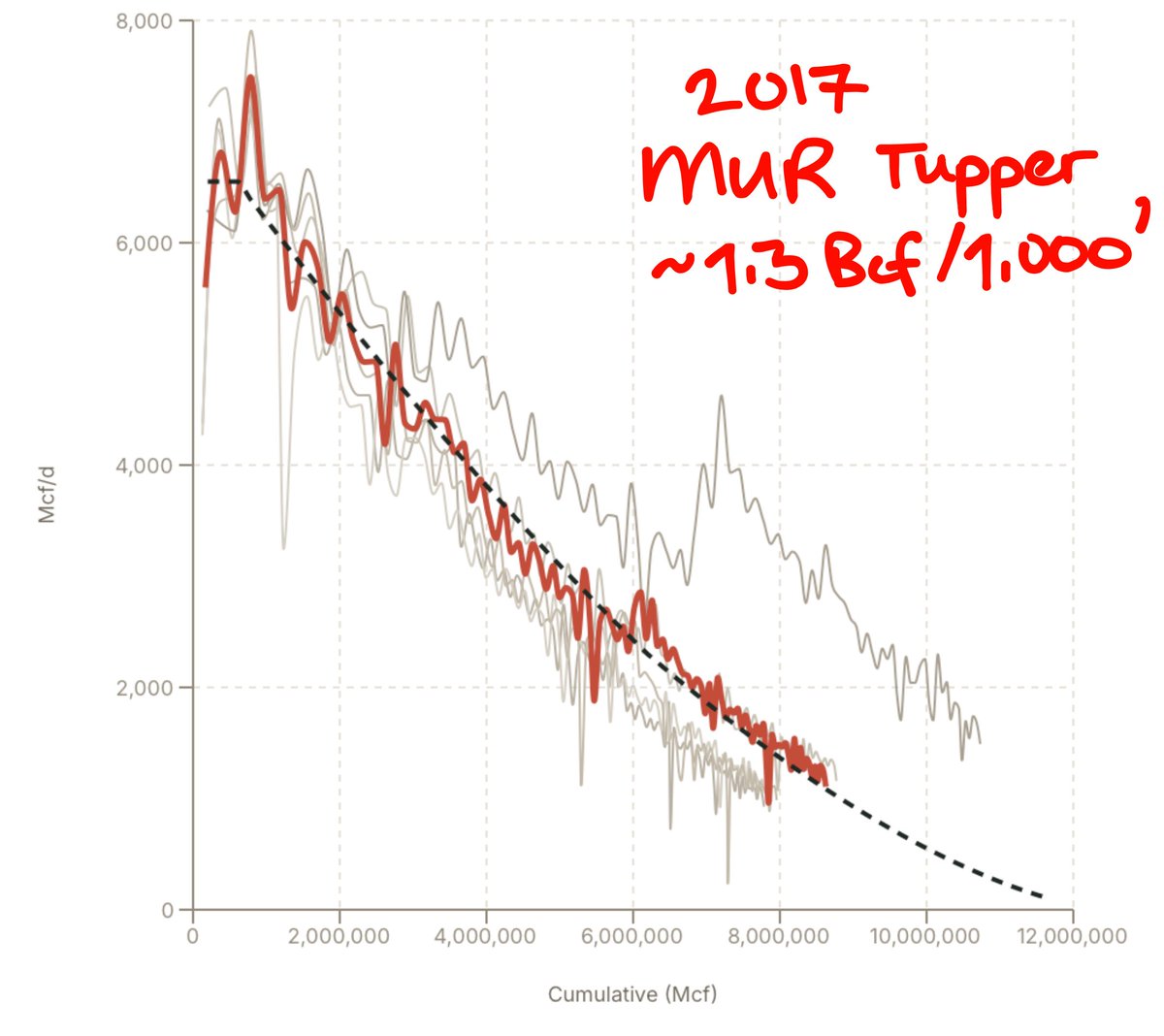
Cenovus is starting their apparent drill bit growth on their ~50,000 acres offsetting Tupper/Glacier/Elmworth that's highly prospective for Montney gas in two benches. Some of it they got from Conoco along with the land sale. As shown below on the map they have 8 licenses along with some facility, road and water use approvals. The rate-cum chart is raw gas from the ~1.8mile Murphy wells completed almost 1 decade ago. Here, I have absolutely no problems saying that gas EURs will be >1.6Bcf/1,000' sales, so on a 3-mile well, that's >20 Bcf sales. Murphy planned at one point to expand their footprint here just because the wells are such high-impact and so low-cost in terms of F&D, but didn't cause no incremental long-haul pipe out of the basin.
This is not going to turn out well for Cenovus [on an asset level] or the basin. Not because this isn't a phenomenal asset, but because, as I've really posted about a lot, this part of the Montney is really freaking dangerous. It's very easy to bring large amounts of gas online that's very low-cost, and if you're Cenovus with an oil business that's fine, NBD, but if you're a gas producer, this should have you shitting your pants. This asset could grow with *ease* to >200MMcf/d and yes there are NGTL limits to that inlet capacity but the plant capacity is there and also, not particularly difficult to construct.
I say this very seriously; if companies keep adding AECO-facing gas volumes, prices are going to get really, really, really ugly, really fast. Even worse than today. At least pricing is positive right now. It will not remain positive if these little 50MMcf/d assets keep cropping up. There's line of sight to well over 1.5 Bcf/d of incremental sales gas growth (NET of declines) over the next few years and there is NOT the egress to support this. And if we keep adding gas into the basin, with no willingness to shut-in, with companies that have oil-weighted assets to support their gas production, it's going to get bad for many years until we can build egress (eventual, but SLOW).
So anyways, not sure the point of this post; Cenovus is going to add more gas, it's going to crush AECO even more which looks even worse now [not that it didn't look fkn AWFUL before]. Eventually this solves itself but we're already on a trajectory where egress will answer, let's not make it more painful please Mr. McKenzie.


English
Canadian Energy Analysis retweetledi

Are you serious? I don’t know your CAGR and you don’t know mine — nor do I care. You could be -99% or +9,999% on the year and I’d still engage because this is my sector.
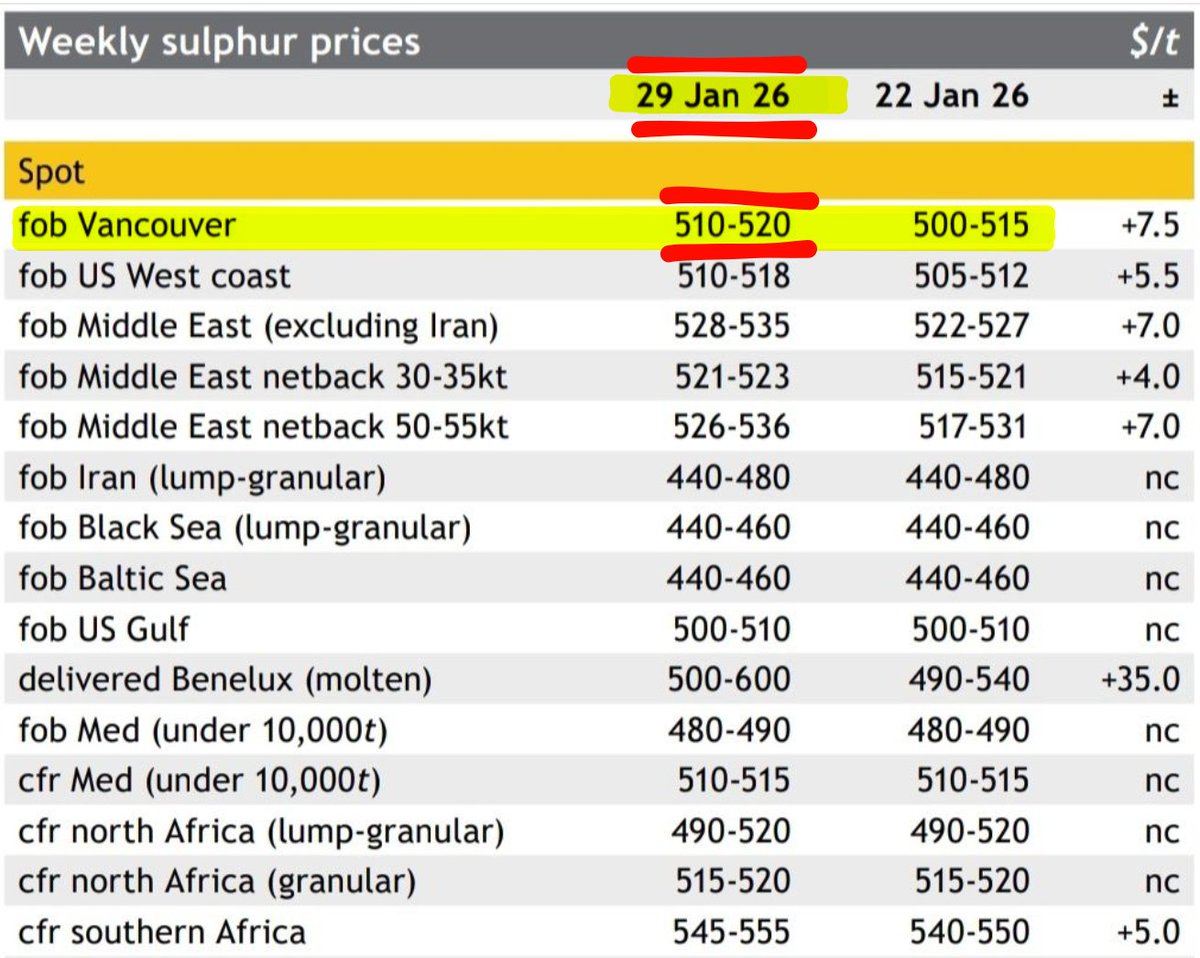
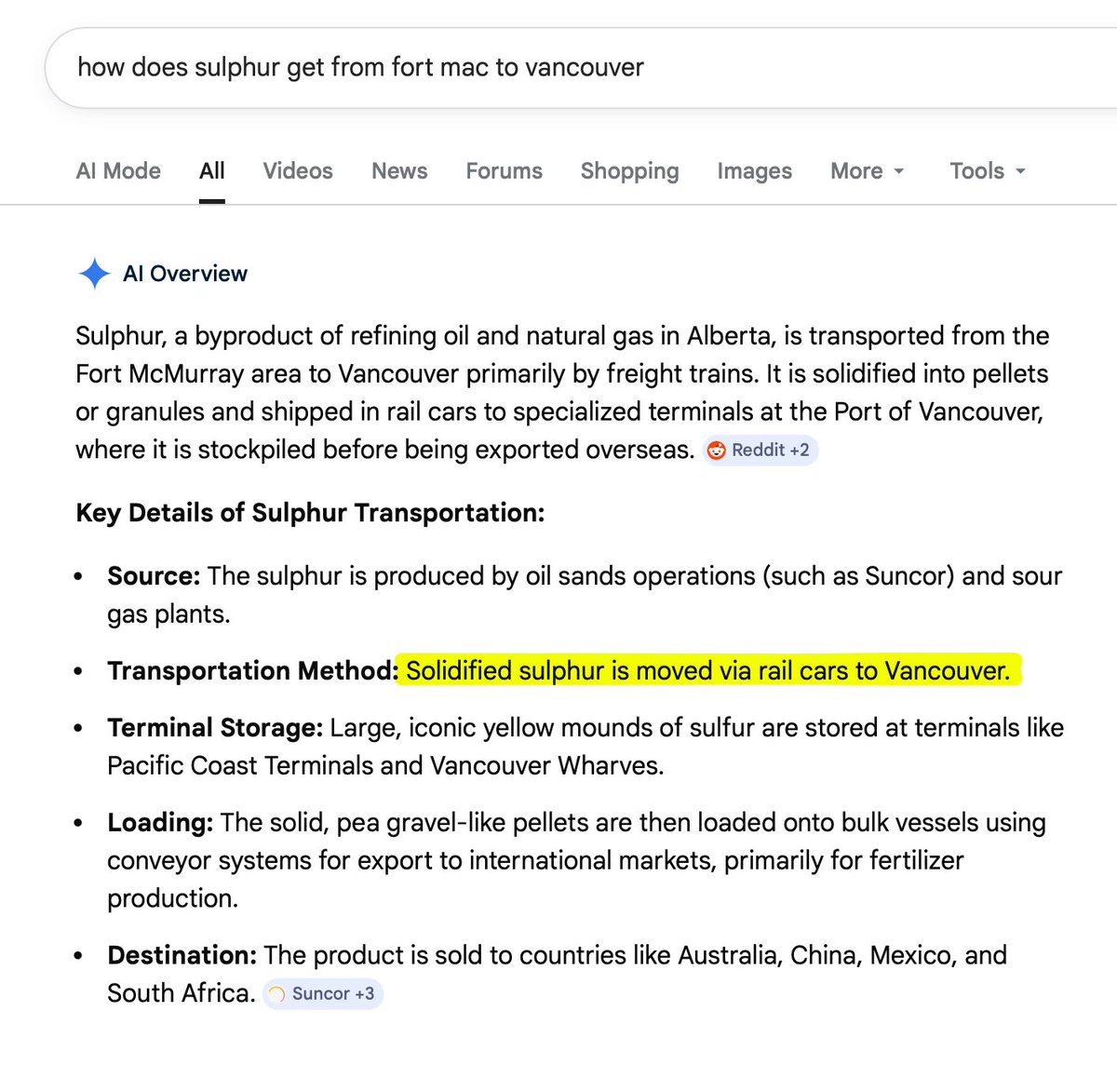
Why not take a minute to wonder why it's just accumulating there? In January of 2026, FOB Vancouver pricing was ~$500/t, that 10 million tonne pile would be $5 billion! So why weren't they selling it then?
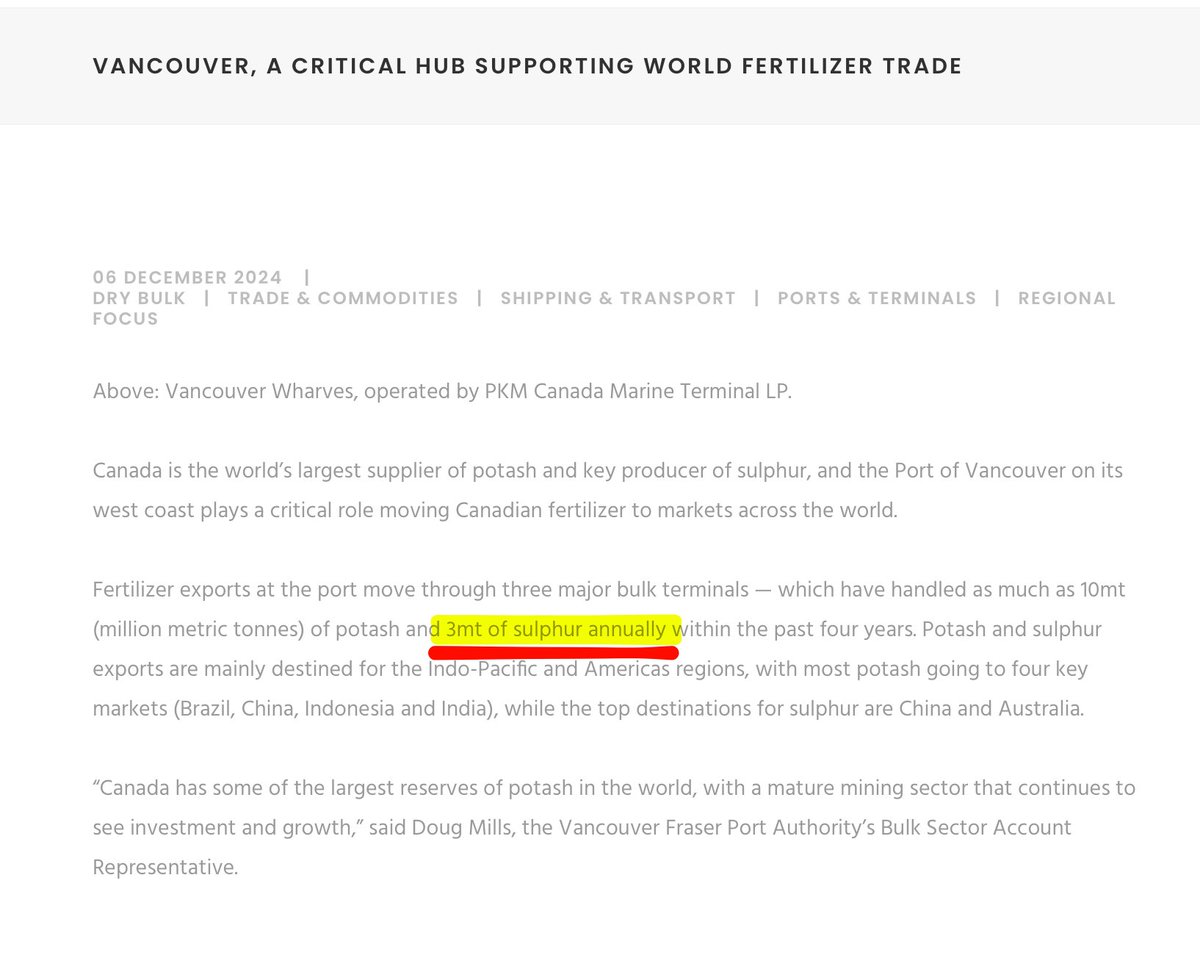
There’s a reason that it sits there; because you transport sulphur via rail to Vancouver, and then you need space at a dry bulk terminal. The Port of Vancouver can handle 3 million tonnes a year of sulphur exports. At that rate, if *just* Suncor owned the terminal (they don't), it would have >3 years to export their Suplhur.
But, Suncor isn't the only Sulphur exporter from Vancouver; and they're not the only oil sands mine in Fort Mac. In terms of free terminal space, there's ~2,000 tonnes a day of export capacity, if you're lucky, or 0.73mt/yr, so at that rate it'd take Suncor almost 15 years to sell their Fort Mac inventory.
But Suncor isn't the only Oil Sands mine with Sulphur, nor the only Sulphur producer in Alberta! So they're competing with everyone else for that terminal space.
And to even get to the Vancouver terminal; you need to rail your Sulphur. So you have 3 bottlenecks to get your Sulphur from Fort Mac to the Port of Vancouver; your rail terminal/transloading capacity, your ability to book rail cars, and your actual dry bulk terminal capacity in Vancouver.
And every single Sulphur producer in the province (i.e. everyone with an oil sands mine, refinery, or sour gas plant), is trying to export their Sulphur.
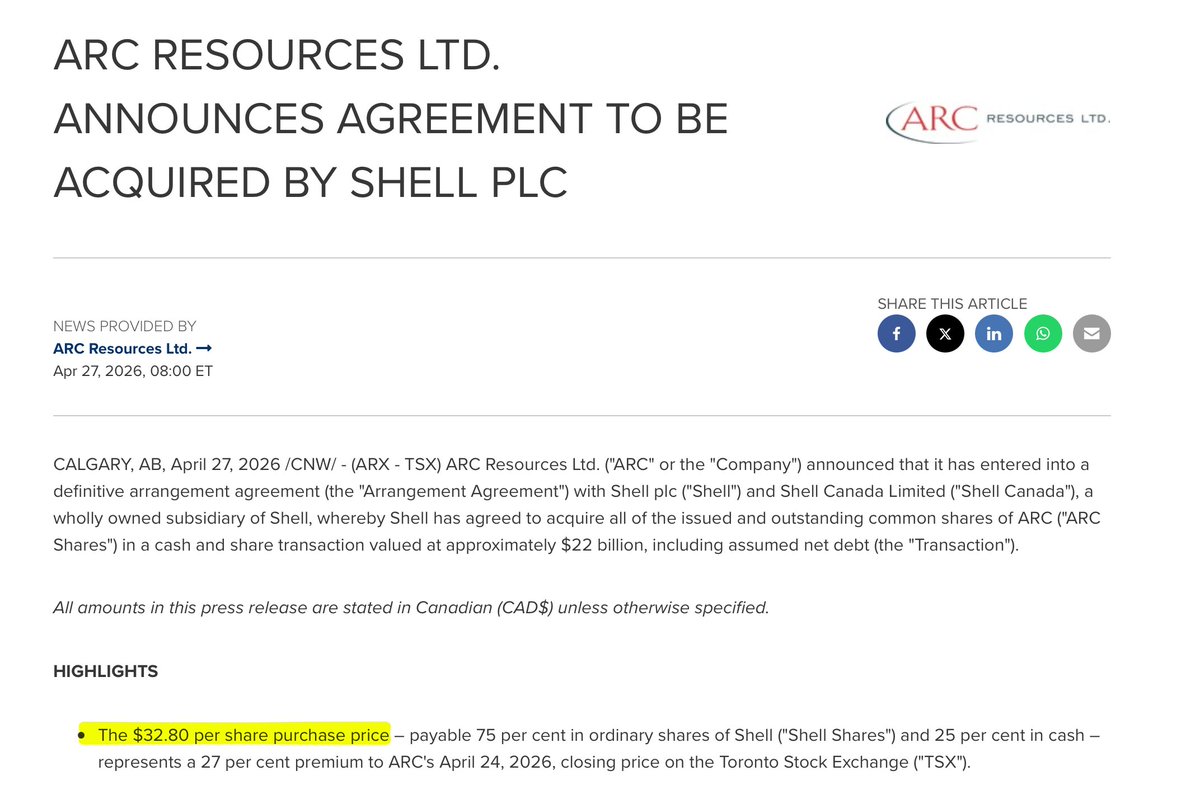
So you end up with highly depressed local prices for Sulphur (why Cavvy/Pieridae did their infamously poor deal with Shell) -- much like AECO gas, it's trapped in the province. You're effectively using TTF pricing to mark AECO reserves in the ground with no ability to land that gas in Europe. It's ridiculous and a fundamental misunderstanding of commodity markets.
Again, I don't know your returns, nor do I care; but if you're going to be so freaking cocky about a claim so bold, and tell me to "google it" -- at least make sure you're right, and have done at least one second-order google search yourself.


English
Canadian Energy Analysis retweetledi

Please for the love of everything holy if you are an E&P do not do anything stupid.
Do not buy back your shares after running your cashflow at $110/bbl WTI. No they're not cheap. The time to buy back stock was every day over the last year.
Do not buy new assets. The time to buy new assets was every day over the last year.
Do not grow. If you couldn't grow over the last year economically, you are almost certainly not going to be able to maintain your new-found production levels when the market reverts. You are not the low cost producer.
English

@ExnerPirot How do you stop something you haven’t even really started? 🤷♂️
English

Well there it is.
Canadian Natural pauses $8.25-billion oil-sands expansion, citing carbon policy uncertainty
theglobeandmail.com/business/artic…
English

@FracSlap Curious which components make up the $1B bottom line figure above? Every line item or specific buckets more than others? IE: capex savings or opex or higher revenues from XYZ?
English

It's becoming extremely clear to me that oil companies will diverge into the "haves and have nots" based on who becomes AI-native the fastest.
We have a client that has a straight path to adding $1 Billion+ to their bottom line and will get there quickly because of their culture and urgency to become AI-native.
Meanwhile, other companies are operating on longer multi-year timelines or have no plan at all.
It's important to understand that AI isn't some enterprise SaaS widget that solves one specific problem, it's going to be a material shift in the way companies operate and will significantly cut capex and opex.
If you want to attract investors, they're going to want to invest in the most capital-efficient companies.
If you want to attract the best talent, they're going to want to work at the companies that are using the latest AI technologies.
It's very binary, the companies who become AI-native are going to cook those who don't.
English