Nigel is baffled

6.7K posts

Nigel is baffled

Nigel is baffled

@NigelIs9734

Se unió Eylül 2024
775 Siguiendo66 Seguidores
Speshal
Speshal@The_Speshal·
@disco___cat The uk is suffering because the public were stupidly allowed to vote on Brexit without being given any facts about it. Also because Trump is fucking up the world economy.
English
1
0
4
313
Nigel is baffled
Nigel is baffled@NigelIs9734·
@Jenny_1884 Me. A recent diabetes diagnosis has prompted me to limit carbs, and get my calories from fat. And guess what, instant weight loss
English
0
0
0
1
Jen k 🇬🇧🏴󠁧󠁢󠁥󠁮󠁧󠁿
I’ve gone back to drinking full fat milk, use real butter & lard because I think we were wrongly advised these products were bad for you when in fact they aren’t. Have others changed back?
English
4.4K
1.5K
20K
390.7K
James Dueck🇻🇦
James Dueck🇻🇦@JamesDueck·
Why are Canada, the UK, and Australia, despite being thousands of kilometers apart, all collapsing in the same way?
English
3.9K
2.7K
21.2K
659K
John Wright
John Wright@1engine·
@JamesDueck Canadians are blaming our economic woes on Trump but he's only been in power for a year and we've had a 10+ year decline.
English
1
0
3
343
Marvel
Marvel@marcvelitrae·
@JamesDueck Multiculturalism. They all chose to throw away their history and culture by inviting droves of people from alien cultures to settle in their countries.
English
1
0
0
112
Bill M.
Bill M.@pr0cs·
@JamesDueck It's a "managed decline" that our betters have decided they'd prefer to rule over. The dirty poors were enjoying life way too much, stinking up their air travel and resorts. Crushing the middle class ensures the right people are in charge
English
6
10
192
19K
Caldweab
Caldweab@LeftyTalk·
@NigelIs9734 @libertarian_ass @DA_Stockman The JCPOA was 3.67%. Reactor grade material & it was coupled with the most stringent IAEA monitoring & inspections. We didn’t need this war. We could have gotten a deal where they down blend their HEU, limit enrichment levels & agree to US/IAEA monitoring & inspections.
English
1
0
1
77
David Stockman
David Stockman@DA_Stockman·
I'll tell you what, Dinesh. Even if you had 400 kilos of 90% U-235 and a box of matches, the length of time it would take you to make a nuke is NEVER. The fact is, 60% enriched uranium like the Iranians had isn't even 10% of the way to a bomb. The rest--- engineering, machining, fabrication and assembly of the watch-like innards of a nuclear implosion bomb---is the real hard part. And even that ignores the fact that no one in their right mind---even the mullahs---would attempt to launch against the USA a beginners bomb that had never been tested and which no Iranian missile could carry for the 10,000 kilometer trip to the US in any event. And that's to say nothing of reentering the atmosphere successfully under blistering heat and percussion. In short, Iran's possession of 10 bombs worth of HEUs was not remotely an imminent threat, and that's according to the repeated attestations of the 17 US intelligence agencies, including DNI Tulsi Gabbard's testimony to Congress in March 2025. So what in the hell are you gumming about in year pathetic, self-evidently barking ignorance?
Dinesh D'Souza@DineshDSouza

60 Minutes has admitted @potus was right about Iran’s nuclear abilities: “If you enrich it just a little bit more, for 10-11 nuclear bombs.” Trump was right!

English
364
749
3.4K
179.6K
MILO
MILO@Nero·
Lord, have mercy.
MILO tweet media
English
1.5K
566
11.5K
416.8K
Connor Tomlinson
Connor Tomlinson@Con_Tomlinson·
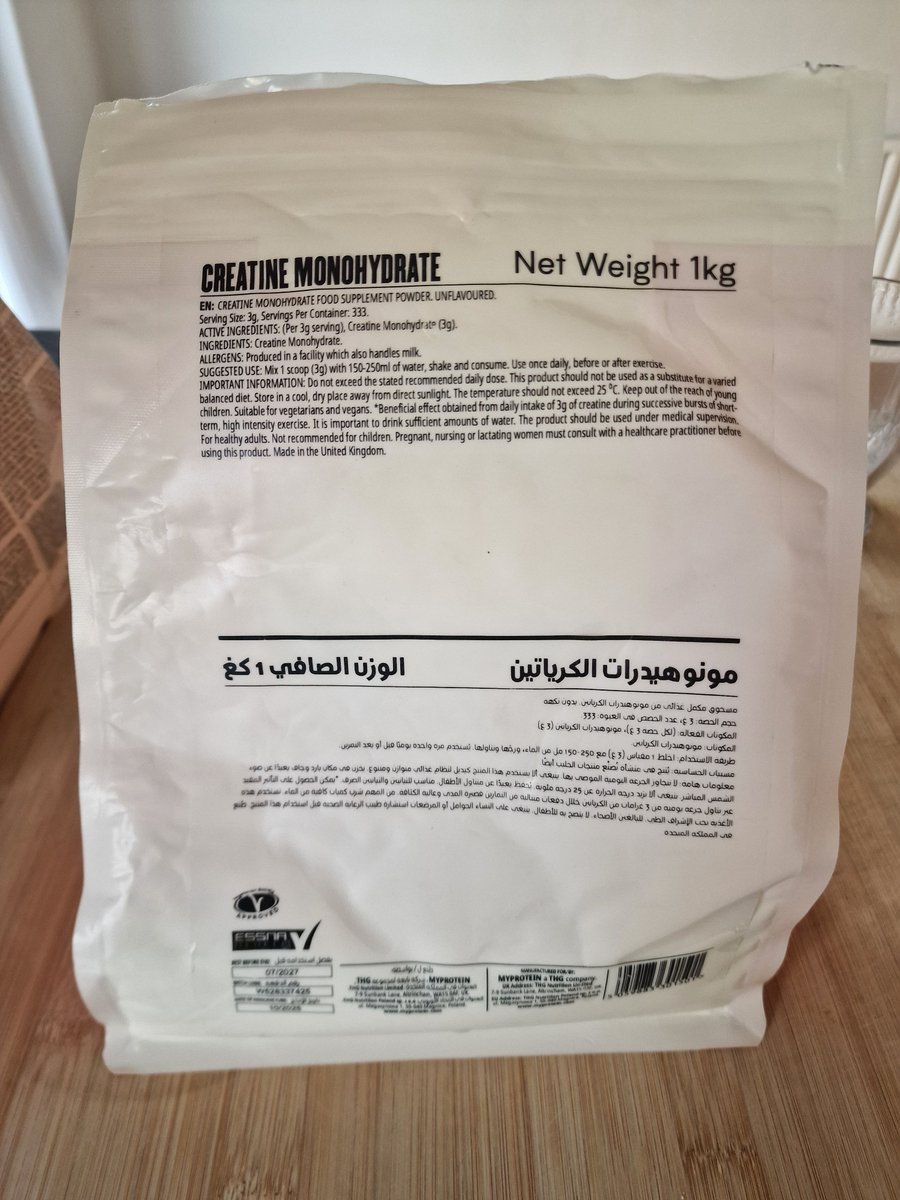
Why is there Star Wars dialogue on the back of my creatine, MyProtein?
Connor Tomlinson tweet media
English
96
33
2.3K
48.6K
Itumeleng Mocumi
Itumeleng Mocumi@ItumelengMocum1·
@pookiepolls Too long and really not bothered.... LOOK BRA.... WHAT WORKED FOR YOU BACK B4 1994 DIDN'T WORK FOR US... HOWEVER SUCCESSFUL SA WAS-black people didn't get to enjoy that success... IT WAS PAINFUL... SO FUCK YOU FUCK WHAT U MISS GO LOOK FOR PRE 94 CONDITIONS ELSEWHERE... FUCK OFF
English
36
1
13
2.6K
Pookie's Polls & Opinions
Pookie's Polls & Opinions@pookiepolls·
A whole generation of South Africans would be shocked to read this, especially when they look at where the country is today. Before 1994, South Africa built capabilities that few countries in the world could claim. It developed nuclear weapons, a rocket programme, large-scale synthetic fuel production, a globally respected defence industry, and medical breakthroughs that made world history. At the southern tip of Africa, one country achieved all of this before the Cold War had even ended. Today, Africa is often spoken about as if it is still waiting to industrialise, still dependent, still trying to build what others already mastered long ago. That is what makes this history so striking. While South Africa was enriching uranium at Pelindaba, testing rockets at Overberg, producing fuel from coal at Secunda, and carrying out the world’s first human heart transplant at Groote Schuur, much of the rest of Africa was being pulled in a very different direction. Instead of industrial self-reliance, many newly independent states were sold ideology. Instead of building durable technical capacity, they were pushed toward socialist models that too often ended in weak institutions, dependency, and collapse. The pattern repeated itself across the continent. South Africa, by contrast, built real strategic capability under sanctions and international pressure. It developed its own uranium enrichment process, built six nuclear weapons, and then voluntarily dismantled them before the democratic transition, opening its programme to international inspection. No other nuclear state has done that in the same way. It also built a serious rocket programme. Vehicles in the RSA series were designed and tested, and the country came close to having its own orbital launch capability. That programme was not simply paused. It was dismantled. Sasol achieved something equally remarkable: turning coal into fuel on a huge scale. When South Africa could not secure enough oil, it used chemistry and engineering to produce its own supply. That was not theory. It was functioning industrial independence. The defence sector was another pillar of that capability. South Africa designed and produced advanced artillery, armoured vehicles, aircraft projects, and attack helicopters. Some of these systems went on to influence military designs far beyond its borders. Then there was medicine. In 1967, Christiaan Barnard and his team performed the world’s first successful human heart transplant in Cape Town. That was not an isolated achievement. It reflected a wider culture of scientific and medical excellence. So the uncomfortable question is this: if all of this is documented, why is so little of it widely remembered? The answer may be that it does not fit neatly into the version of history most people are taught. Pre-1994 South Africa is rightly remembered for apartheid and injustice, but that is not the whole story. It was also the most technologically advanced state Africa had produced, and acknowledging that forces people to confront how much capability existed, and how much has since been lost. South Africa did not inherit these achievements. It built them under pressure, under sanctions, and largely on its own. That is not nostalgia. It is history. And the fact that so many people barely know it happened says a great deal about how history is told.
English
140
535
1.7K
49.1K
Cormac
Cormac@Cormaca2022·
@Bbmorg Yes. No cheese for me though. Nice bread, bit of real butter, beans and black pepper. Done. My go to vegetarian delicacy.
English
1
0
1
29
Nigel is baffled retuiteado
Sama Hoole
Sama Hoole@SamaHoole·
Dry dripping on bread, with a pinch of salt, was, for approximately four hundred years, one of the most common things a British child ate when he came in from school. The dripping was what was left in the pan after the Sunday roast. Beef fat, mostly, sometimes with a dark jelly at the bottom where the juices had settled. Your mother spooned it into a white enamel bowl, covered it with a plate, and kept it on the cold shelf in the pantry. It lasted a week. Sometimes two. It fried the Monday bubble and squeak, the Tuesday eggs, the Wednesday onions. On Thursday afternoon, before it ran out, you got a slice of bread spread with the stuff, a pinch of salt cracked on top, and that was tea. It was a treat. It was also just food. A child in 1930 would have looked at you blankly if you had suggested that beef dripping on bread was in any way remarkable. It was what was in the bowl. It was free. It tasted of Sunday lunch three days later. Beef dripping is approximately 50% monounsaturated fat, 40% saturated fat, and carries the fat-soluble vitamins A, D, E, and K from the pasture the cow grazed on. The cow ate grass. The grass had been growing on British soil since the end of the last Ice Age. The fat was the end product of ten thousand years of continuous ruminant grazing. A slice of bread and dripping delivered, for roughly the price of the bread, a dose of fat-soluble vitamins and usable calories that the rest of the British afternoon was going to need. Nobody got heart disease from bread and dripping. The British cardiovascular mortality rate of 1930, when almost every family ate dripping several times a week, was a fraction of what it is now. The British obesity rate of 1930 was essentially zero. The British type 2 diabetes rate was so low that the Royal College of Physicians considered the condition a medical curiosity. Then the dripping was quietly removed. First by margarine, invented in 1869 by a French chemist trying to feed the army, mass-marketed in Britain after the First World War as a modern, clean, scientific alternative to animal fat. Then by Crisco-style vegetable shortenings in the 1930s. Then, decisively, from the 1960s onwards, by the dietary advice that saturated animal fat caused heart disease. The advice was wrong. The research behind it was flawed, selectively published, and in some cases deliberately manipulated. The corrections have been appearing in the peer-reviewed literature for thirty years. The public-health guidelines have not been updated. Bread and dripping was replaced, in the British kitchen, by margarine on bread. Then by low-fat spread on bread. Then by skimmed-milk spread on industrially processed bread from the Chorleywood process. Then by a plastic tub of something labelled "I Can't Believe It's Not Butter," made from a blend of palm oil, rapeseed oil, emulsifiers, and flavouring, spread on a slice of Kingsmill so pale and so soft it could be balled up in one hand. The cardiovascular disease rates climbed through the same decades. The obesity rates climbed through the same decades. The type 2 diabetes rates went from medical curiosity to national crisis through the same decades. The fat your great-grandmother scraped out of the Sunday roast pan and spread on her child's tea was never the problem. The problem was what replaced it. Industrial seed oil, chemically extracted from seeds using hexane solvent, deodorised, bleached, and sold in a plastic bottle as a health food. A substance no human population had consumed in meaningful quantities before 1910, and which now makes up roughly 20% of the total calories in the average British diet. The dripping bowl on the cold shelf was a complete piece of nutritional engineering, evolved over centuries, running on the natural waste stream of the Sunday roast, costing nothing, delivering real nutrients, and causing none of the conditions it was eventually blamed for. It was thrown out of the British kitchen on the basis of a mistake. The mistake has never been corrected. The bowl is still at your grandmother's house, probably, at the back of a cupboard, unused since about 1985. The cow that built Britain is still in the field.
Sama Hoole tweet media
English
328
1.1K
4.3K
134.6K
Nigel is baffled
Nigel is baffled@NigelIs9734·
@DA_Stockman That 10 bombs claim came from Witkoff. I mean there's no way he would lie to push Trump I to the war is there?
English
0
0
0
19
libertarianass
libertarianass@libertarian_ass·
@DA_Stockman Here is the question for you...what purposes, other than enroute to weapons, does 60% enriched uranium have?
English
11
0
41
2.6K
RAW EGG NATIONALIST
RAW EGG NATIONALIST@Babygravy9·
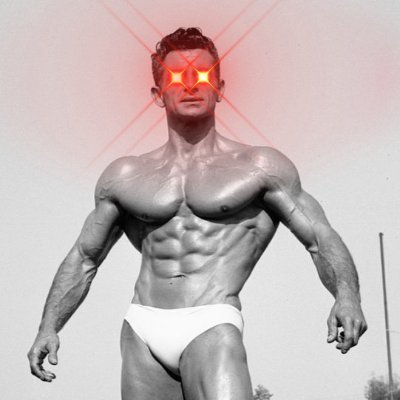
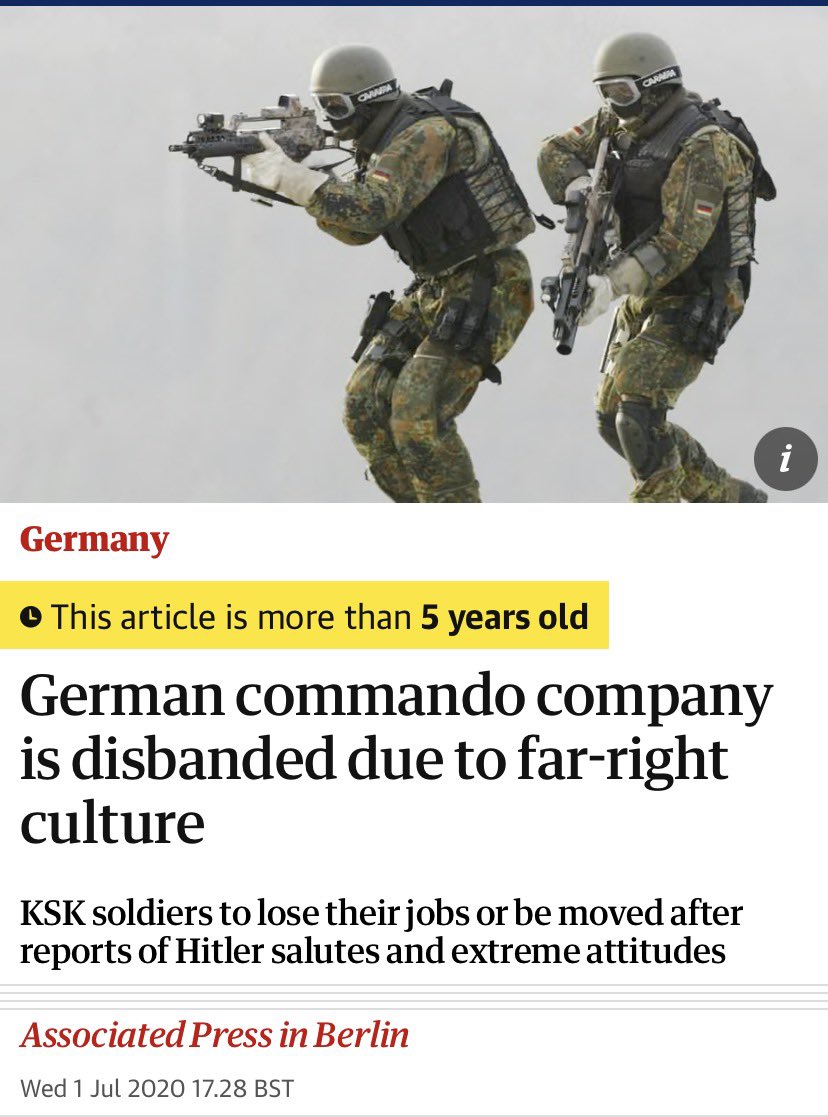
You’ve got to wonder at the logic behind this. I don’t think it’s a mistake or a second-order consequence of leftist government policies. Remember that in Germany, entire special-forces units were disbanded by the government because they were found to be hotbeds of “far-right nationalism” and, in some cases, the soldiers were involved in planning coups against the government. I think, in the years to come, as repression grows even more, Europe’s militaries are going to be used more for internal policing than anything else. For that reason, maintaining elite special forces who are also patriots will be a huge liability European governments will want to avoid.
RAW EGG NATIONALIST tweet mediaRAW EGG NATIONALIST tweet media
GB News@GBNEWS

SAS troops resigning in 'significant numbers' amid war crime 'witch hunts' gbnews.com/news/sas-soild…


English
87
385
3.7K
108K