

Phoenix 🇳🇿
11.5K posts

Phoenix 🇳🇿
@RisesFromFlames
Kiwi, Married with children, Gamer (playing GW2 and ESO). Zionist Christian. I unfollow anti-semites.
Taranaki, New Zealand Se unió Kasım 2022
1.3K Siguiendo1.2K Seguidores

Both societies exist simultaneously
Really incredible to think about


English
Phoenix 🇳🇿 retuiteado

“You can see the surface of the Moon…we just went sci-fi.”
On flight day seven, images from our @NASAArtemis II crew amazed, turning science fiction to reality. From the lunar far side to a solar eclipse from the Moon, the views are EVERYTHING. No pressure to pick a favorite.
English
@MarioNawfal Iran broke the ceasefire right away and is bombing Israel.
English

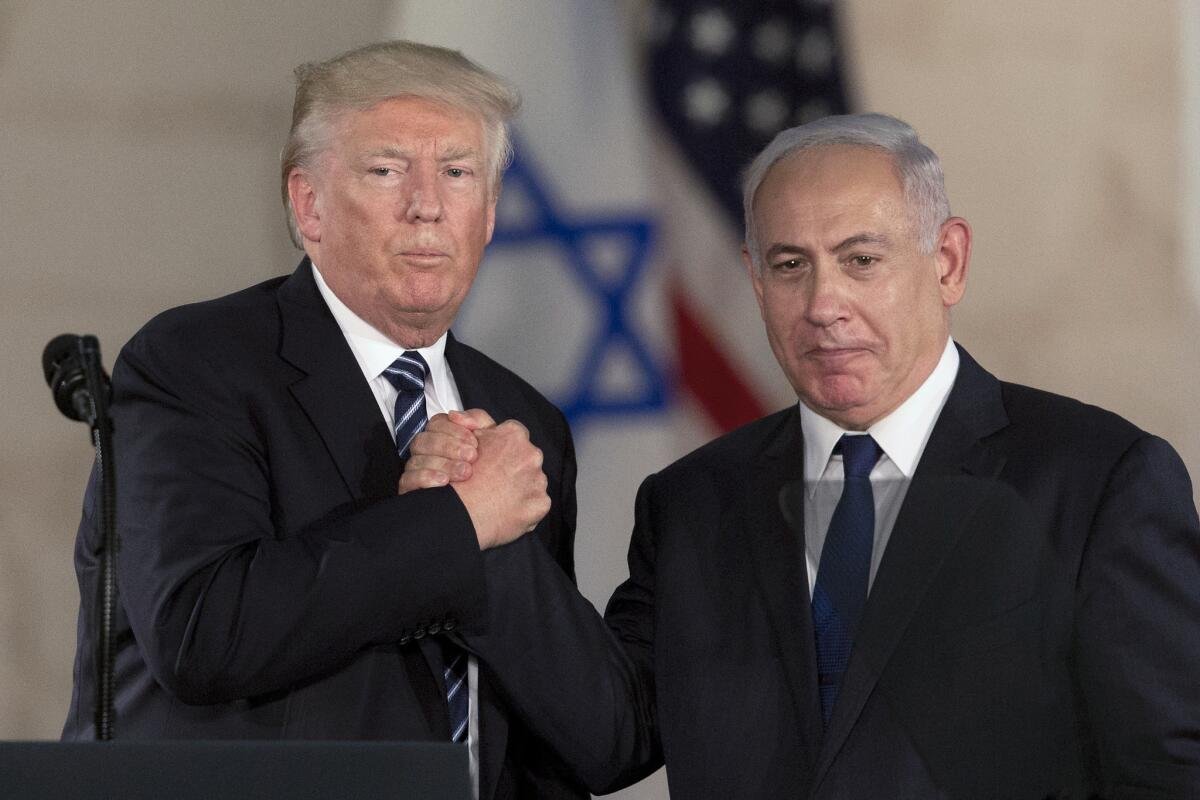
🚨🇺🇸🇮🇷🇮🇱 BREAKING: Israel IS part of the ceasefire.
A senior White House official confirms to CNN that Israel has agreed to suspend its bombing campaign during the two-week pause.
This changes everything.
Trump said Israel would "stop when I stop."
Tonight we find out if he was right.
Source: CNN
Mario Nawfal@MarioNawfal
🇺🇸🇮🇷 BREAKING: Oil is in freefall after the ceasefire announcement. Crude down nearly 9%. Brent down over 11% in a single day. The market just delivered its verdict on the ceasefire before the ink is even dry.
English
@SecRubio You met our most based politician. If only he could be our prime minister. ❤️
English
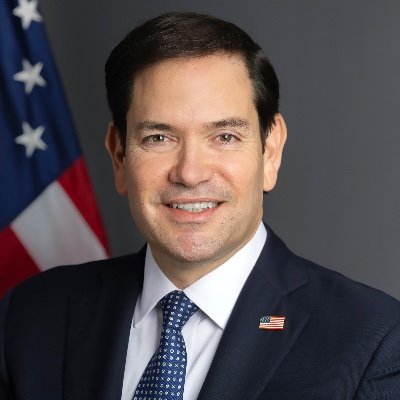
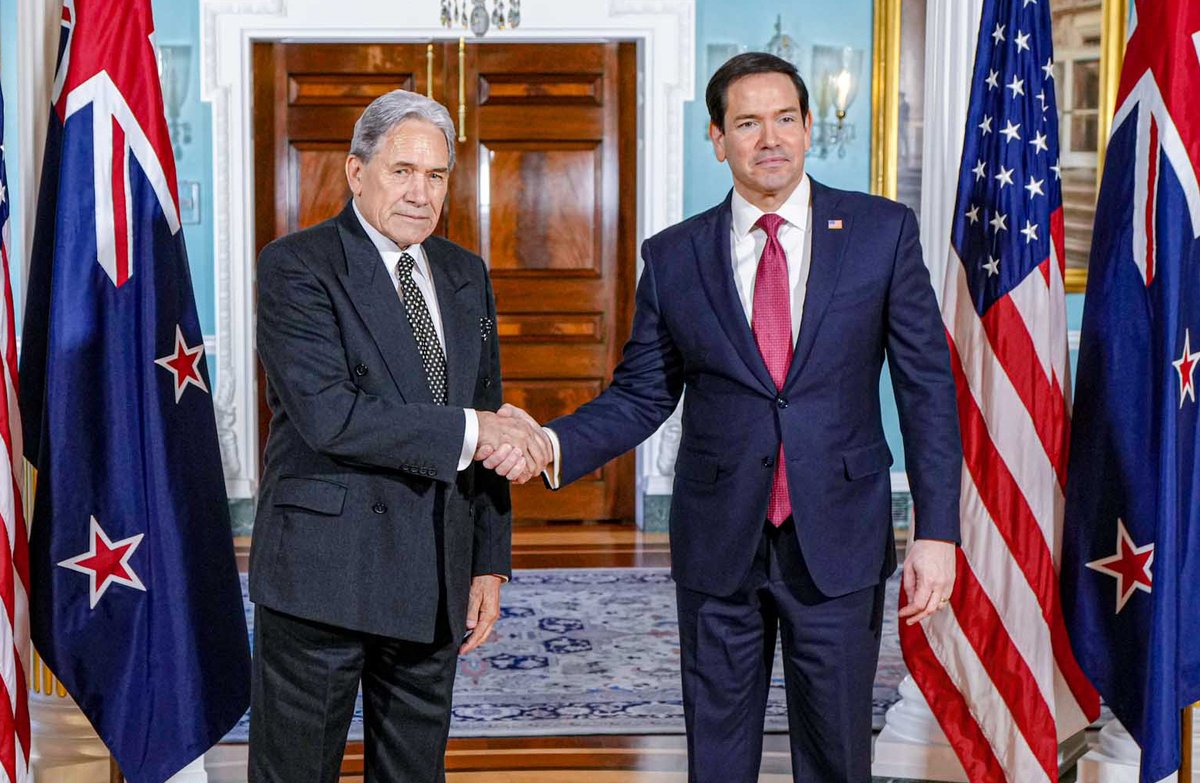
Met with New Zealand Foreign Minister Winston Peters today to discuss cooperation on critical minerals supply chains, the Iran conflict, and ways to advance security and prosperity in the Pacific Islands.
English
@LDSeongdo @ImKingGinger Also, the question ‘does it amplify light’ always confused me. What does that even mean? It should just be a simple thumbs up or down and the votes should be transparent to creators and voters.
English

@ImKingGinger @RisesFromFlames I would like to know if all votes are counted the same even from people who only watched a small portion of a film. If you don't watch enough of a film then your opinion on it shouldn't matter. Not sure how they handle that though.
English

Can someone point me to anyone who is in the Angel Studios Guild that voted to support this new version of Animal Farm?
I would like to talk to them and ask what it was about the film that they saw, and what they knew and how they voted.
This is a serious inquiry. My running theory, if it was actually presented to the Guild, is that the guild has been co-opted.
There is just no way that The Guild voted to allow a movie with a trans actor, and pro-communist message. If this indeed did happen. The Guild is Dead.
English
@NZNationalParty Boooo! We wanted no fuel tax or RUC. Things that would actually help people who drive!
English

Targeted support arrives today for eligible working families. $50 a week to help with the cost of living.
English
Phoenix 🇳🇿 retuiteado

THE ARTEMIS II ECLIPSE.
April 6, 2026.
Totality, beyond Earth. From lunar orbit, the Moon eclipses the Sun, revealing a view few in human history have ever witnessed. Photo: NASA

English

In Lower Hutt, New Zealand 🇳🇿, the owner of the Persian restaurant Banoo, Alex Aragon, hung Iran’s regime flag on the wall 🇮🇷 and placed American and Israeli flags 🇺🇸🇮🇱 on the floor at the entrance, so that customers naturally step on them when entering.
Aragon called it a political statement, but it sparked heated arguments with members of the local Iranian community.
Anyone who hangs the flag of the Islamic Republic while seeing Israel and the US as enemies, when they’re the only one helping Iranians resist the regime, is not a true friend of Iran.
Many Iranians support the Israeli and American strikes against the regime in Iran. Thousands have died for Iran’s true flag, the Lion and Sun, to fly again.
Even today, the regime executed two innocent young men. That is what the Islamic Republic’s flag truly represents.
English
@MrsWard007v2 @nzfirst The ACTUAL right wing party. National is a disappointment.
English

NZ elections are looming.
Luxon has failed us and the Left could win by default (as Luxon did) as a result. Perish the thought.
Keep your vote to the right and give @nzfirst more influence. A sensible choice.

English
@rotovegas_taane It has to be National. But I wish NZ First was the major party and National was the minor party.
English

We all know it's Winston Peters who will decide the winner of this year's election.
Which party do you want him to choose to lead the government?
Labour or National giving them full support?
Or Labour like 2017 with a strong NZ1st?
Or Nats with many NZ1st cabinet positions?
English
Phoenix 🇳🇿 retuiteado

Labour sabotaged and sacrificed the refinery on the altar of climate change... and now we reap the consequences.
Joseph Mooney MP@JosephMooneyMP
It’s been interesting hearing Opposition Leader Chris Hipkins saying that the closure of the Marsden Point refinery was a “private business decision.” While strictly correct, it omits significant government policies and decisions which made that “private decision” the only realistic one. I haven’t seen any media commentary on this. A May 2021 letter from the Refinery’s CEO to the then Minister of Finance described Marsden Point as one of “the safest and most reliable refineries in the region.” Notwithstanding that, the letter said it was considering a major change to its business to significantly reduce its Scope 1 and Scope 2 emissions, and become an import only terminal. It noted that the Minister had directed ACC to accelerate moves to divest from fossil fuels. The letter noted that ACC held around 10% of Refining NZ’s shares, and as significant investments would be required to change it into an import only terminal, it asked the Minister to distinguish investment in Refining NZ from other fossil fuel investments given its critical infrastructure role. But why was Refining NZ looking at shutting down its refinery despite being one of the “safest and most reliable in the region”? A 2019 Ministry for the Environment Regulatory Impact Statement lays it out plainly. Refining NZ’s Negotiated Greenhouse Agreement - protecting it from full ETS exposure since 2003 - expired 31 December 2022. Under government policy settings it would then receive zero industrial allocation and face the full cost of its emissions. The ministry’s own analysis said this would “nearly halve the profitability of the refining business” - at 2019 prices of just $18 per NZU, it would produce an annual ETS bill of ~$20 million. The RIS recorded Refining NZ’s profits over five years: ∙2012: $31M ∙2013: -$5M (a loss) ∙2014: $10M ∙2015: $151M ∙2016: $47M Average that out and you get roughly $47M per year (with an exceptional 2015 year). The ministry itself said full ETS exposure would nearly halve profitability even at $18/unit. NZU prices didn’t stay at $18 which was readily foreseeable. The NZU price hit a record high of $88.50/unit in late 2022. Applied to the Refinery’s Scope 1 emissions of 1 to 1.3 million tonnes per year, that’s an annual ETS liability of $88.5M to $115M, and that’s before Scope 2 costs on purchased electricity and gas. On a business losing money in bad years, a potential $100M+ annual carbon bill isn’t a headwind. It’s a death sentence. The ministry knew this in 2019, and suggested options the government could take in terms of emissions liabilities to keep the refinery in operation, warning: “The closure of Refining NZ, which employs approximately 300 people, would have a significant negative impact on the Northland economy and would leave New Zealand dependent on the supply of refined petroleum products sourced from overseas refineries that may choose to prioritise supply to other nations ahead of New Zealand at times of shortages.” Read the Ministry’s RIS for yourself (that specific comment is at paragraph 25) 👇 environment.govt.nz/assets/Publica…
English
Phoenix 🇳🇿 retuiteado
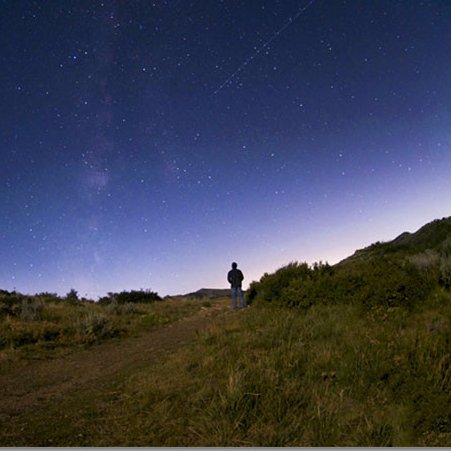
@nzfirst Well deserved. You’re the only party talking about the issues I care about!
English

Join the movement with momentum TODAY!
Join as a general member: nzfirst.nz/join
Join as a member of Young New Zealand First: nzfirst.nz/join_young_nzf…

English
@animalfarmfilm This is one Angel Studios movie I WON’T be taking my family to.
English

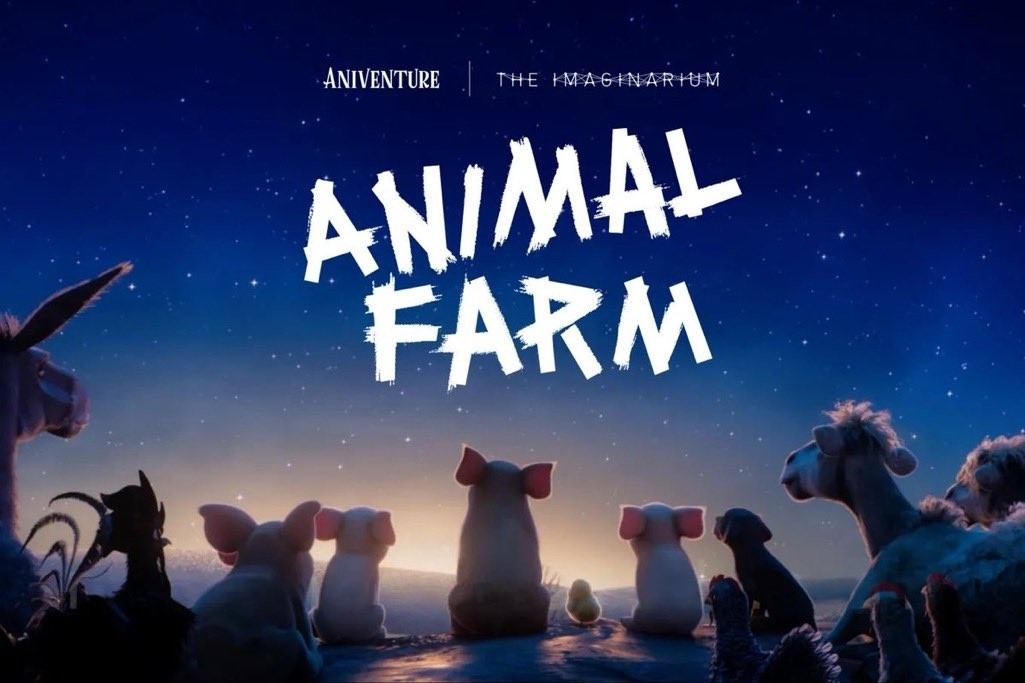
Animal Farm takes over theaters May 1st. 🐖 Tickets on sale now!
English
@bobmccoskrienz Good for New Zealand First. 👍 They are the only right wing party we have.
English

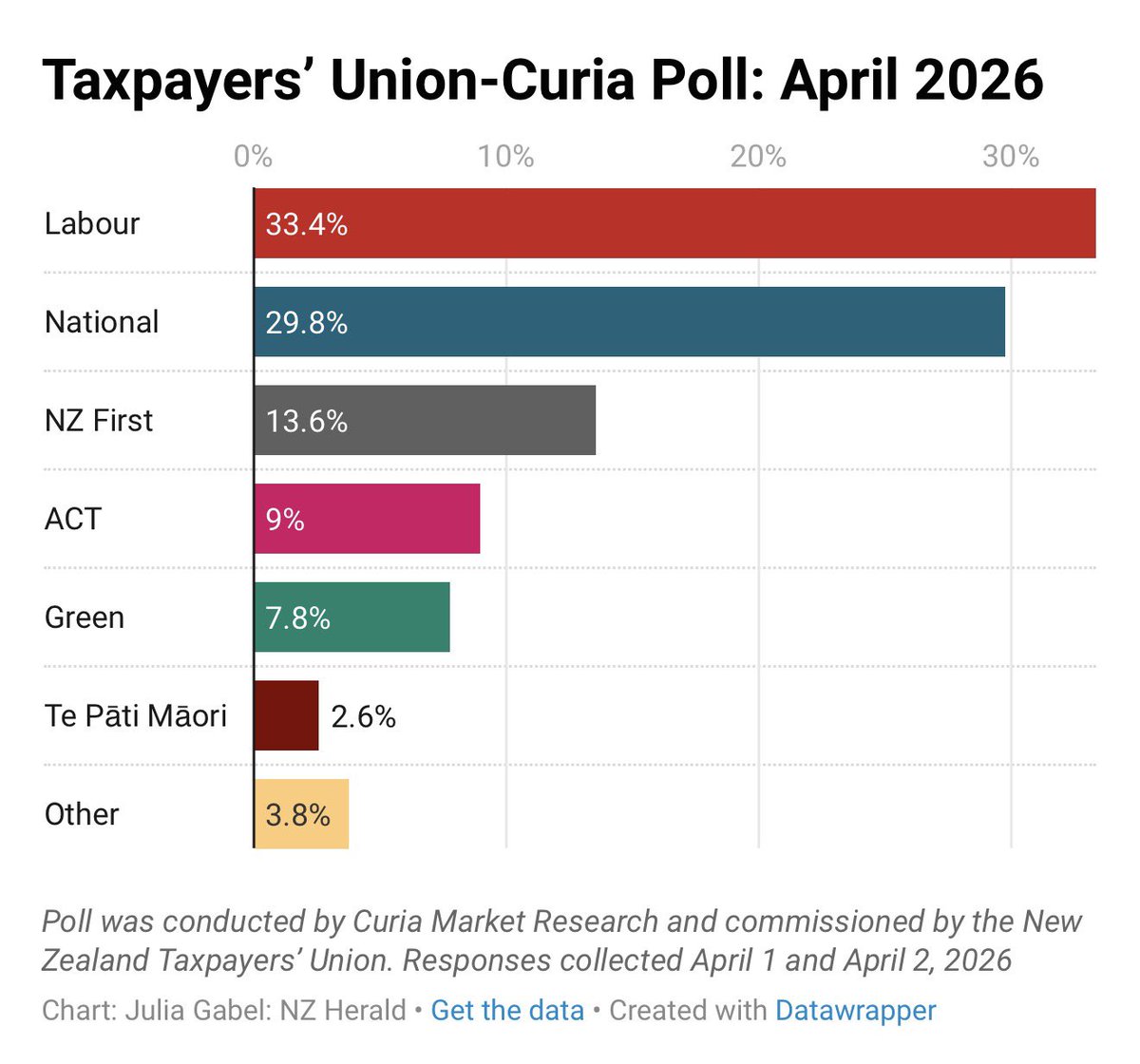
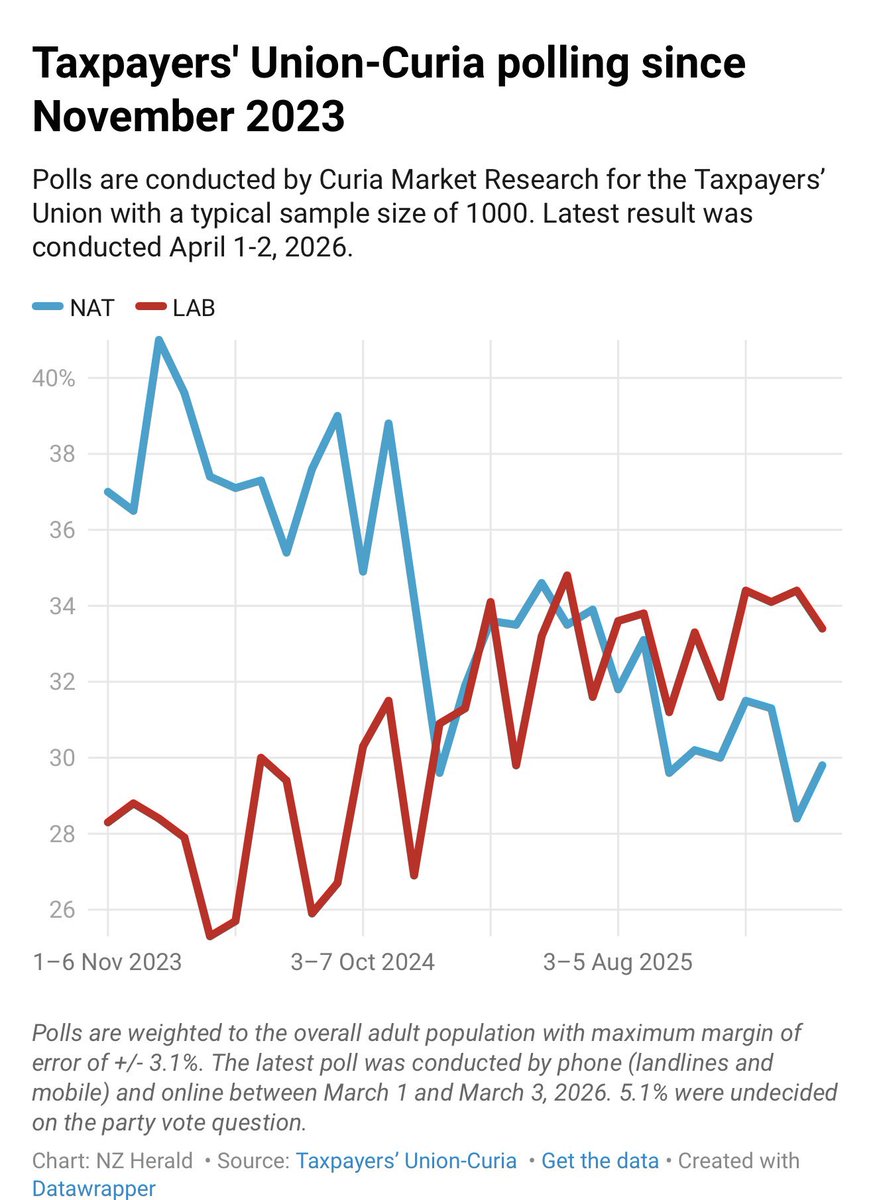
🚨Latest poll
Centre-right in command.
Centre left get a hammering.
The media’s petrol crisis cost of living crisis food crisis everything’s a crisis - isn’t working.
Labour is down 1 point to 33.4%, National is up 1.4 to 29.8%,
NZ First up 3.9 points to 13.6%,
Act is up 1.5 to 9%,
Greens down 2.7 to 7.8%
Te Päti Mãori down 0.6 to 2.6%.
If that was converted to seats in the House, the centre-right bloc would be on 65 seats, enough to govern, while the centre-left would be on 55 seats.
English

@antonseim @Timcast Wow, I had no idea Slingshot was behind David. I had never even heard of them!
English


ANNOUNCEMENT
Timcast IRL has been asked to run ads promoting Animal Farm next week which is being distributed by Angel Studios
Angel studios has done tremendous work in the past and I have been a fan for some time.
However
I am rejecting these ads outright as the film is shockingly offensive as it is pro communism and anti capitalism.
The film in its entirety is a critique of capitalism from beginning to end and even has pro leftist terrorism elements.
I understand that this statement may be one the stupidest things a company in the business of running ads can do, but I am so offended by this film I decided I must publish this statement.
I hope Angel studios corrects this error and gets back to promoting positive films and messaging as they have in the past but I will not be party to nor defend such an egregious insult to a classic book and important message.
Animal Farm: A Cautionary Tail@animalfarmfilm
Animal Farm takes over theaters May 1st. 🐖 Tickets on sale now!
English

DR. PETER MCCULLOUGH: “I took 69 vaccines… I can tell you I cannot be labeled as an anti-vaxxer.”
LILA ROSE: “But if you knew what you knew today and you had the choice, would you still take those 69 vaccines?”
MCCULLOUGH: “No.”
LILA ROSE: “None?”
MCCULLOUGH: “If I knew what I know now, and I’d rely on… 12 studies, 12 showing a healthy child born today… remains healthier if they take no vaccines whatsoever.”
English