

dazzatrøn 🌞
1.6K posts


@EdwardMehr You can also vote for economic policies that lead to hyper inflation.
English

You too could become a millionaire.
Step 1: Join an ambitious group. Working on something bigger than yourself, useful to other humans, and just a little bit crazy in an honest and simple way that makes feel expansive.
Step 2: Work ridiculously hard. People think success is about being deceptive. Doesn’t have to be. Join groups who inspire you to be better.
Step 3: Stop wasting any energy being angry at people who started before you. Some of them are building cool things. Go join them. Build with them. Learn from them. Surpass them.
World is way bigger and full of opportunities than you think! 🇺🇸🇺🇸🇺🇸
Dirty Texas Hedge@HedgeDirty
Over 4000 workers just became millionaires by owning the means of production and the socialists are pissed
English

If we taxed Gina Rinehart properly we could have free public transport for infinity years
Jacinta Allan@JacintaAllanMP
From today until 1 January, public transport is half-price across Victoria.
English

Australia should be a country where hard work, not what you inherit, gets you ahead in life.
English

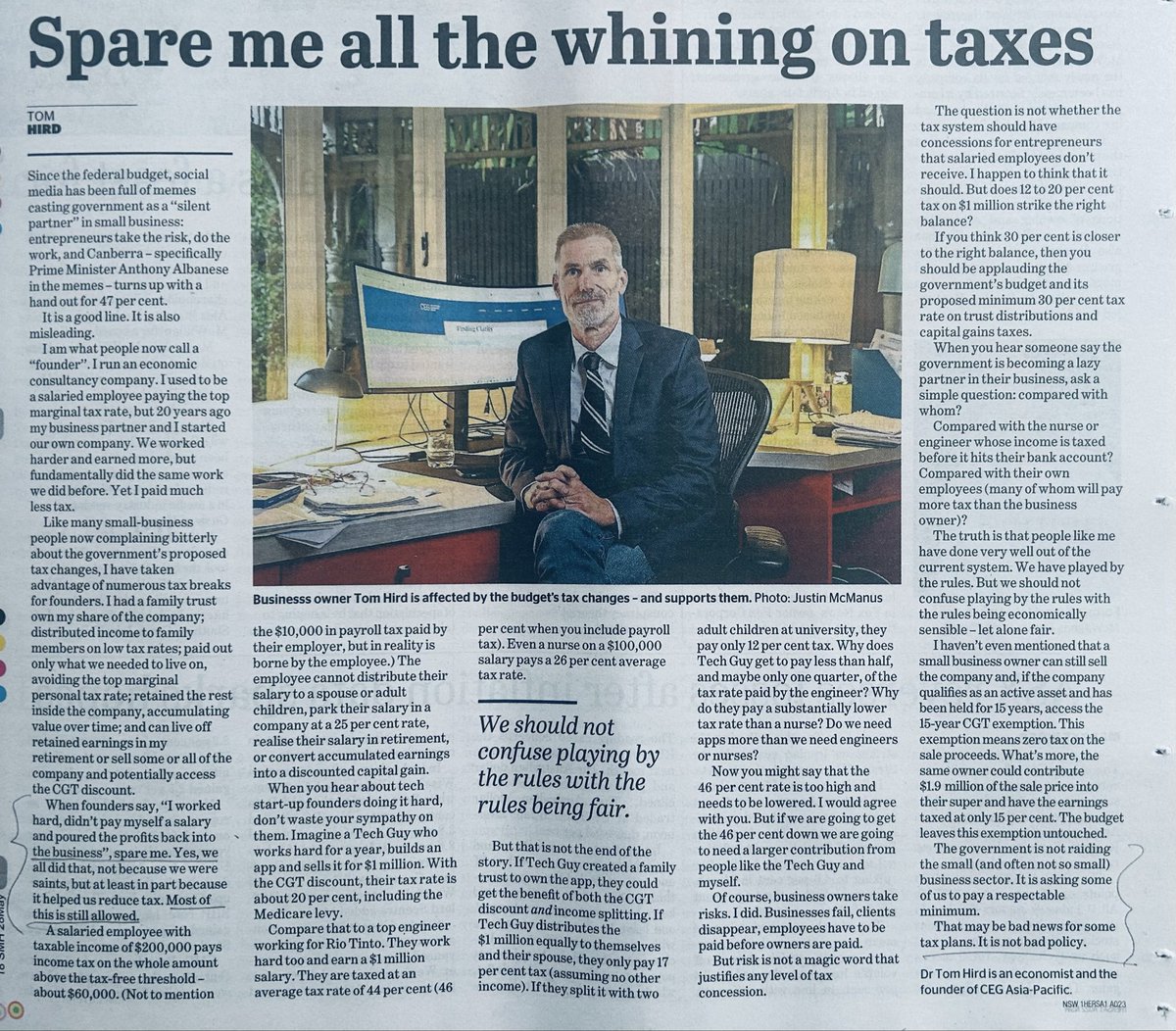
A well-argued rejoinder to the bilious tide of saint-claiming going on right now. From a business owner/originator who clearly knows what he’s talking about. Bravo
English

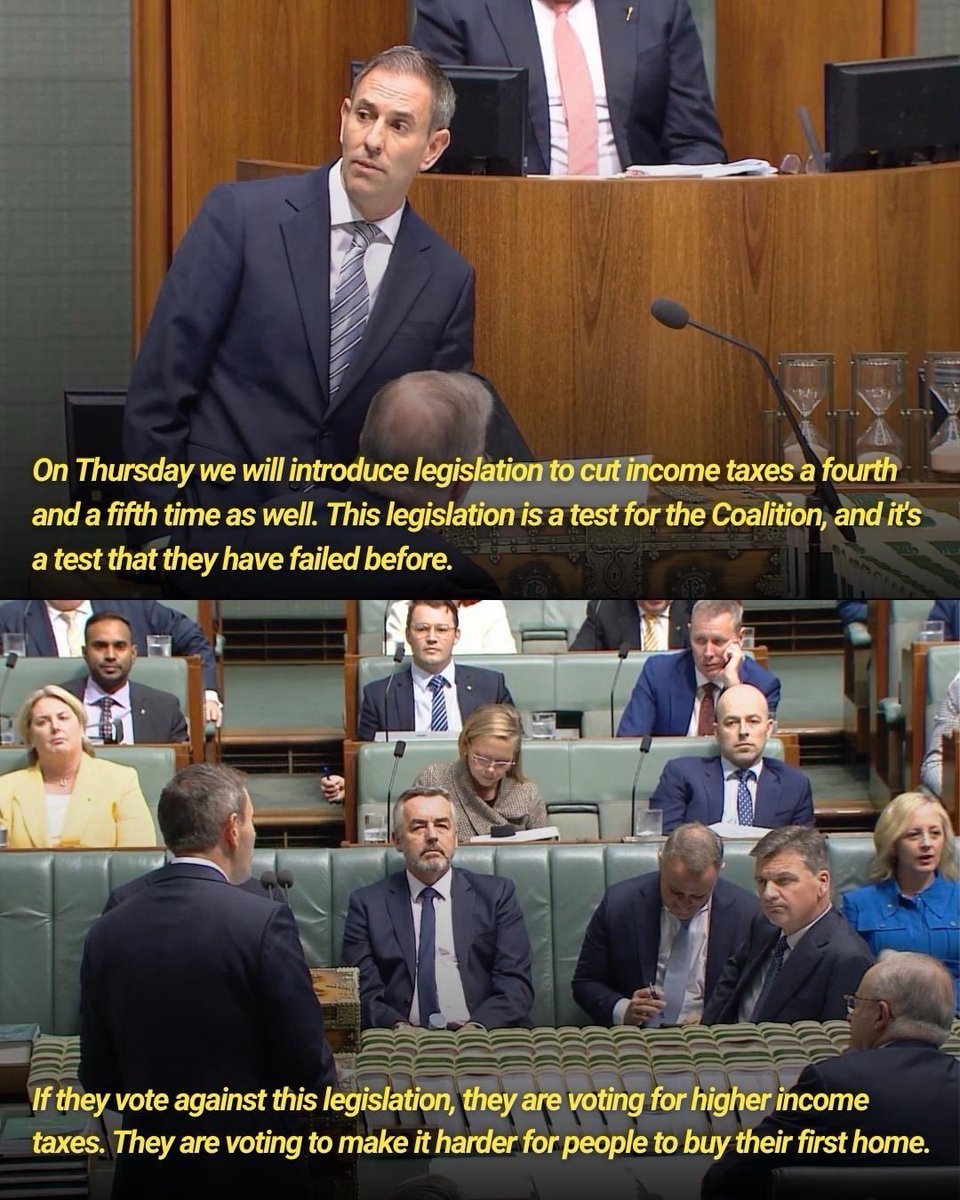
Labor is cutting income taxes for workers five times in three different ways.
It beggars belief that in the first term the Coalition voted against tax cuts and to block housing for Australians.
Now they are showing all the signs of repeating the exact same two mistakes.
English

@ycombinator Wonder if I can get Qantas points for equity. Business travel is very important for my startup.
English

OpenAI is offering $2M in tokens to every YC company in the spring and summer batches.
We extended the summer deadline to May 25 so more founders can get in on it.
ycombinator.com/apply
English
dazzatrøn 🌞 retuiteado

I can’t stop thinking about this post. If you do one thing today, I encourage you to give it a thoughtful, thorough read…
And then commit to never living your life this way. Life has wasted success on the people described in this post.
It really is completely pathetic. They say that comparison is the thief of joy - look no further than this post for validation it is indeed true.
On their deathbed they will realize they have lived their life completely wrong. Don’t let it be you.
Deedy@deedydas
The vibes in SF feel pretty frenetic right now. The divide in outcomes is the worst I've ever seen. Over the last 5yrs, a group of ~10k people - employees at Anthropic, OpenAI, xAI, Nvidia, Meta TBD, founders - have hit retirement wealth of well above $20M (back of the envelope AI estimation). Everyone outside that group feels like they can work their well-paying (but <$500k) job for their whole life and never get there. Worse yet, layoffs are in full swing. Many software engineers feel like their life's skill is no longer useful. The day to day role of most jobs has changed overnight with AI. As a result, 1. The corporate ladder looks like the wrong building to climb. Everyone's trying to align with a new set of career "paths": should I be a founder? Is it too late to join Anthropic / OpenAI? should I get into AI? what company stock will 10x next? People are demanding higher salaries and switching jobs more and more. 2. There’s a deep malaise about work (and its future). Why even work at all for “peanuts”? Will my job even exist in a few years? Many feel helpless. You hear the “permanent underclass” conversation a lot, esp from young people. It's hard to focus on doing good work when you think "man, if I joined Anthropic 2yrs ago, I could retire" 3. The mid to late middle managers feel paralyzed. Many have families and don't feel like they have the energy or network to just "start a company". They don't particularly have any AI skills. They see the writing on the wall: middle management is being hollowed out in many companies. 4. The rich aren’t particularly happy either. No one is shedding tears for them (and rightfully so). But those who have "made it" experience a profound lack of purpose too. Some have gone from <$150k to >$50M in a few years with no ramp. It flips your life plans upside down. For some, comparison is the thief of joy. For some, they escape to NYC to "live life". For others still, they start companies "just cuz", often to win status points. They never imagined that by age 30, they'd be set. I once asked a post-economic founder friend why they didn't just sell the co and they said "and do what? right now, everyone wants to talk to me. if i sell, I will only have money." I understand that many reading this scoff at the champagne problems of the valley. Society is warped in this tech bubble. What is often well-off anywhere else in the world is bang average here. Unlike many other places, tenure, intelligence and hard work can be loosely correlated with outcomes in the Bay. Living through a societally transformative gold rush in that environment can be paralyzing. "Am I in the right place? Should I move? Is there time still left? Am I gonna make it?" It psychologically torments many who have moved here in search of "success". Ironically, a frequent side effect of this torment is to spin up the very products making everyone rich in hopes that you too can vibecode your path to economic enlightenment.
English
@ISSAboveYou @sen @ProfBrianCox Yeah he put @sen up live on the big screen and coincidentally the docking occured. He had to pull himself away. Highlight of the show tbh.
English

@dazzatronus @sen @ProfBrianCox We love that @ProfBrianCox is now featuring @sen views in his shows. Juat. Checking. Did the show literally coincide with the live docking event?
English

We saw this live during @ProfBrianCox Emergence. He got totally distracted haha what a sight!!
sen@sen
A front-row seat to SpaceX CRS-34 docking 🚀
English

The vibes in SF feel pretty frenetic right now. The divide in outcomes is the worst I've ever seen.
Over the last 5yrs, a group of ~10k people - employees at Anthropic, OpenAI, xAI, Nvidia, Meta TBD, founders - have hit retirement wealth of well above $20M (back of the envelope AI estimation).
Everyone outside that group feels like they can work their well-paying (but <$500k) job for their whole life and never get there.
Worse yet, layoffs are in full swing. Many software engineers feel like their life's skill is no longer useful. The day to day role of most jobs has changed overnight with AI.
As a result,
1. The corporate ladder looks like the wrong building to climb.
Everyone's trying to align with a new set of career "paths": should I be a founder? Is it too late to join Anthropic / OpenAI? should I get into AI? what company stock will 10x next? People are demanding higher salaries and switching jobs more and more.
2. There’s a deep malaise about work (and its future).
Why even work at all for “peanuts”? Will my job even exist in a few years? Many feel helpless. You hear the “permanent underclass” conversation a lot, esp from young people. It's hard to focus on doing good work when you think "man, if I joined Anthropic 2yrs ago, I could retire"
3. The mid to late middle managers feel paralyzed.
Many have families and don't feel like they have the energy or network to just "start a company". They don't particularly have any AI skills. They see the writing on the wall: middle management is being hollowed out in many companies.
4. The rich aren’t particularly happy either.
No one is shedding tears for them (and rightfully so). But those who have "made it" experience a profound lack of purpose too. Some have gone from <$150k to >$50M in a few years with no ramp. It flips your life plans upside down. For some, comparison is the thief of joy. For some, they escape to NYC to "live life". For others still, they start companies "just cuz", often to win status points. They never imagined that by age 30, they'd be set. I once asked a post-economic founder friend why they didn't just sell the co and they said "and do what? right now, everyone wants to talk to me. if i sell, I will only have money."
I understand that many reading this scoff at the champagne problems of the valley. Society is warped in this tech bubble. What is often well-off anywhere else in the world is bang average here.
Unlike many other places, tenure, intelligence and hard work can be loosely correlated with outcomes in the Bay. Living through a societally transformative gold rush in that environment can be paralyzing. "Am I in the right place? Should I move? Is there time still left? Am I gonna make it?" It psychologically torments many who have moved here in search of "success".
Ironically, a frequent side effect of this torment is to spin up the very products making everyone rich in hopes that you too can vibecode your path to economic enlightenment.
English
@michaelsnape These replies that George and Margaret are in the right here are insane.
English
Jenny and Matt 35/36 who build a software startup in their garage, have global customers and sell it for $10m, pay $4.7million in tax
George and Margaret 73/74 own a $5million home in Mosman, have $4.4 million in super and pay $0 tax on earnings, $0 CGT and $0 on their pensions
Sydney, New South Wales 🇦🇺 English
@cjoye Do yourself a favour and use this free week of Claude Code / Cowork: claude.ai/referral/Hvgnh…
English

ChatGPT analysis of the Budget impact on new business formation in Australia - basically, what we said, the doubling of the top 46-47% CGT rate (up from 23.5%), massively reduces the incentive to build innovative and high-growth businesses here, which will mean less investment, fewer jobs, lower income, lower economic growth, inferior productivity and ultimately higher inflation and interest rates due to these inefficiencies.
ChatGPT says: 4. New business formation: likely weaker relative to founder-friendly jurisdictions
For high-growth businesses, Australia would become less attractive on post-tax founder economics unless there are strong carve-outs for small business, start-ups, employee equity, rollovers, or closely held businesses.
The OECD notes that most OECD countries tax capital gains on realisation, usually at lower rates or with exemptions, and often provide special relief for housing or closely held businesses. It also notes that the evidence for entrepreneurship effects is mixed, but the policy trade-off is real.
Comparatively, the UK’s 2026 CGT rates are generally 18% and 24% for individuals, with a separate rate for Business Asset Disposal Relief / Investors’ Relief. The US federal long-term CGT top rate is generally 20%, with an additional 3.8% net investment income tax for high earners, and the US also has QSBS relief that can exclude large qualified small-business gains in some cases. PwC’s global CGT table also shows that headline individual CGT rates vary widely, with Australia’s individual capital gains generally subject to normal personal tax rates.
So relative to the US, UK, Singapore, Hong Kong, New Zealand-type founder ecosystems, Australia risks becoming less competitive for:
>>founders choosing where to incorporate or remain tax resident;
>>angel investors and early employees taking illiquid equity risk;
>>serial entrepreneurs deciding whether to recycle capital into the next venture;
>>VC-backed businesses planning exits.
There is empirical support for concern here: research published in the Review of Finance summarises evidence that higher capital gains tax rates are associated with fewer start-ups being financed, less VC raised, and fewer firm entries and exits.
English
Because help with the cost of living is our number one priority.
English
@JEChalmers I'm normally not so passionate about the budget, but you managed to spectacularly and disastrously destroy any remaining faith I had in this country.
English
This is the most important and ambitious Budget in decades.
Important because the world is throwing a lot at us – and this Budget is about helping Australia deal with these challenges.
And ambitious because we have so much going for us – and this Budget is about Australia seizing those opportunities.
This Budget is ambitious in the face of adversity.
It’s a responsible Budget, and a reforming Budget, which builds resilience and bolsters our economy.
There is more cost of living relief, more Medicare and more aged care, and more housing.
It makes the tax system fairer and stronger for workers, businesses, first home buyers and future generations –
Responding to the pressures of the here-and-now while embracing our intergenerational responsibilities.
We are responding to the biggest oil shock in history with a comprehensive $14.8 billion plan to secure more fuel, strengthen our supply chains, build resilience, and take the sting out of prices.
Immediate relief from the fuel crisis is coupled with lasting and responsible cost of living measures.
Tonight, we are proud to be delivering another round of ongoing tax cuts for Australian workers.
We will put more money into the pockets of 13.3 million workers with a new $250 Working Australians Tax Offset.
It will begin from the second half of 2027 and be paid each year, ongoing and automatically in your tax return just like the instant deduction we’re rolling out as well.
The $6.4 billion tax offset is the biggest cost of living measure in this Budget –
But it’s not all we’re doing to support families under pressure.
As a Labor government, we will always invest in Medicare, cheaper medicines and public health so Australians get the care they need, when they need it.
Australia’s longstanding housing shortage is making homes unaffordable.
This challenge hits young workers and families hard and we’re addressing it from every responsible angle.
The reforms in this Budget will lift our total investment in housing to a record $47 billion.
We’re levelling the playing field for first home buyers with 5 per cent deposits and tax reform to help more young Australians into their own home.
These housing reforms go to the core of our Budget strategy.
Dealing with the very real pressures on people right now –
While taking responsibility for the challenges facing the next generations.
The challenges coming at us, the opportunities ahead of us and the better future that Australians deserve, will not wait for a time when all is quiet in the world.
That’s why this Budget invests in resilience and reform, to grow our economy the right way and lift living standards over time.
This productivity package will help us attract and absorb more investment, make it easier and quicker to build, and slash compliance costs.
This Budget includes the most significant tax reform package in more than a quarter of a century.
This is about tax relief and tax reform to make our economy work for more Australians, businesses and future generations.
We’re delivering a fairer tax system for workers, first home buyers and young people.
We’re building a better tax system for businesses, with over $3.5 billion in new measures that lower taxes, to encourage investment and innovation.
Our tax reforms will help workers, create a fairer housing market, and drive more productive investment across our economy.
Debt is lower and the budget position is stronger in every year of the medium term because of our savings.
The medium-term budget position is much stronger and more sustainable as a consequence, creating more room for future tax relief.
Against a backdrop of global uncertainty, this Budget invests in Australia’s resilience, economic sovereignty and national security.
At a time when Australians are under pressure, this Budget delivers more help with the cost of living and new tax cuts for workers.
And in an era where people feel like the system no longer works for them, this Budget doesn’t just acknowledge that – it acts on it.
No other budget in the 2000s has set out this much responsible Budget repair and this much economic reform.
These are difficult decisions to ensure a stronger bottom line every year, to give us greater insurance in uncertain times.
At the same time as we build a more resilient, productive and competitive economy.
This is a strategy which helps shield people from the harshest consequences of a global oil crisis –
Stabilises our economy and our Budget at a time of extreme uncertainty and volatility in the world –
And strengthens Australia for the next shock.
Tonight, we choose the hard road of reform, not the path of least resistance.
By responding to the pressures Australians confront today.
And fulfilling our obligations and responsibilities to the generations to come.
English
So condescending. We in Sydney use gpt3.5 just like the rest of the world.
Elad Gil@eladgil
People at major AI labs (using internal models) 3-4 months ahead of startup silicon valley engineers SV founders/eng 3-6 months ahead of NY NY founders/eng 6-12 months ahead of rest of world Most people have no idea how fast AI shifting as 1-2 years behind SOTA "The future is here, just not equally distributed" - Robert Heinlein
English
@PaulBassat This is definitely making me look at moving everything overseas.
English

The federal Government has the fate of Australia’s startup sector in its hands.
In the next few days we will find out if we have scored a massive own goal and stopped a decade’s remarkable progress in its tracks or if the Government has reflected and changed course ahead of the budget. The mooted policy changes will be a kick in the guts for the economy generally and especially small business but will uniquely impact startup founders and employees.
This is not about a pampered sector wanting to be treated differently but a decision about the sort of country and economy we want. We are sitting on the cusp of the greatest employment transition in our history. AI changes everything. Many, many jobs will disappear and we MUST create new jobs to replace those that will disappear.
Startups are the engine that create large numbers of high paying, highly productive new jobs for young Australians. We don’t want founders building offshore or not building at all as a result of bad policy.
English
