
Eric Koleda

1.7K posts

Eric Koleda banner
Eric Koleda

Eric Koleda

@erickoleda

Developer Advocate 🥑 at @Grammarly, previously @coda_hq and @google.

New York, NY Se unió Eylül 2010
475 Siguiendo1.4K Seguidores
Eric Koleda retuiteado
Addy Osmani
Addy Osmani@addyosmani·
Every time we've made it easier to write software, we've ended up writing exponentially more of it. When high-level languages replaced assembly, programmers didn't write less code - they wrote orders of magnitude more, tackling problems that would have been economically impossible before. When frameworks abstracted away the plumbing, we didn't reduce our output - we built more ambitious applications. When cloud platforms eliminated infrastructure management, we didn't scale back - we spun up services for use cases that never would have justified a server room. @levie recently articulated why this pattern is about to repeat itself at a scale we haven't seen before, using Jevons Paradox as the frame. The argument resonates because it's playing out in real-time in our developer tools. The initial question everyone asks is "will this replace developers?" but just watch what actually happens. Teams that adopt these tools don't always shrink their engineering headcount - they expand their product surface area. The three-person startup that could only maintain one product now maintains four. The enterprise team that could only experiment with two approaches now tries seven. The constraint being removed isn't competence but it's the activation energy required to start something new. Think about that internal tool you've been putting off because "it would take someone two weeks and we can't spare anyone"? Now it takes three hours. That refactoring you've been deferring because the risk/reward math didn't work? The math just changed. This matters because software engineers are uniquely positioned to understand what's coming. We've seen this movie before, just in smaller domains. Every abstraction layer - from assembly to C to Python to frameworks to low-code - followed the same pattern. Each one was supposed to mean we'd need fewer developers. Each one instead enabled us to build more software. Here's the part that deserves more attention imo: the barrier being lowered isn't just about writing code faster. It's about the types of problems that become economically viable to solve with software. Think about all the internal tools that don't exist at your company. Not because no one thought of them, but because the ROI calculation never cleared the bar. The custom dashboard that would make one team 10% more efficient but would take a week to build. The data pipeline that would unlock insights but requires specialized knowledge. The integration that would smooth a workflow but touches three different systems. These aren't failing the cost-benefit analysis because the benefit is low - they're failing because the cost is high. Lower that cost by "10x", and suddenly you have an explosion of viable projects. This is exactly what's happening with AI-assisted development, and it's going to be more dramatic than previous transitions because we're making previously "impossible" work possible. The second-order effects get really interesting when you consider that every new tool creates demand for more tools. When we made it easier to build web applications, we didn't just get more web applications - we got an entire ecosystem of monitoring tools, deployment platforms, debugging tools, and testing frameworks. Each of these spawned their own ecosystems. The compounding effect is nonlinear. Now apply this logic to every domain where we're lowering the barrier to entry. Every new capability unlocked creates demand for supporting capabilities. Every workflow that becomes tractable creates demand for adjacent workflows. The surface area of what's economically viable expands in all directions. For engineers specifically, this changes the calculus of what we choose to work on. Right now, we're trained to be incredibly selective about what we build because our time is the scarce resource. But when the cost of building drops dramatically, the limiting factor becomes imagination, "taste" and judgment, not implementation capacity. The skill shifts from "what can I build given my constraints?" to "what should we build given that constraints have in some ways been evaporated?" The meta-point here is that we keep making the same prediction error. Every time we make something more efficient, we predict it will mean less of that thing. But efficiency improvements don't reduce demand - they reveal latent demand that was previously uneconomic to address. Coal. Computing. Cloud infrastructure. And now, knowledge work. The pattern is so consistent that the burden of proof should shift. Instead of asking "will AI agents reduce the need for human knowledge workers?" we should be asking "what orders of magnitude increase in knowledge work output are we about to see?" For software engineers it's the same transition we've navigated successfully several times already. The developers who thrived weren't the ones who resisted higher-level abstractions; they were the ones who used those abstractions to build more ambitious systems. The same logic applies now, just at a larger scale. The real question is whether we're prepared for a world where the bottleneck shifts from "can we build this?" to "should we build this?" That's a fundamentally different problem space, and it requires fundamentally different skills. We're about to find out what happens when the cost of knowledge work drops by an order of magnitude. History suggests we (perhaps) won't do less work - we'll discover we've been massively under-investing in knowledge work because it was too expensive to do all the things that were actually worth doing. The paradox isn't that efficiency creates abundance. The paradox is that we keep being surprised by it.
Aaron Levie@levie

x.com/i/article/2004…

English
126
624
3.3K
551.9K
Eric Koleda
Eric Koleda@erickoleda·
@GergelyOrosz The big disconnect (which existed pre-COVID too) is in-office mandates and distributed teams. Commuting to an office to spend all day in Zoom meetings is the worst of both worlds. A commitment to in-person work requires some hard decisions around team defragmentation.
English
0
0
0
292
Eric Koleda retuiteado
The Coda Guy
The Coda Guy@thecodaguy·
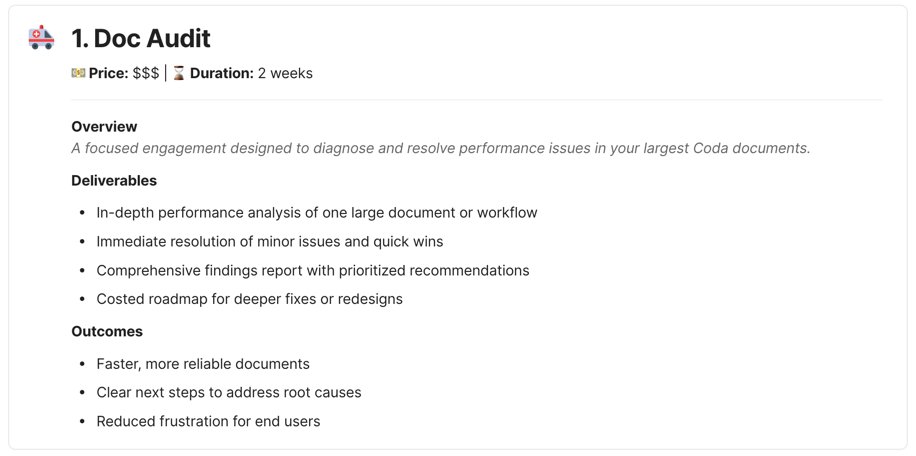
Are your @coda_hq docs getting too big? Receive an error message about your doc size? We can help We run a streamlined and dedicated Doc Audit service to get your docs back up and running fast! Shoot me a DM or email- info@simpladocs.com and we'll get you in good shape!
The Coda Guy tweet media
English
0
1
4
167
Eric Koleda retuiteado
Frédéric Harper
Frédéric Harper@fharper·
Join me and my guest @erickoleda, Lead Developer Relations at @Grammarly exceptionally Tuesday at 3PM ET, while we discuss all things developer relations, and learn more about building a Pack, an extension to your Coda documentation. youtube.com/watch?v=slkCXo…
YouTube video
YouTube
Frédéric Harper tweet media
English
0
1
2
500
Eric Koleda retuiteado
Jamon
Jamon@jamonholmgren·
I don’t care if you do JavaScript or not, or if you use Bun or not, I think this article by @lydiahallie is absolutely a must-read for every developer. It’ll change the way you think about building performant systems. It’s on my top 10 dev articles. bun.com/blog/behind-th…
English
38
96
951
52.7K
Eric Koleda
Eric Koleda@erickoleda·
With MCP tools, is there any expectation of backwards compatibility? For traditional APIs making breaking changes in a big deal, but is an MCP client to assume that the list of tools and/or shape of them can change at any time without warning?
English
0
0
3
58
Thomas Frank
Thomas Frank@TomFrankly·
Why I take forever on videos: In a script, I write, "This trick works with all of these @NotionHQ block types..." Then I think, "Wait, is that always true?" 2 hours later, I've tested things no one else will ever try and submitted 3 bug reports... instead of writing the video.
English
11
0
130
6.7K
Eric Koleda
Eric Koleda@erickoleda·
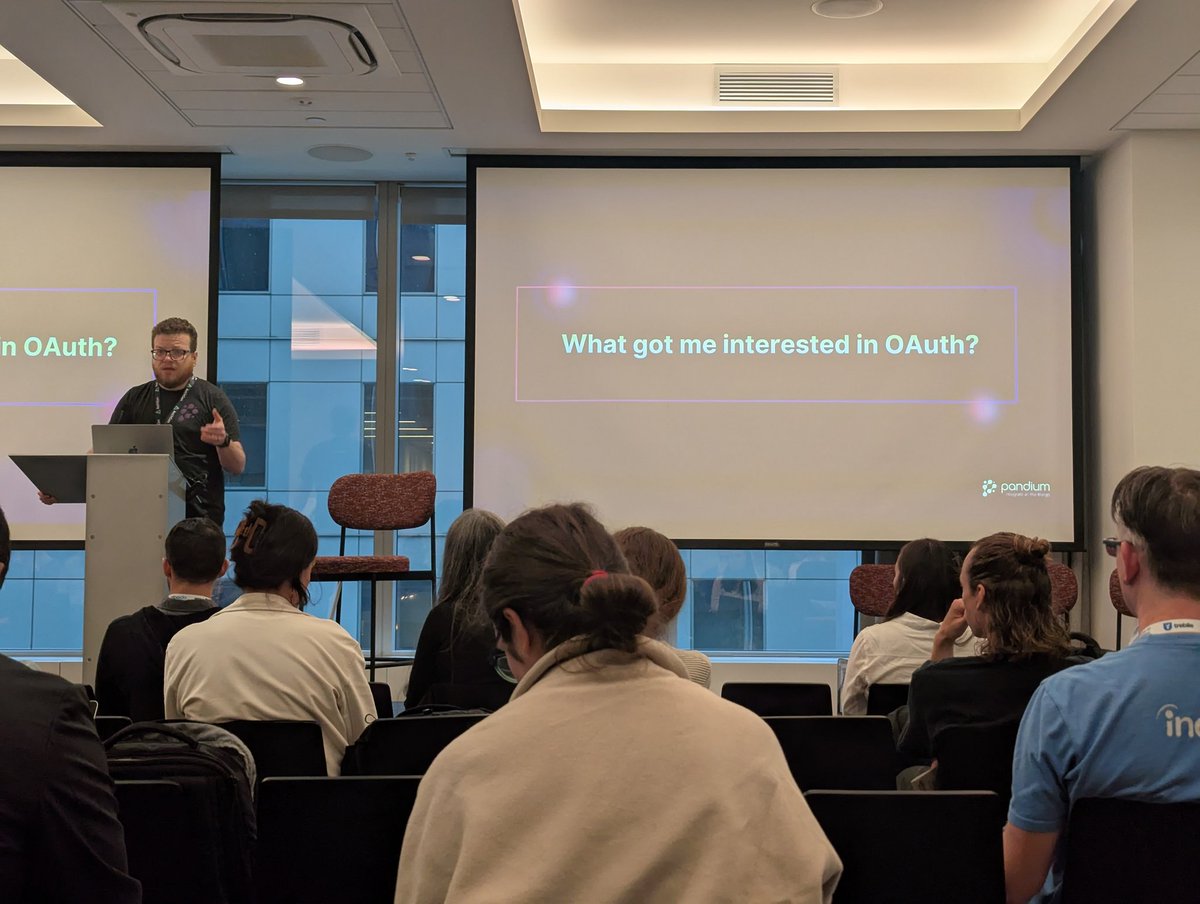
Honored to be a part of a panel talk at the Oktane conference in a few weeks, on the topic of Cross App Access (XAA). I'll be on stage with @aaronpk, the OG of OAuth, and great minds from Okta and Box. Register to join live or watch online, click here ➡️ bit.ly/3JxtPHy
Eric Koleda tweet media
English
0
0
2
85
Eric Koleda
Eric Koleda@erickoleda·
@mjackson The alternative would be an implicit await I guess? The danger there is some lower function introduces some async behavior, slowing down everything else above it. The pain of the async contagion is helpful, at discouraging dependencies from sneaking in delay.
English
0
0
1
240
MJ
MJ@mjackson·
Async code in JavaScript is contagious. Any time you define an async function, the caller must also be async. async function fn() { // ... } async function mustAlsoBeAsync() { let result = await fn() // ... } 1/?
English
70
38
917
232.6K
Eric Koleda
Eric Koleda@erickoleda·
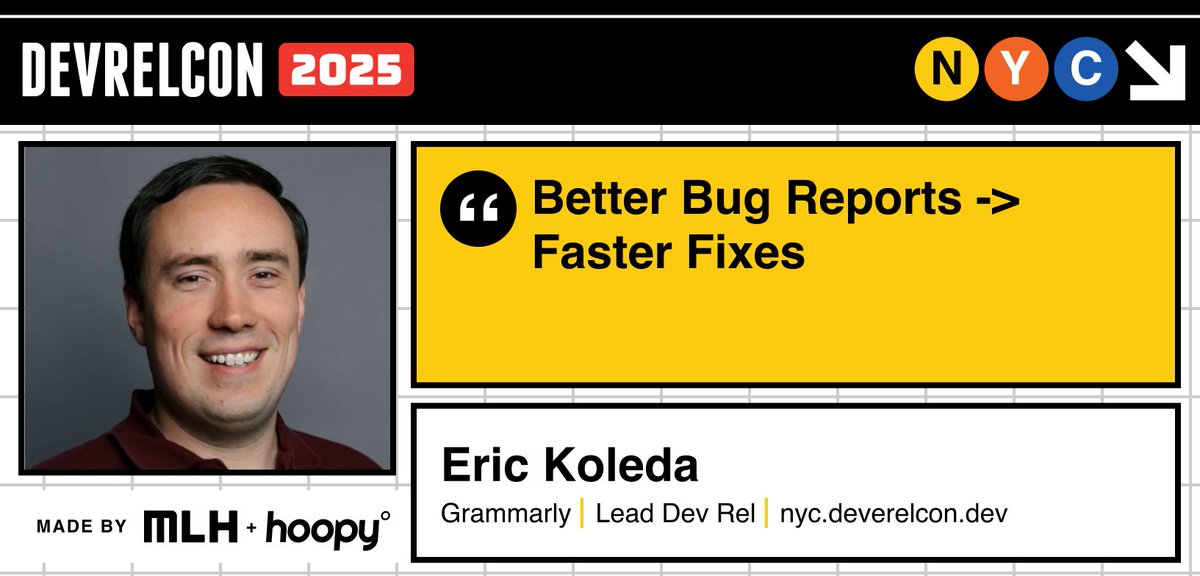
I'll be back at @devrelcon NYC this July, and I'm looking forward to giving my first lightning talk there! I'm oddly passionate about bug reports, and I'm looking forward to sharing my tips, tricks, and enthusiasm with fellow DevRel folks. nyc.devrelcon.dev/sessions/2508
Eric Koleda tweet media
English
1
2
4
269
Eric Koleda
Eric Koleda@erickoleda·
My two tips for API change management: 1) Never make breaking changes 2) Constantly make breaking changes I (try to) make that make sense in the talk I gave at @apidays NYC 2025, and you can watch a pre-recorded version of that talk here: youtube.com/watch?v=Kvtrp6…
YouTube video
YouTube
English
0
0
2
115
Eric Koleda retuiteado
Christiaan Huizer
Christiaan Huizer@CodaExpert·
Just dropped my latest @coda_hq pack: Global Postal & Geologic PRO! 🌍📍 It brings real-time city, country, timezone, currency, and more info right into your docs from addresses or coordinates, based on the @OpenCage API ⤵️ @huizer/published-1-dollar-coda-packs-by-christiaan/global-postal-geologic-pro-48" target="_blank" rel="nofollow noopener">coda.io/@huizer/publis…
English
0
2
8
155
Eric Koleda
Eric Koleda@erickoleda·
@Erwin_AI Ya, it's not clear to me what an MCP server provides that a Swagger/OpenAPI spec does not or can not.
English
0
0
1
30
Erwin
Erwin@Erwin_AI·
I still don't get why MCP exists and what it does differently than having an API. Yes, it's built "for AI specifically" but AI is already capable of using APIs. And we have tons of good protocols/frameworks already. Srsly, I can't be the only one here thinking this?
English
459
133
3.5K
851.8K
Eric Koleda
Eric Koleda@erickoleda·
@F_Ferreira_ @Zoom @tweethue I wrote some Python code, running on my machine, that reads from the Windows Registry to check for webcam access and then sends API requests to my Hue hub. I found a Gist that did the registry reading part, and the Hue part used a Python library.
English
2
0
4
51
Eric Koleda
Eric Koleda@erickoleda·
Fun hacking project of the night: An "On Air" light for @Zoom using @tweethue! Now my wife can more easily tell when I'm in a meeting or just chilling with my headphones on.
English
2
0
4
233
Eric Koleda
Eric Koleda@erickoleda·
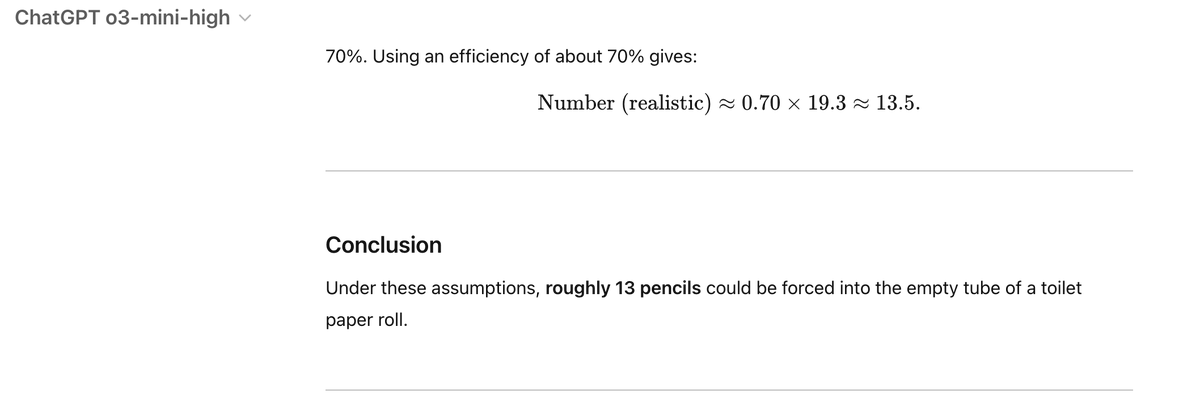
I just asked @deepseek_ai R1 "How many pencils can fit into a toilet paper roll?" and then watched it struggle hard for 3 minutes straight. I honestly felt bad for it after a while, didn't mean to make you sweat dude!
English
1
0
1
114
Eric Koleda
Eric Koleda@erickoleda·
Jess and I had a great time last week talking about "The Magic of Coda Packs", and loved the great turnout and questions from the community. If you missed the live event but are still hungry for Pack knowledge, you can watch the recording here. youtube.com/watch?v=Kr2GYv…
YouTube video
YouTube
English
0
0
1
120