Rob Stephens

2.2K posts

Rob Stephens banner
Rob Stephens

Rob Stephens

@robstephens_

rising tides lift all boats; the stars lift all eyes | investor & LP. deep tech rube. recovering chinaholic. 2x @uva wahoo | views mine, activity ≠ endorsement

Richmond, VA Se unió Eylül 2020
4.8K Siguiendo706 Seguidores
Tweet fijado
Rob Stephens
Rob Stephens@robstephens_·
1/ The dirty secret of US economic policy: We spent 30 years telling China their state-directed capitalism was inferior. Then watched them build the world's largest EV industry, dominate solar, corner drone manufacturing, and nearly close the semiconductor gap. Then we copied their playbook line by line. The investors who noticed first are already positioned. Most haven't.
English
1
0
4
611
Rob Stephens
Rob Stephens@robstephens_·
No easy way out
Robert @Baiguan@robert_baiguan

To predict what will happen, let’s start by ruling out a few scenarios: 1. We are unlikely to see the use of nuclear weapons. First, Israel is unlikely to use them; the U.S. wouldn’t allow it, and more importantly, nukes wouldn’t completely eliminate Iran. Instead, it would risk a counter-strike from Iranian nuclear weapons (which they likely already possess). As for Iran, they won’t be the first to use them. There’s simply no need. We can likely rule out this worst-case, unpredictable risk. 2. The U.S. will not launch a large-scale war on Iranian mainland. They simply can’t afford it. 3. The U.S. will not retreat just yet. Many are anticipating a TACO, but taco now is meaningless. A true "TACO” would mean handing control of the Strait of Hormuz over to Iran—a "Grand TACO," if you will. It’s too early to give up. 4. Israel will not back down. Stopping now would mean all previous efforts were in vain; they won’t get another chance. 5. As long as there is no regime change, Iran will not back down either. As I’ve discussed before, since they’ve already played their biggest card—Hormuz—they won’t fold easily. Folding means certain death for top IRGC people; staying in the game at least offers a chance at survival. Once we exclude these five possibilities and establish these constraints, the path forward becomes relatively clear. First, the U.S. will likely engage in island-seizing operations, hoping to control the situation through small-scale, high-leverage ground combat. From there, three possibilities emerge: • Scenario 1: The battle goes smoothly and concludes in days. Iran is forced to the negotiating table, or regime change occurs. The U.S. quickly gains control of the situation. • Scenario 2: The fighting is grueling and protracted, but the U.S. eventually secures the objective and stabilizes the situation. • Scenario 3: The fighting is exceptionally difficult. The U.S. either fails to take the objective or takes it but finds it impossible to defend, eventually forcing a withdrawal. This would complete the "Grand TACO." Trump would shrug his shoulders and take the exit, claiming the battle was simply unwinnable. Aside from Scenario 1, both Scenarios 2 and 3 would inflict massive pain on the global economic order. I personally think scenario 3 is the most likely. Brace for impact, folks

English
0
0
0
111
Rob Stephens
Rob Stephens@robstephens_·
Hill & Valley 2026 was a coming-out party for American state capitalism. Jamie Dimon called for industrial policy out loud. The State Dept joked it was "capitalism with Chinese characteristics with American characteristics." Nobody laughed it off — because it's true. DoD now has six tech priorities: hypersonics, quantum, directed energy, drones, contested logistics, microchips. Private capital co-investment is baked in. Website post to drone contract in 72 hours. $1.5M Navy program grew to $1.5B. NASA is scrapping the single perfect launch model for iterative development and permanent lunar presence. Nuclear-powered spacecraft are being actively accelerated. Space isn't exploration anymore. It's contested logistics and strategic deterrence. Mark Warner put a number on the AI white-collar disruption: 30% youth unemployment in two years. MBAs first. Blue-collar wages are already up 25-30% from grid and data center buildout. The labor market is inverting. Nuclear is the only real AI energy answer. AI developers are now expected to finance their own power. Costs don't hit ratepayers. The subsidy era is over. DC told Silicon Valley and Wall Street directly: the "moral neutrality" era for tech is finished. Opting out advantages the adversary. That's policy, not rhetoric. Intel sources said China isn't ready for Taiwan today. Generals were running war games in DC this week. Two days. One takeaway. America is now running China's economic playbook. The irony wasn't lost on anyone there who's been paying attention. The event delivered, again. @HillValleyForum @zebulgar @UnderSecE @CGarrett_15
English
4
7
105
10.7K
Rob Stephens retuiteado
delian
delian@zebulgar·
This week has felt so magical Cherry blossom season in DC Some beautiful spring weather Phenomenal forum with tech & policy leaders Biggest and most ambitious space policy from NASA in decades Just makes me so proud to be an American Greatest damn country on Earth 🇺🇸🇺🇸🇺🇸
delian tweet media
English
11
18
363
16.8K
Rob Stephens
Rob Stephens@robstephens_·
Love this "Fiction just got out-engineered by reality."
Jen Zhu@jenzhuscott

When I was consulting for @HBO Silicon Valley, zero-loss compression was the holy grail Richard Hendricks chases that perfect middle-out algo could shrink everything w/out breaking a single bit. Google just did something even more practical for the AI era: TurboQuant compresses LLM key-value caches down to 3 bits per value using random orthogonal rotation + PolarQuant scalar quantization & optional 1-bit QJL residual correction. =>> 6× memory reduction, up to 8× faster attention (on H100), & 0 degradation on LongBench, Needle-in-a-Haystack, and RULER for models like Gemma. No retraining, no calibration needed. Fiction just got out-engineered by reality. 😅💚💚

English
0
0
0
125
Rob Stephens retuiteado
Aditya Agarwal
Aditya Agarwal@adityaag·
Some observations from @HillValleyForum yesterday: - It takes three to tango for hardtech/deeptech. Builders+Investors+PolicyMakers. All 3 were out in full force. - The speaker lineup was top-tier. It's indicative of the great job that @zebulgar @CGarrett_15 @jacobhelberg have done but also to the fact that there is: - Insane energy around hardtech+deeptech. Drones, Energy, Robotics, Atoms+Bits. - This energy is infectious...but oddly not very Silicon Valley / Bay Area pilled. It's in a bunch of disparate places around the US. I think this is a good thing. - The support from Washington / the political class is very real. This was awesome to see. Every single congressman+senator that I interacted with wanted to be part of building something amazing. Having folks like @sriramk in DC helps a lot. - @shaunmmaguire captured this in his interview with TBPN yesterday but I think the interesting aspect of moving from bits to atoms+bits is that you also diversity your sources of capital. Lots of interesting conversations with investors who are far from traditional venture. Super optimistic for 🇺🇸. We have a lot to do but things are going in the right direction.
English
5
16
123
15.9K
Rob Stephens
Rob Stephens@robstephens_·
@collision So obviously overdue it feels like an April Fools joke
English
0
0
0
15
Rob Stephens retuiteado
Aaron Burnett
Aaron Burnett@aaronburnett·
I think Delian is correct here. a SpaceX IPO kicks off orders of magnitude more capital into space infrastructure investment. It might end up being considered as a historic inflection point where capitalism finally meaningfully embraced space and humanity was forever changed. It’s a big deal.
TBPN@tbpn

Varda's @zebulgar says the $1–2 trillion SpaceX IPO is about to flood the space industry with capital, attention, and talent moving into next-gen applications as people rotate out of their positions: "I like to think of space like a highway: when you first only had a handful of cars there, everybody had to bring their own gas tank. Once you get thousands of cars up there, you can start to invest in a gas station." "There are layers of infrastructure, and as you build up each layer - reusable rockets, space factories, gas stations, ground stations - now you can start building application layers on top of those." "I think one day you'll see Founders Fund lead a round in a lunar ice mining operation." "I would bet that in the next five years, we lead a ~$10M financing round into a lunar ice mining operation."

English
10
37
274
20.8K
Rob Stephens
Rob Stephens@robstephens_·
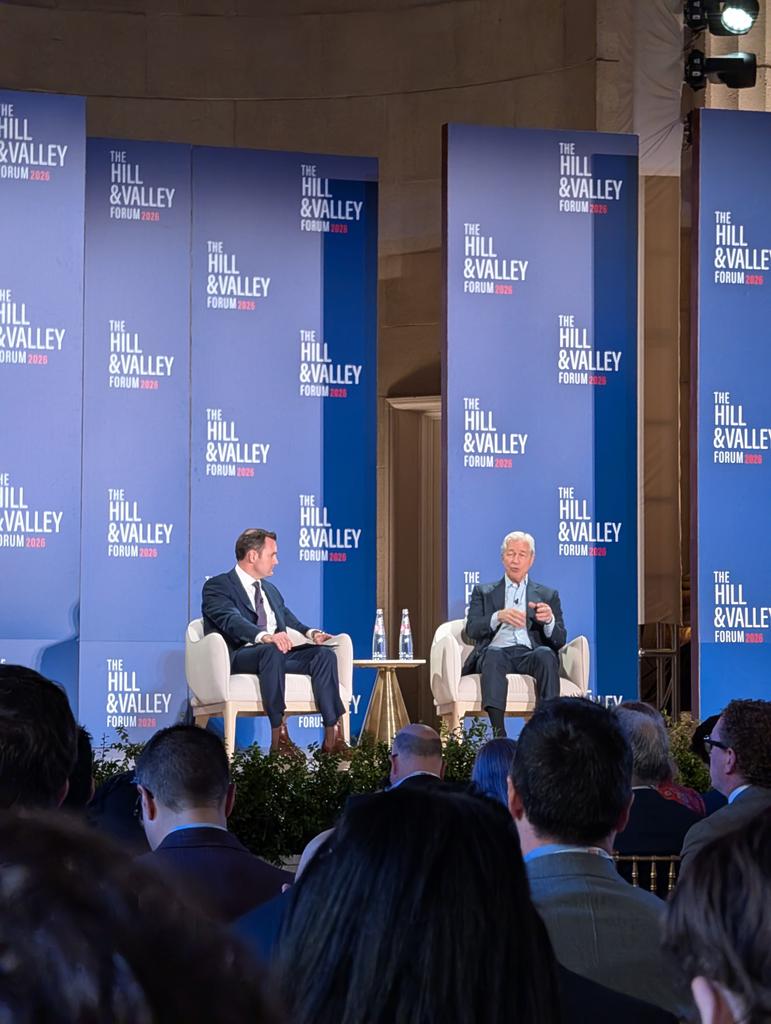
"I think you have to use industrial policy now, and I say that reluctantly" - Jamie Dimon @HillValleyForum
Rob Stephens tweet media
English
0
1
0
221
Rob Stephens retuiteado
Luke Metro
Luke Metro@luke_metro·
Defense tech seed pitch: we have one guy who used to work at anduril Defense tech series C pitch: our existing VCs control the government
English
16
48
1.2K
51.6K
Rob Stephens retuiteado
Lukas Ekwueme
Lukas Ekwueme@ekwufinance·
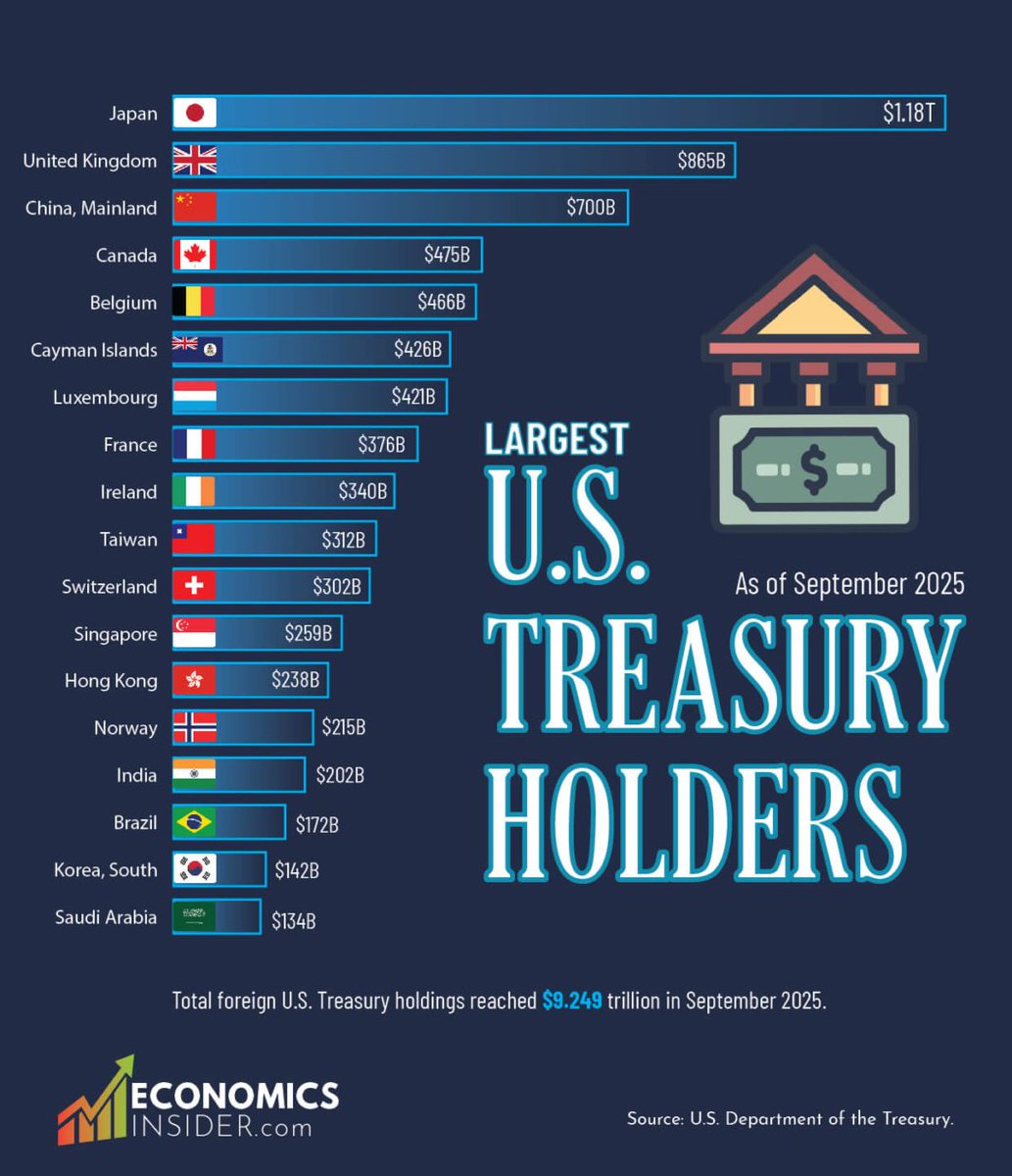
The US is in trouble. While it is true that the U.S. is the largest oil exporter and “only” imports ~3% of its oil through the Strait of Hormuz, the same can’t be said about its allies. - Europe: Highly dependent on oil/gas imports - Asia: Highly dependent on oil/gas/food imports These regions also hold the vast majority of US assets owned and account for most of the buying. The highly financialized and indebted US economy only functions when: 1) Allies buy US Treasuries to keep rates low 2) Allies buy US equities to keep markets and tax receipts up 3) Send cheap goods to the U.S. The current spike in energy and food prices is threatening the very foundation of the empire. As these highly import-dependent countries and regions face mounting costs and strain, they need to make a decision: 1) Print currency to buy energy and food 2) Sell US assets to buy energy and food Printing currency would ignite inflation, and in an already inflationary shock, selling US assets at near all-time highs would buy these countries time for things to normalize. The longer the Strait remains closed, the higher the incentive to sell US assets to relieve inflationary pressures.
Lukas Ekwueme tweet media
English
150
720
1.9K
184.3K
Rob Stephens
Rob Stephens@robstephens_·
What if sci-fi writers weren't imagining the future, they were leaking it. What should I read next?
English
1
0
3
88
Rob Stephens retuiteado
Rui Ma
Rui Ma@ruima·
In China, there is a joke going around right now that, 2026 is apparently the Year One 元年 of literally everything: 1/ autonomous driving 2/ liquid cooling 3/ domestic HBM 4/ on-device AI 5/ solid-state batteries 6/ AI applications 7/ quantum computing 8/ compute-memory integrated chips 9/ brain-inspired computing 10/ the low-altitude economy 11/ commercial space 12/ humanoid robots 13/ silicon photonics 14/ controllable nuclear fusion Is there a frontier technology that ISN'T going to hockey stick / cambrian explode this year???
English
27
80
519
30.1K
Rob Stephens retuiteado
OK Then
OK Then@okaythenfuture·
Balaji’s read on COVID in Jan 2020 was legendary, And this take on the ramifications of the Ramadan War will age just as well. As I said, an unnecessary and pointless war, But one that seems destined to fully usher in the Chinese superpower era.
Balaji@balajis

I'm going to make some obvious points. (1) Blowing up all the oil infrastructure in the Middle East is an insane idea, and may well result in a global economic crash and humanitarian crisis unrivaled in the lives of those now living. We're talking about the price of everything everywhere rising, from food to gas, at a moment when inflation was already high. All of that will be laid at the feet of the authors of this war. (2) The antebellum status quo of Feb 27, 2026 was just not that bad, but we're unlikely to return to it. Expect indefinite, long-term, ongoing disruptions to everything out of the Middle East. (3) Also assume tech financing crashes for the indefinite future. The genius plan to get the Gulf states caught in the crossfire has incinerated much of the funding for LPs, for datacenters, and for IPOs. Anyone in tech who supported this war may soon learn the meaning of "force majeure" as funding gets yanked. (4) Many capital allocators will instead be allocating much further down Maslow's hierarchy of needs, towards useful basic things like food and energy. (5) It's fortunate that all those progressives yelled about the "climate crisis." Yes, their reasoning about timelines was wrong, and much of the money was wasted in graft, but the result was right: we all need energy independence from the Middle East, pronto. It's also fortunate that Elon and China autistically took climate seriously. Now they're going to need to ship a billion solar panels, electric vehicles, batteries, nuclear power plants, and the like to get everyone off oil, immediately. (6) It's not just an oil and gas problem, of course. It's also a fertilizer problem, and a chemical precursor problem. Maybe some new sources will come online at the new prices, but it takes time to dial stuff up, particularly at this scale, so shortages are almost a certainty. That said, China has actually scaled up coal-to-chemicals[a,c] (C2C), and there's also something more sci-fi called Power-to-X[b] which turns arbitrary power + water + air into hydrocarbons. But all of that will need to get accelerated. I have a background in chemical engineering so may start funding things in this area. (7) Ultimately, this war is going to result in tremendous blame for anyone associated with it. It's a no-win scenario to blow up this much infrastructure for so many people. Simply not worth it for whatever objective they thought they were going to attain. But unless you're actually in a position to stop the madness, the pragmatic thing to do is: scramble to mitigate the fallout to yourself, your business, and your people. [a]: reuters.com/business/energ… [b]: alfalaval.com/industries/ene… [c]: reuters.com/sustainability…

English
13
40
373
91.8K