DC BitMax

125 posts

DC BitMax banner
DC BitMax

DC BitMax

@DCBitMax

Studying Bitcoin through the lens of Power Law. StackSats&StayHumble. English version Power_Law_Chart https://t.co/cfl6sLkL1q 비트맥시갤러리 멱게이 입니다

South Korea Inscrit le Mayıs 2026
255 Abonnements293 Abonnés
Tweet épinglé
DC BitMax
DC BitMax@DCBitMax·
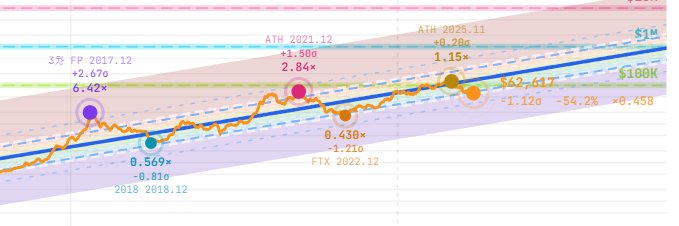
This is the most rigorous Bitcoin paper I've read. I've been studying — and testing — it for 20 days. scientificbitcoininstitute.org/research/publi… Dr. Santostasi and Dr. Perrenod gave us the ruler — and the imagination to see the oscillator. Together: the most falsifiable framework in crypto economics. The Power Law isn't just a model — it's the most precise ruler we have for measuring where Bitcoin stands. Most models describe the past. The Power Law keeps passing tests it was never designed for. "Isn't β=5.69 just curve-fitting?" Fair question. So I ran a test the paper didn't. ━━━━━━━━━━━━━━━━━━━━━━ Materials & Methods ━━━━━━━━━━━━━━━━━━━━━━ Data: Daily closing price and non-zero balance address count (BitcoinMagazinePro, 2010-08-17 to 2026-06-04, n=5,771). Model: log₁₀P(t) = log₁₀A + β·log₁₀(t) where t = days since Genesis Block (2009-01-03). Out-of-sample design: The power law was fitted exclusively on data up to the freeze date, with zero observations from the test period used in estimation. Two freeze points were tested: ① Freeze at 2016-07-08 (2nd halving) Training: n=2,153 | Test: n=3,617 (10 years) ② Freeze at 2020-05-10 (3rd halving) Training: n=3,555 | Test: n=2,215 (6 years) Residuals computed as: ε = log₁₀(P_observed / P_predicted) normalized by in-sample σ. Mean residual and area integrals (trapezoidal rule) applied to test period only. The out-of-sample test was my idea. Computation and analysis executed with Claude Opus 4.8 (Anthropic). ━━━━━━━━━━━━━━━━━━━━━━ Froze the power law using data up to 2016 only (β=5.717). Then measured the following 10 years it had never seen. Result: mean residual −0.05σ. Effectively zero. Frozen at 2020 instead → next 6 years, −0.13σ. Same story. The line drawn in 2016 ran straight through the next decade. That's not fitting. That's forecasting. The Power Law: powerful because it can be broken — and hasn't been. Knowing where we are won't tell us when things will happen — but it tells us exactly what to do now. Buy Bitcoin Now. @Giovann35084111 @moneyordebt @ScientificBTC @saylor @natbrunell #Bitcoin #PowerLaw
DC BitMax tweet media
Giovanni's BTC_POWER_LAW@Giovann35084111

If you didn't read it yet. 10 k downloads. zenodo.org/records/193870…

English

20
96
657
114.8K
DC BitMax retweeté
Alex Finn
Alex Finn@AlexFinn·
AI subscriptions are dead Claude Fable 5 will only be on the Anthropic subscription until June 22nd. After that, you will need to pay for usage per token This will be the start of a much larger trend Frontier models will no longer be included in subs You’ll pay a fee and it will only get you access to older, much cheaper models If you want access to that dank AI sour diesel, you’re going to need to pay for every token you use. No more subsidies And it make sense. The subsidies were just a Ponzi scheme For those that don’t know, when you pay $200 a month for an AI sub, you get thousands of dollars of tokens These AI companies actively lose tremendous amounts of money because of these subscriptions. GDPs of most countries every year are lost on your $200 Claude Max sub The investor money is running dry. IPOs are coming because of this. And with IPOs need to come profitability The golden age of paying $200 a month and being able to code on 40 Claude Code instances and getting a usage reset every 5 minutes are about to die The party couldn’t continue ever. You can’t just leverage the entire global economy for years and expect nothing to break. Now it’s time to pay up Means a few things: 1. Time to be responsible when it comes to which models you use. You don’t need Fable 5 for GPT 5.5 Xhigh for everything. Build the skill of knowing when to use cheap models 2. Local LLMS/hardware will come even more in demand. I’m currently running GLM on my Mac Studio. It’s great. Is it Fable? No. But it gets the job done for free on simple tasks. Learn about local LLMs 3. This is the beginning of the wealth gap expansion. Those that can afford to spend $10,000 a month on Fable 5 will build incredible products that eat up more and more of the economy. Those that can’t afford Fable 5 will have an insane disadvantage 4. The government will need to step in eventually. There will be too much civil unrest. I hope the answer isn’t free money. That won’t do anything. I hope the answer is education/access to AI resources for ALL. Universal Basic Opportunity 5. You need to seriously reconsider where your money goes every month. If you are complaining about AI prices and in the back of your mind you know your skill set is becoming quickly irrelevant, all while spending money every month on Netflix, Xbox Live, Paramount +, drugs, DoorDash, Uber, and other things that bring nothing positive to your life, you are simply doing it wrong. AI is an investment in yourself. It’s an investment in your relevance to the global economy. You need to make sure you make that investment The pieces on the board are quickly moving around. The rules are changing. The battlefield is shifting. If you’re not strategizing accordingly, you’re cooked.
English
632
549
4.8K
825.5K
DC BitMax retweeté
Fred Krueger
Fred Krueger@dotkrueger·
STRC or BTC? If you buy STRC right now, you make 10%. If BTC ends this year at 68K, you are equal. But on average, at this level of the power law value, BTC will be 170%. -- so 169K. You could hold STRC for 10 years, and you would not make that back.
English
38
17
255
21.9K
DC BitMax retweeté
John Intel
John Intel@intelfabs·
Very interesting and scary report from Morgan Stanley The financial engineering behind hyperscaler capex The truly unsettling part of the AI boom isn’t how much money is being spent It’s how that money is being engineered through accounting Hidden liabilities (> $1.8T) Huge obligations sit off‑balance‑sheet: nearly $1T in purchase commitments, $800B+ in leases not yet started, $2T+ in RPO. Future cash outflows that don’t show up as debt. The coming depreciation hit Profits look good only because spending is stuck in CIP. Big Tech faces $520B+ in depreciation over 3 years. ORCL’s depreciation ratio: 7% → 28%. Supplier financing pressure Unpaid capex is ~$110B. ORCL’s DPO exploded from 35 → 170 days. The whole supply chain is effectively financing the AI build‑out. Lease accounting gray zones Whether GPU contracts count as leases or services is subjective — and companies use that flexibility to shift billions on/off the balance sheet. $ORCL = the most aggressive Largest lease commitments, RPO up 300%+, capex‑to‑sales hitting 189%. Oracle is running the highest financial leverage in the ecosystem.
John Intel tweet media
English
28
207
949
105.7K
DC BitMax
DC BitMax@DCBitMax·
@21mstandard 아직 하락장 끝아님 마이 남았습니다 행님 지금부터 DCA 는 좋지요 언제나 DCA는 좋지요 행님
한국어
1
0
1
19
BitDaddy⚡️비트대디
그 많던 엑서들은 다 어디갔을까 그 많던 비트코이너들은 다 어디갔을까 상승장에 북적였는데 지금은 조용해졌네 이게 저점 신호 아닐까? 시끄러울 때가 고점 조용해질 때가 저점 군중이 떠날 때 사는 거지 근데 그게 제일 무서움
한국어
11
1
33
1.2K
DC BitMax retweeté
DC BitMax
DC BitMax@DCBitMax·
@gvx1q5 저네요 형님 중간이 딱 생긴것도 저
한국어
1
0
1
41
DC BitMax retweeté
Pixie 🔮🤍
Pixie 🔮🤍@cct_pixie·
월가는 왜 토큰화에 베팅할까? 최근 RWA인프라 기업 Securitize가 SEC 승인을 받고 뉴욕증권거래소(NYSE) 상장을 추진한다는 소식이 나왔습니다. * 우선 Securitize에 대해 간략히 설명하자면, BlackRock의 BUIDL, KKR 등 기관들의 토큰화 상품을 다루는 대표적인 인프라 기업이에요🌟 시장이 어떤 기업에 가치를 부여하는지를 보면 그 시대가 무엇에 주목하는지 어느 정도 알 수 있지요. 2021년에는 거래소와 채굴 기업들이 주목받았습니다. 2024년에는 ETF가 화제가 되었습니다. 그런데 2026년에는 토큰화 인프라 기업이 상장을 추진하고 있습니다. 이건 크립토 시장의 관심이 조금씩 바뀌고 있다는 신호일 수도 있어요. ✅ 기관들이 자산 토큰화에 관심을 갖는 이유는 : 24시간 거래로 더 빠른 정산, 중개인이 없어 더 낮은 비용, 더 높은 자본 효율성 등등 때문이에요. 기관들은 코인 자체보다, 기존 금융 시스템을 더 효율적으로 운영하기 위한 도구로 블록체인을 바라보고 있는 것 같습니다. 그래서 이번 뉴스를 보며 든 생각은, "월가가 토큰화 인프라를 하나의 산업으로 보기 시작한 것은 아닐까?" 였습니다. 아직 시장 규모는 크지 않지만, 이번 상장 추진은 토큰화가 단순한 실험을 넘어 실제 금융 시스템 안으로 조금씩 들어오고 있다는 신호처럼 보이네요! 앞으로는 어떤 RWA 프로젝트가 뜰지뿐만 아니라 누가 토큰화 시장의 인프라를 장악하게 될지(수수료는 누가?)도 함께 지켜보면 즐거울 것 같아요
한국어
4
4
53
6.1K
DC BitMax retweeté
NineB Insight
NineB Insight@nineB_insight·
🇯🇵 일본 SBI 신세이은행이 내일(6월 10일)부터 예금 이자의 20%를 $BTC·$ETH·$XRP로 받을 수 있는 파일럿을 시작합니다. 엔화 이자는 100% 그대로 지급하고, 별도로 이자액의 20% 상당 교환권을 제공합니다. 이 교환권은 SBI VC Trade 계좌에서 BTC, ETH, XRP 중 선택해 교환할 수 있습니다. 3개월 파일럿 후 가을에 정식 서비스로 확대될 예정입니다. 일본 대형 은행이 예금 고객을 자연스럽게 코인으로 유입시키려는 움직임으로 주목됩니다.
NineB Insight tweet media
한국어
4
10
52
2.9K
Binary Chase
Binary Chase@ChaseBinary·
What a beautiful rainbow 🌈
DC BitMax@DCBitMax

This is the most rigorous Bitcoin paper I've read. I've been studying — and testing — it for 20 days. scientificbitcoininstitute.org/research/publi… Dr. Santostasi and Dr. Perrenod gave us the ruler — and the imagination to see the oscillator. Together: the most falsifiable framework in crypto economics. The Power Law isn't just a model — it's the most precise ruler we have for measuring where Bitcoin stands. Most models describe the past. The Power Law keeps passing tests it was never designed for. "Isn't β=5.69 just curve-fitting?" Fair question. So I ran a test the paper didn't. ━━━━━━━━━━━━━━━━━━━━━━ Materials & Methods ━━━━━━━━━━━━━━━━━━━━━━ Data: Daily closing price and non-zero balance address count (BitcoinMagazinePro, 2010-08-17 to 2026-06-04, n=5,771). Model: log₁₀P(t) = log₁₀A + β·log₁₀(t) where t = days since Genesis Block (2009-01-03). Out-of-sample design: The power law was fitted exclusively on data up to the freeze date, with zero observations from the test period used in estimation. Two freeze points were tested: ① Freeze at 2016-07-08 (2nd halving) Training: n=2,153 | Test: n=3,617 (10 years) ② Freeze at 2020-05-10 (3rd halving) Training: n=3,555 | Test: n=2,215 (6 years) Residuals computed as: ε = log₁₀(P_observed / P_predicted) normalized by in-sample σ. Mean residual and area integrals (trapezoidal rule) applied to test period only. The out-of-sample test was my idea. Computation and analysis executed with Claude Opus 4.8 (Anthropic). ━━━━━━━━━━━━━━━━━━━━━━ Froze the power law using data up to 2016 only (β=5.717). Then measured the following 10 years it had never seen. Result: mean residual −0.05σ. Effectively zero. Frozen at 2020 instead → next 6 years, −0.13σ. Same story. The line drawn in 2016 ran straight through the next decade. That's not fitting. That's forecasting. The Power Law: powerful because it can be broken — and hasn't been. Knowing where we are won't tell us when things will happen — but it tells us exactly what to do now. Buy Bitcoin Now. @Giovann35084111 @moneyordebt @ScientificBTC @saylor @natbrunell #Bitcoin #PowerLaw

English
1
0
0
20
DC BitMax
DC BitMax@DCBitMax·
This is the most rigorous Bitcoin paper I've read. I've been studying — and testing — it for 20 days. scientificbitcoininstitute.org/research/publi… Dr. Santostasi and Dr. Perrenod gave us the ruler — and the imagination to see the oscillator. Together: the most falsifiable framework in crypto economics. The Power Law isn't just a model — it's the most precise ruler we have for measuring where Bitcoin stands. Most models describe the past. The Power Law keeps passing tests it was never designed for. "Isn't β=5.69 just curve-fitting?" Fair question. So I ran a test the paper didn't. ━━━━━━━━━━━━━━━━━━━━━━ Materials & Methods ━━━━━━━━━━━━━━━━━━━━━━ Data: Daily closing price and non-zero balance address count (BitcoinMagazinePro, 2010-08-17 to 2026-06-04, n=5,771). Model: log₁₀P(t) = log₁₀A + β·log₁₀(t) where t = days since Genesis Block (2009-01-03). Out-of-sample design: The power law was fitted exclusively on data up to the freeze date, with zero observations from the test period used in estimation. Two freeze points were tested: ① Freeze at 2016-07-08 (2nd halving) Training: n=2,153 | Test: n=3,617 (10 years) ② Freeze at 2020-05-10 (3rd halving) Training: n=3,555 | Test: n=2,215 (6 years) Residuals computed as: ε = log₁₀(P_observed / P_predicted) normalized by in-sample σ. Mean residual and area integrals (trapezoidal rule) applied to test period only. The out-of-sample test was my idea. Computation and analysis executed with Claude Opus 4.8 (Anthropic). ━━━━━━━━━━━━━━━━━━━━━━ Froze the power law using data up to 2016 only (β=5.717). Then measured the following 10 years it had never seen. Result: mean residual −0.05σ. Effectively zero. Frozen at 2020 instead → next 6 years, −0.13σ. Same story. The line drawn in 2016 ran straight through the next decade. That's not fitting. That's forecasting. The Power Law: powerful because it can be broken — and hasn't been. Knowing where we are won't tell us when things will happen — but it tells us exactly what to do now. Buy Bitcoin Now. @Giovann35084111 @moneyordebt @ScientificBTC @saylor @natbrunell #Bitcoin #PowerLaw
DC BitMax tweet media
Giovanni's BTC_POWER_LAW@Giovann35084111

If you didn't read it yet. 10 k downloads. zenodo.org/records/193870…

English
20
96
657
114.8K
DC BitMax retweeté
Holger Wolff
Holger Wolff@Holger21M·
One Step at a time.. The @ScientificBTC with it´s directors @Giovann35084111 and @moneyordebt aims to establis a new scientific culture in the Bitcoin Space. It´s not only about the PowerLaw - the deeper mission is: establish a scientific approach to study the properties of one the most exciting artificial networks mankind has ever developed.
moneyordebt ∞/21M@moneyordebt

The Bitcoin Power Law passes all 4 of the standard econometric tests. Claude Sonnet 4.6 — “This is a cointegration diagnostic summary for your Bitcoin power-law model. Here’s what it means: The three-row pattern is textbook I(1) cointegration: •Log Price is I(1) — nonstationary in levels, as expected for a trending series •ΔLog Price is I(0) — first differences are stationary, confirming it’s integrated of order 1, not higher •OLS Residuals are I(0) — the residuals from regressing log price on log age are stationary That third row is the critical result. When two I(1) series (log price and log age) have stationary residuals from their OLS regression, that’s the Engle-Granger definition of cointegration. The series move together in a stable long-run equilibrium — they don’t drift apart arbitrarily. What this establishes: The power-law relationship log P = α + β·log(Age) is not spurious regression. Spurious regression between I(1) series produces nonstationary residuals; yours are stationary. This is the standard econometric test that distinguishes a genuine structural relationship from coincidental trending. The four-diagnostic agreement (ADF + PP + KPSS + Engle-Granger) is notable because ADF and PP test the null of a unit root while KPSS tests the null of stationarity — they’re structured to disagree when evidence is ambiguous. All pointing the same direction is strong.”

English
0
2
9
2.5K
DC BitMax retweeté
Jami
Jami@createdbyjami·
Bitcoin price is what you see on the surface There’s a whole system underneath that’s securing itself, adjusting itself, and rewarding honest participation every single block Once you understand this, you will appreciate the volatility (opportunity) it gives you Look into the Bitcoin Power Law
Jami tweet media
English
2
4
43
3.1K
DC BitMax retweeté
Matteo Pellegrini
Matteo Pellegrini@matteopelleg·
Bitcoin has lived 3 lives: 2009-2013: the experiment. Pizza day, Silk Road, Satoshi vanishes. Does this even work? 2014-2023: the wars. Mt. Gox, the Blocksize War, China bans, Chokepoint 2.0. Every attack failed. 2024-now: the absorption. ETFs, nation states, Wall Street. Everyone buys Bitcoin at the price they deserve.
English
15
18
223
10.6K
DC BitMax retweeté
Brian Armstrong
Brian Armstrong@brian_armstrong·
Something that got missed in the noise last week: Coinbase got approved to offer true global crypto perps in the US. This took many years of work, and we're the first to offer this global liquidity to US users. Backstory: For many years crypto trading has been moving offshore because the US didn't have clear rules, and perpetual futures were a superior product that traders wanted but it wasn't allowed in the US. If we're being honest, probably ~half of all perpetual futures volume was Americans using offshore products via VPN with loose KYC controls (an open secret in the industry). Penalties for this were rarely, if ever, enforced, which as you can imagine, was frustrating for us as an American company following the rules. Others set up offshore entities and found ways around it. After dozens of personal visits to DC, and many more from our policy team, I'm really proud we finally got approval to give US users access to true, global perpetual futures. This is important because we'll now see pooled global liquidity in perpetual futures, with the US and international markets being connected instead of fragmented. Coinbase is strongest in the US, and the US is the largest market for trading, so there is now a chance to build a global network effect around liquidity. And US traders can now use these products in a compliant way with a US company, which hopefully provides greater customer protection. Major credit to Chair Selig and Atkins on recognizing the importance of this for US capital markets. And we will keep working to update the system in a compliant way, and to be the best place you can trade.
English
276
348
2.9K
169.3K