Michael Shacklock

879 posts

Michael Shacklock

Michael Shacklock

@Neurodynamics

DipPT, MAppSc (MSK), FACP. Founder, author best seller, Clinical Neurodynamics, NDS Neurodynamic Solutions.

Adelaide, Australia Inscrit le Aralık 2009
282 Abonnements4.4K Abonnés
Michael Shacklock
Michael Shacklock@Neurodynamics·
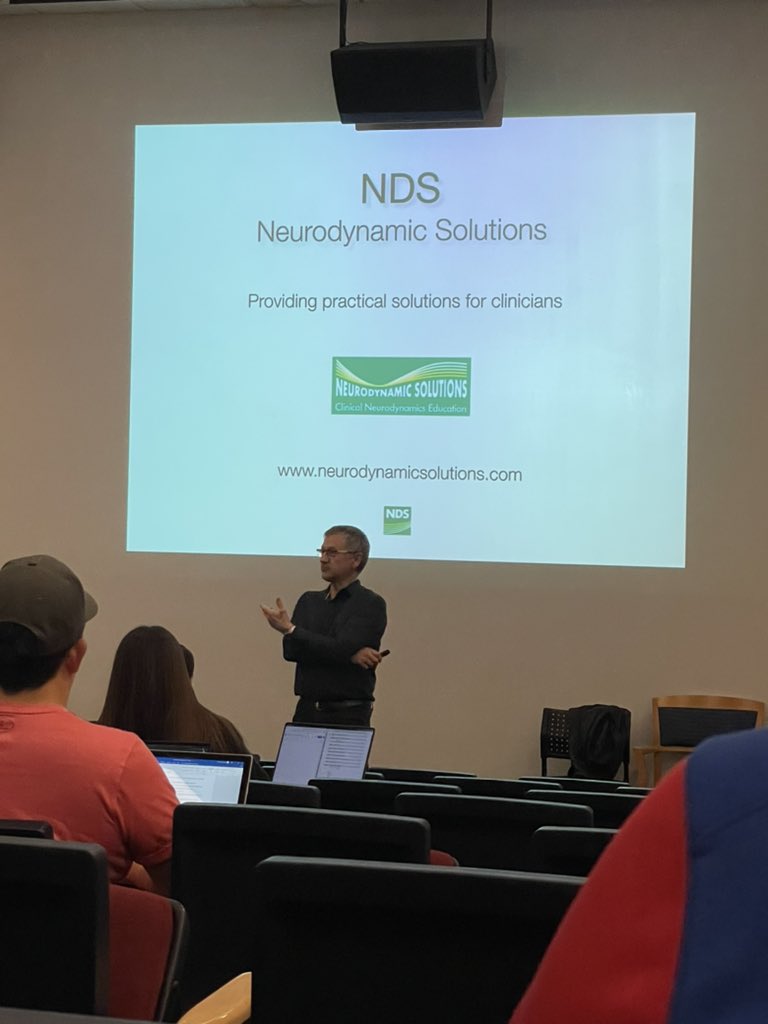
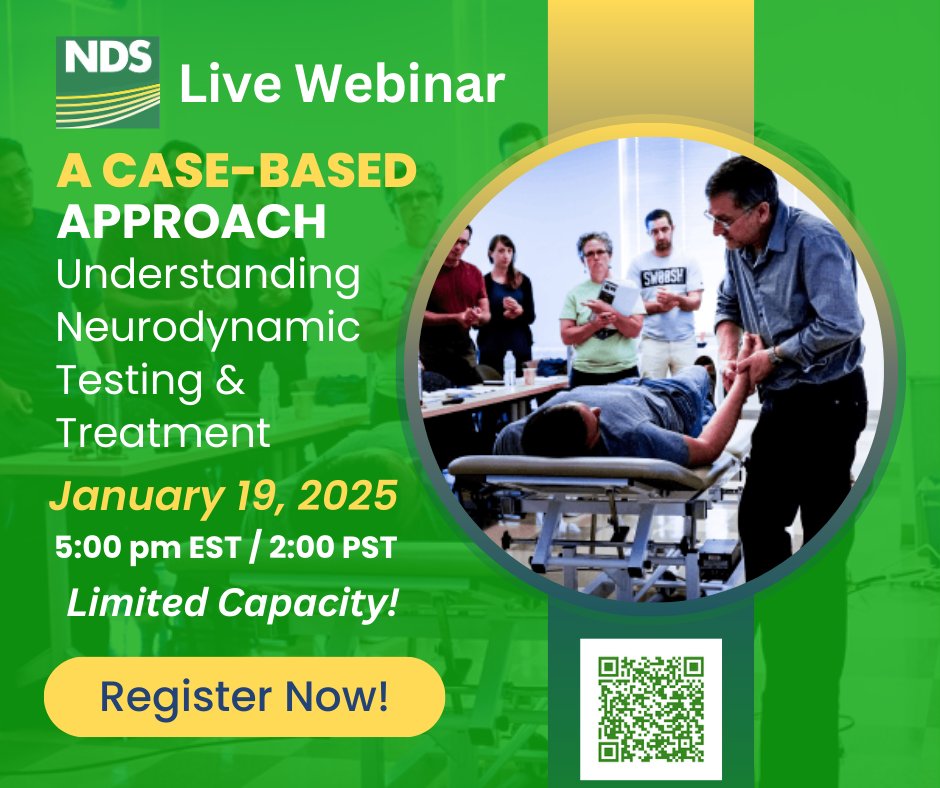
ATTN: PTs and Chiros! NEW FREE WEBINAR! Case-based Approach to Understanding Neurodynamic Testing and Treatment. Michael Shacklock, DipPT, FACP); Drs Michael Maxwell DC & Dr Joseph Gravino DPT. Day - Sun Jan 19 Time: PST 2:00 pm, EST 5:00 pm Register here: us02web.zoom.us/webinar/regist…
Michael Shacklock tweet media
English
0
1
3
358
Michael Shacklock
Michael Shacklock@Neurodynamics·
@AnninaBSchmid Well done Annina!! Very much deserved, and on the right day!! Keep up your excellent work. I’m sure there is plenty more to come! Best wishes from Australia.
English
0
0
1
399
Annina Schmid
Annina Schmid@AnninaBSchmid·
So excited to be awarded Professorship in Oxford, as a physiotherapist and on the day of physiotherapy no more. Massive thank you to all my team and collaborators past and present, would not have been possible without you!!!🍹🎊🎉!
English
76
20
485
35.6K
Michael Shacklock
Michael Shacklock@Neurodynamics·
Hello Everyone, NDS has a NEW INSTAGRAM ACCOUNT instagram@neurodynamicsolutions We'll be doing our updates there for lots of good info. Please go there for the latest in research, techniques and clinical pearls.
English
0
1
8
1.3K
Michael Shacklock
Michael Shacklock@Neurodynamics·
@pttimyyc @joegdpt Maybe a proximal sliding one but these are rare. Maybe it’s producing some sliding that relieves the pain with not much shoulder abduction to avoid too much tension.
English
1
0
2
0
Tim Ireland
Tim Ireland@pttimdynamic·
@Neurodynamics @joegdpt Yeah I remember from your book some of the different dysfunctions (ex: closing dysfunction of the facet joint). Is there a dysfunction that would lead to symptomatic relief with long arm traction ?
English
1
0
0
0
Tim Ireland
Tim Ireland@pttimdynamic·
Has anyone found that some neuro arm symptoms feel better with long arm traction and others worse? If anyone has any guidance or possible explanation for this lmk! *just curious*
English
5
1
2
0
Michael Shacklock
Michael Shacklock@Neurodynamics·
@joegdpt @pttimyyc Yes and it’s important that we consider dysfunctions that lead us to treatment types because general sliders or tensioners may not attack the right mechanisms.
English
1
0
2
0
Joseph
Joseph@joegdpt·
@pttimyyc I see this often. Many times I find this to be due to either the sliding mechanism or convergence of neural tissue. Often you will find some mechanical sensitivity to either a proximal or distal directed neural slide. Anything to add to this @Neurodynamics ?
English
2
0
2
0
Michael Shacklock
Michael Shacklock@Neurodynamics·
@AnninaBSchmid Good work! Nerve scarring occurs in CTS and one wonders if impaired fibrinolytic activity is also linked, and if the CTS is from compression by synovial sheaths or intrinsically neural. Is the nerve part of the chicken or merely the egg?
English
0
0
0
0
Annina Schmid
Annina Schmid@AnninaBSchmid·
The gene DIRC3 seems to modify risk for both conditions. An increased IGF-1 signalling in fibroblasts may have a role in the pathology of both conditions. 3/4
English
2
0
3
0
Michael Shacklock
Michael Shacklock@Neurodynamics·
@Retlouping @marklaslett_NZ Neurodynamic tests are functional (not medical) tests and should not be used directly for diagnosis of pathology or disease. They are better for detection of pain-related nerve movement than diagnosis of ‘why’. That’s done in the rest of the evaluation. BOOM!
English
0
1
8
0
Michael Shacklock
Michael Shacklock@Neurodynamics·
@Retlouping @marklaslett_NZ Yes and n. root deficit is key to diagnosis of radiculopathy, but this still does not distinguish the cause: - radiculitis without compression - compression (disc, tumour, cyst, stenosis). As always, nothing’s perfect and diagnosis comes from a combination of tests.
English
1
1
4
0
Michael Shacklock
Michael Shacklock@Neurodynamics·
@marklaslett_NZ @joegdpt Neurally, we can base the choice of progression on the ipsi/bilateral comparison SLR. But we also have to be careful about the X SLR because the X-over nerve root mechanism can disrupted, may not be appropriate.
English
0
0
2
0
Michael Shacklock
Michael Shacklock@Neurodynamics·
@marklaslett_NZ @joegdpt Interesting. If we’re thinking of added neural techniques, flexion in standing compresses the spine but can be a lower progression for the ipsilateral nerve root than seated slump with only the ipsilateral knee extended. It’s about spinal cord movement.
English
1
0
2
0
Mark Laslett
Mark Laslett@marklaslett_NZ·
Update on the post 2 level adherent dura mater case from a wekk ago. He has been challenging standing flexion for a week and the X SLR test has become negative, but otherwise unchanged. Reviewed him, taught him more & will see him in 2-3 weeks. Good start on 3-6 month journey
English
1
1
14
0
Michael Shacklock
Michael Shacklock@Neurodynamics·
@TaiwanOzPhysio @MovementPainPT Common difficulty with clinical trials is lack of diagnosis - difficult to know if treatment is directed at the cause. With neural aspect to sciatica, we need: - radiology/electrophysiology - exclusion of other causes - relate neural symptoms to movement.
English
0
2
5
0
Michael Shacklock
Michael Shacklock@Neurodynamics·
@AnninaBSchmid Well done to the team. Begs the questions: 1. Does the Inventory lack sensitivity? 2. Does the inventory lack specificity? I've seen people with signs of CS but they do NOT have pain. 3. Does CS always relate to pain. My opinion - no, not always. More research needed!
English
0
0
2
0
Annina Schmid
Annina Schmid@AnninaBSchmid·
The plot is thickening...well done Luis for this work demonstrating that the CSI is not associated with signs indicative of central sensitisation in patients with focal nerve injuries.
L. Matesanz@L_matesanz

Is there any relationship between central sensitization sings and the central sensitization inventory? #focal #nerve #injury 👇🏼👇🏼 mdpi.com/2077-0383/11/4… Thanks to: @Josuefisio @FCuencaMartinez #DrCarlosGoicoechea #DrCecilia #DraIsabelSimon and @AnninaBSchmid

English
3
5
41
0