Phil

661 posts

Phil banner
Phil

Phil

@Real__Phil

Inscrit le Temmuz 2011
145 Abonnements159 Abonnés
Phil
Phil@Real__Phil·
@samelifeenjoyer Yeah, I've looked and there's nothing viable nearby that could be used for the data centers they have planned. That's why they show renderings of new ones being built. I don't see how 2027-2028 energization happens. GL.
English
1
0
1
128
Stock Enjoyer
Stock Enjoyer@samelifeenjoyer·
@Real__Phil You may want to check out Pool Rd. running along the site and further down. There appear to be three existing substations. The 54 acre corridor looks to be it. Investor slide says the below. I am no civil or electrical engineer but proximity is there.
Stock Enjoyer tweet media
English
1
0
0
179
Stock Enjoyer
Stock Enjoyer@samelifeenjoyer·
After the $NUAI call I was a bit curious and somewhat concerned ERCOT permitting was not mentioned. I believe Will, Charlie, and Ted to be competent (very smart) along with their institutional partners so naturally I was curious as to why they did not mention or seem concerned? After going through the transcript and reading @litigious_dulce post earlier today (go check it out) there appears to be a legitimate reason as to why ERCOT was not mentioned. The existing infrastructure around the site may be the answer. TCDC sits directly adjacent to Vistra Energy generation assets in Ector County. Check out the photo: "Access to existing energy infrastructure may accelerate development timelines and de-risk delivery" If you don't read all this, this is essentially the summary. The physical proximity matters more than we may realize. When a DC campus is built next to an existing power generator, there is a mechanism called a net metering colocation agreement. Instead of drawing power through the ERCOT grid, the generator delivers electricity directly to the load via a short interconnection or a private wire between two neighboring properties. Vistra already has: 1. Generation capacity on site 2. Established ERCOT interconnection 3. Existing metering infrastructure Here is an example out of Pennsylvania: In PJM, AWS tried to co-locate a data center directly next to Talen Energy's Susquehanna nuclear plant via a behind-the-meter direct wire. Power delivered privately between neighbors, no grid transmission required. FERC rejected the expansion. Regulatory issues killed the BTM play in PJM. This problem does not exist in Texas. ERCOT operates under state jurisdiction, not FERC. The Lone Star State baby😎. Texas SB6 explicitly created a regulatory pathway for BTM co-location between an existing generator and a new large load. The approval process runs through PUCT aka The Public Utility Commission of Texas. County permitting. State commission. No ERCOT queue. Seems to be the exact language $NUAI management uses when asked about power timelines. Vistra is already interconnected. Already generating. The private wire between the two neighboring properties would be the shortest path to solving the hardest problem in data center development right now which is getting power to the site. AWS proved the BTM colocation model is viable, they just could not do it with the environment they were in. Texas built the regulatory framework to do it. $NUAI has the neighbor to make it work. Yes, $NUAI would be on BTM natural gas energy but the same playbook could be applied. Maybe AWS should check out $NUAI. $NUAI wouldn't be entering the ERCOT queue. They'd be contracting with a neighbor who is already in it. The regulatory path is a PUCT direct wire filing and county permitting. Is this what management seemed to be referencing on the call? Practically any permitting they spoke was all county related. Maybe they aren't avoiding the ERCOT question they've potentially already solved it? Management has also consistently cited strong relationships as the foundation of the project. We now know financing is not an issue and permitting is under way with the county. Relationships seem to be the real leverage here. $NUAI needs power. Vistra has power and is already interconnected directly adjacent. A direct wire agreement or BTM colocation contract is just a negotiated commercial deal between two neighbors. I hope this post does not come off as wild "speculation" or "hopium" but it does appear to be a real and viable path. I was a bit skeptical but I remain bullish. Additionally, we will have to accept that even with the notable execution of the team the market does not really care about these things till the deal is signed. I find this all to be quite interesting and hopefully plays out! I am sure all of this in hindsight will be painfully obvious...
Stock Enjoyer tweet media
English
4
3
64
3.3K
Phil
Phil@Real__Phil·
@samelifeenjoyer That’s not what their plans show on the investor presentation. Use google earth or maps and show me an existing substation on their site. No way there is an existing substation to support a 200MW data center they can use.
English
1
0
0
159
Stock Enjoyer
Stock Enjoyer@samelifeenjoyer·
@Real__Phil I believe this is why $NUAI bought the additional 54 acres to support BTM direct wire, would not be building a substation they would be connecting connecting into one that already exists.
English
1
0
8
849
Phil retweeté
Burak
Burak@upliftyourpath·
Wall Street is waking up to $BRUN, and the financial momentum is undeniable! Here is why I just added this stock to my portfolio: - The market cap is hovering near $1.4 billion, yet they entered the public markets backed by $940 million in long-term contracted revenue. - Secured a massive $1.44 billion Dell agreement that practically equals their entire market cap. - Projecting an Annualized Recurring Revenue (ARR) of over $375 million by the end of FY2026. It is a small position for now. High-risk, high-reward.
English
3
2
22
3.1K
Phil retweeté
𝐀𝐠𝐫𝐢𝐩𝐩𝐚 𝐈𝐧𝐯𝐞𝐬𝐭𝐦𝐞𝐧𝐭𝐬
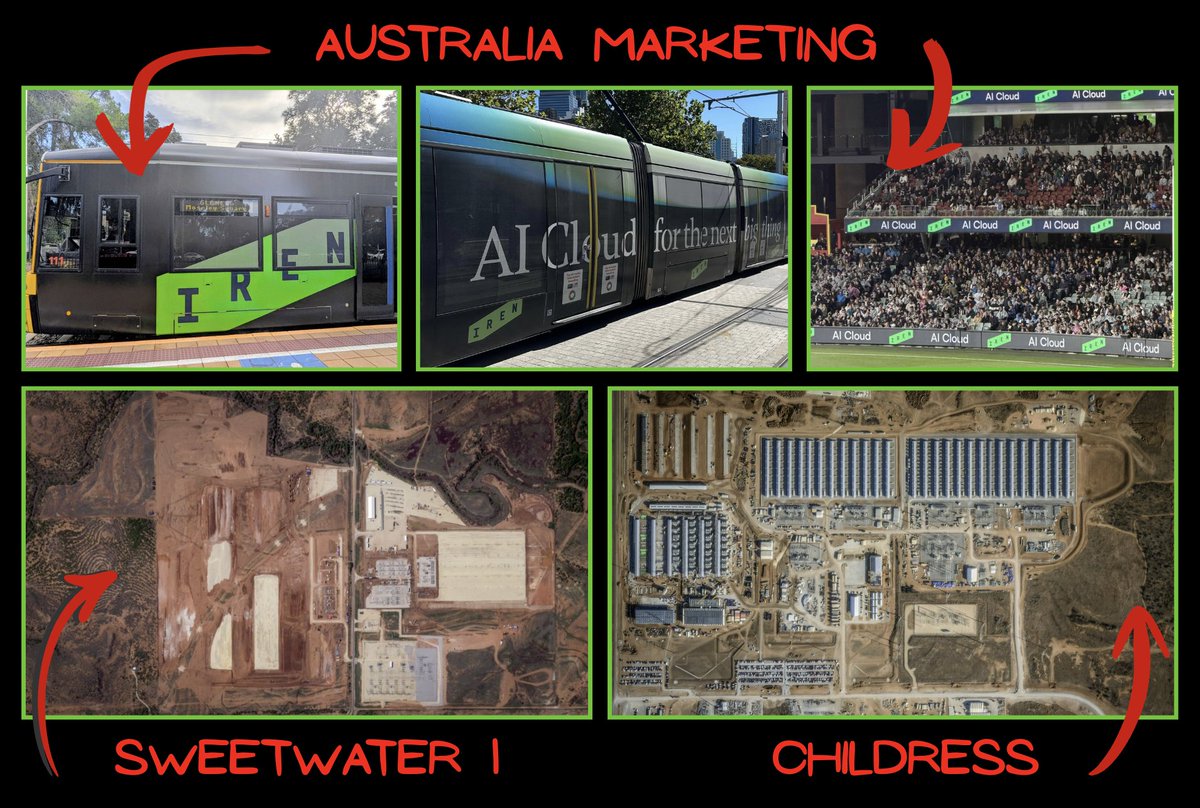
3 Imminent $IREN Catalysts Not many companies have as much going for them right now as $IREN does. While management has been relatively quiet since the last earnings call, I believe we're standing right before a wave of major, thesis defining announcements. 1) Australia Expansion Given that Australia is where $IREN was incorporated, one might expect the company to already be operational there. Yet as of today, Australia remains merely the home of its HQ. That will likely change very soon... Just a couple of months ago, $IREN announced a sponsorship of the Sydney Swans, a prominent AFL team. As an isolated event, I wouldn't have thought much of it. The company's CEO is an Australian Football coach himself, so it could have simply been management paying homage to the company's roots. However, this sponsorship was accompanied by a sweeping marketing campaign across Australia. $IREN has seemingly gone all out on visual ad spend, plastering full trams with the company's logo and tagline across multiple Australian states, while also putting up new billboards outside Sydney's airport and other notables places. Knowing how cost disciplined management is, I seriously doubt they're burning all this money on nothing. I strongly believe the company is close to unveiling a major expansion into Australia. Currently, there are rumors that $IREN has at least two new data center sites lined up: one in South Australia, and one in New South Wales. With how aggressive the regional ad spend has been, I'd expect any new site announcement to be accompanied by large-scale customer contracts. If I had to speculate on who $IREN's first major customer in Australia might be, I'd wager on Anthropic, who recently announced plans to open an office in Sydney. 2) Sweetwater 1 Energization + Deal $IREN is likely just days or weeks away from energizing its largest site to date; the massive 1.4 GW Sweetwater 1 campus. With data center projects across the industry missing delivery timelines, largely due to an inability to secure reliable power, Sweetwater 1 stands out as a true unicorn. Having this much grid connected power concentrated at a single site is virtually unheard of, and positions Sweetwater as one of the most valuable assets in the sector. Successful energization will undoubtedly elevate $IREN's standing among operators industry wide, putting its execution capabilities on full display while competitors face severe delays and outright project cancellations. Management is also aggressively hiring for the Sweetwater campus, including night shift positions, a strong signal that the company is gearing up to develop new data centers at rapid speed around the clock, 24/7. This tells me we're likely nearing the signing of a new large-scale anchor client deal, possibly with another hyperscaler or frontier AI lab. My expectation is that the first tranche of the Sweetwater build-out will be designed entirely for liquid-cooled Rubins, with commissioning likely sometime in H1 2027. 3) Childress Expansion While Sweetwater is currently getting all the attention, we shouldn't overlook $IREN's first Texas campus; the 750 MW large Childress site. So far, $IREN has contracted 40% of the site's total capacity to Microsoft, 300 MW gross across 4 tranches (Horizon 1 to 4). That leaves 450 MW still up for grabs. With management clearly signaling its intention to fully convert the remainder of Childress into an air-cooled AI cloud campus, the runway potential remains enormous. Over the coming weeks, I'm expecting one of two things: either $IREN announces a new multi-hundred MW cloud contract for Childress, or management lays out a concrete plan to convert the remaining 450 MW into a large-scale cloud hub for multiple enterprise clients. Either way, the conversion of Childress's remaining capacity is likely to begin very soon. As with Sweetwater, the company is also actively hiring night shift HSE advisors for Childress construction, once again signaling an intent to scale development rapidly (night shift = 24/7 construction). On a side note, I'm also expecting the successful delivery of Horizon 1 this quarter to act as a meaningful catalyst for the company's competitive standing in the market. General Thoughts While I've covered each of these topics in depth in previous Substack reports, I believe the time has now come for this wave of catalysts to materialize. It's also worth pointing out that most Wall Street analysts fail to see around the corner when it comes to $IREN's cloud expansion. For the most part, they simply react to what's directly in front of them. That means $IREN is one of the rare stocks where retail investors can front run institutional capital, getting positioned before the catalysts materialize and before Wall Street prices them in accordingly. The irony is that over the past few weeks, retail has been doing the exact opposite: panic selling right before what I expect to be a major re-rate of the stock. Earlier this month I also heard many investors claim that $IREN couldn't move up before new large-scale deals or other catalysts materialized… That's a very dangerous way to think. Markets are inherently illogical. Trying to rationalize them is a mistake not only retail investors, but institutional ones too tend to make. Last year, $IREN's share price increased by over 1,000% from its April lows, purely on the expectation of a deal being close. If you'd waited for the actual announcement, you would have entered around $70… In any case, with these 3 major catalysts in front of us, I'm very much looking forward to the weeks ahead and especially to the Q1 earnings call. NFA, but I wouldn't be surprised if the stock cracks $100 in May. Images S/O: @FransBakker9812, @tempocap2
𝐀𝐠𝐫𝐢𝐩𝐩𝐚 𝐈𝐧𝐯𝐞𝐬𝐭𝐦𝐞𝐧𝐭𝐬 tweet media
English
95
218
1.4K
1M
Phil retweeté
XCap
XCap@XCapitalMgmt·
If I had a direct line to @danroberts0101 (which I don't) I'd say this (after starting with thank you): i. You're solving for optionality at all times. ii. You have an open ATM. Even if you don't intend to draw on it, having a higher share price increases your optionality. iii. Time to compute is a great narrative but it's doing nothing for the stock. iv. Execution has been and will continue to be your greatest differentiation point. Use it. v. Don't wait for May earnings - as you hit milestones throughout Q2 (and beyond), blitz the market with PRs. Why? You will differentiate on proven, consistent execution that competitors cannot match. vi. Horizon 1 delivered? PR. vii. Sweetwater 1 energized? PR. viii. PG and/or Mackenzie (or even Canal) fully contracted? PR. ix. First contract signed for air cooled AI Cloud capacity in Childress? PR. x. Australian datacenter expansion? PR. xi. Datacenter financing for Horizons and/or incremental GPU financing or corporate level debt secured? PR. xii. Sweetwater deal? PR. xiii. Undisclosed sites included in Batch Zero? PR. xiv. Execution in a vacuum lets FUD breathe and reduces optionality. I get that you're hitting a scale where certain developments (e.g., the 10 MW site at PG) are no longer material to the business as a whole, but when the ATM is open, your optionality increases as momentum on execution is made clear. IR is a weapon, not a distraction.
English
31
43
266
47.3K
Phil retweeté
Mario
Mario@Mario20253035·
The man building a trillion watts of compute for America just liked a thread about a former Kremlin tech asset building US AI infrastructure unchecked. This isn’t about tickers. Wake up.$NBIS
Mario tweet media
English
24
4
81
84.4K
Phil retweeté
Jim Liu
Jim Liu@jiahanjimliu·
Speculative Post $IREN: Earnings Call Transcript Notes Some other people may see Dan Roberts, IREN CEO, as over confident or "over playing" his hand, but I disagree. Having studied most if not all @danroberts0101 interviews, it's clear to me that Dan is very ambitions in actions/planning but conservative in words. He drags negotiations out for maximum flexibility but will firmly commit when the time comes. Dan does not hype, and when he says something, it's backed by real discussions. Whether or not the negotiations succeed, we do not know, but Dan speaks in terms of concrete events. Therefore, I find it worthwhile to scrutinize statements made in the earnings call. In particularly, this earnings call had statements that don't make sense to an untrained eye and deviated from previous calls. I will directly quote the Q2 2026 earnings call transcript. You can cmd-f / ctrl-f to verify context: finance.yahoo.com/quote/IREN/ear… (2) Backdrop Right now, IREN investors' biggest questions is: "how will IREN get better contract economics?" or in other words "how are the negotiations going?". @Umbisam pointed out that hyperscalers have the negotiation power because: 1. They might be a cartel to keep prices low. 2. There's only a few of them will billion dollar pockets to buy at the scale which IREN needs to sell. I directionally agree that HS have an inordinate amount of negotiation power but not for the reason @Umbisam pointed out. The main reason is that HS have their own DC buildout and IaaS operations teams. HBM is subjected to points 1 & 2 that @Umbisam makes, but crucially HS cannot make their own HBM. I believe the first MSFT deal had lower topline because: 1. Anchor tenant for site and the entire company. 2. Unproven uptime risk mean that MSFT would use IREN's bare metal GPUs for internal projects instead re-sell them as an extension of Azure compute. If IREN delivers, it would not have to do this risk discount for subsequent HS customers. However the true unlock comes from how ORCL achieved higher topline for bare metal GPUs. You see OpenAI, Palantir, Tiktok all use ORCL bare metal GPUs (1) and it's not because ORCL is better than MSFT, AWS, or GCP. It's because OpenAI, Palantir, Tiktok are all very capable at managing their own software infrastructure and ORCL provides just enough software (bare metal GPUs + Kubernetes). This enables ORCL to split the the HS margins with them. Knowing this backdrop, let's scrutinize the earnings transcript for clues on what type of customer $IREN is negotiating with and what are the dynamics. Time to DC Previously IREN had spoken about time to power. This was the first earnings call when IREN spoke about time to DC. "time to power is critical, but time to data centers is actually the more limiting factor" (2) So there's 1+ customer whose needs are pretty urgent that it's not longer about time to power (years) but time to datacenter (months). After all, IREN has "idle" power capacity and can build DCs within 6-9 months but the customer is concerned about time to datacenter meaning they need something pretty urgently. Air Cooled "We're also seeing hyperscalers and leading enterprises actively pursue both liquid and air-cooled GPU deployments as they work to accelerate rollouts. The increased focus on air-cooled deployments aligns extremely well with our existing footprint of 810MW of already operational air-cooled data centers." (2) Previously IREN had focused on retrofit talks for their Canada DCs. For Childress, TX, IREN-MSFT went with liquid cooled. Now all of a sudden, IREN is talking about their air-cooled deployemnts within their 810MW footprint. Canada only has 160MW so the 810MW must include the Childress DCs. A rationale for the sudden change is that the customer who is concerned with time to DC sees that the standing air-cooled DCs would bring compute up fast enough to meet their needs. Previously IREN had mainly mentioned hyperscalers for their Texas sites. But now IREN is including "leading enterprises". Hyperscalers have planned compute for at least their core business and can sell more or less of their lower priority services if they don't have enough compute. In other words, it's okay for Hyperscalers to not meet some of their lower priority demand. This means Hyperscalers don't need to deviate from their specs and probably wouldn't accept the air-cooled DCs at Childress. This leads me to conclude the customer who is discussing air-cooled at Childress is a leading enterprise instead of a Hyperscaler. There are very few leading enterprises that are not hyperscalers and have 300MW IT of unplanned demand. That's at least a $10-15B five year contract or $2-3B/year depending on GPU type. Multi-Billion Dollar Software Customer "one of the contracts we are negotiating at the moment is a multi-billion-dollar contract where we need to bring a software solution" (2) What kind of software could this be? I'll be the first to admit that IREN is not strong in Cloud software. Dan admits his own view on software: "we continue to think that it is likely to be one of the areas in this space that gets commoditized the fastest". The software likely referred to is Kubernetes for Bare Metal GPUs. You see, what the customer needs IREN to do is setup Kubernetes so that it abstracts away the datacenter. Kubernetes is open sourced by Google so what IREN needs to optimally layout/design the datacenter and configure Kubernetes to reflect the datacenter layout design. In other words, this is not really software. IREN is using Google software and providing the network fabric, storage architecture, cluster topology. This is not easy because there are thousands of connections via networking cables and complex rack/row/failure domain. However this is not a software problem but rather a datacenter design problem. Google's Kubernetes is the software that handles the complexity and IREN just needs to design and setup the datacenter correctly. Additionally, IREN will need observability to monitor when to physically have data center technicians service end of life or degraded parts. This software falls within the realm of IaaS for bare metal, not PaaS or SaaS. Whereas HS can handle everything including providing the DC specs and setting up the hardware side of Kubernetes, some leading enterprises are pure software. Some AI Natives might even be better than HS at software but because they don't have the years of operating DCs. IREN's DC team from Rackforce has operated DCs for over a decade (3) and now they have knowledge transfer from Microsoft on setting up an state of the art training DC. Thus there is no worry that IREN all of a sudden needs to do "software". This is IaaS software that is more about datacenter and hardware knowledge, not PaaS/SaaS software which IREN is not good in. The Right Customer "The focus is on choosing the right long-term partnerships that support durable platform-level growth" (2) IREN has recognized that being plan B for HS is not the optimal way to achieve great economics. Although subsequent contracts with HS will have better economics, the real unlock comes from working with an AI native that needs scale on the magnitude of 4.5GWs. Given all the clues above, I hate that I arrive at the same conclusion as some pumpers. The pumpers got the timing wrong but the client they guess might be right. 1. Who all of a sudden has 300MW IT of unplanned demand they need within 6 months (time to DC)? 1a. Anthropic just raised it's revenue guidance for 2026 by 20% to 55B (5). 2. Who is big enough to sign billion dollar contracts but has no internal DC team and bare metal + Kubernetes setup? 2a. You see most companies that can sign billion dollar contracts have internal DC teams. Anthropic uses bare metal on AWS with Kubernetes setup to abstract away the DC and have no internal DC team. 3. Who is very careful about unit economics and has the HS+ software capabilities to convert software prowess into compute savings? 3a. Anthropic is god-like in software and doesn't need AWS software, GCP software, or $NBIS software. IREN is more than willing to give up PaaS/SaaS margins for IaaS scale. Buying bare metal at HS rates is detrimental to Anthropic's unit economics and Anthropic just needs to find a partner that can match it's scaling. The missing question is whether or not IREN can get <6% debt financing at a large billion dollar scale (so not Dell financing) with Anthropic as the counter party? I think there's a good chance because many are trying to get Anthropic exposure. $ZM went up 10% that one day just because it had invested in an early Anthropic round (6). Hypothesis You see Stargate made ORCL the DC/IaaS arm of OpenAI and Anthropic needs an DC/IaaS provider that's going to give it better margins than HS Clouds has the HS-level power capacity and time to power. With the rest of Childress, SW1, SW2, Oklahoma - IREN has power capacity at the right the time to fit Anthropic's ambitions. It's not seeking PaaS/SaaS margins. Can $IREN be the DC arm of Anthropic?
English
62
66
593
225.6K
M. V. Cunha
M. V. Cunha@mvcinvesting·
🚨 JUST IN: DataOne's CEO has denied rumors that $NBIS' data center in Vineland, New Jersey will expand to 1 GW. According to him, there isn't enough land to support that scale, and capacity shouldn't go “way above” 350 MW. Source: City of Vineland Town Hall Meeting
English
18
12
325
74.5K
Phil retweeté
𝐀𝐠𝐫𝐢𝐩𝐩𝐚 𝐈𝐧𝐯𝐞𝐬𝐭𝐦𝐞𝐧𝐭𝐬
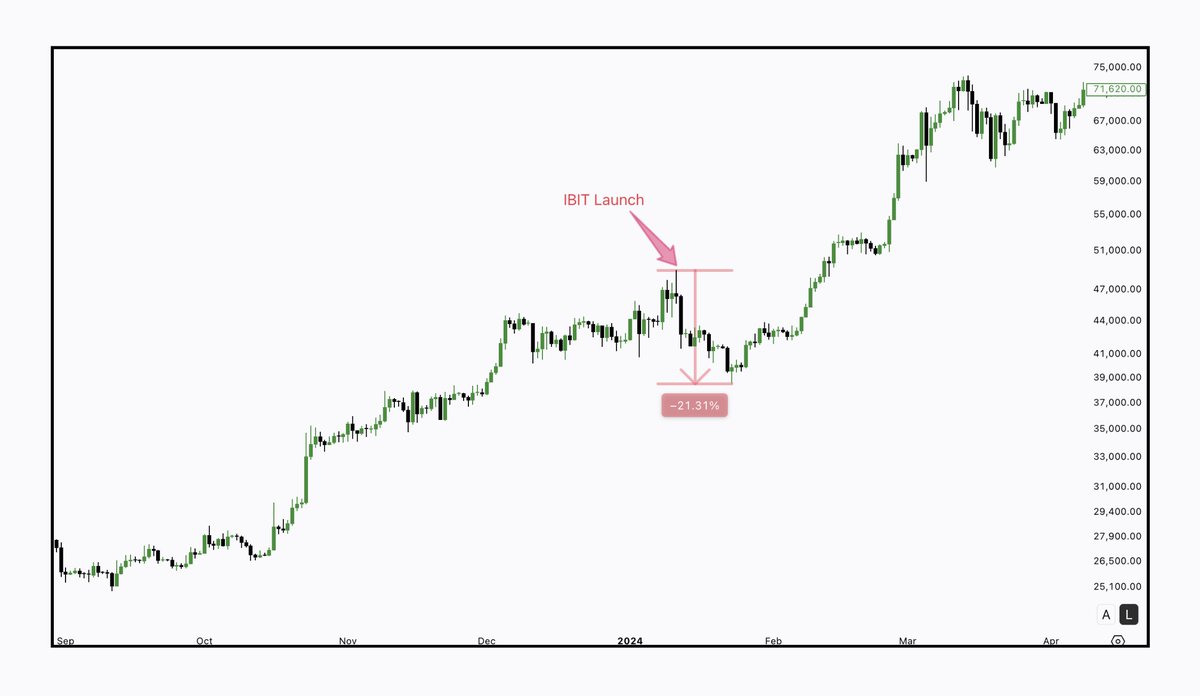
$IREN's share price… I’ve read many different takes on why $IREN is supposedly on this downward trajectory. Some claim it’s due to $BTC weakness, others say it’s just distress in the AI sector. Either way, a large number of $IREN shareholders do seem concerned and wonder if we have already put in a long-term top. In this post I’ll unpack all of it & provide you with my take on $IREN's recent share price performance. First of all, even though Bitcoin’s price action has been disappointing over the past couple of months, I doubt it has had a significant impact on $IREN's share price performance. Yes, $IREN is still one of the largest "BTC miners", however, its share price has been totally detached from Bitcoin’s price action for a while now. In my opinion, $IREN's recent dip in share price isn’t just unsurprising, it’s something that was long overdue anyway. A stock can’t go up in a straight line forever… From early April until last week $IREN pulled a >15x – over a span of just ~7 months. You hardly ever see these kinds of moves in the stock market, not in a timeframe this short. So far, this has been a generational run, one that was unsustainable at this current pace. I do think we have much more to go before putting in a long-term top, but the share price taking a breather and resetting sentiment is exactly what you want to see if you are a long-term holder. This correction creates the base for the next round – it’s standard market psychology & cyclicality. I also think most investors have the wrong perspective on price action in general. And I mean “perspective" literally. Most people look at $IREN's chart on a linear scale (pic 1) and see a catastrophic collapse in share price over the past ~10 trading sessions. Meanwhile, I exclusively look at the logarithmic chart of $IREN (pic 2) and all I see is a small dip in the grand scheme of things. On a linear chart, each step on the y-axis is the same dollar amount, while on a logarithmic chart, each step is the same percentage move. So on a log chart, a move from $5 to $10 (100%) takes up the same vertical space as a move from $20 to $40 (also 100%), even though the absolute dollar move is much larger in the second case. That’s why log charts are so much better for comparing the present to the past. Every bit of vertical distance represents the same percentage change, so you keep proper perspective on drawdowns and rallies. On a linear chart, once a stock has run 10–15x, the right side of the chart gets vertically “stretched,” and any pullback looks like a total collapse. In $IREN's case, the current dip looks like the worst crash ever on a linear chart, even though we’re “only” down a bit over ~40% from the recent highs. Earlier this year, during the April flush, we were down roughly 70% from the local highs we made in December. In percentage terms, that April move was far more violent. The log chart shows this clearly; the linear chart doesn’t. One reason why I was so amazed by $IREN when I discovered the stock early last year was the fact that its log chart looked so volatile. With most stocks, volatility is contained in a tight range on a log chart. What may appear as a volatile stock, even on a log chart, may just be minimal moves in % terms. However, $IREN is a different beast… Its high volatility means corrections may be violent, but the potential upside is so much greater than with most other stocks. You can easily configure your current chart setup into a logarithmic one on TradingView (not a sponsor, but I use this free tool all the time to look up charts). Now, getting back on topic. I believe it comes down to 3 reasons why $IREN is currently dipping: 1) It ran up too far, too quick, without any major pullbacks in between 2) Buy the rumor, sell the news 3) Sector weakness Point 1 I just discussed – every asset needs sentiment resets once in a while, completely normal and natural market behavior. Regarding point 2, it’s pretty obvious that last week was a classic "buy the rumor, sell the news event" (very common in markets). Many $IREN holders bought the stock in anticipation of a major hyperscaler deal, buying the stock BEFORE the deal, believing the stock would pump more once a hyperscaler agreement actually materializes. However, the opposite happened; the stock dropped soon after the deal was made public – primarily because there were no buyers left – everyone had already bought the stock beforehand. In market terminology you also call this "priced in". The market had already priced in a deal of that magnitude before it even happened. These sorts of "buy the rumor, sell the news" events are incredibly common in all types of markets. Whenever there is an obvious “event” that most market participants can anticipate beforehand (evident from price rallying up prior to the event), chances increase drastically that the good news has already been priced in and that "day x" will be more disappointing than most expect. Another high-profile example of a buy the rumor, sell the news event was the launch of Bitcoin’s first-ever spot ETF ( $IBIT ) in early 2024. When it became obvious that the launch was imminent, BTC rallied strongly in the weeks and months prior to it. Then on launch day (11. Jan, 2024) BTC started a sell-off that continued for a couple of weeks. Of course, BTC recovered and nearly doubled soon afterwards, but the ETF launch was still a "buy the rumor, sell the news" event. These types of events can also quickly snowball into a larger correction for a few psychological reasons. As I said before, many investors buy the asset regardless of fundamentals or even chart technicals, solely on the basis of thinking "they are early", because day x hasn’t happened yet (in $IREN's case day x = hyperscaler deal). Now that the first deal has happened, that kind of buyer isn’t there anymore. Moreover, some short-term investors or traders got into $IREN with the sole intention to sell the stock after the first major deal gets announced – anticipating a large pump on day x and then selling out on top. We got a brief pump when the deal was announced and that group of people sold, leading to selling pressure at the highs. Others with a similar plan may have wanted the stock to rally a bit more, but once they saw the stock dipping, they may have gotten spooked and sold a portion or all of their holdings soon after, leading to even more selling pressure. Many who took profit in the $65–79 range likely had positions that were up multiples on their entry price and so de-risking their portfolio at that point seemed reasonable. Now, sub-$60 and even sub-$50 we are getting into the "panic range". Selling pressure at these levels primarily comes from "investors" who are panicking about $IREN's long-term potential. They might think the stock has put in a long-term top and its best days are over. They see the recent dip and are getting cold feet – selling, just to make the bleeding stop. They might also believe the economics of the company's recent deal with Microsoft can’t be good because, after all, we are down significantly since the deal was announced. ... They are fooled by efficient market theory and believe "the market is trying to tell them something", i.e. that the deal was bad. They may even think that any new deal that’s announced in the future may just lead to further drops in share price – they are basically rationalizing current price action and extrapolating from it (something you should never do, unless you are doing it from a market-psychology POV). Now finally, we also have general AI sector weakness on top of everything else, which is compounding the downside pressure. $CRWV & $NBIS recently had earnings and both fell short to some extent. Nebius missed on revenue expectations & CoreWeave had to revise down their Q4 guidance due to their reliance on third-party developers who are behind delivery schedules – something $IREN doesn’t even have to deal with because they develop their data center infrastructure in-house. One might think that hiccups amongst competitors should be a good thing for $IREN, after all this is a very competitive industry. And with that assessment you might be right, but as I alluded to before, the market is severely irrational and won’t price these factors in immediately. Instead, these negative industry-related news items are short-term headwinds for the entire sector, because of algorithms that trade sector-wide and un-informed "investors" that see CoreWeave's colossal dump after earnings and think something like "Uhh, $CRWV crashed big-time after its earnings, the same might happen with $IREN, because they are kind of the same thing right? Let’s sell just in case" … Not realizing the primary reason why $CRWV sold off in the first place is due to something that could never happen to $IREN (third-party developer issues). So, where does this leave us and what are my expectations going forward? After having spent 1000s of hours researching this company, this short-term price action doesn’t bother me in the slightest – I’m still incredibly bullish on $IREN over the mid to long term and nothing has changed in that. If anything, I’m now more bullish AFTER this $MSFT deal since it now marks a thesis-defining milestone in my investment. There are some industry-wide risks that I’m monitoring closely, but I firmly believe $IREN is in an incredibly strong position to weather any potential macro headwinds. I do, however, believe that these are the times that truly test investors and show the importance of building high conviction in your holdings, which is only possible when you understand your holdings from the inside out. If you haven’t done the research, you’ll undoubtedly make irrational decisions along the way – primarily due to a lack of data. Conclusions that may seem logical at first could be missing the mark completely if you simply had more knowledge. Now that retail market participation is at all-time highs, markets are even more prone to violent swings in both directions, catching many off guard who haven't done sufficient due diligence on their holdings. My upcoming “project” is tackling exactly that need and tries to simplify this research process in a time-saving & engaging way for retail investors & institutions alike. I’m looking forward to sharing more about it over the coming 24 hours… Until then, have a good one ;) Cheers! ✌️
𝐀𝐠𝐫𝐢𝐩𝐩𝐚 𝐈𝐧𝐯𝐞𝐬𝐭𝐦𝐞𝐧𝐭𝐬 tweet media𝐀𝐠𝐫𝐢𝐩𝐩𝐚 𝐈𝐧𝐯𝐞𝐬𝐭𝐦𝐞𝐧𝐭𝐬 tweet media
English
134
204
1.4K
236.9K
Phil retweeté
Mike Alfred
Mike Alfred@mikealfred·
WHERE IS JIM CHANOS!?
English
172
77
1.3K
114.1K
Phil retweeté
Futurum Equities
Futurum Equities@FuturumEquities·
$IREN has ~3 gigawatts of secured power dedicated to its data centers. What makes this even more important is that power is quickly becoming the new currency of the AI economy. GPUs are useless w/o energy & hyperscalers don’t have dedicated power infrastructure at this scale.
Futurum Equities tweet media
English
23
85
577
133K
Phil retweeté
IREN
IREN@IREN_Ltd·
“We’re focused on AI Cloud - moving up the value chain, capturing more of the economics by providing that compute, and building relationships directly with end customers” Catch the replay of $IREN Co-Founder & Co-CEO @danroberts0101 on @CNBCOvertime discussing the latest trends shaping AI infrastructure with @MorganLBrennan and @jonfortt
English
49
188
1.2K
306.4K
Phil retweeté
Money Qubit
Money Qubit@moneyqubit·
They say ‘don’t put all your eggs in one basket.’ $IREN says: sell the basket, buy $IREN.
Money Qubit tweet media
English
9
18
192
30K
Sam Kampner
Sam Kampner@KampnerSam·
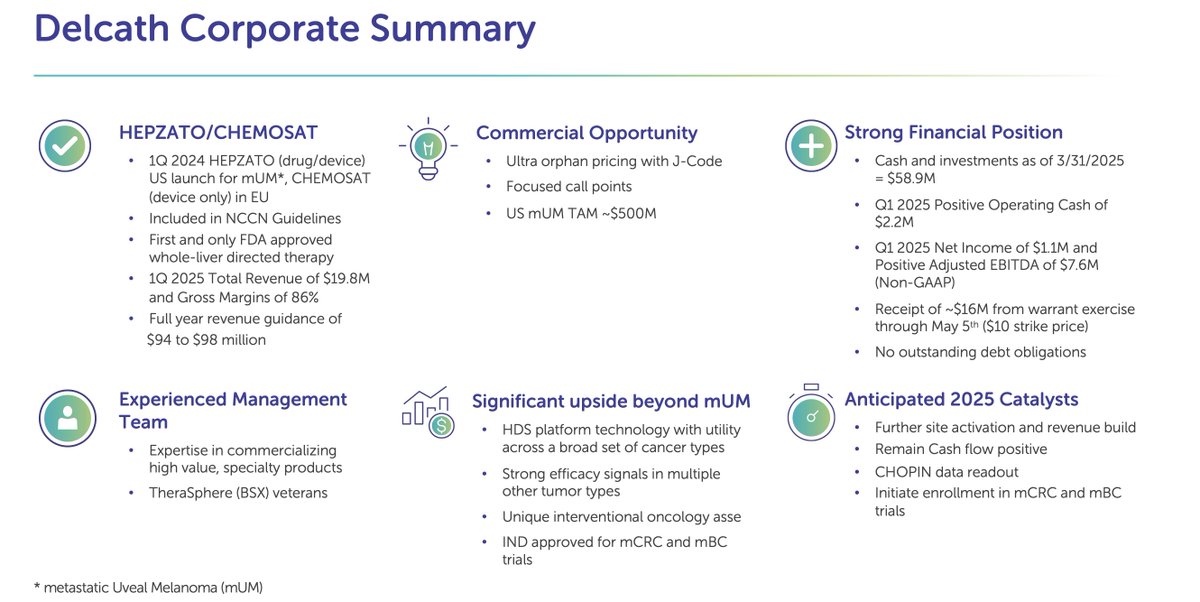
Thanks for the reply! Current TAM is near $1B, but will expand to multiple billions once other phase 2 studies are completed (2027 & 2028). Adoption is a key factor here. The treatment itself is non-discretionary (and there are no good alternatives), but it comes down to the rate of adoption by hospitals. The FDA mandated training program for new centers is the primary bottleneck to growth, so tracking the number of activated treatment sites is key. At the same time, once a hospital invests significant resources into training, the high switching costs make them incredibly "sticky". This is the key metric to focus on in the next earnings.
English
1
0
1
296
Sam Kampner
Sam Kampner@KampnerSam·
I've been watching $DCTH closely. It's not often you see a company pivot from 30+ yrs of R&D cash burn to a profitable, high-growth operation. This story is too compelling to ignore. Putting the final touches on my full investment thesis now. Releasing it in the coming days.
English
3
2
39
3.8K
Phil
Phil@Real__Phil·
@johnbarker44 Do you think they will be GM’s sole supplier for thermal barriers in 2 years? By then GM should be using prismatic cells. LG & Samsung both have their own thermal barriers and are working closely with GM on the new batteries. Good luck.
English
0
0
0
219
John Barker
John Barker@johnbarker44·
Obvs $ASPN can go lower with the whole world stacked against it, but it’s as cheap as all get out and has MAJOR support around $5.50. Last time it was lower was mid-2019! Priced like a going concern risk, but will likely be 2-5x higher in 2 years
English
3
0
6
2.3K
Phil
Phil@Real__Phil·
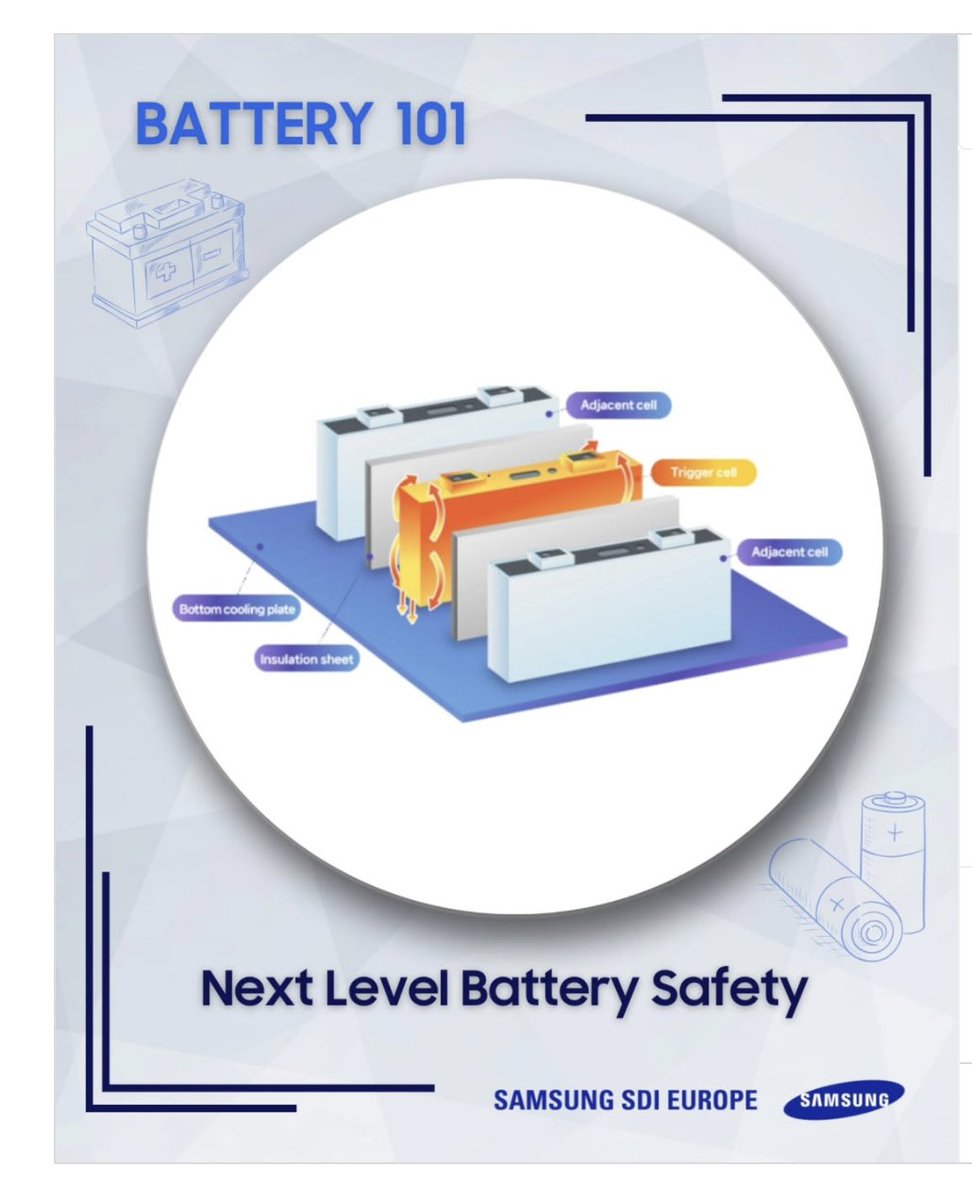
One thing is for sure these battery companies are not buying PryoThin from $aspn
Phil tweet media
English
0
0
0
281
Phil
Phil@Real__Phil·
Samsung SDI has also patented aerogels for EV batteries. patents.google.com/patent/US20250… I don't think GM will use $ASPN for the new battery design. I expect they will rely LG & Samsung to supply the thermal barriers and lower the costs at the same time.
English
1
0
1
252
Phil
Phil@Real__Phil·
@Mikimmykim @sivapatibandla1 They are working on the new battery jointly. Kurt Kelty has started they will lower costs and it just doesn’t make sense to have $Aspn as a sole supplier.
English
1
0
0
232
Siva Patibandla
Siva Patibandla@sivapatibandla1·
$ASPN's guide is partly due to inventory normalization and partly due to conservative assumptions. Thermal Revs dropped from $90M in Q3 to $70M in Q4, so inventory normalization has already happened, maybe another $20M of impact in Q1. The Q3,Q4 rev rate for Thermal was never sustainable, as they imply 100,000 , 77,000 car sales per quarter. As GM looks to keep inventory levels at 60-70 days, this means ASPN revs will closely track GM's sales in 2025, as there won't be any additional sales due to inventory buildup or yield related issues. If we assume current sales trend hold, GM will likely sell 45-50k EV's(normal case) per quarter in 2025. Which implies ASPN thermal revs(including Honda@15,000 per Q) of about $58M, add $42M of energy rev, implies starting Q2, ASPN should go back to $100M rev rate. This is broadly inline with the current Q1 guidance of $75M-$95M. Excluding $40M of energy rev, thermal rev expectation is around $35M-$55M. Basically the conservative numbers come down to some more inventory normalization and ASPN conservatively believing GM and Honda sales will stay stagnant this year. I strongly believe the CEO and CFO need to be held accountable for this, they kept drumming up record results and never ever highlighting that this growth is not sustainable. My theory is they did that so they could keep stock price artificially high to raise money to fund the GA plant. My prediction : Revs stay flattish(<5-10%)this year, before accelerating again in 2026 and beyond. Still a growth story, but a greedy management team screwed everyone over.
English
3
2
21
5.2K