TommyJR

4.6K posts

TommyJR banner
TommyJR

TommyJR

@tempocap2

Chart & Patterns

Katılım Temmuz 2023
345 Takip Edilen6K Takipçiler
Sabitlenmiş Tweet
TommyJR
TommyJR@tempocap2·
$ASTS glad we got the 🔷🔷🔷 We also got the breakout follow through Maybe it retests maybe it just goes 📈 It's fully valued ($37b) given minimal revs but in terms of strategic asset value this thing should be worth $100b+ in short order
TommyJR tweet media
Sun Liao@sunxliao

$ASTS almost every space stock looks like this right now... I love it... Triple blue (1D) diamonds in our Startup.io indicator suite and slicing resistance levels like it's nothing... Watching that purple resistance tomorrow and then probably goes higher?

English
4
7
68
12.8K
TommyJR retweetledi
Marko Matvikov
Marko Matvikov@MarkoMatvikov·
Labor clearly can’t defend why its CGT changes extend beyond property if the intent is to remove tax incentives for property. But I’m seeing a new wave of defence being that a) they only apply to the ‘wealthy’ and b) ‘small businesses’ are exempt – so let me tell you why these are categorically wrong. • The ‘wealth’ data is fundamentally flawed: It’s based on single year transaction data, rather than lifetime earnings. About 90% of Aussie taxpayers earn under 135k per year, so when an investor sells a long-held asset, that single transaction for a single year pushes them into the ‘top 10%’. This doesn’t mean they’re in the top 10% of wealthiest Aussies – it simply means that for that specific year, they earned over 135k, which could be off the back of decades of earning much less per year. • The small business concessions aren’t indexed: The $2m threshold for annual turnover and $6m threshold for asset value haven’t increased for almost 20 years (a problem that extends to many of our taxes). This means modest family businesses are being dragged into a tax regime originally designed for much larger operations – specifically, where it was designed to exempt 95% of businesses entities in 2007, it now only exempts about 60% in 2026 (and rapidly shrinking). • The path to building wealth is being cut off: Financial independence is rarely achieved by earning a wage and spending it. For people to become comfortable or modestly wealthy, they generally need to save and invest the wages they earn. Enforcing a minimum 30% floor rate on all forms of capital gains, even for people whose income puts them below the 30% marginal tax bracket, makes it harder for wage earners to build wealth. The bottom line is that this budget suppresses aspiration and socio-economic mobility – and I don’t think that’s what Aussies voted for at the last election.
English
24
44
262
5.9K
TommyJR retweetledi
Rosanna Prestia, MBA
Rosanna Prestia, MBA@RosannaInvests·
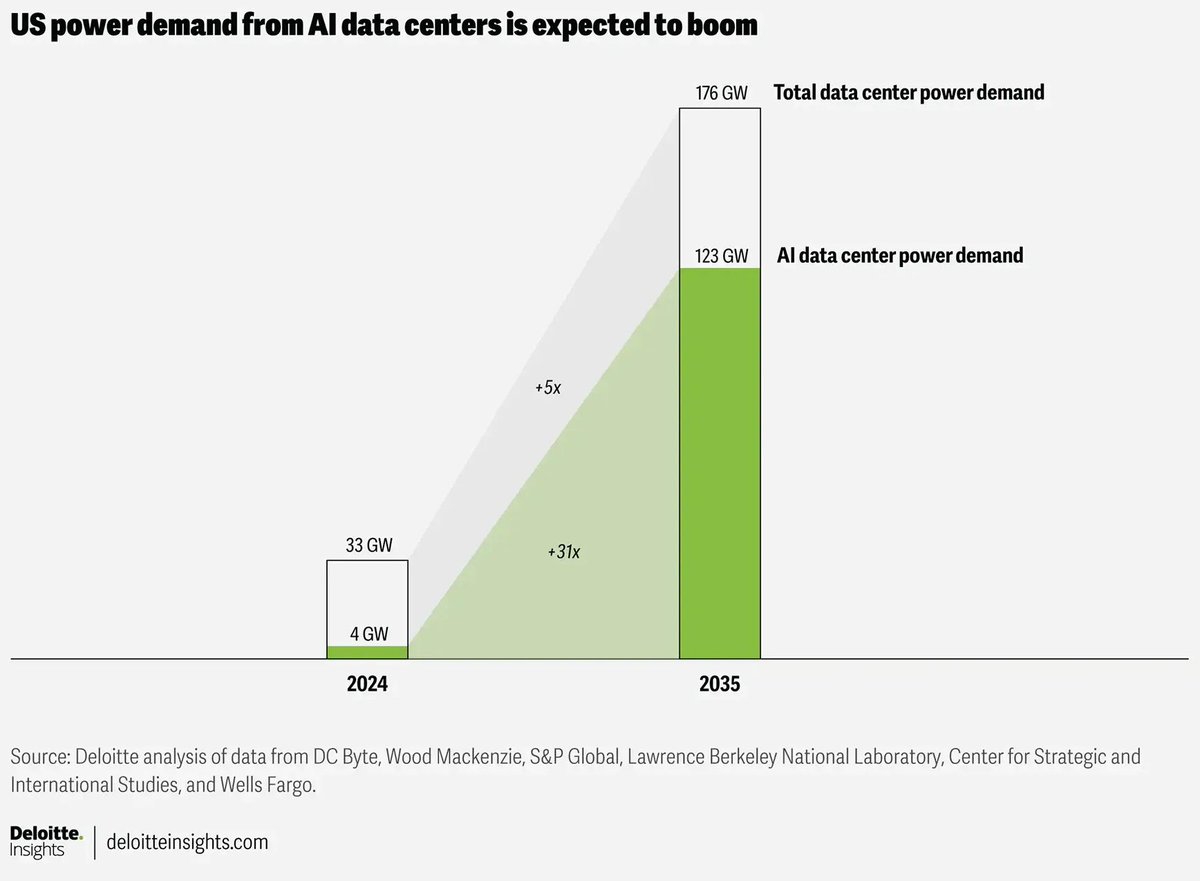
⚡ The AI POWER buildout is real. Here's the FULL stack: THE BITCOIN-TO-AI POWERHOUSE: 🏭 $IREN - IREN Limited, 100% renewable power, B300 deployments live, scaling fast on Cerebras-class customers THE NEOCLOUD ANCHOR: 🏭 $NBIS - Nebius Group, NVIDIA $2B strategic investment, $17.4B Microsoft contract + $27B Meta deal, full-stack AI cloud across 16 global sites THE QUALITY HYPERSCALER HOST: 🏭 $APLD - Applied Digital, $31B contracted lease revenue across 4 AI Factory campuses, 1.2 GW under contract, investment-grade hyperscalers THE CIPHER PIVOT: 🏭 $CIFR - Cipher Digital, $11.4B contracted revenue, 600 MW AWS + Google/Fluidstack leases, fully rebranded from BTC mining to AI HPC THE CEREBRAS ANCHOR PLAY: 🏭 $DGXX - Digi Power X, $2.5B Cerebras 10-year MSA, 400 MW secured across AL/NY/NC, zero debt + cash flush THE COLOCATION SCALER: 🏭 $WYFI - WhiteFiber, 99 MW NC-1 operational + 200-300 MW expansion, capital-light bridge model with $160M Paris deal, Cerebras pursuit THE NEOCLOUD LEADER: 🏭 $CRWV - CoreWeave, NVIDIA Preferred Partner, hyperscaler-class GPU cloud, multi-billion contracted revenue, AI inference workhorse THE POWER GENERATION ANCHOR: 🏭 $VST - Vistra Corp, nuclear + gas + renewables fleet, AI data center offtake deals, Constellation-rival positioning THE GAS TURBINE BACKLOG: 🏭 $GEV - GE Vernova, gas turbine backlog stretched to 2028+, SMR partnerships, the AI data center power buildout backbone THE FUEL CELL ONSITE POWER: 🏭 $BE - Bloom Energy, $20B backlog, Oracle + Brookfield + AEP deals, on-site AI power generation moat, 55-day delivery vs 90-day promise AI compute is meaningless without power. Hyperscalers aren't building data centers - they're building power plants that compute. The compute layer gets the headlines. The power layer captures the margin. Read the tape. Position accordingly. 👀
Rosanna Prestia, MBA tweet media
English
8
29
140
9.5K
TommyJR retweetledi
Daniel Roberts
Daniel Roberts@danroberts0101·
Childress. Liquid cooling online.
Daniel Roberts tweet media
English
172
267
2.9K
431.6K
TommyJR retweetledi
Freedom By 40
Freedom By 40@Freedom_By_40·
Freedom By 40 tweet media
ZXX
1
2
25
2.7K
TommyJR retweetledi
Rosanna Prestia, MBA
Rosanna Prestia, MBA@RosannaInvests·
The asymmetric setup most investors will recognize too late:👀 $SIVE sits at ~$2B mcap today. The InP chokepoint of AI photonics. Four AI infrastructure pillars. One company. The CPO market alone is projected at $20B by 2036 (37% CAGR). If $SIVE captures just 5% of the External Light Source sub-market: → $1B revenue → At 10-15x premium photonics multiple → $10-15B mcap → 5-7x from here That doesn't even count: ✚ LiDAR ramp (Aeva/NVIDIA Hyperion Q4 2026) ✚ 5G/6G mmWave commercialization (Tachyon) ✚ Defense program expansion (NEMC EW STAR) ✚ Jabil custom transceiver scale-up ✚ Nasdaq New York dual listing unlock ✚ U.S.-Sweden TPD bilateral cooperation tailwinds When $LITE and $COHR re-rated on NVIDIA's $2B investment, the picks-and-shovels thesis was validated. $SIVE is the smallest, most concentrated InP pure-play of the three Western suppliers. The market hasn't priced this yet.🤯 When it does, the entry isn't here anymore.🚀 Long $SIVE $SIVEF
English
9
14
87
56.6K
Rittenhouse Research
Rittenhouse Research@RHouseResearch·
@jaminball Lol, IREN does not have 210MW online / active. They have ~10MW online / active, as they did ~$34MM of “cloud” revenue last quarter vs. $2B+ for CoreWeave and ~$400MM for NBIS. Bucketing them in the same category as CRWV and NBIS is diabolical.
English
5
0
45
3.3K
TommyJR retweetledi
Leo Edge
Leo Edge@LeoCapital_01·
$ASTS closed at ~$106 heading into a long weekend. Take a breath. Here's what's happening behind the scenes while the market is closed. Every analyst at Goldman, Morgan Stanley, Deutsche Bank will pull apart the SpaceX S-1 this weekend. They would be modeling @Starlink 's $11.4B at 63% margins. They will be sizing the $740B D2D TAM. And they would be looking at the named competitor in that filing $ASTS . Those analyst reports hit desks Tuesday morning. Fresh eyes. New models. Public comparable identified. All three BlueBird satellites are confirmed ready for June launch. Next week we should hear the specific launch date. Once that gets pinned on the calendar, it becomes real for every investor still on the sidelines. SpaceX IPO roadshow starts in two weeks. Starlink will be the most talked about business in finance for the next month. Every conversation about Starlink Mobile is a conversation about the D2D market that $ASTS leads in technology and carrier partnerships. New investors and retailers will discover $ASTS through SpaceX's own story. What I expect in June: $ASTS announces the next batch of satellites for July launch around the same time BB8-10 go up. If manufacturing cadence is proven, the market stops debating whether they can build satellites and starts pricing in the full constellation. That's the shift from "can they execute" to "how fast can they scale." Things are becoming routine at $ASTS . Satellites built. Satellites shipped. Satellites launched. That's the biggest catalyst of all i.e. when execution becomes boring, the market pays up. Now the part I want to say directly. I know a lot of you are sitting on gains right now and thinking about taking profits over the weekend. That's your call. But here's what I learned trading $TSLA for years. I exited momentum multiple times thinking I'd buy back on a dip. Sometimes I did. Sometimes the stock never came back to my exit price and I watched it run without me. The times I missed the re-entry cost me more than every dip I ever sat through. Building a thesis is the first hard thing. Building conviction is harder. But the hardest thing is doing nothing while the thesis plays out - sitting through the red days, the bear posts, the volatility, the urge to trade around your position, or taking profits and rotating into something shinier that showed up on your X feed. I'm not setting price targets. I don't call tops or bottoms. If you want short-term technical levels, @Reformed_Trader charts have been solid - You do You. What I will say: partnerships are inevitable but useless without hardware in orbit. The hardware is going up next month. The partnerships (google, meta, anduril) will follow. The analyst coverage is coming. The institutional discovery is happening right now over someone's morning coffee at a long weekend house in the Hamptons. Let it cook. $ASTS 🛰️
English
52
86
664
48.9K
TommyJR retweetledi
Paul Bassat
Paul Bassat@PaulBassat·
The federal budget unintentionally sparked the debate we need to have as a country and has given voice to a large number of people who have never expressed themselves publicly before. The debate is about the sort of country we want to be and the role of ambition, incentives, aspiration and wealth creation. As much as some of us might hate some of the policy Initatives in the budget, we should be thrilled that we are finally having the debate we need to have.
English
20
29
194
20.5K
TommyJR retweetledi
Geoff Wilson
Geoff Wilson@GeoffWilsonWAM·
The new CGT must be stopped. It’s war on the aspiration and ambition of all Australians. "If you’re disincentivising investment in growth companies, you’re not only hurting investors — you’re hurting Australia’s long-term prosperity."
Geoff Wilson tweet media
English
75
200
856
12.9K
TommyJR retweetledi
Chris Brycki
Chris Brycki@chrisbrycki·
The CGT debate is missing this simple solution. theaustralian.com.au/wealth/investi… “An argument often raised is that labour and capital should be taxed more similarly. That sounds politically appealing, but it ignores some important economic realities. First, investing involves risk and time in a way ordinary wage income doesn’t. Investors are putting already taxed savings at risk and there is no guaranteed return, no minimum wage, no sick leave, and very often significant losses. Second, economies rely on people willing to defer consumption and commit capital towards businesses, housing and innovation. If the after-tax reward for taking long-term risks falls too far, less capital gets invested and more gets consumed, parked in lowerproductivity assets such as cash or moved offshore. Third, capital is mobile globally. Entrepreneurs and investors can choose where to build companies and allocate capital. If Australia taxes long-term investment much more heavily than comparable countries, over time that risks pushing investment, businesses and talented workers elsewhere.”
Chris Brycki tweet media
English
47
47
327
14K
Jim Chalmers MP
Jim Chalmers MP@JEChalmers·
We’re delivering a lot of tax reform in the Budget – here are the facts.
Jim Chalmers MP tweet mediaJim Chalmers MP tweet mediaJim Chalmers MP tweet mediaJim Chalmers MP tweet media
English
1.3K
244
665
56.3K
TommyJR retweetledi
𝐀𝐠𝐫𝐢𝐩𝐩𝐚 𝐈𝐧𝐯𝐞𝐬𝐭𝐦𝐞𝐧𝐭𝐬
My take on @danroberts0101 new post $IREN Co-CEO just dropped a beautifully written thread on the company's compounding competitive advantages. Seriously, a must read for every $IREN investor or folks who are on the fence. My highlights: - Dan confirmed that the 60 MW cloud contract with $NVDA is in fact measured in 'gross' MW, not IT. That was already obvious to me based on the earnings call material, however, it's great to get definitive confirmation. The implications of this is ENORMOUS. The $NVDA contract has incredible economics, something I've analyzed extensively in my upcoming $IREN deep dive (released in a couple of days on Substack). - Dan firing shots at the likes of $NBIS & $CRWV: "And the asset-light neocloud trying to compete by renting capacity is discovering that sites were locked up years ago, and the operators utilizing them aren’t subletting. By the time new entrants solve for land, power and permitting, IREN will have gigawatts online, execution track record, and customer relationships that took years to build. That gap doesn’t close. It compounds." This is by far my favorite quote coming out of Dan. Eventually, everyone will realize that the real advantage $IREN has over the rest of the neo-cloud sector, is the fact that they are the only provider that's 100% vertically integrated. They don't have to deal with any land-lords. They don't have to pay billions to $BE to secure fuel cells in a desperate attempt to salvage a project that is tied to a large customer contract. $IREN is in control of its own destiny, and eventually that will show up in the bottom line (profits). The “asset-light” model never works in an infrastructure-heavy industry. It works for hardware, when you are the high-margin designer and outsource the manufacturing process to a specialized entity. But it doesn’t work when the infrastructure itself is the product. In cloud, the value is not just in having access to GPUs. The value is in controlling the full stack, which mostly consists of physical infrastructure. If you outsource all of that to colocation partners, you are not building an AI factory. You are renting someone else’s factory, layering a spread on top, and hoping the economics still work after the landlord, the power provider, the OEM, and the lender have all taken their share. That model can look attractive in the early innings because it allows rapid capacity announcements without heavy upfront CapEx. But structurally, it leaves the operator with the worst part of the value chain. I'm really looking forward to comparing the net income lines between $IREN, $CRWV, and $NBIS a few years from now. I wouldn't be surprised if two out of the three remain unprofitable by then. - I really enjoyed Dan's section about becoming a global cloud provider. He did a great job in explaining the importance of being locally present in the markets you want to source customers from. Not just due to local proximity for inference, but also due to compliance & sovereignty. These were my highlights, I'll let you discover the other gems yourself. This is easily Dan's best post and I think it does a lot in terms of IR, especially as it's coming from him; the co-founder and co-CEO of $IREN. As mentioned earlier, very soon I'll be releasing a new deep dive on $IREN. It goes deep into the implications of the $NVDA partnership and Mirantis acquisition, including a bunch of different topics worth exploring. So far, the report is 30 pages long (including graphs / images) and I'm in the process of finalizing it. Honestly, one of my best deep dives to date. I know I'm saying that for each release, but the depth and quality of our work is undoubtedly increasing. Can't wait to publish it. Cheers guys! ✌️
Daniel Roberts@danroberts0101

𝐓𝐡𝐫𝐞𝐞 𝐋𝐚𝐲𝐞𝐫𝐬. 𝐎𝐧𝐞 𝐂𝐨𝐦𝐩𝐨𝐮𝐧𝐝𝐢𝐧𝐠 𝐀𝐝𝐯𝐚𝐧𝐭𝐚𝐠𝐞. 𝐓𝐡𝐞 𝐈𝐑𝐄𝐍 𝐓𝐡𝐞𝐬𝐢𝐬. There's been a lot happening at IREN recently. Expansion across North America, Europe and Asia-Pacific. The NVIDIA partnership. The Mirantis acquisition. New GPU deployments. New customer discussions. A growing global footprint. Underneath all of it is a fairly simple view of where the world is heading, and a deliberate strategy for how we position IREN within it. That strategy is built on three layers. Together, they compound into a structural advantage that gets harder to replicate every quarter we execute. Layer 1: Physical infrastructure. Power, land, substations, data centers, cooling. The foundation that everything else sits on. Layer 2: Compute infrastructure. The GPUs, servers and networking that go inside those buildings. Deployed at scale. Generating revenue. Building execution track record. Layer 3: Software and operational capability. The orchestration, deployment tooling and enterprise expertise that makes the first two layers work harder for customers, and opens the door to a broader, higher-value market over time. Layers 1 and 2 are where the overwhelming majority of IREN's value is being created today. Layer 3 is where that advantage compounds further over time, but only because Layers 1 and 2 are built, owned and controlled at scale by IREN, not subscale nor contracted from a third party. Think of Amazon. They didn't win e-commerce by building a great website. They won it by controlling the fulfilment infrastructure at a scale nobody else could replicate. The foundation you don't control becomes the ceiling on your business. That is exactly how we think about IREN. The physical infrastructure - the land, the power, the substations, the data centers - is owned and controlled by us. The compute deployed into it generates the revenue and execution track record. And the software, orchestration and enterprise capability we are more methodically building on top is what turns the total product into a vertically integrated AI Cloud platform that compounds over time and deepens into a competitive moat. AI is still early. The bottleneck is increasingly physical. And we have spent eight years building the foundations.

English
72
107
1.1K
174.5K