bee

39.4K posts

bee

bee

@thebee

Advocating for harm reduction

Melbourne Inscrit le Şubat 2007
439 Abonnements346 Abonnés
bee retweeté
Prohibition Does Not Work
📝 READ THIS from our Spokesman @Tim_Andrews in @brussels_report 👇 The Dutch experience is a textbook example of policy backfiring. You cannot ban demand out of existence. What this policy has done is push consumers out of the regulated market and into illicit channels. Some are even being driven back to smoking. That is the opposite of what public health policy should be. brusselsreport.eu/2026/04/16/the…
English
1
5
6
139
bee retweeté
Charles A. Gardner, PhD
Charles A. Gardner, PhD@ChaunceyGardner·
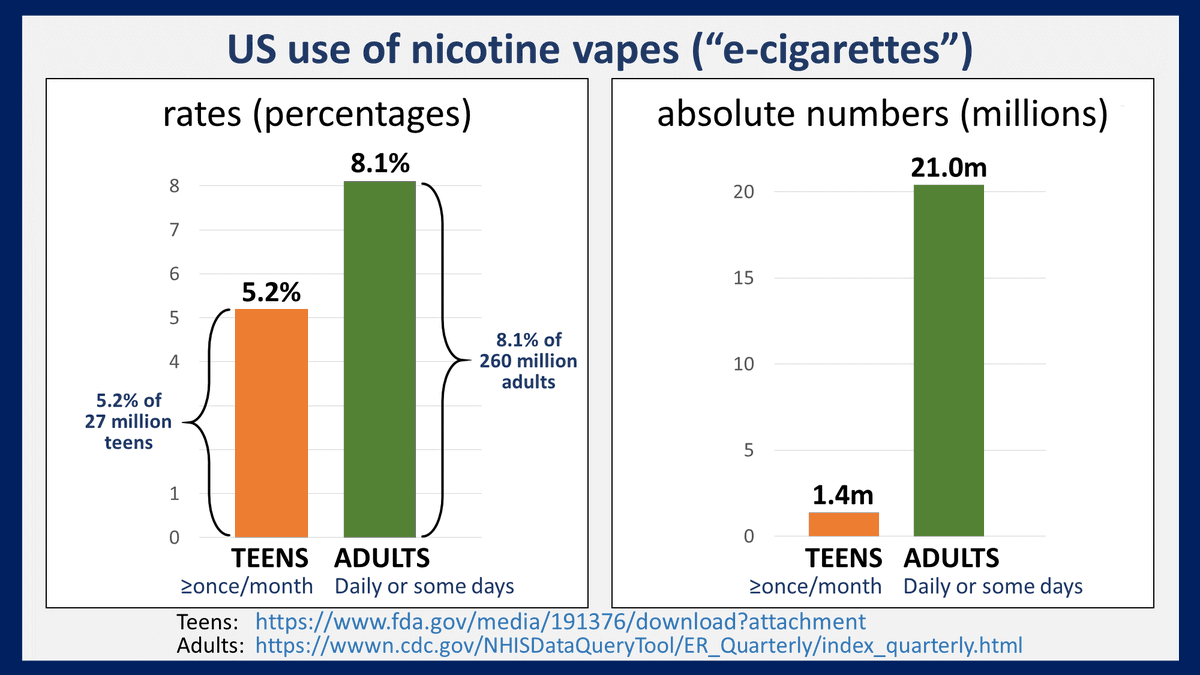
2025: 5.7% of US high school students now vape nicotine "at least one time in the past 30 days." 1.3% are "dual users" (hopefully, "on the journey to quit"). 0.5% smoke a cigarette at least ONCE in the past month. A 50-year low. Behold "the crisis." 🙄
Jukka Kelovuori@jkelovuori

CORRECTED graph in image below. "April 15: Note to the post.  The original chart contained a small error in the 2025 column.  H/T to Charles Gardner for pointing this out.  Correction has been made." rodutobaccotruth.blogspot.com/2026/04/high-s… H/t @ChaunceyGardner

English
0
4
17
240
bee retweeté
Pam
Pam@PamThis·
@BradK87287 @JulianHillMP Zilch evidence that vaping causes cancer or heart disease. Studies that try to prove even the vaguest link have been retracted or dismissed by actual experts. If you were serious about public health you'd promote and support vaping as is done in NZ, UK and other countries.
English
0
0
2
12
bee retweeté
BradK
BradK@BradK87287·
@JulianHillMP Australia would be a smoke-free nation with no black market had the Government simply legalised & regulated re-usable #vapes
BradK tweet media
English
1
4
11
117
bee retweeté
Jukka Kelovuori
Jukka Kelovuori@jkelovuori·
@HansPeterAlbre1 @JulianHillMP Australia is useful as it gives the rest of the world a shining example of what NOT to do with nicotine policy. Why it continues to bang its head against the wall taking the advice of a handful of prohibitionist tobacco control wowsers is baffling. Enjoy the chaos.
Jukka Kelovuori tweet media
English
0
1
1
3
bee retweeté
Jukka Kelovuori
Jukka Kelovuori@jkelovuori·
@JulianHillMP You can't de facto ban legal cigarettes (by taxing them to the hilt) and then cry when illegal operators handle the supply. Or you can, but it looks foolish. Meet the demand by legalizing fairly priced safer nicotine alternatives.
English
1
1
17
93
bee retweeté
Alan CMA
Alan CMA@Algore09algor·
@Clive_Bates offers a refreshing and pragmatic vision for the future of public health and tobacco control in Australia. At the heart of his proposal is tobacco harm reduction, which is the simple idea of helping people move from high risk products like cigarettes to low risk alternatives like vapes. The goal is to focus on reducing the heavy burden of disease and death caused by inhaling tobacco smoke.  Moving away from current restrictive regulations toward a regulated market offers several major advantages for the community. By bringing the market into the light, the government can set rules for product safety, accurate labeling, and age secure retailing. Addressing the underlying economic drivers of the illicit trade, rather than relying solely on expensive and often ineffective enforcement, can dry up the profits currently flowing to criminal networks. When safer alternatives are accessible and affordable, smokers have a clear, lawful path to protect their own health. Furthermore, for young people who might otherwise start smoking, having access to regulated, smoke free products can divert them away from the most harmful forms of nicotine use.  The core message is one of optimism: Australia can fix the current lawless fiasco by being more open to economically grounded and consumer focused solutions. By focusing on risk proportionate regulation, where the most harmful products are controlled most strictly, the government can reassert control and normalize a lawful market. Choosing regulation over prohibition protects consumers, reduces crime, and ultimately saves lives.
English
0
2
2
12
bee retweeté
Pippa Starr - Let's Improve Vaping Education! 🇦🇺
Have you been fooled? Watch out for studies that “Link” vaping to detrimental health effects. The term “Link” is far too often used to deceive and distort the truth! I can find links that some human cells are similar to that seen in vertebrates species thousands of years ago, that doesn’t mean we are dinosaurs and going to die of the same causes. Yet, by matching contrast, this is the sort of nonsense that professional tax revenue collectors would have you believe! 🤦‍♀️
English
0
1
11
167
bee retweeté
Dave
Dave@_DaveCross_·
It’s unbelievable that Australia thought its tobacco policy would work - it’s more unbelievable that it won’t change it
Pippa Starr - Let's Improve Vaping Education! 🇦🇺@LivePippas

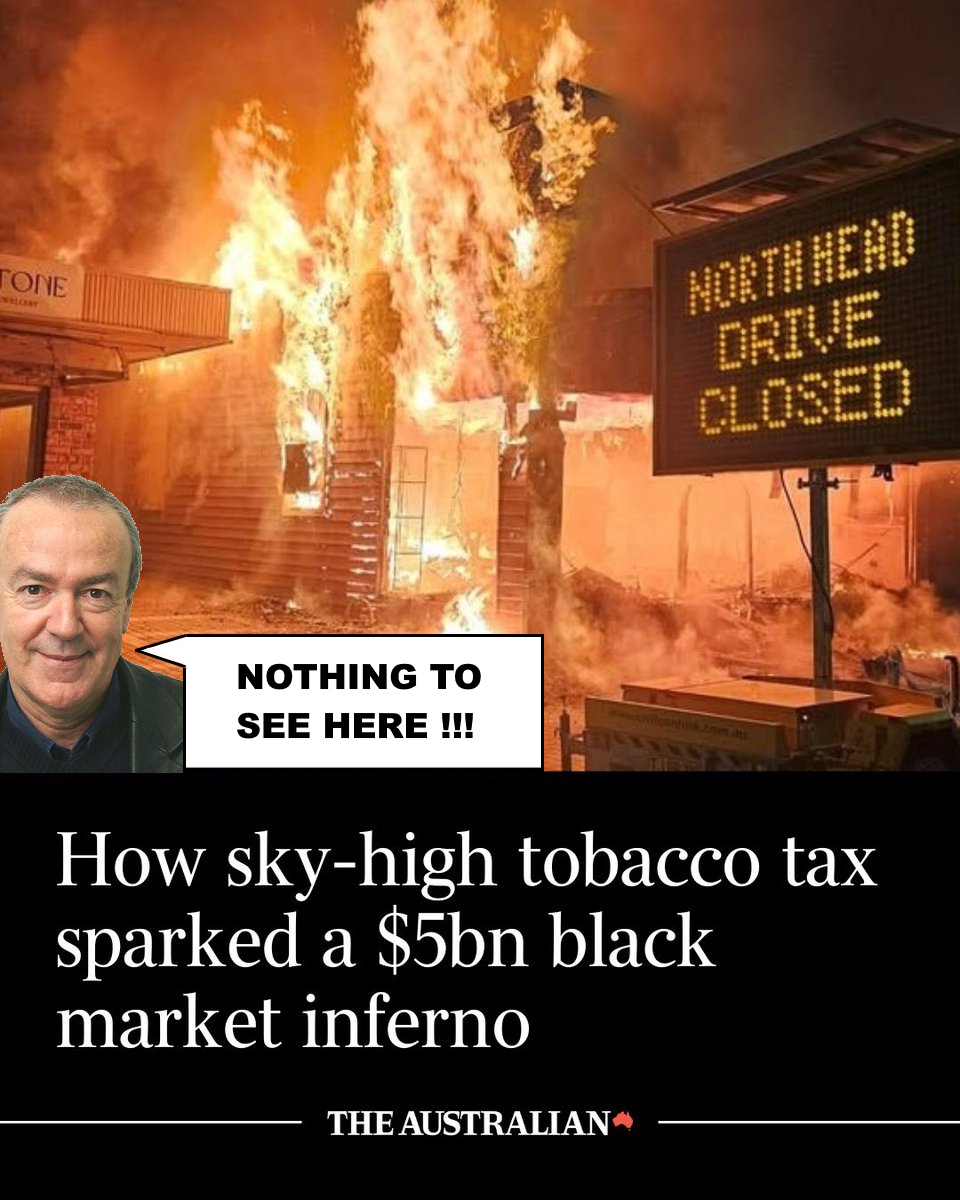
🚨#285 Tobacco and Vapes Wars Firebombing at Altona this morning! 🔥🔥🔥🔥🔥🔥🔥🔥🔥🔥🚒🧯 FLAMES RIP THROUGH ALTONA STORE OVERNIGHT. A vehicle was driven straight into the business before both were set alight. Police are now hunting those responsible.

English
0
6
16
1.4K
bee retweeté
Alan CMA
Alan CMA@Algore09algor·
Having read most of the submissions to the inquiry, one thing stands out the usual suspects are still pushing the same tired playbook. More enforcement, higher taxes, tighter controls. No reflection, no accountability, no sign that anything has been learned from what’s already gone wrong. It’s the same ideas that helped create the current mess, now being presented as the solution to it.
English
2
5
18
111
bee retweeté
Charles A. Gardner, PhD
Charles A. Gardner, PhD@ChaunceyGardner·
@SenTomCotton You DO realize you are doing big tobacco's bidding, right? THEY want you to go after what you call "illegal Chinese vapes" because those products undermine deadly cigarette sales.
Charles A. Gardner, PhD tweet media
English
0
2
7
68
bee retweeté
Jody Lanard MD
Jody Lanard MD@EIDGeek·
For years we've watched in shock as officials & "experts" campaigned to (mis)teach the public that e-cigs ware as bad or worse than smoking. We first wrote about CDC mis-portraying e-cigs in 2015. Anyone who thinks gov mis-info is a right vs left issue is not paying attention.
Joe Gitchell@jgitchell

I'm not quite sure how I had missed much of this receipts-laden 2021 thread from @mikepesko. Sadly, it has aged very well, and that should trouble everyone working at the collision of science, health, and communications. #EVALI @DearPandemic @drjenndowd @unbiasedscipod @WSITYpod @brindaadhikari @LaurenWeberHP @jonathanstea @CaulfieldTim @jeremyfaust @EIDGeek @picardonhealth @opinion_joe @meganranney @kmpanthagani @panagis21

English
0
8
10
241
bee retweeté
Alan CMA
Alan CMA@Algore09algor·
There’s a fundamental problem with the submission from Michelle Jongenelis: it acknowledges the symptoms of Australia’s nicotine policy failure, but refuses to confront the cause. We’re told the illicit tobacco market now makes up around 55% of the total market. That’s not a side issue. That’s not a “blip”. That is systemic collapse. When more than half the market is illegal, enforcement isn’t just struggling, it’s already lost. And yet the response offered is more of the same: stricter enforcement, more regulation, fewer retailers, and continued reliance on high prices to “motivate” quitting. That logic simply doesn’t hold up anymore. The submission leans heavily on the idea that high prices drive people to quit. But in the real world, what’s happening is much simpler: high prices are driving people to the black market. Smokers aren’t quitting en masse, they’re just switching suppliers. The policy hasn’t reduced demand, it’s just handed supply over to organised crime. Even more telling is what’s missing. There is no serious engagement with safer nicotine alternatives. No acknowledgement that products like vaping or other non-combustible nicotine options exist as substitutes. Instead, they’re dismissed as “industry narratives” or ignored entirely, as if the only acceptable outcome is complete nicotine abstinence. That’s not public health. That’s ideology. Because the reality is this: People smoke for nicotine, but they die from combustion If you remove combustion, you dramatically reduce harm If you make safer alternatives accessible and affordable, people switch This isn’t theoretical. It’s already happened in multiple countries. Instead, this submission doubles down on a model that is visibly failing in Australia. It even argues that reducing excise won’t fix the illicit market, which may be partly true, but completely sidesteps the obvious question: what will? The answer cannot just be “more enforcement” when the market is already dominated by illegal supply. There’s also a contradiction at the heart of the argument. On one hand, the submission says smokers are being “denied the opportunity to quit” because of cheap illicit tobacco. On the other, it resists making any safer alternatives widely accessible or affordable. So smokers are stuck between expensive legal cigarettes and cheap illegal ones, with very little in between. That’s not a pathway to quitting. That’s a trap. And then there’s the broader framing. The submission paints illicit tobacco primarily as a criminal justice issue and a moral failing, something that “normalises criminal behaviour.” But it avoids acknowledging that policy settings created the conditions for that market to thrive in the first place. You can’t price a legal product out of reach, restrict access, remove viable alternatives, and then act surprised when an illegal market fills the gap. That’s not an unintended consequence. That’s predictable. What this submission ultimately reveals is a system that is unwilling to adapt. Even when faced with clear evidence of failure, it falls back on the same tools, the same assumptions, and the same blind spots. If the goal is genuinely to reduce smoking, then the conversation needs to shift from punishment and restriction to substitution and harm reduction. That means making safer nicotine products cheaper, accessible, and acceptable as alternatives to smoking. Until that happens, Australia will continue to see exactly what this submission describes: a thriving illicit market, stalled quit rates, and a policy framework that looks increasingly disconnected from reality.
English
1
4
9
141