

John Mark Fitzpatrick ICP
119 posts
John Mark Fitzpatrick ICP
@FitzForce44
Executive Coach for company founders. Ready to help IC community project/company founders. Happy to take payment in ICP or ckBTC.
Dubai शामिल हुए Mart 2022
485 फ़ॉलोइंग153 फ़ॉलोवर्स

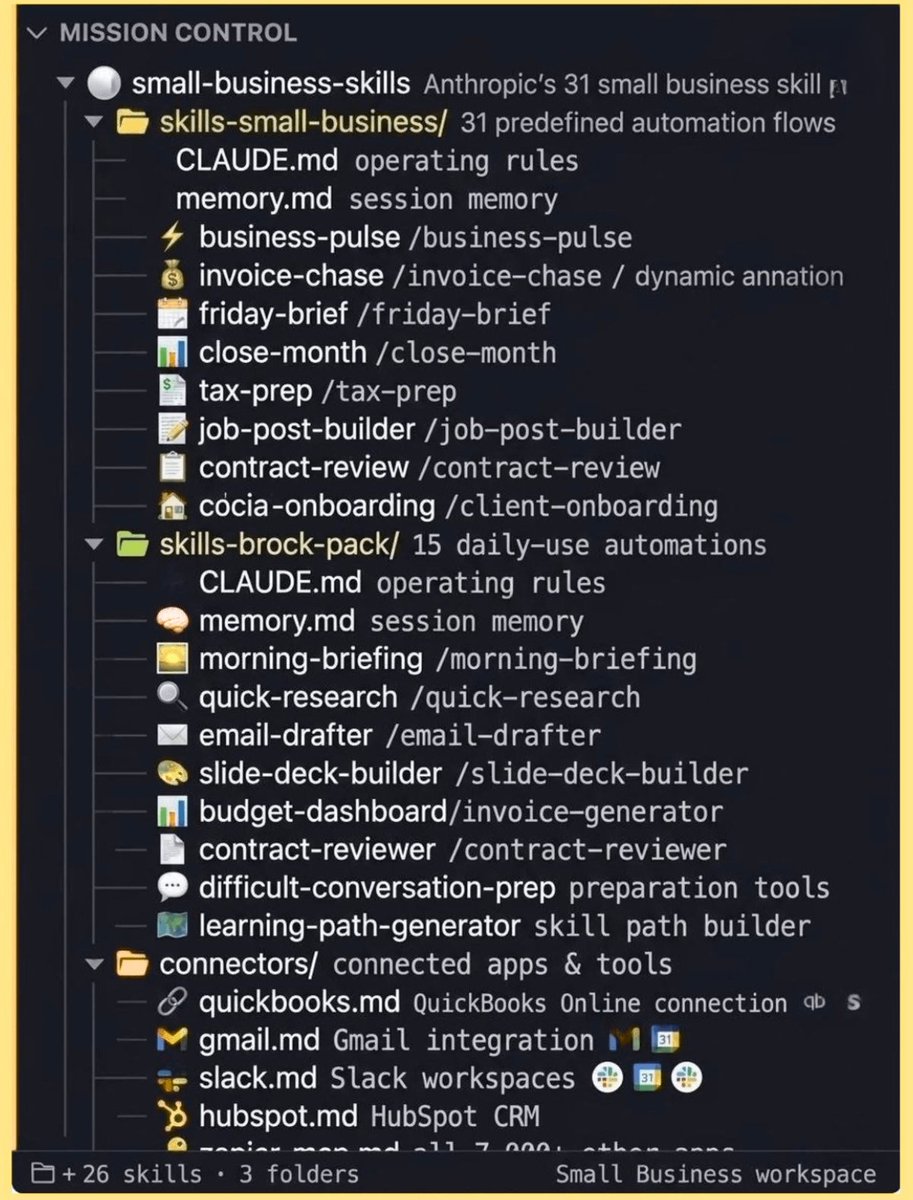
Anthropic just released 31 ready-to-use Claude skills for small businesses.
382,000 downloads in 24 hours.
I mapped every single workflow into a 10-minute setup guide.
Financial operations, sales automation, HR workflows, marketing growth, real-time dashboards.
Want the full breakdown?
Comment "Skills" + Follow @ameliahazelai (so I can DM you)
The breakdown includes:
→ All 31 skills organized by function
→ The 5 critical skills to deploy first
→ 12 connector setup guide in priority order
→ Permission settings for every sensitive action
→ Real output examples from Business Pulse, Invoice Chase, Job Post Builder
What changed:
Small businesses used to manually stitch together:
→ Zapier
→ Notion
→ CRM tools
→ Email workflows
→ Custom scripts
Now it's packaged into reusable AI skill packs:
→ Workflow logic
→ Memory systems
→ Behavior rules
→ Connectors
→ Orchestration
Business operations as AI-readable skill files.
The crazy part: You don't need Claude Pro to use them.
These are .md skill files. You can adapt them for Codex, Cursor, Gemini, or any coding agent.
Save this. Deploy the first 5 skills this weekend. Start automating.
English

Claude For Small Business is INSANE.
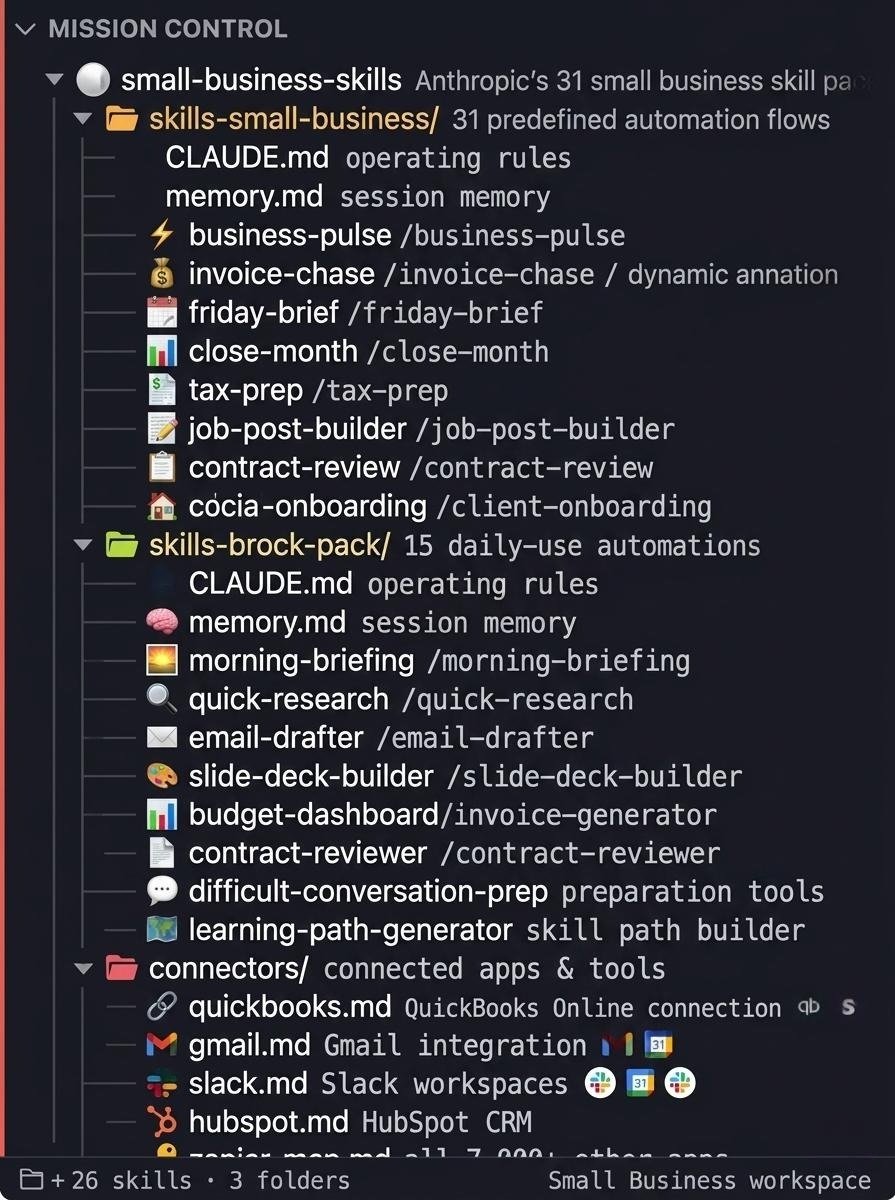
I've built a complete breakdown of all 31 Anthropic Small Business skills that maps every workflow, connector, and automation in under 10 minutes.
The same skill stack that had 382,000 downloads on its first day.
Financial operations, sales and client work, HR and hiring, marketing and growth, reporting and dashboards.
Inside the breakdown:
- All 31 skills organised by function with the 5 to run first
- The 12 connector setup guide in priority order with permission settings for every sensitive action
- Worked examples for Business Pulse, Invoice Chase, and Job Post Builder with real output shown
Want a copy? Like + Comment "31" and I'll send it over ASAP
(Must be following)
English

What people thought America could be - a beacon of democracy - was the last thing it became. In reality, it’s a corporate machine that has given rise to the Transnational Private Sector (TPS).
The TPS is a coalition of corporate giants, led by the Financial-Industrial Complex (FIC) with firms like JPMorgan, Goldman, and BlackRock, alongside the Military-Industrial Complex (MIC), Consumer-Industrial Complex (CIC), and Techno-Industrial Complex (TIC).
This collective force operates beyond borders, transcends nationality, and prioritizes profit over public welfare.
When Jamie Dimon, JPMorgan’s CEO, warned in October 2024 that wars in Ukraine and the Middle East could destabilize the global economy, he wasn’t just forecasting. He was asserting the TPS’s dominance over policy.
To understand this power, you have to examine the game theory driving the TPS’s clash with nations.
This concept that I have developed deliberately sets aside the idea of good, evil, right, or wrong. Geopolitical dynamics are examined through the lens of incentives, power, and measurable outcomes, not moral judgments. The focus is the strategic interplay of actors, stripped of ethical narratives.
___
Game theory provides a framework for understanding geopolitical strategies by analyzing the incentives that drive actors’ decisions.
There are two distinct game types: finite and infinite. Both these games shape global interactions. Finite games are zero-sum with defined endpoints, and clear winners and losers. It’s akin to a corporate quarter where profit maximization is the sole objective.
One player wins, the other loses.
Infinite games, conversely, lack a conclusion, have no end, prioritizing sustained participation through long-term stability, akin to a nation’s multi-generational survival strategy.
States operate within infinite games.
They do not expire. They do not tap out.
Their permanence compels them to prioritize enduring stability over immediate gains. For instance, China’s $1 trillion Belt and Road Initiative, spanning decades, secures global trade networks to ensure long-term economic influence. BRICS nations, through $10 billion in yuan-based trade, foster mutual economic resilience for mutual prosperity.
This cooperative approach engenders a form of morality rooted in reciprocity: mutual support today ensures mutual survival tomorrow. Such strategies reflect a commitment to societal development and stability, as states must maintain legitimacy and resources for their populations over time.
The TPS operates as a corporate entity, fundamentally detached from societal obligations. Unlike states, the TPS bears no responsibility to citizens, public welfare, or long-term development. Its imperative is profit maximization within finite time horizons, driven by shareholder demands and market cycles.
This corporate structure compels the TPS to engage in finite games, where immediate financial returns supersede all else. For example, the TPS’s imposition of significant tariffs on global nations in 2025 aimed to secure economic leverage, prioritizing short-term gains over regional stability. Such actions reflect a rational, amoral calculus: profit is the sole metric, unburdened by considerations of societal impact or ethical norms.
Finite games, by their nature, foster amorality. The TPS’s focus on short-term victories - such as market dominance through military coercion, currency wars, tariffs, and resource extraction - disregards long-term consequences, as corporate entities are not accountable for societal fallout.
In contrast, infinite games cultivate morality through sustained cooperation, as states must invest in trust to ensure their longevity.
The TPS has been playing finite-game rules in an infinite-game arena. When this happens, we have a mixed, unbalanced game.
A mixed game provokes backlash.
Picture a player disobeying the rules.
That's your TPS.
And it is banding states together against it to rebalance the game. The BRICS formation or the systematic de-dollarization initiatives are a strategic response, realigning global power to counter TPS dominance.
It's the game recorrecting itself.
This interplay of mixed-game dynamic is where the TPS’s amoral, zero-sum, profit-driven maneuvers clash with states’ cooperative, stability-oriented strategies.
A payoff matrix illustrates this easily.
1. The TPS secures immediate profits but risks isolation as states band together.
2. States achieve gradual stability but sacrifice short-term gains.
The TPS’s corporate nature - unencumbered by societal duties - locks it into finite games, while states’ obligations to their populations drive infinite-game cooperation.
This tension, rooted in divergent incentives, underscores the global struggle between short-term profiteering and long-term resilience, setting the stage for the TPS’s operational framework.
___
What is the TPS?
Picture the TPS as a colossal corporate skyscraper, its gleaming glass facade reflecting trillions in valuation that makes entire economies appear as a speck of dust.
At its pinnacle, the FIC - JPMorgan, Goldman, BlackRock, Vanguard, etc. - occupies the C-suite, a sleek executive suite where profit reigns supreme.
Below, the building hums with activity: the MIC (Lockheed , Raytheon, etc.) fortifies the security wing, the CIC (Exxon, Coca-Cola, Pfizer, Walmart, etc.) drives the bustling sales floor, and the TIC (Apple, Amazon, Microsoft, Nvidia, etc.) powers the innovation labs.
Each department operates with calculated precision, yet all answer to the FIC’s shareholder-driven directives, tethered to a singular goal: maximizing returns, unbound by borders or public welfare.
This skyscraper’s foundation is the United States, not as a sovereign nation but as a subjugated platform, meticulously engineered to amplify the TPS’s global reach. Decades of deregulation - culminating in the 1999 Glass-Steagall repeal - dismantled barriers, granting the FIC unchecked freedom to amass trillions.
Tax breaks and billions in defense budgets fuel the machine, while the US government, reduced to an extension of the TPS, prioritizes corporate efficiency over its citizens.
These American citizens are left to navigate the fallout. Mounting debt, eroding wages, while the TPS pursues wealth on a global stage. The Federal Reserve, calibrating monetary policy to stabilize markets, stands ready to pivot when BRICS’s multipolar trade order emerges, ensuring the TPS remains a formidable force in a restructured economy.
Unlike states, bound to their people and long-term development, the TPS owes nothing to society. Its corporate essence - divorced from public accountability - drives its finite-game strategy, where profit trumps all. This skyscraper doesn’t serve nations; it commands them, reshaping the global order to its design.
Let’s rewind back to the post-World War II era, when the MIC commanded the C-suite of the TPS. In those days, the MIC titans like Lockheed Martin and Raytheon held the ultimate power, with ample defense budgets out of taxpayer pockets fueling a war machine that defined America’s global reach. Fresh off its victory as a superpower, the US wielded unmatched military might, and the MIC capitalized on this dominance to shape foreign policy.
Every contract, every missile, reinforced its grip.
When nations resisted the TPS’s economic orbit, the MIC responded with unrelenting force. Iraq’s Saddam Hussein dared to sell oil in euros in 2000; by 2003, a NATO-led invasion, backed by $100 billion in MIC contracts, dismantled his regime, securing $500 billion in oil reserves. Libya’s Muammar Gaddafi pushed anti-dollar policies in 2011; NATO’s barrage, fueled by $160 billion in oil deals, reduced his government to rubble. The MIC’s dominance stemmed from a simple truth: war was profitable, and its C-suite reign ensured the TPS thrived on conflict, unburdened by societal costs.
The tide started to shift in the 1980s, as financial deregulation reshaped the skyscraper’s power structure. The 1999 Glass-Steagall repeal, among other reforms, unleashed the FIC to amass unprecedented wealth, with their trillions in collective asset pool out-sizing economies by the 2000s. The FIC mastered hedging, by betting on every market outcome - guaranteeing profits whether markets soared or crashed.
Unlike the MIC, reliant on wars, or the CIC, vulnerable to disruptions, the FIC thrived in any climate, pocketing billions in equities trading during stability or significant derivatives profits amid chaos. By 2015–2020, the FIC, sensing greater collective returns, orchestrated a quiet coup, redirecting the TPS toward diplomacy through billions in Gulf energy deals that bolstered TIC’s innovation and CIC’s margins.
The FIC is unique in the sense that its role transcends coordination. It hedges against its own departments, ensuring profits even if they falter. If the CIC’s retail collapses or the MIC’s wars misfire, the FIC shorts their stocks, securing significant derivatives profits. This ruthless pragmatism drives its push for Middle East stability, as war disrupts the lucrative Gulf partnerships. The FIC is also accelerating the BRICS’s $10 billion yuan-based trade order, positioning itself to profit in a multipolar future.
Consequently, within the TPS skyscraper, an inner game theory unfolds - cooperative yet fiercely competitive.
When cooperative, the TPS is absolutely devastating. In Iraq, Libya, and Ukraine, the MIC’s destruction paved the way for CIC’s cheap imports and FIC’s oil bets, reaping billions while nations crumbled. It threatens Iran with MIC-led war to sweeten billions in Gulf deals, boosting TIC’s tech contracts. It instigates currency wars on Turkey, devaluing the lira, so CIC’s Marriott locks in tourism profits.
Competitively, the FIC wields departments as leverage. It will coordinate with other departments for collective gain but it will also defect for better return on investment. It will conduct tariffs adversely affecting the CIC if it means vassalizing states in the future. It possesses calculated pragmatism capable of supplanting the MIC’s warlord era to steer the skyscraper toward stable profits in any climate.
Not just wars and destruction.
___
Today, the FIC commands the C-suite, and it is orchestrating a strategic trifecta that reshapes the global order with calculated precision.
From its executive suite, the FIC surveys a world in flux, deploying three interconnected maneuvers.
Consolidation. Vassalization. BRICS alignment.
The goal?
To secure unrivaled dominance in a multipolar world.
Each move, executed with the amoral pragmatism of a finite-game strategist, positions the TPS to thrive in the present while engineering a lucrative foothold in the emerging future.
First, the TPS consolidates power within the US, its subjugated platform, by acquiring struggling small and medium enterprises (SME's) battered by tariffs and policies championed by its FIC mouthpiece, President Trump. In 2025, these tariffs - essentially taxes on imports - have spiked costs, squeezing SMEs reliant on global supply chains. The FIC, sensing opportunity, sweeps in, buying up these firms at bargain prices, folding them into the TPS’s vast empire. This consolidation strengthens the CIC and TIC, ensuring the skyscraper’s domestic foundation remains robust while smaller players falter. It’s a ruthless finite-game play: the TPS absorbs weakened assets, bolstering its retail engine without regard for local communities or economic equity.
Second, the TPS vassalizes vulnerable nations, tightening its global grip. Tariffs targeting over 20 export-dependent countries - not accounting for the EU - have crippled their economies, crashing markets and eroding confidence. The FIC steps forward with predatory aid, offering loans and significant bond investments, like BlackRock’s new stake in German bonds last quarter, to stabilize budgets. These lifelines come with ironclad strings: debt binds nations to TPS agendas, transforming them into exploitation hubs stripped of autonomy. Governments, desperate to survive, cede control over resources and policies, their sovereignty reduced to a footnote in the FIC’s ledger. This vassalization mirrors the MIC’s historical conquests but swaps bombs for bonds, a subtler yet equally devastating finite-game victory.
Third, the TPS accelerates the rise of a BRICS-led trade order, not as a rival but as a future arena for profit. By fracturing the dollar’s dominance through tariffs, the FIC paves the way for BRICS’s $10 billion yuan-based trade system, a multipolar framework gaining traction. This is no accident. The TPS is positioning itself to dominate this new order. Investments like significant stakes in BRICS bonds and billions in Gulf partnerships ensure the FIC’s influence spans both systems. The Federal Reserve, attuned to this shift, stands poised to recalibrate monetary policy when the time comes, keeping the TPS’s financial arsenal sharp. In vassalized nations, the TPS entrenches itself, ready to dictate terms when BRICS consolidates.
The TPS’s trifecta is operating with surgical precision and chilling efficiency. Small and medium enterprises, crushed by tariffs, vanish into the TPS’s portfolio, bolstering its domestic empire. Export-dependent nations, along with Europe, kneel under the weight of FIC debt with their economies reeling, reduced to vassalized hubs serving corporate whims. The BRICS’s new trade order, quietly fueled by the TPS’s tariff-driven fracture of the dollar system, rises with the FIC’s fingerprints all over it.
This is game theory’s mixed-game dynamic unfolding: the TPS’s finite-game trifecta pursuing immediate profits, where its amoral payoff structure prioritizes short-term dominance over societal stability.
Yet, each of these zero-sum moves provokes states to embrace the infinite-game cooperation model.
The BRICS’s trade bloc iterates strategies to counter TPS hegemony, by seeking long-term equilibrium through reciprocal trust. The FIC, anticipating this, adopts a dominant strategy: hedging with Gulf partnerships and BRICS bonds by dangling MIC threats to profit in any outcome.
The FIC envisions a future of a restructured skyscraper, with its C-suite commanding a BRICS-aligned trade order, with vassalized states as mere cogs in the machine.
This isn’t adaptation.
It’s the TPS leveraging finite-game aggression and infinite-game foresight to rewrite the global rules once again, ensuring its dominance in a multipolar world.
English
@MrWhiplash_ @grok is this true? Where can I find more info?
English

TARTARIA REVEALED: PUTIN UNLEASHES THE FORBIDDEN EMPIRE
The world just changed forever. Russian President Vladimir Putin has declassified explosive Tartaria archives, unearthing a colossal empire that was systematically ERASED from global memory. The moment this happened, Western historians went silent — and for good reason.
Tartaria wasn’t a myth. It was the largest empire on Earth, spanning from the Urals to Alaska, New Earth to Tibet. Its people weren’t savages — they were spiritually advanced, morally grounded, and technologically ahead of their time. They lived by virtue, honor, and ancestral power. Blue-eyed, red-haired warriors who valued family, justice, and the sacred bloodline. These were not primitive tribes. They were Slavic-Aryan titans. And now, their memory is being restored.
The first edition of Encyclopedia Britannica (1771) called Tartaria a dominant force in northern Asia. But after the 18th century? It vanished — not by accident, but by design. Later editions wiped Tartaria clean. The greatest historical cover-up in human history.
Why was it erased? Because Tartaria stood against the control systems of the Vatican, the Romanovs, the global banking dynasties, and the cabal that would later shape the West. Tartaria was FREE — self-sufficient, non-centralized, rooted in ancestral energy. That’s the one thing the Deep State fears most.
Putin's move to resurrect Tartaria is more than historical correction. It's a strike against the globalist script. Russia is now rewriting its entire history curriculum, purging Western distortions and restoring its true legacy. This is a paradigm shift — a cultural nuke detonated in plain sight.
The release of Tartaria documents isn’t just for scholars — it’s a clarion call for spiritual war. The world’s timeline is being shattered. The illusion is collapsing. And with it, the old guard’s grip on our past.
Tartaria isn’t dead. It was buried. Now it’s rising.
The forbidden empire returns. The truth has awakened. The storm is not coming. It’s HERE.

English
@bneeditor Trump did this with the US government recently
English

Mercedes offers employees money for voluntary resignation
Over the past year, the automaker's shares have fallen by 20% - Mercedes has faced declining sales in China and the EU and decided to reduce staff.
Now, employees are being offered to resign voluntarily with severance pay. A 30-year-old employee earning 6 thousand euros would receive 100 thousand euros for resigning, a 45-year-old - 300 thousand euros, and a 55-year-old department head with 30 years of service and a salary of 9 thousand euros would get 500 thousand for voluntary resignation.
Via mm
English
@bneeditor Largely in agreement, but is zelensky is desperately trying to save lives, should he not be focused on peace and the path to it?
English
A note on Zelensky‘s English skills.
His English has come on by leaps & bounds (he used to struggle in Ukrainian too)
But it’s still not very good.
And that’s probably a problem.
Eloquence in diplomacy is importance. Surely behind the fight yesterday is the fact that he had to speak in English and if you speak a language badly (as I know well from my own experience) then you tend to speak bluntly .
It’s too easy in this case to cause offence when none was intended.
On top of that, you have to remember that Zelinsky remains an amateur at diplomacy.
He was speaking as a commander in chief of a people who are dying and he is desperately trying to save them.
He’s speaking from the heart and he’s asking for the things he needs . He’s not talking about compromise he’s talking about saving lives and that means more arms more money and security guarantees.
On the Russian side.Lavrov it’s probably one of the best foreign ministers in the world with decades of experience.
He is a master diplomat and extremely eloquence and speaks excellent English. He plays the game like a fiddle, a virtuoso. If you remember when he met Trump, he wrapped him around his finger like a baby.
This is a problem for Zelinski because he’s seriously outclassed by the Russian team.
I listened to Zelensky‘s Fox News interview and my heart bleeds for him.
He’s in a terrible situation and he was trying to sell his morally superior position to the US people. But I think he came across as crude and I doubt that he will convince them because that interview was a situation where he needed to be eloquence and his English simply isn’t up to it.
David Edick Jr@davidedickjr
Zelensky is very close to a breakdown 😒 @bneeditor
English




Do I build an American 1950s themed town with a cafe/drive in cinema/blockbuster/park filled with classic cars and houses and ban the use of all modern technology only providing disposable cameras for people to take photos with and run it as a luxury resort?
English

John Mark Fitzpatrick ICP रीट्वीट किया

.@elonmusk hearing you want to authenticate all humans on Twitter e.g. to stop bots
Great idea. Can you look at doing this anonymously using virtual people parties to prove personhood (a new crypto technique)
Could really move digital democracy forward
medium.com/dfinity/ultima…
English





Which one you picking? #Realworldassets edition!
@Chainlink #LINK @Avax #Avalanche @DFINITY #ICP
COMMENT, RETWEET OR LIKE YOUR FAVORITE ONE!

English
Tell me what the EXACT price of #Bitcoin will be in 24 hours.
The 5 comments that get the closest answer will be added to my private VVIP group💎👇
English
QME

laser-eye maxis are mad at @brian_armstrong, because he tweeted that paying merchants with L1 BTC has a poor UX, so coinbase no longer supports that.
guess what? he’s right!
how do i know? because at @TaprootWizards, we’re one of the largest BTC merchants on the planet.
this month, we processed over 300 BTC in bitcoin L1 payments (over $15m USD).
on top of that we also processed over 20 BTC (over $1m USD) in payments that had to be refunded due to inefficiencies of L1 BTC as a payment protocol.
my understanding is that this probably makes us the largest BTC-only merchant in the world for the month of february, or at least one of the largest. (BTC merchant = selling goods directly to consumers for BTC)
i’m going to describe some of the issues we encountered, but first, some background.
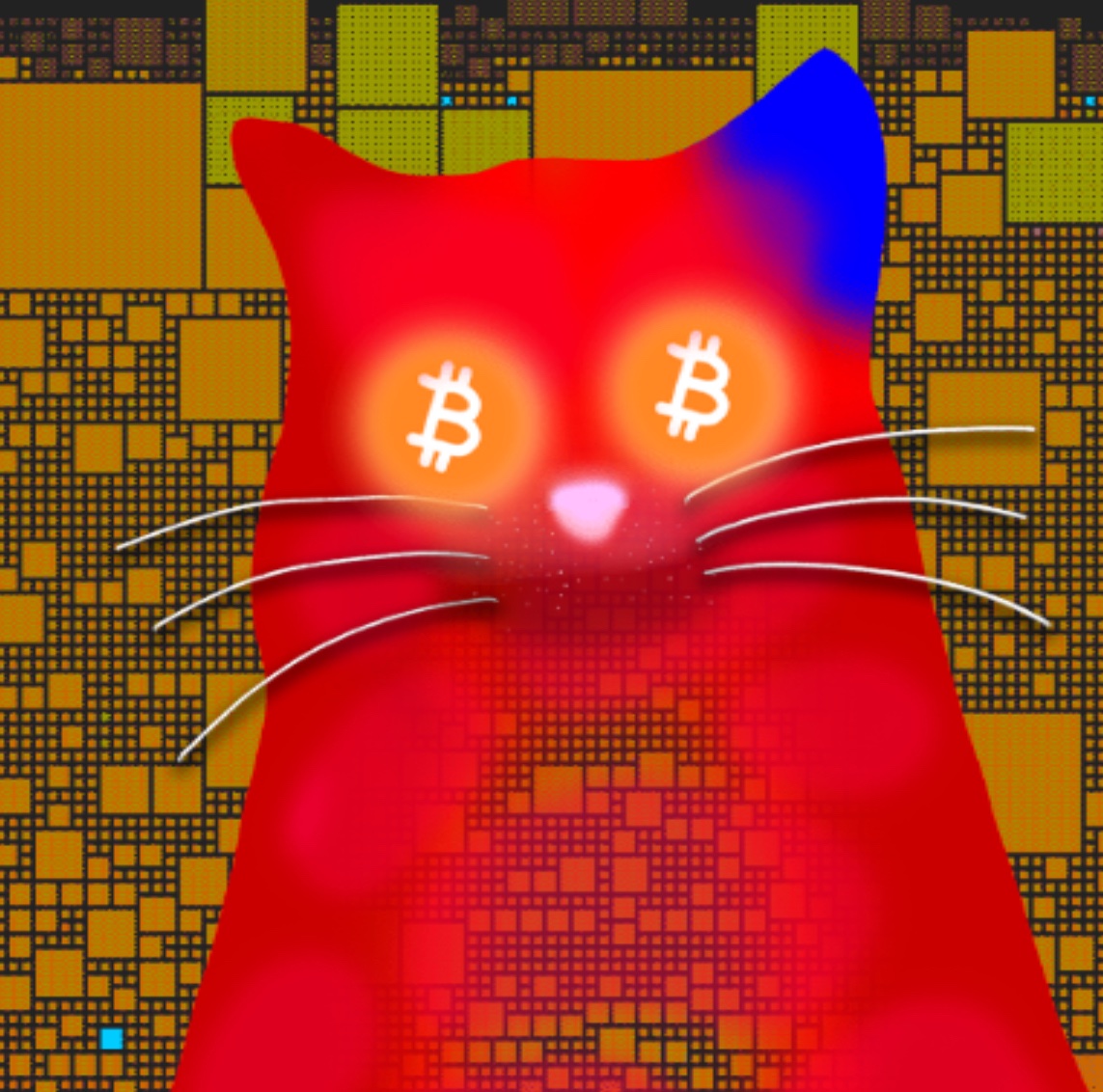
these payments were processed during the @quantumcats sale. the buyers were buying Quantum Cats ordinals from us. bitcoin jpegs.
i know that some of the readers don’t like (or don’t understand) jpegs. so allow me to introduce another, very similar type of sale: ticket sale for a high-demand concert.
imagine a taylor swift concert. the demand is much higher than the supply. tickets are not cheap, but in an attempt to reward loyal fans, the organizers are pricing them below what the market perceives as “fair value”. organizers attempt to prioritize “true fans” and to limit the amount of tickets each fan can purchase, but no matter what organizers do, it is clear that many people will try to buy as many tickets as they can just to turn around and resell them for a higher price as soon as all tickets sell out, probably within minutes.
that is the exact situation that popular jpeg mints find themselves in, and so even if the reader really hates on-chain jpegs, bitcoin payment solutions will still have to improve to the point that they can support the high-demand ticket sale usecase, if we ever hope for bitcoin to become a successful payment method.
ok. so here are some of the issues we encountered:
1. LONG CONFIRMATION TIMES
for some usecases, long confirmation times don’t really matter. for example, if you’re selling a bitcoin tshirt, with unlimited supply, and low demand, and the tshirt takes 2 weeks to ship, then it doesn’t really matter if the transaction takes 30 minutes to confirm. as soon as a transaction hits the mempool, you tell the buyer that their payment was received and they can close the tab and move on with their lives. once the payment confirms onchain, you can start the shipping process. and if it fails to confirm, you send them an email and tell them something went wrong.
cool! but this isn’t really that interesting of a usecae. it works for products in low demand. in other words, it works when no one’s using it.
what happens if there are only 2,000 shirts, and they’re really sought-after so you know that 50,000 people are going to be racing to buy them before supply runs out?
suddenly, fast confirmation is really important, because the buyers NEED TO KNOW ASAP if their payment was successful or not. if they’re not sure, they might send you multiple payments, hoping one of them goes through! they REALLY want to make sure they’re getting one of those tshirts, you see…
and if the order only confirms once the payment confirms, you might end up having to process A LOT of refunds, because 50,000 people would make payments hoping to get in, but you can only fulfill orders for 2,000 people!
so for us, in order to minimize refunds, we had to approve orders based on UNCONFIRMED TRANSACTIONS, as soon as they hit the mempool. this meant that buyers were reserved a Qunatum Cat before having their payment confirmed in a block, which is a better experience for the buyers, but risky for the merchant: before a payment is confirmed, there are multiple ways for the buyer to reverse it.
to mitigate that risk, we used a bunch of proprietary heuristics to verify that a buyer really *intends* to complete the purchase, and won’t try to reverse it, even though they technically could.
the good news: those heuristics worked, and all of the unconfirmed payments we approved actually got confirmed eventually.
the bad news: this required our engineers to review incoming payments manually and sometimes take action to mitigate risk. it was a very labor-intensive process. it was worth it for us, to ensure a smooth experience for our customers, but most merchants won’t be able to afford doing this.
2. PAYMENT AMOUNTS AREN’T ENFORCEABLE
the way L1 bitcoin payments work is different from most modern payment methods. the buyer gets an address to send BTC to, and while the merchant can tell them which amount to send, the customer can send any amount they want. it can be below or above the amount that the merchant is asking for.
this issue doesn’t exist with other payment systems. when you pay with a credit card for example, you can only pay the amount that the merchant dictates, not more, not less. smart-contract-powered payment processing solutions, like the one coinbase provides, can also reject transactions that don’t match the merchant’s requested amount.
so why is this a problem? for most merchants, the main issue is that some customers might send an amount below the invoice amount, either in error, or to see if they can get away with it. in that case the merchant will probably have to refund the transaction.
but for HIGH-DEMAND products, like Quantum Cats, or like taylor swift tickets, there’s another concern: some customers might try to pay MORE, hoping they can fool the system and buy more than their allotted allocation.
that’s the issue we had, and fortunately we were prepared for it, assuming that some customers would attempt this. so we kept track of overpayments, and ended up processing 20 BTC in refunds - OVER $1 MILLION DOLLARS - for people who intentionally overpaid, just trying their luck.
but again, this required manual reconciliation, and many hours of manual work. it’s feasible in our case, but not feasible for most merchants.
3. ONCHAIN FEES
onchain fees are a real issue for payment processors. essentially it’s another one of those “it only works when no one’s using it” scenarios. if a high-demand taylor swift concert was selling tickets only for L1 bitcoin payments, and tickets were only confirmed once the onchain payment ids confirmed, you’d see transaction fees rising to unprecedented levels, as buyers attempt to overpay miners to ensure they get their tickets before anyone else.
we wanted to minimize our impact on the network, so we decided to let buyers reserve their Quantum Cats as soon as their transaction hit the memppol, as opposed to when the transaction is confirmed. this also helped mitigate long confirmation times, as described in (1).
but as explained above, this required us to manually review incoming payments to ensure we only reserve Quantum Cats for payments that are likely to confirm. it’s a manual labor-intensive process and isn’t feasible for most online merchants.
if we hadn’t done that, we’d have to deal with people setting fees that are too low and getting their transactions “stuck”, but also with people paying high fees, making the network more expensive to use for everyone else!
4. “JUST USE LIGHTNING BRO”
the usual laser-eye response to these issues is telling people to “just use lightning”.
well, we tried. we looked into it, and while LN does structurally resolve most of the issues above, our conclusion was that the lightning network cannot support the volume of payments we were expecting.
why? well, 300 BTC is almost 10% of the entire capacity of the lightning network. because of the way lightning works, we’d have to source so-called “incoming liquidity”, which means that other lightning network service providers would have to lock up at least 300 BTC to connect to us and to allow their users to pay us. and since we can’t tell ahead of time which service providers our customers would be using, we’d have to have MULTIPLE providers lock up 300 BTC each to be safe. we’d probably have had to have providers lock up somewhere around 1000 BTC or moreto make this work smoothly. 25%+ of the entire network capacity. it wouldn’t have worked.
btw we did use the lightning network for another campaign last year. we had 10,000 people make payments of $2 each over one weekend, and it created so much stress on the network that multiple CEOs of wallets and service providers contacted us and asked us to stop. imagine what would’ve happened with a $15m sale.
lightning is simply NOT FEASIBLE for high-demand sales. it is not a serious solution.
🐱🐱🐱
i’m not writing this to FUD bitcoin. i’m obsessed with bitcoin and have been for a decade, and am very bullish on its future. we insisted on using only BTC for our sale even though it was hard, and even though our customers begged us to accept other currencies. Many of our customers got a BTC wallet and made a BTC payment for the first time ever to get a Quantum Cat.
we’re gonna continue to push this forward and come up with innovative solutions to improve the experience, but if we care about bitcoin’s success, we need to be honest with ourselves: bitcoin is a BAD payment solution right now. we know because we have the experience that most bitcoiners don’t. when brian armstrong and coinbase say that the payment UX with bitcoin is bad, they know what they’re talking about. and no, lightning doesn’t fix this.
🐱🐱🐱
plot twist: bitcoin’s OP_CAT scripting function, if revived, would allow building better payment networks on top of bitcoin that resolve all of the issues above. we’re intent on bringing OP_CAT back. if you want to learn more and stay up to date, follow @quantumcats and turn on notifications 🔔
English