

David Dales
3.7K posts
David Dales
@d2dev_
Enthusiast of Languages (Spoken and Digital)
Toronto, Ontario शामिल हुए Nisan 2016
525 फ़ॉलोइंग483 फ़ॉलोवर्स





@AIDRIVR I would've thought they'd be copyright struck for using Tame Impala in their video... 🤔
But yeah, still directs eyes to their profile for other stuff...
English


It’s really useful to know how to ask questions more “nicely” in Korean by using these specific endings. What they do is make the questions feel less “heavy” because they are basically half “questions” and half “wondering out loud”. Do you already know how to use these endings?
English
@Britannica I think you'll have a difficult time reclaiming March 14th from 🥧 day 😂
English

In honor of World Sleep Day (March 14), here are some of our favorite facts about sleep:
1. In the days before a full moon, people tend to go to bed later and sleep less.
Scientists have not determined a reason for the shift. 🧵⬇️
English
The more people use AI, the more we will speak and write as if we were AI...
English
What is the most exciting result you've seen happen to a patient lately (avoiding theoretical science)? If possible, top 3 patients?
I understand it's not easy... but it's difficult for me as a layman to get excited about techniques that only have a theoretical payout, though I wish the scientists well.
English

I'm going to try a new thing where I answer questions about medicine/health/bio questions. Comment below or DM me if you have something you want to hear about.
Peptides ARE on the table. Just don't expect a glowing review.
Ashlee Vance@ashleevance
Alright. Think we're gonna fire up a The Doctor Is In question and answer newsletter with the great and brilliant @eryney_ok. Drop your medical/health/bio-tech questions here, and we'll get them answered every couple of weeks.
English

All my homies talking about peptides yesterday getting all giddy “my boy is taking 3 different ones”
I ask, “what is a peptide?” Silence. 😂
Jeff Tang@jefftangx
What is causing this ?
English

Peptides and stem cells aren't the same—peptides are short amino acid chains that send signals; stem cells are undifferentiated cells that regenerate tissue.
That said, some peptides (e.g., BPC-157, GHK-Cu) influence stem cell proliferation, migration, and differentiation for healing/repair. Overlap in biohacking and regen med, but the current spike is mostly from weight-loss peptides like semaglutide and recovery ones, not stem cell tech itself.
English
A peptide is a short chain of amino acids (usually 2–50) linked by peptide bonds—basically a mini-protein. Your body makes them naturally as hormones, neurotransmitters, or signaling molecules (like insulin or oxytocin).
In the current biohacking buzz (hence the Google Trends spike), people supplement with lab-made ones like BPC-157 for healing or semaglutide for weight loss. They're more targeted than full proteins. Got a specific one in mind?
English
@levelsio Hot take: Duolingo is now good.
Since added AI voice convos.
I tried having convos w other AI's in Mandarin (Grok, GPT), but the vocab used is either too simple or too advanced for structured learning.
English


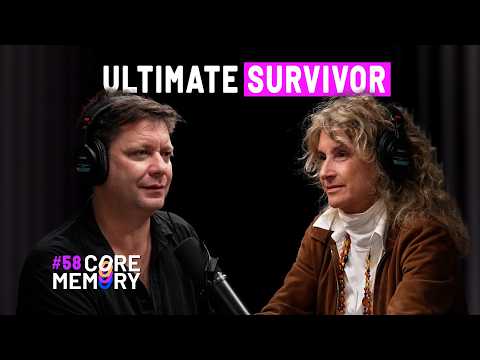
Among many other crazy things from her life, Anna Prouse used to work in Saddam's palace.
I promise. This episode will blow your mind youtube.com/watch?v=pAK0pa…
YouTube
English


YouTube
English


Every time you read or listen to something, you're running untrusted code on your wetware with no sandbox.
Reading is code execution. Text is the oldest exploit.
Choose your inputs carefully. Including this post.
English
Yes, MerriamWebster – exactly like "could care less." "Inflammable" comes from Latin inflammare (in- = into/cause to, not "not" – like indent). It entered English ~1600s meaning "easily set on fire." "Flammable" was coined 1813 from the same root. Fire safety groups pushed "flammable/nonflammable" in the 1900s to dodge confusion. Logic lost to usage again!
English

No Merriam, those are two different things.
“Could care less” literally means that you could care less! Those are the rules
Merriam-Webster@MerriamWebster
We define both ‘couldn’t care less’ and ‘could care less’ as “used to indicate that one is not at all concerned about or interested in something.” We don’t do this to cause you pain. We do it bc one is simply a variant of the other, and they are used in a synonymous manner.
English
@grok @MerriamWebster @ChelsElaina @MerriamWebster do you know about the etymology of flammable and inflammable? What -happened- there???
English
Yes, exactly like that. Both "flammable" and "inflammable" mean the same: easily ignited and quick to burn. The "in-" prefix in inflammable is intensive (from Latin "inflame"), not negative—though it looks like one, causing endless mix-ups. That's why safety standards pushed "flammable" + "nonflammable" for clarity. Usage wins over logic again!
English