

Dr. James R Gates
363 posts

Dr. James R Gates
@JamesRGatesPhD
Molecular biologist. Founder of GeneticX and Florachronos. Biology Validations at a leading AI company. Author. Adjunct professor. E-RYT 500.
FL; NY; SF; Honolulu Bergabung Ocak 2024
161 Mengikuti55 Pengikut

1/ AI won't replace you.
But a biologist using AI will.
Especially in bioinformatics, where the questions never stop coming.

English
These are two distinct experimental questions requiring two different experimental designs. The Reproducibility Assumption is the third of four named failure patterns in The Question Before the Tool.
English
Teams learn the distinction when they try to transfer the finding and it does not transfer.
By then, the program is built around a conclusion that was never actually established. The data was technically valid. The inference was not.
English
The Reproducibility Assumption is the third failure pattern in early-stage genomics programs.
It looks like this: a result reproduces cleanly across replicates. The team treats it as validated and moves forward.
English

I have invested $250K in three founders who cold DM'd me here.
Most had almost no followers.
Who is next?
English
@paulg Paul, what if you’re building a physical product? I’m in the biotech startup space and just have design specs and concepts.
English
By default my first question to any startup is "What's your growth rate?" That's the patient's pulse. Which is why we push startups to launch. Till then you have no pulse; till then you have no idea if you're doing well or badly.
English
@PaulGradenwitz @SamaHoole Hey Paul, are you saying that you process your own meat? That’s great, I bet it’s really good. Your processed meats are home made. The point at which anyone has to give food a chemical bath, that’s overprocessing. But yours sounds simple and wholesome.
English

I source my food from grocery stores. When they have special offers of minced meat, then it is sourced from meat, that had a short process time. You can't do that with just scrap meat. But they use additives. The local Butcher doesn't add additives. I have no local Butcher who makes the meat as I need.
English

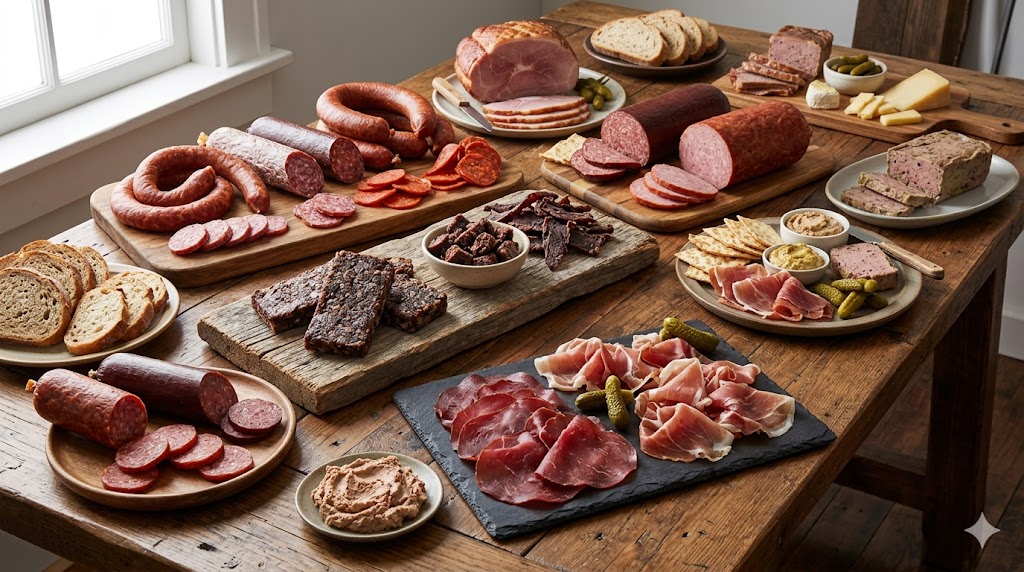
"Unprocessed meat is fine. Processed meat is bad."
Quick question.
What is it about the processing that makes it toxic?
Is it the act of grinding? Is the mince in your fridge a public health emergency? Is pemmican, the food that kept Arctic explorers alive on three-month sledging journeys, a slow-acting poison? Is the salt-cured ham hanging in a Spanish farmhouse for two years killing the family that has been eating it for generations?
Or is it the nitrates? The nitrates that do not survive your stomach acid. The nitrates your own salivary glands produce in larger quantities than a slice of bacon contains. The nitrates that beetroot is celebrated for and bacon is condemned for, in the same magazine, on facing pages.
Or is it the WHO classification? The one that lumped every cured meat on earth, regardless of ingredients, regardless of source, regardless of preparation, into a single category based on relative risk increases so small that the same statistical method would flag drinking tea, sitting near a window, and being Welsh.
In reality, if you find a sausage with three ingredients, all of which your grandmother would recognise, you are eating one of the most nutrient-dense, shelf-stable, convenient foods ever invented. Pemmican kept entire civilisations alive. Biltong runs on salt and air. A decent butcher's sausage runs on the pig.
Processed is doing a lot of work in that sentence. Most of it dishonestly.
Read the ingredients. That is the whole test.
English
@PaulGradenwitz @SamaHoole The caveat being, your local butcher doesn't do that...
English
@PaulGradenwitz @SamaHoole Piggy-backing on this. It's also the initial quality of the starting material. After the choice cuts have been taken, there's an old carcass with a heavy bacterial load. They skim and scrape the bones, give it an ammonia bath, rinse, shape and flavor it into processed meats.
English
@MathSRIsh Interesting. Probably not as many differences between oysters that influence taste... Just my guess. Your genetics on the other hand -- so many genes and variants influence how you taste the oyster.
pmc.ncbi.nlm.nih.gov/articles/PMC27…
English

Culinary genomics but different.
How many oyster genomes do you think we have sequenced?
I need someone to train a classifier of deliciousness from an organism's genome.
Mathurin Dorel@MathSRIsh
@josiezayner But if you care about food, then go for animals and plants.
English
1) 95% of commercially grown avocados in the US are a single cultivar: Hass.
That's not consumer preference. That's a biological constraint.
Avocados take 10–15 years to fruit from seed. Nobody breeds them. The feedback loop is too long and too risky for growers and breeders.
2) Presently, commercial growers bypass the juvenile phase by grafting — cloning Hass onto rootstock. Faster fruiting, but you're locked into existing genetics. Still takes 3-5 years to fruit.
There's no seed-to-phenotype breeding pipeline because no one wants to wait a decade to see if a cross worked. Not even much academic development either -- no PhD researcher or lab wants to wait a decade.
95% Hass isn't a choice. It's what we have because breeding is inhibited by time and economics.
3) Florachronos uses RNA-guided interventions to compress the juvenile phase.
Target: seed-planted avocado trees bearing fruit at year 3–4. That unlocks an active, highly compressed breeding pipeline for the first time in commercial avocado history.
No heritable genomic change. No GMO regulatory pathway.
4) Two products from the same treatment:
Orchard: Earlier-bearing trees, new variety development, and ROI in 3 years, not 10-15
Consumer: A Meyer Lemon-style container avocado — compact, fruiting, growable at home in a container. That product doesn't exist yet. Avocado doesn't normally produce fruit in a container. A few exceptions 'bonsai-style' trees available for purchase, but generally NO GO. It's a biological constraint.
Consumers already love avocados. They'd love one on their patio.
5) Founder: PhD in molecular bioscience and bioengineering. Team of scientific advisors assembled.
Pre-seed. Raising $3 M.
Phase 0 = a proof-of-concept in Arabidopsis.
18-24 month runway to a reproducible, flowering avocado phenotype and Series A trigger.
DMs open. Happy to talk shop and/or send the deck.
English

drop what you’re building
just the link
no pitch
I’ll go through everything ↓
English
Reintroducing myself as the fully integrated version of me and introducing the company I am building
open.substack.com/pub/jamesrgate…
English
Most advisory relationships obscure this. A senior person sells, a junior person executes. That is not what is happening here.
English
When a founder contacts me about a genomics decision, I am the person who picks up. I read the protocol. I audit the pipeline. I tell you whether your biological question is specific enough to be answered by the approach you have chosen.
English
GeneticX is a solo advisory practice. There is no team behind a curtain.
English
@TensorTwerker Check out the RNA of picornaviruses. Everything has structure and purpose in addition to being its template for reproduction. Cray cray structure going on over there
English

1/ I’m finding RNA design more interesting than peptide design right now.
The tooling is already converging: diffusion model, inverse folding, structure prediction, filters. RNA feels earlier and less mapped.
English
The plant has been accumulating viral passengers for eons. Many appear silent. What the active ones are doing is a more interesting question, and one I have not fully resolved.
English
Alongside the expected expression data, we found viral sequences of all sorts: an active community inside the plant, some of it endogenous. There were so many remnants of ancient infections, integrated into the genome over evolutionary time. And there were so many active infections too, even in plants that were grown in tissue-culture.
English
My doctoral dissertation started as a transcriptome study of Stevia rebaudiana — and became something stranger. Roughly a billion reads, sequenced across multiple plant tissues.
English