Paul_Gradenwitz

11.8K posts

Paul_Gradenwitz

Paul_Gradenwitz

@PaulGradenwitz

Father, Grandfather, chip designer, professor, interested in cosmology, drive Tesla, Tesla shareholder. I eat the carnivore diet because of the best health.

Zurich, Switzerland Katılım Kasım 2022
233 Takip Edilen1.7K Takipçiler
Sabitlenmiş Tweet
Paul_Gradenwitz
Paul_Gradenwitz@PaulGradenwitz·
Since I only can pin one post or article to my profile I changed that to a pinned post of articles I would like to share as wide a s possible Here an article about Cosmology: x.com/PaulGradenwitz… Here the explanation why we have gravity and inertia: x.com/PaulGradenwitz… Here a discussion why a BH has to be solid and nothing moves inside x.com/PaulGradenwitz…
Paul_Gradenwitz@PaulGradenwitz

x.com/i/article/1867…

English
12
5
60
12.4K
Paul_Gradenwitz
Paul_Gradenwitz@PaulGradenwitz·
@drterrysimpson Fine they win for many. They lose for me. I did those diets and kept deteriorating to the level where my feet skin was so soft that I got blood blisters from just fast walking. Once I changed to the carnivore diet I changed from surviving to thriving.
English
0
0
0
8
Dr Terry Simpson
Dr Terry Simpson@drterrysimpson·
You’re mixing a few true observations with a conclusion that doesn’t follow. Yes—humans have a smaller colon than gorillas. That’s because we are omnivores, not hindgut fermenters. We don’t need to re-eat feces to survive because we extract nutrients efficiently before the colon, and use the colon for supplemental fermentation (short-chain fatty acids, immune signaling, gut integrity). Smaller colon ≠ carnivore. It means mixed strategy. And the “how long foods have existed” argument cuts both ways. Humans have been eating plants, tubers, grains, and legumes for tens of thousands of years—with clear archaeological evidence of starch use (grinding stones, dental calculus). Cooking and food processing predate agriculture and made plant foods even more accessible. But here’s the part that matters: evolution tells you what you can survive on, not what optimizes long-term health in a modern lifespan. So we test it. Patterns like the Mediterranean model—quantified and tested in trials such as PREDIMED Trial—consistently show lower cardiovascular events and better metabolic outcomes than meat-heavy patterns. We are not gorillas. We are not lions. We are flexible omnivores. And when you actually measure outcomes—not stories about ancestors—the diets that lean heavily on plants win.
English
1
0
1
14
Dr Terry Simpson
Dr Terry Simpson@drterrysimpson·
And here we have the carnivore crowd saying fiber is bad - but hey, let be specific here .This is the old trick: take a niche experience, wrap it in confident physiology, and declare the textbooks overturned. Here’s the problem. Fiber isn’t “irritating debris.” It’s the primary substrate for the microbiome. Remove it and yes, stools may get smaller, less frequent, and easier to pass for some people. That’s not curing constipation, that’s reducing stool bulk and transit demand. Different mechanism, different outcome. And yes, some individuals—IBS, FODMAP sensitivity—feel better when they reduce certain fermentable carbs. That’s real. But that’s not an argument against fiber broadly; it’s an argument for targeted dietary adjustment, not a universal carnivore prescription. Meanwhile, the actual evidence base is dull but consistent: Higher fiber intake is associated with lower rates of constipation, diverticular disease, colorectal cancer, and cardiovascular disease. Fiber increases stool bulk, improves transit time, and feeds bacteria that produce short-chain fatty acids like butyrate—fuel for colonocytes, not “irritants.” The “I removed fiber and felt better” story is not wrong—it’s just incomplete and overgeneralized. This is why you talk to people who read and understand nutrition as opposed to someone who declares victory because they have the palate of someone on the spectrum
Sama Hoole@SamaHoole

Meat contains zero fibre. This is used to argue that meat causes constipation. Here is what meat also contains: zero plant matter, zero lectins, zero oxalates, zero insoluble fermentable debris requiring motility to move through the intestine, zero irritants, and zero of the compounds that, in sensitive individuals, cause the gut to seize, bloat, and perform what can only be described as an interpretive protest. Many people who switch to carnivore report that the constipation, which they had on their high-fibre diet and attributed to insufficient fibre, resolves completely. The working theory had been: not enough fibre. The actual issue was: too much of the things that irritate the gut lining. The solution they were given: more of the things irritating the gut lining. Specifically bran. The bran made things worse. The meat is being blamed for what the bran started. The bran is still being recommended.

English
5
5
45
3K
Paul_Gradenwitz
Paul_Gradenwitz@PaulGradenwitz·
Take all your menu items you would propose in your best diet and tell me how many years,they have been available for human consumption. Yes we are not obligated carnivores, but our nearest cousins, gorillas, that are strong herbivores, ferment the food in their colon and then shit on their hand to eat it again inorder to extract the nutrients out of it. Rabits and other herbivores do the same. We are not shit eaters. Our place to ferment food, our colon, is far smaller. We can extract some food there, but it is not the main method.
English
1
0
0
25
Dr Terry Simpson
Dr Terry Simpson@drterrysimpson·
“I get your message, but we’re ‘optimized’ for a carnivore diet” is a nice story—until you look at human physiology and outcomes. We are not obligate carnivores. We lack the short gut, the enzymatic profile, and the metabolic dependence on protein/fat seen in true carnivores. Instead, we have amylase for starch digestion, a colon designed for fermentation, and a microbiome that produces short-chain fatty acids from fiber—all signals of an omnivore built to handle mixed diets. And then there’s the inconvenient part: outcomes. Dietary patterns rich in plants—like the Mediterranean model validated in trials such as PREDIMED Trial—consistently show lower cardiovascular events, better metabolic health, and longer survival. Yes, humans can cope with many diets. We can survive on extremes. But survival isn’t the benchmark—health outcomes are. If we were truly “optimized” for carnivory, the best evidence wouldn’t keep pointing in the opposite direction.
English
1
0
1
33
Paul_Gradenwitz
Paul_Gradenwitz@PaulGradenwitz·
I asked Grok to analyze your studies. They are mostly based on self reporting. Mix that with the pinned opinion the carbs can't be bad, and you have a perfect storm to declare meat, in a menu of carbs, like spaghetti, seed oils, processed food item, as the single reason for all the trouble. I asked you for true pure carnivore diet studies. You respond with a plethora of studies that are done the wrong way.
English
0
0
0
22
Paul_Gradenwitz
Paul_Gradenwitz@PaulGradenwitz·
You can try to swamp me with articles. I will not do the meta research of trying to filter out those that base their results on a wrong method. If eating high processed food, seed oils, and carbs are mixed in a diet, and the the meat is blamed for what the other three did, then we talk about correlation and not causation.
English
0
0
1
32
Paul_Gradenwitz
Paul_Gradenwitz@PaulGradenwitz·
@Tellit007 I am on a trip and don't have my blood values at hand. I need to search since I don't memorize these.
English
1
0
1
4
Tellit Likeitis
Tellit Likeitis@Tellit007·
What is your ApoB or LDL-C? Whether you or I eat carnivore is not the argument. The argument is what the evidence shows. On Alzheimer's: the strongest causal evidence we have is from trials that cleared amyloid and slowed disease. CLARITY AD enrolled 1,795 patients, cleared amyloid with lecanemab, and produced 27% slowing of clinical decline. TRAILBLAZER-ALZ 2 enrolled 1,736 patients, cleared amyloid with donanemab, and produced 35% slowing. When removing the pathology slows the disease, that is mechanism confirmation. That is what a causal hypothesis looks like when it survives a trial. The dietary carb hypothesis for Alzheimer's has no comparable trial. Family observations are not the replication. Do better.
English
1
0
0
10
Paul_Gradenwitz
Paul_Gradenwitz@PaulGradenwitz·
@Tellit007 Have you tried the carnivore diet yourself? Or do you talk based on succession, on information provided by others. A pure carnivore diet removes the carbs that speed up Alzheimer and Parkinson. From my family background that is the big problem. I already see the benefits there.
English
1
0
0
11
Tellit Likeitis
Tellit Likeitis@Tellit007·
@PaulGradenwitz Yes, that is the mandatory reply as issued by the carnivore committee. They rarely tell their real number as it always reveals trouble while they hide behind "great HDL, trigs and ratios!" Fascinating.
English
1
0
0
5
Paul_Gradenwitz
Paul_Gradenwitz@PaulGradenwitz·
@TeslaBoomerMama I made a diet advice. It is up to you to take it. If you are to thin, then you will gain on that diet. If you are too much you will lose on that diet. Trey seriously the carnivore diet
English
0
0
0
66
AleXandra Merz 🇺🇲
AleXandra Merz 🇺🇲@TeslaBoomerMama·
Good morning ☀️ Getting too thin?
AleXandra Merz 🇺🇲 tweet media
Santa Barbara, CA 🇺🇸 English
401
6
647
76.4K
Paul_Gradenwitz
Paul_Gradenwitz@PaulGradenwitz·
@Tellit007 I have not seen any negative change of my blood values since my start of the diet although I tested every 3 months.
English
1
0
0
5
Tellit Likeitis
Tellit Likeitis@Tellit007·
That is a real result and it makes sense. Fatty liver responds well to caloric deficit by any means. The substrate driving hepatic fat synthesis drops, the liver clears. Your experience is consistent with that mechanism. The question is what happened to your ApoB while the liver was healing. In a meaningful proportion of people on high saturated fat carnivore protocols, ApoB rises. That is the number worth knowing, as that is the causal driver of CVD. Not to argue with your result. To make sure the liver win is not being traded off for a future cardiovascular event. Do you know your ApoB? If it's too high and carnivore works for you, there are ways to mitigate and have best of both worlds.
English
1
0
1
13
Paul_Gradenwitz
Paul_Gradenwitz@PaulGradenwitz·
What model, mouse? What diet method, questionnaire? There are loads of studies that you can bin directly because they are not worth the paper they are printed on. So, mentioning that it has been studied means as much as that you never considered the value of the studies. So, no real answer.
English
1
0
0
40
Paul_Gradenwitz
Paul_Gradenwitz@PaulGradenwitz·
@Tellit007 My bias is that I was severely deteriorating on a plant mostly low fat diet as advised by medics where my fatty liver got worse every check. I changed to the carnivore diet, and my fatty liver was gone in 3 months. My health returns. My mild arthritis healed in 2 weeks, etc.
English
1
0
2
11
Tellit Likeitis
Tellit Likeitis@Tellit007·
The 82-year-old is survivorship bias. The ones who died at 67 with elevated ApoB on high saturated fat are not in your image. On the RCT demand: you are eating the diet without one. The standard you are applying to the evidence does not appear to apply to your own choices. Fascinating.
English
3
0
2
47
Paul_Gradenwitz
Paul_Gradenwitz@PaulGradenwitz·
@drterrysimpson So, you want to twle the transport organisation's away where the cargo is the problem. The CDC already has dropped all Cholesterol recommendations but you stick to the old school. Stay on the latest level of misunderstanding!
English
0
0
0
44
Dr Terry Simpson
Dr Terry Simpson@drterrysimpson·
LDL isn’t the ambulance, it’s the traffic. When there are too many apoB particles, some get into the wall and stay there—and that’s how the fire starts. Lower the traffic, fewer crashes. That’s not theory, that’s trials, genetics, and pathology all agreeing. - oh, and inflammation can cause the cap of the plaque to rupture, so think of cholesterol as the TNT and inflammation as the fuse. A fuse without cholesterol does nothing.
Sama Hoole@SamaHoole

LDL doesn't cause heart disease any more than ambulances cause car crashes. It's a transport vehicle. It goes where it's needed. When there's arterial inflammation, caused by oxidised seed oils, chronic hyperglycaemia, smoking: LDL shows up at the site. We measured the ambulance. We prescribed a drug to reduce the number of ambulances. Nobody asked what kept calling them.

English
13
10
55
3.9K
Paul_Gradenwitz
Paul_Gradenwitz@PaulGradenwitz·
@drterrysimpson Louis 14 did have diarrhea. The doctors were trained in the method according to the Philosoph, Aristotle to look at the whole appearance of the person, and kept advising a laxative. They ignored the facts.
English
0
0
0
33
Paul_Gradenwitz
Paul_Gradenwitz@PaulGradenwitz·
@drterrysimpson Calling the Mediterranean diet the best means you compare with a group of diets missing the real winner. That biases your choice and your response is invalid. The real winner is the Carnivore diet, that is zero carbs. However, once trained in the university you can't admit it.
English
0
0
0
99
Dr Terry Simpson
Dr Terry Simpson@drterrysimpson·
I do love how people who have never gone to medical school are curriculum experts - yes we do study vaccines, immunology, virology, microbiology and yes we are the clinical experts who see disease.
Scott Pitkeathly@PitkeathlyScott

@drterrysimpson You’re are one of them Terry

English
74
190
1.8K
49.8K
Paul_Gradenwitz
Paul_Gradenwitz@PaulGradenwitz·
@ExploreCosmos_ No, space is expanding with respect to the unit if length that we define with our matter. The same observation will be true if space remains constant and all matter shrinks. So, expanding space, or shrinking matter, are two sides of the same scale change fact.
English
0
0
0
91
Erika 
Erika @ExploreCosmos_·
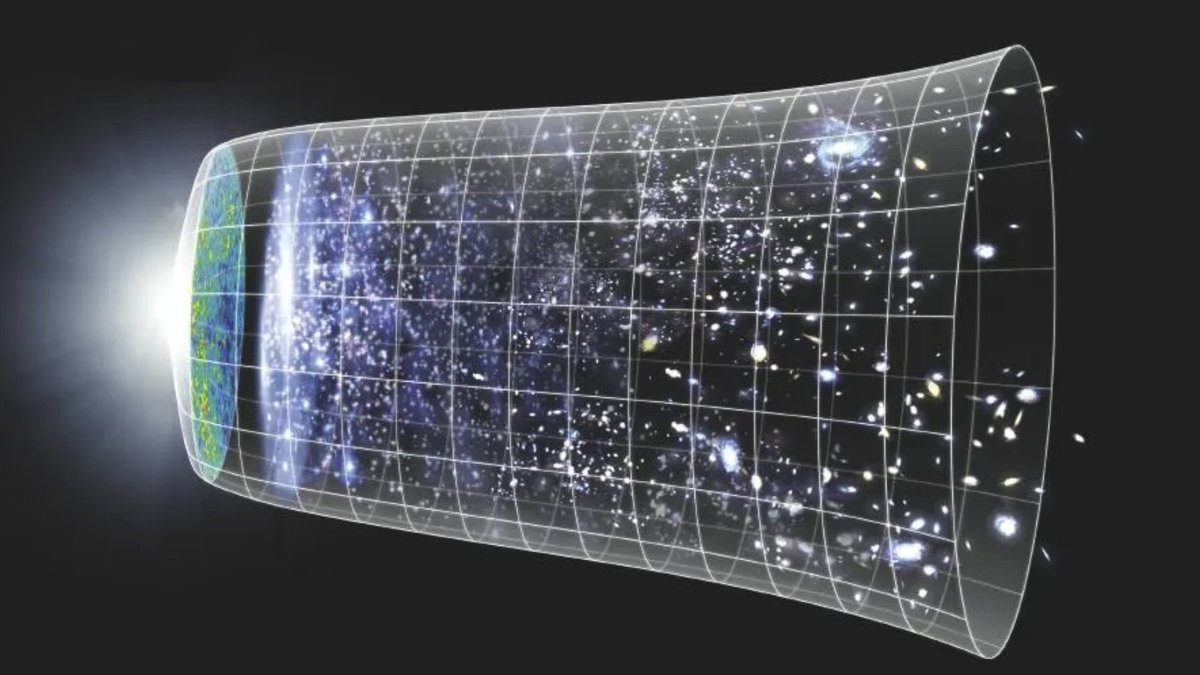
When we say the universe is expanding, they’re not speaking metaphorically. Space itself is stretching, and galaxies are drifting apart as a result. The rate at which this happens is encoded in a number known as the Hubble constant. In principle, it should be a single, well-defined value. In practice, it isn’t. And that’s where things get interesting. There are two fundamentally different ways to measure how fast the universe is expanding. One looks at the early universe, using the cosmic microwave background, the faint afterglow of the Big Bang. The Planck satellite mapped tiny fluctuations in this radiation with extraordinary precision. From that snapshot of the universe when it was just 380,000 years old, cosmologists can infer how fast it should be expanding today. This method gives a lower value. The other approach looks at the local universe, what’s happening much closer to us in cosmic terms. By measuring distances to nearby galaxies using standard candles like supernovae, and calibrating them with observations from telescopes such as the Hubble Space Telescope and the James Webb Space Telescope, we can directly estimate the current expansion rate. This method consistently gives a higher value. The problem is not that these measurements are slightly off. It’s that they disagree by more than they should, at roughly the 5σ level, well beyond what we expect from statistical uncertainty. This discrepancy is known as the Hubble tension, and it has become one of the most persistent and uncomfortable puzzles in modern cosmology. At first, many assumed it would go away. Maybe there were subtle calibration errors. Maybe some systematic bias hadn’t been accounted for. But as the data improved, the tension didn’t shrink. It became sharper. So now the question has shifted. Not “where’s the mistake?” but “what are we missing?” One possibility is that there are still hidden systematics in one or both methods. Measuring cosmic distances is notoriously difficult, and even small biases can ripple outward into large discrepancies. But the fact that independent teams, using different techniques, keep finding similar results makes this explanation harder to sustain on its own. The more intriguing possibility is that the standard model of cosmology—ΛCDM—might be incomplete. That model has been extraordinarily successful. It explains the large-scale structure of the universe, the distribution of galaxies, and the detailed patterns in the cosmic microwave background with remarkable accuracy. But it also relies on components we don’t fully understand, like dark matter and dark energy. If the Hubble tension is real, it could be hinting at new physics. Perhaps dark energy evolves over time instead of being constant. Perhaps there were additional relativistic particles, like unknown neutrino species, in the early universe. Or perhaps gravity itself behaves slightly differently on cosmological scales than we currently assume. None of these ideas are confirmed. But they are being taken seriously, because the alternative, that all these independent measurements are wrong in just the right way, is becoming increasingly unlikely. There’s also something deeper at play here. The two methods are not just different techniques, they are probing different epochs of the universe. One looks back to the very beginning, the other measures the present. The fact that they don’t agree may be telling us that the story of cosmic expansion is more complex than a single, smooth evolution. So which one is right? At the moment, we don’t know. And that’s precisely why this tension matters. Because when the universe gives you two answers to the same question, it’s usually not confused. It’s trying to tell you something.
Erika  tweet media
English
58
48
280
12.1K
Paul_Gradenwitz
Paul_Gradenwitz@PaulGradenwitz·
I had a fatty liver and people like you advised me to reduce the fat, eat less and di a lot of movement. This was while I was on a low fat, mostly vegetarian diet. I changed to a pure carnivore diet while I keot sitting at my desk and my fatty liver was gone in 3 months. So, I learned that the standard diet advice is simply not working. People with IBS are relieved from their trouble on the same carnivore diet while banning all fibers. Those who listened to their doctor and tried to heal their IBS with fibers, ended on the operation table and had to live with a bag.
English
2
0
1
509