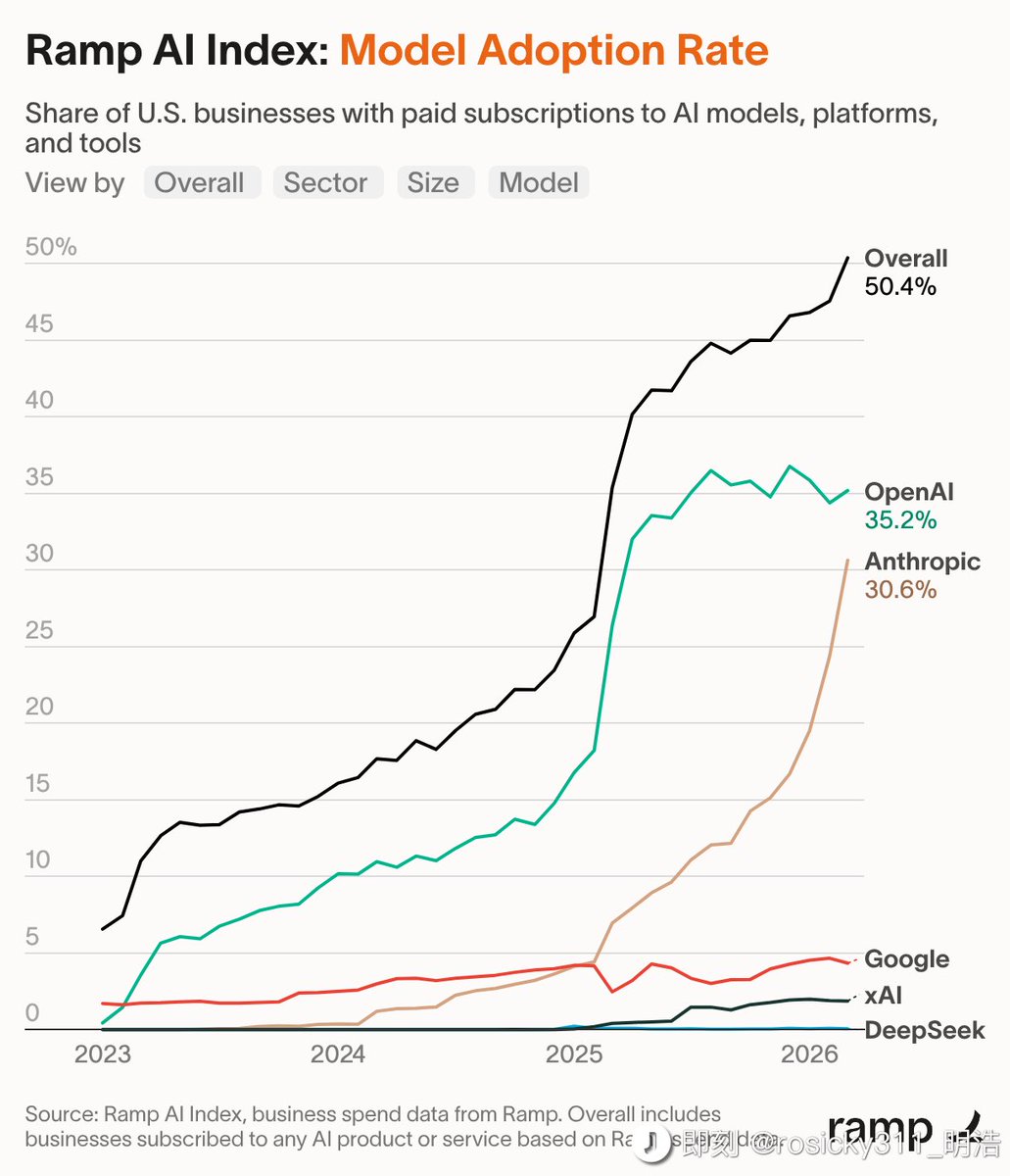
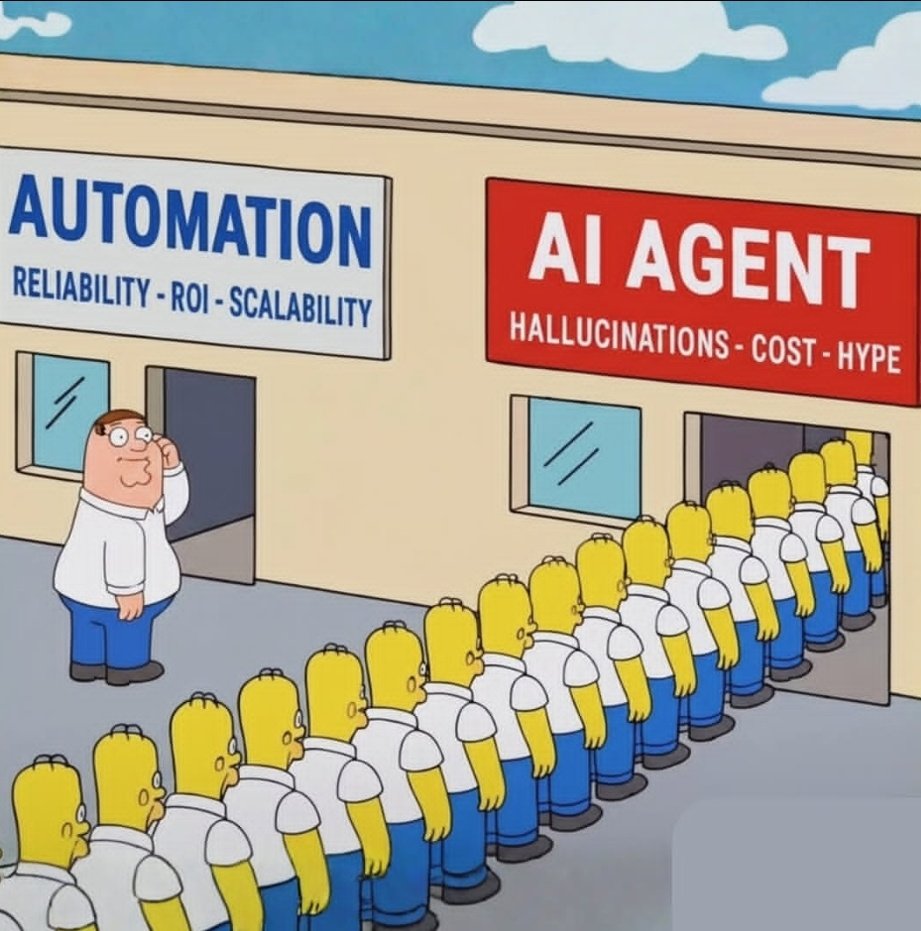
@dontbesilent 这是否能说明这个业务虽然风险很大,但一旦跑通,赚钱速度几乎是「印钞」级别,花费一点别的时间和精力都是在耽误,我有这种感觉是我用的那家连CC Switch上的流程都只有一张截图
中文
Leonard Chen
551 posts

@lunalunadic
lunadic.eth | AI enthusiast | Wealth Management | data analytics @NYUStern | private banker

一个反直觉的观点: 图文化不是进化,是退化 当下有一种流行叙事暗含着:“ 视频 > 图+文 > 纯文”,仿佛图文是更高一级的形态。 但在认知演化层面,这个判断完全反过来。 人类大脑约 30% 皮层用于视觉处理,文字只有 5000 年历史。视觉是原生通道,文字是文化技术 hack,它强行借用视觉皮层去承载抽象符号操作,它迫使大脑进行线性、序列化、去情境化的推理。 哲学、数学、法律、科学,都是这种“反自然”认知模式的产物。 而图文化(pictorialization)在认知模式上是退回视觉优先的前文字状态。短期爽,长期是抽象能力的流失。 很多传播学者早已论证: 每一次媒介从线性文字回退到图像&视听,群体的复杂思考能力都在下一代出现可观测的衰退。 想想现在的短视频流行...
SpaceX 宣布与 AI 编程工具 Cursor 达成深度合作,并获得了一个选择权:今年晚些时候,要么以 600 亿美元收购 Cursor,要么支付 100 亿美元作为合作费用。 Cursor 是目前最火的 AI 编程工具之一,很多开发者用它来写代码,它的核心能力是把 AI 模型嵌入代码编辑器,让写代码变得更快更智能。Cursor CEO Michael Truell 在 X 上表示,这次合作将帮助团队扩展 Composer(Cursor 的核心 AI 模型)的训练规模。 Cursor 在声明中说,团队一直想大幅推进模型训练,但被算力瓶颈卡住了。通过这次合作,他们将利用 xAI 的 Colossus 基础设施来大幅提升模型能力。 这里的关键背景是:今年 2 月,马斯克把 xAI 并入了 SpaceX,合并估值 1.25 万亿美元。SpaceX 旗下的 Colossus 超算号称拥有相当于 100 万块 H100 的算力,这是 Cursor 最看重的资源。而 SpaceX 正在筹备今年夏天的 IPO,很可能成为史上最大规模的上市。在 IPO 前绑定一个增长最快的 AI 编程工具,显然是为了给估值故事加码。 值得注意的是,Cursor 目前仍在销售和使用 Claude 和 GPT 模型,而 Anthropic 和 OpenAI 都在推自己的编程工具,这种关系本身就很微妙。与 SpaceX 的合作,可能就是 Cursor 为摆脱这种尴尬局面做的准备。 Cursor 的估值增长速度本身就是一个故事:去年 1 月估值 25 亿美元,5 月涨到 90 亿,11 月 Series D 轮融资后达到 293 亿,现在传出的融资估值已经超过 500 亿。600 亿美元的收购选择权意味着又一次大幅溢价。 对开发者来说,这件事的实际影响取决于 Cursor 拿到 Colossus 算力后,自研模型能提升到什么水平。如果 Cursor 真的训出了足够强的自有模型,它对 Claude 和 GPT 的依赖就会降低,产品的定价和功能策略都可能随之改变。至于 600 亿收购会不会真的发生,还是最终走 100 亿合作费的路线,目前双方都没有给出明确时间表。
今天读到一篇很锋利的论文,提出了一个概念叫「LLM 谬误」。什么意思呢,你用 AI 写出了一篇漂亮的分析报告,然后潜意识里开始觉得「我确实有这个水平」。 这不是幻觉问题(输出对不对),不是自动化偏差(太信 AI),是一种更阴的东西,你因为用了 AI,开始太信自己。 论文拆解了四个机制, 1)归因模糊。你丢了一句模糊的提示词进去,AI 吐出来一段结构完整、论证清晰的内容。你改了几个词,又丢回去,它又优化了一版。几轮下来,你已经分不清哪些想法是你的、哪些是它的了。人的大脑有个毛病,倾向于从结果反推作者身份,「这个东西是在我的对话里产出的,所以是我的」。 2)流畅性幻觉。AI 输出天然就语法正确、逻辑通顺、风格统一,看着就像一个资深人士写的。问题是人脑会把「读起来顺畅」自动等价于「写的人很专业」,这是一个认知捷径,你根本不会去审视内容到底是怎么生成的,表面的流畅直接就把你骗过去了。 3)管道不透明。传统工具你好歹能看到中间步骤,Excel 公式、SQL 查询,过程是透明的。但 AI 的检索、模式匹配、综合推理全部藏在黑箱里,你只看到输入和输出两头。中间它到底做了多少活,你完全无从判断,也就没办法准确地分配功劳。 4)认知外包。推理让 AI 推,组织让 AI 组织,措辞让 AI 润色,你自己参与的认知深度越来越浅。反复外包之后,你连评估自己到底懂不懂的能力都退化了。越依赖越不自知,越不自知越高估,正反馈循环。 这四个齿轮一咬合,感知能力和实际能力之间就裂开一道缝,而且是系统性的那种。 更要命的是往上捅到了制度层面。候选人用 AI 辅助做出高质量 portfolio,面试官只看产出根本判断不了独立能力;学生用 AI 完成作业,成绩不再反映真实理解;资质认证的信号价值被稀释。 这篇论文目前还是纯概念性的,没有实验数据。但它给一个东西起了名字,一个几乎每个 AI 重度用户都隐约感觉到、但没人正式说破的东西。 说真的,值得反复问自己一个问题,离开 AI,你还剩多少? arxiv.org/abs/2604.14807



继语音输入法泛滥之后 island 也泛滥了 资本主义还是低估了人类 人们没有商业利益人类也可以卷 😂

LLM Knowledge Bases Something I'm finding very useful recently: using LLMs to build personal knowledge bases for various topics of research interest. In this way, a large fraction of my recent token throughput is going less into manipulating code, and more into manipulating knowledge (stored as markdown and images). The latest LLMs are quite good at it. So: Data ingest: I index source documents (articles, papers, repos, datasets, images, etc.) into a raw/ directory, then I use an LLM to incrementally "compile" a wiki, which is just a collection of .md files in a directory structure. The wiki includes summaries of all the data in raw/, backlinks, and then it categorizes data into concepts, writes articles for them, and links them all. To convert web articles into .md files I like to use the Obsidian Web Clipper extension, and then I also use a hotkey to download all the related images to local so that my LLM can easily reference them. IDE: I use Obsidian as the IDE "frontend" where I can view the raw data, the the compiled wiki, and the derived visualizations. Important to note that the LLM writes and maintains all of the data of the wiki, I rarely touch it directly. I've played with a few Obsidian plugins to render and view data in other ways (e.g. Marp for slides). Q&A: Where things get interesting is that once your wiki is big enough (e.g. mine on some recent research is ~100 articles and ~400K words), you can ask your LLM agent all kinds of complex questions against the wiki, and it will go off, research the answers, etc. I thought I had to reach for fancy RAG, but the LLM has been pretty good about auto-maintaining index files and brief summaries of all the documents and it reads all the important related data fairly easily at this ~small scale. Output: Instead of getting answers in text/terminal, I like to have it render markdown files for me, or slide shows (Marp format), or matplotlib images, all of which I then view again in Obsidian. You can imagine many other visual output formats depending on the query. Often, I end up "filing" the outputs back into the wiki to enhance it for further queries. So my own explorations and queries always "add up" in the knowledge base. Linting: I've run some LLM "health checks" over the wiki to e.g. find inconsistent data, impute missing data (with web searchers), find interesting connections for new article candidates, etc., to incrementally clean up the wiki and enhance its overall data integrity. The LLMs are quite good at suggesting further questions to ask and look into. Extra tools: I find myself developing additional tools to process the data, e.g. I vibe coded a small and naive search engine over the wiki, which I both use directly (in a web ui), but more often I want to hand it off to an LLM via CLI as a tool for larger queries. Further explorations: As the repo grows, the natural desire is to also think about synthetic data generation + finetuning to have your LLM "know" the data in its weights instead of just context windows. TLDR: raw data from a given number of sources is collected, then compiled by an LLM into a .md wiki, then operated on by various CLIs by the LLM to do Q&A and to incrementally enhance the wiki, and all of it viewable in Obsidian. You rarely ever write or edit the wiki manually, it's the domain of the LLM. I think there is room here for an incredible new product instead of a hacky collection of scripts.

In honor of 50 years of Apple, we're sharing - for the first time ever - Don Valentine's original 1977 memo for Sequoia's investment into Apple Computer. #Apple50