anand iyer

17.6K posts

anand iyer

anand iyer

@ai

Managing partner Canonical · Venture Partner Lightspeed · Father · Husband · Few-shotting tech, open source

San Francisco, CA 参加日 Şubat 2008
636 フォロー中49.6K フォロワー
anand iyer
anand iyer@ai·
Chris has provided the clearest breakdown of robot world models that I've seen. The simplest way to understand them: an LLM asks "what word comes next?" A world model asks "what happens next in the physical world if I do this?" 3 types are competing right now: 1. Action-conditioned (V-JEPA 2, Dreamer v4): predict what happens given a robot's action. The purest approach, but predictions collapse within seconds. 2. Video world models (NVIDIA DreamGen, 1x): generate a video of the task first, then reverse-engineer the motor commands from the frames. No action labels needed to train. 3. Joint world-action models (DreamZero, Fast WAM): predict both video and action simultaneously. Currently winning on benchmarks. The best models don't even render video at test time. They just need to have learned what the world looks like in order to act in it. This matters because today's AI is essentially like a very well-read intern. Great at desk work, useless at unloading a truck. You can simulate billions of chess games, but you can't bake a billion cakes. World models trained on internet-scale video are how robotics closes that gap. Transformers made AI book-smart. World models give it physical intuition. Great read👇🏾
Chris Paxton@chris_j_paxton

x.com/i/article/2037…

English
5
12
67
12.2K
anand iyer
anand iyer@ai·
“My kids will never be smarter than a computer.” -@sama in response to @deedydas’s Q about how he thinks about the influence of AI as a parent.
English
0
0
10
1.8K
anand iyer
anand iyer@ai·
China built >40 state-backed exoskeleton data factories. Workers folding cloth, opening doors, stacking blocks, repeating each motion hundreds of times so a robot can learn what a hand already knows. No text corpus, no simulation gets you there. One of the only ways to give a machine physical intelligence right now is to pass it through a human body first. China is treating this as shared infrastructure worth building at national scale. Whereas here in the US, we are each collecting the same data inside walled gardens. Great read:
Divyansh Kaushik@dkaushik96

Harmonic drives. Servo motors. Rare earth magnets. Strain-wave gears. Exoskeletons worn by workers in Chinese factories repeating the same motion hundreds of times a day so a robot somewhere can learn what a hand already knows. Forty state-funded sites. Local governments providing space rent-free. New essay on why the AI competition is expanding. Link in reply.

English
3
18
100
11.3K
anand iyer
anand iyer@ai·
In 2020, right before the lockdown, @akashraju4 cold DM’d me asking for fundraising advice for his pre-seed. Today, Glimpse raised a $35M Series A led by a16z. Relentless execution by this team as they have navigated their way to PMF. Huge congrats team! Proud to have been a day 1 backer. Boiler up!!
anand iyer tweet media
Akash Raju@akashraju4

I’m extremely excited to announce that @try_glimpse has raised a $35M Series A led by @a16z with continued participation from @8vc & @ycombinator bringing our total raised to $52M. At Glimpse, we’re building the AI-native infrastructure for CPG & retail brands. We started off automating the deductions workflow - recovering brands millions of dollars back into their P&L & saving dozens of hours every week. With this initial focus, we’ve also built the CPG data layer giving us the opportunity to continue expanding to more manual workflows that can be automated. We’re giving CPG brands real operating leverage in the world of AI. To our 200+ customers including PLTFRM, Evermark, IQ Bar, Alice Mushrooms, and more, thank you for your faith in us. We have more fuel now to keep supporting & scaling with you all. We’re hiring - come join us! We’re just getting started.

English
3
2
18
3.5K
anand iyer
anand iyer@ai·
Almost everyone I know in tech is hacking on something on the side.
English
11
1
36
6.9K
anand iyer
anand iyer@ai·
Robotics sensor logs, self-driving car telemetry, hospital vitals - all time series, all dwarfing the text and video data the AI industry has spent years optimizing for. And the reason transformer models (Claude, ChatGPT etc.) can't forecast this well: they turn continuous numbers into discrete tokens, and that tokenization likely destroys the precision the problem needs. Google, Amazon, Datadog have all built proprietary models to compensate but those models only saw historical numbers, never the earnings report or policy change that caused them. @synthefyinc's Migas 1.5 is the first open-weights foundation model that combines text and time series to induce such exogenous information into time series forecasting natively. Early numbers: 75%+ win rate across 86 real-world datasets. 14.2% lower MAE. Weights on @huggingface. Or download & use their new skill directly in Claude.
Synthefy@synthefyinc

Today, we’re releasing Migas 1.5: the first foundation model to fuse text and time series. Until now, forecasting models have only looked at historical numbers. Migas 1.5 changes that by letting users incorporate real-world context directly into the forecast. This enables teams to forecast with essential context like earnings reports, policy changes, market events, supply shocks, and more. This directly results in more accurate forecasting and enables complex scenario analysis, especially when historical data is sparse. Highlights: - Highest Elo rating against leading foundation models on 86 real-world datasets - 75%+ win rate against all baselines (even Migas 1.0!) - Up to 14.2% lower MAE in short-context forecasting - Fully open source - Premade Claude skill to get you started in seconds We’re excited to open-source Migas 1.5 and eager to see what the community builds with it. Links in comments.

English
2
5
16
3.3K
anand iyer
anand iyer@ai·
The moat in robotics is the data flywheel. This is one of the most intellectually honest interviews in the space, given by @hausman_k. His core thesis, borrowed from "The Inner Game of Tennis": you can't program intelligence by writing rules. You have to learn it from data. This is the same insight that made LLMs work. We tried to hand-code language for decades (dating myself). Then we just... scaled data. Hausman thinks robotics is at that inflection, but the data problem in physical AI is fundamentally harder: - Language models: trained on the internet (trillions of tokens, free) - Vision models: trained on images (billions, cheap) - Robot models: trained on real-world interactions (expensive, slow, environment-specific) Simulation doesn't solve manipulation because "you'd need to simulate all of the external world". So, the moat is the data flywheel: deploy robots --> collect interaction data --> improve models --> deploy more robots. The Inner Game of Robots. Great interview, @mariogabriele.
Mario Gabriele 🦊@mariogabriele

@hausman_k is the co-founder and CEO of @physical_int, a robotics company building a general-purpose “AI brain for the physical world.” The company has raised more than $1 billion in funding to develop foundation models that allow robots to operate across many machines, environments, and tasks rather than being programmed for a single purpose. In our conversation, we explore: • The moment a lecture from Sergey Levine convinced him to abandon his PhD research direction and pivot fully to deep learning • The case for building a general “AI brain” for the physical world rather than a single specialized robot • The role of real-world data in training robots, the limits of simulation, and how deployment could create a powerful data flywheel • The unique challenges of physical intelligence and why robots must operate with far higher reliability than language models Thank you to the partners who make this possible - @brexHQ: The intelligent finance platform: brex.com/mario - @meetgranola: The app that might actually make you love meetings: granola.ai/mario Timestamps (00:00) Intro (04:05) Karol’s early fascination with robots (18:21) Karol’s entry point to robotics and PhD program (25:49) Combining robotics with LLMs: The Taylor Swift demo (30:48) The 1970s SHRDLU AI experiment (39:40) How research shapes what Physical Intelligence builds (49:07) The return of reinforcement learning in robotics (1:00:00) NVIDIA’s simulation engines (1:07:31) Compensating for missing senses

English
7
10
94
18K
anand iyer
anand iyer@ai·
This feels like physical product design's ChatGPT moment. This team just ran an autonomous agent against the entire chip design process: 219-word spec in, tape-out-ready silicon layout out, 12 hours later. The agent ran continuously against a simulator, found its own bugs, rewrote its own pipeline, and iterated to a working CPU! Chip design costs well over $400M and takes up to 9 years. Not because writing hardware code is hard (it is actually brutally hard) but because a respin costs 10 of millions. So teams spend more than half their total budget just verifying the design is correct before a single transistor is placed. That cost structure is why most chip designs never get built. Entire product categories that were previously too low-volume to justify a tape-out are now buildable.
Towaki Takikawa / 瀧川永遠希@yongyuanxi

Design Conductor: an AI agent that can build a RISC-V CPU core from design specs. The agent is given access to a RISC-V ISA simulator and manuals... to enable an end-to-end verification-driven generation. The most important thing for design intelligence is a verifier 😎

English
11
54
338
43.9K
anand iyer
anand iyer@ai·
Karpathy's autoresearch loop (write code, train for 10 minutes, check if it improved, keep or discard, repeat) is getting cloned in other verticals to improve models. Bitmind tshipped a deepfake detection toolkit built on the same chassis: point an agent at 60+ image datasets overnight, wake up to 50 iterated experiments and a competition-ready model. Thanks to Karpathy, this sort of autonomous ML research is becoming an essential primitive for frontier AI teams.
Ken Jon@kenjon

Agents are the future. Inspired by autoresearch and arbos we released our deepfake research training toolkit: DFResearch: github.com/BitMind-AI/dfr… Experiment autonomously to train the best deepfake detection models. Integrated to download data, output submission ready-results, and full guide to adding custom models, datasets.

English
4
1
35
6.3K
anand iyer がリツイート
Ryan Shea
Ryan Shea@ryaneshea·
Inspired by @karpathy’s autoresearch, I built Autofoundry — a simple CLI that lets you run experiments across cloud GPUs with one command: autofoundry run You get a real-time interactive table showing GPU availability and pricing across Runpod, Vast, Lambda Labs and PRIME Intellect. Pick what you want and it spins up the instances, streams results live to your terminal, aggregates metrics into a report, and tears everything down. A great first script to try is: scripts/run_autoresearch.sh The terminal UI is straight out of Neon Genesis Evangelion (w/ full NERV Central Command vibes) and the project is open source (MIT licensed).
English
9
12
163
14.5K
anand iyer がリツイート
Marisa Tashman Coppel
Marisa Tashman Coppel@MTCoppel·
1/ Big news: @phantom has received first-of-its-kind no action relief from the @CFTC. We can now connect users to regulated derivatives markets and event contracts without registering as an introducing broker. cftc.gov/PressRoom/Pres…
English
31
64
536
67.2K
anand iyer がリツイート
Purdue Men's Basketball
Purdue Men's Basketball@BoilerBall·
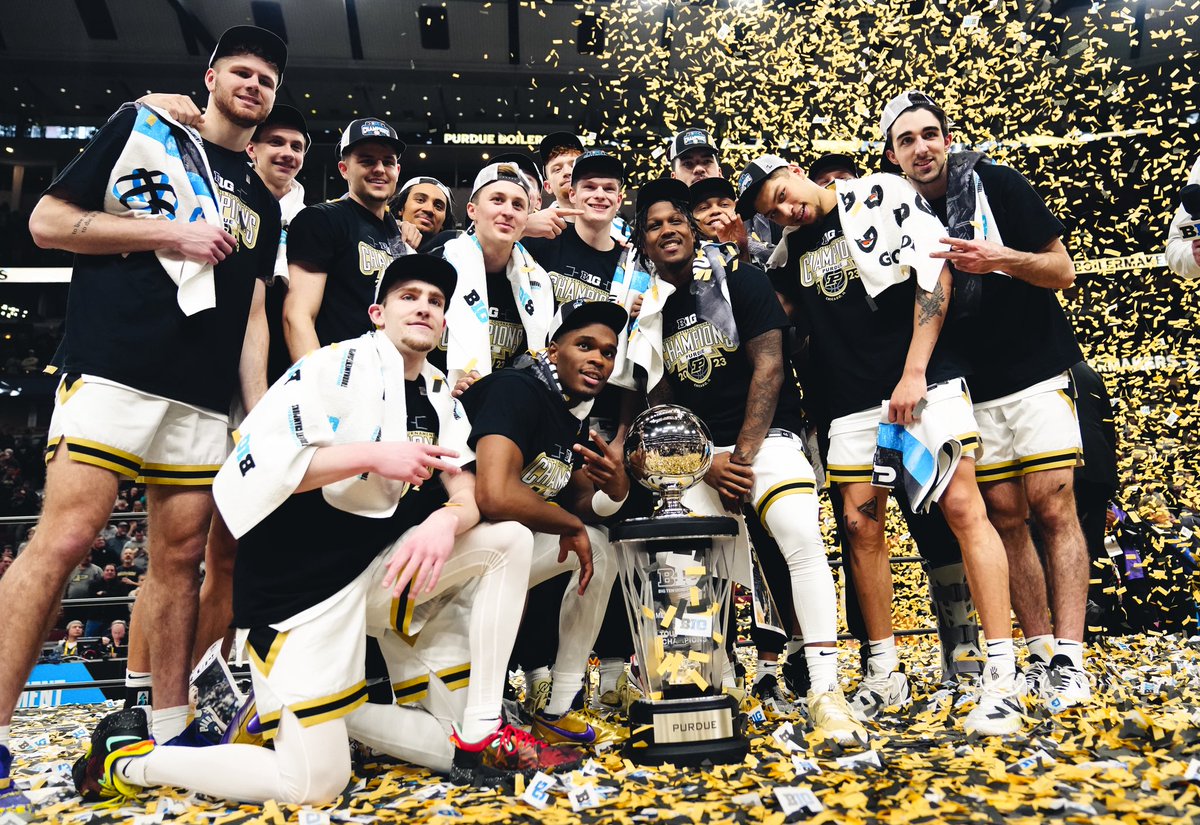
Déjà vu. 2023 - 🏆 2026 - 🏆 7 straight dubs in the United Center.
Purdue Men's Basketball tweet mediaPurdue Men's Basketball tweet media
Français
6
65
1.1K
18.2K
anand iyer がリツイート
Chris Paxton
Chris Paxton@chris_j_paxton·
They need to bring one of these setups to GTC
anand iyer@ai

Went to @DvijKalaria's lab @berkeley_ai and played ping pong against his robot, Oreo. I'd played a ton of ping pong as a kid. This felt appropriately surreal and one of those "I wish I could tell my highschool self about this" moments. Table tennis is one of the harder sports for robots to play. The ball can move up to 30+ mph with heavy spin, the human opponent's intent is hidden, and the whole body has to coordinate. Oreo is a full humanoid holding a real paddle, and it learned key motions like swings by watching Dvij demonstrate. No robot-collected training data. One person shows the motion, the policy generalizes. The way it works, as I understood it: - A smart system (a hierarchical planner) first figures out where the ball is going to fly and picks the best type of hit, like a forehand or backhand swing. - This plan then helps train the robot's "brain" (an RL policy) in a virtual simulation. The brain learns by trial and error, getting rewards when it mimics a few example moves - Once trained in the sim, the whole setup gets applied to the actual physical robot so it can play for real. The human demonstrations are essentially the reference motions. They are building a robot that has watched more human table tennis than any human has, and uses that to develop its own game. I still won. (Barely. But that won't last)

English
1
8
27
7.9K