CS

3.1K posts

CS banner
CS

CS

@CallMeCSZ

Just a stranger writing some stranger things on CT Binance square creator : https://t.co/bbE4Et9nVs

参加日 Ağustos 2020
624 フォロー中632 フォロワー
固定されたツイート
CS
CS@CallMeCSZ·
Not everyone starts with everything. But we share one thing in common. A belief that technology should be better, simpler, and closer to people. From small ideas, to the peak of glory, Vietnamese builders came together laying the first bricks on Rialo. The Vietnamese community @RialoHQ , at the first step, was just a small foundation until they found dreamers who shared the same vision. Together. Rebuild. Rethink. From Vietnam to the world. Shout out to my editor god : @novapino0504 he's cooking and helping me to made this dope 🔥 Thank you guys to spend a little time for watching my video 🫶 @aqccapital @Richardx122
English
47
19
116
9.4K
CS
CS@CallMeCSZ·
@quang250802 I’m homeless and unemployed S O S
English
0
0
0
7
Quang
Quang@quang250802·
No one will tell you you’re getting scammed until: - Someone DMs you first with a job and AI-generated website → scam - Unreal salary range for a basic role → scam - Working 6+ hours/day with no compensation → scam - No clear team / no doxx / no LinkedIn → scam - Paid in future tokens with no clear vesting → scam - Only communicates via Telegram, avoids calls → scam Did I miss something?
Quang tweet media
English
25
2
63
1.5K
CS
CS@CallMeCSZ·
@khaibillbill Bro Wadafak u spend too much money on this
English
1
0
1
22
khaibill
khaibill@khaibillbill·
gm and happy weekend ct. my br dont flex, just let the lifestyle speak.
English
44
1
69
1.7K
KirA
KirA@hieung173·
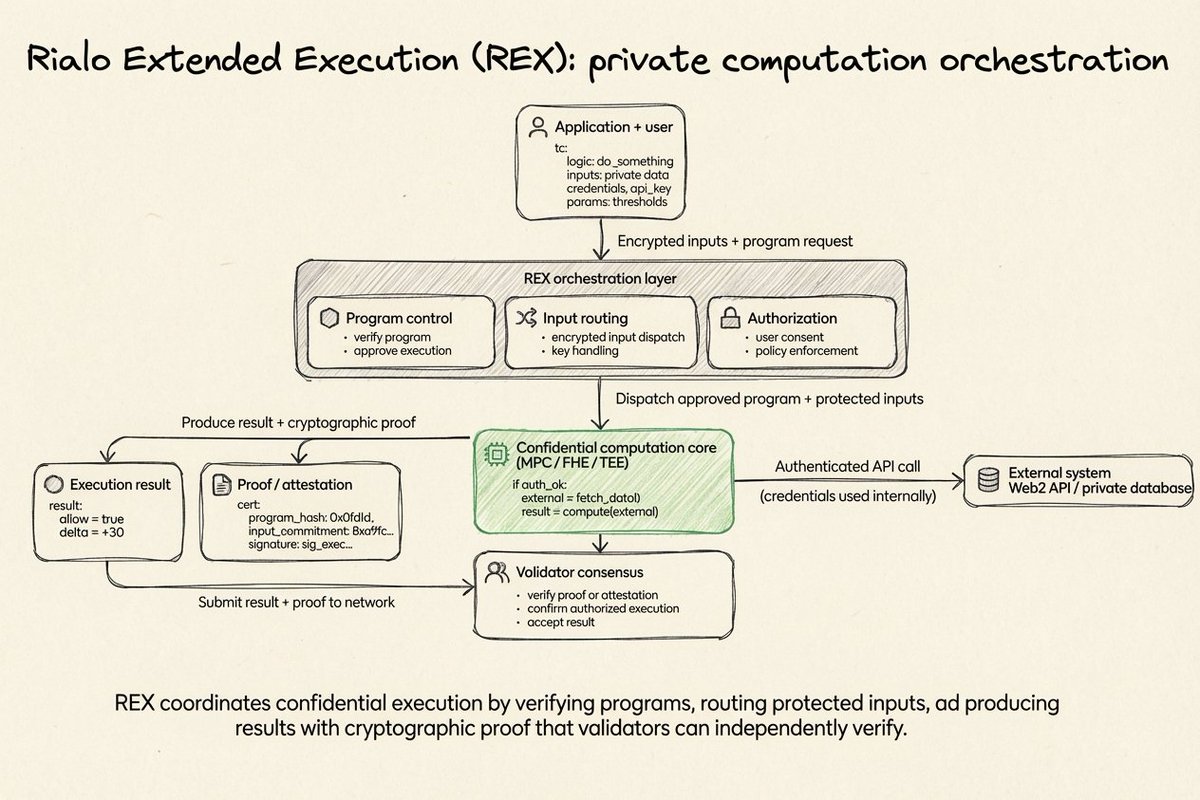
Web3 promised privacy. What we got instead was radical transparency. Every trade, every strategy, every interaction exposed. MPC, FHE, and TEEs tried to fix this. But they operate in isolation. No coordination layer. No unified flow. No standard for trust. @RialoHQ changes that with REX. A system where: • Programs are verified before execution • Inputs are encrypted and routed securely • Users explicitly approve every computation • Outputs are cryptographically proven Not just “hidden computation” but structured, verifiable, and programmable privacy.
KirA tweet media
English
5
0
13
111
Quang
Quang@quang250802·
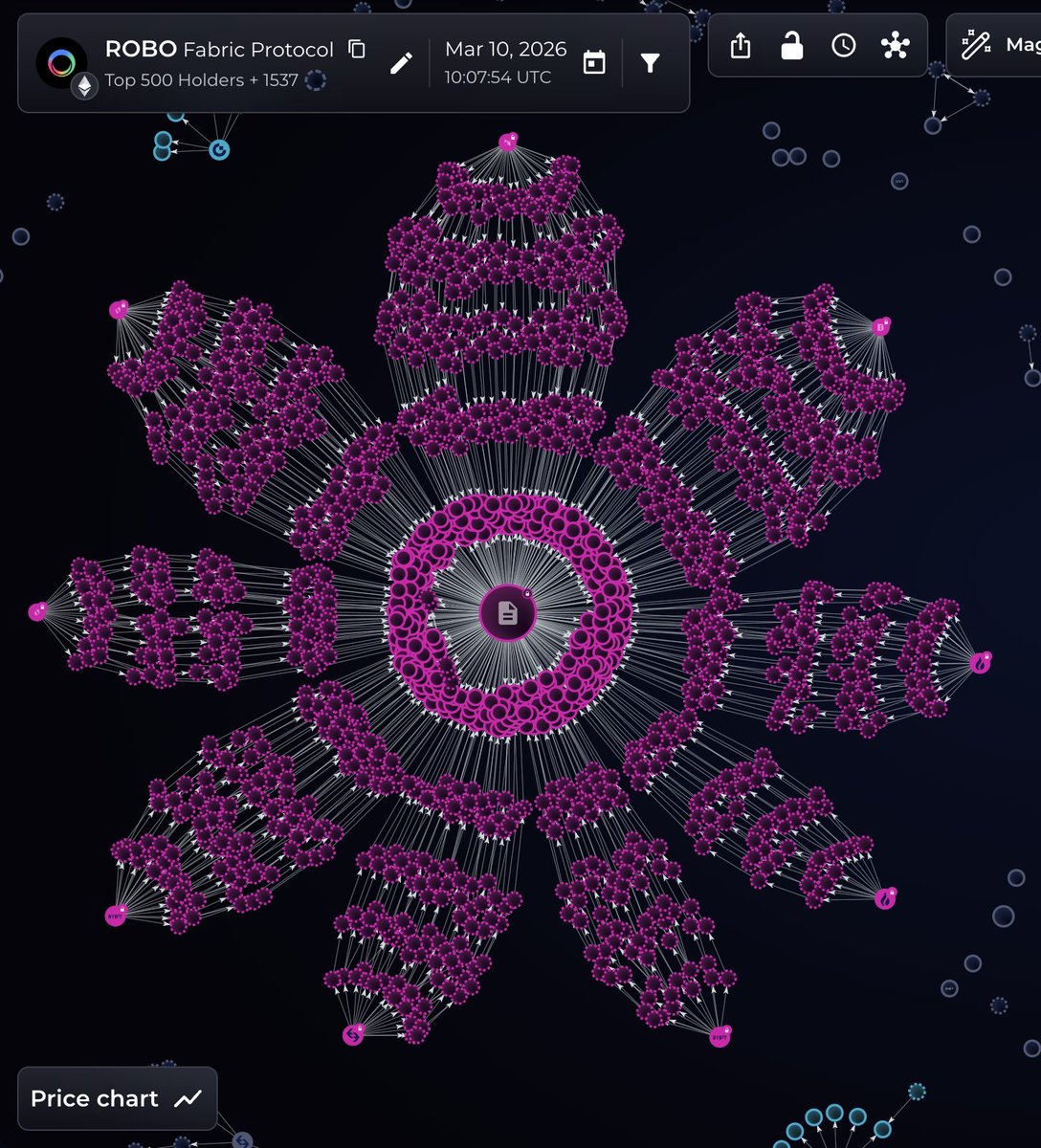
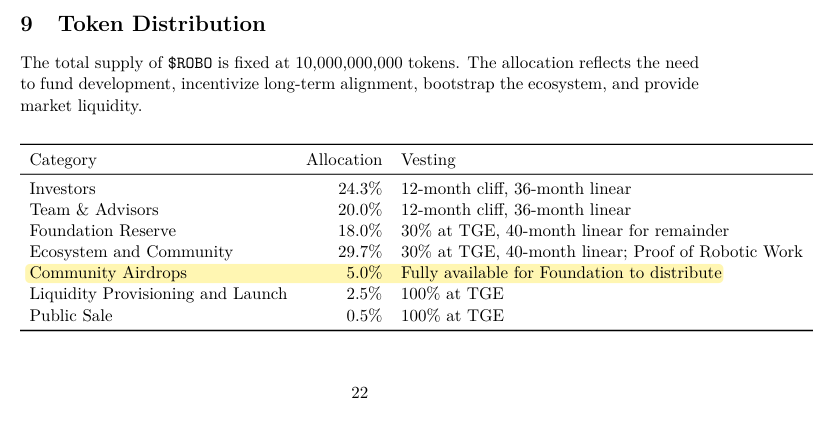
Why are more and more projects turning out to be scams? Recently, ~200M $ROBO tokens funneled into a single wallet, OpenMind is almost certainly the next biggest rugged. Many people will: - Wait for a “reasonable” explanation from the team - Defend the team to the end “this info is false” - Hope for another airdrop for community members - Keep hoping for season 2 But from my experience with similar projects, I’m pretty sure: > The team is probably throwing a big party with hot girls & champagne somewhere > They will stay silent and rely on the CM shield (iykyk) > Plan to replace or dump core community members > Run fake pumps in the future for sure > Then come back 2 months later as if nothing happened, launching OpenMind 2.0 campaign lol So why are scams happening more often? The team benefits the most → they cash out and run How to spot it early? During development, they often rely on cheap marketing tricks: - Referral campaigns - Empty promises of huge airdrops - “Community first” slogans - “10k OG roles for early supporters” If you see multiple of these signs, stay cautious
Quang tweet mediaQuang tweet mediaQuang tweet mediaQuang tweet media
English
18
3
46
1.6K
CS
CS@CallMeCSZ·
I used to think a signature meant something was trustworthy. If a document was signed, if a transaction was confirmed, if a record had some form of validation, I assumed that was enough. But the more I interact with different systems, the more I realize a signature doesn’t actually guarantee trust, it only shows that something was approved by someone. And that “someone” is the part we often ignore. Who issued it? Under what conditions? Should they even be trusted in the first place? Most of the time, we don’t verify that. We just see the signature and move on. That’s where things start to feel incomplete to me. Because a signature proves existence, not legitimacy. It tells you something happened, but not whether it should matter. Looking into @Sign made me rethink this a bit. Maybe the real value isn’t in signing things, but in attaching context to those signatures, turning them into something that can actually be verified instead of just accepted. If that’s the case, then trust doesn’t come from the signature itself. It comes from everything behind it. $SIGN #SignDigitalSovereignInfra
CS tweet media
English
1
0
3
49
0xviet
0xviet@0xvietnguyen·
airdrop projects may next bad oro neura op_net dango donut incentiv capony iopn konnex mawari billions genlayer fermah umi network opengradient pharos network humanoid network common point is social task and many discord role
English
72
3
151
7K
Quang
Quang@quang250802·
when you’re the only one bullish on a project while the whole CT says it’s a scam:
English
46
0
84
2.6K
CS
CS@CallMeCSZ·
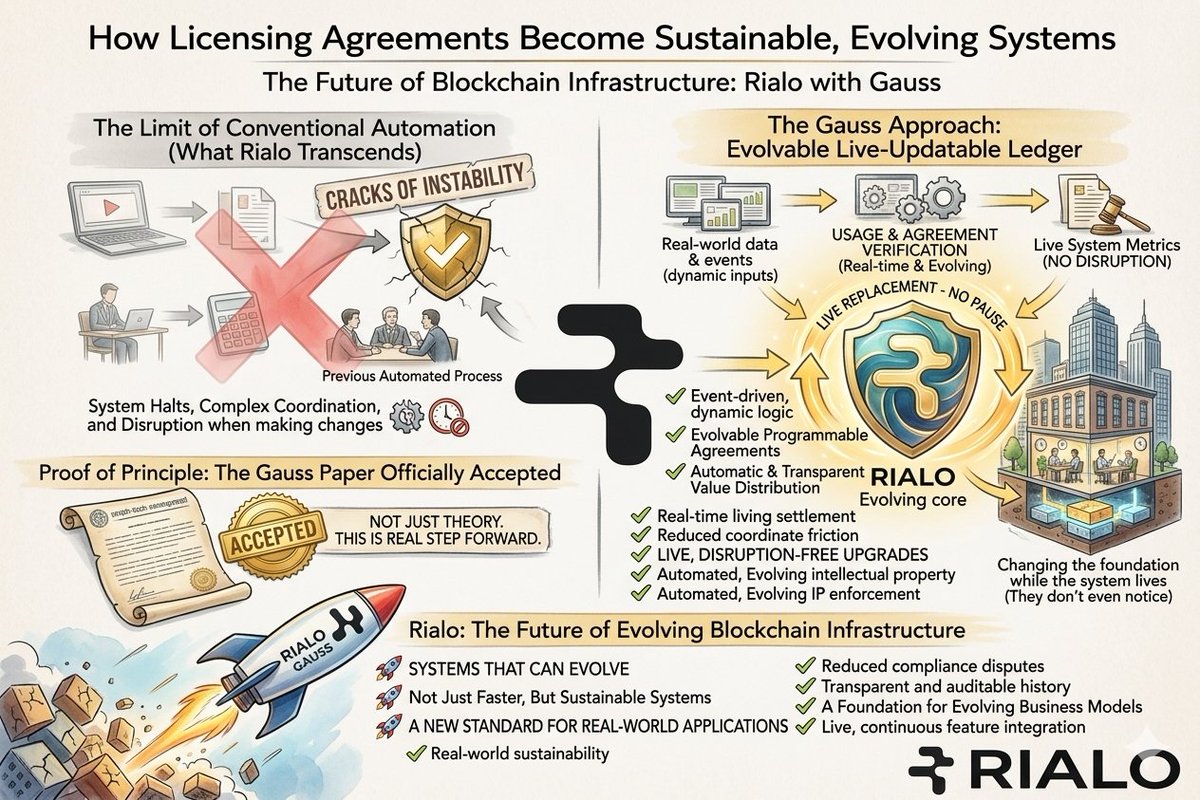
Most blockchains treat consensus like something fixed. But what if it didn’t have to be? Upgrading BFT systems today is painful. Coordinated. Risky. Often disruptive. Rialo takes a different path. With Gauss, consensus is no longer a rigid layer it becomes something that can evolve in real time. Hot-swappable protocols. Seamless validator rotation. Zero downtime. The key insight is simple, but powerful: separate what consensus does from how it’s implemented. That’s how you unlock true flexibility at the infrastructure layer. The fact that the Gauss paper is now officially accepted only reinforces what’s coming: Blockchains won’t just scale. They’ll adapt. And @RialoHQ is already building in that direction.
CS tweet media
Rialo@RialoHQ

BFT consensus protocols in production blockchains suffer from two problems: Upgrading them is a nightmare involving complex coordination and expensive downtime They can't handle a complete committee swap without disrupting network operation Rialo solves both with Gauss. Gauss lets Rialo hot-swap consensus protocols and validator sets without a second of downtime. It introduces a clean separation between a consensus protocol's inner log and a sanitized outer log. It allows committee membership, failure thresholds, and the consensus protocol itself to evolve independently. The Gauss paper has been officially accepted. Take a sneak peek at the paper written by Subzero’s very own @allenclement, @natachacrooks, @neilgiridharan, and @aleak 👇

English
9
0
21
396
Tanvir Nabil
Tanvir Nabil@tanvirnabil25·
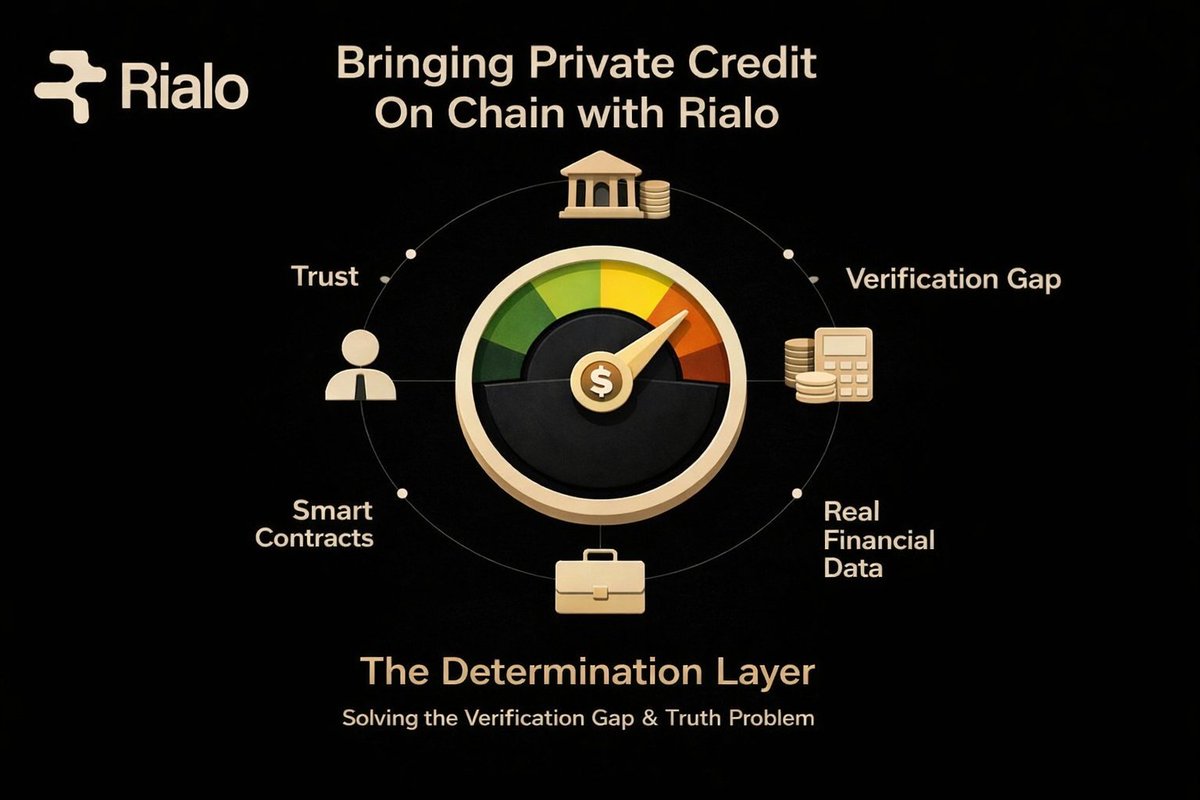
Bringing Private Credit On Chain with Rialo For private credit in traditional finance, trust and human oversight are key factors. At Rialo, we believe this does not have to be the case. Through smart contracts, Rialo ensures that every condition of a credit agreement is met without any human intervention. However this is only half of the equation. For us the real issue is not enforcement but truth. How can smart contracts possibly determine a firm’s cash flow, EBITDA and debt obligations on their own. This is where Rialo comes in. @RialoHQ ensures that every decision on a credit agreement is made based on real and truthful information. This is how Rialo brings private credit on chain and makes it more efficient, more transparent and more on chain without sacrificing any of its current features of privacy and control. @RialoHQ is not only bringing private credit on chain. It is also bringing a new way of thinking about the functionality of trust and verification in finance. The Rialo blog post discusses why the industry needs a determination layer to solve the verification gap and truth problem.
Tanvir Nabil tweet media
Rialo@RialoHQ

How do we bring private credit onchain? Smart contracts can perfectly enforce the rules of a credit agreement without a human in the loop, but they still rely on external inputs to determine the truth about the credit instrument before deciding how and when the rules should be enforced. Our blog post explores the verification gap and why the industry needs a Determination Layer to solve the "truth problem." Blog link below:

English
6
0
16
101
Rakib al hasan
Rakib al hasan@Rakibmi21383392·
That’s not sustainable for real world systems. @RialoHQ changes this with Gauss. No halts. No complex coordination. No disruption. It’s like changing the foundation of a building while people are still living inside and they don’t even notice. And now, the Gauss paper being officially accepted is a big signal that this is not just theory It's a real step forward for blockchain infrastructure. Rialo is not just building faster systems. It’s building systems that can evolve. That’s the future. 🚀 @RialoBangladesh
Rakib al hasan tweet media
Rialo@RialoHQ

BFT consensus protocols in production blockchains suffer from two problems: Upgrading them is a nightmare involving complex coordination and expensive downtime They can't handle a complete committee swap without disrupting network operation Rialo solves both with Gauss. Gauss lets Rialo hot-swap consensus protocols and validator sets without a second of downtime. It introduces a clean separation between a consensus protocol's inner log and a sanitized outer log. It allows committee membership, failure thresholds, and the consensus protocol itself to evolve independently. The Gauss paper has been officially accepted. Take a sneak peek at the paper written by Subzero’s very own @allenclement, @natachacrooks, @neilgiridharan, and @aleak 👇

English
37
0
69
488
RE:VERSE
RE:VERSE@reverse_tcg·
💎 WE JUST HIT 1000+ 💎 ✅ 1000+ on X ✅ 1000+ on Discord Congrats to everyone who got the early role. If not, no worries. This is just the beginning. Join us now! Let’s keep building together 🔥
RE:VERSE tweet media
English
341
283
505
6.1K
CS
CS@CallMeCSZ·
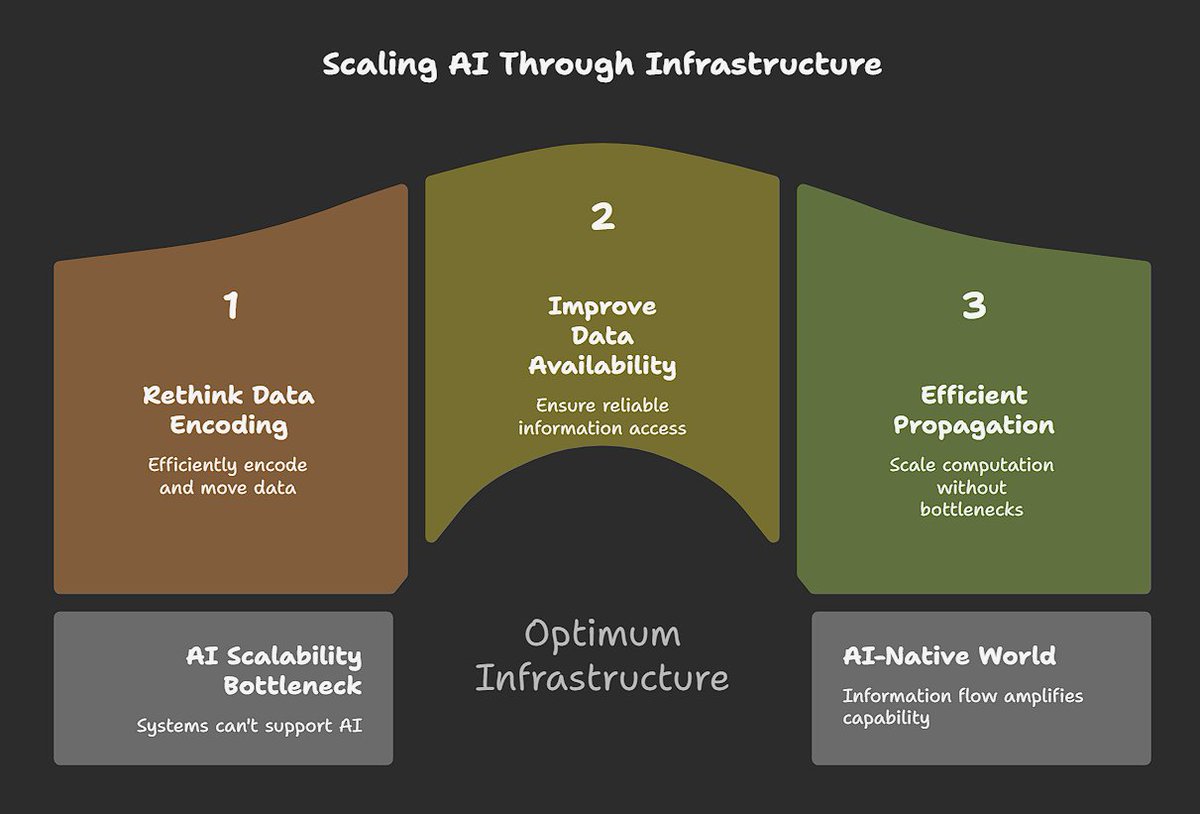
Most people think AI is about smarter chatbots. They’re missing the real shift. AI is becoming infrastructure. Not an app layer. Not a feature. But a foundational system like electricity or the internet. And like any infrastructure, the real bottleneck isn’t ideas. It’s throughput. Compute. Energy. Data movement. We’re entering a world where: -> Intelligence is programmable -> Discovery is automated -> Innovation cycles move at machine speed But this only works if the underlying systems can support it. Right now, they can’t. AI doesn’t scale because: -> Compute is expensive -> Data is siloed -> Systems are not designed for continuous learning This is not just an AI problem. It’s a systems problem. The next breakthrough won’t come from a better model. It will come from better infrastructure for intelligence. Systems that: -> Move data efficiently -> Encode information reliably -> Scale computation without bottlenecks This is where @get_optimum comes in. Not as another chain. But as infrastructure for high-throughput information flow. By rethinking how data is encoded, moved, and reconstructed (think RLNC, data availability, efficient propagation), Optimum targets the real bottleneck: throughput at scale. Because in an AI-native world: Information flow = capability And whoever solves data movement defines the limits of intelligence. AI is not replacing humans. It’s amplifying what systems can do. And the systems we build today will define the ceiling of intelligence tomorrow. The question is no longer: “How smart can AI get?” But: “Can our infrastructure keep up?” @aqccapital @blockchainjeff
CS tweet media
English
8
0
13
152
CS
CS@CallMeCSZ·
@0xDoTran great article brother
English
1
0
1
5