
Sabitlenmiş Tweet
Web³ Jefe
3.5K posts


Web³ Jefe
@blockchainjeff
Web3 Marketing & Community expert (9 years deep)✨ Opinions are my own 👽
Some Cyberpunk City Katılım Ekim 2017
2.8K Takip Edilen2.6K Takipçiler
Web³ Jefe retweetledi

The value of the work we're doing at @get_optimum
is encapsulated quite well by the phrase "speed is money". In modern markets there are real economic advantages to latency reduction. (с) @MurielMedard
Muriel Medard@MurielMedard
The value of the work we're doing at @get_optimum is encapsulated quite well by the phrase "speed is money". In modern markets there are real economic advantages to latency reduction. This is nothing new. Wall Street firms have long been optimizing on latency, primarily through colocation and top of the line hardware. However, when it comes to decentralized systems, expensive hardware and geographic concentration are antithetical to their purpose. Therefore we should optimize decentralized network latency through software, which I'm thrilled about because it's exactly what I've spent the better part of the past 2 decades working on with Random Linear Network Coding. Now let’s talk about networking economics, the relationship between speed and money. First, it's important to note that users will only pay for low latency if it can be consistently guaranteed. Second, you can only make that latency guarantee for a certain number of users. This is a universal law of networking. We can model this relationship on a delay curve, shown below. The delay curve is determined by the utilization rate of the network, meaning how much traffic is flowing through the network divided by the network's throughput. As you approach a level of traffic equal to the available throughput, latency trends infinitely higher. On this delay curve we can impose some utility thresholds. These thresholds are the levels of latency which are important to different groups of users because of how that latency guarantee improves their economic outcomes. Finding the point on the curve where each threshold intersects will tell us what level of traffic we can guarantee that level of latency for. Essentially, there exists a finite supply of speed on a network and the highest utility users of that speed are willing to pay more for it. I like to think of this similarly to expedited shipping options on Amazon. This is why we say speed is money, and why we can create a Latency Marketplace. The only way to increase the supply of speed is to fundamentally increase network throughput. This is what we work on at Optimum by using Random Linear Network Coding. The same relationship between traffic and throughput still applies, but now the delay curve is shifted out further to the right. Now more traffic can be processed at the same latency, or the same traffic can be processed at a lower latency. More speed available to the network. More value unlocked for the network’s users. Crucially, that value is no longer only reserved for those who can afford to sit closest to the machine. Expanding the supply of speed widens who can reach each latency threshold, keeping the network's advantage decentralized rather than concentrated in the hands of a few. When nodes join Optimum and participate, they reap the benefits, but they also add to the capacity. Rather than vying against each other in a zero-sum game, nodes help themselves and others.
English

English

See Optimum fam.
My friend @eth_Kuchiki built an
amazing memory card game for
the optimum community.
You should test your memory at
least one time.
Test here: optimum-memory-game-pearl.vercel.app
@get_optimum @blockchainjeff
Byakuya@eth_Kuchiki
🃏 𝗕𝘂𝗶𝗹𝘁 𝗮 𝗠𝗲𝗺𝗼𝗿𝘆 𝗖𝗵𝗮𝗹𝗹𝗲𝗻𝗴𝗲 Today I built an Optimum Memory Card Game for the community Match two identical cards, clear each level see how far your memory can take you Game Link optimum-memory-game-pearl.vercel.app @cryptooflashh @blockchainjeff
English
Web³ Jefe retweetledi

♾ Meet @get_optimum team in Q3/2026:
-----
🇺🇸 Flashbots MEV Workshop | July 30
🇸🇬 Nanyang Blockchain Conference | August 21-22
🇰🇷 Korea Blockchain Week | September 29 - October 1
🇸🇬 Digital Asset Summit Asia | October 7
🇸🇬 TOKEN2049 | October 7-8
-----
Save the calendar 🗓️ 👇
Pegasus@ada_pegasus
With a decade of experience: 🟢The Merge on the Besu client team 🟢Built at Blocknative 🟢Co-founded HellHound @sajidazouarhi - @get_optimum Chief Product Officer - is joining @ETHSofiaBG on September 24 in Sofia 🇧🇬 ♾ Optimum is building the Universal Data Acceleration Network powered by Random Linear Network Coding. Set our calendar: blockchainweek.bg
English
Web³ Jefe retweetledi
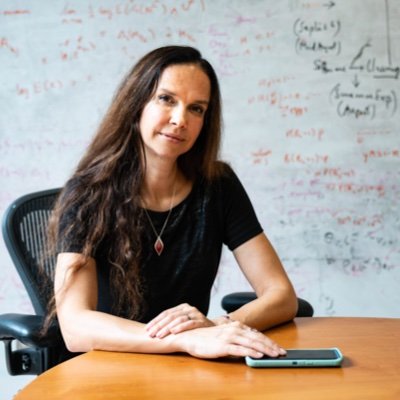
The value of the work we're doing at @get_optimum is encapsulated quite well by the phrase "speed is money". In modern markets there are real economic advantages to latency reduction.
This is nothing new. Wall Street firms have long been optimizing on latency, primarily through colocation and top of the line hardware. However, when it comes to decentralized systems, expensive hardware and geographic concentration are antithetical to their purpose. Therefore we should optimize decentralized network latency through software, which I'm thrilled about because it's exactly what I've spent the better part of the past 2 decades working on with Random Linear Network Coding.
Now let’s talk about networking economics, the relationship between speed and money.
First, it's important to note that users will only pay for low latency if it can be consistently guaranteed.
Second, you can only make that latency guarantee for a certain number of users. This is a universal law of networking. We can model this relationship on a delay curve, shown below.
The delay curve is determined by the utilization rate of the network, meaning how much traffic is flowing through the network divided by the network's throughput. As you approach a level of traffic equal to the available throughput, latency trends infinitely higher.
On this delay curve we can impose some utility thresholds. These thresholds are the levels of latency which are important to different groups of users because of how that latency guarantee improves their economic outcomes. Finding the point on the curve where each threshold intersects will tell us what level of traffic we can guarantee that level of latency for.
Essentially, there exists a finite supply of speed on a network and the highest utility users of that speed are willing to pay more for it. I like to think of this similarly to expedited shipping options on Amazon. This is why we say speed is money, and why we can create a Latency Marketplace.
The only way to increase the supply of speed is to fundamentally increase network throughput. This is what we work on at Optimum by using Random Linear Network Coding. The same relationship between traffic and throughput still applies, but now the delay curve is shifted out further to the right. Now more traffic can be processed at the same latency, or the same traffic can be processed at a lower latency. More speed available to the network. More value unlocked for the network’s users.
Crucially, that value is no longer only reserved for those who can afford to sit closest to the machine. Expanding the supply of speed widens who can reach each latency threshold, keeping the network's advantage decentralized rather than concentrated in the hands of a few. When nodes join Optimum and participate, they reap the benefits, but they also add to the capacity. Rather than vying against each other in a zero-sum game, nodes help themselves and others.
English
Web³ Jefe retweetledi

Meet Web³ Jeff @blockchainjeff : a powerful force in Web3 marketing & community building with 9 years of deep ecosystem expertise. As a key strategist for @get_optimum , he shapes its narrative, driving awareness for its breakthrough data acceleration network. 🚀🌐

Ares D Moon@aresdmoon
Meet Lewej Whitelow: Senior Technical Program Manager at Optimum leading protocol development & releases for mump2p. A battle-tested Ethereum ecosystem veteran, he brings deep Web3 product influence from his past TPM roles at OP Labs (Optimism) and Blocknative. 🚀⛓️ @get_optimum
English
Web³ Jefe retweetledi
Gmum ! @blockchainjeff @get_optimum This community is truly amazing 🚀, and i wanted to give something back to the amazing people who make this space what it is.
Made by me, 100% free for community! 🆓
Shipping to Indonesian regional mod @CryptoSundayz
Ask him to get it! 🎁
English
Web³ Jefe retweetledi

Blockchain data propagation is slow, consuming massive bandwidth. What if you could send equations instead of raw data, reconstructing it with 95% less bandwidth and 20x faster speeds? That's the power of RLNC, developed over two decades at MIT.
English
Web³ Jefe retweetledi
Crypto Dojo / Weekly regional AMA
2 July, 4 pm UTC
Today we'll be talking about a few exciting things.
1️⃣ @get_optimum is hiring a Senior Data Scientist. Maybe one of you is the right person for the role? 😁
2️⃣ I have an idea on how we can better organize our regional events, and I'd love to discuss it with you all.
As always, come with your questions. See you there!

𝚜𝚊𝚖𝚞𝚛𝚊𝚒.𝚒𝚝𝚊𝚗@samurai_itan
Crypto Dojo / Weekly regional AMA 25 June, 4 pm UTC We'll be discussing: 👉 the new APR Estimator and how mump2p can impact validator revenue 👉@get_optimum latest testing partnership with @puffer_finance 👉your best posts from last week And, of course, we'll make sure to answer all of your questions. Don't forget to set a reminder👇
English
Web³ Jefe retweetledi

We are hiring a Senior Data Scientist.
You will work at the intersection of networking infrastructure, decentralized systems, and empirical blockchain research, where millisecond-level differences can have meaningful economic consequences.
High ownership, high impact role. Fully remote.
Apply at: jobs.ashbyhq.com/optimum/ee9881…
English
Web³ Jefe retweetledi
Yieldmaxxing is already here!
This is exactly what @kentlinyy has been talking about.
And yeah, you might think: I've already heard a hundred guys like this who just know how to talk nicely.
But this is a different case, here, words are followed by action.
And one of those actions is the partnership between @get_optimum and @puffer_finance.
This partnership is about real infrastructure testing in near-production conditions.
👉@puffer_finance works with institutional staking and validators
👉@get_optimum focuses on how data is propagated efficiently across networks
Once this shows results in testing, the next step is scaling across the entire Ethereum staking and restaking layer.
And this is what real infra stories look like:
not empty hype, but under-the-hood impact that starts changing yield and system efficiency.

Optimum@get_optimum
Yieldmaxxing 101 Five important factors to consider when choosing where to stake your $ETH, with @kentlinyy.
English
Web³ Jefe retweetledi

Gmum fam! ♾
Weekly RU | UA AMA @get_optimum
📅 18.06 | 4 PM UTC
⚪️ Discussing the latest project updates and news
⚪️ Breaking down recent research on post-quantum security and why coding matters just as much as cryptography
⚪️ RLNC and how it enables ultra-fast data delivery across blockchain networks
⚪️ Talking about Ethereum staking strategies and the key factors behind maximizing yield
⚪️ Recapping the latest partnerships.
We’ll be glad to see you all and answer all of your questions live ♾
vssema@vssema11
Speed is money ♾ In Web3, thats not just a saying its an economic reality. The difference between earning a reward and missing it can be measured in milliseconds. A validator receives a block slightly earlier. A proposer has a little more time to select the highest MEV bid. An attester meets the deadline instead of missing it. ------------------------------------------- @get_optimum isnt trying to redesign blockchains from scratch, its focusing on something more fundamental,improving how data moves across them. Using RLNC, it aims to reduce propagation delays and make delivery more reliable, giving validators and networks more valuable time where it matters most. -------------------------------------------- Markets reward efficiency. And in a world where every millisecond can have economic value, optimizing data movement isnt just infrastructure. Its an investment in performance!
English
Awesome!🔥
Capzz@Capzzlord
be honest, how much of the last Optimum video do you actually remember? Not what you think you remember, what you can remember right now without going back to rewatch it. the truth is most of us consume content and move on. we just watch, give a like or comment and thats all a week later? half the details are gone. So I started thinking: What if learning about @get_optimum felt more like a game than homework? that's why I built Optimum Watch & Earn A simple platform that turns every new Optimum video into a community challenge. Here's how it works: every week we have an active video for the community. > Watch the latest video > Unlock a 5-question quiz based on the video's content > 20 seconds per question > The faster and more accurately you answer, the higher your score > Build streaks across multiple videos > Compete with your region on a live leaderboard And yes... the regional competition is real. • West Africa • East Africa • UK & Europe • North America • Diaspora every week, regions battle for the top spot. which means every correct answer isn't just helping your score alone, it's helping your entire region climb the rankings. The goal wasn't just to build another quiz, the goal was to make learning about Optimum more interactive, memorable, and fun. come rep your region and let's see who was actually paying attention link : optimum-watch-and-earn.vercel.app Built independently for the Optimum community because I wanted every new content drop to feel like an event, not just another video.
English
Web³ Jefe retweetledi
Consistently fast data propagation is how we optimize Ethereum's block supply chain. @sajidazouarhi
English
Web³ Jefe retweetledi

Web³ Jefe retweetledi

Wonderful night in NYC🗽 with our institutional friends. Welcome to the new Wall Street!
Optimum@get_optimum
The TAM is the entire global financial system & the ticker is $ETH. Cheers from the Optimum team, @BitMNR, @1kxnetwork, @BlockdaemonHQ and @Auros_global here at last night's Top of the Block event we hosted in NYC. 🥂 Catch us next week at @ethconf!
English
Web³ Jefe retweetledi
"𝘼𝙨𝙨𝙪𝙢𝙚 𝙚𝙫𝙚𝙧𝙮𝙩𝙝𝙞𝙣𝙜 𝙊𝙥𝙩𝙞𝙢𝙪𝙢'𝙨 𝙙𝙤𝙞𝙣𝙜 𝙞𝙨 𝙨𝙪𝙥𝙚𝙧 𝙨𝙪𝙘𝙘𝙚𝙨𝙨𝙛𝙪𝙡"
@tarunchitra sees our Latency Marketplace giving rise to blockspace futures markets, in turn tightening the spread for TradFi assets trading onchain.
English
Web³ Jefe retweetledi

Web³ Jefe retweetledi
Find something you believe in and go all in on building it.
@kentlinyy talks about dropping out of HBS to co-found Optimum.👇
English
Web³ Jefe retweetledi
Many people talk about quantum (PQ) computing like it's mystical. It isn't. It's math. The way we will secure data against it is also math, specifically, coding theory. Let me explain what that means, because much of the current PQ conversation is missing some important context.
Quantum computers work on qubits rather than bits. A bit is 0 or 1. A qubit can be described as something that can be 0, 1, or a distribution between them. That extra room is where the power comes from: a quantum computer is probabilistic, not deterministic, and it can solve specific problems that today's machines cannot.
The challenge is that as you compute, the qubits degrade. The state doesn't stay constant. Without robust, efficient error correction, a quantum computer can't scale. Error correction is a coding problem. So coding is one of the largest open obstacles to making quantum computing real at all, which is why so much of the heavy investment in this space is, at its core, an investment in better codes.
That same math is what protects us on the other side. To see why, the analogy I keep coming back to is a door and a lock. Every cryptosystem you use today protects a large surface (say a megabit of data) with a tiny key, say 128 or 256 bits. The lock is a small fraction of the door. That arrangement works against a classical attacker because they have to break the lock; there's no other way in.
A quantum attacker doesn't have that constraint. They can probe non-deterministically; they don't need to break the lock at all. They can look for a weak point anywhere on the surface of the door and punch a hole through it. You may not even know which part of your data they saw, maybe nothing important, maybe exactly what you wanted to hide.
Almost the entire PQ conversation today is about reinforcing the lock. Replace ECDSA, replace the key-exchange primitive, swap in a lattice-based KEM. That work matters and it should continue. But it is still a small reinforced patch on a very large door.
The real question is how you reinforce the whole door. The math for that has existed since the 1970s: the McEliece cryptosystem, the granddaddy of post-quantum schemes, and the main one I personally trust. It has withstood half a century of attacks by cryptographers without a fundamental break—a track record little else in this space comes close to.
The problem with McEliece is not security. It is pain. Applying it to a full payload is, if you forgive the grim comparison, like chemo: it kills the tumor and almost kills the patient. That is why nobody deploys it broadly. The lock is small enough to absorb the cost; the door is not.
This is where coding solves the second half of the problem. The construction my collaborators and I developed, HUNCC (Hybrid Universal Network Coding Cryptosystem), splits the data into coded pieces and applies the expensive PQ encryption to only a small fraction of them, maybe a few percent, or less. An attacker who breaks in sees a system of equations with one unknown they cannot recover. One unknown in a coded system is a hyper-strong key, and the protection lives everywhere on the data, not just at the lock.
The point is not that this replaces ML-KEM or any other PQ KEM. It doesn't, and I wouldn't claim it does. The point is that coding is what makes post-quantum security something you can actually deploy at speed, across the whole door, without paying the chemo cost everywhere.
Coding is what is currently blocking quantum computing from becoming real, and coding is what will make quantum safety real. The math has been here for fifty years. What we have been missing is the path from correct-but-unusable to correct-and-fast.
More to come.
English