Anton Gerashchenko@Gerashchenko_en
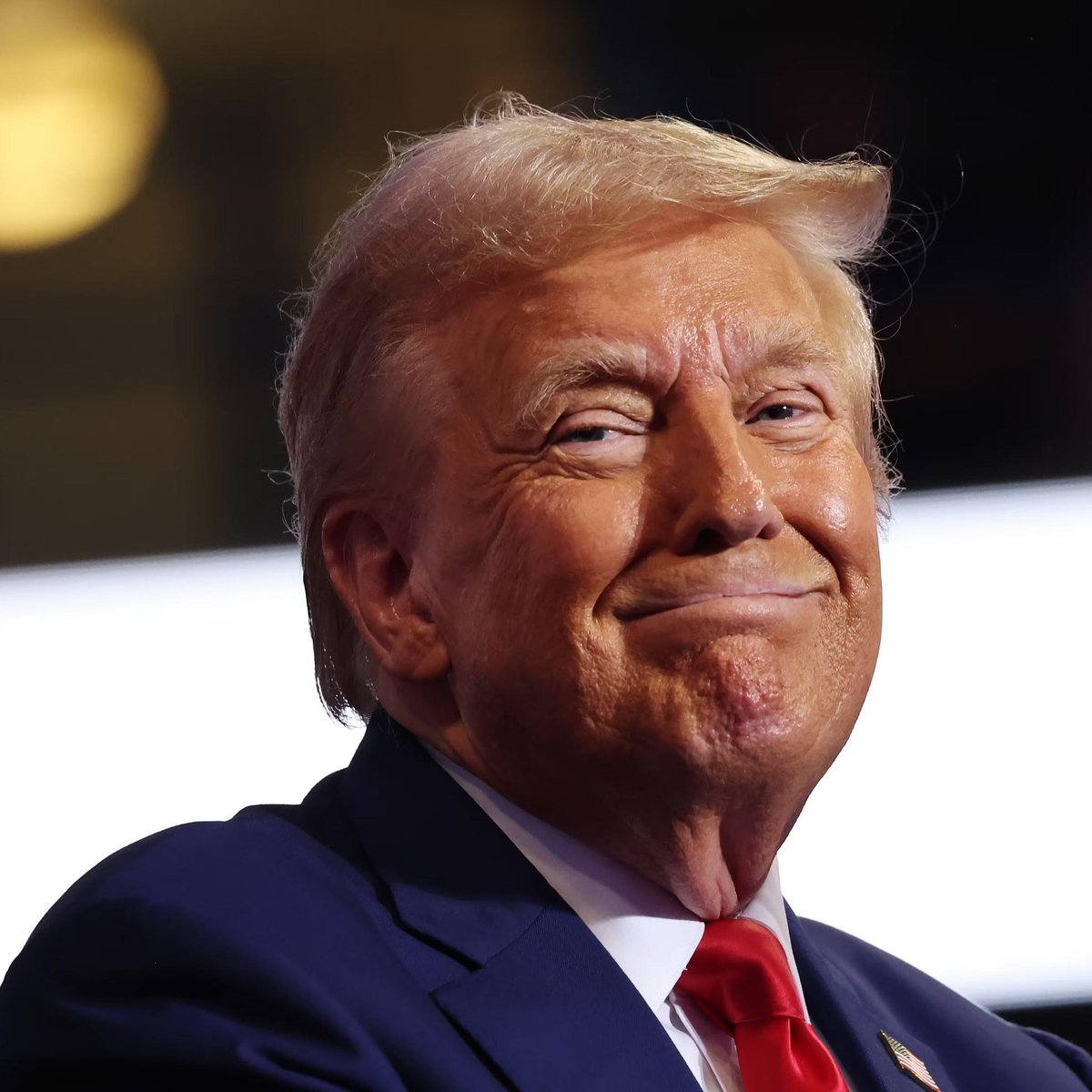
Recently, President Trump publicly said that the United States doesn't "have to be there for NATO." US Defense Secretary Pete Hegseth refused to directly confirm the US commitment to Article 5, saying that it is up to President Trump to decide.
Europe will likely have to realize that the moment when it finds itself facing its problems alone is much closer than it seems.
I've tried to look at possible scenarios and critical vulnerabilities for Europe in case the US withdraws from NATO.
From a legal point of view, the US withdrawal from NATO is a slow and complex process: under Article 13, it takes at least one year after notification. Additionally, starting from 2023, the US president cannot do this alone - a two-thirds majority in the Senate or an act of Congress is required. But the problem is that even without a formal withdrawal, Washington can already significantly weaken NATO politically, militarily, and psychologically. And that's exactly what is happening.
At the same time, Europe is no longer where it was ten years ago: defense spending is rising rapidly. But this still does not replace the United States. Key dependencies remain - nuclear deterrence, command and control, intelligence, logistics, long-distance transport, missile defense, and ammunition stocks. There is no strategic autonomy yet.
◼️Scenario 1. Shock without withdrawal.
Most likely, Trump will not formally withdraw the US from NATO. Instead, he undermines the Alliance through threats, humiliating allies, and doubting Article 5. NATO does not collapse, but begins to crumble from within due to mistrust.
In this scenario, Europe frantically rearms itself but still counts on the American security umbrella. And for Russia, this is an almost perfect window of opportunity: not for a major war with NATO, but for sabotage, cyberattacks, provocations in the Baltics and the Arctic, and strikes against critical infrastructure. Moscow's goal is to prove that NATO is incapable of acting.
◼️Scenario 2. A de facto withdrawal without a de jure withdrawal.
This is the most dangerous scenario: The US formally remains in NATO but effectively undermines the Alliance from within - reducing its presence, stalling decisions, and making security guarantees conditional. This is something Trump could do, as it does not require a complex legal procedure. For Europe, this is the worst kind of uncertainty: NATO seems to exist, but whether it is capable of acting is unknown. For the Kremlin, this is also very convenient, especially if Russians are confident that the US will not respond.
◼️Scenario 3. The formal withdrawal process is initiated, but resistance emerges in the US.
Trump attempts to turn threats into legal action. And this is where the resistance begins: the Senate, Congress, the courts, some Republicans, Democrats, the Pentagon, and the foreign policy apparatus. Formally, NATO will remain in place for at least another year. But the strategic blow comes sooner: the very initiation of the procedure undermines the basic assumption that the US remains the reliable core of the Alliance.
◼️Scenario 4. Europe becomes independent.
This is a forced adaptation. Europe accelerates its rearmament, integration, and joint production. NATO does not disappear, but becomes less American: the US weakens as a political center, while Europeans become more influential. The problem is that this transition is slow and dangerous. The money is already there, but command, production, and nuclear gaps cannot be closed quickly.
◼️Scenario 5, the worst one: A crisis within NATO coincides with a Russian strike.
Moscow is not waiting for the Alliance to collapse. It needs only a moment when trust in Article 5 has vanished, and Europe hasn't yet had time to get stronger. Then, rather than a major war, there will be a limited strike aimed at causing a split: sabotage, a cyberattack, or an attack on infrastructure. The goal is not necessarily to seize territory. The goal is to demonstrate that NATO is incapable of responding quickly, unanimously, and decisively.
◼️For Ukraine, the consequences are direct. Any erosion of the US role in NATO simultaneously reduces the predictability of support for Kyiv, increases the burden on Europe, and strengthens the Kremlin's temptation to expand the war as a tool to pressure the entire European order. The question of NATO's reliability directly affects Ukraine. It is a question of whether Europe can adapt quickly and maintain political stability and unity in the face of a real threat.
Finally, it is worth mentioning President Trump's claims to Greenland, which, in light of his intentions regarding NATO, add further grounds for concern.