固定されたツイート
Not Indexed
7.4K posts

Not Indexed
@Error_HTTP_404
#Architectural Contemplator.
Obviously not here 参加日 Kasım 2013
655 フォロー中197 フォロワー

SGA continues to lead the league in dramatic falls, establishing himself as the clear King of Floppers.
Despite the evident volume and quality of his performances, the @NBA has yet to introduce an official Flops Per Game statistic.
One must also note the conspicuous absence of a @Polymarket dedicated to this category.
This represents a notable gap in both analytical coverage and market efficiency.
English

RF-DETR is now available in @huggingface transformers
state of the art in both detection and segmentation, outperforming YOLO architectures
- checkpoints: huggingface.co/Roboflow/models
- demo: huggingface.co/spaces/hugging…
- docs: huggingface.co/collections/me…
English

Two paired skills I have been building with Claude, forming a single apparatus.
The Référentiel indexes what is established across our exchanges, concepts, decisions, methodological constraints. NOÉSIS, its mirror, indexes how those results were reached: the cognitive operations themselves, externalised so they can be audited rather than merely trusted.
Neither is written in ordinary prose. Both use a constructed notation grounded in Sumerian grammar, ergative–absolutive alignment and agglutinative verbal morphology. Entries combine determinatives (domain, agent), conceptual logograms, and, in NOÉSIS, a closed set of cognitive verbs.
The ergative alignment is not ornamental: because it marks the agent of a transitive action distinctly from its patient, the notation compels every recorded operation to name who reasoned and on what, and forbids the two from blurring.
Two further constraints define the system. Claude reads and may propose an entry, but never writes, I validate each one. And a coherence audit is native: any record of knowledge can be checked against the cognitive operation that produced it.
Knowledge on one side, the thinking that produced it on the other, both written in the same script, which is precisely what lets one audit the other.
English

DisneyResearch|Studios in Zürich, the joint research laboratory between Disney and ETH Zurich, was officially announced on 11 August 2008 as part of Disney’s global R&D initiative that also included a collaborative lab with Carnegie Mellon University.
Since then, it has conducted frontier research in AI, visual computing, robotics, and human-machine interfaces, some of which were reportedly a decade ahead of industry standards.
Its primary focus remained academic, resulting in limited commercialization partnerships.
An underrecognized collaboration whose advanced interfaces could support broader AI adoption.
Hook since that's day.
#DisneyResearch #ETHZurich
English

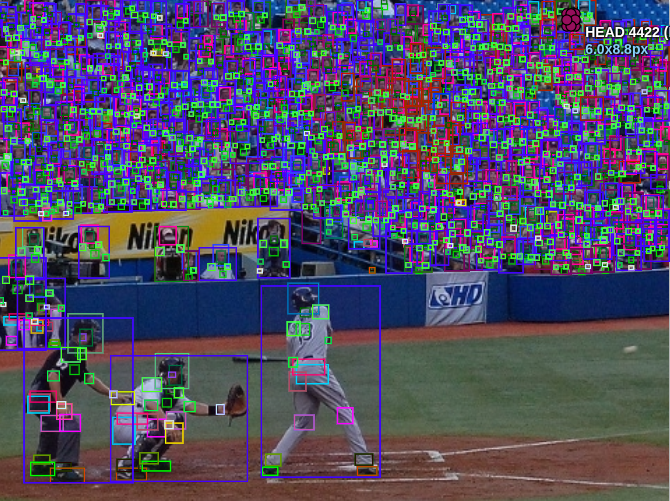
Alright, it's time for a paper thread about my own first ever vision paper, which is having a bit of a moment on twitter rn thanks to @PINTO03091 and @yacineMTB.
BiternionNets: continuous head orientation from discrete labels.
Demo video from ~11y ago:
Super PINTO@PINTO03091
なんてシンプルな実装なんだ。めちゃくちゃ良いぞ。
English

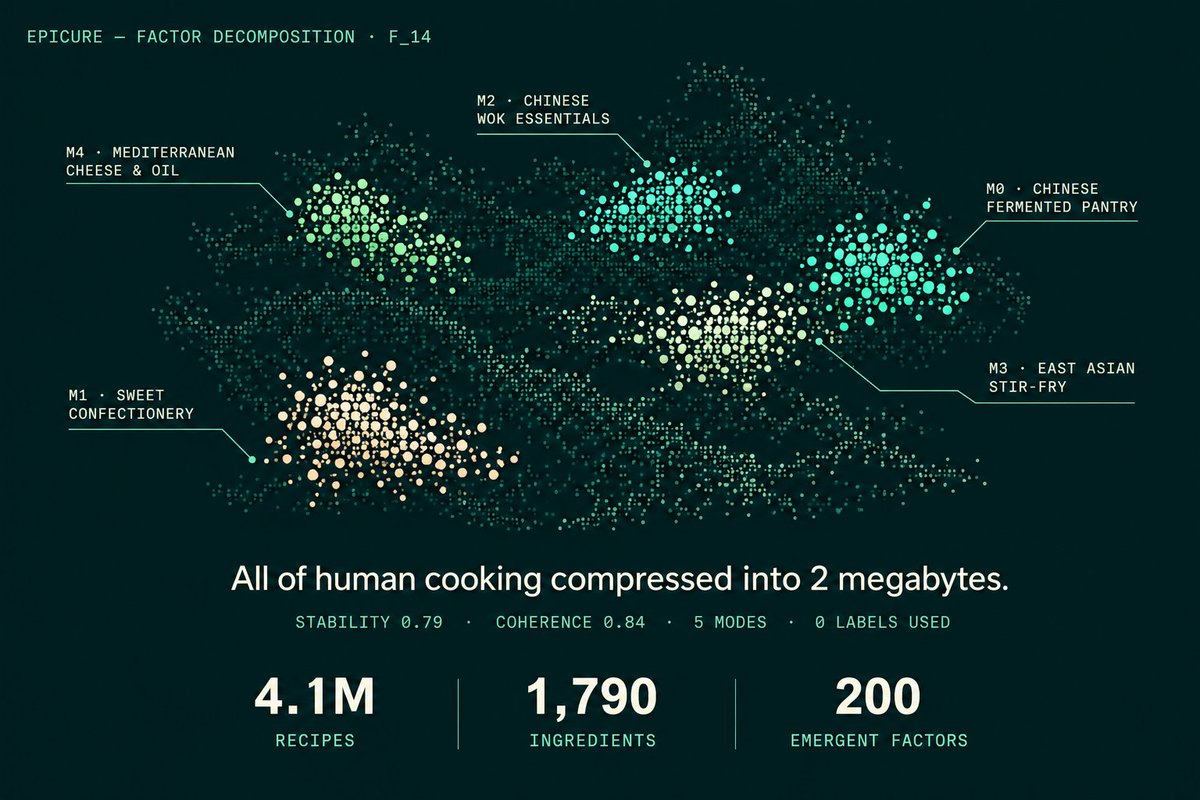
@josefchen geometry provides the tactical precision to map the hunter-gatherer paradigm: optimizing human dietary needs against procurement costs. Treating eating as the third constraint of survival transforms this flavor map into a rigorous food security engine.
English
Not Indexed がリツイート

@elonmusk … gonna make Jules Verne come back from where he’s sleepin.
English

@ShutterCG Nicely done! Long time ago I built something similar plugged it with a generative model that grabs tiles on the fly (raster or vector agnostic) and styles them cartoon, anime, or soft slope casting shadows. Still love this approach.
English

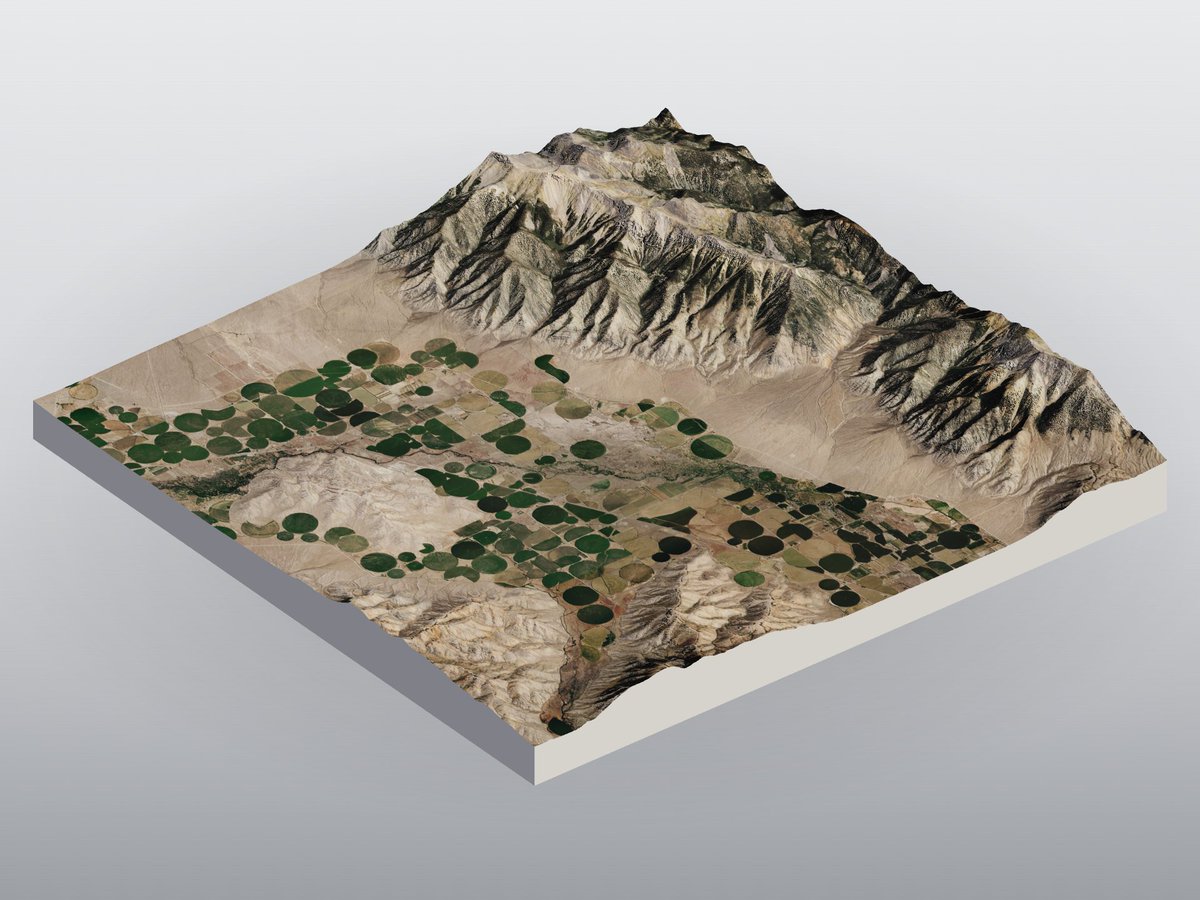
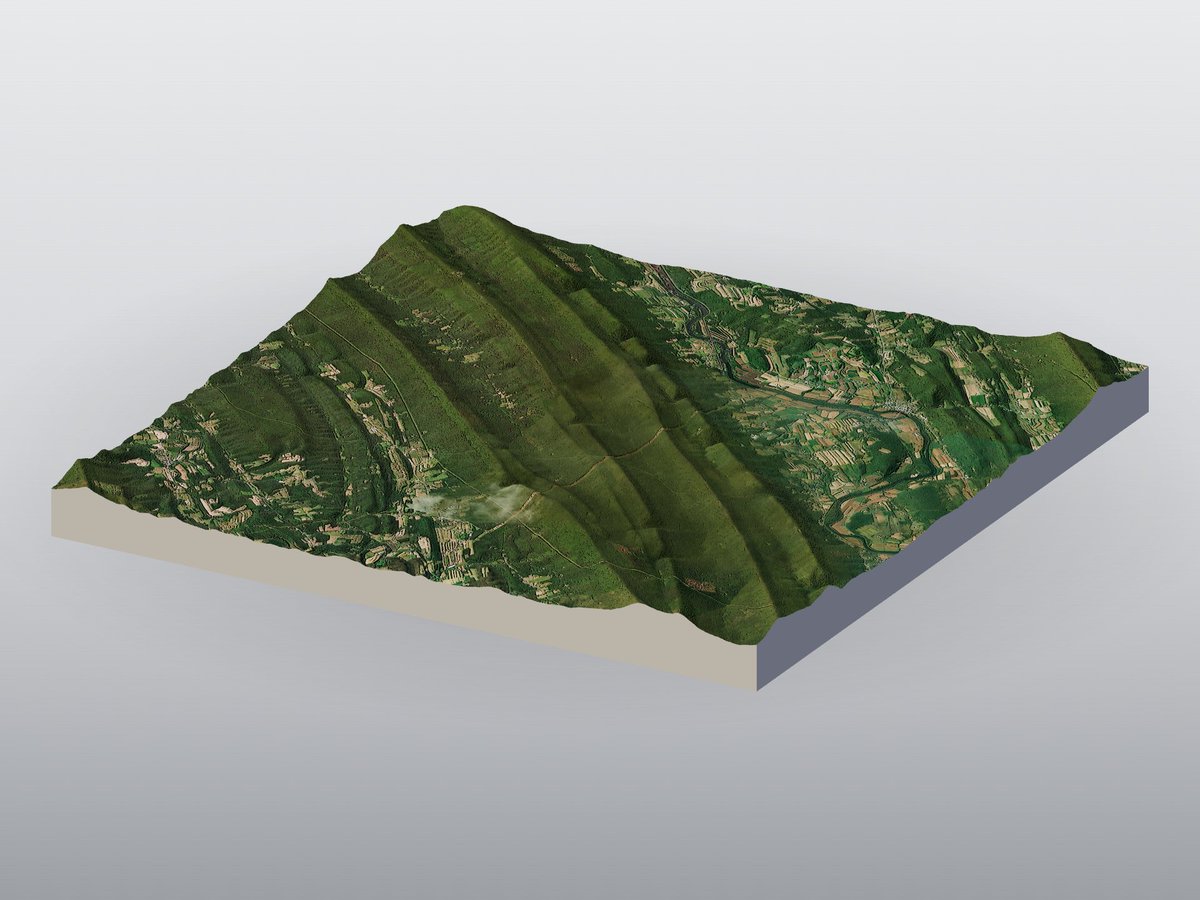
Minimaps #5. USA Edition 🇺🇸
Grand Canyon, Coconino County, Arizona, United States
36.08720°N, 111.85635°W
Butte County, Idaho, United States
43.82552°N, 113.38457°W
Tuscarora State Forest, Pennsylvania, United States
40.44669°N, 77.68196°W
Mount St. Helens, Skamania County, Washington, United States
46.23516°N, 122.18445°W
#minimaps #threejs #googlemaps #Esri #OpenTopography #OSM


English

Genuine question rather than a "you should've", the manual route gives you something a distributed+RL loop structurally can't: a coherent expert prior instead of a crowd average, which regresses to mean annotator skill exactly on the fine boundaries. Have you thought about using the 2M set as the calibration anchor for an RL reward model, so a collaborative loop inherits your precision instead of normalizing it out? Curious where you land on expert-prior vs consensus for sub-pixel anatomic detail.
English

@skalskip92 You might not believe it, but I simply manually annotated over 2,000,000 human body parts with ultra-precise detail. Probably no one else could do that.

English
Not Indexed がリツイート

The Hat Effect. In Tokyo people queued nearly for the hat, not the talks, and that inversion is the whole point.
Putting on the hat performs what social psychology calls self-categorization. You stop defining yourself by personal traits and start defining yourself by a membership. Identity shifts from "I" to "we, the Palantir people," in public, in one move, without a word. The object is the switch that flips it.
That is why the object outdraws the content. Durkheim's totem applies almost exactly: the emblem is not a picture of the group, it is the group made into a thing you can carry. A diffuse, abstract collective has no body until it is condensed into an object, and then people relate to the object the way they relate to the collective itself. The hat is Palantir's totem. Coming for the hat is coming for the collective in the only form it can be held.
And here is what the Reddit contrast misses. The hat is cheap, so the hat is not the signal. The signal is wearing it in the open while a large online audience treats the name as toxic. The cost is reputational, and a signal only carries meaning when it costs the sender something. The hostility is not evidence against the culture, it is the thing that makes the badge worth wearing. The queue is the price that makes the membership legible.
This is why it reads as identification, not consumption. People are not buying an accessory, they are fusing a part of who they are to a shared world-model and announcing it. Palantir types data into a shared ontology. The wearer lets the same operation type them.
@PalantirTech @ssankar @eliano @oinariiisan
English

this makes no sense. everyone on reddit hates Palantir
おいなり|Startup Now🎙️@oinariiisan
Unbelievable. The line for the Palantir Japan Meetup is already insane, and it hasn't even started yet! I might not even get in... This is crazy!
English

The current implementation establishes a real-time, state-synchronized architecture for spatial interior mapping, evolving the baseline @threejs framework by @codedgar_dev from a localized rendering technique into a distributed data layer. By leveraging a custom @supabase and PostGIS database schema, individual window identifiers are mapped directly to distinct spatial coordinates via three-dimensional GiST indexing. The client architecture utilizes a deterministic finite state machine (WindowStateManager) and an LRU-based TextureStreamCache to execute runtime uniform adjustments and texture swapping natively, avoiding the compilation overhead of hot-reloading raw GLSL code. Crucially, the backend architecture integrates an asynchronous asset ingestion pipeline via edge functions featuring native adapters for multimodal generative models, specifically utilizing @NanoBanana procedurally synthesize complete, individual PBR material texture sets from natural language prompts while broadcast-tracking generation job states. State mutation operates across a dual-channel protocol: an ephemeral broadcast network for real-time user manipulation, and an atomic database transaction layer secured by PostgreSQL pessimistic row-locking, cryptographic row-level security, and sequential version validation to prevent race conditions.
This foundational architecture permits the realization of a macro-scale spatial social network expanding upon concepts highlighted by @DX_Nacca . The prospective final system envisions a global, geocentric building matrix wrapped seamlessly onto planetary GIS platforms, such as @googleearth , utilizing coordinate re-projection. Within this global canvas, verified users can claim distinct architectural nodes to broadcast personalized, high-fidelity faked PBR material sets generated instantly via context-aware AI engines mapping localized room geometries. The asset pipeline can be expanded to support cyclic GIF or streaming video textures for dynamic, animated interior environments, alongside localized ambient audio casting per window identifier. Combined with persistent real-time presence sync and zero-latency on-the-fly material synthesis, the final iteration transforms isolated interior mapping into a synchronized, worldwide virtual commonwealth where architectural spaces function as active vectors for algorithmic and social expression.
English

Presenting three-fenestra!
A preview is ready for those who'd like to try the library in ThreeJS!
Repo and Demo below
Codedgar@codedgar_dev
This looks incredible on ThreeJS as well! Will have to polish but it looks amazing ngl
English

The detectability is a spectral argument before it is a spatial one. Aphid feeding suppresses leaf reflectance across both the visible (350-700 nm) and near-infrared (700-1300 nm) domains, with the depression scaling with infestation severity and the most sensitive bands clustering in the NIR/SWIR (cotton, Gossypium hirsutum, leaf-level hyperspectral with NDSI/RSI indices): pmc.ncbi.nlm.nih.gov/articles/PMC61…
The single most consistent discriminator sits at the red-edge near 700 nm, just outside the human-visible range, which is precisely why RGB-only pipelines underperform on early or hidden infestation (bok choy, DNN classifier; informative regions at 720-800 nm and 420-440 nm): sciencedirect.com/science/articl…
A necessary caveat on "early detection": at sub-threshold infestation the signal is frequently not plant physiology but the physical presence of the aphid behind the leaf, with the informative SID abundance map falling in 710-825 nm (faba bean, Vicia faba, spectral information divergence): pmc.ncbi.nlm.nih.gov/articles/PMC12…
And for direct enumeration of the insects rather than host stress, one-class SVM with Laplacian-of-Gaussian blob detection on hyperspectral imagery is the relevant prior: mdpi.com/2072-4292/15/8…
Practical consequence: discriminability is physical, so the choice of spectral input (red-edge/NIR bands or derived indices) outweighs backbone architecture, and early versus late infestation are distinct phenomena that leaf-level binary labels silently conflate.
English

@cathsimard_ Thank you. It took courage to write this openly, unresolved, while it is still being lived, and more still to stay generous inside something that must feel like being dispossessed of your own self. That openness is what made the thought worth writing.
English

A bit of vulnerability this morning.
What would you do?
An artist blatantly copies and replicates your work.
Almost every piece in your portfolio.
The art, the titles, the captions, your website, your branding, your documentaries, your COAs… everything.
Every new work you release is carefully studied, stalked, and replicated.
There is no mention of her/his inspirations anywhere, and comments get deleted if anyone mentions you as the inspiration.
Over time, this artist significantly grows through those copied images, gets brand deals, press, etc.
The artist starts selling coaching and courses about finding “your own style.”
Peak irony.
The artist starts giving talks and presentations about her/his work without any credit or mention of you.
No legal action can be taken because your images aren’t directly used by the artist. Words and writings are always carefully rearranged to prevent copyright infringement as well. So is it illegal? No. Unethical? Absolutely.
So what would you do?
After more than 5 years of dealing with that, the answer remains to do nothing.
To let that artist find their own path, grow, and trust that the universe will take care of it all.
I’ve always been grateful for my inspirations and mention them often.
We live in an age where creating visually beautiful art is easy. But many artists think that being honest about their inspirations will devalue their work. So they hide, they lie, they pretend.
In my opinion, there is so much value and beauty in recognizing the people who inspired your path, your art and honoring them. It is a form of authenticity and respect.
Every now and then, I get this artist’s work sent to me, and I ask myself what I should do.
And the answer remains nothing.
Thank you for reading 💙
English

So climb. Then pause, and look around. Ask whether what you build raises you in truth or merely accumulates, and, above all, whether you can see those you love walking paths other than your own, paths that are true reflections of their being. That recognition is precisely what the copyist has lost: he can trace your path but never walk his own. To honor another's singularity is the outward proof of one's own.
English

What our tools now make free is the copying of the instant, never of duration. One can replicate an image, a title, a visual identity; one cannot replicate the path that brought them into being. The copyist accumulates instants and remains dispossessed of the time that produced them.
AI does not invent this turpitude. It lowers its cost. What human beings already did out of vanity they will now do without friction, and faster. The tool adds no darkness of its own; it merely removes the last obstacles to a darkness that preceded it.
Yet whoever erases their sources forecloses the possibility of founding anything. A lineage is transmitted only through avowed filiation. By deleting the comments that name you, this artist teaches their own students to delete in turn. They will be imitated, never cited: fertile in the market, sterile in the tradition.
So one does nothing, indeed. Not from resignation, but because the asymmetry is already in place, and no act of vengeance adds to it. One climbs, and keeps one's head high. When the day comes, whether or not there proves to be any purpose to the masquerade, one presents oneself proud of the manner of the ascent, not of what was taken.
English