Michael Ostacher, MD, MPH

20.7K posts

Michael Ostacher, MD, MPH banner
Michael Ostacher, MD, MPH

Michael Ostacher, MD, MPH

@RecoveryDoctor

Professor of Psychiatry & Beh Sciences @StanfordMed decreasing stigma/increasing evidence/improving care. Food tweets. Digital Ed @BMJMentalHealth Opinions mine

Stanford, CA 参加日 Ocak 2013
994 フォロー中3.8K フォロワー
固定されたツイート
Michael Ostacher, MD, MPH
Michael Ostacher, MD, MPH@RecoveryDoctor·
Just had a patient tell me today that my prescribing acamprosate saved his life. Hasn't drank since. "I just don't think about it anymore." Never had someone taking gabapentin tell me that, so just a reminder to all of you out there to follow the data and to watch your biases.😀
English

29
33
249
41K
Crémieux
Crémieux@cremieuxrecueil·
Just met an old guy talking about peptides in my elevator and he said he'd text me info about retatrutide. He just sent me my article.
English
29
3
731
13.2K
Max Jordan Nguemeni
Max Jordan Nguemeni@MaxJordan_N·
Nothing makes me want an SUV like buying furniture on facebook marketplace
English
1
0
8
331
Michael Ostacher, MD, MPH がリツイート
Robert Howard
Robert Howard@ProfRobHoward·
The fundamental problem for lecanemab and donanemab is that it is almost an exaggeration to describe their benefits over 18 months as “modest” and from what little the companies have chosen to tell us about long-term extension data it looks like they do not modify disease course.
john williams@wi_john

Politics vs Evidence? “The independent appeal panel has ruled that some elements the committee used to inform its decision-making in relation to the cost-effectiveness of donanemab & lecanemab need further consideration.” thetimes.com/article/27f32f…

English
2
6
13
1.8K
Michael Ostacher, MD, MPH
Michael Ostacher, MD, MPH@RecoveryDoctor·
@cremieuxrecueil Well, perhaps the time has come to only do comparator trials — or placebo controlled trials in non-overweight or obese subjects.
English
0
0
7
849
Crémieux
Crémieux@cremieuxrecueil·
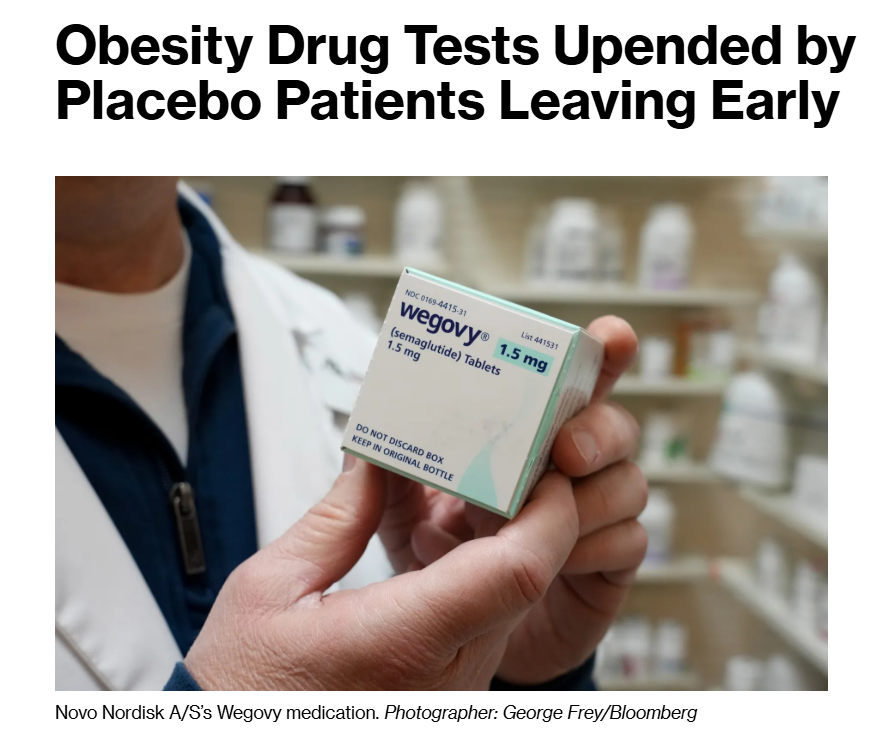
This is not good: People have learned that GLP-1s are really effective, so if they're not losing weight, they know they're in the placebo group. So these people getting placebos are getting mad and leaving the trials.
Crémieux tweet media
English
153
276
9.6K
534.6K
Michael Ostacher, MD, MPH がリツイート
John Torous, MD MBI
John Torous, MD MBI@JohnTorousMD·
Listen to the free author interview podcast! Link inside the @JAMAPsych paper below
Balázs Szigeti@psybalazs

🚨MAJOR NEW PAPER 🚨 just out in @JAMAPsych : Psychedelic Therapy vs Antidepressants for the Treatment of Depression Under Equal Unblinding Conditions (tinyurl.com/yu2rbtaf). I am very proud of this one, was a lot of work for me - both co-first and last author! Eternal gratitude to co-first @QuantPsychiatry and twitterless Hannah Barnett! The premise is that it is biased to compare open-label trials (=where patients know what treatment they are getting) to blind trials (=where patients do NOT know what they are getting). Open-label trials would gain an unfair advantage by higher placebo response. Even formally blinded psychedelic trials are practically open-label as its obvious to distinguish placebo from 25mg of #psilocybin. In contrast, traditional antidepressants (SSRIs/SNRIs) trials are are close to be truly blind (Lin 2022). Given the bias of open-label vs. blinded comparison, we compared the efficacy of psychedelic-therapy (which is practically always open-label) vs. open-label antidepressants for the treatment of major depression. We tested 3 prior hypothesis: - There will be a significant difference between psychedelic-therapy vs. open-label antidepressants, favoring psychedelic-therapy. - There will be a significant difference between blinded and open-label antidepressants trials, favoring open-label. - There will NOT be a significant difference between blinded and open-label psychedelic-therapy, as practically they are always open-label. In contrast with our prior hypothesis, we did not find psychedelic-therapy to be more effective than open-label antidepressants (H1). Not only was the difference not clinically meaningful, but practically there was no difference at all. This finding means that antidepressants administered knowingly to patients, which is the case in real-life medical practice, is as effective as psychedelic-therapy. This result was robust across variations in study selection, including when we removed psychedelic-therapy trials on treatment-resistant depression. We also assessed the impact of blinding in both psychedelic-therapy and antidepressants trials. We found that for antidepressants (H2), but not for psychedelic-therapy (H3), open label is associated with better outcomes than blinded treatment. However, even in the case of antidepressants, the difference was practically small (~1.3 HAMD units). How come hypothesis 1 failed, i.e. that psychedelic-therapy is no ore effective than open-label antidepressants, given that antidepressants trials are famous for small drug-placebo difference (~2.4 HAMD units), while psychedelic-therapy trials reported large effects (~7.3)? The key factor is that in psychedelic trials the placebo response is about 50% relative to antidepressants, ~ 4 vs 8 HAMD units (Hsu 2024, Hieronymus 2025). This suppressed placebo response leads to an inflated between-arm difference, as the treatment arm is measured against a lower floor. The suppressed placebo response in psychedelic-therapy trials is likely attributable to the ‘know-cebo’ effect, i.e. the disappointment when patients realize they are in the control group. In psychedelic-therapy trials, this placebo suppression accounts for 4.0 / 7.3 ~ 55% of the specific treatment effect. In other words, ~55% of psychedelic-therapy’s effect is not explained by patient improvement after the treatment, but rather by the lack of improvement in the placebo group. In summary, we found that for the treatment of depression, psychedelic-therapy is no more effective than open-label SSRIs/SNRIs. Our results for psychedelics are twofold: psychedelic-therapy demonstrated a robust and large therapeutic effects (~12 HAMD units), which justifies optimism. On the other hand, psychedelic-therapy’s lack of superiority compared to open-label SSRIs/SNRIs highlights the influence of blinding integrity and argues against overly optimistic narrative's about psychedelic-therapy's potential.

English
1
2
8
3.2K
Chris Aiken, MD
Chris Aiken, MD@chrisaikenmd·
Flow = first tDCS for depression, FDA-approved on this study: ▪ Similar effect size as antidepressants ▪ Blind not intact ▪ Adverse effects: mild skin burn/irritation ▪ Does not work when antidepressants fail More detail, and comparison to ProLivRx: psych-partners.com/flow-tdcs-depr…
Chris Aiken, MD tweet media
English
3
1
18
1.4K
Michael Ostacher, MD, MPH
Michael Ostacher, MD, MPH@RecoveryDoctor·
@ExistWell Given the hype and expectancy around psychedelics (no one enters these trials hoping to get placebo) these results suggest that the psychedelics don't work very well. Not disappointed or excited at all.
English
1
0
1
144
David B. Yaden
David B. Yaden@ExistWell·
Worth a read. Some (enthusiasts) will be disappointed psychedelics effects "only" around those of current antidepressants, while others (skeptics) will be amazed psychedelic effects are around those of current gold standard antidepressant treatments. (Response relative to priors)
Balázs Szigeti@psybalazs

🚨MAJOR NEW PAPER 🚨 just out in @JAMAPsych : Psychedelic Therapy vs Antidepressants for the Treatment of Depression Under Equal Unblinding Conditions (tinyurl.com/yu2rbtaf). I am very proud of this one, was a lot of work for me - both co-first and last author! Eternal gratitude to co-first @QuantPsychiatry and twitterless Hannah Barnett! The premise is that it is biased to compare open-label trials (=where patients know what treatment they are getting) to blind trials (=where patients do NOT know what they are getting). Open-label trials would gain an unfair advantage by higher placebo response. Even formally blinded psychedelic trials are practically open-label as its obvious to distinguish placebo from 25mg of #psilocybin. In contrast, traditional antidepressants (SSRIs/SNRIs) trials are are close to be truly blind (Lin 2022). Given the bias of open-label vs. blinded comparison, we compared the efficacy of psychedelic-therapy (which is practically always open-label) vs. open-label antidepressants for the treatment of major depression. We tested 3 prior hypothesis: - There will be a significant difference between psychedelic-therapy vs. open-label antidepressants, favoring psychedelic-therapy. - There will be a significant difference between blinded and open-label antidepressants trials, favoring open-label. - There will NOT be a significant difference between blinded and open-label psychedelic-therapy, as practically they are always open-label. In contrast with our prior hypothesis, we did not find psychedelic-therapy to be more effective than open-label antidepressants (H1). Not only was the difference not clinically meaningful, but practically there was no difference at all. This finding means that antidepressants administered knowingly to patients, which is the case in real-life medical practice, is as effective as psychedelic-therapy. This result was robust across variations in study selection, including when we removed psychedelic-therapy trials on treatment-resistant depression. We also assessed the impact of blinding in both psychedelic-therapy and antidepressants trials. We found that for antidepressants (H2), but not for psychedelic-therapy (H3), open label is associated with better outcomes than blinded treatment. However, even in the case of antidepressants, the difference was practically small (~1.3 HAMD units). How come hypothesis 1 failed, i.e. that psychedelic-therapy is no ore effective than open-label antidepressants, given that antidepressants trials are famous for small drug-placebo difference (~2.4 HAMD units), while psychedelic-therapy trials reported large effects (~7.3)? The key factor is that in psychedelic trials the placebo response is about 50% relative to antidepressants, ~ 4 vs 8 HAMD units (Hsu 2024, Hieronymus 2025). This suppressed placebo response leads to an inflated between-arm difference, as the treatment arm is measured against a lower floor. The suppressed placebo response in psychedelic-therapy trials is likely attributable to the ‘know-cebo’ effect, i.e. the disappointment when patients realize they are in the control group. In psychedelic-therapy trials, this placebo suppression accounts for 4.0 / 7.3 ~ 55% of the specific treatment effect. In other words, ~55% of psychedelic-therapy’s effect is not explained by patient improvement after the treatment, but rather by the lack of improvement in the placebo group. In summary, we found that for the treatment of depression, psychedelic-therapy is no more effective than open-label SSRIs/SNRIs. Our results for psychedelics are twofold: psychedelic-therapy demonstrated a robust and large therapeutic effects (~12 HAMD units), which justifies optimism. On the other hand, psychedelic-therapy’s lack of superiority compared to open-label SSRIs/SNRIs highlights the influence of blinding integrity and argues against overly optimistic narrative's about psychedelic-therapy's potential.

English
10
6
36
5.3K
Sean X. Luo MD PhD
Sean X. Luo MD PhD@seanluomdphd·
@JamesLNuzzo @CJFerguson1111 There are existing RCTs on this topic. The aggregate result is that if you aren't severely impaired, removing socials really doesn't help. If you are severely impaired, it helps some, but I'm sure that's not enough on its own. Not sure if this is consistent with Haidt or not.
English
3
0
5
319
James L. Nuzzo, PhD
James L. Nuzzo, PhD@JamesLNuzzo·
Interesting. There is no evidence that time spent on social media is correlated with adolescent mental health problems: Findings from a meta-analysis. @CJFerguson1111
James L. Nuzzo, PhD tweet media
English
19
46
199
8.8K
Matthew W. Johnson
Matthew W. Johnson@Drug_Researcher·
@RecoveryDoctor @TheBorisLab I have more confidence but your points are good. What about the case of expose therapies for phobias, likely the most supported and effective behavioral therapy? There are still no blinded trials but strong comparative trials.
English
1
0
2
77
Michael Ostacher, MD, MPH
Michael Ostacher, MD, MPH@RecoveryDoctor·
Really terrific work here. There is definitively the “moment of betrayal” when the participant is randomized to placebo. @TheBorisLab We need a new methodology for studying these consciousness altering drugs, especially in this environment of tremendous hope and hype.
Balázs Szigeti@psybalazs

🚨MAJOR NEW PAPER 🚨 just out in @JAMAPsych : Psychedelic Therapy vs Antidepressants for the Treatment of Depression Under Equal Unblinding Conditions (tinyurl.com/yu2rbtaf). I am very proud of this one, was a lot of work for me - both co-first and last author! Eternal gratitude to co-first @QuantPsychiatry and twitterless Hannah Barnett! The premise is that it is biased to compare open-label trials (=where patients know what treatment they are getting) to blind trials (=where patients do NOT know what they are getting). Open-label trials would gain an unfair advantage by higher placebo response. Even formally blinded psychedelic trials are practically open-label as its obvious to distinguish placebo from 25mg of #psilocybin. In contrast, traditional antidepressants (SSRIs/SNRIs) trials are are close to be truly blind (Lin 2022). Given the bias of open-label vs. blinded comparison, we compared the efficacy of psychedelic-therapy (which is practically always open-label) vs. open-label antidepressants for the treatment of major depression. We tested 3 prior hypothesis: - There will be a significant difference between psychedelic-therapy vs. open-label antidepressants, favoring psychedelic-therapy. - There will be a significant difference between blinded and open-label antidepressants trials, favoring open-label. - There will NOT be a significant difference between blinded and open-label psychedelic-therapy, as practically they are always open-label. In contrast with our prior hypothesis, we did not find psychedelic-therapy to be more effective than open-label antidepressants (H1). Not only was the difference not clinically meaningful, but practically there was no difference at all. This finding means that antidepressants administered knowingly to patients, which is the case in real-life medical practice, is as effective as psychedelic-therapy. This result was robust across variations in study selection, including when we removed psychedelic-therapy trials on treatment-resistant depression. We also assessed the impact of blinding in both psychedelic-therapy and antidepressants trials. We found that for antidepressants (H2), but not for psychedelic-therapy (H3), open label is associated with better outcomes than blinded treatment. However, even in the case of antidepressants, the difference was practically small (~1.3 HAMD units). How come hypothesis 1 failed, i.e. that psychedelic-therapy is no ore effective than open-label antidepressants, given that antidepressants trials are famous for small drug-placebo difference (~2.4 HAMD units), while psychedelic-therapy trials reported large effects (~7.3)? The key factor is that in psychedelic trials the placebo response is about 50% relative to antidepressants, ~ 4 vs 8 HAMD units (Hsu 2024, Hieronymus 2025). This suppressed placebo response leads to an inflated between-arm difference, as the treatment arm is measured against a lower floor. The suppressed placebo response in psychedelic-therapy trials is likely attributable to the ‘know-cebo’ effect, i.e. the disappointment when patients realize they are in the control group. In psychedelic-therapy trials, this placebo suppression accounts for 4.0 / 7.3 ~ 55% of the specific treatment effect. In other words, ~55% of psychedelic-therapy’s effect is not explained by patient improvement after the treatment, but rather by the lack of improvement in the placebo group. In summary, we found that for the treatment of depression, psychedelic-therapy is no more effective than open-label SSRIs/SNRIs. Our results for psychedelics are twofold: psychedelic-therapy demonstrated a robust and large therapeutic effects (~12 HAMD units), which justifies optimism. On the other hand, psychedelic-therapy’s lack of superiority compared to open-label SSRIs/SNRIs highlights the influence of blinding integrity and argues against overly optimistic narrative's about psychedelic-therapy's potential.

English
1
3
24
2.8K
Michael Ostacher, MD, MPH
Michael Ostacher, MD, MPH@RecoveryDoctor·
@Drug_Researcher @TheBorisLab Not much confidence. Unless compared to a comparable control (same dose and duration) and with therapists not biased toward an intervention (do those exist?) then no. With that every therapy looks about the same. But there is still the hope and hype problem…
English
1
0
3
117
Matthew W. Johnson
Matthew W. Johnson@Drug_Researcher·
@RecoveryDoctor @TheBorisLab Do you have any confidence in the science behind behavioral treatments, e.g., CBT, prolonged exposure, DBT, Motivational Enhancement? None of it is blinded. Why not apply similar standards for psychedelics given the blinding issues?
English
1
0
13
589
Sean X. Luo MD PhD
Sean X. Luo MD PhD@seanluomdphd·
@drraja_ They conveniently left out a funnel plot, saying testing it result in lack of significance. I bet there is fairly obvious publication bias if you inspect the funnel plot.
English
1
0
3
145
Raja Adnan Ahmed
Raja Adnan Ahmed@drraja_·
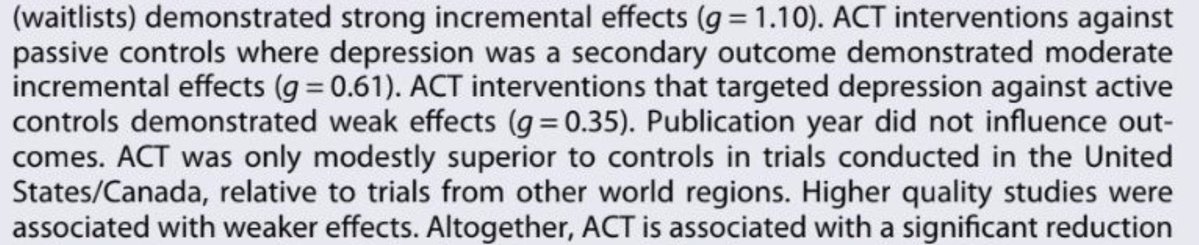
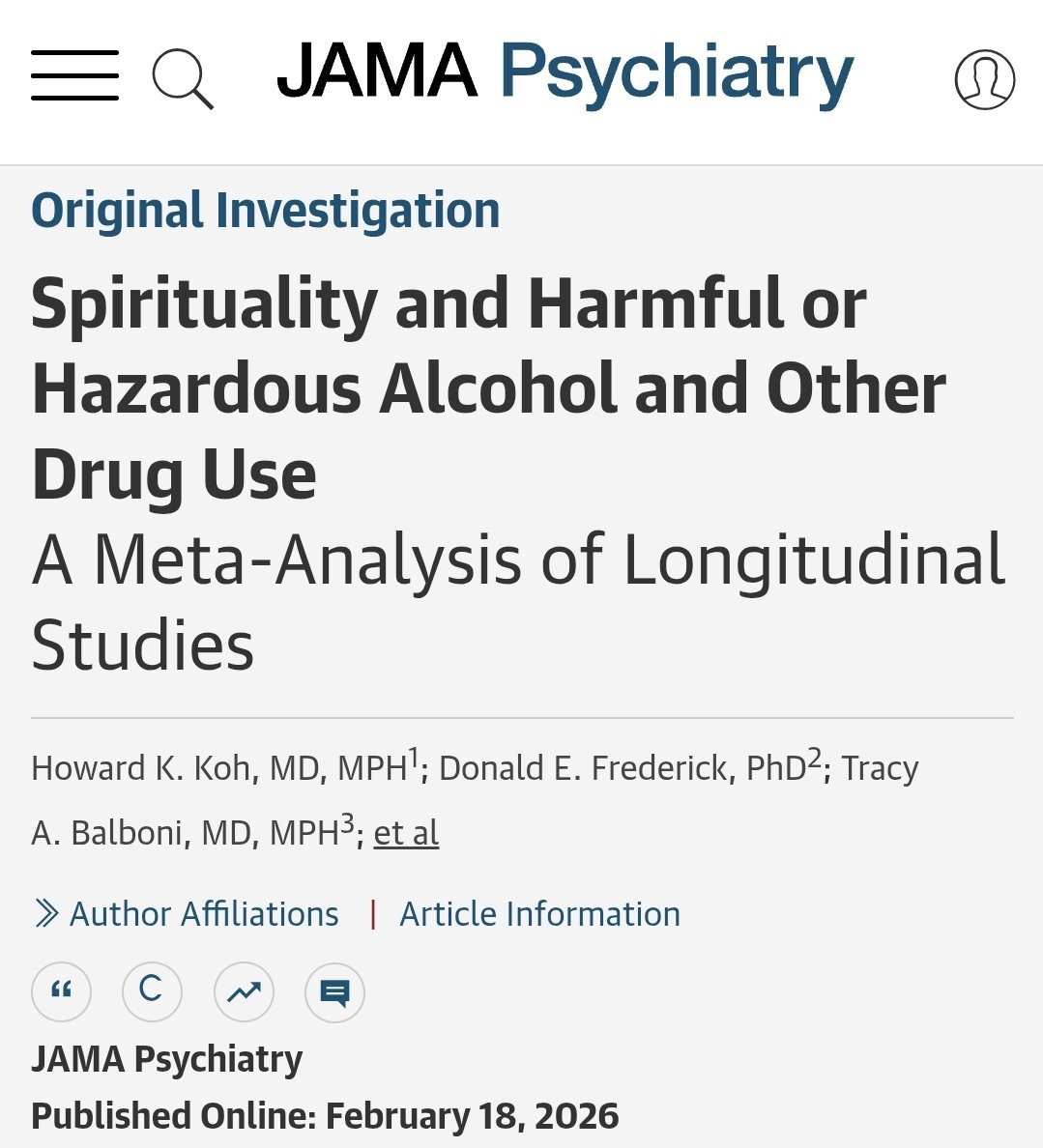
JAMA Psychiatry Study Investigating the association between spiritual exposures and related alcohol & illicit drug use outcomes. Results from the 55 studies, which collectively included 540 712 participants, documented a significant protective association related to both prevention and recovery between spirituality and alcohol and other drug use outcomes. jamanetwork.com/journals/jamap…
Raja Adnan Ahmed tweet media
English
5
9
46
10.4K