Jay Wong

2.2K posts

Jay Wong banner
Jay Wong

Jay Wong

@Stepmark_Jay

M&A banker focused on the AI industry. Founder @StepmarkAI. Not financial advice, DYOR.

San Francisco 参加日 Eylül 2008
831 フォロー中944 フォロワー
Jay Wong
Jay Wong@Stepmark_Jay·
@paulg I think you'd love this vintage AP with an art deco design. Hard to find a timeless design like this.
Jay Wong tweet media
English
1
0
70
15.1K
Paul Graham
Paul Graham@paulg·
There's a vintage watch dealer in London (Somlo) that always has watches in amazing condition. 60 year old watches that seem unworn. I asked the owner how he does it. He said they've been around a long time and always pay promptly, so they get first look.
English
65
13
1.6K
240.8K
Jay Wong
Jay Wong@Stepmark_Jay·
@paulg I was at Clicky Bezel today and the founder mentioned you dropped by recently. Hope you enjoyed the store!
English
0
0
0
156
Paul Graham
Paul Graham@paulg·
I went to visit Subdial in London. Cool place with some good watches. I bought something so strange that till I saw it I'd never have believed it existed: an Ellipse pocket watch. I kid you not.
Paul Graham tweet media
English
71
7
810
111.4K
Jay Wong がリツイート
Parker Conrad
Parker Conrad@parkerconrad·
Rippling launched its AI analyst today. I'm not just the CEO - I'm also the Rippling admin for our co, and I run payroll for our ~ 5K global employees. Here are 5 specific ways Rippling AI has changed my job, and why I believe this is the future of G&A software. 🧵 1/n
Parker Conrad tweet media
English
120
300
1.2K
468.3K
Jay Wong がリツイート
Mamoon Hamid
Mamoon Hamid@mamoonha·
Been playing with @Rippling AI this week. Typed in: "I'm trying to plan an offsite for the team sometime in 2026. Suggest windows of times when the least amount of vacations are taken (based on historic data) and are spaced outside of national holidays and school holidays in the Bay Area." Got a bunch of windows, instantly, from live data. Software in the AI era is great!
English
21
35
323
86.3K
Jay Wong がリツイート
Manus
Manus@ManusAI·
Today, we're taking Manus out of the cloud and putting it on your desktop. Introducing My Computer, the core feature of the new Manus Desktop app. It’s your AI agent, now on your local machine.
English
483
771
7K
4.2M
Jay Wong
Jay Wong@Stepmark_Jay·
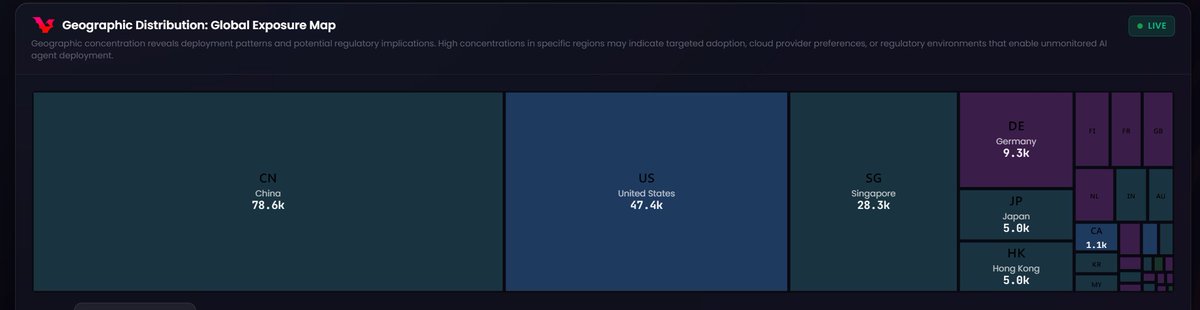
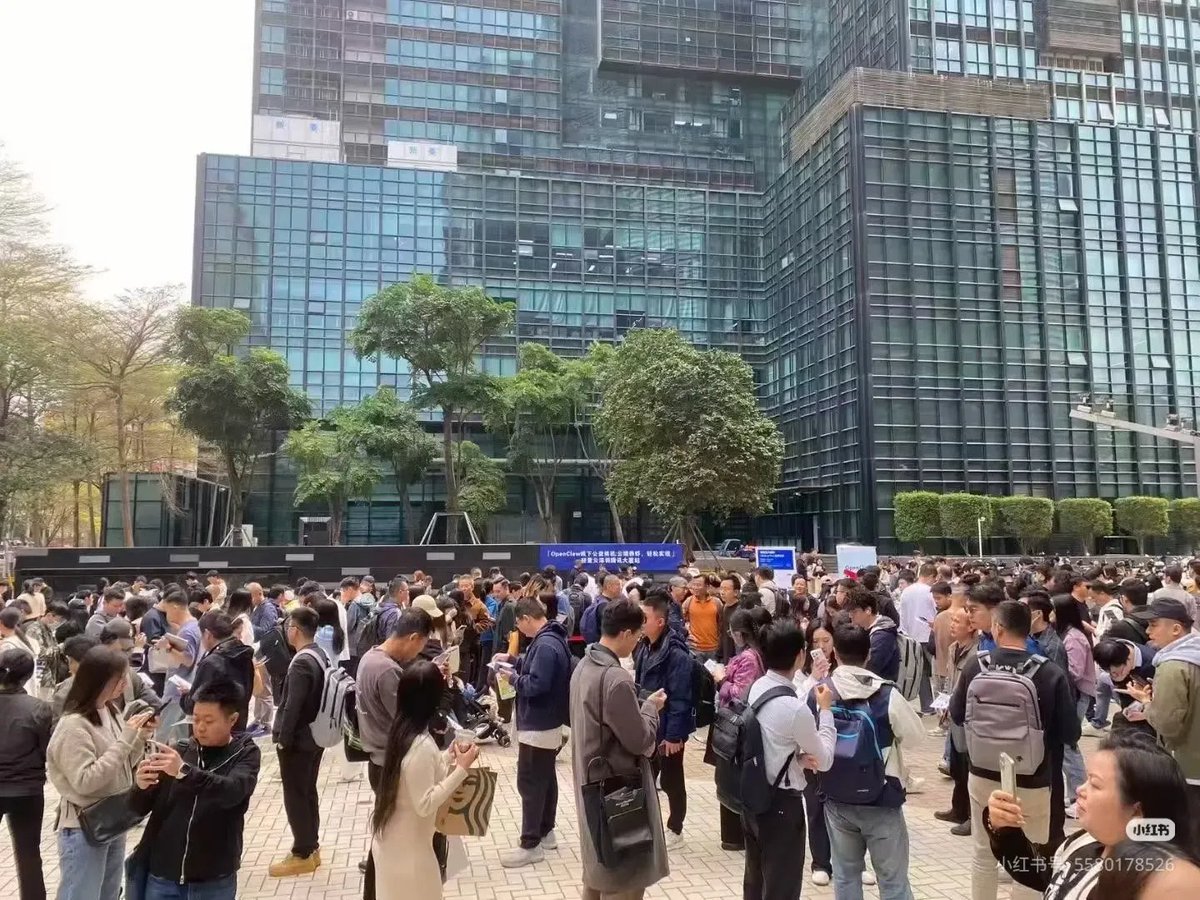
It took OpenClaw only 100 days to become the most starred repo in GitHub history. In China, there's OpenClaw mania; the country represents about 50% of total downloads (the U.S. is a distant second). People in China are lining up to get OpenClaw installed on their computers and some are even paying others to help with the installation. Seems the Chinese are much more willing to embrace AI than the ROW. Per Hello China Tech: "Installers who spoke to Chinese reporters said many of their clients had no clear use case. They deployed first and figured out the purpose later." Surprisingly, ByteDance in Dec 2025 launched something similar via a phone app that could screen-read and operate apps on the user's behalf, but it was quickly pulled due to security concerns. @poezhao0605 makes the argument that Chinese Big Tech is excited about OpenClaw because it creates a sustainable demand (paid via API) that helps fund the supply (capex) that has and is being purchased to fund local AI development.
Jay Wong tweet mediaJay Wong tweet media
English
1
0
0
62
Sheel Mohnot
Sheel Mohnot@pitdesi·
@AlexKolicich This is awesome, congrats! Now stop sending me onehope wine and start sending me cashmere
English
2
0
32
3.7K
Alex Kolicich
Alex Kolicich@AlexKolicich·
We wrote the first check into Quince and never shared our thesis publicly At the time, D2C was radioactive and 'affordable luxury' sounded like an oxymoron. Today they raised at $10B. We couldn't be more excited. Here's why we believed — and why we think it's still early! 8vc.com/resources/quin…
English
43
27
561
156.6K
Jay Wong がリツイート
Will Knight
Will Knight@willknight·
Scoop from me: Nvidia will spend a total of $26 billion over the next five years building the world's best open source models. America is back in the open source AI race! wired.com/story/nvidia-i…
English
82
235
1.9K
681K
Jay Wong がリツイート
Sawyer Merritt
Sawyer Merritt@SawyerMerritt·
Nvidia has released a new video of CEO Jensen Huang taking a 2.5 hour ride across San Fransisco in a Mercedes using Nvidia's Alpamayo autonomous driving system. Jensen: "The two of us were just talking and enjoying San Francisco. This is the way transportation should be. 100% comfortable and 100% confident. Completely revolutionary."
English
236
192
2.7K
473.1K
Jay Wong
Jay Wong@Stepmark_Jay·
Typical SaaS per seat pricing will need to evolve as AI input costs (I.e., COGS) rise due to inference costs. But, ability to add greater user value expands so revenue pie is larger. Excited to see this change @clay
Karan Parekh@kp_1123

Today, we’re changing how pricing works at @Clay. I don’t like pricing changes - they are hard and they affect both our team and our ecosystem. But as Clay’s product evolved, it became clear we needed to rethink our structure. Here’s the TL;DR of what’s changing - data costs are coming down, choosing a plan should feel easy, AI is becoming more flexible, and we’re introducing Actions as a metric that measures how much you accomplish with Clay. Our customers don't come to Clay to buy data. They come to automate and improve their end-to-end GTM work, from making reps more effective, to building pipeline, to growing their businesses. The data is an input. The value is what you do with it. With Actions, Clay is separating out the inputs from the value. We win when we help you win. I have a theory that Clay is previewing where most AI companies will end up on pricing. When AI hit SaaS, it broke pricing models that had worked for decades. SaaS ran on near-zero marginal costs, so the industry couldn’t price cost-plus, and instead priced on value. 80% gross margins and $1k+ seat costs were the output. Then came tokens. Overnight, every AI business had variable costs, and cost-plus pricing (with tokens or credits) was the obvious solution. Clay experienced this with data years ago. We pay vendors every time a customer accesses data through Clay, so we built a usage-based credit model to cover those costs. The concerns were obvious - costs can move between months, data points are priced differently, customers can’t predict spend in advance… Sound familiar? The reality is, having a high cost to serve customers isn’t new, it’s just new to SaaS. Most industries, from potato chips to cars, have a high marginal cost. But differentiated brands like Ferrari don’t price cost-plus. They’re selling more than 4 wheels that move - they’re selling an experience, scarcity, and attributes that you can’t find in another product. They’re selling value. Everyone in AI dreams about outcome-based pricing, but I think that’s not a panacea. Meta went from CPMs to transactions, but most didn’t, and I think the same will be true in AI. Instead, I think most AI businesses will go through the (re-)learning journey that Clay did. The data (or tokens) is an input. The value is what you (your platform) do with it. We ignored every pricing “best practice”, because they didn’t feel right to us. Existing customers don’t have to change plans - it’s our job to show you the value of the new plans. If you can save on new plans, we’ll tell you. And we’re expecting revenue to go down, not up, with this change. That’s intentional. We’re focused on making this easy, so we’re set up to grow with you, and to keep shipping products that will help you grow faster. @Varun and I talked through the change, and I’m linking our announcement and internal memo in the comments. If you've got questions, I'd love to hear them.

English
2
0
0
110
Jay Wong がリツイート
Oracle
Oracle@Oracle·
Recent media activity about the Abilene site are false and incorrect. First, Crusoe and Oracle are operating in lockstep to deliver one of the world's largest AI Data centers in Abilene at record-breaking pace. Two buildings are completely operational and the rest of the campus is on track. Second, Oracle has completed leasing for the additional 4.5GW to deliver on our commitments to OpenAI. We continuously evaluate sites around the world to meet the growing demand for OCI by working with great partners and customers all the time. social.ora.cl/6000B6DKug social.ora.cl/6005B6DKTB
English
145
254
1.1K
983.5K
Jay Wong
Jay Wong@Stepmark_Jay·
What happens to gas-powered AI data centers if oil stays above $100? Do they shut down, or do consumers foot the bill?
English
0
0
1
54
Jay Wong
Jay Wong@Stepmark_Jay·
@yishan @heynavtoor This is why people who are benefiting the most from AI are people who have experience, sound judgement and taste. Juniors staff who need real world experience to differentiate between what’s “good” versus “bad” are not using AI to its full potential yet.
English
0
0
9
3K
Yishan
Yishan@yishan·
Adopting AI into your work makes everyone a CEO, and there's something about it that very few people understand (mostly because few people are CEOs): When you have an front-line job, you spend maybe 1-5% of your brainpower of high-level, critical-thinking strategy. Most of your job is just running some SOP that's been given to you. Move up a couple levels, maybe you're managing a little team, and you might spend 10-25% of your time making critical strategic decisions. The rest of the time, you're executing departmental strategy that was handed to you, and your time is spent making sure your team carries that out. Once you're the CEO, you'll have (if you're good at your job) delegated all of the routine problems and issues that are straightforward to solve to capable executives. What's left for you? Only the hardest and most critical decisions. The better and more capable your staff, the harder the questions will be that bubble up to you, because they take care of everything else. Those become the only duties you have left: thinking REALLY hard about very dfificult, ambiguous, strategic decisions. And now it's your entire job. Instead of 10-25% intensity (or less), it's 80-90% intensity. Incidentally, this is why you hear about CEOs having these intensely regimented lives and health-oriented habits: it's all designed to biologically support the fact that their brains have to be operating at peak capacity nearly all the time. So now everyone is starting to manage armies of agents doing the routine parts of their job. If you're good, you can distill your job into a clear SOP that the agents run, and now "all you have to do" is oversee them... ... and now lots of people are learning that being the boss isn't quite as easy as they thought.
English
13
51
560
134.6K
Nav Toor
Nav Toor@heynavtoor·
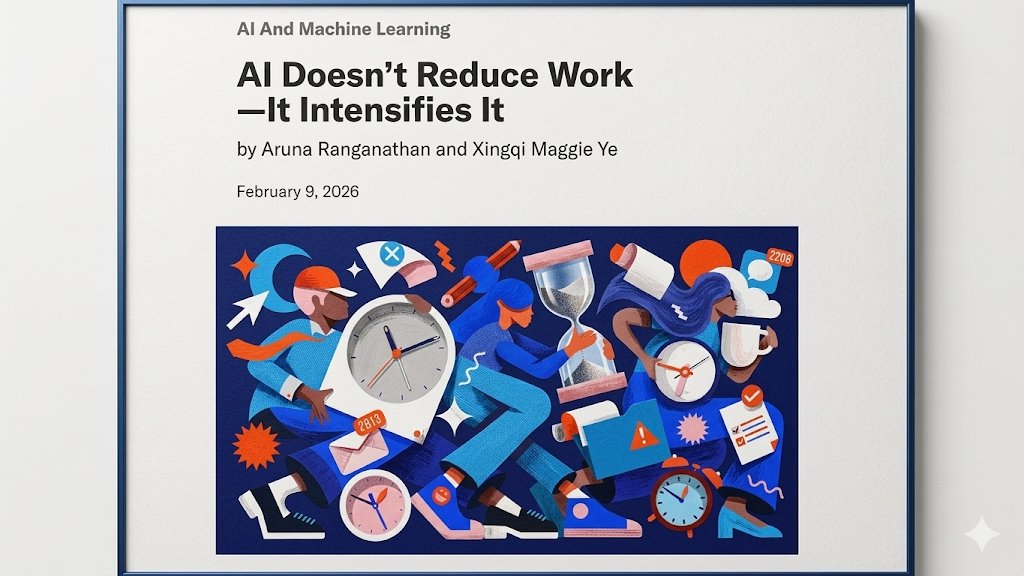
🚨BREAKING: Berkeley researchers spent 8 months inside a tech company watching how employees actually use AI. The promise was simple: AI will save you time. Do less. Work smarter. The opposite happened. Workers didn't use AI to finish early and go home. They used it to take on more. More tasks. More projects. More hours. Nobody asked them to. They did it to themselves. The researchers sat inside the company two days a week for 8 months. They watched 200 employees in real time. They tracked work channels. They conducted 40+ interviews across engineering, product, design, and operations. Here's what they found. AI made everything feel faster, so people filled every gap. They sent prompts during lunch. Before meetings. Late at night. The natural stopping points in the workday disappeared. People ran multiple AI agents in the background while writing code, drafting documents, and sitting in meetings simultaneously. It felt like momentum. It felt productive. But when they stepped back, they described feeling stretched, busier, and completely unable to disconnect. 83% said AI increased their workload. Not decreased. Increased. 62% of associates and 61% of entry-level workers reported burnout. Only 38% of executives felt the same strain. The people doing the actual work absorbed the damage while leadership celebrated the productivity numbers. Then came the trap nobody saw coming. When one person uses AI to take on extra work, everyone else feels like they're falling behind. So the whole team speeds up. Nobody formally raises expectations. But the new pace quietly becomes the default. What AI made possible became what was expected. The researchers gave it a name: workload creep. It looks like productivity at first. Then it becomes the new baseline. Then it becomes burnout. AI was supposed to give you your time back. Instead it's eating more of it. And the worst part? You're doing it to yourself. Voluntarily.
Nav Toor tweet media
English
316
2.2K
7K
1.1M