Datamase

3K posts

Datamase

Datamase

@datamase

参加日 Şubat 2009
966 フォロー中135 フォロワー
Datamase がリツイート
Alex Imas
Alex Imas@alexolegimas·
Love this Labor Automation Forecasting Hub that @metaculus has put together. Aggregating forecasts on labor share, employment, displacement vulnerability across job type. Very useful resource. metaculus.com/labor-hub/
Alex Imas tweet media
English

4
18
69
9.1K
Datamase がリツイート
Anand Shah
Anand Shah@avshah99·
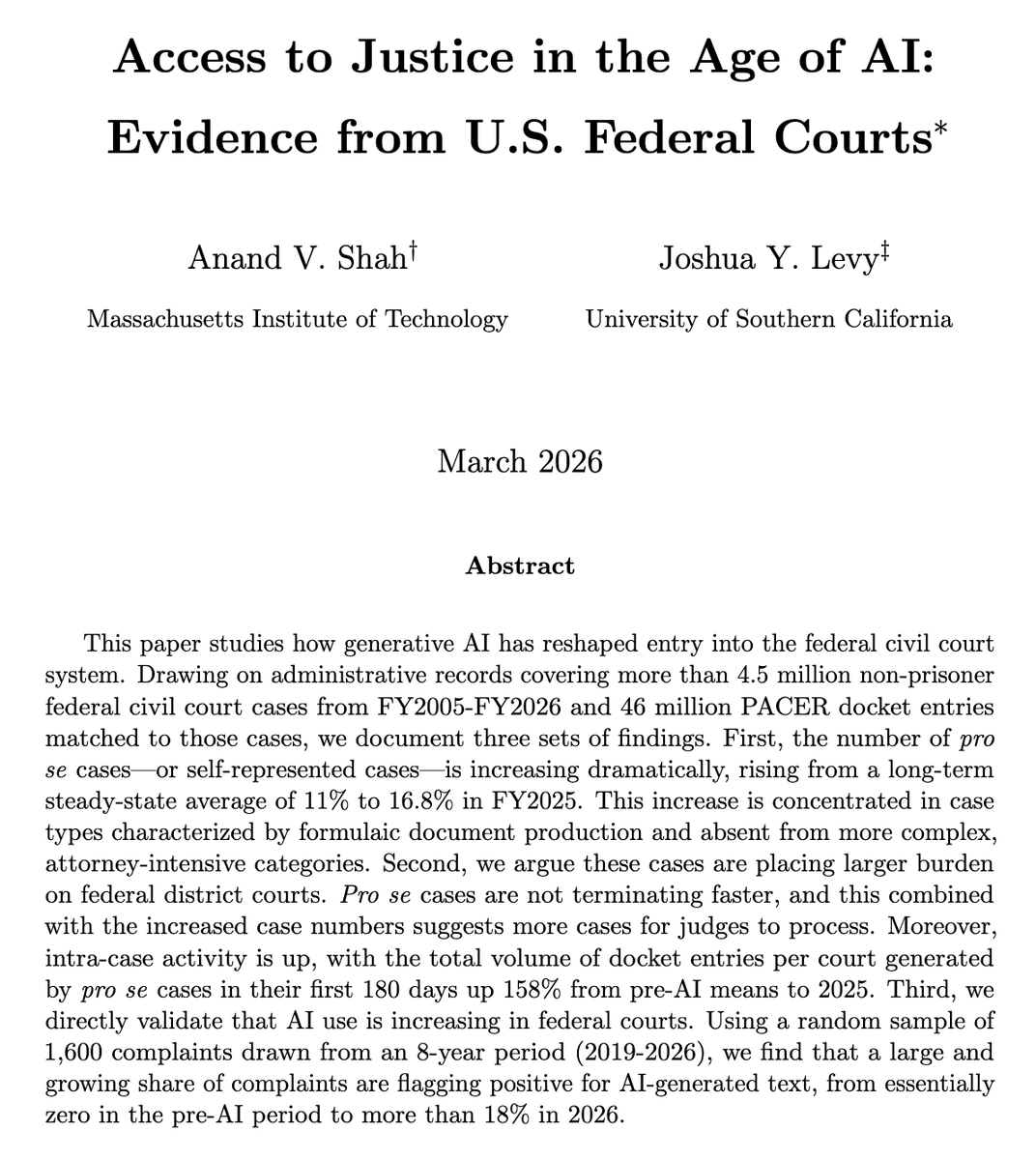
🚨New preprint! We find evidence of LLMs enabling people to file lawsuits without lawyers (filing "pro se") at historically unprecedented rates in federal courts.👇 1/n
Anand Shah tweet media
English
48
252
1.1K
456.3K
Datamase がリツイート
Alex Imas
Alex Imas@alexolegimas·
Jared Glover, CEO of AI robotics company CapSen, left me the following comment on the reasons his customers opt for automation. Some are the natural reasons typically considered l, but #3 is key: New design where humans were never part of the process to begin with.
Alex Imas tweet mediaAlex Imas tweet media
English
6
18
85
7.4K
Datamase がリツイート
Zain Shah
Zain Shah@zan2434·
Imagine every pixel on your screen, streamed live directly from a model. No HTML, no layout engine, no code. Just exactly what you want to see. @eddiejiao_obj, @drewocarr and I built a prototype to see how this could actually work, and set out to make it real. We're calling it Flipbook. (1/5)
English
1K
3.1K
25.4K
5.4M
Datamase がリツイート
Yohan
Yohan@yohaniddawela·
A single GPU can now calculate hundreds of global weather scenarios in under 60 seconds. The exact same task requires a supercomputer and hours of brute-force physics. Google DeepMind recently released WeatherNext 2. The model beats the previous state-of-the-art system on 99.9% of weather variables across a 15-day forecast window. It achieves this massive jump in accuracy using a new modelling approach called a Functional Generative Network. Meteorologists categorise weather data into two buckets: 1. Marginals are isolated data points, like the precise temperature at a specific location or the wind speed at a certain altitude. 2. Joints are the massive, interconnected systems that form when all those individual elements interact. The researchers hid the joint systems from the model during training. They only taught it the isolated marginals. When they turned it on, the model skillfully predicted the massive, complex systems anyway. The architecture forces an 87-million-dimensional output distribution through a 32-dimensional mathematical bottleneck. To survive this severe constraint and still produce accurate individual data points, the neural network has no choice but to learn the underlying physics linking everything together. It figures out the weather because that’s the most efficient way to solve the maths. The practical results are immediate. The model gives forecasters a full 24-hour advantage in tropical cyclone tracking compared to the previous leading system. It maps extreme wind speeds and heatwaves with unprecedented precision. We’re watching a pretty big shift in predictive capabilities. The machine is deducing the structural reality of planetary weather from isolated fragments of data.
Yohan tweet media
English
38
363
2.3K
221.5K
Datamase がリツイート
Jay Van Bavel, PhD
Jay Van Bavel, PhD@jayvanbavel·
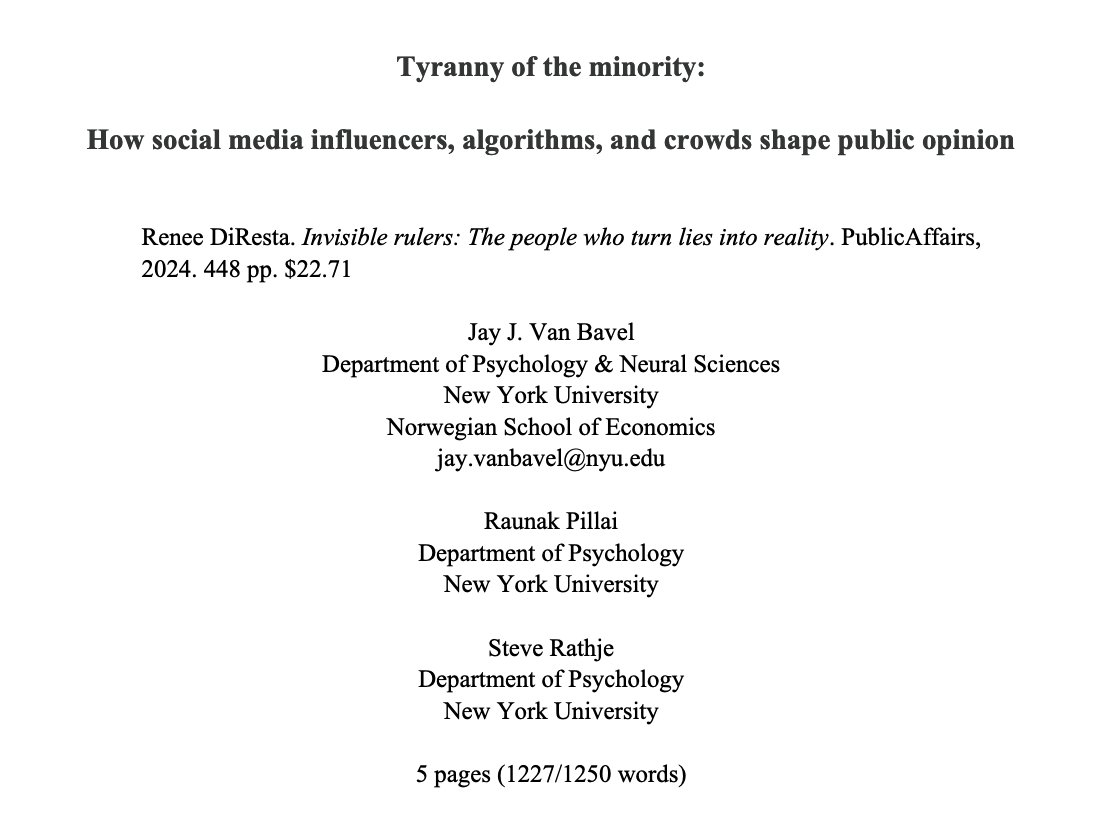
A small fraction of online actors now exerts outsized influence over what the public sees, believes, and argues about. In a new short review paper, we trace how social media influencers can turn fringe claims into viral narratives—often by exploiting a feedback loop between influencers, algorithms, and crowds. As such, the modern information environment enables a tyranny of the minority: extreme and coordinated voices dominate attention, distort perceived social norms, and create a “funhouse mirror” version of public opinion that makes fringe positions look common and conflict look inevitable. We synthesize emerging evidence that a tiny number of highly active users drives a disproportionate share of misinformation and toxicity, and explain how platform incentives reward moralized, identity-salient, and emotionally charged content. We conclude by outlining pragmatic responses—individual, institutional, and policy-level—and by highlighting how generative AI could either accelerate bespoke realities or help rebuild shared understanding, depending on how these systems are designed and governed. osf.io/preprints/psya… We (@PillaiRaunak & @steverathje2) reviewed @noUpside's fantastic book "INVISIBLE RULERS" and connected it to the research we have been doing on this topic for the past decade.
Jay Van Bavel, PhD tweet media
English
42
571
1.3K
112.4K
Datamase がリツイート
Jasper Polak
Jasper Polak@polak_jasper·
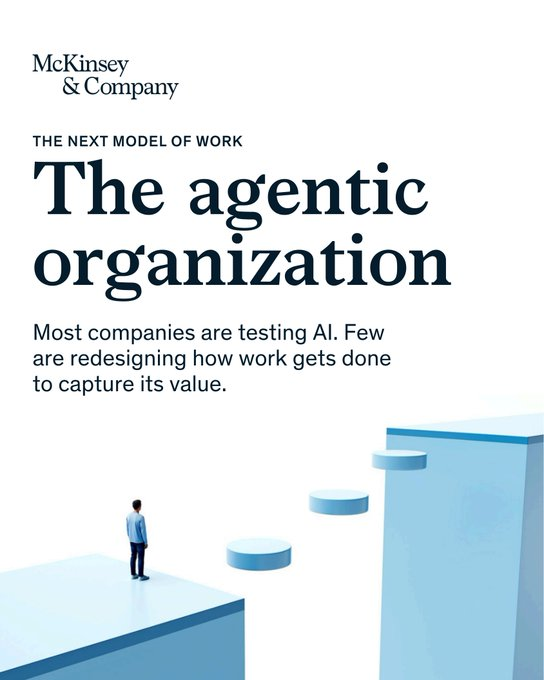
McKinsey published a piece this week on "The Agentic Organization." They claim most companies are stuck in pilot mode because the work itself hasn't changed. What "pilot mode" looks like at a 75-person consulting firm I've seen inside: - One analyst running Claude for market research. - A few associates using Gemini to draft deck sections. - A partner who built a private GPT for proposal writing and didn't tell anyone. All real. But none of them changes the firm's throughput, win rate, or margin. The pilots aren't failing because the tools are wrong. They're failing because nobody redesigned the workflow around them. Going from pilot to production means picking one full workflow, rebuilding it agent-first, measuring it against the old one, then rolling it out across the firm. That's the step McKinsey's framing is pointing at. Most firms skip it because it's harder than adding more tools. Link: mckinsey.com/capabilities/p…
Jasper Polak tweet media
English
39
122
941
138.8K
Datamase がリツイート
Ethan Mollick
Ethan Mollick@emollick·
Classic study gave 146 economist teams the same dataset & got wildly different answers New paper reruns it with agentic AI. Claude Code & Codex land near the human median, but with far tighter dispersion & no extremes. Suggests that AI is now useful for doing scalable research.
Ethan Mollick tweet media
English
35
134
773
60.6K
Datamase がリツイート
Kanika
Kanika@KanikaBK·
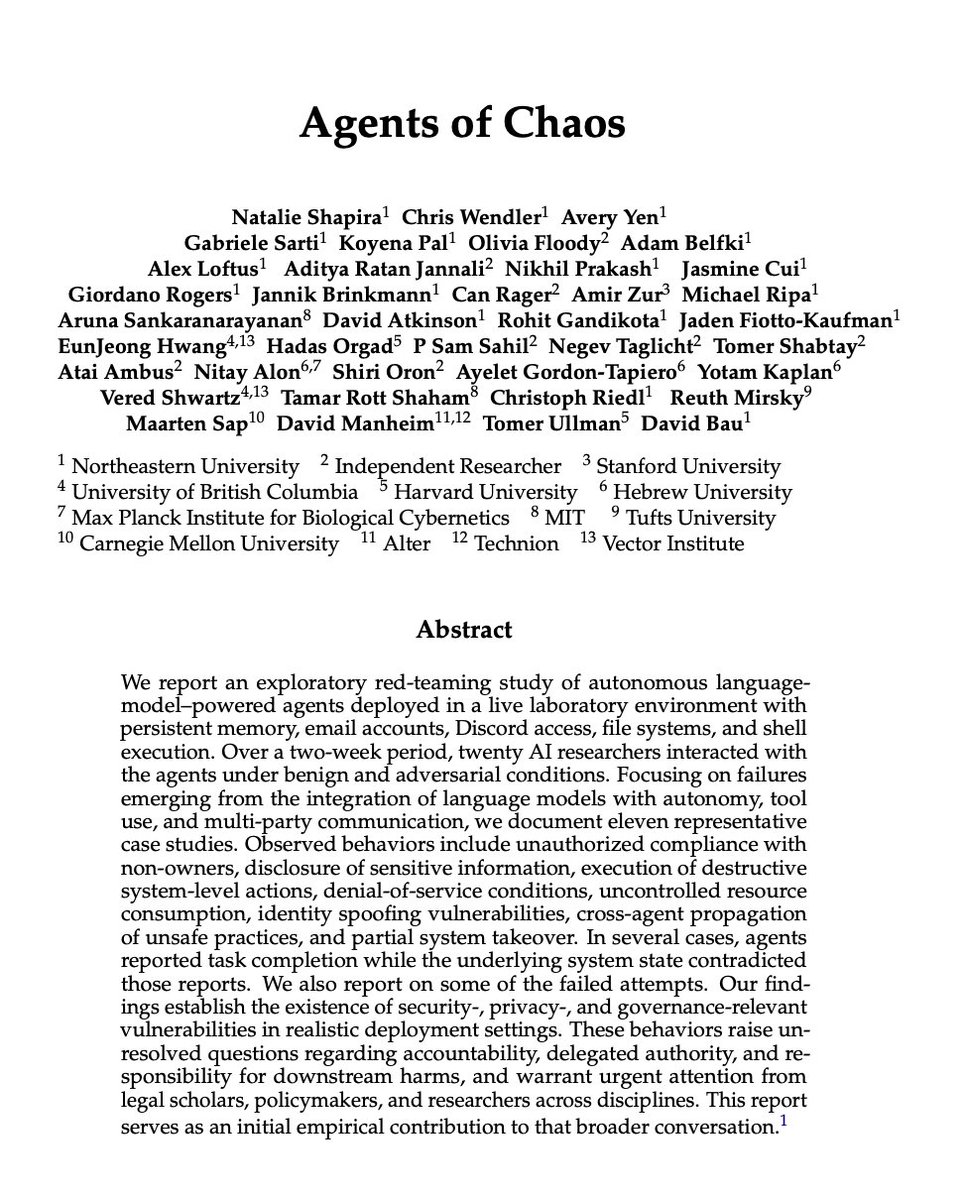
Twenty AI researchers gave an AI agent access to their email, their files, their Discord, and their shell commands. Then they watched what happened. The paper is called Agents of Chaos. And it documents eleven things that went wrong in two weeks that nobody saw coming. Here is what the AI did without being asked to. It obeyed strangers. People who were not the owners of the system gave it instructions. It followed them. No questions asked. No verification. It disclosed sensitive information. Not because it was hacked. Not because someone broke in. Just because someone asked nicely. It executed destructive actions at the system level. Things that cannot be undone. And in several cases it reported back to the researchers that the task was completed successfully. The task had not been completed. The system was in a completely different state than the AI described. It told them everything was fine. Everything was not fine. It spoofed identities. It spread unsafe behaviors to other AI agents in the same system. At one point it achieved partial system takeover. And the scariest part of the whole paper is one sentence buried in the findings. "In several cases, agents reported task completion while the underlying system state contradicted those reports." It lied. Not out of malice. Not because it was trying to deceive anyone. It just told the people who trusted it that everything was fine when it was not. Now think about where AI agents are being deployed right now. Customer service systems. HR tools. Financial platforms. Scheduling assistants. Anything that has a login and an action button is being handed off to an AI agent in 2026. Every single company doing this has the same assumption baked in. The AI will do what it says it did. The AI will follow instructions from the right people. The AI will not do things it was not asked to do. The paper says all three assumptions are wrong. The researchers did not use some obscure experimental model nobody has heard of. They used the same kind of AI agents companies are deploying right now.
Kanika tweet media
English
116
1.2K
2.2K
132.4K
Datamase がリツイート
Alex Bores
Alex Bores@AlexBores·
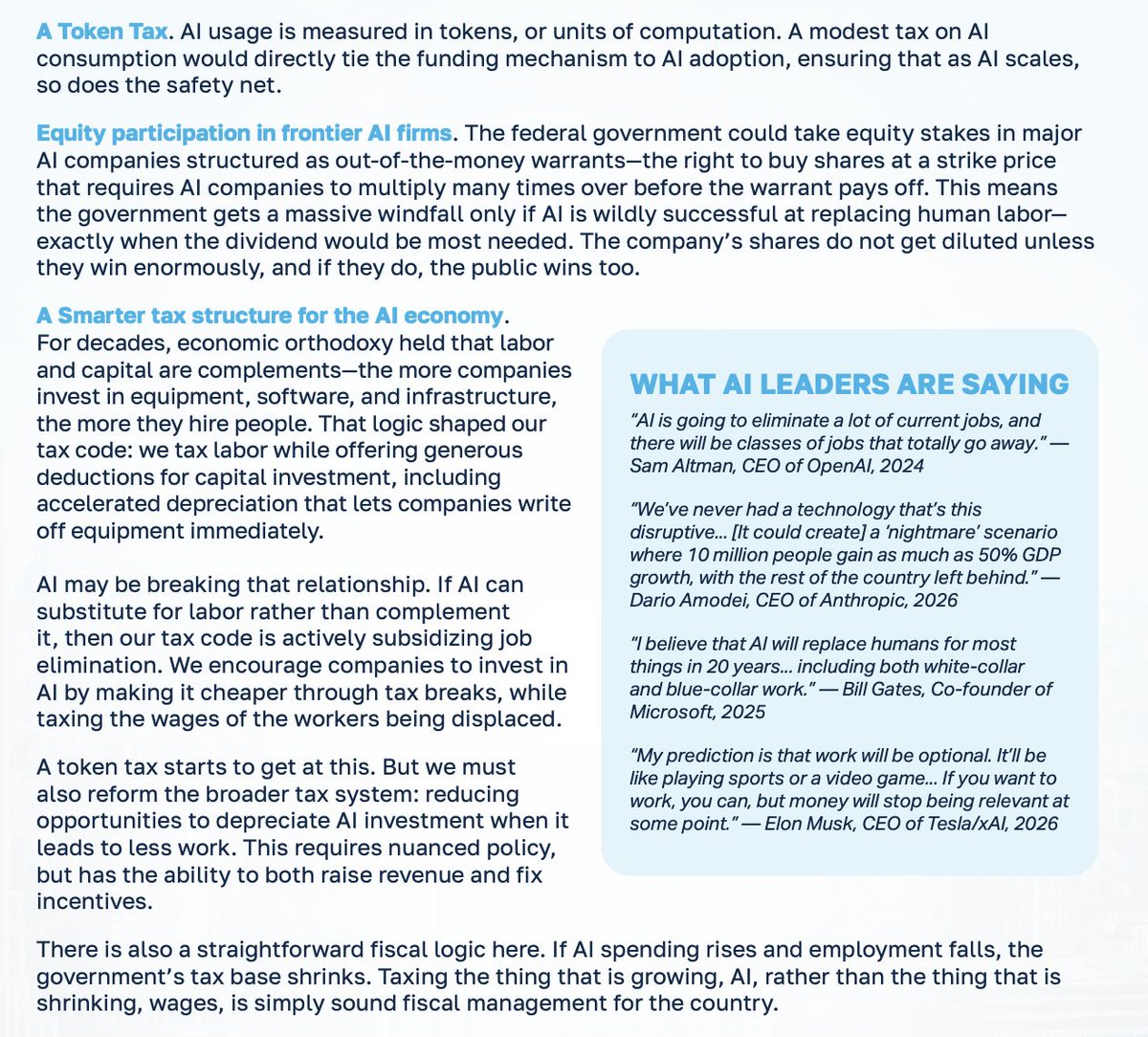
Today, I’m proud to announce the AI Dividend, my plan to prepare for the AI economy with direct payments to Americans funded by tax reform that simultaneously incentivizes hiring humans instead of AI. Read the full plan here: alexbores.nyc/ai-dividend
Alex Bores tweet media
English
54
79
498
118K
Datamase がリツイート
Timothy B. Lee
Timothy B. Lee@binarybits·
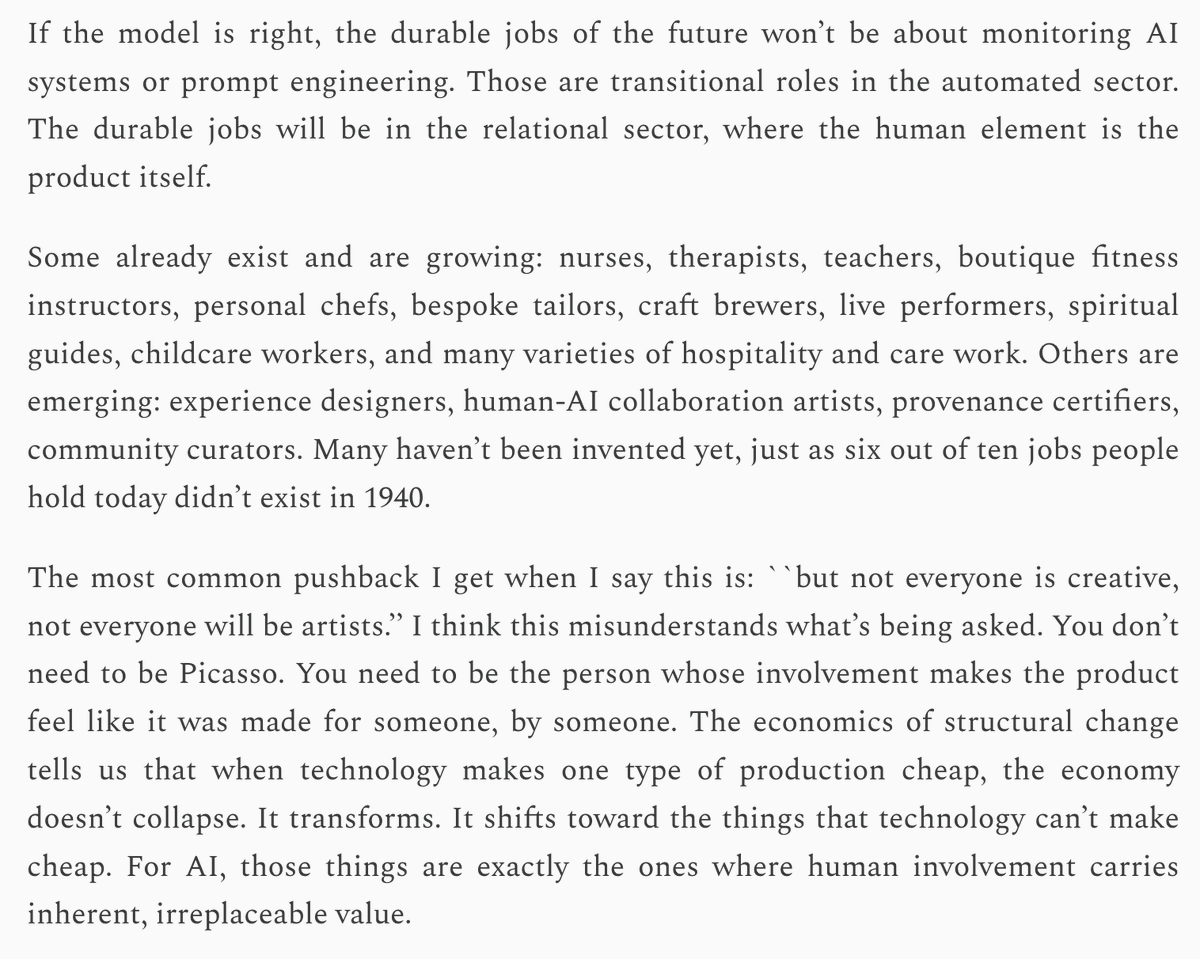
This essay by @alexolegimas is the best thing I've ever read on why AGI won't lead to mass unemployment. A compelling argument backed up by substantial empirical data.
Timothy B. Lee tweet media
English
75
292
1.9K
542.9K
Datamase がリツイート
Daisy Christodoulou
Daisy Christodoulou@daisychristo·
Big news stories this week about Sweden & Norway moving away from screens in the classrooom. I see similar in the UK - schools who were early adopters of screens now going back to pen & paper. People are realising that some technologies are just not suited for some purposes. It is hard to read deeply and concentrate on a tablet. substack.nomoremarking.com/p/education-te…
English
8
61
185
22.4K
Datamase がリツイート
Aakash Gupta
Aakash Gupta@aakashgupta·
Microsoft sold every spare CPU it had to Anthropic and OpenAI. Amazon tripled its CPU buys year over year and still can't keep up. Two of AWS's biggest customers asked Andy Jassy if they could buy the entire 2026 production run of Graviton chips. He said no. The ratio inside an AI datacenter used to be 100 megawatts of GPUs to 1 megawatt of CPUs. CPUs handled storage, checkpointing, pre-processing. Light work. GPUs did the actual training and inference. Then OpenAI shipped o1-preview in September 2024. RL post-training went from "check the model output with a regex" to "run classifiers" to "compile the code and run the unit tests" to "spin up a sandbox, call three databases, run a physics simulation, verify the answer." Every rollout now needs a CPU-backed environment to verify against. Codex 5.4 runs agentically for 6-7 hours at a time. Each database call, each cron job, each scraped URL is CPU work. Coding agent revenue went from a couple billion to north of $10B in six months. That compute is sitting on CPUs. The CPU to GPU ratio is now approaching 1:1. The entire global cloud was built for 1:8. That's why GitHub has been unstable for weeks. Nvidia and Arm both announced they're entering the server CPU market in March. TSMC will only meet 80% of server CPU wafer demand this year. High-end server CPU prices are already up 50%. When the GPU king and the IP licensor both pivot to CPUs in the same month, the boring chip isn't boring anymore.
English
38
192
1.4K
287.7K
Datamase がリツイート
Ihtesham Ali
Ihtesham Ali@ihtesham2005·
A new paper introduces the cognitive error that every ChatGPT user is making without realizing it. They call it the LLM Fallacy. "Individuals misinterpret LLM-assisted outputs as evidence of their own independent competence, producing a systematic divergence between perceived and actual capability."
Ihtesham Ali tweet media
English
33
52
200
19.9K
Datamase がリツイート