Dan Moore

4.4K posts

Dan Moore banner
Dan Moore

Dan Moore

@DmoWriter

Writer @ESPN @ringer | Also @TheAtlantic @Baseballpro, @Oaklandside, others | SPORTS TOWN (forthcoming @UnivNebPress) | East Bay 🌳 | Oliver’s dad ⚾️

가입일 Haziran 2010
2.8K 팔로잉3.6K 팔로워
고정된 트윗
Dan Moore
Dan Moore@DmoWriter·
I’m so excited to finally share this: I’m writing a book. It’s about Oakland—its rise as a great American sports town, its fall to the billionaires who abandoned it, and, most of all, the fans and activists and founders who fought to hold onto this aspect of the city’s history, identity and soul. I aim to get it all: what happened, how it happened, and why it matters not just to A’s, Raiders, Warriors, Roots and Ballers fans, but sports fans (and taxpayers) everywhere. I’ve been working on this for a long time already, and though there’s still a long way to go, I’m so excited for you all to read it. Let’s Go, Oakland. I hope it does you justice ⚾️ cc @OaklandBallers @oaklandrootssc @Oakland68s @LastDiveBar @UnivNebPress
Dan Moore tweet media
English
56
87
648
43.1K
Luke Epplin
Luke Epplin@LukeEpplin·
“Moses and the Doctor” has been out for more than a month and I just received a memory alert of when I was writing chapter 14. Somehow I got it done.
Luke Epplin tweet media
English
2
0
28
435
Dan Moore
Dan Moore@DmoWriter·
@TM_Brown @viajoshhunt My life for the last 7 years. Thank you for sharing. I didn’t know there were others!
English
1
0
8
1.1K
Teddy (T.M.) Brown
Teddy (T.M.) Brown@TM_Brown·
If any writers are wondering how a lot of freelancers are making it work, I wrote this whole thing about how to maintain a day job and also write. I’ve always had a full-time gig, the economics of pure freelancing never worked for me: open.substack.com/pub/tedthought…
English
2
37
417
21.2K
Drew McGowan
Drew McGowan@DrewMcGowan·
@DmoWriter Hey Dan! I would love to buy you a coffee, beer, drink, pastry, whatever and hang out. Let me know next time you’re available in Oakland!
English
1
0
1
32
Dan Moore
Dan Moore@DmoWriter·
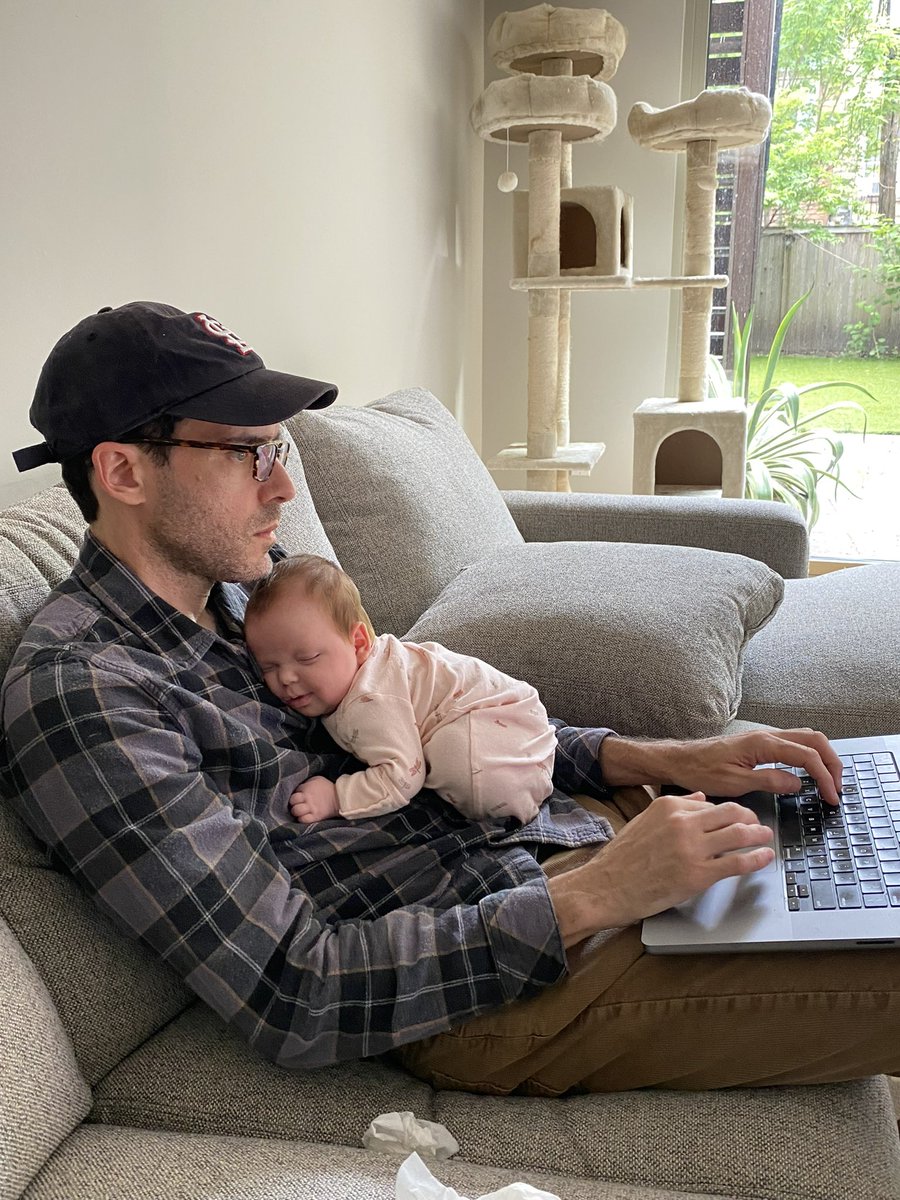
I'm writing a book. It's about Oakland. I usually work on it early in the morning, at night, in whatever pockets of time I can squirrel away from my three year old. It's always hard yanking myself out of the draft. Depending how long I'm away, it's even harder re-immersing myself in it. Last week I got a hotel room in downtown Oakland and did nothing but write for four days. I'd never done anything like that. I'm glad I did. To live in the book for so long changed my relationship to it. Writing a book has simultaneously been the most engrossing thing I've ever done and the most soul-jangling. I vacillate between pure love for the material I'm working with and high-pitched anxiety over all the ways I'm sure I'm not doing it justice. I checked out of the hotel feeling fully the former—and newly confident in my ability to finish this damn thing, certainly by my September deadline. I see it. I'm getting excited about showing it to people. The only wrinkle: my wife's pregnant with our second child, another boy, who arrives in June—so the deadline's been moved up. Wish me luck. Here's a picture from like the one walk I took. It's of the greatest city on earth. Back to work.
Dan Moore tweet media
English
16
8
288
13.7K
Dan Moore
Dan Moore@DmoWriter·
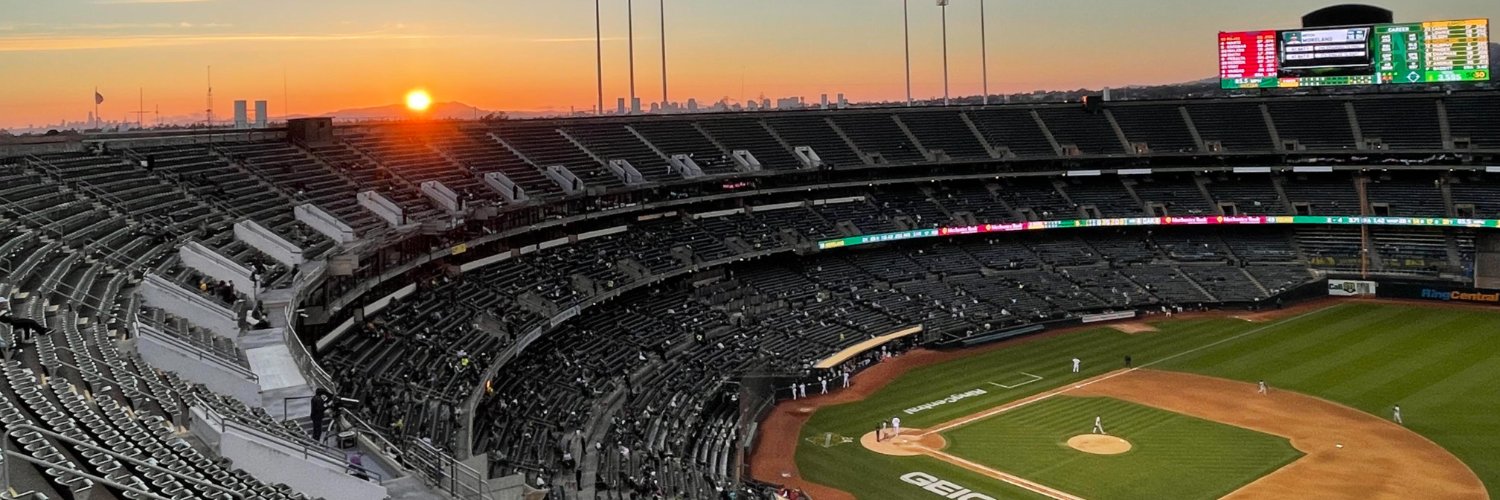
World, this is Walter Haas Jr. Haas bought the A's in 1980 for around $12 million. The A's were, at the time, the worst team in baseball. (In 1979, they went 54–108.) They had baseball's lowest attendance. The Coliseum, now 14 years old, was drab and showing wear. Oakland, meanwhile, was corkscrewing. The city was bleeding employers. Crime was surging. And its most important institutions all seemed to be abandoning it. Charlie Finley—the man Haas bought the A's from—had been trying for several years to move the team to Denver. Al Davis was in the middle of suing the NFL for the right to move the Raiders to Los Angeles. Things seemed bleak. Just a few years prior, Oakland had been the most successful sports town in America. Now it seemed to be dying. Many outside observers wrote both team and town thoroughly off. No doubt casual fans around the country would have bought the idea that the Oakland Coliseum was no longer a place worth investing in. Haas—former president and CEO of Levi Strauss and Co.—said fuck that. He spent his own money to upgrade the Coliseum. He built up the organization, hiring the likes of Sandy Alderson, Andy Dolich, and, later, Billy Beane. He invested in the community. ("We built 10 little league fields in and around Oakland,” Dolich, an Executive VP, told me, for my book. “Reading programs. Affordability programs to bring little league groups and schools to games. We were partners with the Oakland Zoo. We tried to immerse ourselves in the community. That stuff makes people proud.”) And he compiled a roster full of stars (Jose Canseco, Mark McGwire, hometown heroes Dave Stewart and Rickey Henderson). By the end of the 1980s, the A's were the very best team in baseball. They had baseball's second highest attendance. They had baseball's highest payroll and among its highest revenues. They went to three World Series in a row, beating the Giants in one. In 1987, Oakland hosted the All Star game. Health failing, Haas sold the A's in 1995 for $85 million. The price was laughably low—Haas offered buyers a discount, in return for their promise that they keep the A's in Oakland—but it still constituted a massive return on that initial $12 million investment. The idea that the A's, just ten years later, were not an organization worth investing in—that both baseball and business success could never be had in East Oakland—betrays an ignorance of history and a lack of imagination. Fisher could have spent money on players in Oakland. He's a billionaire (richer than Haas was) who collected revenue-sharing checks nearly every year of his tenure. In 2017, he could have built a new stadium right at the Coliseum site. The Raiders were gone (again). He had the historic East Bay market to himself. He could have had what Haas had. He could have given Oakland what he's now giving Las Vegas. Oakland would have rewarded him for it. Let us be frank about what happened: he chose not to. That choice should not be accepted at face value. As Walter Haas's son, Wally, once told the @sfchronicle, it was, rather, "unforgivable." I appreciate Evan's reporting here. It's an incredible about-face we're witnessing. But the history that was thrown away in Oakland is an important part of this story. Without it, the story's incomplete.
Dan Moore tweet media
Evan Drellich@EvanDrellich

In Oakland, every star player would walk out the door. Now the A’s are doing things differently. The irony: the guy finally allowed to give out the long-term contracts doesn’t have one himself. On the art of an A’s extension: nytimes.com/athletic/71098…

English
39
151
567
78.7K
Garth Kimball
Garth Kimball@garthoakland·
@DmoWriter Thank you for another thoughtful and accurate piece. Oakland has been cursed with bad ownerships. Haas was the best. While going to the Coli as a kid, he would wander the stands and talk to you & thank for coming. He cared. We've just had owners who didn't care or gave a damn.
English
2
3
25
654
Ron Kroichick
Ron Kroichick@ronkroichick·
Festive atmosphere in Oakland for celebration honoring Olympic gold medalist Alysa Liu
English
3
36
535
7.5K
Dan Moore
Dan Moore@DmoWriter·
Hi Pete! I'm with ya on one thing. Oakland is not without fault. Building Mt. Davis, taking on all that debt, selling out the A's in favor of capitulating to Davis, creating a quagmire at the Coliseum site—that was the worst possible thing the city could have done at that moment. Much of Schott/hoffman's/Lew Wolff's inability to get a stadium deal done in Oakland can be traced directly back to that decision. (One reason Brown was against building a stadium uptown was because the city was paying~$30m a year by that point on debt payments for the renovations that had only been completed like four years earlier.) Wolff and Schott/Hoffman wanted to build at the Coli, but they couldn't, because of the other teams. That had changed by 2017, however. A stadium could have been built there. Again, that's what Wolff wanted to do. Fisher for a time seemed open to building there, too. He in fact tried to get Oakland to sell him its half of the land (after successfully persuading the county to sell him its half) under the auspices that it would work as a backup to Howard Terminal, which the A's recognized to be rife with complications. (athleticsnation.com/2018/3/26/1716…) Also, wouldn't Haas's success in Oakland prove that Oakland is indeed built for baseball? Oakland was arguably the most successful baseball city on planet earth in the Bash Bro's era.
English
2
0
26
604
Pete Turner
Pete Turner@PeteATurner·
Evan and Dan present a version of this story. There's also the version where every owner in the Oak era was frustrated by the lack of revenue. They were all beset by tepid fan support. Hoffman, Schott and Wolff were all land developers...each of them failed to get a yard built. Their efforts spanned several cities and a case that went to the Supreme Court. Oak mayor Jerry Brown was open with his contempt about a new A's stadium. To understand the environment the team had to endure...Mayor Quan had a vision for "Colesium City"--the goal? Keep the Warriors, Raiders and A's. Oak city failed; nobody wanted the project. Despite the market size and team success, the fans never busted 3million in a season. Us Bay fans, we've always been fickle. We have other things to do. I'm often told that A's fans were incredible...the numbers don't support it. They often brag on bottom 1/3 attendance. Haas had his moments as a great owner. He also had his failures. On the eve of the Giants fleeing SF, Haas, rather than take the market, he saved the team and kept the split market. It was the death blow for the A's team. Critics point to John Fisher as a villain. The team was a fan support starved zombie in Oakland in the early 90s. When Dan couches the sale of the team at a loss for his family, as a good thing, it was not. Let's be crystal clear. An MLB franchise selling below market value in the f'ing Bay Area is a failing business. Alturism isn't success. Bad policy, an angry demos, a heavy dose of disingenuous press and no team was going to survive Oak. Worse? When the Giants and 9ers had their measures passed to pave the way for their new stadia...the 9ers yard never materialized. They had to move to the more friendly confines of Santa Clara...the Giants still had law suits and dissent to battle. Thankfully, they managed to get their yard erected. The A's left for a lot of reasons. It seems now, more than ever, that a deal was never possible. Oakland is broke, the stadium site is no longer desirable. It's not just that there's no plan to develop anything there, but there is likely enough corruption that it's going to stay that way. How long has the Malibu site been bereft of any viable project? Oakland isn't built for baseball. John Fisher was the first owner to figure out how to get the hell out of The Town.
Pete Turner tweet media
Dan Moore@DmoWriter

World, this is Walter Haas Jr. Haas bought the A's in 1980 for around $12 million. The A's were, at the time, the worst team in baseball. (In 1979, they went 54–108.) They had baseball's lowest attendance. The Coliseum, now 14 years old, was drab and showing wear. Oakland, meanwhile, was corkscrewing. The city was bleeding employers. Crime was surging. And its most important institutions all seemed to be abandoning it. Charlie Finley—the man Haas bought the A's from—had been trying for several years to move the team to Denver. Al Davis was in the middle of suing the NFL for the right to move the Raiders to Los Angeles. Things seemed bleak. Just a few years prior, Oakland had been the most successful sports town in America. Now it seemed to be dying. Many outside observers wrote both team and town thoroughly off. No doubt casual fans around the country would have bought the idea that the Oakland Coliseum was no longer a place worth investing in. Haas—former president and CEO of Levi Strauss and Co.—said fuck that. He spent his own money to upgrade the Coliseum. He built up the organization, hiring the likes of Sandy Alderson, Andy Dolich, and, later, Billy Beane. He invested in the community. ("We built 10 little league fields in and around Oakland,” Dolich, an Executive VP, told me, for my book. “Reading programs. Affordability programs to bring little league groups and schools to games. We were partners with the Oakland Zoo. We tried to immerse ourselves in the community. That stuff makes people proud.”) And he compiled a roster full of stars (Jose Canseco, Mark McGwire, hometown heroes Dave Stewart and Rickey Henderson). By the end of the 1980s, the A's were the very best team in baseball. They had baseball's second highest attendance. They had baseball's highest payroll and among its highest revenues. They went to three World Series in a row, beating the Giants in one. In 1987, Oakland hosted the All Star game. Health failing, Haas sold the A's in 1995 for $85 million. The price was laughably low—Haas offered buyers a discount, in return for their promise that they keep the A's in Oakland—but it still constituted a massive return on that initial $12 million investment. The idea that the A's, just ten years later, were not an organization worth investing in—that both baseball and business success could never be had in East Oakland—betrays an ignorance of history and a lack of imagination. Fisher could have spent money on players in Oakland. He's a billionaire (richer than Haas was) who collected revenue-sharing checks nearly every year of his tenure. In 2017, he could have built a new stadium right at the Coliseum site. The Raiders were gone (again). He had the historic East Bay market to himself. He could have had what Haas had. He could have given Oakland what he's now giving Las Vegas. Oakland would have rewarded him for it. Let us be frank about what happened: he chose not to. That choice should not be accepted at face value. As Walter Haas's son, Wally, once told the @sfchronicle, it was, rather, "unforgivable." I appreciate Evan's reporting here. It's an incredible about-face we're witnessing. But the history that was thrown away in Oakland is an important part of this story. Without it, the story's incomplete.

English
9
1
10
2.6K
Dan Moore
Dan Moore@DmoWriter·
@Adamcopes whew glad you're excited!! I'll get you a copy
English
0
0
2
46
Adam Copeland
Adam Copeland@Adamcopes·
@DmoWriter Is this the kind of stuff we can expect in ‘Sports Town?’
English
1
0
4
679
Travis Danner
Travis Danner@dannerrama·
There’s going to be various attempts to rewrite history when it comes to the A’s move— thank god for people like @DmoWriter who will continue to set the record straight: this move was a choice, a particularly cynical one, and not a necessity. 👏🏻 👏🏻👏🏻
Dan Moore@DmoWriter

World, this is Walter Haas Jr. Haas bought the A's in 1980 for around $12 million. The A's were, at the time, the worst team in baseball. (In 1979, they went 54–108.) They had baseball's lowest attendance. The Coliseum, now 14 years old, was drab and showing wear. Oakland, meanwhile, was corkscrewing. The city was bleeding employers. Crime was surging. And its most important institutions all seemed to be abandoning it. Charlie Finley—the man Haas bought the A's from—had been trying for several years to move the team to Denver. Al Davis was in the middle of suing the NFL for the right to move the Raiders to Los Angeles. Things seemed bleak. Just a few years prior, Oakland had been the most successful sports town in America. Now it seemed to be dying. Many outside observers wrote both team and town thoroughly off. No doubt casual fans around the country would have bought the idea that the Oakland Coliseum was no longer a place worth investing in. Haas—former president and CEO of Levi Strauss and Co.—said fuck that. He spent his own money to upgrade the Coliseum. He built up the organization, hiring the likes of Sandy Alderson, Andy Dolich, and, later, Billy Beane. He invested in the community. ("We built 10 little league fields in and around Oakland,” Dolich, an Executive VP, told me, for my book. “Reading programs. Affordability programs to bring little league groups and schools to games. We were partners with the Oakland Zoo. We tried to immerse ourselves in the community. That stuff makes people proud.”) And he compiled a roster full of stars (Jose Canseco, Mark McGwire, hometown heroes Dave Stewart and Rickey Henderson). By the end of the 1980s, the A's were the very best team in baseball. They had baseball's second highest attendance. They had baseball's highest payroll and among its highest revenues. They went to three World Series in a row, beating the Giants in one. In 1987, Oakland hosted the All Star game. Health failing, Haas sold the A's in 1995 for $85 million. The price was laughably low—Haas offered buyers a discount, in return for their promise that they keep the A's in Oakland—but it still constituted a massive return on that initial $12 million investment. The idea that the A's, just ten years later, were not an organization worth investing in—that both baseball and business success could never be had in East Oakland—betrays an ignorance of history and a lack of imagination. Fisher could have spent money on players in Oakland. He's a billionaire (richer than Haas was) who collected revenue-sharing checks nearly every year of his tenure. In 2017, he could have built a new stadium right at the Coliseum site. The Raiders were gone (again). He had the historic East Bay market to himself. He could have had what Haas had. He could have given Oakland what he's now giving Las Vegas. Oakland would have rewarded him for it. Let us be frank about what happened: he chose not to. That choice should not be accepted at face value. As Walter Haas's son, Wally, once told the @sfchronicle, it was, rather, "unforgivable." I appreciate Evan's reporting here. It's an incredible about-face we're witnessing. But the history that was thrown away in Oakland is an important part of this story. Without it, the story's incomplete.

English
6
19
126
9.1K
Ben Koo
Ben Koo@bkoo·
This is a great history here by Dan. Highly recommend. The loss of a team I was incredibly bonded to, at the hands of such a villain, is something I honestly haven’t fully grieved and has made such an impact on my views on society as a whole. Things just get taken from you.
Dan Moore@DmoWriter

World, this is Walter Haas Jr. Haas bought the A's in 1980 for around $12 million. The A's were, at the time, the worst team in baseball. (In 1979, they went 54–108.) They had baseball's lowest attendance. The Coliseum, now 14 years old, was drab and showing wear. Oakland, meanwhile, was corkscrewing. The city was bleeding employers. Crime was surging. And its most important institutions all seemed to be abandoning it. Charlie Finley—the man Haas bought the A's from—had been trying for several years to move the team to Denver. Al Davis was in the middle of suing the NFL for the right to move the Raiders to Los Angeles. Things seemed bleak. Just a few years prior, Oakland had been the most successful sports town in America. Now it seemed to be dying. Many outside observers wrote both team and town thoroughly off. No doubt casual fans around the country would have bought the idea that the Oakland Coliseum was no longer a place worth investing in. Haas—former president and CEO of Levi Strauss and Co.—said fuck that. He spent his own money to upgrade the Coliseum. He built up the organization, hiring the likes of Sandy Alderson, Andy Dolich, and, later, Billy Beane. He invested in the community. ("We built 10 little league fields in and around Oakland,” Dolich, an Executive VP, told me, for my book. “Reading programs. Affordability programs to bring little league groups and schools to games. We were partners with the Oakland Zoo. We tried to immerse ourselves in the community. That stuff makes people proud.”) And he compiled a roster full of stars (Jose Canseco, Mark McGwire, hometown heroes Dave Stewart and Rickey Henderson). By the end of the 1980s, the A's were the very best team in baseball. They had baseball's second highest attendance. They had baseball's highest payroll and among its highest revenues. They went to three World Series in a row, beating the Giants in one. In 1987, Oakland hosted the All Star game. Health failing, Haas sold the A's in 1995 for $85 million. The price was laughably low—Haas offered buyers a discount, in return for their promise that they keep the A's in Oakland—but it still constituted a massive return on that initial $12 million investment. The idea that the A's, just ten years later, were not an organization worth investing in—that both baseball and business success could never be had in East Oakland—betrays an ignorance of history and a lack of imagination. Fisher could have spent money on players in Oakland. He's a billionaire (richer than Haas was) who collected revenue-sharing checks nearly every year of his tenure. In 2017, he could have built a new stadium right at the Coliseum site. The Raiders were gone (again). He had the historic East Bay market to himself. He could have had what Haas had. He could have given Oakland what he's now giving Las Vegas. Oakland would have rewarded him for it. Let us be frank about what happened: he chose not to. That choice should not be accepted at face value. As Walter Haas's son, Wally, once told the @sfchronicle, it was, rather, "unforgivable." I appreciate Evan's reporting here. It's an incredible about-face we're witnessing. But the history that was thrown away in Oakland is an important part of this story. Without it, the story's incomplete.

English
2
10
51
5.2K
Dan Moore
Dan Moore@DmoWriter·
@bkoo Ah man, thank you Ben. I’ve actually been reading some of your old Athletics Nation blogs, all are excellent. Appreciate you sharing
English
0
0
6
132
Oaklandfans
Oaklandfans@oaklandfans·
@DmoWriter Wonderful piece. I’ve said it time and time again. Walter Haas Jr. and his family truly made Oakland A’s games at the Coliseum heaven on earth. It was our Field of Dreams.
English
1
1
12
422
Dan Moore
Dan Moore@DmoWriter·
@marcmurd Thanks Marc, I used to live by the lake too. Miss it everyday
English
0
0
1
8
marc murdock
marc murdock@marcmurd·
@DmoWriter Lived two blocks from the lake for years. Looking very much forward to your book.
English
1
0
1
2
Dan Moore
Dan Moore@DmoWriter·
@BWDBWDBWD thanks bradford! appreciate it. and I know! the A’s always were uniquely fashionable…
English
0
0
5
807
Bradford William Davis
Bradford William Davis@BWDBWDBWD·
@DmoWriter dan this is incredible...thank you for sharing. also funny that there was *another* jeans tycoon who owned the A's
English
1
0
11
1.1K