ForgeAudit

105 posts

ForgeAudit banner
ForgeAudit

ForgeAudit

@ForgeAudit

Deep security audits for Web3 protocols. Get secured : https://t.co/XQyx5uTFfP

가입일 Mart 2026
33 팔로잉109 팔로워
고정된 트윗
ForgeAudit
ForgeAudit@ForgeAudit·
You spent months building your protocol. Then one day, a simple exploit drains everything. Reentrancy. Logic flaw. Access control that slipped through. It wasn't because the attacker was a genius. It was because the security review was just a formality.
English
2
1
15
1.4K
ForgeAudit
ForgeAudit@ForgeAudit·
$5.4M drained from @gravity_bridge today. Not through a complex math exploit. Not through a reentrancy attack. Through trust. 37 validators unknowingly signed a malicious update. The signing pipeline was poisoned. They never knew what they were approving. The contract had no timelock. No guardian multisig. No circuit breaker. Once the signatures were valid, execution was instant. And irreversible. The scariest vulnerabilities aren't in the math. They're in the assumptions. "Our validators won't be compromised." "Our signing pipeline is safe." It was realistic enough.
English
6
15
88
16.1K
ForgeAudit
ForgeAudit@ForgeAudit·
@Core3io That's a different kind of vulnerability. No audit can fix that one.
English
0
0
1
20
CORE3
CORE3@Core3io·
@ForgeAudit 💯Audit doesn't matter if the founder has a "passwords.txt" file on desktop
English
1
0
1
44
ForgeAudit
ForgeAudit@ForgeAudit·
Most protocols that got exploited had an audit on their roadmap. It was always scheduled for later. After the raise. After the feature was done. After mainnet. Later never came with enough time. And some that did get audited, still got exploited. Because security isn't a one time event. New integrations, new features, new attack surfaces. The teams that stay secure don't treat audits as a checkbox. They treat security as an ongoing discipline. One audit is the foundation. What you build on top of it determines how long it holds.
English
2
2
19
570
ForgeAudit
ForgeAudit@ForgeAudit·
🚨@inkfinance's Workspace Treasury Proxy on Polygon was just drained for ~$140K. Here's what the attacker actually did: They deployed a contract at an address matching a whitelisted claimer entry. By calling claim(claimId), they passed the eligibility check and triggered the treasury's authorized transfer. A $25K Balancer V2 flashloan was used and repaid atomically. The attacker funded from Railgun on Ethereum, bridged to Polygon roughly 32 minutes before the exploit. The whitelist checked if the address matched. It never checked if the caller actually controlled that entry. Access control isn't just about who's on the list. It's about who can act on behalf of that list.
English
0
1
14
434
ForgeAudit
ForgeAudit@ForgeAudit·
One audit doesn't mean your protocol is safe forever. It means every vulnerability we could find at that point in time has been addressed. But protocols evolve. New features get added. Integrations expand. Every change shifts the attack surface. The teams that stay secure aren't the ones who audited once. They're the ones who treat security as an ongoing process. Every new feature deserves a fresh set of eyes. Every upgrade is a new risk surface that didn't exist before. And even after your code is final, bug bounties exist for a reason. A hundred security researchers looking at your protocol will always catch things a single audit couldn't. Different perspectives, different assumptions, different findings. One audit is the foundation. What you build on top of it determines how long it holds.
English
2
1
13
315
ForgeAudit
ForgeAudit@ForgeAudit·
@Scallop_io Side contracts rarely get the same scrutiny as core contracts. But attackers don't make that distinction. Appreciate the transparency and swift response, this is how it should be handled.
English
0
0
6
1.1K
Scallop
Scallop@Scallop_io·
🚨 SECURITY INCIDENT NOTICE We have identified an exploit affecting a side contract related to Scallop’s sSUI spool rewards pool, resulting in a loss of approximately 150K SUI. The affected contract has been frozen. Our core contracts remain safe and only the sSUI rewards pool was impacted. All other pools are safe. Scallop will fully cover 100% of the loss. We are actively investigating and will share further updates soon. Thank you for your patience and continued support. 🐚
English
126
157
743
256.9K
ForgeAudit
ForgeAudit@ForgeAudit·
A few years ago, auditors read code line by line. Then tools came. Static analyzers, fuzzers, automated scanners. Some auditors resisted it, saying real auditing is manual. Meanwhile attackers never resisted anything. They adopted every tool that gave them an edge. If hackers are using AI to find vulnerabilities, and they are, then auditors who aren't using it are already behind. We can't reject progress. We have to move with it. We use AI. It makes us faster, gives us more coverage, catches the surface level stuff quickly. But we don't stop there. Because AI finds patterns. It doesn't find intent. It doesn't understand why a function was built a certain way or what happens when two systems collide under pressure. That's where humans come in. That's where the real bugs hide. The future of smart contract security isn't AI or human. It's both.
English
2
2
28
1.2K
ForgeAudit
ForgeAudit@ForgeAudit·
@asen_sec This. The ones grinding in silence right now are the ones who'll matter most later.
English
1
0
5
102
0xasen
0xasen@asen_sec·
Not every new auditor who'll matter in three years is visible today. Some are quiet right now, putting in reps nobody sees. Keep going. I'll notice.
English
9
3
120
2.4K
ForgeAudit
ForgeAudit@ForgeAudit·
@gurwinder_sui We cover more than just Solidity. EVM is our core but we're not limited to it
English
0
0
1
51
ForgeAudit
ForgeAudit@ForgeAudit·
Some of the sharpest builders and auditors in Web3 are still unknown. Not because they lack skill. Because they never got the right support. The builder with a great idea but no network. No budget for an audit. No connection that opens the first door. The auditor with real skills and a growing track record, but never got a real opportunity. They're out there. Still grinding. Still building in silence. Web3 moves better when we lift each other up. Support the builders around you. Back the auditors still finding their footing. Share their work. Give them a shot. You might be looking at the next great name in this space. That's exactly what we are building toward. A place where serious builders and auditors belong. It's one of our biggest visions. Are you one of them?
English
5
2
30
996
ForgeAudit
ForgeAudit@ForgeAudit·
@ighodarod95 That feeling is more common than people admit. What stage are you at right now, still learning or already doing contests?
English
0
0
0
49
ForgeAudit
ForgeAudit@ForgeAudit·
@seeksahib Strong point. Another pattern we see: Teams focus on building fast, but don’t think enough about trust. Demand gets users in, but reliability is what keeps them.
English
0
0
5
30
Sahib
Sahib@seeksahib·
Vibecoding made everyone a builder. But why are you building in Web3 at the first place? If you can't answer this clearly... you aren't ready. We're seeing more early-stage projects than ever. The common reason of failure of all these projects is a) not enough demand b) no strong reason to pick them over others Don't start a Web3 project, just because it sounds cool and fancy.
English
22
0
37
2.5K
ForgeAudit
ForgeAudit@ForgeAudit·
@volo_sui Incidents like this are a good reminder that security isn’t just about smart contracts. Operational layers, especially key management, often become the real point of failure. Appreciate the transparency here.
English
0
0
7
625
Volo
Volo@volo_sui·
📋 Community Status Report - Volo Protocol We want to provide our community with a full and honest account of where things stand following yesterday's security incident. We owe you clarity, and we are committed to providing it every step of the way. 1. Cause of the Hack Our investigation is ongoing, and we do not want to speculate on details before we have a complete picture. What we can share at this stage: we believe the attack was the result of a private key compromise. Despite our best efforts and security practices in place, the attacker was able to exploit this vector to access the affected Vaults. This was not a smart contract vulnerability or a protocol-level exploit; the Sui blockchain and its infrastructure performed as intended throughout. A full technical post-mortem will be published once the investigation is concluded. We are working with security partners to ensure this cannot happen again. 2. Fund Recovery - $2M Successfully Frozen Of the ~$3.5M in assets taken, we have successfully frozen approximately $2M in close coordination with the Sui Foundation and ecosystem partners. This was the result of a rapid, round-the-clock effort from our team and the broader ecosystem. We are continuing to work through the details of the recovery and return process with our partners during EST business hours on Wednesday. A further update will follow as soon as those discussions are concluded. 3. Making Users Whole - We Are Fully Prepared For the remaining ~$1.5M, we are fully prepared to make every affected user whole. No user will be left out of pocket. We know that a promise alone is not enough - we will be communicating every step of the process transparently before funds are returned, so you know exactly what is happening and when. Details on the reimbursement process will be shared shortly. We are deeply sorry this happened. The Volo Team is working without pause to resolve it and to rebuild the trust you have placed in us. Thank you for your patience and continued support.
English
18
8
112
18.5K
ForgeAudit
ForgeAudit@ForgeAudit·
@ClayTrop Appreciate that. That’s exactly what we’re trying to build, step by step. Still early, but we’re getting there.
English
0
0
3
83
clay Trop
clay Trop@ClayTrop·
@ForgeAudit This hits. As a builder, I’ve seen how many great ideas stay hidden just because the right doors never opened. We need more spaces like this.
English
1
0
3
96
ForgeAudit
ForgeAudit@ForgeAudit·
Shipping pressure is real. Deadlines are real. Investor expectations are real. So is the exploit that comes after. Most protocols that got drained weren't built by careless teams. They were built by talented people under pressure at launch, at upgrade, at every new integration. Security isn't a one time checkpoint. It's the work that never stops. The window between deployment and exploit doesn't wait for your roadmap. If you're still building, one piece of advice : make security part of the process now. Not after the audit request. Not after the incident report. Now.
English
2
0
14
368
ForgeAudit
ForgeAudit@ForgeAudit·
@Param_eth Single point of failure at the verifier level. The exploit didn't break the system, it used it exactly as designed. That's the harder lesson.
English
0
0
6
470
Param
Param@Param_eth·
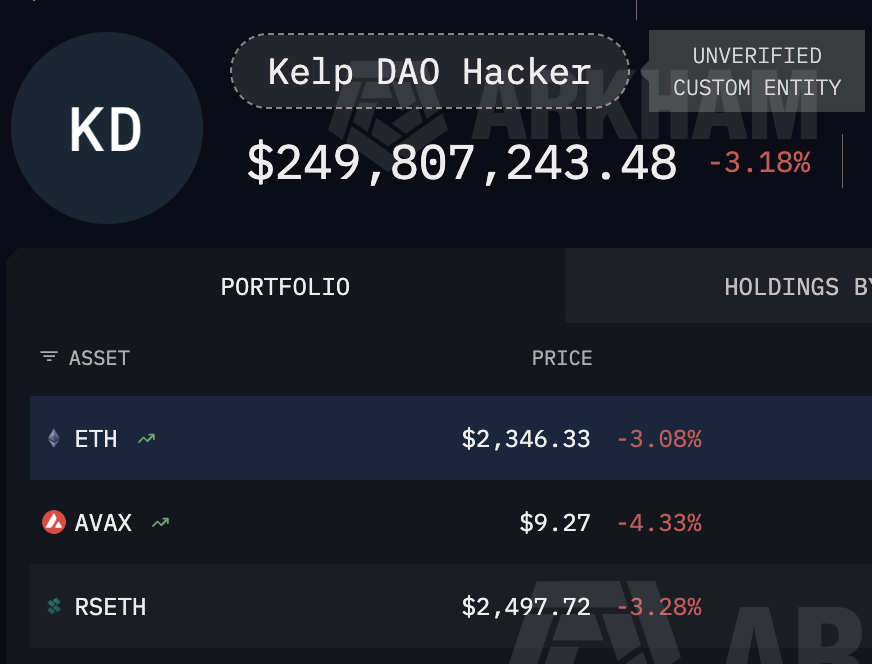
Everything you need to know about the rsETH exploit ($292 million): attacker targets insecure bridge configuration Verifier setup: Only one approval is required, and this is the single point of failure. Attacker forges cross-chain message. Tricks Bridge into Release: 116,500 fake $rsETH worth ~$292 million About 36% of total supply Unbacked ETH tokens created from thin air by the attacker (minted) Attacker receives fake rsETH on Ethereum Immediately deposits it into Aave as collateral then borrows: 106,467 ETH (~$250M) Started selling and swapping rsETH. bad debt created of more than $177 million. WETH pool utilisation hits 100% Aave freezes rsETH market exploit was not in core rsETH backing exploit hit bridged rsETH version attacker wallet publicly tracked funded via Tornado Cash one of the biggest bridge failures of 2026
Param tweet mediaParam tweet media
English
22
40
357
40.4K
ForgeAudit
ForgeAudit@ForgeAudit·
The oracle wasn't broken, it read what was there. The attacker deployed fake token contracts, wired them into a cluster of freshly created pools, and built a synthetic liquidity graph around attacker controlled assets. Any validation logic that trusted those pools without questioning asset legitimacy got misled. The gap wasn't oracle sophistication. It was asset admission.
English
1
0
4
38