Barry Solaiman

179 posts

Barry Solaiman banner
Barry Solaiman

Barry Solaiman

@ProfBarrySol

Health, AI & the Law | Associate Professor @hbku_cl | @WCMQatar Adjunct | @Cambridge_Uni PhD | Governor, World Association for Medical Law | Fellow, @harvardmed

Doha, Qatar 가입일 Ocak 2010
1.2K 팔로잉581 팔로워
Barry Solaiman
Barry Solaiman@ProfBarrySol·
🚨New Article🚨 From Bench to Bedside: Governing Health Care Artificial Intelligence (AI) through a ‘True Lifecycle Approach. OPEN ACCESS > doi.org/10.1017/amj.20…
Barry Solaiman tweet media
English
0
0
1
71
Barry Solaiman
Barry Solaiman@ProfBarrySol·
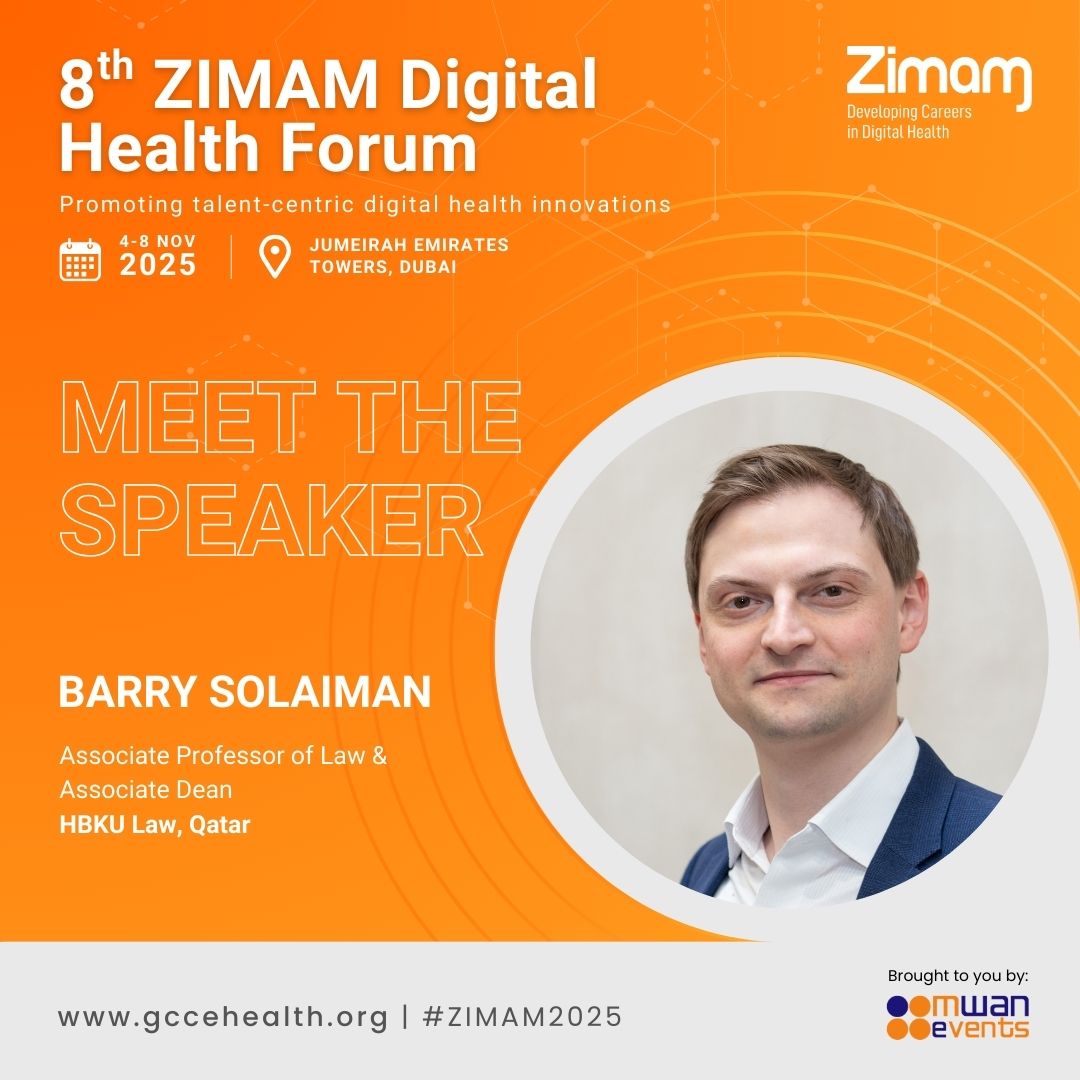
I'm giving a talk in #Dubai at the ZIMAM Digital Health Forum on Wednesday. I'll discuss what we can learn from the #GCC countries about #AI governance in healthcare (Join the event: gccehealth.org ). I have a few publications in this area if you're interested, with more on the way!: 🔷 A “True Lifecycle Approach” towards governing healthcare AI with the GCC as a global governance model > nature.com/articles/s4174… (Nature Portfolio) 🔶 Regulating AI-Based Medical Devices in Saudi Arabia: New Legal Paradigms in an Evolving Global Legal Order > link.springer.com/article/10.100… (Springer Nature) 🔷 Regulating AI in health in the Middle East: case studies from Qatar, Saudi Arabia and the United Arab Emirates > doi.org/10.4337/978180… (Edward Elgar Publishing) #ZIMAM2025 #DigitalHealth #AIinHealthcare #MENAHealthcare #MWANEvents
Barry Solaiman tweet media
English
0
1
2
213
Barry Solaiman
Barry Solaiman@ProfBarrySol·
🎬 I had the pleasure of sitting down with Steve Mackie following my British Council Science & Sustainability Award. We discussed my journey from Cambridge to Qatar, which unexpectedly led to exploring a "legacy mindset" in establishing innovative institutions like HBKU's College of Law. We delved into pioneering interdisciplinary research for societal benefit, and the vital role of supporting young talent—such as through Newcastle University's PARTNERS program, which paved my path to Durham and Cambridge. Living abroad offers fresh perspectives on one's homeland; Steve and I shared our deep patriotism for the UK. A truly enriching conversation—thank you! Watch here: youtube.com/watch?v=7RozoW… @NCLLawSchool @BritishCouncil @ukinqatar @UniofNewcastle @durham_uni @Cambridge_Uni @DurhamLawSchool @cambridgelaw @YoursCambridge @durhamalumni @NCLalumni @hbku_cl @HBKU #WeAreNCL
YouTube video
YouTube
English
0
2
5
426
Barry Solaiman
Barry Solaiman@ProfBarrySol·
I have written a short piece in the Diplomatic Courier on why a "True Lifecycle Approach" (TLA) towards governing healthcare AI is necessary 👉 diplomaticourier.com/posts/a-true-l… The TLA is a proposed new model of governance: ✔️ As technologies continue to evolve, the frameworks that govern their use remain fragmented. ✔️ Governance should embed medical law and ethics throughout, and not ignore the patient. ✔️ AI is not just a technological project but a human one. This builds on our recent article in Nature Portfolio's npj Digital Medicine (available here: doi.org/10.1038/s41746…) @Yosra_Mekki, Junaid Qadir, @IBioethics (Mohammed Ghaly), Mohamed Abdelkareem, and Abdulla Al-Ansari. @hbku_cl @QatarUniversity @HMC_Qatar A “true lifecycle approach” for governing healthcare AI diplomaticourier.com/posts/a-true-l…
English
1
2
5
294
Barry Solaiman
Barry Solaiman@ProfBarrySol·
🚨ANOTHER paper out in @NaturePortfolio's @npjDigitalMed! In this one, we propose a “True Lifecycle Approach” (#TLA) to governing healthcare AI—drawing on examples from Qatar, Saudi Arabia, and the UAE to show how governance can be patient-centred, ethically grounded, and globally scalable. READ HERE ➡️ doi.org/10.1038/s41746… Most frameworks today narrowly focus on risk classification, technical compliance, and bureaucratic tick-boxes. Our Perspective argues that patients deserve more 😷. The TLA embeds healthcare law and ethics at every stage of AI development and use: 🔹 R&D 🔬: Ethical guardrails from the very beginning of AI research 🔹 Approval 🖲️: Arguing for standards for all types of AI—not just medical devices 🔹 Post-implementation 🏥: Accountability and continuous oversight once deployed We hope our Perspective can encourage discussion and debate about how we govern AI at every stage of its lifecycle. 📘 Thank you to the brilliant team, @Yosra_Mekki, Junaid Qadir, @IBioethics (Mohammed Ghaly), Mohamed Abdelkareem, and Abdulla Al-Ansari. @hbku_cl @QatarUniversity @HMC_Qatar doi.org/10.1038/s41746…
English
0
4
9
692
Barry Solaiman
Barry Solaiman@ProfBarrySol·
⚡Our new paper in @NaturePortfolio's @npjDigitalMed (led by Dr. @Yosra_Mekki) explores how digital twins👬 are beginning to reshape surgical care—from preoperative planning and training to intraoperative decision-making and postoperative monitoring: READ HERE FREE ➡️ doi.org/10.1038/s41746… We present a comprehensive framework mapping the four levels of surgical digital twins: 🔹 Static twins for pre-op planning and patient education 🔹 Functional twins simulating biomechanics and procedure outcomes 🔹 Shadow twins using real-time intraoperative data for dynamic guidance 🔹 Intelligent twins that leverage AI for predictive modeling and in-silico trials Our Perspective examines the technological potential and the ethical, regulatory, and practical challenges of implementing digital twins in the operating room! 📒 Details about the authors put together by the amazing Dr. Yosra! Surgical expertise (plastic, orthopedic, maxillofacial, and neurosurgery): Elisabet Hagert, MD PhD, Vikas Khanduja, Professor Jag Dhanda, Sirajeddin Belkhair, and Mitchell Stotland brought in key clinical insights from across surgical specialties. Extended Reality (XR) surgical innovation: Gijs Luijten and Jan Egger helped drive the integration of advanced tech into surgical practice. Gijs is a 'technical physician'. In silico trials and virtual modeling: Prof Alejandro Frangi FREng brought in specialised niche knowledge on utilizing digital twins to simulate and predict clinical outcomes. Ethics of the surgical metaverse: Junaid Qadir and MUHAMMAD BILAL shaped our thinking around how to use immersive tech responsibly in surgery. Health technology law and regulation: Barry Solaiman brought deep expertise in legal and regulatory frameworks around healthcare technology. Medical education and innovation: Susu Zughaier, Vikas Khanduja, Professor Jag Dhanda, and Mitchell Stotland focused on how we can rethink medical training for the future using digital twins. Trainee perspectives: Chris Varghese and Yosra Mekki are learners and future surgeons acquiring the 'know how' behind interdisciplinary medical innovation. #DigitalTwins #SurgicalInnovation #AIinHealthcare #HealthTech #InSilicoTrials #npjDigitalMedicine
English
0
6
9
8.9K
Barry Solaiman
Barry Solaiman@ProfBarrySol·
🏆 The Research Handbook on Health, AI and the Law (with @CohenProf) has become the first book in the history of Edward Elgar Publishing (@ElgarPublishing) to be included in the National Institutes of Health (@NIH)'s National Library of Medicine (@NLM_NIH). 📚 Find it on the NIH’s Bookshelf here: ncbi.nlm.nih.gov/books/NBK61319… Bookshelf is the U.S. government’s official digital archive of authoritative texts in medicine and the life sciences. Inclusion means the handbook is now part of the core reference library used by NIH researchers, health regulators, and global policymakers. 🚀 This is one of the few legal volumes on the platform — and the first comprehensive book on health AI law to be recognised in this way. With over 20,000 downloads already, we hope its inclusion will accelerate multidisciplinary efforts at the intersection of law, ethics, and emerging health technologies. 🙏 We are thankful to all the authors who helped us create such an expert collection of chapters. The team at Edward Elgar have been exceptional throughout this process. Always supportive, responsive, and eager to push new boundaries. 🥇For those less familiar: Edward Elgar is an award-winning independent UK publisher specialising in law and the social sciences. You can explore their catalogue here: e-elgar.com @Vera_Lucia_Rap @bisilisib @e_kamenjasevic @KasparRosagerm @tom_goffin @_sofiapalmieri @jlroberts_law @petersalib @CKonnoth @WNicholsonPrice @gerke_sara @cybersimplesec @ZacharyCalo @IBioethics @EffyVayena @VNRahimzadeh @TiMinCeBIL @JWested @CalvinWLHo @HBKU @hbku_cl @PetrieFlom @ElgarPublishing @BenBooth157 @Elgar_Law @Elgar_Libraries
Barry Solaiman tweet media
English
0
7
13
757
Barry Solaiman
Barry Solaiman@ProfBarrySol·
It has been 4 years in the making, but I am pleased to share the public version of the "Research Guidelines for Healthcare AI Development" created from my research grant I led at @hbku with this fantastic team (Mohammed Ghaly, Prof. Mowafa Househ, Said Ismail, Paul Thornalley, Bori Mifsud, Fama Dieng). Thank you also to Dr Amany Dahir and the Ministry of Public Health - Qatar for being a great partner during the development of these guidelines. Guidelines Link: dx.doi.org/10.13140/RG.2.… This document provides non-binding guidance to researchers who are developing artificial intelligence (AI) systems in their healthcare-related research for subsequent use in the healthcare sector. We developed this for Qatar and for consideration by other countries in the Middle East, but we hope it serves as a useful template for policymakers and researchers worldwide. The guidelines emphasise fairness, accountability, and transparency across three stages of AI development: 🏗️ model development 👮 external validation 🚁 and deployment Grounded in international best practices and tailored specifically to local contexts, we hope this resource supports researchers and healthcare stakeholders in developing ethical, effective AI systems that place patients and healthcare professionals at the center, rather than as an afterthought. This is a 'living document'—it is by no means perfect, and we warmly welcome your insights and suggestions. Your expertise and feedback will help us refine future versions. Thank you Neyla Dahane, and Vasiliki G. Leventakou for being so open minded and receptive to this idea when I first contacted you. Thank you to those who participated in the expert roundtables and helped shape this work (Dr. Dena Al Thani (@Dena_AlThani), Dr. Marwa Qaraqe (@drmarwaqaraqe), Dr.Arfan Ahmed, Alaa Abd-alrazaq) #AI #Healthcare #Research #Guidelines #Qatar #Ethics #Transparency #Accountability #ArtificialIntelligence @HBKU_CIS @hbku_cl @QF @QBRIOffical @_QPHI @IBioethics @DrSaidIsmail @pjthornalley @BoriMifsud @MOPHQatar Guidelines Link: dx.doi.org/10.13140/RG.2.…
English
0
2
6
298
Barry Solaiman
Barry Solaiman@ProfBarrySol·
🤖 CHAPTER 22: "Regulating AI in Medical Care in South Korea" by Won Bok Lee (#OpenAccess HERE ▶ doi.org/10.4337/978180…) provides an in-depth look at South Korea’s evolving #AI governance in healthcare, its regulatory bodies, and critical challenges in oversight. 🚨 Key Developments in AI Regulation: 🏛️ Government oversight: Three key agencies regulate #healthcareAI— Personal Information Protection Commission (PIPC): Oversees #dataprivacy under the #PIPA. Ministry of Food and Drug Safety (MFDS): Regulates #medicaldevices, akin to the #FDA. Ministry of Health and Welfare (MOHW): Determines #healthinsurance coverage for AI in clinical settings. 📜 Medical AI Pre-Market Regulation: 🛑 Defining AI as a Medical Device: AI software is classified as a medical device if it diagnoses, monitors, or treats conditions—similar to #FDA and #EU MDR criteria. ⚖ Regulatory carve-outs: AI tools aiding clinical decision-making (#CDSS) may not qualify as medical devices, creating regulatory ambiguity. 📊 Approval process: AI medical devices undergo rigorous safety and efficacy testing, with over 139 AI products approved as of 2022. 💰 Health Insurance & Market Access: 💡 Coverage limitations: AI-based diagnostic tools struggle with reimbursement due to restrictive national health insurance policies. 🔄 New Health Technology Assessment: A three-year evidence-building period allows some AI tools, like VUNO Med-DeepCARS, to enter clinical practice before full coverage decisions. 🔒 Data Ownership & Privacy: 🔗 Pseudonymised data: The #PIPA amendment in 2020 allows for research use of pseudonymised #healthdata without patient consent, aligning with #GDPR principles. ⚠ Regulatory gaps: Uncertainty remains over ownership rights for patient data between hospitals and patients. 💡 Key Takeaways for Future Regulation: ✅ Clarify AI medical device classifications to reduce regulatory uncertainty for developers. 🔗 Improve health insurance pathways to incentivize AI adoption in clinical settings. 📝 Enhance AI-specific privacy laws to balance #innovation with #dataprotection. Chapter 22 is part of the Research Handbook on Health, AI, and the Law (with @CohenProf). @ElgarPublishing @Elgar_Law @Elgar_Libraries @hbku_cl @PetrieFlom @BenBooth157 @EwhaWomansUniv
Barry Solaiman tweet media
English
0
1
4
195
Barry Solaiman
Barry Solaiman@ProfBarrySol·
🤖 CHAPTER 21: "Legal Governance of Artificial Intelligence in Healthcare Devices and Services in Singapore" by Warren B. Chik and Haran Sugumaran (#OpenAccess HERE ▶ doi.org/10.4337/978180…) examines Singapore’s evolving regulatory framework for #AI in #healthcare, balancing innovation with #ethics, #safety, and #privacy. 🚀 Key Developments in AI Healthcare Regulation: 📜 AI-Governance Model: Singapore’s #ModelAIGovernanceFramework promotes fairness, transparency, and explainability in #AIdecisionmaking. 🏥 Healthcare-Specific Oversight: The Ministry of Health’s AIHGle (#ArtificialIntelligence in Healthcare Guidelines) focuses on #AImedicaldevices, ensuring safe design, risk assessment, and regulatory compliance. 🛡 Cybersecurity & Data Protection: AI must comply with the #PDPA (Personal Data Protection Act), which mandates strict security measures for patient data. ⚖ Regulatory Challenges: ⚙️ Divergent Approaches: While the Health Sciences Authority (HSA) enforces stringent safety standards for AI-driven medical devices, the broader AI healthcare sector operates under a mix of statutory and voluntary guidelines. 📊 Pre-Market Consultation: The HSA’s Pre-Market Consultation Scheme provides AI developers with early regulatory feedback, expediting market access while ensuring compliance. 🛑 Cybersecurity Risks: Recent data breaches (e.g., SingHealth cyberattack) underscore the vulnerability of healthcare AI systems and the urgent need for stronger safeguards under the Cybersecurity Act 2018. 💡 Key Insights for the Future: ✅ Regulatory Agility: AI regulation must evolve to accommodate adaptive AI and machine learning-based medical devices while ensuring patient safety. 🔗 Interoperability & Innovation: Singapore’s AI strategy encourages cross-sector collaboration and integration with global #AIethics frameworks. 📝 Stronger Compliance Mechanisms: Balancing data privacy with AI-driven healthcare innovation requires enhanced legal safeguards and clearer regulatory guidelines. 📖 Chapter 21 is part of the Research Handbook on Health, AI, and the Law (with @CohenProf ). @ElgarPublishing @Elgar_Law @Elgar_Libraries @hbku_cl @PetrieFlom @BenBooth157 @SgSMUCDL
Barry Solaiman tweet media
English
0
4
7
503
Barry Solaiman
Barry Solaiman@ProfBarrySol·
I'm joining of an🌟AMAZING🌟 lineup with I. Glenn Cohen (@CohenProf), Vera Lucia RAPOSO (@Vera_Lucia_Rap), and Cynthia Ho discussing "Researching AI and Health Law in an International Context" with the American Society of International Law (@asilorg) Moderated by Dr. Jenny Gesley of the Library of Congress (@librarycongress) (such an honour!) 📝 FREE AND OPEN TO ALL > REGISTER HERE (7th May ONLINE)✏️> asil.org/event/research… 💎 It's a rare opportunity to have Glenn, Cynthia, and Vera on the same panel. I highly encourage you to register for their excellent insights on AI and health law. The field is moving fast and their insights get more interesting and nuanced by the day. Description: Artificial Intelligence (AI) is on everyone's mind. AI used in the medical field poses some unique regulatory challenges. Please join the ASIL International Legal Research Interest Group (ILRIG) as the editors and some of the authors of the Research Handbook on Health, AI and the Law (published in 2024) (doi.org/10.4337/978180…) discuss different aspects of AI and health law, including intellectual property issues, in an international and comparative context. The webinar will provide attendees with substantial information and ways to research these topics in a global context but will also point out challenges to conducting research in such an emerging area of law. There will be time for Q&A at the end. @ElgarPublishing @Elgar_Law @Elgar_Libraries @hbku_cl @PetrieFlom @BenBooth157 #AI #healthcare #governance #regulation #law #ethics #research #robots #ip #copyright #liablity #consent #data #technology #facialrecognition
Barry Solaiman tweet mediaBarry Solaiman tweet media
English
0
6
5
551
Barry Solaiman
Barry Solaiman@ProfBarrySol·
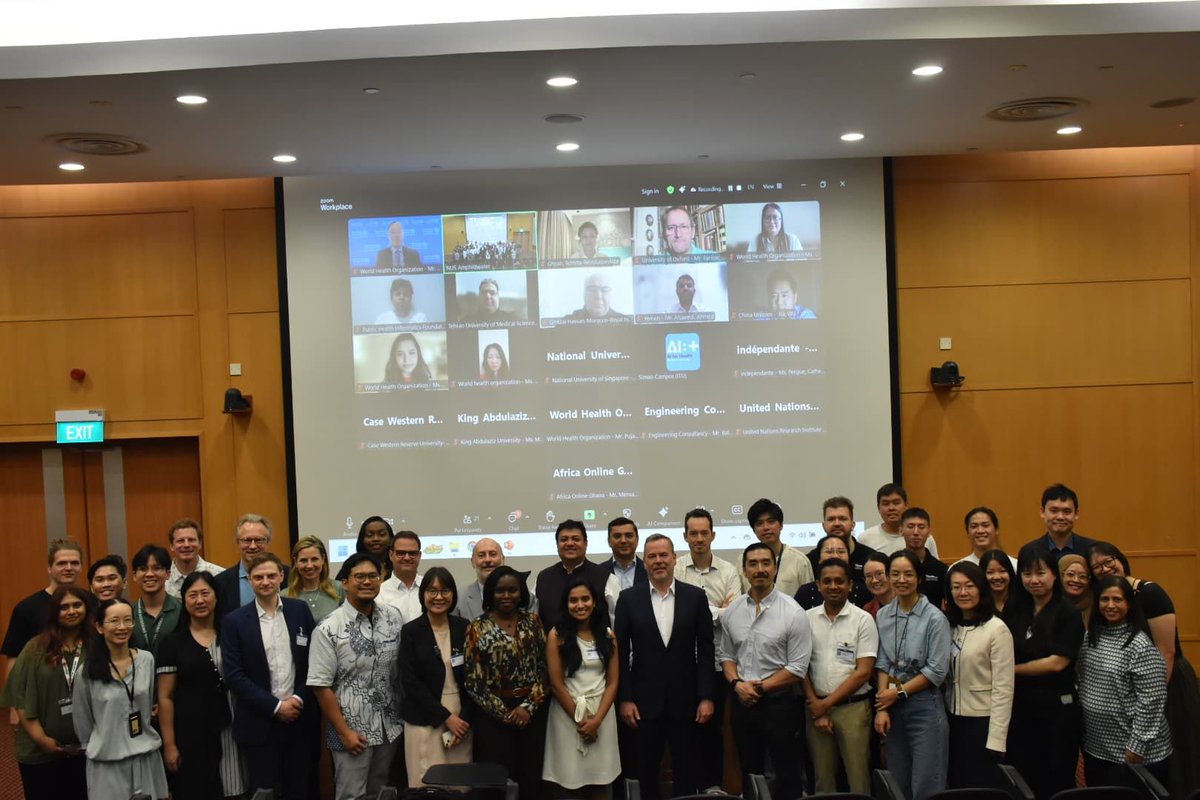
🌍 I'm pleased to join the "Working Group on Regulatory Considerations for AI in Health" of the World Health Organization @WHO . This group is doing exciting work on global governance in this space. We had a very productive meeting in #Singapore alongside colleagues from the World Intellectual Property Organization @WIPO, the International Telecommunication Union @ITU, and the National University of Singapore @NUSingapore. Members of the group have been working hard for some time and there is much in the pipeline that will shape regulations around the world in the years to come. Looking forward to sharing some of this great work in the future. These meetings are part of the Global Initiative on AI for Health (GIAI4H). Thank you Sameer Pujari, Simão Campos (@simao_campos), Dean Ho @thedeanh, and Siddhartha Prakash for leading these talks. Thank you Kanika Kalra @Kanika__Kalra for involving me. It was great meeting brilliant minds! #AIforHealth #GlobalHealth #ResponsibleAI #HealthInnovation #Collaboration #GIAI4H
Barry Solaiman tweet mediaBarry Solaiman tweet media
English
0
0
2
133
Barry Solaiman
Barry Solaiman@ProfBarrySol·
In my new publication, I look at the 'European Distinctions between Private and Public Law in Health Care and the Emerging Influence of Private Lobbies' > Read #OpenAccess > doi.org/10.1017/978100… Key Distinctions Between European and U.S. Health Law: 🏥 Universal health coverage: Unlike the U.S. system, European healthcare is largely state-backed, but private-sector involvement varies widely by country. ⚖ Public vs. private funding: Some countries integrate public insurance with private providers, while others restrict market competition to protect universal access. 💰 Government control: Many European nations, such as #UK, #France, and #Germany, maintain direct oversight of healthcare spending and services. 🔒 Private Law in European Healthcare: 📜 Tort vs. contract law: While #tort law governs medical liability, contract law’s role in doctor-patient relationships is less clear, with limited empirical data. 🛂 Cross-border healthcare: #EU law enables patients to seek medical treatment in other member states, introducing elements of market-driven care. 🛑 The Expanding Influence of Private Lobbying: 🏛 Shaping policy behind closed doors: Private health interests exert strong lobbying pressure at both national and EU levels. 📊 Privatization and regulatory capture: Laws are increasingly shaped to create new revenue streams for private firms within public healthcare systems. 💡 Key Takeaways: ✅ Transparency is essential: Stronger #lobbying regulations and disclosure requirements are needed to safeguard public interest policymaking. 🔗 Balancing public and private law: As private law structures expand, governments must refine regulations to protect patients while managing healthcare costs. 📝 Patient protections amid privatization: Emerging #data laws and contractual safeguards may play a critical role in ensuring accountability in evolving #healthcare markets. This chapter is in "Health Law as Private Law: Pathology or Pathway" (Cambridge University Press), edited by I. Glenn Cohen @CohenProf, @SusannahBaruch, Wendy Netter Epstein, @ProfCRobertson, and @CarmelShachar. I am very grateful for the opportunity to contribute to this important book! These are critical contributions to this field. A highly recommended read. Some amazing contributors to this book are: Jaime King (@profjaimeking), Bill Sage, @RothLauren2 , Wendy Epstein, @CKonnoth, @CMonahan10, @jill_horwitz (I couldn't list everyone!) @CambridgeUP @PetrieFlom @hbku_cl
Barry Solaiman tweet mediaBarry Solaiman tweet media
English
0
5
5
675
Barry Solaiman
Barry Solaiman@ProfBarrySol·
🤖 CHAPTER 20: "Convergence in the Regulation of Artificial Intelligence Software as Medical Devices in the Guangdong–Hong Kong–Macao Greater Bay Area of China" by @CalvinWLHo (#OpenAccess HERE ▶ doi.org/10.4337/978180…) examines the evolving regulatory landscape for #AI-driven #medicaldevices in the Greater Bay Area (#GBA), highlighting efforts towards harmonisation across #China, #HongKong, and #Macao. 🚨 Key Developments in AI Medical Device Regulation: 📜 China’s Regulatory Shift: The National Medical Products Administration (NMPA) has implemented over 100 new regulatory tools, focusing on safety, risk-based oversight, and whole-device lifecycle supervision. 🛑 AI as Medical Device Software (MDS): In 2022, the NMPA released guidance aligning AI software regulations with global standards (IMDRF), addressing risk classification and clinical evaluation. 🏥 Hong Kong's Approach: Unlike mainland China, Hong Kong currently lacks statutory regulation of medical AI, relying instead on voluntary MDACS (Medical Device Administrative Control System) listing and adverse event reporting. 🌍 Cross-Border Harmonisation: The GBA Medical Device Work Plan aims to integrate regulatory frameworks, allowing designated hospitals to access Hong Kong- and Macao-approved devices before full mainland approval. 🔒 Regulatory Challenges: ⚖️ Divergent Approaches: While China enforces #AIAct-style oversight through the NMPA, Hong Kong and Macao operate on fragmented regulatory models, complicating convergence. 📊 Risk-Based Classification: AI-based MDS must be classified as Class II or Class III, with higher-risk software (e.g., autonomous AI decision support) requiring extensive clinical trials. 🔗 Post-Market Surveillance: The introduction of the Unique Device Identification (UDI) system aims to enhance traceability, but integration across jurisdictions remains a work in progress. 💡 Key Insights for the Future: ✅ Need for Unified Regulation: Converging policies across the GBA would facilitate AI-driven healthcare innovation while maintaining safety and efficacy. 📝 Interoperability with Global Standards: Adapting China’s risk-based approach to align with international models (@FDA, EU MDR) is crucial for global AI medical device compliance. 🚀 Innovation vs. Oversight: The regulatory challenge is balancing rapid AI adoption with stringent patient protection frameworks. 📖 Chapter 20 is part of the Research Handbook on Health, AI, and the Law (with @CohenProf). @ElgarPublishing @Elgar_Law @Elgar_Libraries @hbku_cl @PetrieFlom @BenBooth157
Barry Solaiman tweet media
English
0
2
4
328
Barry Solaiman
Barry Solaiman@ProfBarrySol·
✨ In this new article in the Journal of Law, Innovation and Technology, I critique the #EU's AI Act and argue that patients need an AI Bill of Rights ➡️ 5️⃣0️⃣ The first 50 visits to the article at the following link will provide full access (tandfonline.com/eprint/MWSYUQT…). To those first 50, downloading the PDF file will ensure you have an offline copy. 🚨 Key Issues with the AI Act: ⚖ Regulation vs. Trust: The AI Act adopts a risk-based approach, assuming that reducing AI risks will build #trust, but this is an oversimplification. 🔍 Lack of Healthcare-Specific Trust Measures: Trust in #healthcare involves #transparency, #accountability, and #ethics, yet these are not directly integrated into the AI Act’s framework. 📉 Disconnect from Patients' Needs: The AI Act’s technical focus (e.g., #FLOPs limits for GenAI) does not address how patients and healthcare professionals actually experience trust in AI systems. 🔒 Proposed AI Bill of Rights for Healthcare: 📜 Patient-Centric Protections: A rights-based framework should explicitly safeguard patients, clarifying AI’s role in their care and decision-making. 🛡 Explainability and Consent: Patients should have the right to meaningful explanations of AI decisions, supporting informed consent and clinical accountability. ⚙ Regulatory Integration: An AI Bill of Rights should complement the AI Act, GDPR, and Medical Device Regulation (#MDR) to enhance oversight and reduce ethical blind spots. ✅ AI Governance Needs a Human-Centered Approach: Regulation must acknowledge how trust is built in healthcare, not just how AI is categorized. Taylor & Francis Group (@WeAreTandF) @hbku_cl #AI #AIAct #EU #Trust #Trustworthiness #Governance #Regulation #healthcare #Doctors #Patients #billofrights #rights #medicine
Barry Solaiman tweet media
English
0
6
7
592
Barry Solaiman
Barry Solaiman@ProfBarrySol·
🤖 CHAPTER 19: "Regulating AI in Health in the Middle East: Case Studies from Qatar, Saudi Arabia, and the United Arab Emirates" with Ayesha Bashir, and Fama Dieng (OpenAccess HERE ▶ doi.org/10.4337/978180…) examines the unique regulatory approaches of three Gulf nations—Qatar, SaudiArabia, and the UAE—in governing AI in healthcare. 🚨 Key AI developments in the region: 🌍 National AI investments: The UAE, KSA, and Qatar rank highest in the Arab world for AI investment, innovation, and implementation. 🏛️ Government leadership: The UAE has a dedicated Minister for AI, KSA established the Saudi Data & AI Authority (SDAIA), and Qatar launched the Qatar Center for Artificial Intelligence (QCAI). 🩺 AI-driven healthcare: AI is used for #medicalimaging, #electronichealthrecords (#EHRs), #wearabletech, and predictive analytics in hospitals across the region. 🔒 Regulatory frameworks and challenges: 📜 Legal voids and emerging policies: While #AIAct-style regulations exist in the EU, the Gulf states rely on national strategies and guidelines that are still evolving. ⚖️ Medical device regulations: Saudi Arabia's #SFDA has led with a structured regulatory framework for AI-based medical devices, while Qatar and the UAE have emerging policies. 🔍 Data protection laws: Qatar pioneered regional #DataPrivacy laws, but implementation challenges persist in all three nations. 💡 Insights for the future: ✅ Cultural and ethical considerations: Islamic bioethics plays a role in shaping AI governance, influencing debates on transparency, accountability, and fairness. 🔗 Global alignment: While local policies develop, these nations must balance international regulatory alignment with regional healthcare needs. ⚠️ Uncertainty for AI developers: Rapid regulatory changes leave questions on compliance, legal liability, and ethical AI deployment in healthcare. 📖 Chapter 19 is part of the Research Handbook on Health, AI, and the Law (with @CohenProf). @ElgarPublishing @Elgar_Law @Elgar_Libraries @hbku_cl @PetrieFlom @BenBooth157 #AIRegulation #HealthLaw #MedicalAI #EthicsInHealthcare #GlobalStandards #InnovationPolicy #MiddleEast #AIinHealthcare
Barry Solaiman tweet media
English
0
2
5
977